
Provided by Medi Com Worldwide Inc Supported by

Provided by Medi. Com Worldwide, Inc. Supported by an educational grant from Teva Pharmaceuticals
Faculty David W. Dodick, MD – Chair Professor of Neurology Department of Neurology Mayo Clinic Phoenix, Arizona Andrew C. Charles, MD Professor of Neurology UCLA School of Medicine Los Angeles, California Deborah I. Friedman, MD, MPH, FAAN Professor of Neurology & Neurotherapeutics Professor of Ophthalmology University of Texas Southwestern Medical Center Dallas, Texas
Agenda 4: 30 pm Registration and Dinner 5: 00 pm Moderator’s Welcome 5: 10 pm The Patient’s Story; Meet LK 5: 15 pm Panel Presentations/Interaction/ Discussion with LK and Audience
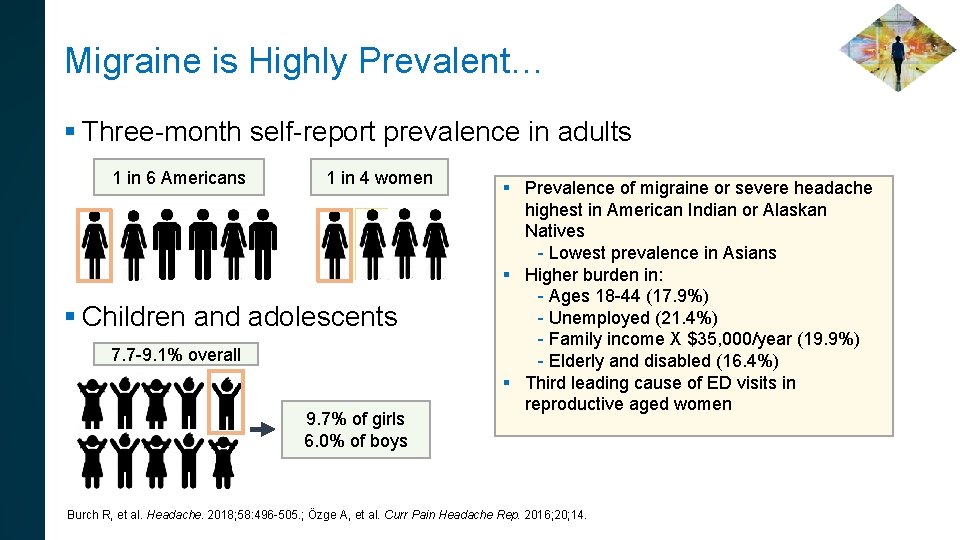
Migraine is Highly Prevalent… § Three-month self-report prevalence in adults 1 in 6 Americans 1 in 4 women § Children and adolescents 7. 7 -9. 1% overall 9. 7% of girls 6. 0% of boys § Prevalence of migraine or severe headache highest in American Indian or Alaskan Natives - Lowest prevalence in Asians § Higher burden in: - Ages 18 -44 (17. 9%) - Unemployed (21. 4%) - Family income X $35, 000/year (19. 9%) - Elderly and disabled (16. 4%) § Third leading cause of ED visits in reproductive aged women Burch R, et al. Headache. 2018; 58: 496 -505. ; Özge A, et al. Curr Pain Headache Rep. 2016; 20; 14.
…and Highly Disabling Global Burden of Disease Study § Headache is the 2 nd leading cause of years lived with disability (YLD) worldwide § Headache disorders are the cause of more than three-quarters of all neurological TLDs (6. 5% of all YLDs) § Migraine is the 3 rd among people ages 15 -49 years (GBD 2016) § Migraine is the 2 nd cause of disability in both sexes and all ages (#1 is low back pain) § And the first cause of disability in persons under age 50 Saylor D, et al. Semin Neurol. 2018; 38: 182 -190. ; GBD 2015. Lancet. 2016; 388: 1545 -1602. ; Steiner TJ, et al. J Headache Pain. 2018; 19(1): 17.

Migraine Impacts Work Productivity – Most migraneurs, and more than half of those with 4+ MHD, believe they’ve missed opportunities % Agree Migraine impacts work productivity for 68% of migraineurs Some also have career-changing impact 38 % 39 % 4+ MHD: 52% 53% 32 % 29 % 55% say migraine has impacted career goals Missed out on additional Chose to turn down Changed jobs to opportunities at work earning potential at work opportunities at work minimize the likelihood of (promotions, etc. ) getting a migraine Base: Migraine sufferers who work (n=227); total migraine for changed job and career goals (n=518) agree is top 3 box agreement on a 6 -point scale Q 15. Using the scale shown below, please indicate how much you agree or disagree with the following statements. Q 10. Thinking about the overall impact migraines have had on your life, to what extent do you believe that migraines have negatively impacted your…
Family Impact of Migraine § Ca. MEO Study (web based, 2012 -2013) assessed Family Burden Module in EM and CM (ICHD-3 b) § 13, 064 respondents (65. 7% response rate) § 4, 022 migraineur-spouse dyads including 2, 275 dyads with children § EM (91. 2%), CM (8. 8%) § 48 -57% reported reduced participation in family activities due to migraine at least once monthly § Many perceived that their spouse/partner did not believe the severity and impact of their migraines (EM 34 -40%, CM 44%) § 1/3 worried about long-term financial security for themselves or their families because of their headaches § Many felt that they would be better parents without migraine (EM 30 -58%, CM 72%) § Spouses agreed to a lesser extent Buse DC, et al. Mayo Clin Proc. 2016; 91: 596 -611.
Adolescent Perspectives of a Parent’s Migraine Ca. MEO Study (1, 411 parent-adolescent dyads) Highly statistically significant (P<. 001) responses related to: § Loss of parental support/reverse caregiving (cooking, chores, taking care of parent) § Emotional experiences (arguing, taking advantage of parent, angry at parent, parent is “needy, ” would get along with parent better if they didn’t have migraine) § Interference with school (missing events, parent can’t participate like other parents do) Buse DC, et al. Headache. 2018; 58: 512 -524.
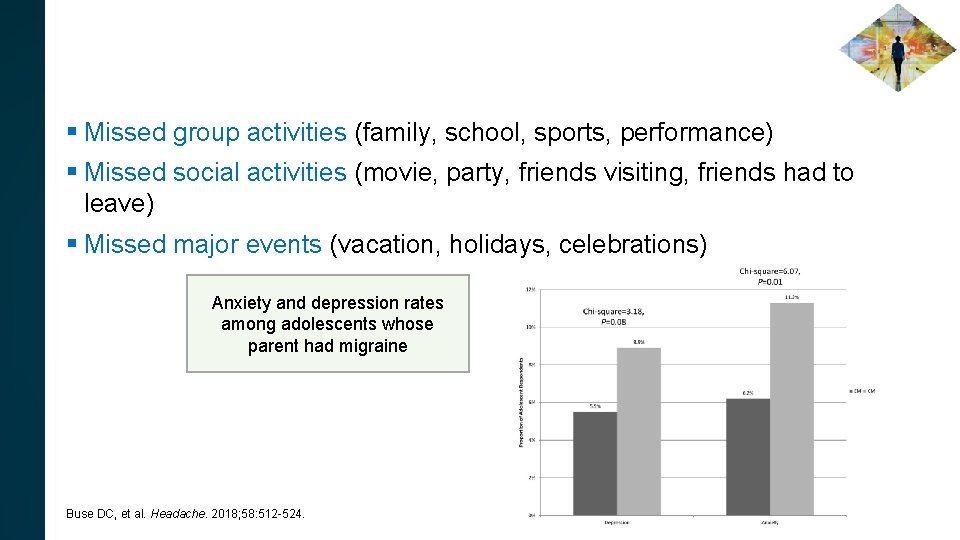
§ Missed group activities (family, school, sports, performance) § Missed social activities (movie, party, friends visiting, friends had to leave) § Missed major events (vacation, holidays, celebrations) Anxiety and depression rates among adolescents whose parent had migraine Buse DC, et al. Headache. 2018; 58: 512 -524.
Rate of Self-Awareness of the Diagnosis is Low German Health Interview Study (n=7341) § Screened for severe headaches in the previous 12 months 12 -month prevalence 60% (women 66%, men 53%) § Diagnosed with migraine using ICHD-2 criteria 12 -month prevalence 10. 6% (women 15. 6%, men 5. 3%) “Do you believe that your headaches were, at least in part, due to migraine? ” § 70% of patients with migraine regarded their headaches as migraine § 41% had consulted a physician for headache in 12 months § -65% of those had received a diagnosis of migraine Radtke A, et al. Cephalalgia. 2012; 32: 1023 -1030. ; Lipton RB, et al. Neurology. 2002; 58: 885 -894.

Most common misdiagnoses by physicians: § Tension-type headache (55. 6%) § Sinus headache (9. 1%) § Other (35. 4%) Factors predicting higher self-awareness: § Greater headache intensity § Greater number of headache days § Photophobia and photophobia, nausea or vomiting, unilateral pain, throbbing pain, visual aura § Sex and having a medical consultation were NS § In a 2002 U. S. study, only 53% of patients correctly diagnosed their own migraines Radtke A, et al. Cephalalgia. 2012; 32: 1023 -1030. ; Lipton RB, et al. Neurology. 2002; 58: 885 -894.
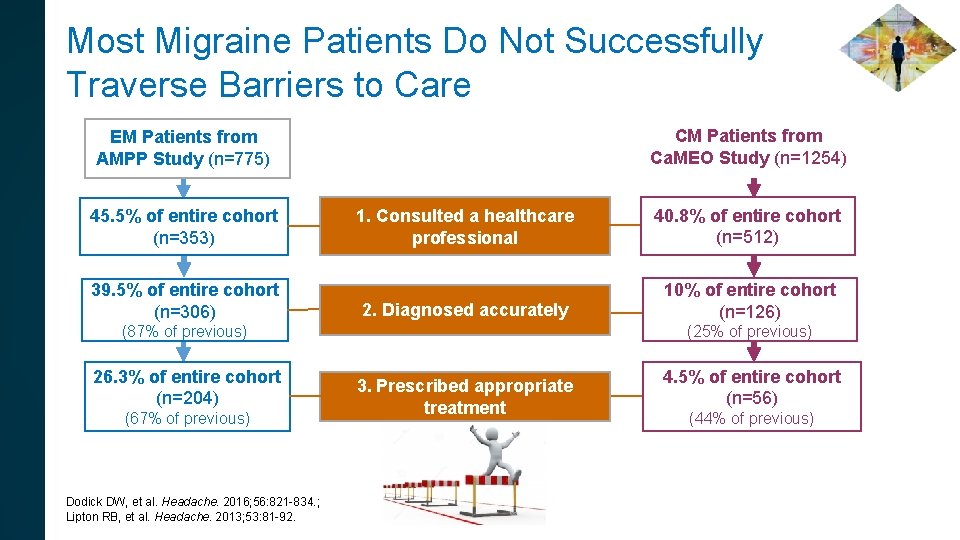
Most Migraine Patients Do Not Successfully Traverse Barriers to Care CM Patients from Ca. MEO Study (n=1254) EM Patients from AMPP Study (n=775) 45. 5% of entire cohort (n=353) 39. 5% of entire cohort (n=306) 1. Consulted a healthcare professional 40. 8% of entire cohort (n=512) 2. Diagnosed accurately 10% of entire cohort (n=126) (25% of previous) (87% of previous) 26. 3% of entire cohort (n=204) (67% of previous) Dodick DW, et al. Headache. 2016; 56: 821 -834. ; Lipton RB, et al. Headache. 2013; 53: 81 -92. 3. Prescribed appropriate treatment 4. 5% of entire cohort (n=56) (44% of previous)
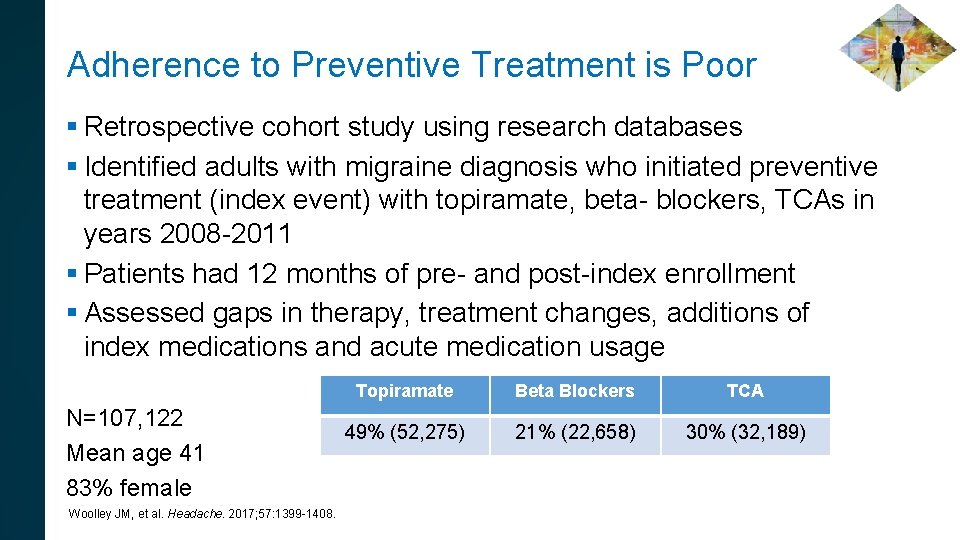
Adherence to Preventive Treatment is Poor § Retrospective cohort study using research databases § Identified adults with migraine diagnosis who initiated preventive treatment (index event) with topiramate, beta- blockers, TCAs in years 2008 -2011 § Patients had 12 months of pre- and post-index enrollment § Assessed gaps in therapy, treatment changes, additions of index medications and acute medication usage N=107, 122 Mean age 41 83% female Woolley JM, et al. Headache. 2017; 57: 1399 -1408. Topiramate Beta Blockers TCA 49% (52, 275) 21% (22, 658) 30% (32, 189)
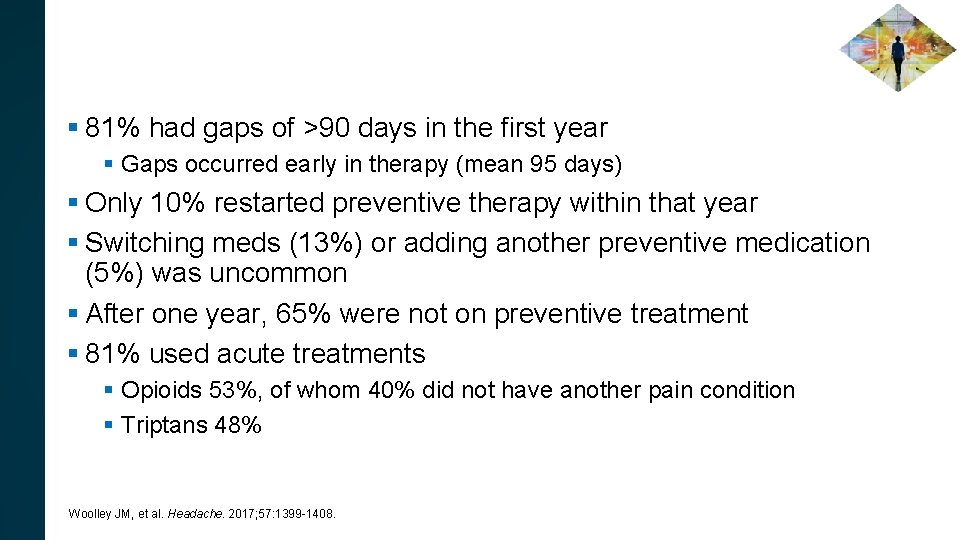
§ 81% had gaps of >90 days in the first year § Gaps occurred early in therapy (mean 95 days) § Only 10% restarted preventive therapy within that year § Switching meds (13%) or adding another preventive medication (5%) was uncommon § After one year, 65% were not on preventive treatment § 81% used acute treatments § Opioids 53%, of whom 40% did not have another pain condition § Triptans 48% Woolley JM, et al. Headache. 2017; 57: 1399 -1408.
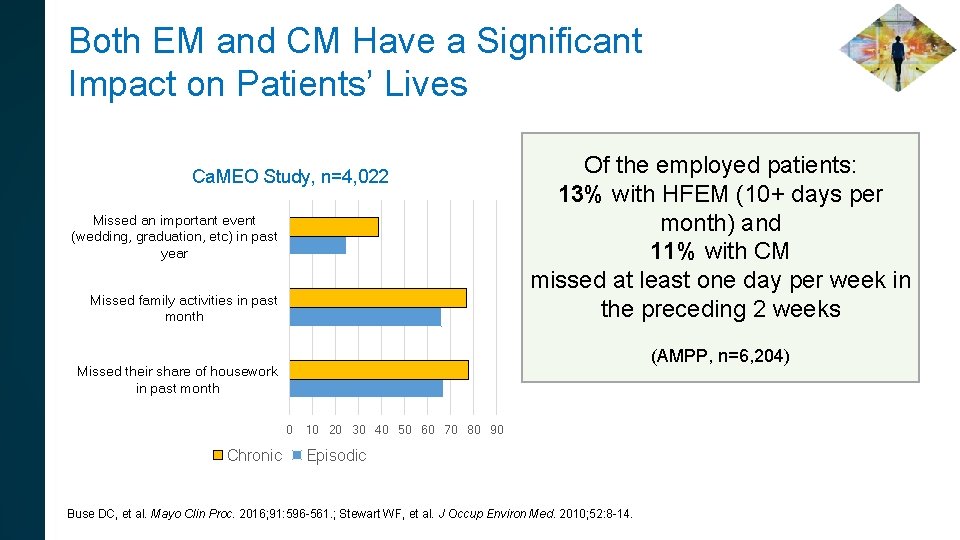
Both EM and CM Have a Significant Impact on Patients’ Lives Ca. MEO Study, n=4, 022 Missed an important event (wedding, graduation, etc) in past year Missed family activities in past month Of the employed patients: 13% with HFEM (10+ days per month) and 11% with CM missed at least one day per week in the preceding 2 weeks (AMPP, n=6, 204) Missed their share of housework in past month 0 Chronic 10 20 30 40 50 60 70 80 90 Episodic Buse DC, et al. Mayo Clin Proc. 2016; 91: 596 -561. ; Stewart WF, et al. J Occup Environ Med. 2010; 52: 8 -14.
Adherence to Oral Preventives in Chronic Migraine § Retrospective cohort study using Research Databases § Adults with CM who initiated an oral preventive in 2008 -2012: TCAs, SSRIs, beta blockers, gabapentin, topiramate, divalproex § Index date determined by first pharmacy claim § Excluded patients whose claim occurred within 12 months after a diagnosis of CHF, HTN, depression or seizure § Calculated medication possession ratio (MPR and proportion of days covered (PCD) Hepp Z, et al. Cephalalgia. 2015; 35: 478 -488.
§ 74, 870 patients with CM identified § 49% initiated a preventive medication § 8, 688 met inclusion/exclusion criteria § Most were female, average 40; 59% working full-time § Based on medication possession(MPR ≥ 80%): § 29% were adherent at the end of 6 months § 20% were adherent at 12 months § Based on proportion of days covered (PCD ≥ 80%): § 26% were adherent at the end of 6 months § 17% were adherent at 12 months Hepp Z, et al. Cephalalgia. 2015; 35: 478 -488.
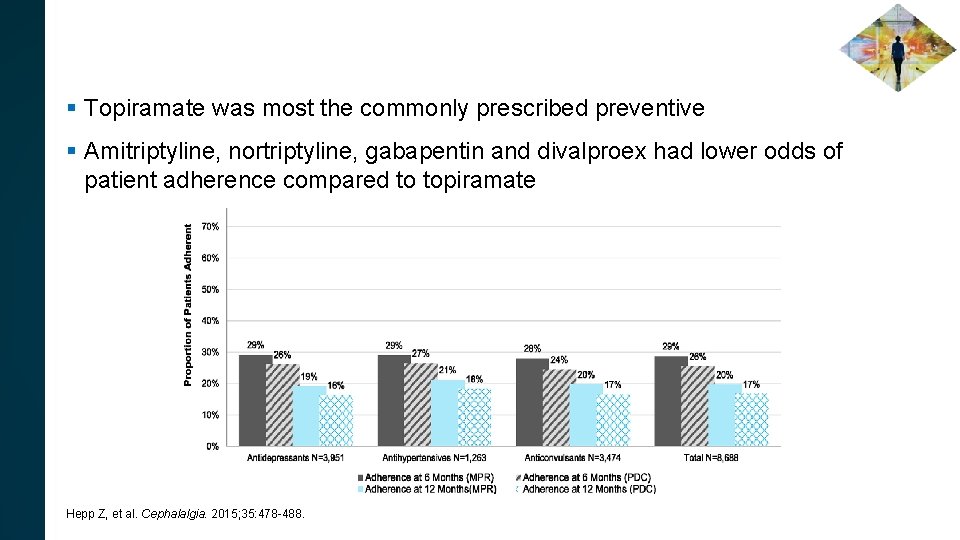
§ Topiramate was most the commonly prescribed preventive § Amitriptyline, nortriptyline, gabapentin and divalproex had lower odds of patient adherence compared to topiramate Hepp Z, et al. Cephalalgia. 2015; 35: 478 -488.
Stigma of Migraine Study of EM (n=123), CM (n=123) and epilepsy (n=62) patients using the Stigma Scale for Chronic Illness § CM patients reported more stigma than epilepsy and EM patients § EM and CM patients had higher rates of internalized stigma than those with epilepsy § Stigma was correlated with inability to work in all groups § Age, income and education did not affect stigma scores Young WB, et al. PLo. S One. 2013; 8(1): e 54074.
How Do Neurologists Perceive Migraine? 368 French neurologists, of whom 48. 6% had migraine § § 92. 3% claimed to be very or quite interested in migraine 96. 5% considered it a “real” illness 96. 6% considered it very or quite disabling About half considered it challenging to treat because of: § § Unrealistic patient expectations (46. 2%) Time-consuming treatment (48. 9%) Complications of co-existing anxiety and depression (59. 5%) Medical nomadism (47. 0%) No difference between those who did and did not have migraine Donnett A, et al. Headache. 2010; 50: 1115 -1125.

There is a Shortage of Headache Specialists to Care for Migraine Patients § Currently 475 UCNS-certified headache medicine specialists in the US and Canada § One specialist for every 80, 000 patients § Marked geographic disparity § Best patient ratio: DC, NH, NY, NB § In 2014, six states had no headache specialist § Most located in urban and higher income areas § Long wait times for appointments § Headache Medicine Fellowship programs are largely unfilled Rosen NR, et al. International Headache Congress, 2013. ; Rizzoli P, et al. Headache. 2014; 54: 1591 -1600. ; Minen MT, et al. Headache. 2015; 55: 1092 -1101.
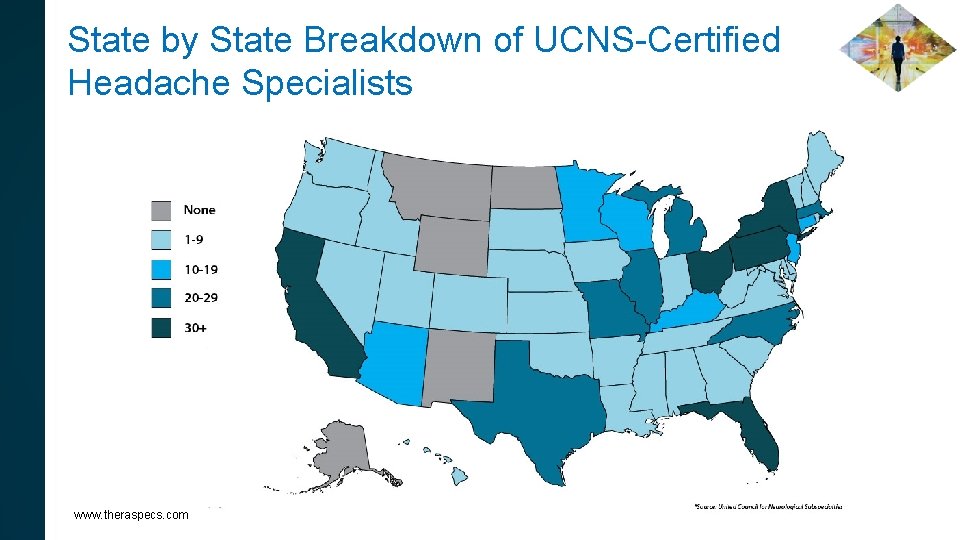
State by State Breakdown of UCNS-Certified Headache Specialists www. theraspecs. com
What is a Neuropeptide? § Small chains of amino acids released by neural cells (neurons or glial cells) to signal to other cells § Multiple properties that set them apart from classical neurotransmitters
Examples of Neuropeptides § Calcitonin gene-related peptide § Pituitary adenylate cyclase activating peptide § Vasoactive intestinal peptide § Orexins § Substance P § Hypothalamic hormones (eg, Gn. RH, oxytocin) § Endogenous opioids (endorphins, enkephalins) § Melanocortin § Bradykinin Hökfelt T, et al. Lancet Neurol. 2003; 2(8): 463 -472.
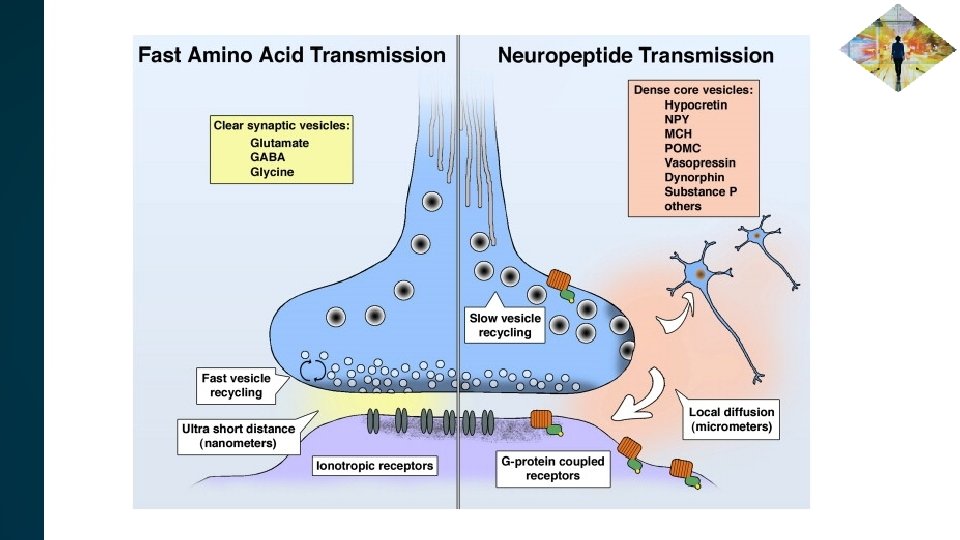
Summary § Compared to neurotransmitters (like glutamate, GABA) neuropeptides: § Are produced and packaged differently by cells § Take more activation to release § Bind more tightly to receptors § Have a more sustained effect § Can be released away from a synapse § Once released can travel to more distant locations § Can cause more diffuse effects on glia, vascular cells, endocrine cells, etc.
Calcitonin Gene Related Peptide (CGRP) § 37 amino acid polypeptide § Alpha-CGRP believed to be primary active form in nervous system § Beta-CGRP (3 amino acids different from Alpha CGRP) believed to be primarily active form in GI tract § Activates CGRP receptor and may also activate other types of receptors

Evidence of a Key Role for CGRP in Migraine CGRP is Released During a Migraine Attack CGRP Administration Triggers Migraine CGRP Levels are Elevated in Chronic Migraine Small Molecule CGRP Antagonists Abort Migraine Antibodies to CGRP or its Receptor Prevent Migraine Goadsby PJ, et al. Ann Neurol. 1990; 28: 183 -187. ; Goadsby PJ, et al. Brain. 1994; 117( Pt 3): 427 -434. ; Hansen JM, et al. Cephalalgia. 2010; 30(10): 1179 -1186. ; Cernuda-Morollon E, et al. Neurology. 2013; 81(14): 1191 -1196. ; Olesen J, et al. N Engl J Med. 2004; 350: 1104 -1110. ; Ho TW, et al. Neurology. 2008; 70: 1304 -1312.
CGRP Release in Migraine § CGRP but not neuropeptide Y, VIP, or substance P released during attacks of migraine with and without aura § Elevated CGRP levels were observed in jugular but not antecubital venous blood on same side as pain § Greater elevation in CGRP observed in migraine with aura § CGRP levels normalize upon treatment with sumatriptan § Serum CGRP levels reported to be chronically elevated in patients with chronic migraine Goadsby PJ, et al. Ann Neurol. 1990; 28: 183 -187. ; Goadsby PJ, et al. Ann Neurol. 1993; 33(1): 48 -56. ; Cernuda-Morollon E, et al. Neurology. 2013; 81(14): 1191 -1196.
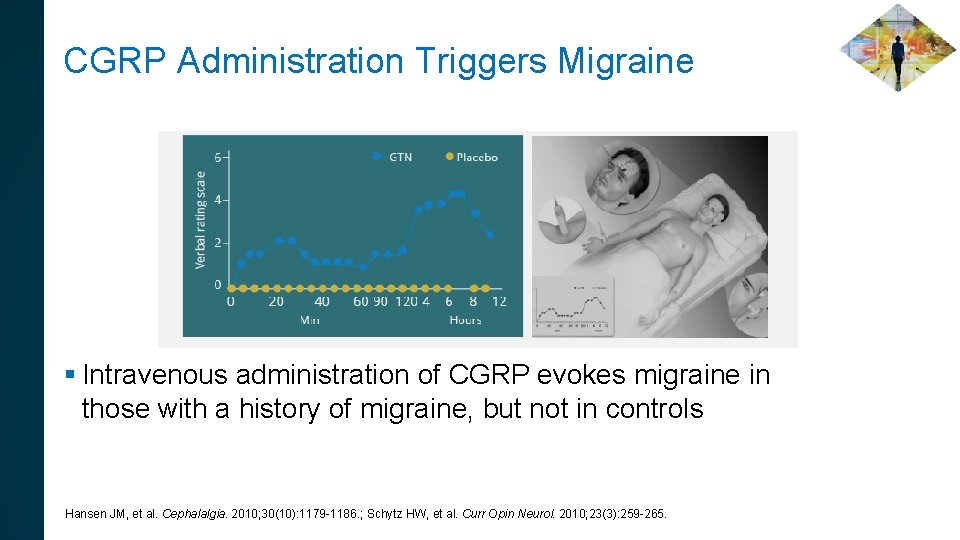
CGRP Administration Triggers Migraine § Intravenous administration of CGRP evokes migraine in those with a history of migraine, but not in controls Hansen JM, et al. Cephalalgia. 2010; 30(10): 1179 -1186. ; Schytz HW, et al. Curr Opin Neurol. 2010; 23(3): 259 -265.
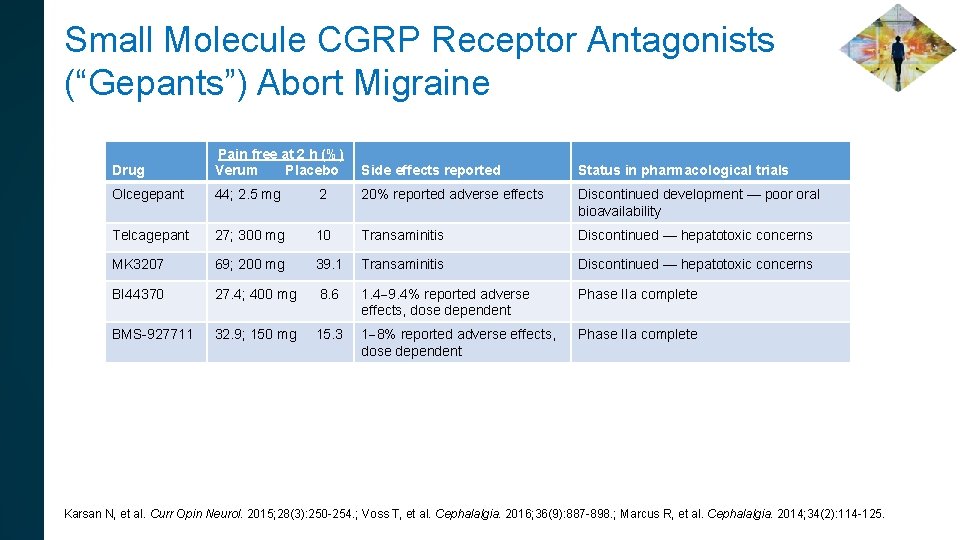
Small Molecule CGRP Receptor Antagonists (“Gepants”) Abort Migraine Drug Pain free at 2 h (%) Verum Placebo Side effects reported Status in pharmacological trials Olcegepant 44; 2. 5 mg 2 20% reported adverse effects Discontinued development — poor oral bioavailability Telcagepant 27; 300 mg 10 Transaminitis Discontinued — hepatotoxic concerns MK 3207 69; 200 mg 39. 1 Transaminitis Discontinued — hepatotoxic concerns BI 44370 27. 4; 400 mg 8. 6 1. 4 9. 4% reported adverse effects, dose dependent Phase IIa complete BMS-927711 32. 9; 150 mg 15. 3 1 8% reported adverse effects, dose dependent Phase IIa complete Karsan N, et al. Curr Opin Neurol. 2015; 28(3): 250 -254. ; Voss T, et al. Cephalalgia. 2016; 36(9): 887 -898. ; Marcus R, et al. Cephalalgia. 2014; 34(2): 114 -125.

What Do Clinical Trials of CGRPrelated Therapies Tell Us About Pathophysiology?
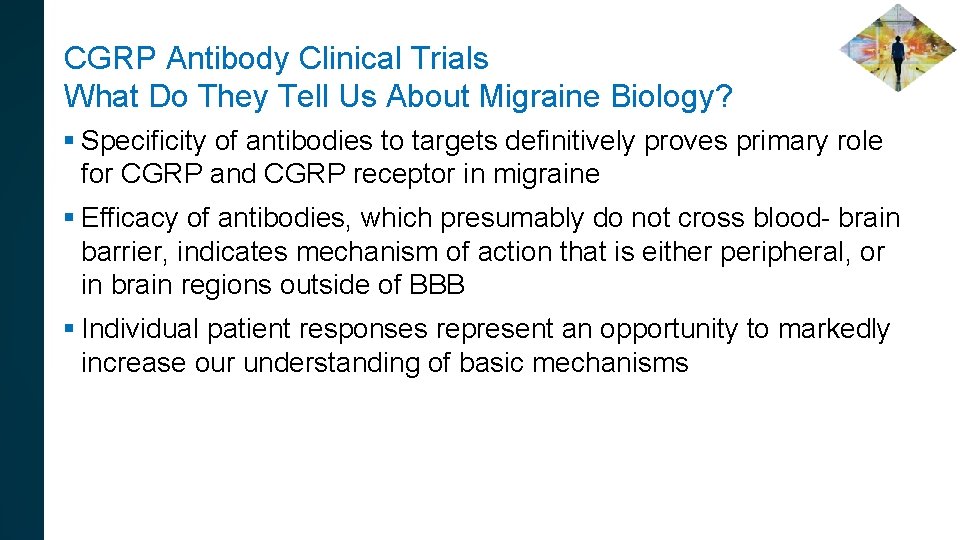
CGRP Antibody Clinical Trials What Do They Tell Us About Migraine Biology? § Specificity of antibodies to targets definitively proves primary role for CGRP and CGRP receptor in migraine § Efficacy of antibodies, which presumably do not cross blood- brain barrier, indicates mechanism of action that is either peripheral, or in brain regions outside of BBB § Individual patient responses represent an opportunity to markedly increase our understanding of basic mechanisms
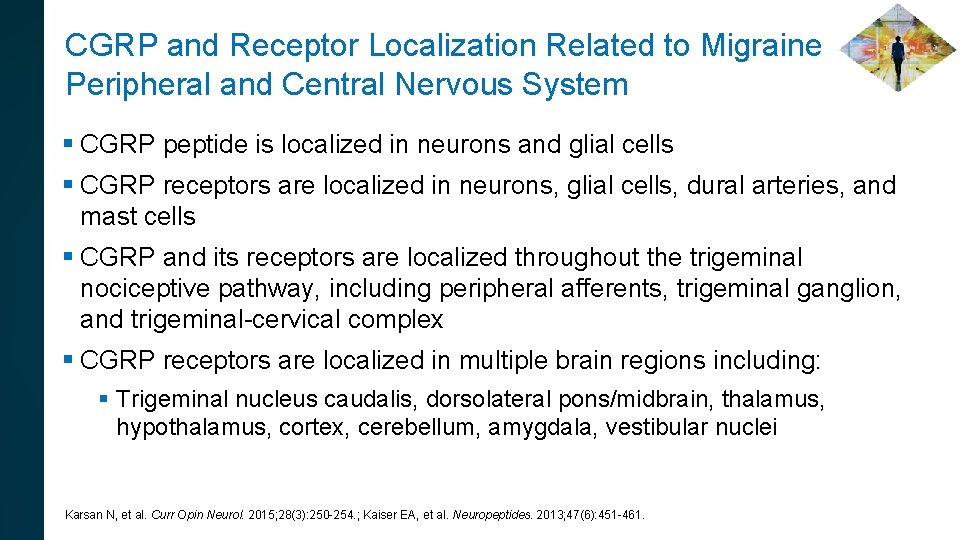
CGRP and Receptor Localization Related to Migraine Peripheral and Central Nervous System § CGRP peptide is localized in neurons and glial cells § CGRP receptors are localized in neurons, glial cells, dural arteries, and mast cells § CGRP and its receptors are localized throughout the trigeminal nociceptive pathway, including peripheral afferents, trigeminal ganglion, and trigeminal-cervical complex § CGRP receptors are localized in multiple brain regions including: § Trigeminal nucleus caudalis, dorsolateral pons/midbrain, thalamus, hypothalamus, cortex, cerebellum, amygdala, vestibular nuclei Karsan N, et al. Curr Opin Neurol. 2015; 28(3): 250 -254. ; Kaiser EA, et al. Neuropeptides. 2013; 47(6): 451 -461.
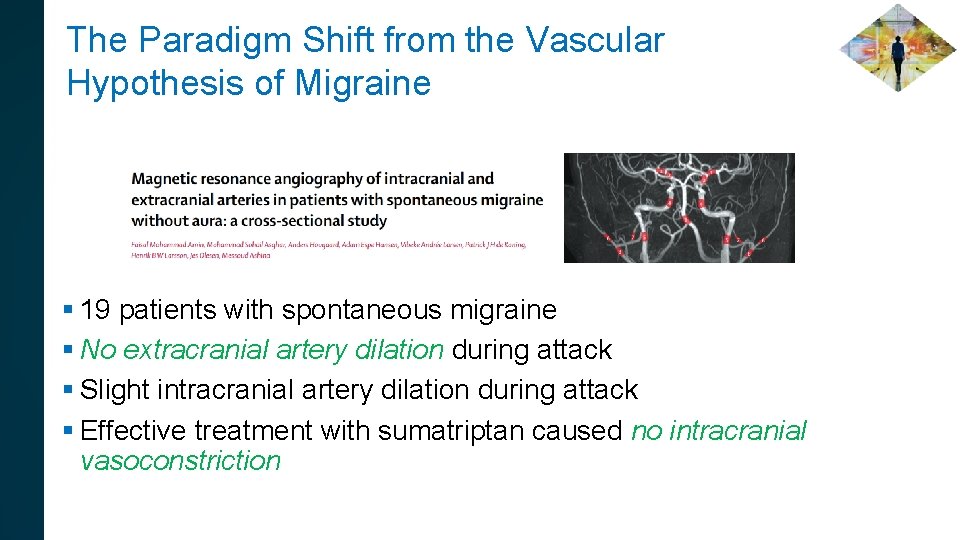
The Paradigm Shift from the Vascular Hypothesis of Migraine § 19 patients with spontaneous migraine § No extracranial artery dilation during attack § Slight intracranial artery dilation during attack § Effective treatment with sumatriptan caused no intracranial vasoconstriction

If the Vascular Hypothesis of Migraine is not Correct, How Do You Explain the Role of CGRP, Which is a Vasodilator? § The fundamental tenet of the vascular hypothesis is that the dilation of blood vessels is responsible for headache § While CGRP is indeed a vasodilator, it is also separately involved in pain transmission § Thus, while CGRP may dilate blood vessels, it is the parallel effect of CGRP on pain transmission that is responsible for headache, and not the dilation of blood vessels
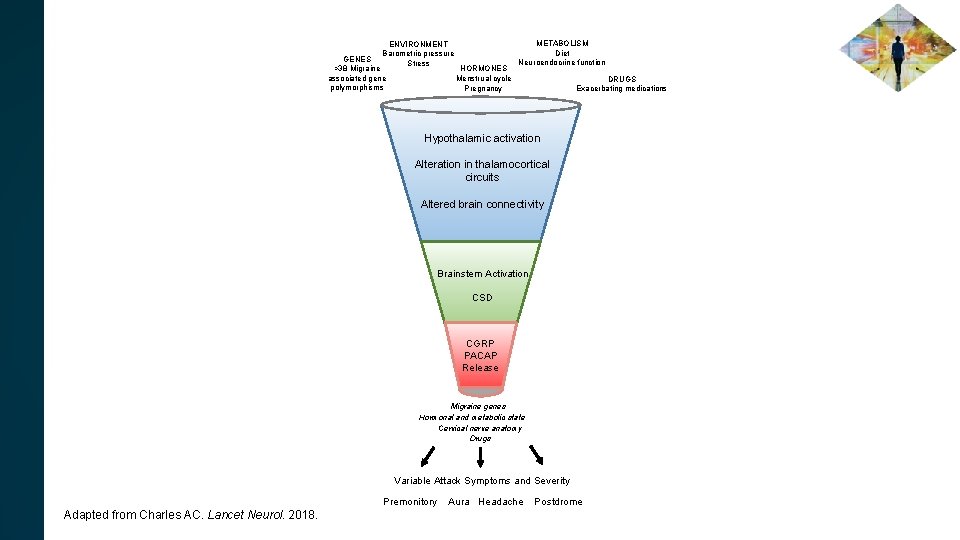
ENVIRONMENT Barometric pressure Stress GENES >38 Migraine associated gene polymorphisms HORMONES Menstrual cycle Pregnancy METABOLISM Diet Neuroendocrine function DRUGS Exacerbating medications Hypothalamic activation Alteration in thalamocortical circuits Altered brain connectivity Brainstem Activation CSD CGRP PACAP Release Migraine genes Hormonal and metabolic state Cervical nerve anatomy Drugs Variable Attack Symptoms and Severity Premonitory Aura Headache Postdrome Adapted from Charles AC. Lancet Neurol. 2018.
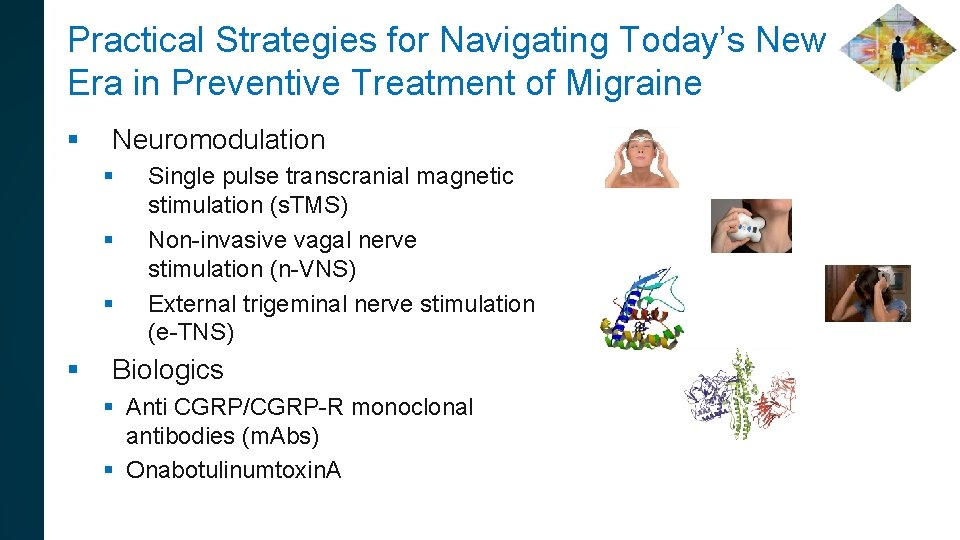
Practical Strategies for Navigating Today’s New Era in Preventive Treatment of Migraine § Neuromodulation § § Single pulse transcranial magnetic stimulation (s. TMS) Non-invasive vagal nerve stimulation (n-VNS) External trigeminal nerve stimulation (e-TNS) Biologics § Anti CGRP/CGRP-R monoclonal antibodies (m. Abs) § Onabotulinumtoxin. A
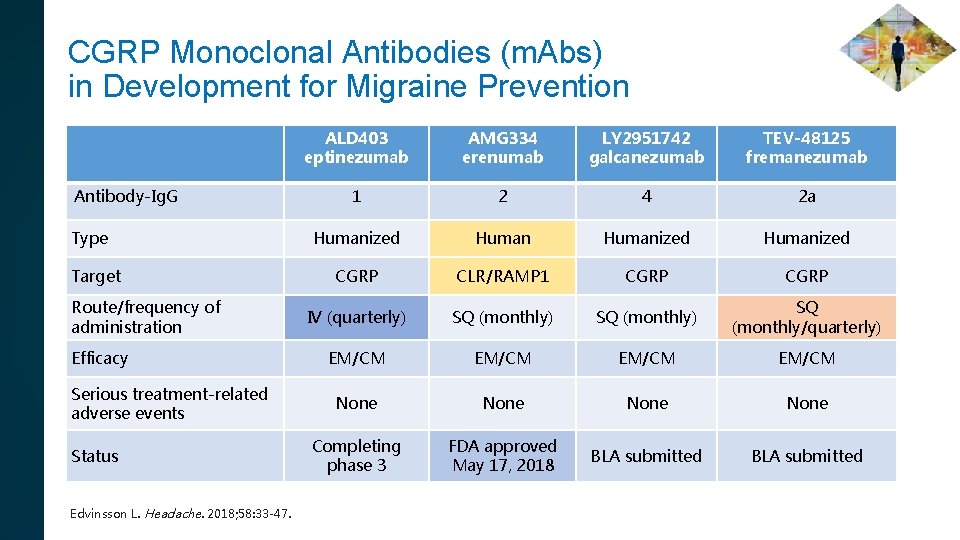
CGRP Monoclonal Antibodies (m. Abs) in Development for Migraine Prevention Antibody-Ig. G Type Target Route/frequency of administration Efficacy Serious treatment-related adverse events Status Edvinsson L. Headache. 2018; 58: 33 -47. ALD 403 eptinezumab AMG 334 erenumab LY 2951742 galcanezumab TEV-48125 fremanezumab 1 2 4 2 a Humanized CGRP CLR/RAMP 1 CGRP IV (quarterly) SQ (monthly) SQ (monthly/quarterly) EM/CM None Completing phase 3 FDA approved May 17, 2018 BLA submitted
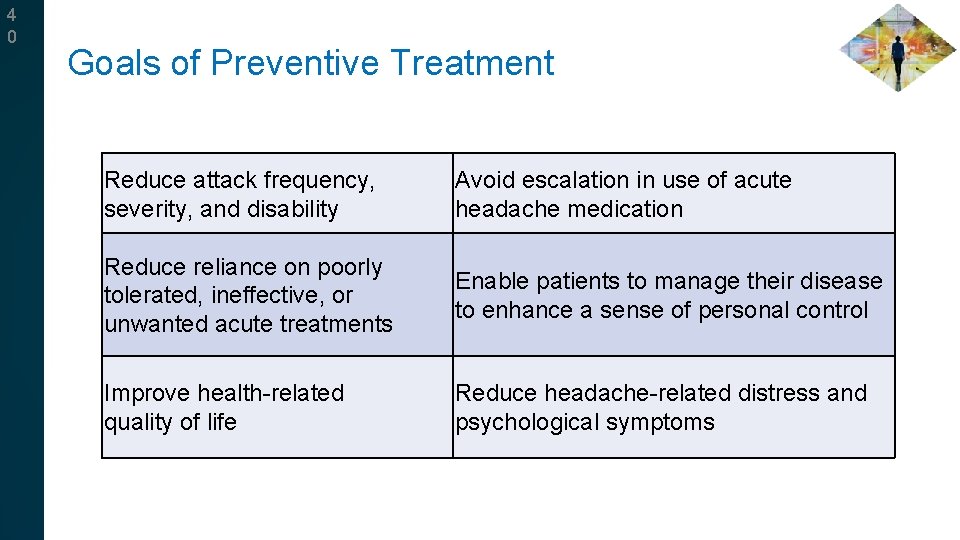
4 0 Goals of Preventive Treatment Reduce attack frequency, severity, and disability Avoid escalation in use of acute headache medication Reduce reliance on poorly tolerated, ineffective, or unwanted acute treatments Enable patients to manage their disease to enhance a sense of personal control Improve health-related quality of life Reduce headache-related distress and psychological symptoms
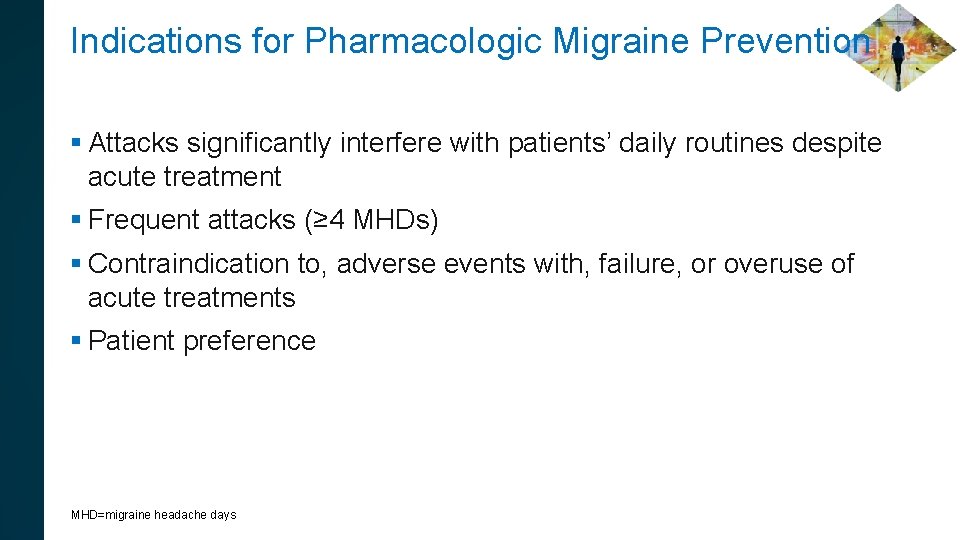
Indications for Pharmacologic Migraine Prevention § Attacks significantly interfere with patients’ daily routines despite acute treatment § Frequent attacks (≥ 4 MHDs) § Contraindication to, adverse events with, failure, or overuse of acute treatments § Patient preference MHD=migraine headache days
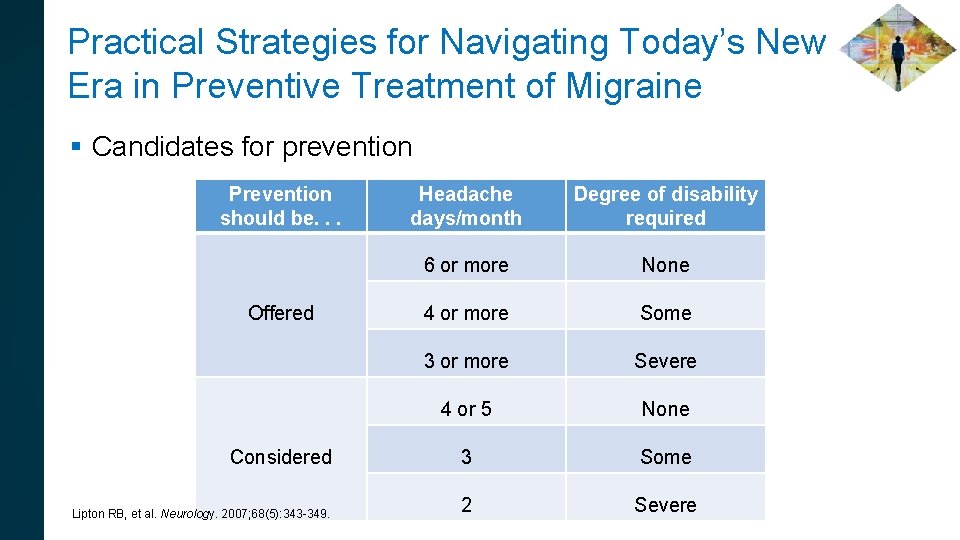
Practical Strategies for Navigating Today’s New Era in Preventive Treatment of Migraine § Candidates for prevention Prevention should be. . . Headache days/month Degree of disability required 6 or more None 4 or more Some 3 or more Severe 4 or 5 None Considered 3 Some Lipton RB, et al. Neurology. 2007; 68(5): 343 -349. 2 Severe Offered
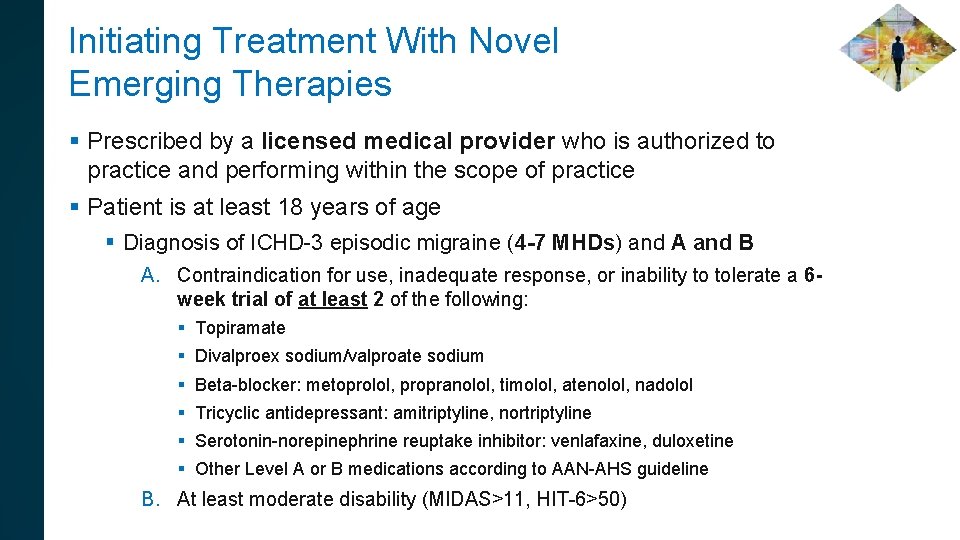
Initiating Treatment With Novel Emerging Therapies § Prescribed by a licensed medical provider who is authorized to practice and performing within the scope of practice § Patient is at least 18 years of age § Diagnosis of ICHD-3 episodic migraine (4 -7 MHDs) and A and B A. Contraindication for use, inadequate response, or inability to tolerate a 6 week trial of at least 2 of the following: § Topiramate § Divalproex sodium/valproate sodium § Beta-blocker: metoprolol, propranolol, timolol, atenolol, nadolol § Tricyclic antidepressant: amitriptyline, nortriptyline § Serotonin-norepinephrine reuptake inhibitor: venlafaxine, duloxetine § Other Level A or B medications according to AAN-AHS guideline B. At least moderate disability (MIDAS>11, HIT-6>50)
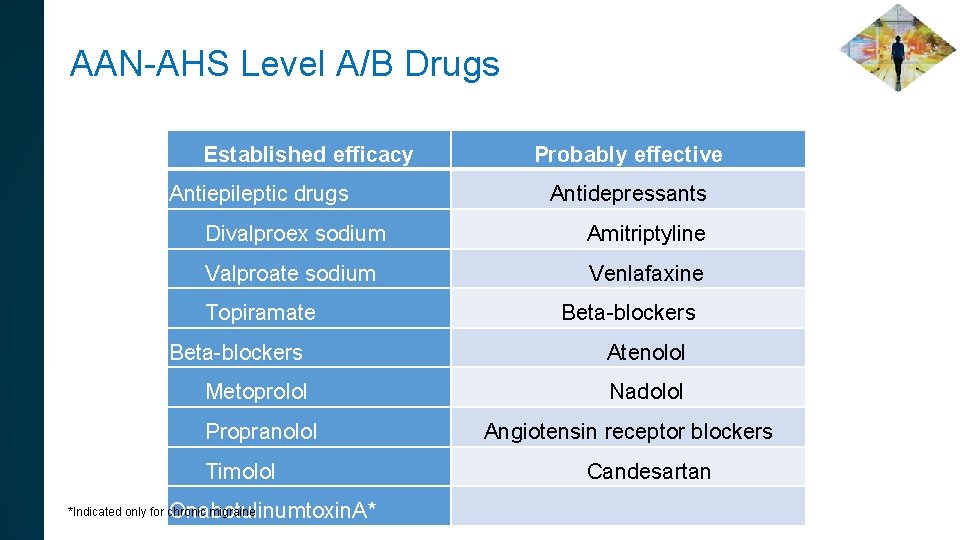
AAN-AHS Level A/B Drugs Established efficacy Antiepileptic drugs Probably effective Antidepressants Divalproex sodium Amitriptyline Valproate sodium Venlafaxine Topiramate Beta-blockers Atenolol Metoprolol Nadolol Propranolol Timolol Onabotulinumtoxin. A* *Indicated only for chronic migraine Angiotensin receptor blockers Candesartan
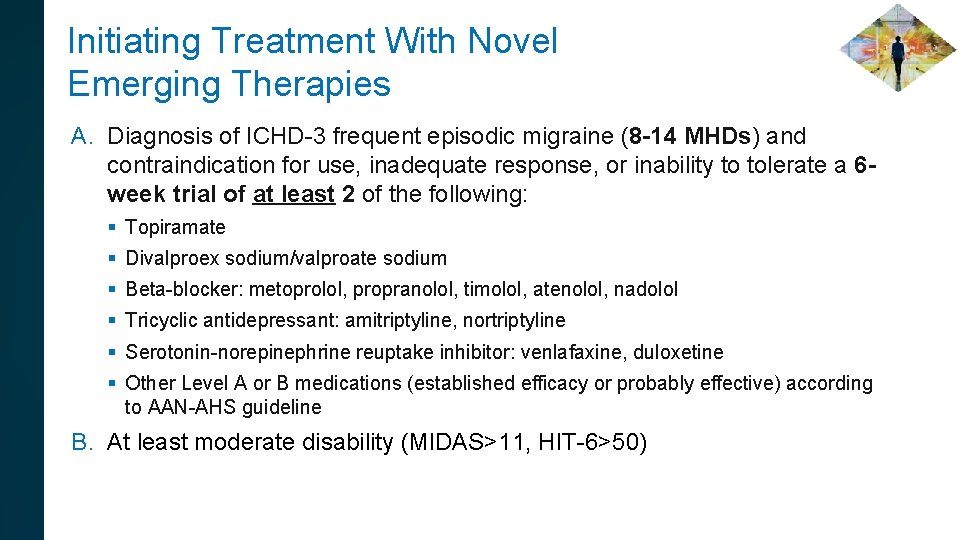
Initiating Treatment With Novel Emerging Therapies A. Diagnosis of ICHD-3 frequent episodic migraine (8 -14 MHDs) and contraindication for use, inadequate response, or inability to tolerate a 6 week trial of at least 2 of the following: § Topiramate § Divalproex sodium/valproate sodium § Beta-blocker: metoprolol, propranolol, timolol, atenolol, nadolol § Tricyclic antidepressant: amitriptyline, nortriptyline § Serotonin-norepinephrine reuptake inhibitor: venlafaxine, duloxetine § Other Level A or B medications (established efficacy or probably effective) according to AAN-AHS guideline B. At least moderate disability (MIDAS>11, HIT-6>50)
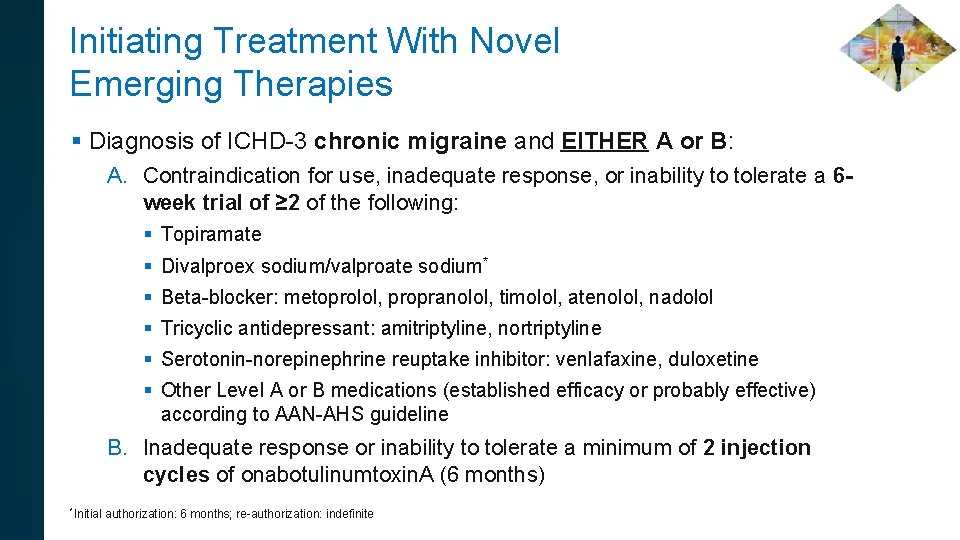
Initiating Treatment With Novel Emerging Therapies § Diagnosis of ICHD-3 chronic migraine and EITHER A or B: A. Contraindication for use, inadequate response, or inability to tolerate a 6 week trial of ≥ 2 of the following: § Topiramate § Divalproex sodium/valproate sodium* § Beta-blocker: metoprolol, propranolol, timolol, atenolol, nadolol § Tricyclic antidepressant: amitriptyline, nortriptyline § Serotonin-norepinephrine reuptake inhibitor: venlafaxine, duloxetine § Other Level A or B medications (established efficacy or probably effective) according to AAN-AHS guideline B. Inadequate response or inability to tolerate a minimum of 2 injection cycles of onabotulinumtoxin. A (6 months) *Initial authorization: 6 months; re-authorization: indefinite
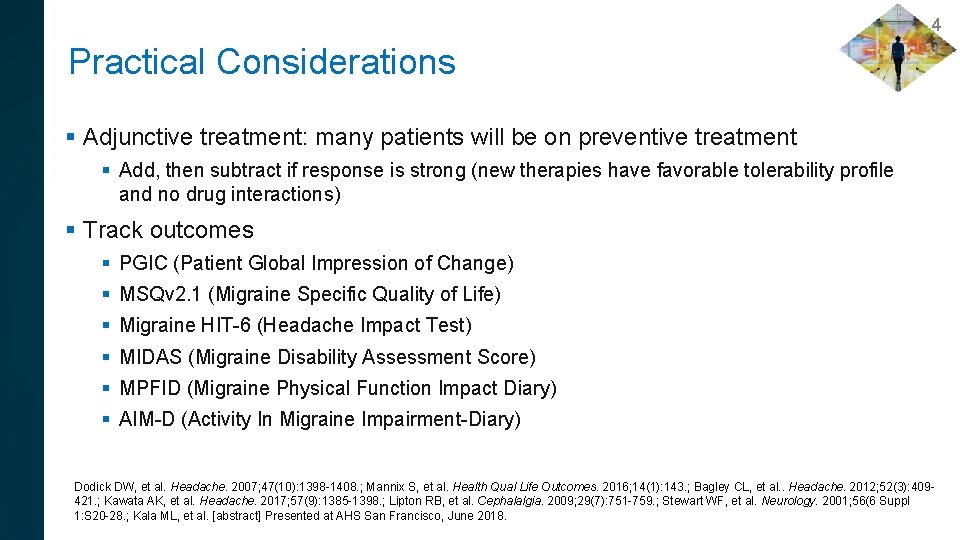
Practical Considerations 4 7 § Adjunctive treatment: many patients will be on preventive treatment § Add, then subtract if response is strong (new therapies have favorable tolerability profile and no drug interactions) § Track outcomes § PGIC (Patient Global Impression of Change) § MSQv 2. 1 (Migraine Specific Quality of Life) § Migraine HIT-6 (Headache Impact Test) § MIDAS (Migraine Disability Assessment Score) § MPFID (Migraine Physical Function Impact Diary) § AIM-D (Activity In Migraine Impairment-Diary) Dodick DW, et al. Headache. 2007; 47(10): 1398 -1408. ; Mannix S, et al. Health Qual Life Outcomes. 2016; 14(1): 143. ; Bagley CL, et al. . Headache. 2012; 52(3): 409421. ; Kawata AK, et al. Headache. 2017; 57(9): 1385 -1398. ; Lipton RB, et al. Cephalalgia. 2009; 29(7): 751 -759. ; Stewart WF, et al. Neurology. 2001; 56(6 Suppl 1: S 20 -28. ; Kala ML, et al. [abstract] Presented at AHS San Francisco, June 2018.
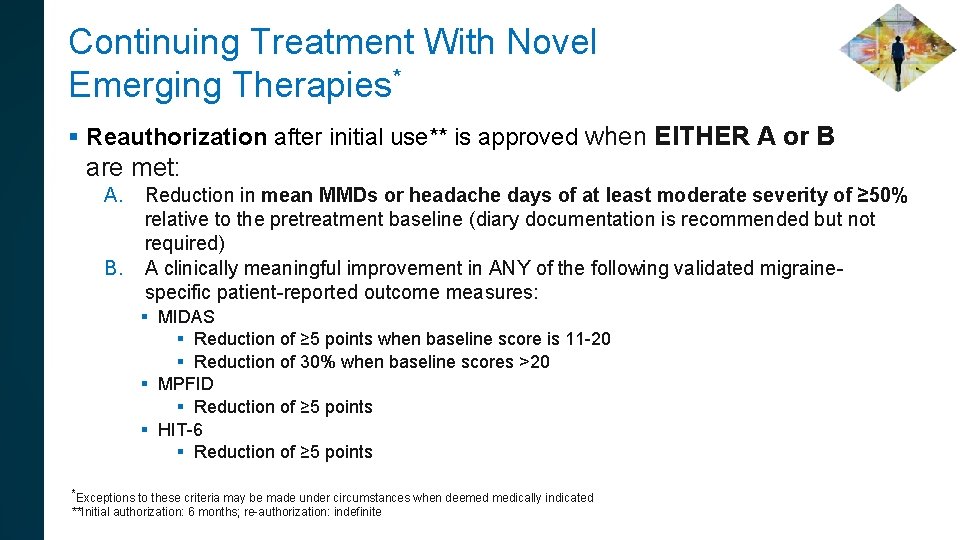
Continuing Treatment With Novel Emerging Therapies* § Reauthorization after initial use** is approved when EITHER A or B are met: A. B. Reduction in mean MMDs or headache days of at least moderate severity of ≥ 50% relative to the pretreatment baseline (diary documentation is recommended but not required) A clinically meaningful improvement in ANY of the following validated migrainespecific patient-reported outcome measures: § MIDAS § Reduction of ≥ 5 points when baseline score is 11 -20 § Reduction of 30% when baseline scores >20 § MPFID § Reduction of ≥ 5 points § HIT-6 § Reduction of ≥ 5 points *Exceptions to these criteria may be made under circumstances when deemed medically indicated **Initial authorization: 6 months; re-authorization: indefinite
- Slides: 48