
Provide Health Resources Healthy students are better learners
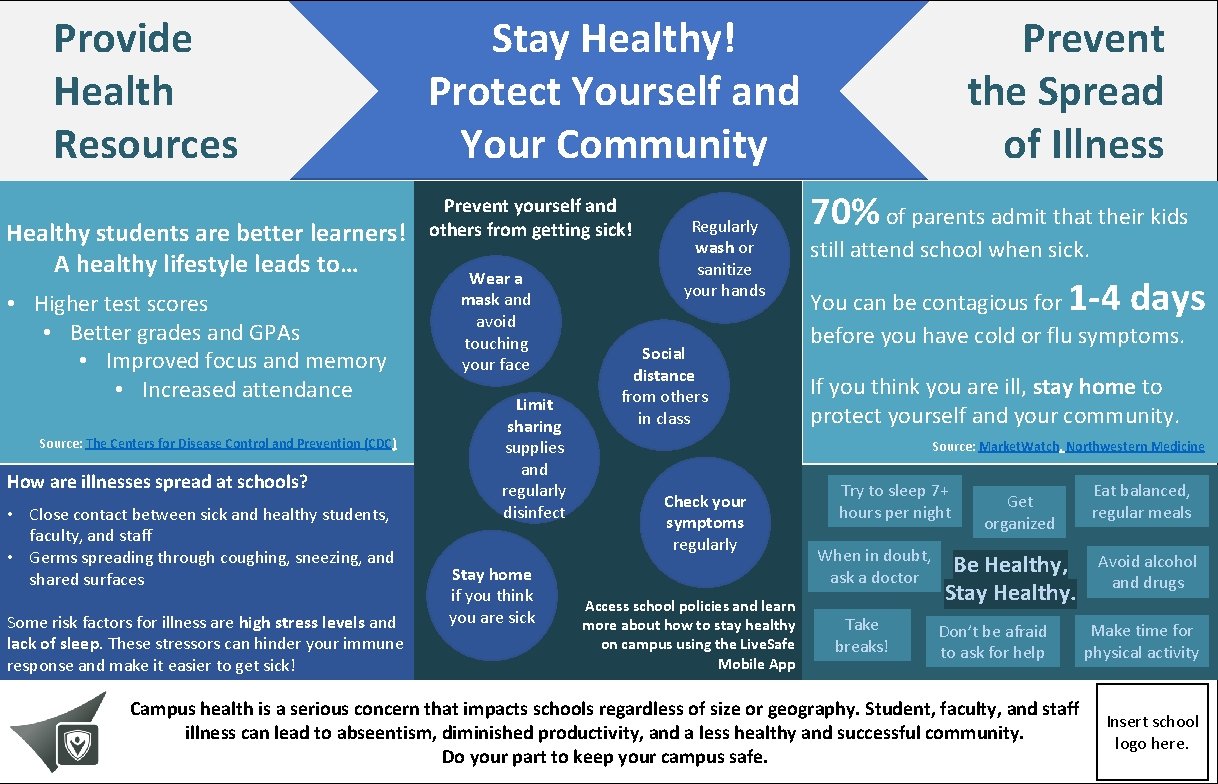
Provide Health Resources Healthy students are better learners! A healthy lifestyle leads to… • Higher test scores • Better grades and GPAs • Improved focus and memory • Increased attendance Source: The Centers for Disease Control and Prevention (CDC) How are illnesses spread at schools? • Close contact between sick and healthy students, faculty, and staff • Germs spreading through coughing, sneezing, and shared surfaces Some risk factors for illness are high stress levels and lack of sleep. These stressors can hinder your immune response and make it easier to get sick! Stay Healthy! Protect Yourself and Your Community Prevent yourself and others from getting sick! Wear a mask and avoid touching your face Limit sharing supplies and regularly disinfect Stay home if you think you are sick Regularly wash or sanitize your hands Social distance from others in class Prevent the Spread of Illness 70% of parents admit that their kids still attend school when sick. 1 -4 days You can be contagious for before you have cold or flu symptoms. If you think you are ill, stay home to Source: NSVRC Solutions protect yourself and your community. Source: Market. Watch, Northwestern Medicine Check your symptoms regularly Access school policies and learn more about how to stay healthy on campus using the Live. Safe Mobile App Try to sleep 7+ hours per night When in doubt, ask a doctor Take breaks! Get organized Eat balanced, regular meals Avoid alcohol Be Healthy, Are the victim of sexual and drugs violence other than rape Stay Healthy. Don’t be afraid to ask for help Campus health is a serious concern that impacts schools regardless of size or geography. Student, faculty, and staff illness can lead to abseentism, diminished productivity, and a less healthy and successful community. Do your part to keep your campus safe. Make time for physical activity Insert school logo here.
- Slides: 1