
Protozoans Chapter 8 Protozoans 5 Groups Flagellated Amoeboid
Protozoans Chapter 8
Protozoans � 5 Groups �Flagellated �Amoeboid �Foramanifera �Ciliates �Coccidea
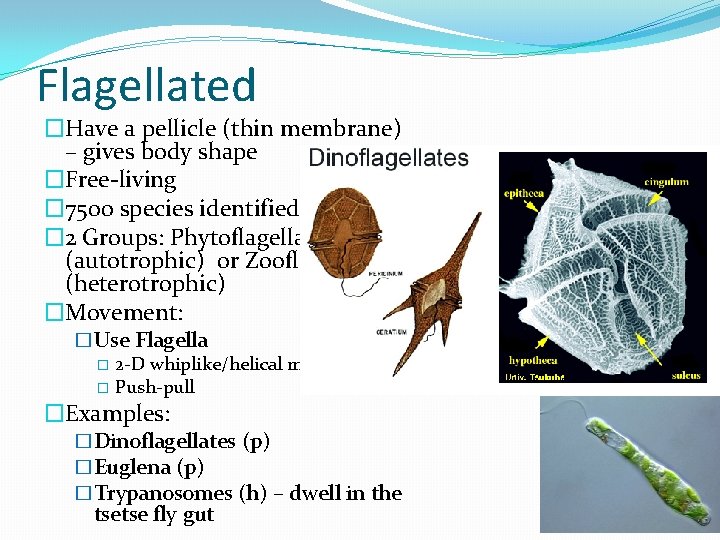
Flagellated �Have a pellicle (thin membrane) – gives body shape �Free-living � 7500 species identified � 2 Groups: Phytoflagellated (autotrophic) or Zooflagellated (heterotrophic) �Movement: �Use Flagella � 2 -D whiplike/helical movements � Push-pull �Examples: �Dinoflagellates (p) �Euglena (p) �Trypanosomes (h) – dwell in the tsetse fly gut
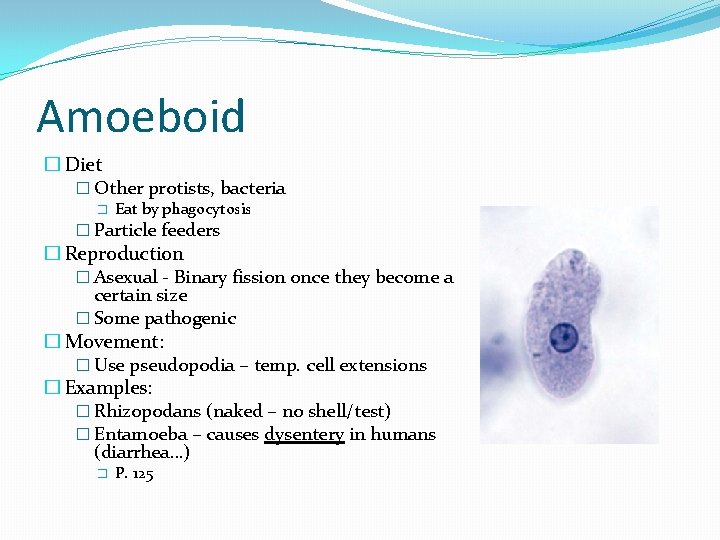
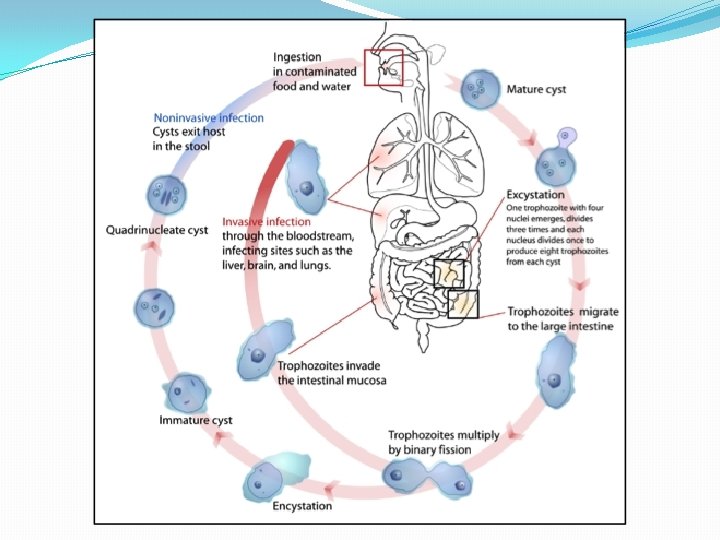
Amoeboid � Diet � Other protists, bacteria � Eat by phagocytosis � Particle feeders � Reproduction � Asexual - Binary fission once they become a certain size � Some pathogenic � Movement: � Use pseudopodia – temp. cell extensions � Examples: � Rhizopodans (naked – no shell/test) � Entamoeba – causes dysentery in humans (diarrhea…) � P. 125
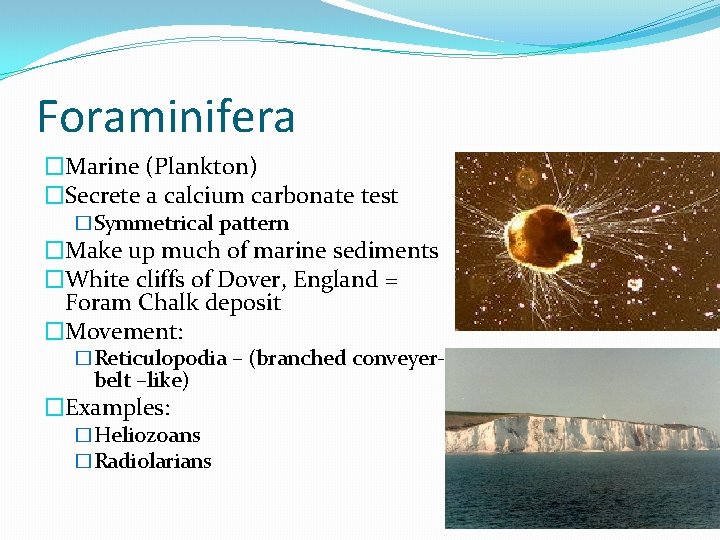
Foraminifera �Marine (Plankton) �Secrete a calcium carbonate test �Symmetrical pattern �Make up much of marine sediments �White cliffs of Dover, England = Foram Chalk deposit �Movement: �Reticulopodia – (branched conveyer- belt –like) �Examples: �Heliozoans �Radiolarians
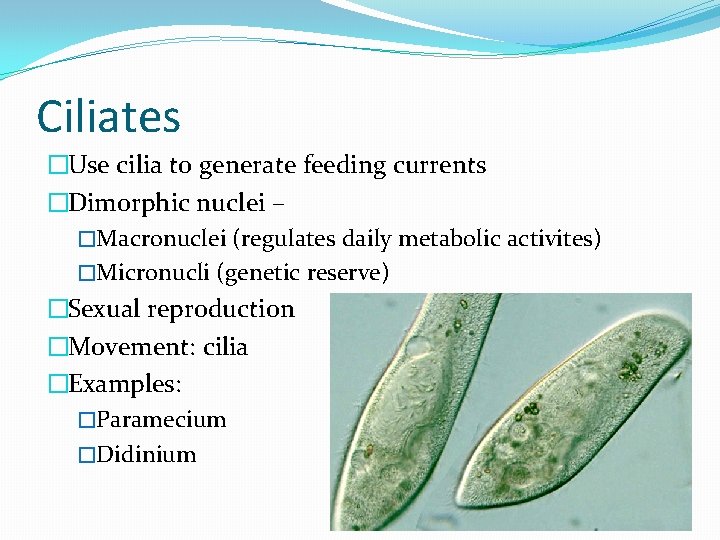
Ciliates �Use cilia to generate feeding currents �Dimorphic nuclei – �Macronuclei (regulates daily metabolic activites) �Micronucli (genetic reserve) �Sexual reproduction �Movement: cilia �Examples: �Paramecium �Didinium
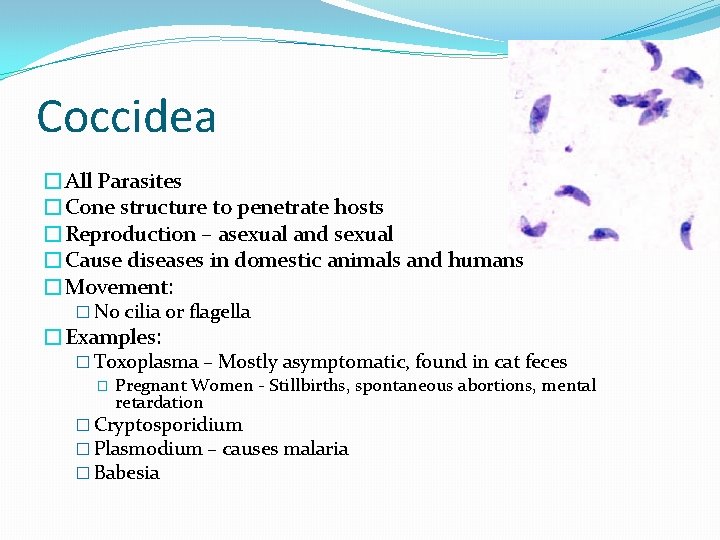
Coccidea �All Parasites �Cone structure to penetrate hosts �Reproduction – asexual and sexual �Cause diseases in domestic animals and humans �Movement: � No cilia or flagella �Examples: � Toxoplasma – Mostly asymptomatic, found in cat feces � Pregnant Women - Stillbirths, spontaneous abortions, mental retardation � Cryptosporidium � Plasmodium – causes malaria � Babesia
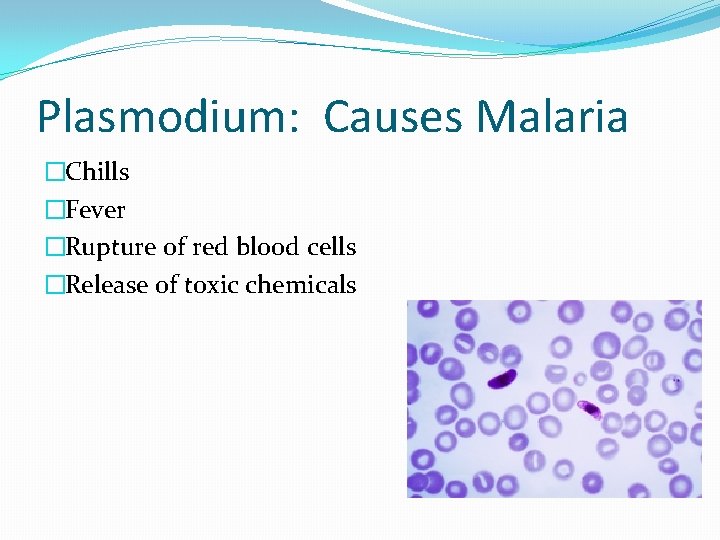
Plasmodium: Causes Malaria �Chills �Fever �Rupture of red blood cells �Release of toxic chemicals
- Slides: 9