
Protozoa Tamboli A Z Dept of zoology S
Protozoa Tamboli A. Z. Dept. of zoology, S. M. Joshi College, Hadapsar. F. Y. B. Sc.
General Characteristics • Single-celled or unicellular organisms; some live in colonies; • Size = microscopic (3 to 1, 000 microns). • No germ layers, tissues, or organs; • However, specialized intracellular "organelles" are present • Over 64, 000 species have been described; about 50, 000 are free-living
• Locomotion by pseudopodia, flagella, or cilia. • Symmetry = all types (bilateral, radial, spherical, or asymmetrical) • Free living, commensal, parasitic, or mutualistic • Mostly naked, but few have simple protective exoskeletons (tests), E. g. Arcella and Difflugia
• Nutrition = autotrophic (holophytic), saprozoic, saprophytic, or holozoic. • Reproduction: asexual = longitudinal and transverse binary fission, budding, multiple fission (sporogony, schizogony) • Sexual = syngamy, autogamy, conjugation
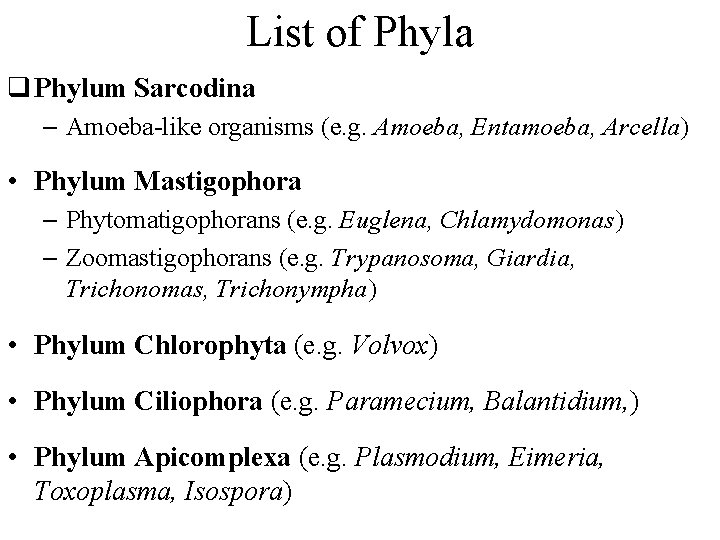
List of Phyla q Phylum Sarcodina – Amoeba-like organisms (e. g. Amoeba, Entamoeba, Arcella) • Phylum Mastigophora – Phytomatigophorans (e. g. Euglena, Chlamydomonas) – Zoomastigophorans (e. g. Trypanosoma, Giardia, Trichonomas, Trichonympha) • Phylum Chlorophyta (e. g. Volvox) • Phylum Ciliophora (e. g. Paramecium, Balantidium, ) • Phylum Apicomplexa (e. g. Plasmodium, Eimeria, Toxoplasma, Isospora)
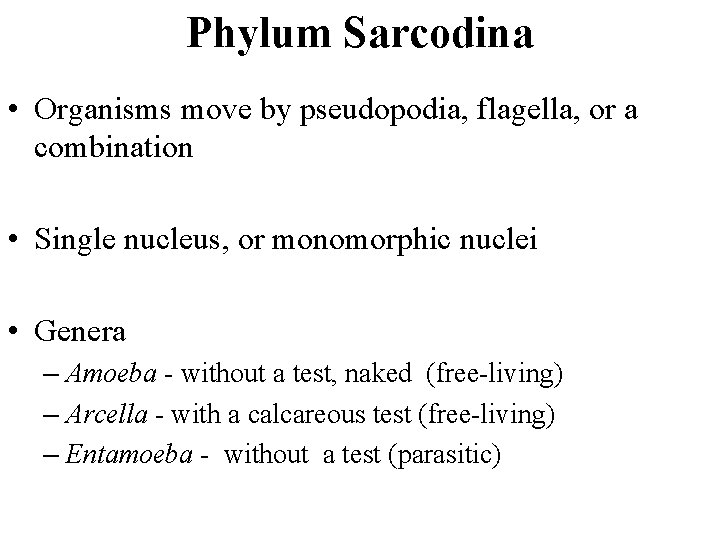
Phylum Sarcodina • Organisms move by pseudopodia, flagella, or a combination • Single nucleus, or monomorphic nuclei • Genera – Amoeba - without a test, naked (free-living) – Arcella - with a calcareous test (free-living) – Entamoeba - without a test (parasitic)
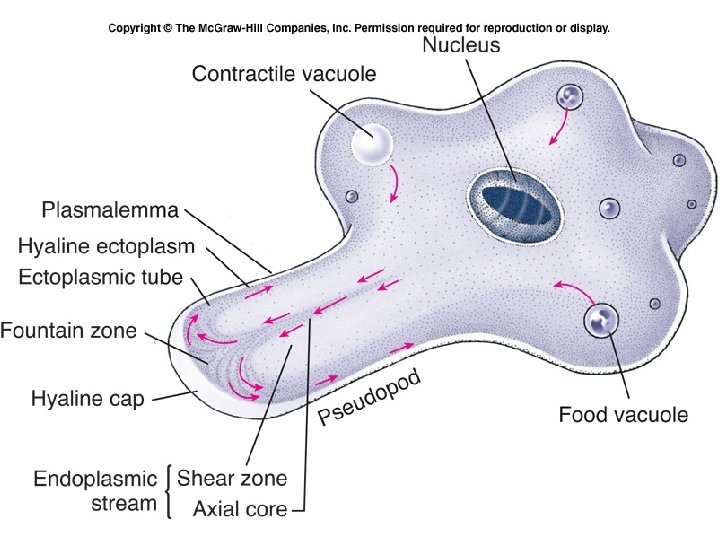
Figure 11. 10
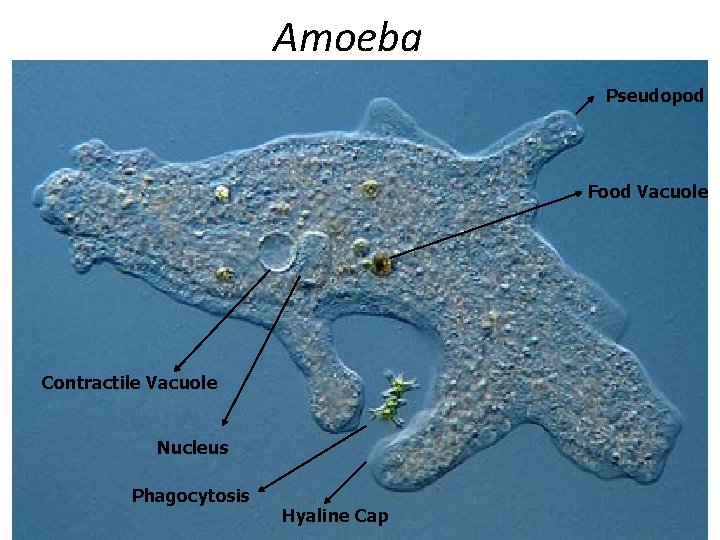
Amoeba Pseudopod Food Vacuole Contractile Vacuole Nucleus Phagocytosis Hyaline Cap
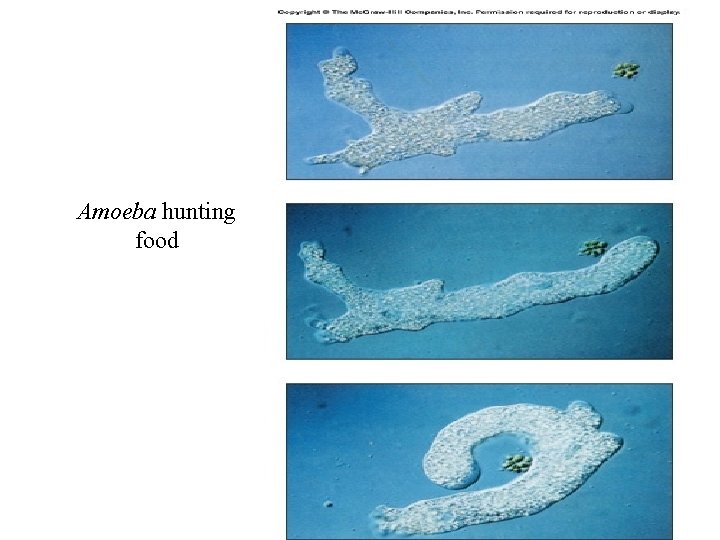
Amoeba hunting food
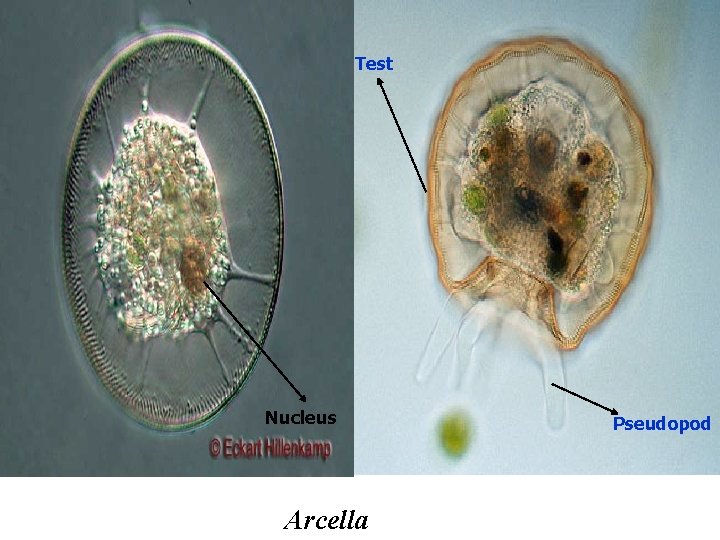
Arcella Test Nucleus Arcella Pseudopod
Subphylum Euglenoidea • Plant like organisms; photosynthesis • Solitary • Symmetry is usually bilateral • Presence of stigma for light detection
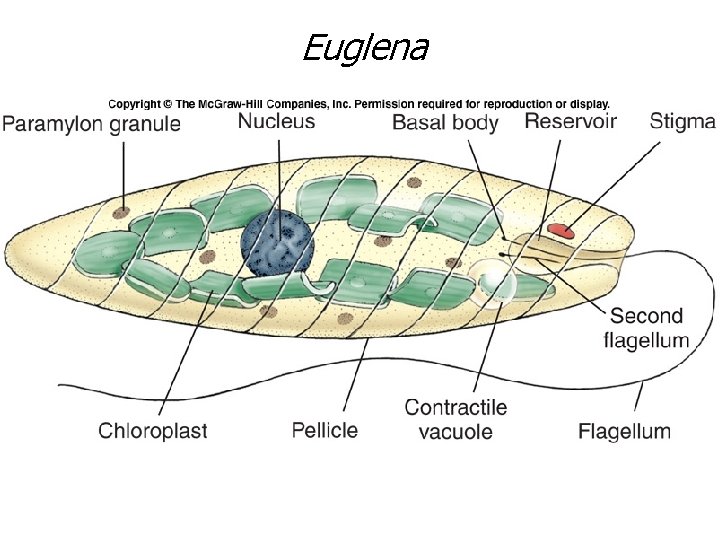
Euglena
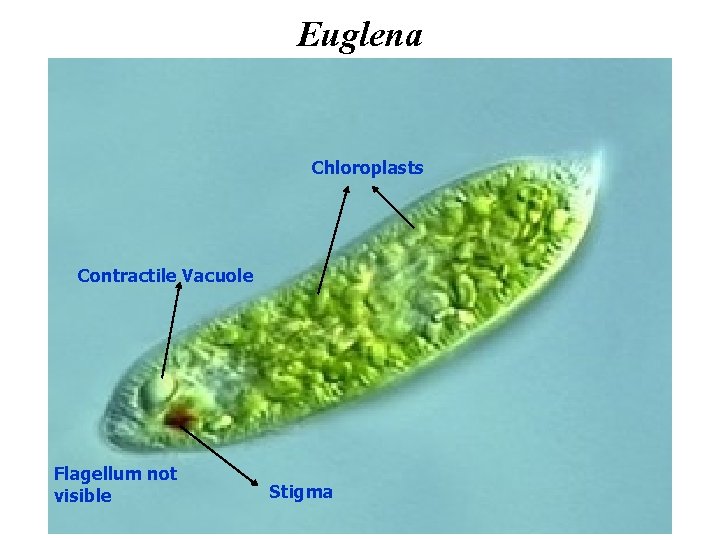
Euglena Chloroplasts Contractile Vacuole Flagellum not visible Stigma
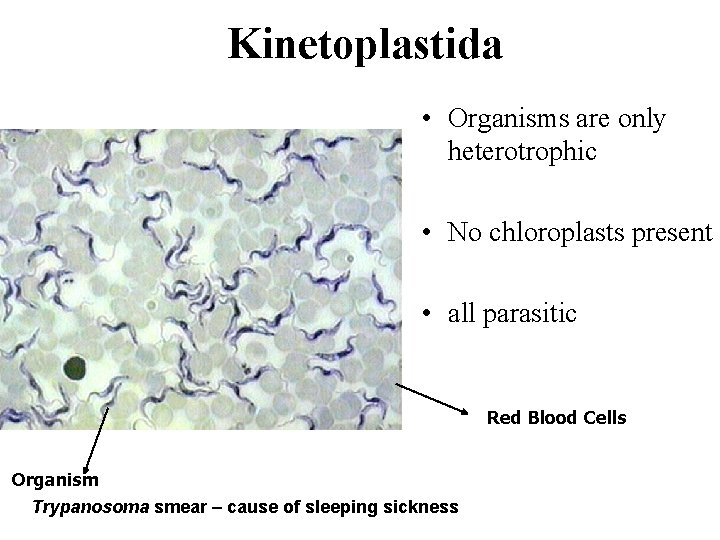
Kinetoplastida • Organisms are only heterotrophic • No chloroplasts present • all parasitic Red Blood Cells Organism Trypanosoma smear – cause of sleeping sickness
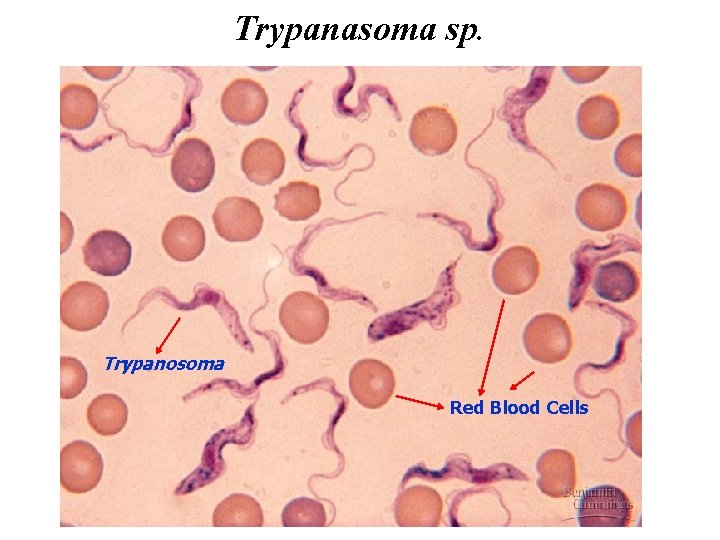
Trypanasoma sp. Trypanosoma Red Blood Cells
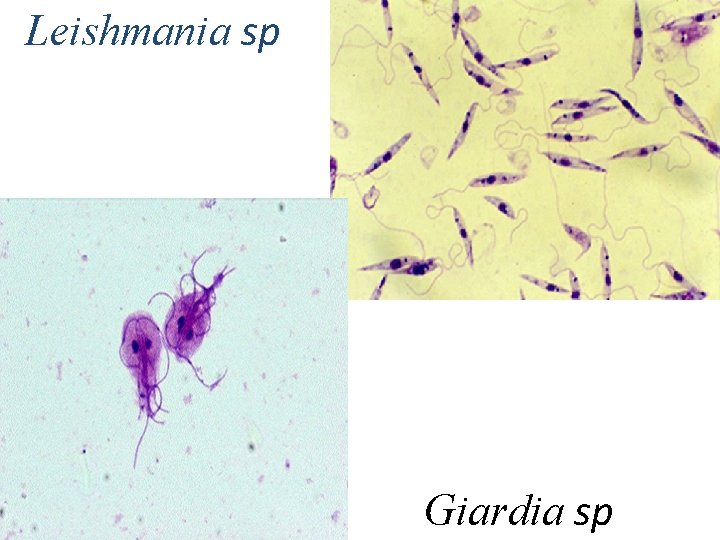
Leishmania sp Giardia sp
Phylum Chlorophyta • Flagellated single or colonial organisms • All members are autotrophic, chloroplasts with chlorophyll • Genetically different from Euglenozoa
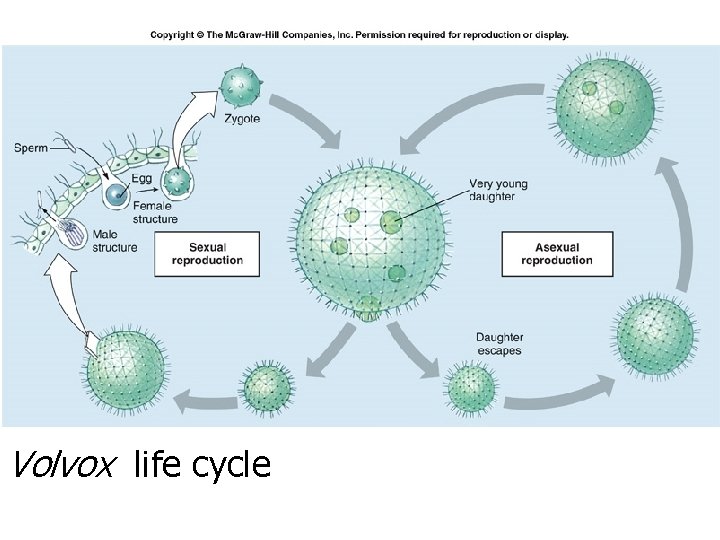
Volvox life cycle
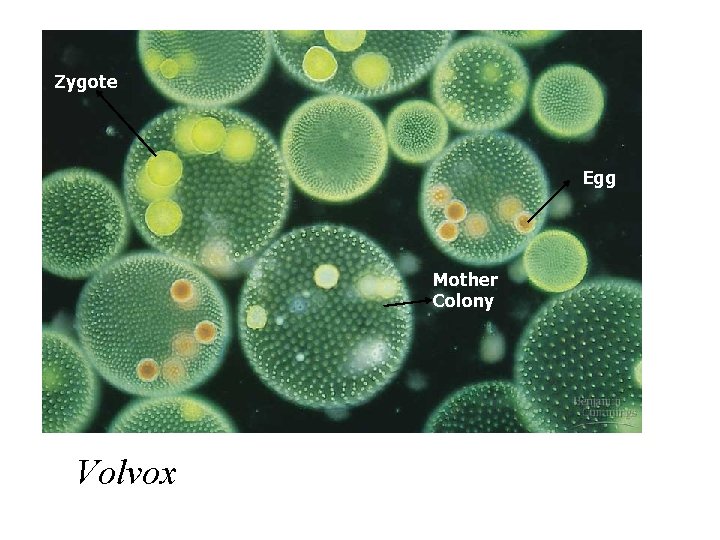
Zygote Egg Mother Colony Volvox
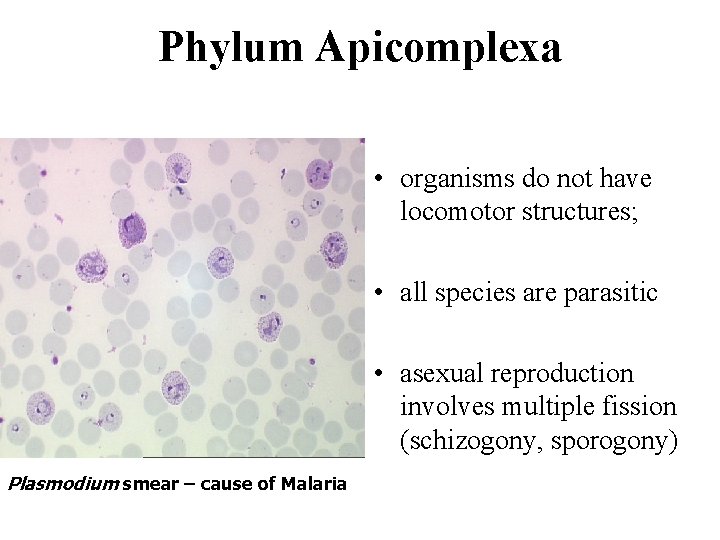
Phylum Apicomplexa • organisms do not have locomotor structures; • all species are parasitic • asexual reproduction involves multiple fission (schizogony, sporogony) Plasmodium smear – cause of Malaria
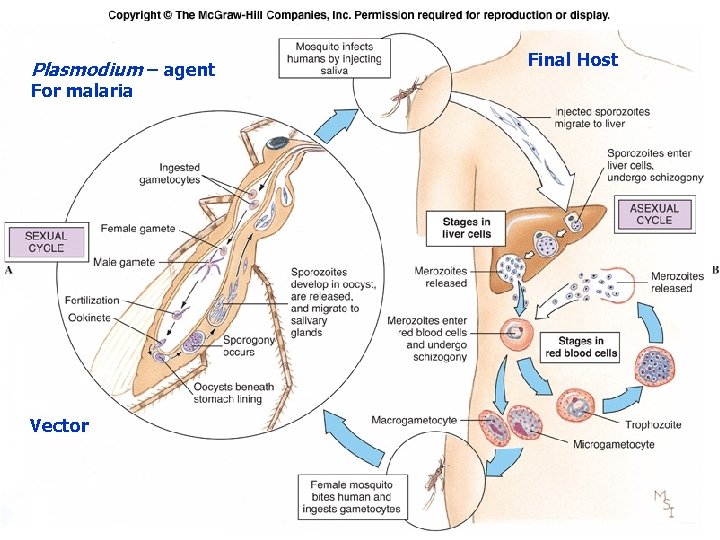
Plasmodium – agent For malaria Vector Final Host
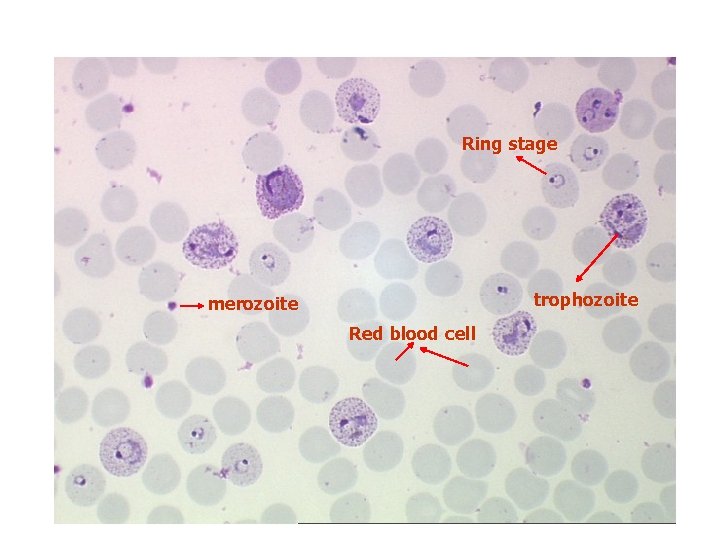
Ring stage trophozoite merozoite Red blood cell Trophozooite
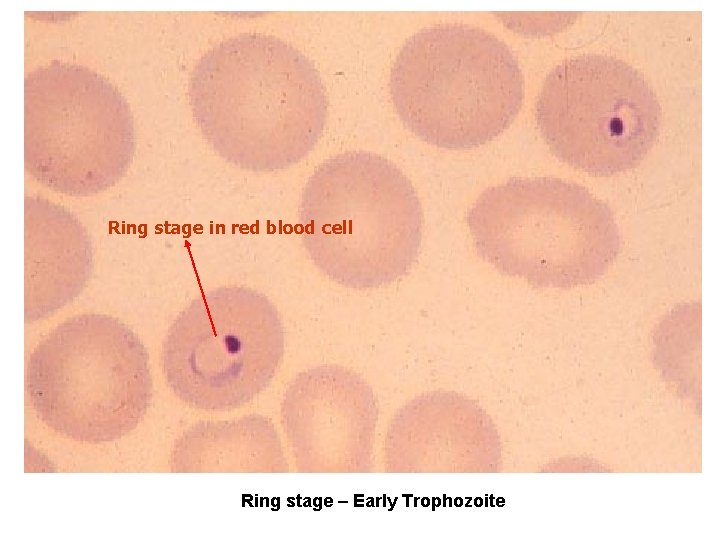
Ring stage in red blood cell Ring stage – Early Trophozoite
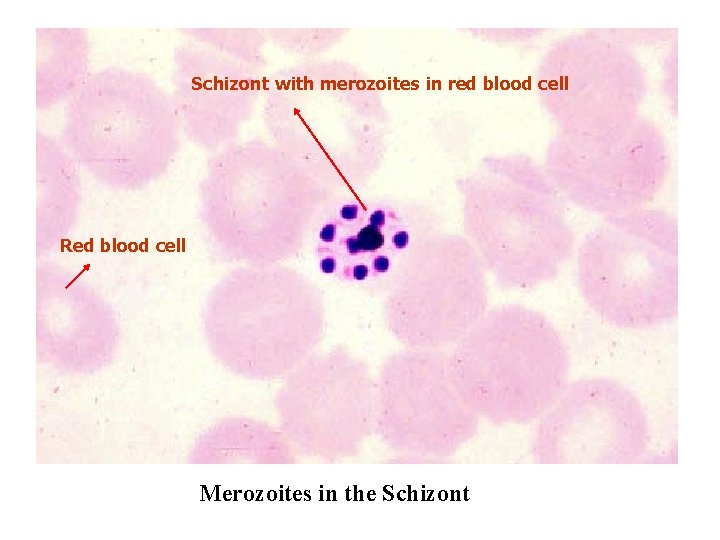
Schizont with merozoites in red blood cell Red blood cell Merozoites in the Schizont
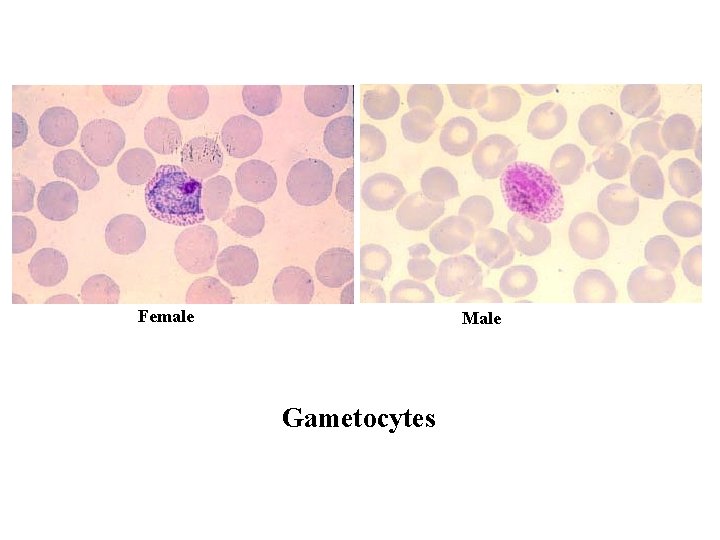
Female Male Gametocytes
Phylum Ciliophora: The Ciliates • Organisms move by cilia • Usually two sizes of nuclei ; Macronucleus and micronucleus • Reproduction usually by transverse binary fission • Sexual reproduction by conjugation
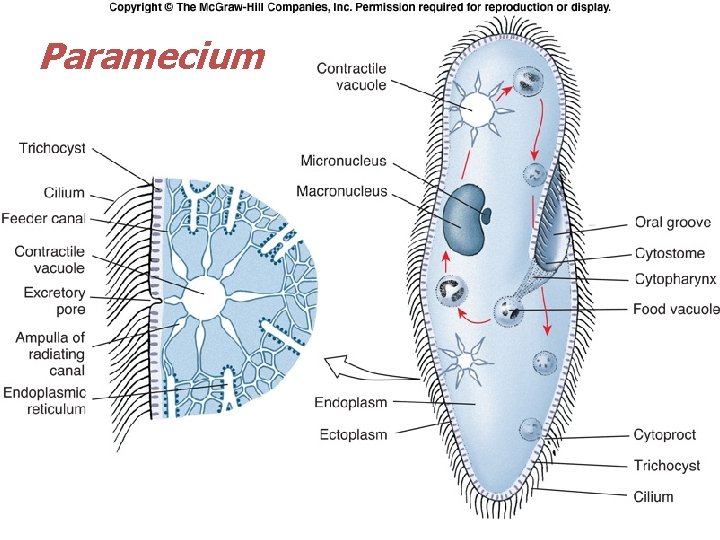
Paramecium
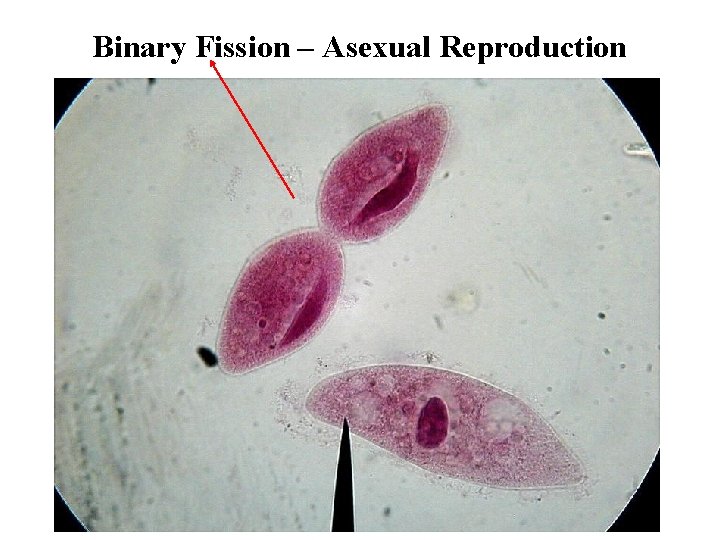
Binary Fission – Asexual Reproduction
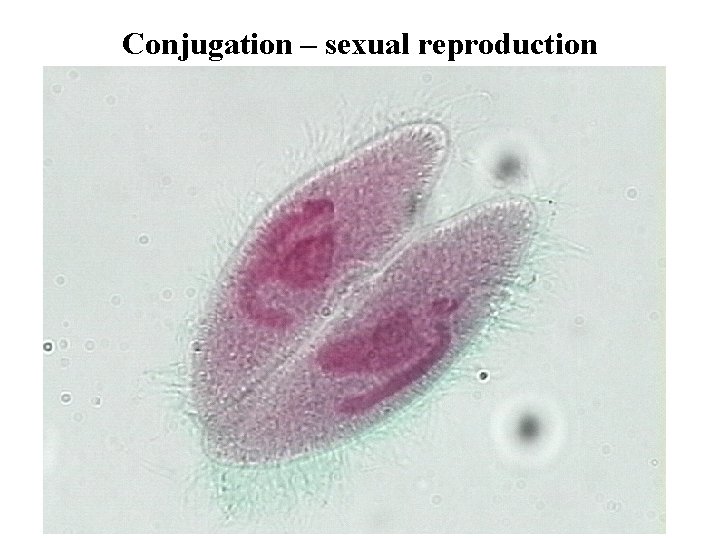
Conjugation – sexual reproduction
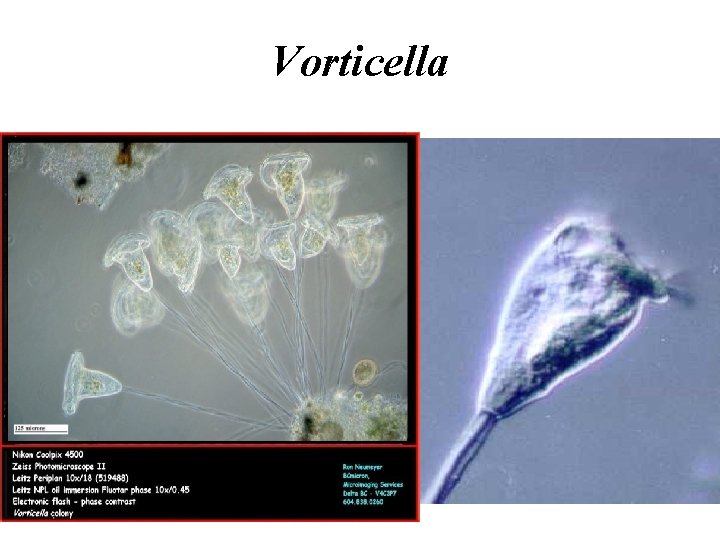
Vorticella
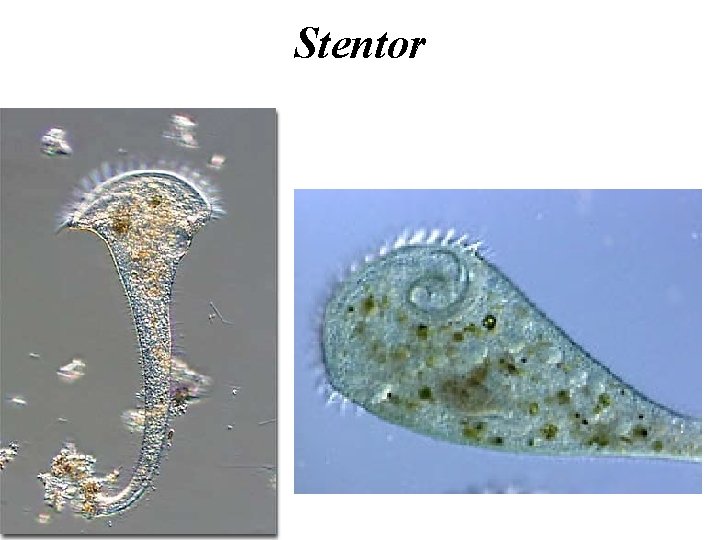
Stentor
Protozoa: Ecological Importance • Unicellular level of organization • Highly specialized organelles for various physiological processes • Prominent members of the aquatic food chain, especially detritivores and • Symbiosis is highly developed among members i. e. Commensals, parasites, mutuals, and detritivores with multicellular organisms
- Slides: 32