
Prototyping What Why and How Emma J Rose
- Slides: 31
Prototyping: What? Why? and How? Emma J. Rose UW Technical Communication Emma J. Rose - UWTC
Today we’ll talk about What is a prototype n Why and how prototypes are used n How this applies to you n Some examples n n …and, if time permits, we’ll build a prototype Emma J. Rose - UWTC
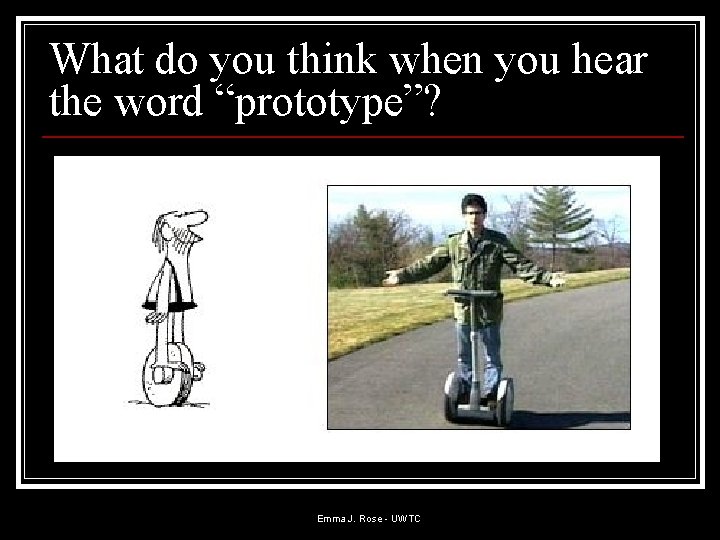
What do you think when you hear the word “prototype”? Emma J. Rose - UWTC
What is a prototype An original … what other forms will be developed from n A physical model n A design of some part (or entire) system n Emma J. Rose - UWTC
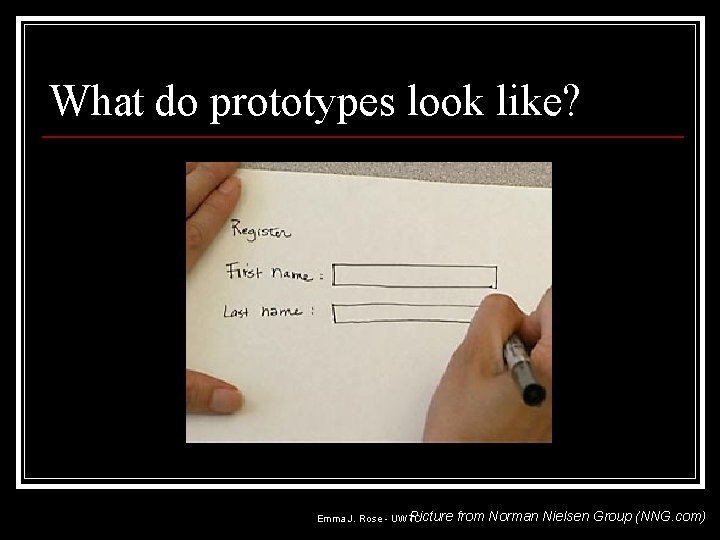
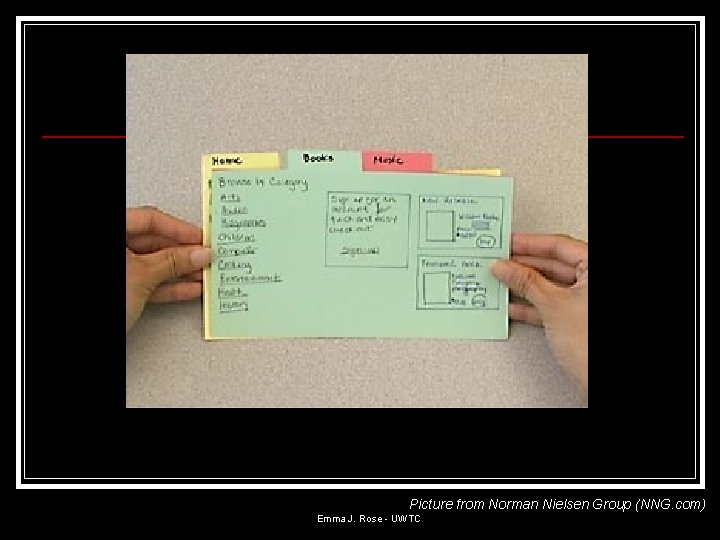
What do prototypes look like? They are “mock ups” n Rough drafts or sketched of a design n Can be just a drawing or have extended functionality n A work in progress n Emma J. Rose - UWTC
We use prototypes all the time n User-centered design (UCD) n n n Is a philosophy and an approach to creating products and processes Puts the user in the center of the design decisions Usability n n Is an essential part of UCD Helps evaluate a product to see if it’s working Emma J. Rose - UWTC
Why do we use prototypes? To get a sense of how a product will work n Identify essential features or components n Have something to evaluate early on n And…. n Emma J. Rose - UWTC
Why else do we use prototypes? Helps you from going in the wrong direction n A cheap way to do it! n Let’s you make changes quickly, try something new without being tied down. n Emma J. Rose - UWTC
According to Jakob Nielsen Cheaper to change a product early than later in the development process n Common estimate is that it's 100 times cheaper to make a change before any code has been written n Emma J. Rose - UWTC
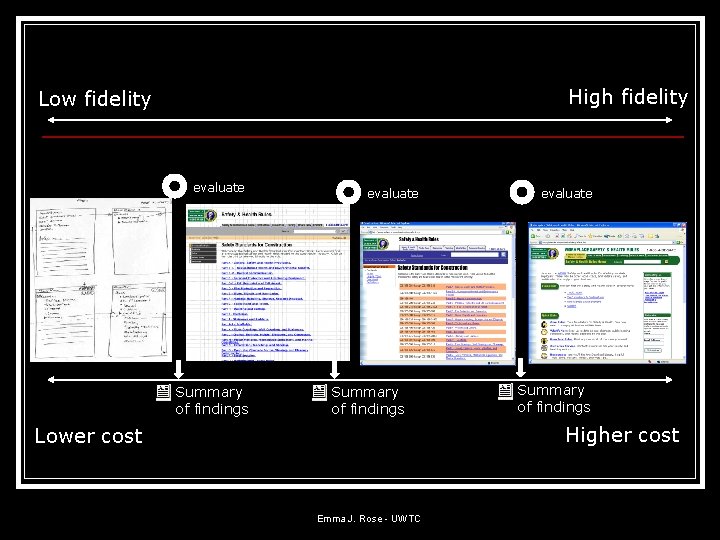
How are prototypes used Throughout the design process n Help design and evaluate a product along the way n Moves from simple to more complex: this is called fidelity n Emma J. Rose - UWTC
Fidelity n n n How detailed a mock up is How close to being “done” Low - Paper Medium - Visio, Power. Point, Word High - Programming can include full functionality Emma J. Rose - UWTC
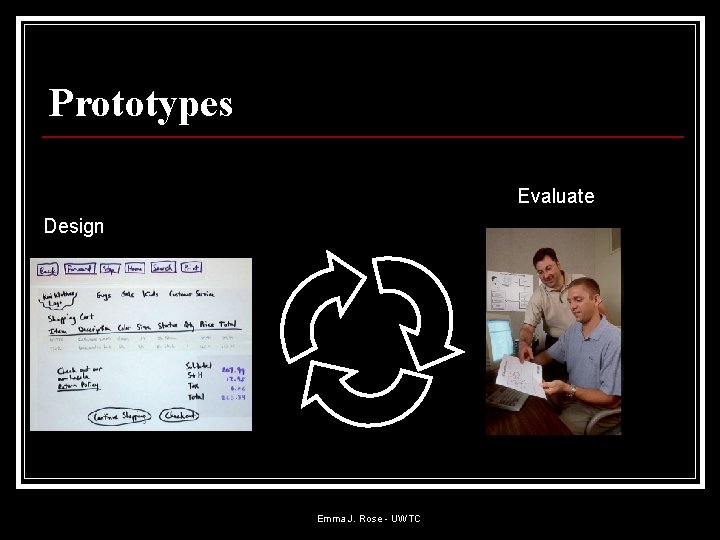
Prototypes Evaluate Design Emma J. Rose - UWTC
High fidelity Low fidelity evaluate Summary of findings Higher cost Lower cost Emma J. Rose - UWTC
What do prototypes look like? Picture Emma J. Rose - UWTC from Norman Nielsen Group (NNG. com)
Picture from Norman Nielsen Group (NNG. com) Emma J. Rose - UWTC
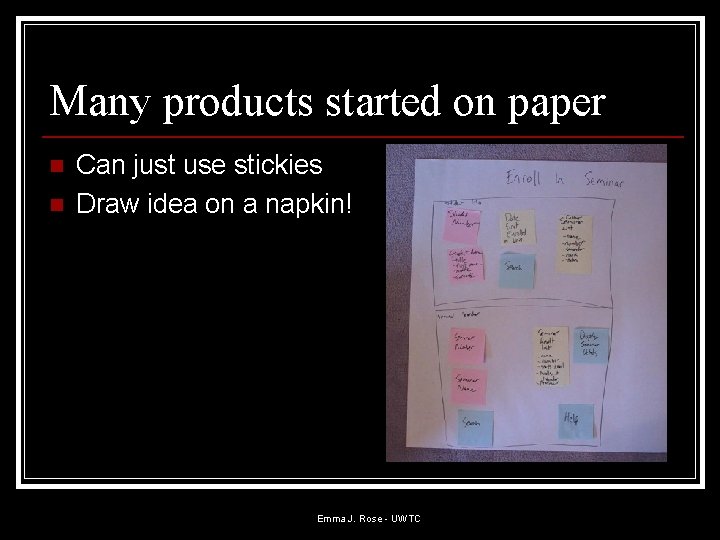
Many products started on paper n n Can just use stickies Draw idea on a napkin! Emma J. Rose - UWTC
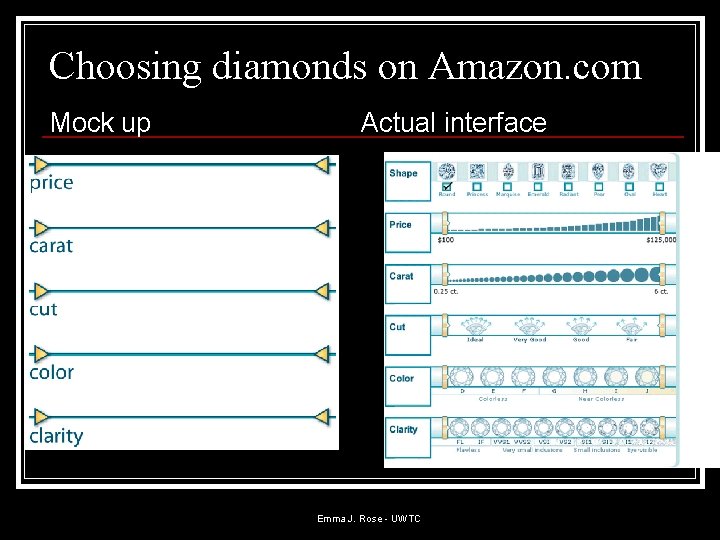
Choosing diamonds on Amazon. com Mock up Actual interface Emma J. Rose - UWTC
How do we evaluate prototypes? n Similarly to how we evaluate any product n An essential element to user-centered design…. . n We do usability studies! Emma J. Rose - UWTC
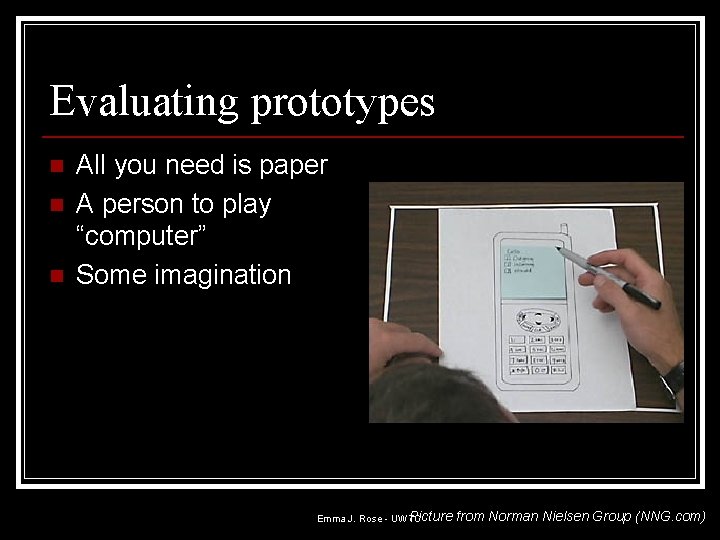
Evaluating prototypes n n n All you need is paper A person to play “computer” Some imagination Picture Emma J. Rose - UWTC from Norman Nielsen Group (NNG. com)
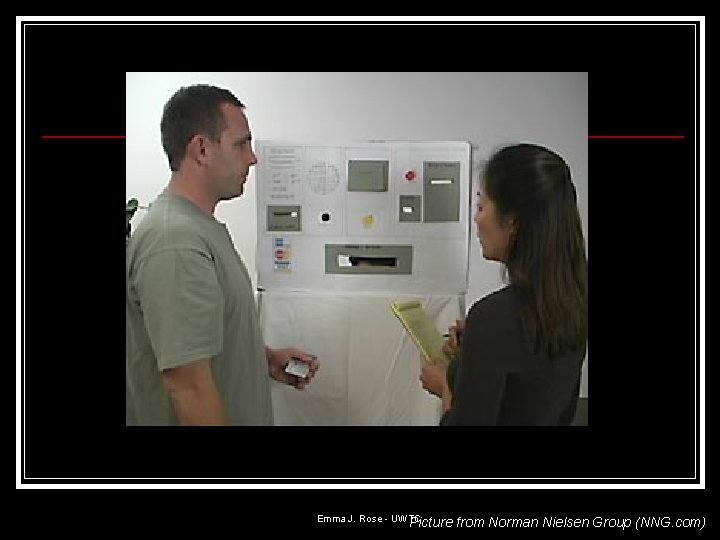
Emma J. Rose - UWTC Picture from Norman Nielsen Group (NNG. com)
Objections you may hear I can’t use a prototype, my product is too complex! n How will people know what the system is doing? It needs to be coded so it’s interactive. n How can we evaluate a paper version? Users will think it’s silly. n Emma J. Rose - UWTC
How we respond No product is too complex! Think of it from a user’s perspective. You can think just screen to screen. n An evaluation can be interactive, someone plays the computer and simulates interactivity n Users are willing to go along! They pretend it is real product. n Emma J. Rose - UWTC
How this applies to you n The Make it Better assignment n When you suggest a redesign, it is helpful to provide visual elements n n n Consider creating a prototype You can evaluate it with real users You will have data about what works and what doesn’t Gives you an aid to talk about what you changed and why All design is iterative…this is why you can “Make it Better” Emma J. Rose - UWTC
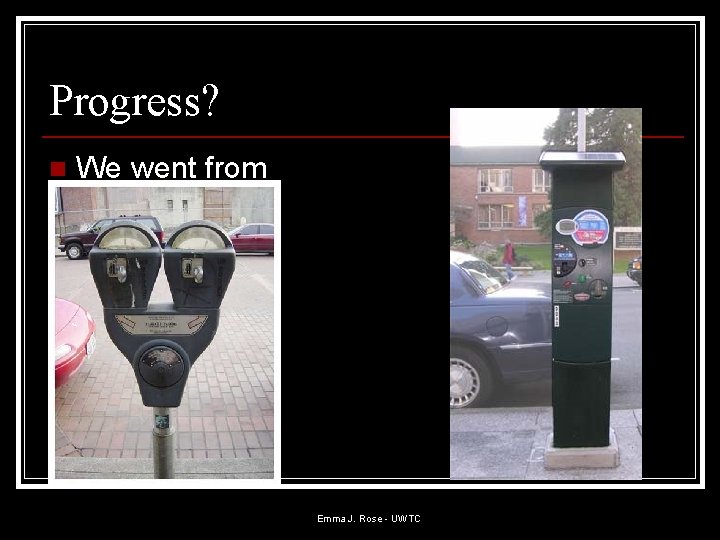
In class activity How many people drive in Seattle? n How about park? n n n What’s hard about parking? How about after you park? Emma J. Rose - UWTC
Progress? n We went from Emma J. Rose - UWTC
Design scenario The city of Tacoma has hired you to create new digital parking meters n After doing some research, they like some aspects of the Seattle digital meters: n n n Solar powered Send data to a central location Let users pay with credit card However… Emma J. Rose - UWTC
They don’t like the design! Your task: Design an interface for a parking meter n It should: n n n Allow use of Credit cards, cash: bills and coins Be easy to use Not required lots of instructions on the design itself Use paper and pencil or pen Emma J. Rose - UWTC
Debrief n What was easy or hard about the exercise? n What would you do next before pitching the design to the City of Tacoma? n What are some extra bonuses of doing a prototype? Emma J. Rose - UWTC
If you want to learn more n About Paper Prototyping n n Paper Prototyping by Carolyn Snyder Jakob Nielsen’s article on Useit. com Emma J. Rose - UWTC
If you want to learn more about n User centered design and usability n n n Coordinated study: Offered Spring 2006 Meets evenings and weekends 3 linked courses: n n Theory of Human Computer Interaction User Experience Design Usability Research Methods You get to design a product and evaluate it. Emma J. Rose - UWTC
Thanks for your time! Questions? n Email n n Me: ejrose@u. washington. edu TC advisor: knappy@u. washington. edu Pick up a brochure n See the website n n http: //www. uwtc. washington. edu/programs/certs/ coordstudy. php Emma J. Rose - UWTC