
Prototyping In The Software Process Prepared by J
Prototyping In The Software Process Prepared by, J Stella Janci Rani Assistant Professor Department of Computer Science Sarah Tucker College Tirunelveli 7
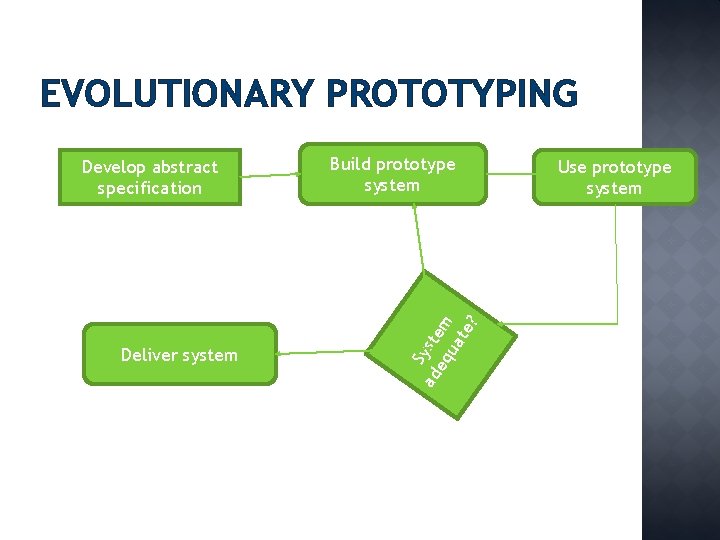
EVOLUTIONARY AND THROW AWAY PROTOTYPING � This means giving the user a system which is incomplete and then modifying and agumenting is as the user requirements become clear. � Evolutionary prototyping starts with a relatively simple system which implements the most important user requirements. This is augmented and changed as new requirements are discovered.
EVOLUTIONARY PROTOTYPING � Evolutionary prototyping is based on the idea of developing initial implementation exposing this to user comment and refining this through many stages until an adequate system has been developed. � This approach to development was used initially for those systems which are difficult or impossible to specify.
ADVANTAGES � Accelerated delivery of the system as I discussed in the introduction to the book the pace of business change means that it is essential that software support is made available quickly. � User engagement with the system the involvement of users with the development process does not just mean that the system is more likely to meet their requirements.
EVOLUTIONARY PROTOTYPING Deliver system Build prototype system S ad yste eq m ua te ? Develop abstract specification Use prototype system
THROW AWAY PROTOTYPING � Approach extends the requirements analysis process with the intention of reducing overall life cycle costs. The principal function of the prototype is to clarify requirements and provide additional information for managers to assess process risks. � This approach to system prototype is commonly used to check the design before expensive commitments to manufacturing the system have been made. � A throw away software prototype is not normally used for design validation but to help develop the system requirements.
- Slides: 6