
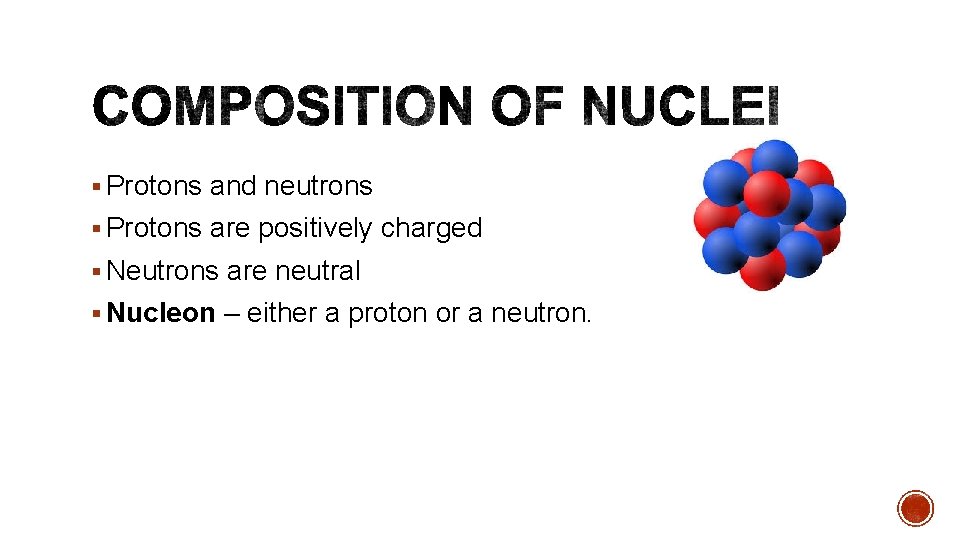
Protons and neutrons Protons are positively charged Neutrons
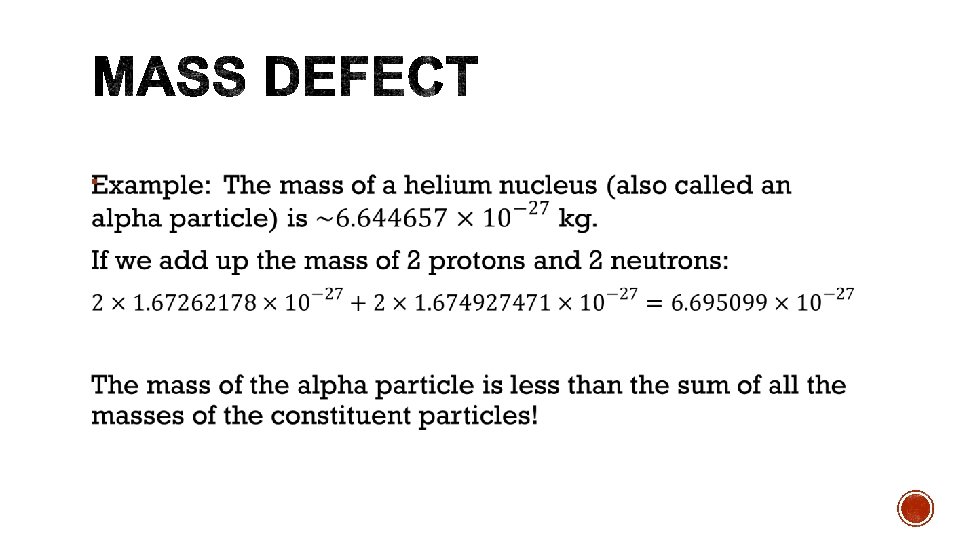
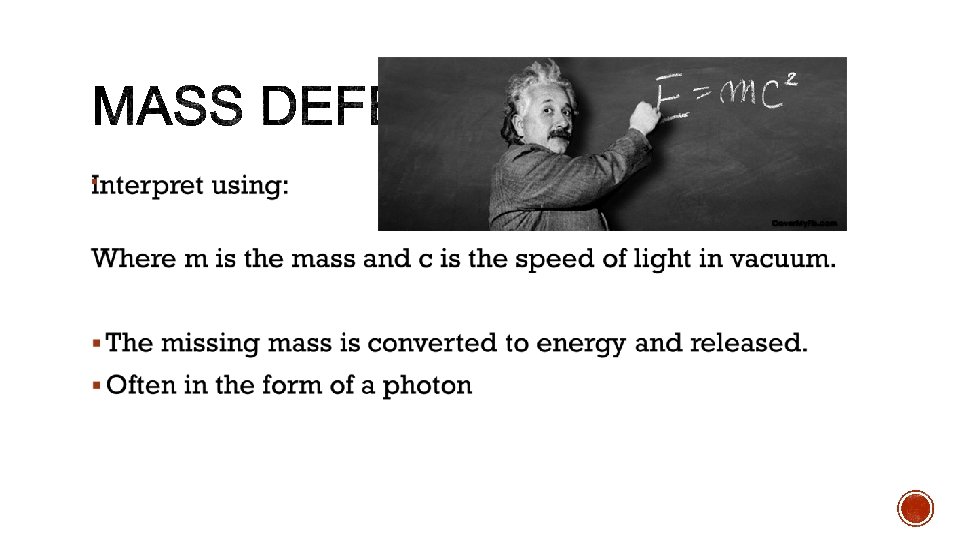
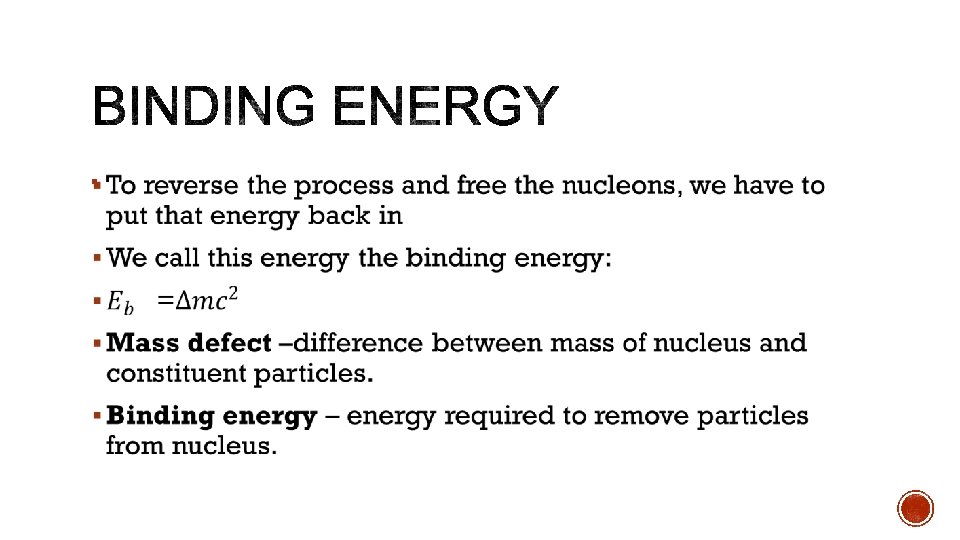
- Slides: 26
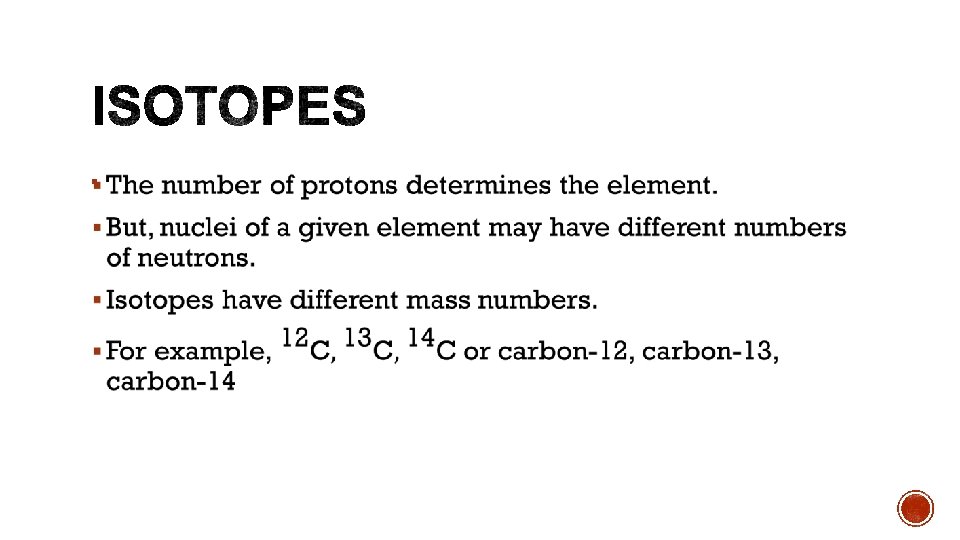
§ Protons and neutrons § Protons are positively charged § Neutrons are neutral § Nucleon – either a proton or a neutron.
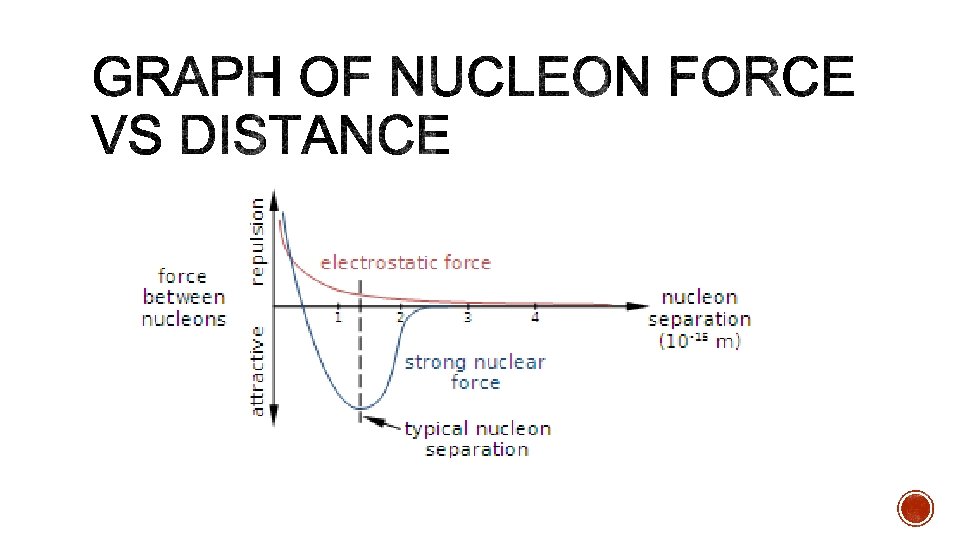
§ Protons repel due to the electrostatic force. § What then stops the nucleus from exploding? § The nuclear force is an attractive force that acts between nucleons. § Also called the strong nuclear force, this force acts over a short range. § Neutrons in the nucleus act to shield the protons from each other and strengthen the attractive force.
§ Have the same outer electronic structure § Hence they are chemically identical.
§ Download at: http: //tinyurl. com/mbtpcmt § Have a play § For each element find: § The most abundant isotope § Least abundant, stable isotope
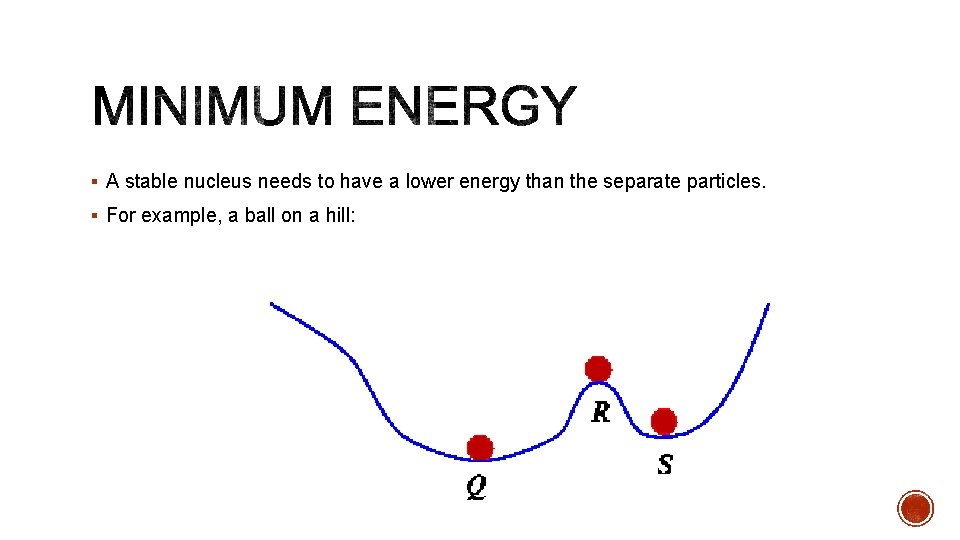
§ A stable nucleus needs to have a lower energy than the separate particles. § For example, a ball on a hill:
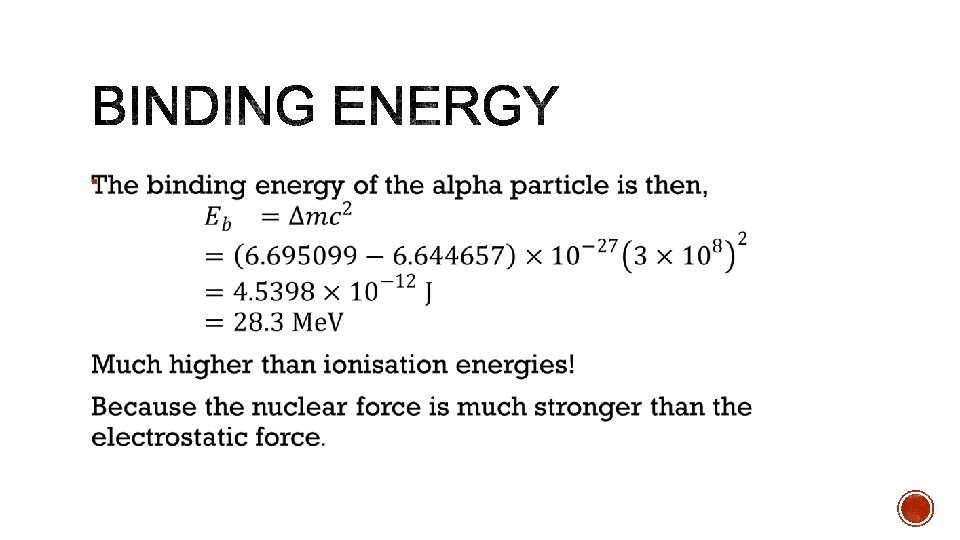
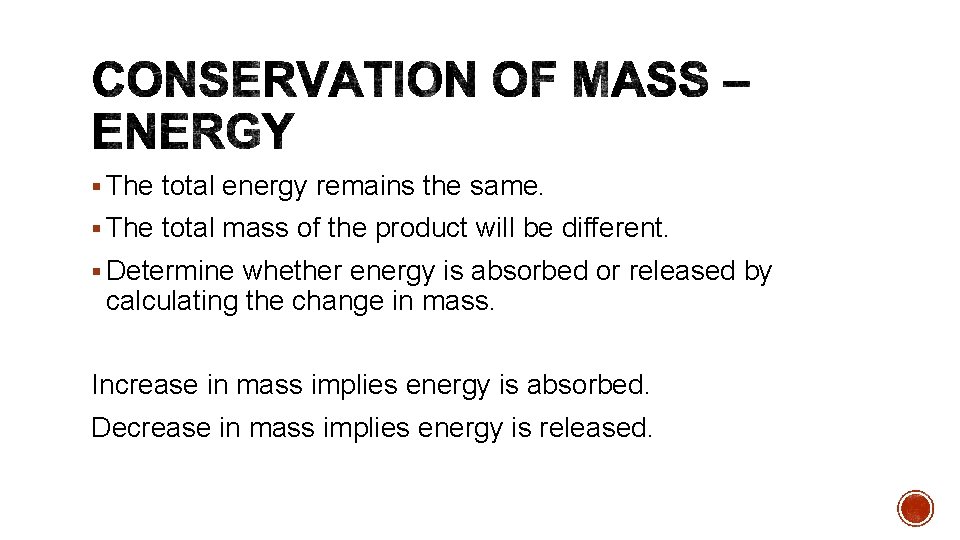
§ The total energy remains the same. § The total mass of the product will be different. § Determine whether energy is absorbed or released by calculating the change in mass. Increase in mass implies energy is absorbed. Decrease in mass implies energy is released.
§ Radioisotopes - the isotopes of an element that are radioactive. § Such nuclei are unstable and will emit particles and electromagnetic radiation. Two main uses of medical radioisotopes: § Diagnostic tool in imaging, for example in PET scans § Therapeutic techniques, where radiation is used to damage certain cells
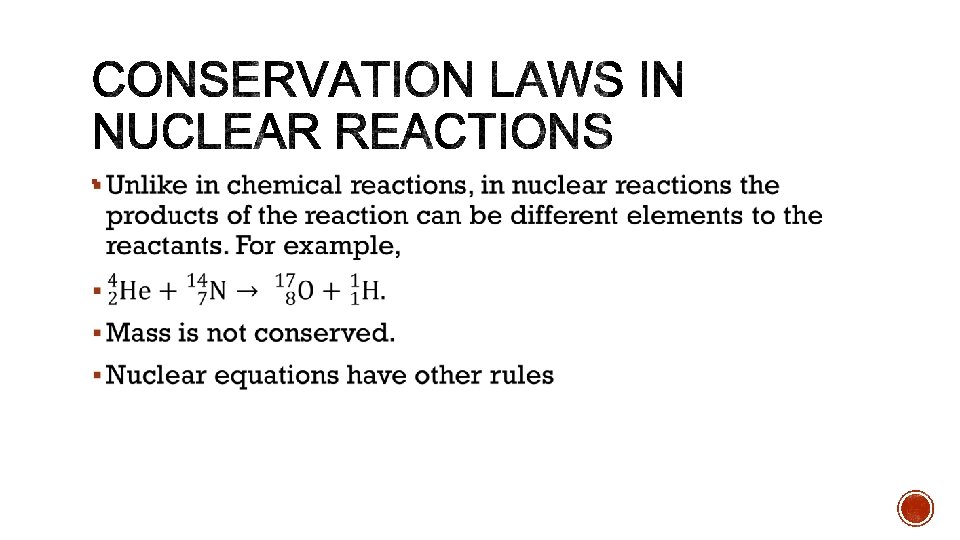
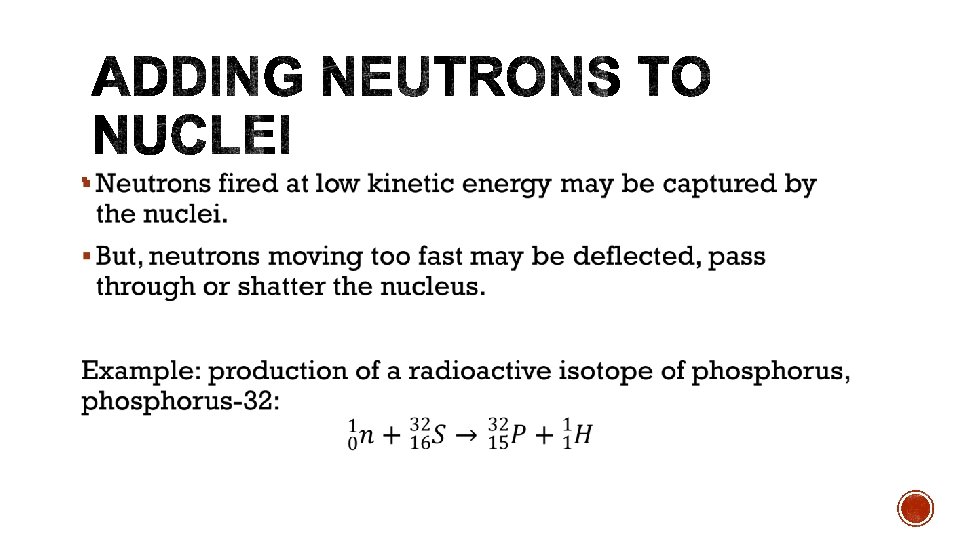
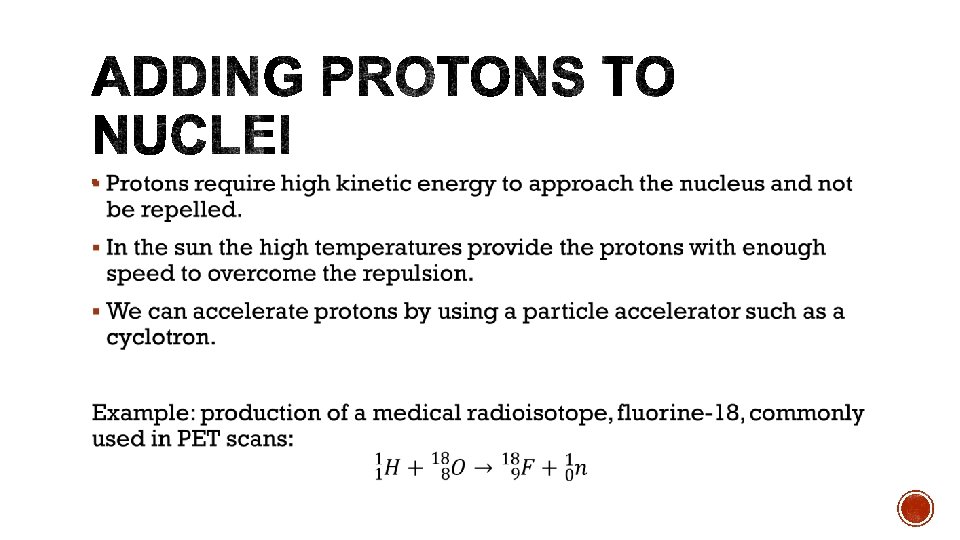
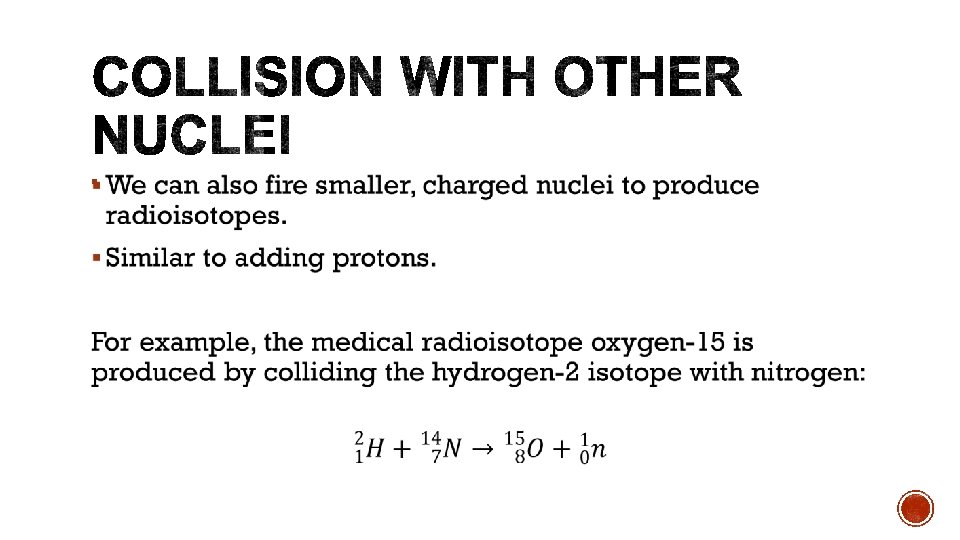
§ There a few techniques for producing radioisotopes. § A nuclei can gain protons or neutrons or both. § Addition of neutrons produces isotopes of the same element. § Addition of protons will change the type of element.
§ As radioisotopes are not stable, the mass defect of the reaction is often negative, indicating that energy must be absorbed. § This energy can be supplied by the kinetic energy of the collision particle. § The kinetic energy of the collision particle must be greater than the binding energy in order for conservation of momentum to hold. § If the kinetic energy is equal to the binding energy, then the products would have no momentum.