
Proton Pump Inhibitors AND THE IMPACT ON CLOSTRIDIUM
Proton Pump Inhibitors AND THE IMPACT ON CLOSTRIDIUM DIFFICLE Farah Jn Baptiste & Rachel Randall
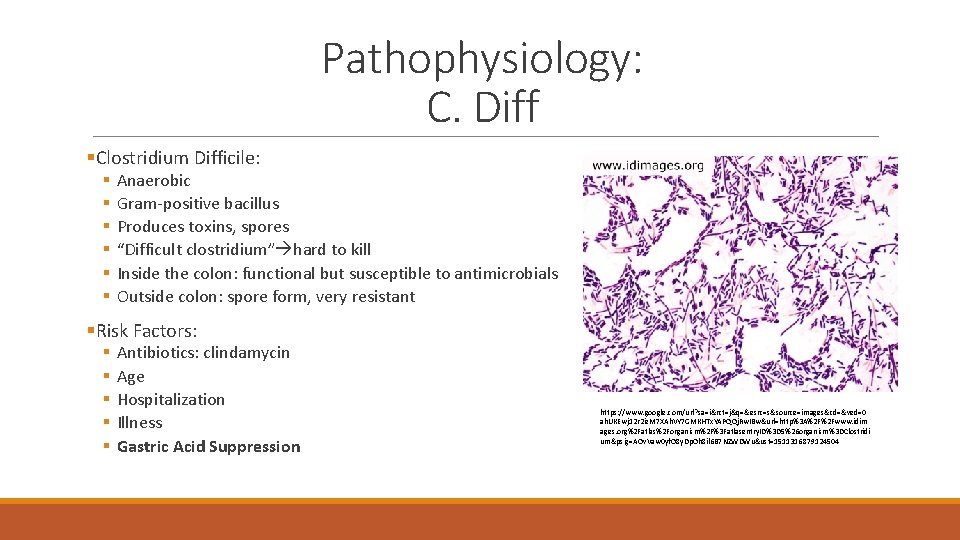
Pathophysiology: C. Diff §Clostridium Difficile: § § § Anaerobic Gram-positive bacillus Produces toxins, spores “Difficult clostridium” hard to kill Inside the colon: functional but susceptible to antimicrobials Outside colon: spore form, very resistant §Risk Factors: § § § Antibiotics: clindamycin Age Hospitalization Illness Gastric Acid Suppression https: //www. google. com/url? sa=i&rct=j&q=&esrc=s&source=images&cd=&ved=0 ah. UKEwj 12 r 2 iz. M 7 XAh. VY 7 GMKHTx. YAPQQj. Rw. IBw&url=http%3 A%2 F%2 Fwww. idim ages. org%2 Fatlas%2 Forganism%2 F%3 Fatlasentry. ID%3 D 5%26 organism%3 DClostridi um&psig=AOv. Vaw 0 yf. O 8 y. Dp. Oh 8 il 6 B 7 NZWDWu&ust=1511316879124504
Symptoms, Diagnosis, and Treatment §Diarrhea: very watery stool §Fever §Diagnosis: if more than 3 loose stools in 24 hrs, send stool sample to test for C. Difficle toxins §Abdominal Pain §Treatment: §Leukocytosis §May have blood in stool §Endoscopy: inflammation of the mucosa of the colon § Oral vancomycin § Oral metronidazole
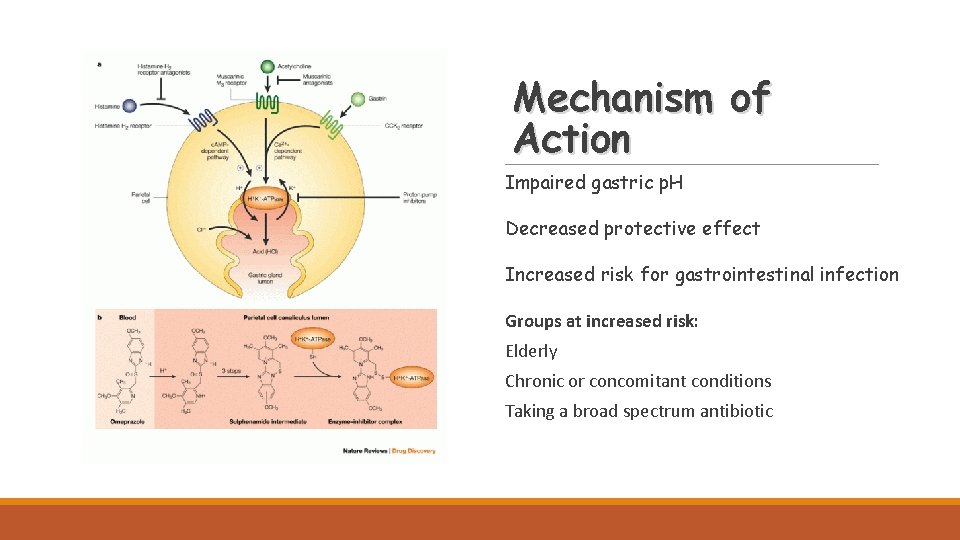
Mechanism of Action Impaired gastric p. H Decreased protective effect Increased risk for gastrointestinal infection Groups at increased risk: Elderly Chronic or concomitant conditions Taking a broad spectrum antibiotic
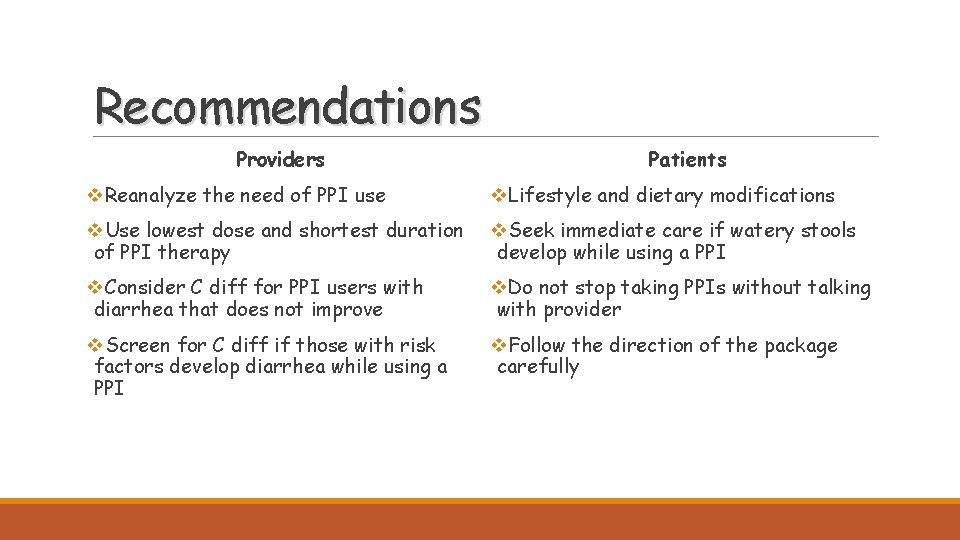
Recommendations Providers Patients v. Reanalyze the need of PPI use v. Lifestyle and dietary modifications v. Use lowest dose and shortest duration of PPI therapy v. Seek immediate care if watery stools develop while using a PPI v. Consider C diff for PPI users with diarrhea that does not improve v. Do not stop taking PPIs without talking with provider v. Screen for C diff if those with risk factors develop diarrhea while using a PPI v. Follow the direction of the package carefully

Concern regarding PPI’s: §FDA’s Adverse Event Reporting System: §Patient’s taking proton-pump inhibitors reported diarrhea as an adverse effect (2012): § Study: 23 studies reported a higher risk of C. Diff in patient’s currently taking a PPI versus patients who were not § The FDA did note that populations who developed C. Diff were also exposed to antibiotics (a significant risk factor in developing C. Diff) § Risk was 1. 4 to 2. 75 times more likely to develop C. Diff while on a PPI compared to not o. Why the concern: o Clostridium Difficile resistance is considered an urgent threat by the Centers for Disease Control (2013) o 14, 000 people die from this infection per year o Clostridium difficile became resistant to fluoroquinolones in 2000 o 2000 -2007, 400% increase in the number of C. Diff related deaths https: //www. google. com/url? sa=i&rct=j&q=& esrc=s&source=images&cd=&ved=0 ah. UKEwj. H m 5 DA 0 s 7 XAh. VIm. MKHea. UBh. QQj. Rw. IBw&url=https%3 A%2 F%2 Fstopcdiffnow. org%2 F&psig=AOv. Vaw 3 SHZ 6 y. Y QVhw. Y 68 c. Lf 792 QS&ust=1511318542857198
References Bakken, J. S. , Kelly, C. P. , & Lamont, J. T. (2017, November 7). Clostridium difficile in adults: Treatment. Retrieved November 20, 2017, from https: //www-uptodatecom. ezproxy. lib. utah. edu/contents/clostridium-difficile-in-adultstreatment? source=search_result&search=c%20 diff%20 treatment&selected. Title=1~150 Centers for Disease Control. (2013). Antibiotic Resistance Threats in the United States, 2013. Retrieved November 20, 2017, from https: //www. cdc. gov/drugresistance/pdf/ar-threats-2013508. pdf Johnson, A. D. (2009). Proton-pump inhibitors and Clostridium difficile infection risk: New insights toward an understanding of potential risks. Retrieved from https: //www. medscape. com/viewarticle/702800 Proton Pump Inhibitors (PPIs) and C. difficile. (2012). Pharmacist's Letter/Prescriber's Letter. Retrieved November 20, 2017.
- Slides: 7