
Proton NMR Spectroscopy The NMR Phenomenon Most nuclei




- Slides: 66
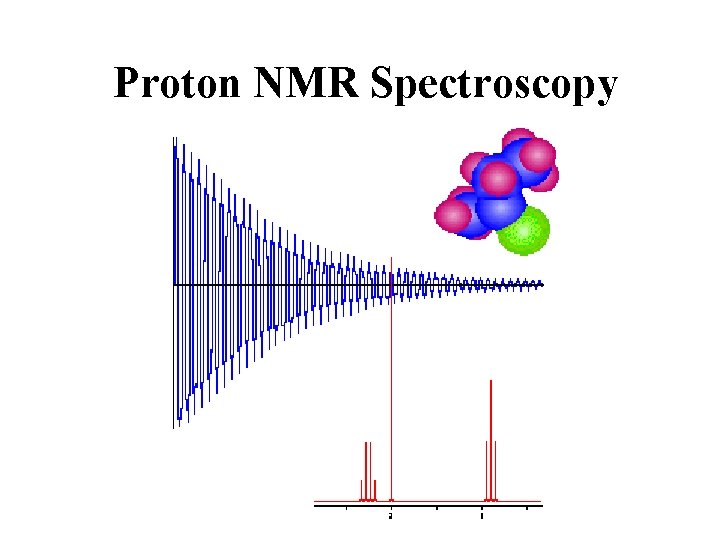
Proton NMR Spectroscopy
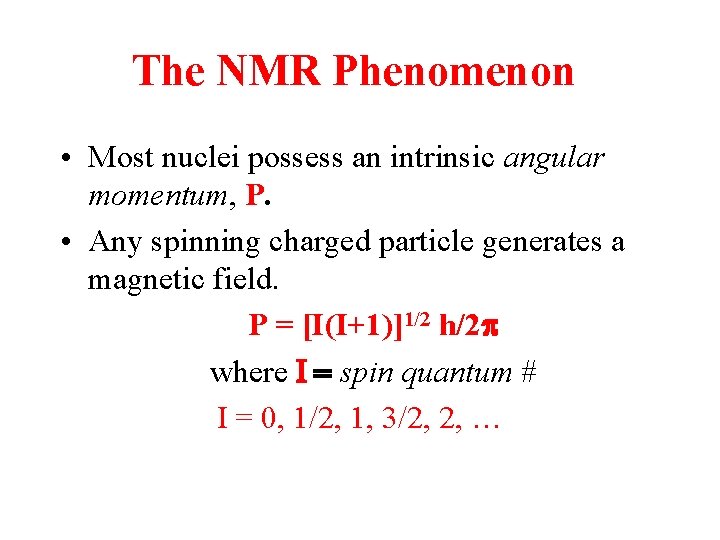
The NMR Phenomenon • Most nuclei possess an intrinsic angular momentum, P. • Any spinning charged particle generates a magnetic field. P = [I(I+1)]1/2 h/2 p where I = spin quantum # I = 0, 1/2, 1, 3/2, 2, …
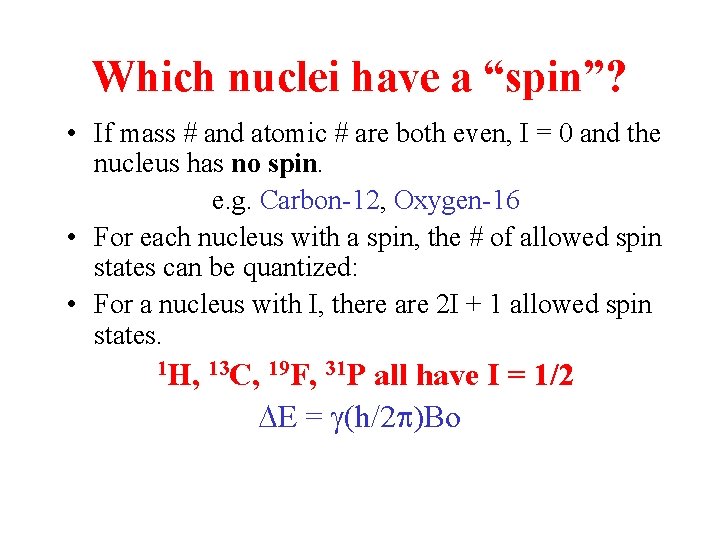
Which nuclei have a “spin”? • If mass # and atomic # are both even, I = 0 and the nucleus has no spin. e. g. Carbon-12, Oxygen-16 • For each nucleus with a spin, the # of allowed spin states can be quantized: • For a nucleus with I, there are 2 I + 1 allowed spin states. 1 H, 13 C, 19 F, 31 P all have I = 1/2 DE = g(h/2 p)Bo
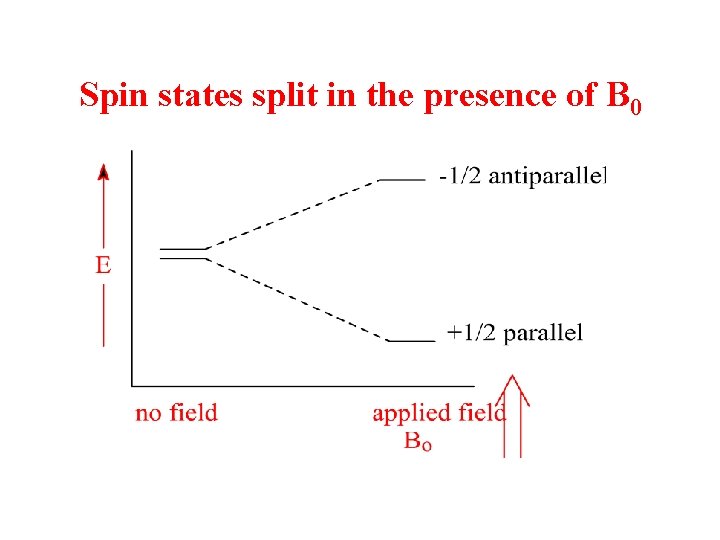
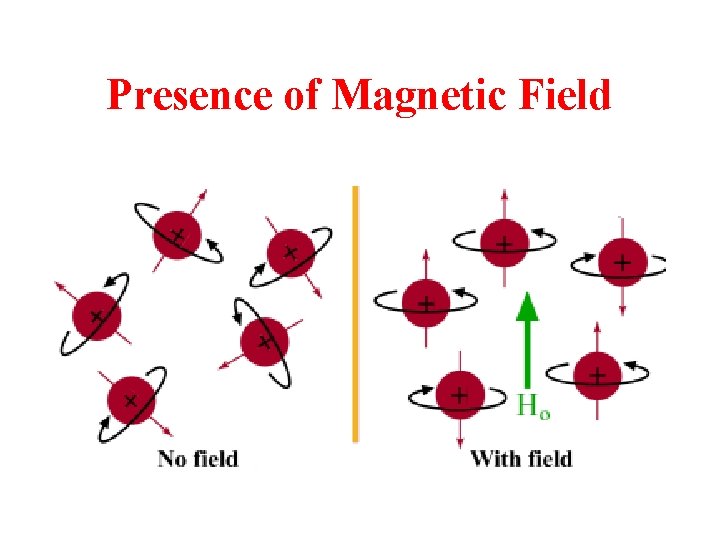
Spin states split in the presence of B 0
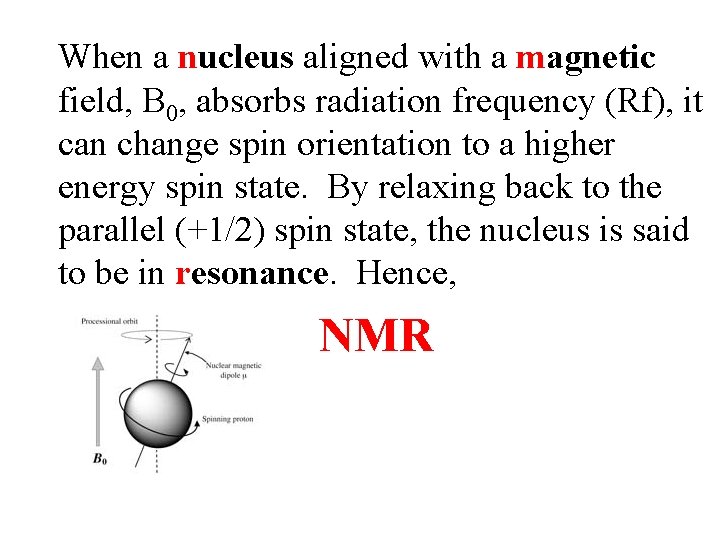
When a nucleus aligned with a magnetic field, B 0, absorbs radiation frequency (Rf), it can change spin orientation to a higher energy spin state. By relaxing back to the parallel (+1/2) spin state, the nucleus is said to be in resonance. Hence, NMR
Presence of Magnetic Field
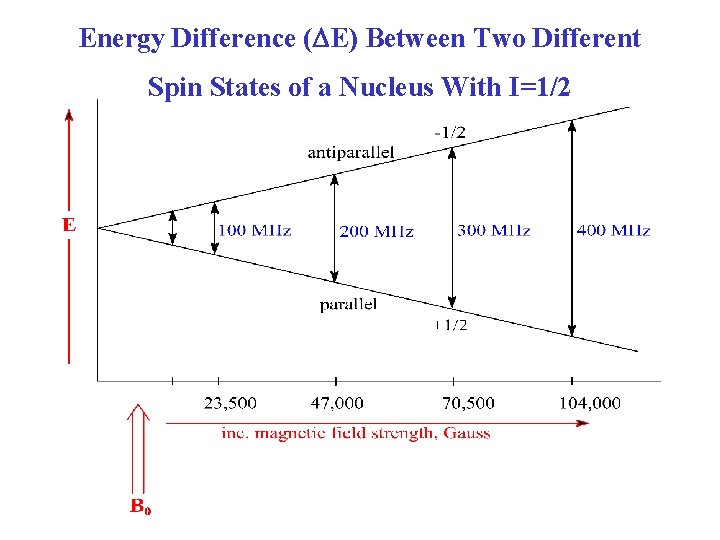
NMR instruments typically have a constant Rf and a variable B 0. A proton should absorb Rf of 60 MHz in a field of 14, 093 Gauss (1. 4093 T). Each unique probe nucleus (1 H perhaps) will come into resonance at a slightly different and a very small percentage of - the Rf. All protons come into resonance between 0 and 12/1, 000 (0 – 12 ppm) of the B 0.
Energy Difference ( E) Between Two Different Spin States of a Nucleus With I=1/2
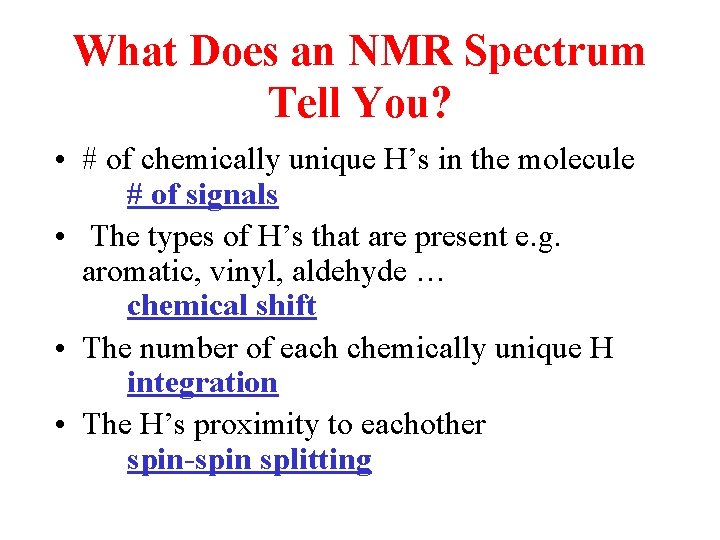
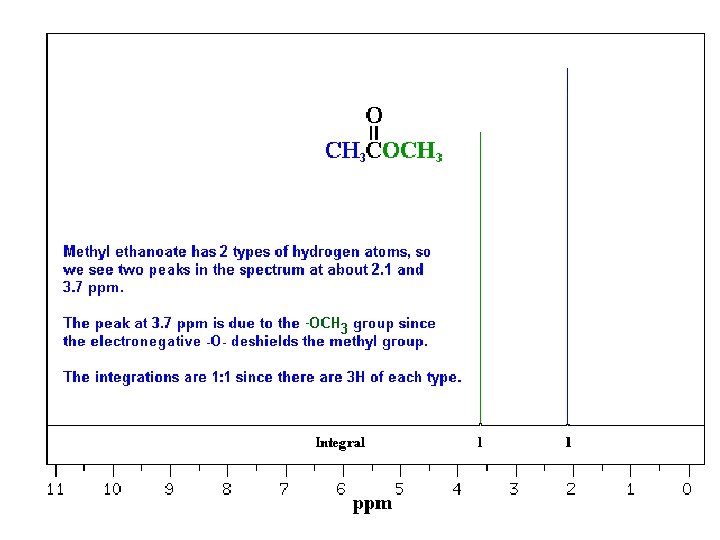
What Does an NMR Spectrum Tell You? • # of chemically unique H’s in the molecule # of signals • The types of H’s that are present e. g. aromatic, vinyl, aldehyde … chemical shift • The number of each chemically unique H integration • The H’s proximity to eachother spin-spin splitting
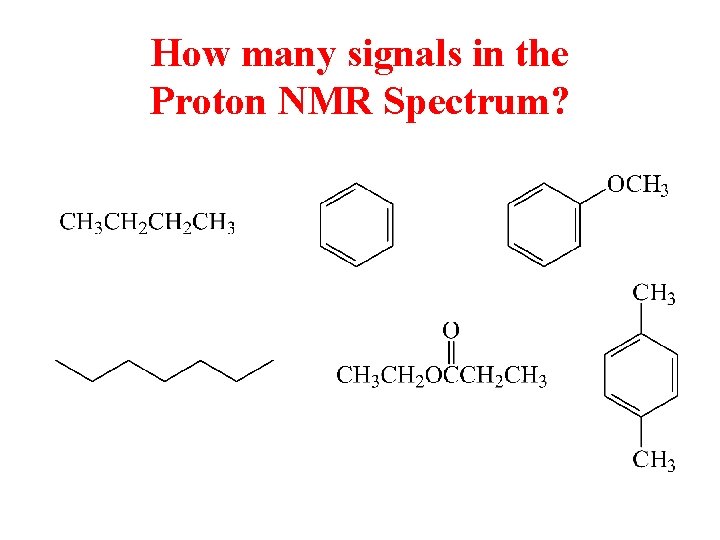
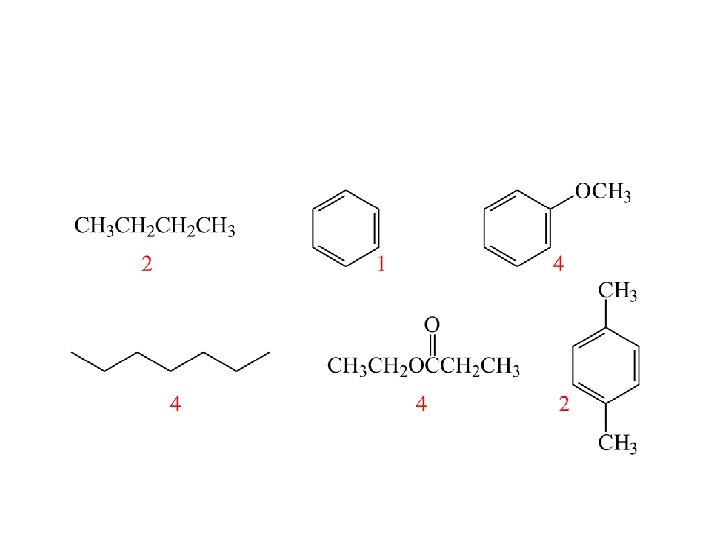
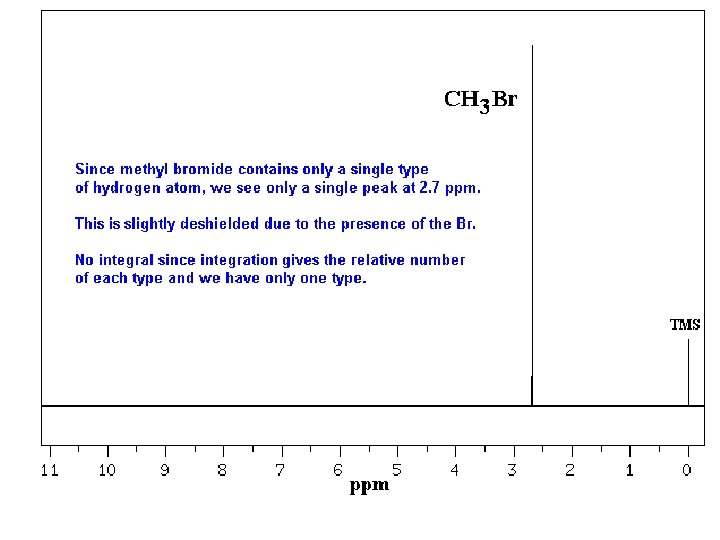
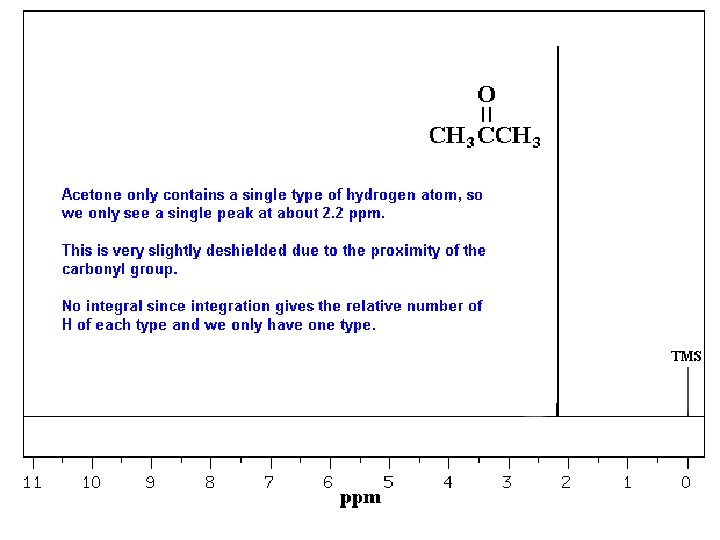
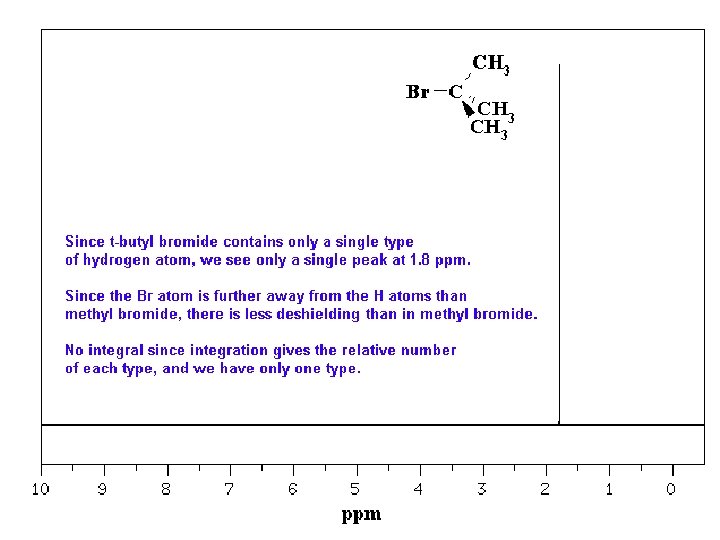
How many signals in the Proton NMR Spectrum?
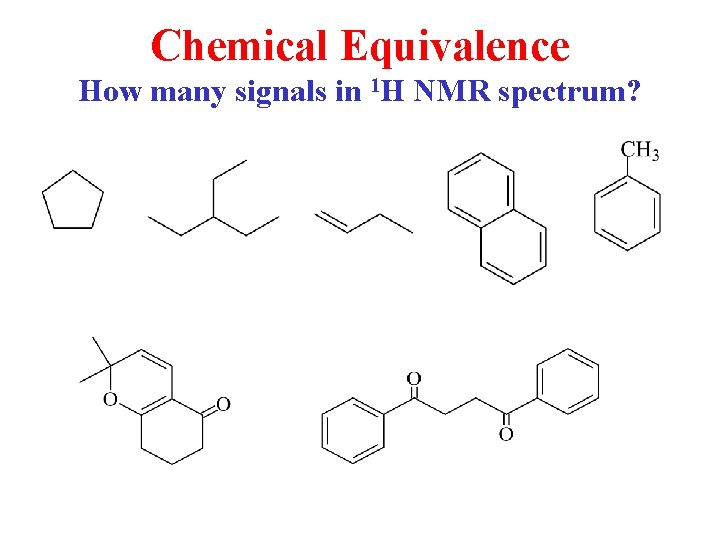
Chemical Equivalence How many signals in 1 H NMR spectrum?
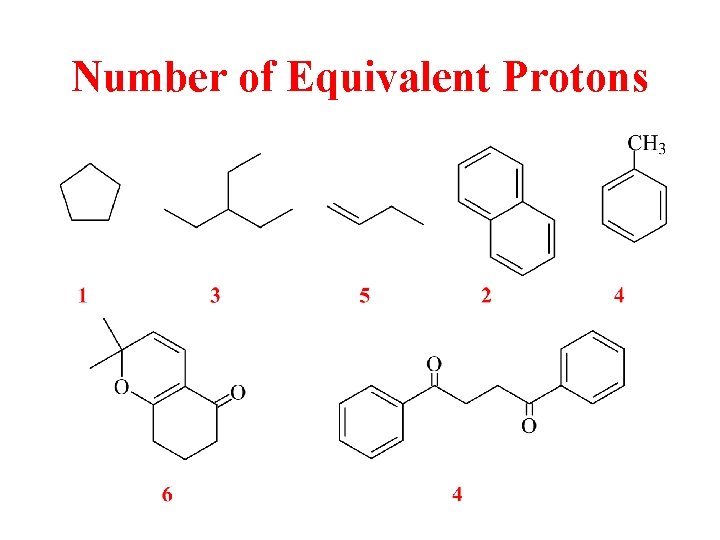
Number of Equivalent Protons
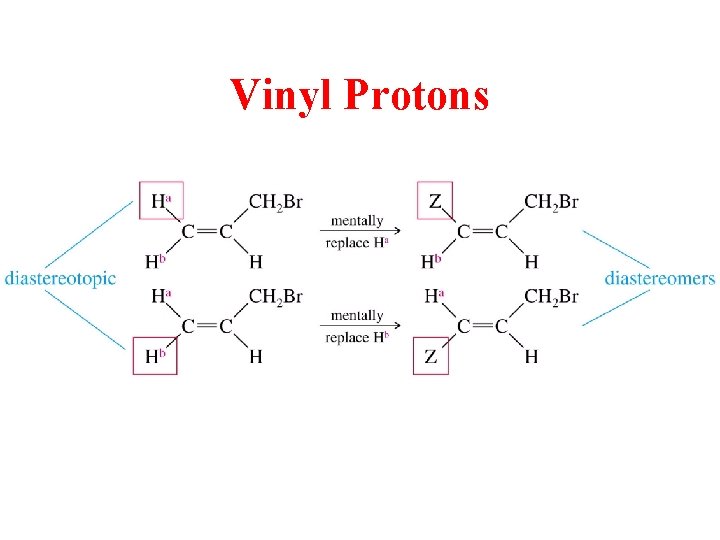
Vinyl Protons
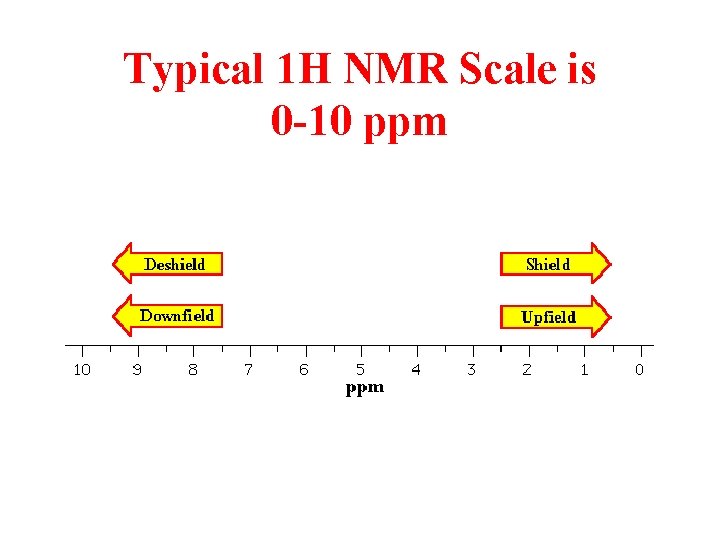
Typical 1 H NMR Scale is 0 -10 ppm
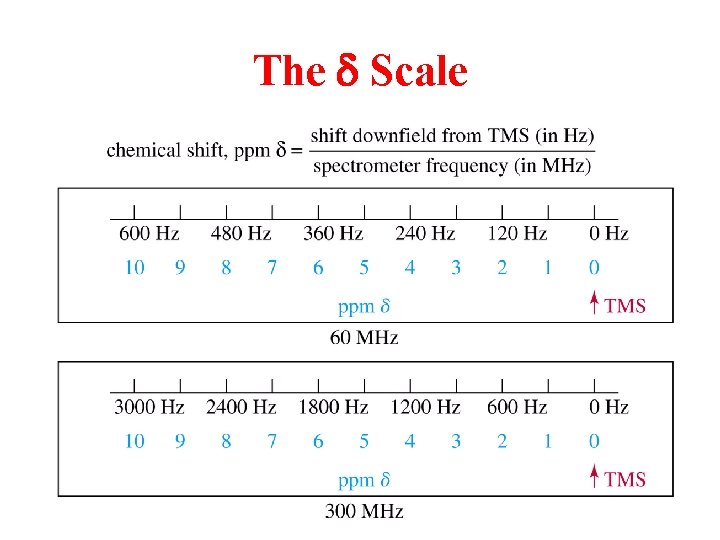
The d Scale
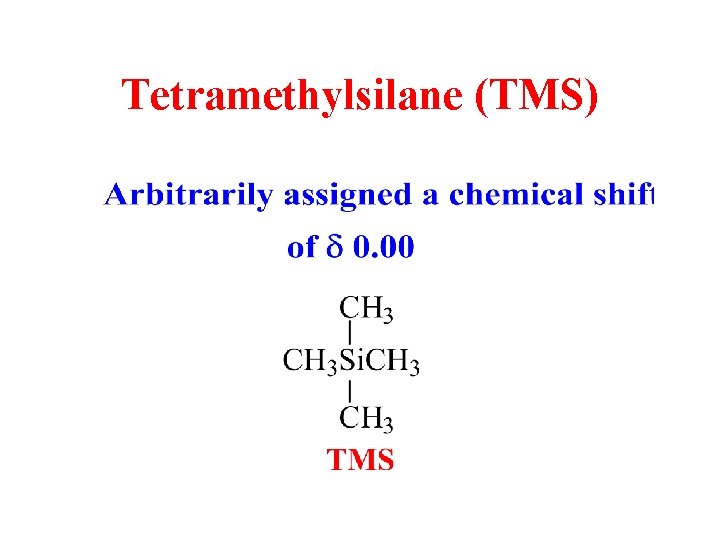
Tetramethylsilane (TMS)
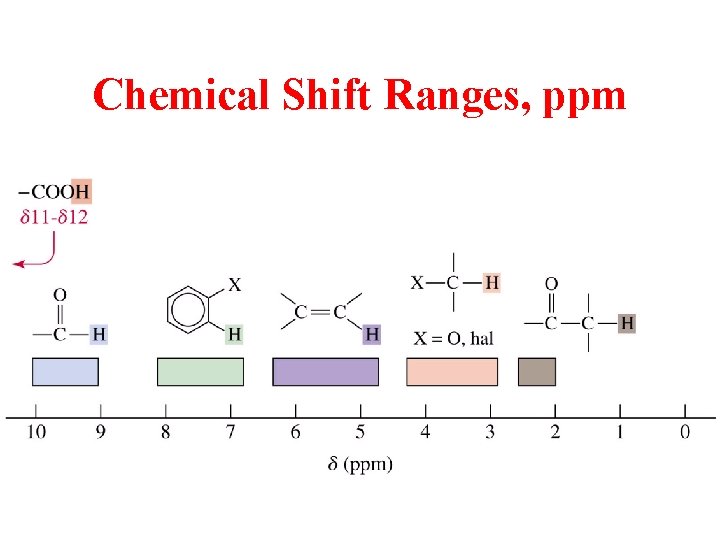
Chemical Shift Ranges, ppm
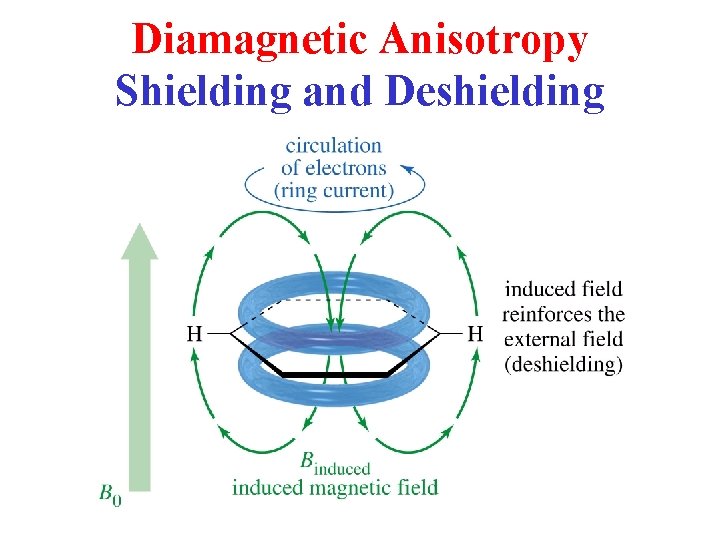
Diamagnetic Anisotropy Shielding and Deshielding
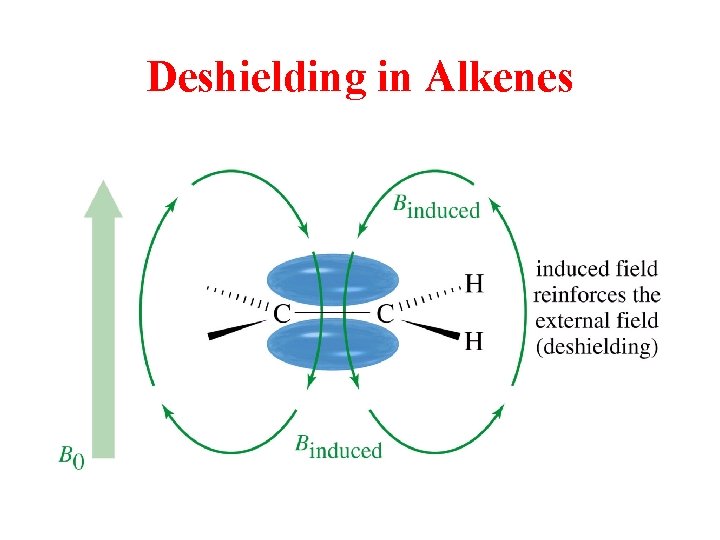
Deshielding in Alkenes
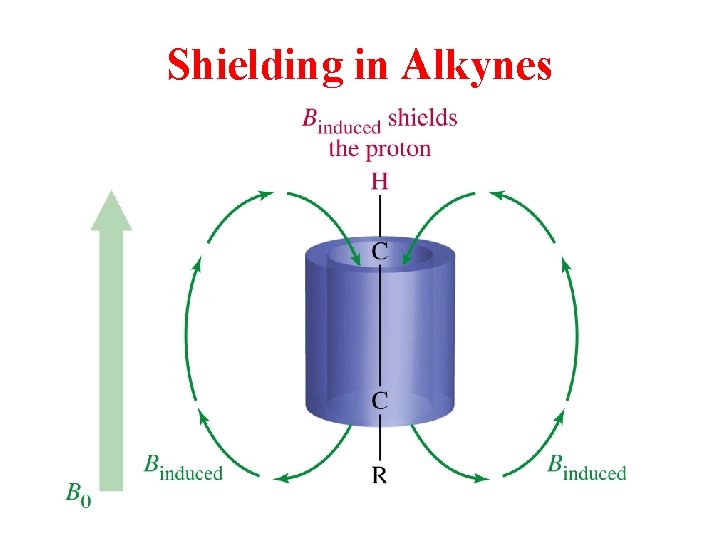
Shielding in Alkynes
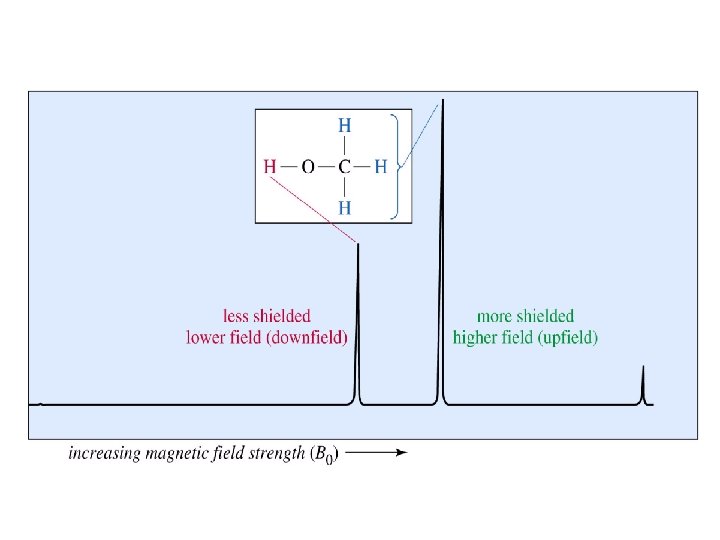
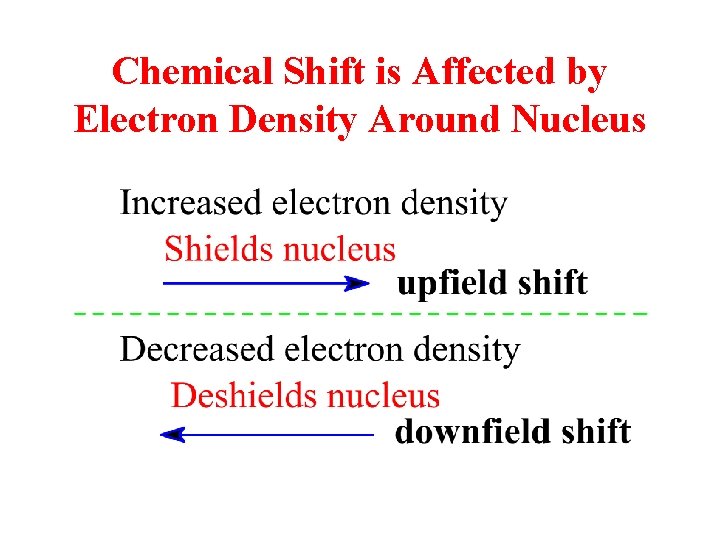
Chemical Shift is Affected by Electron Density Around Nucleus
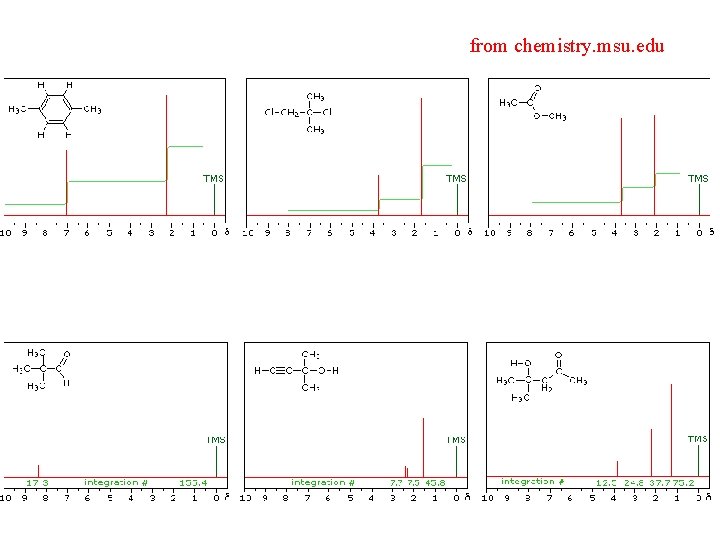
from chemistry. msu. edu
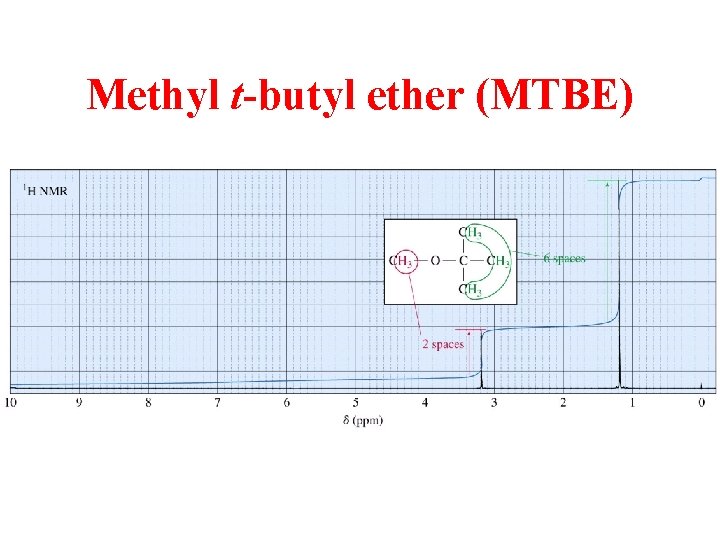
Methyl t-butyl ether (MTBE)
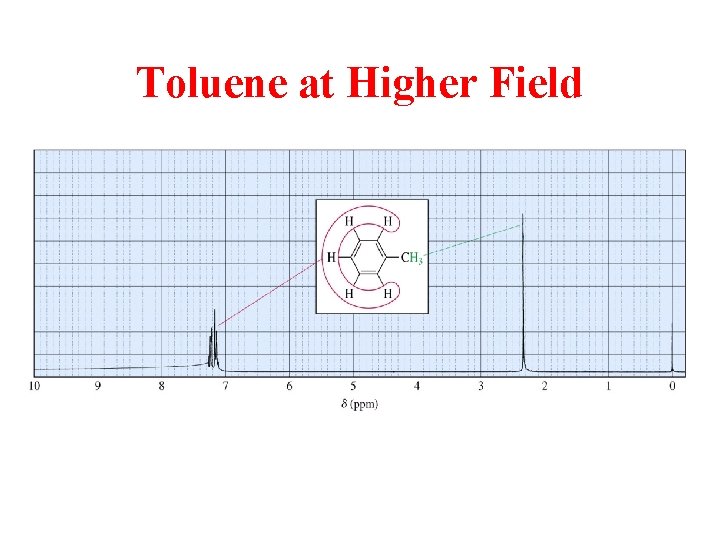
Toluene at Higher Field
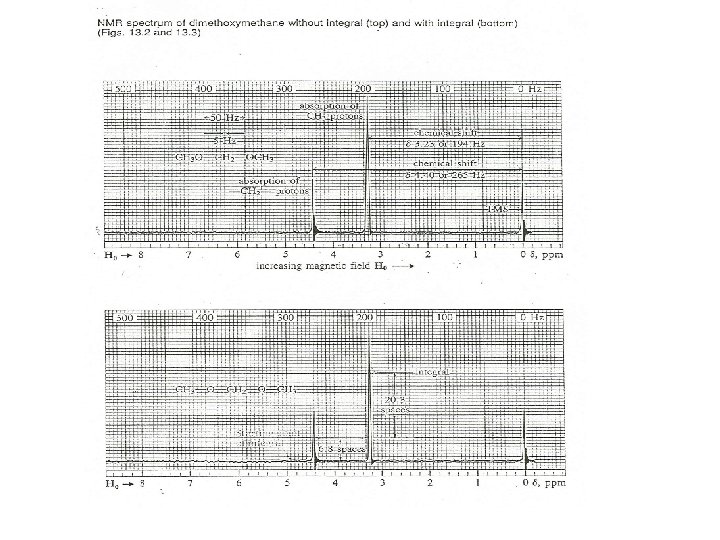
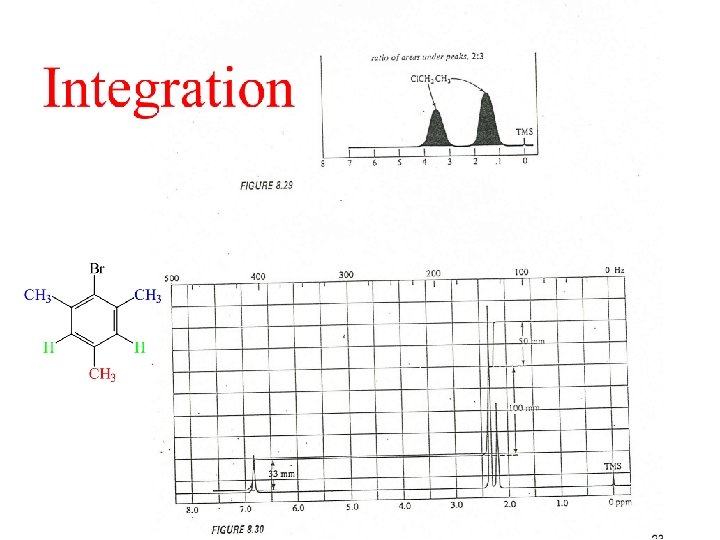
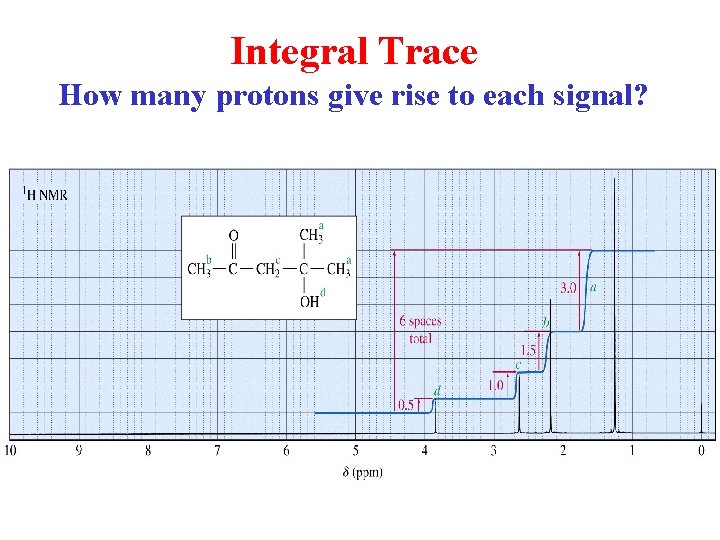
Integral Trace How many protons give rise to each signal?
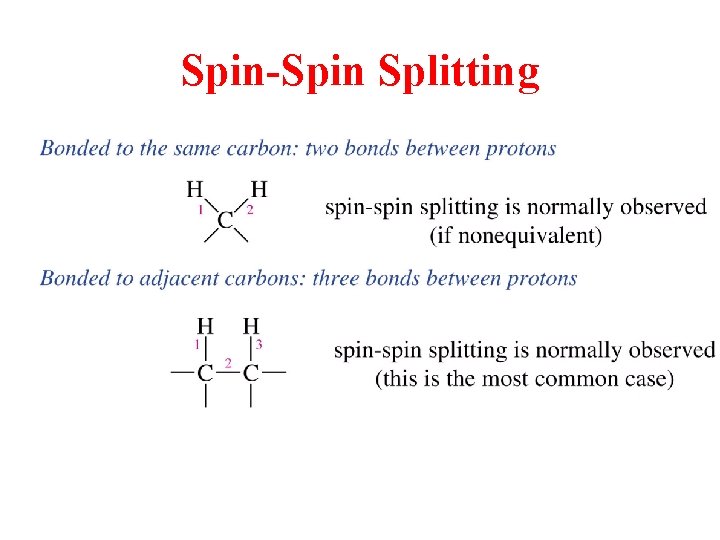
Spin-Spin Splitting
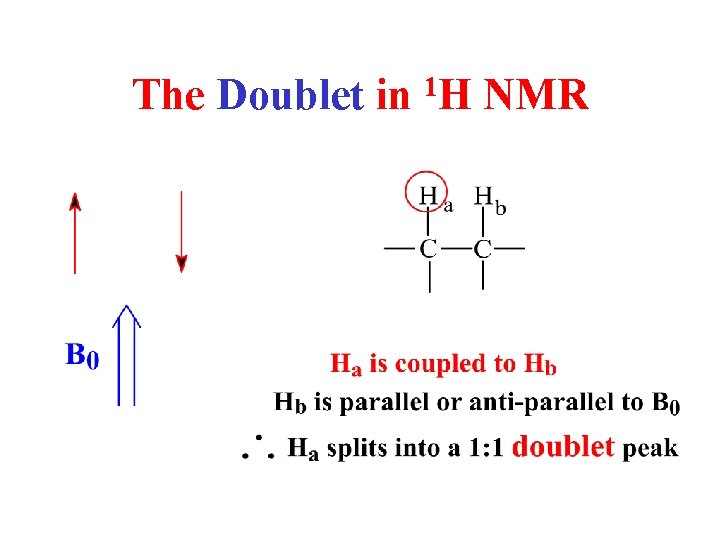
The Doublet in 1 H NMR
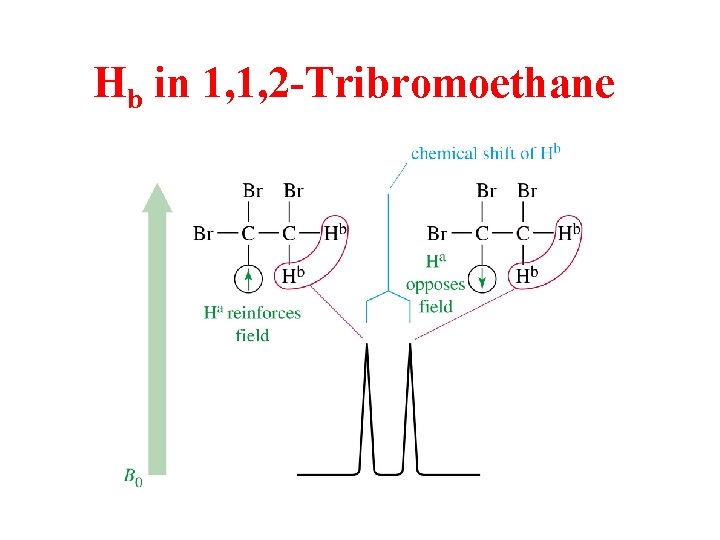
Hb in 1, 1, 2 -Tribromoethane
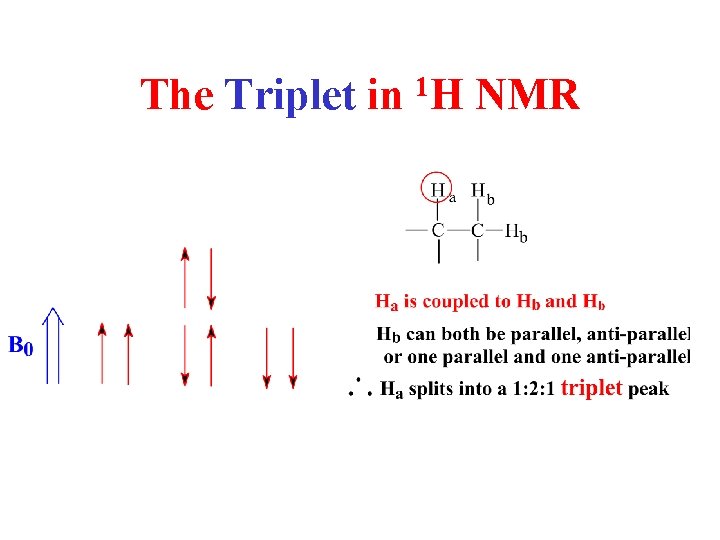
The Triplet in 1 H NMR
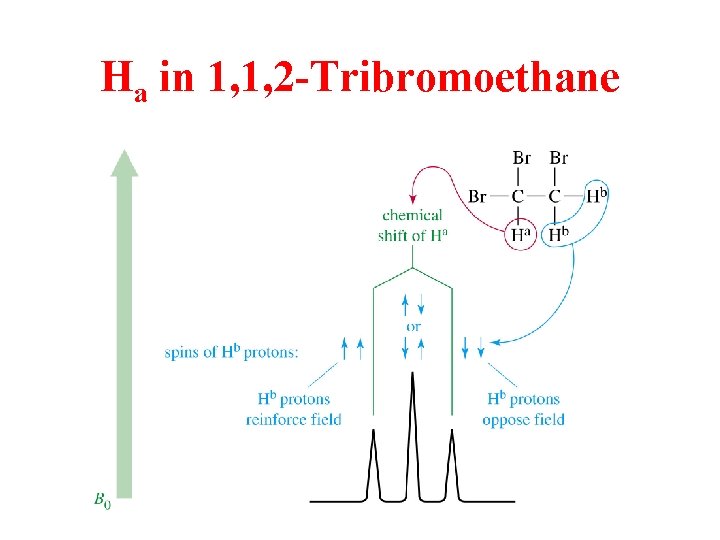
Ha in 1, 1, 2 -Tribromoethane
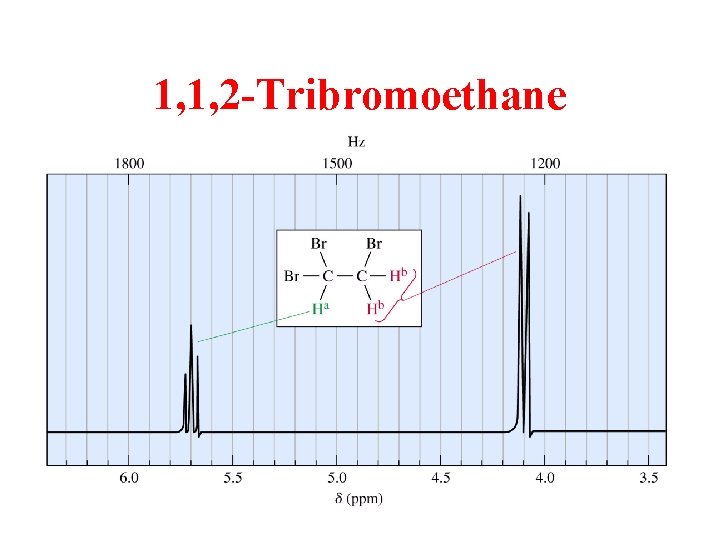
1, 1, 2 -Tribromoethane
The Quartet in 1 HMR
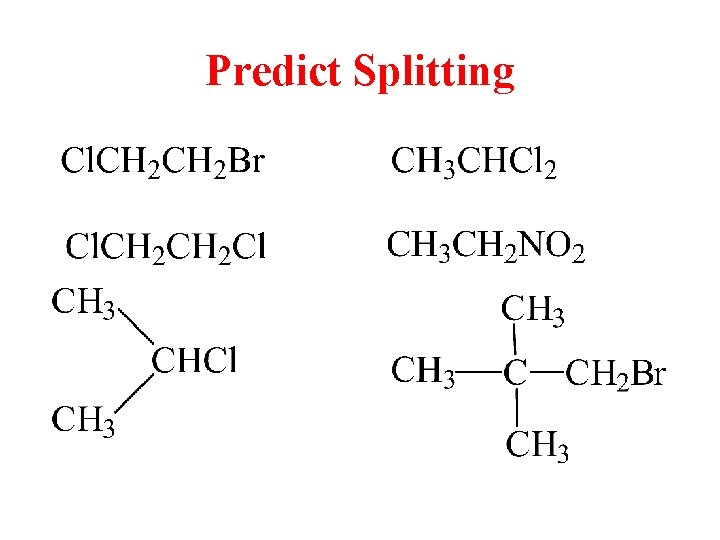
Predict Splitting
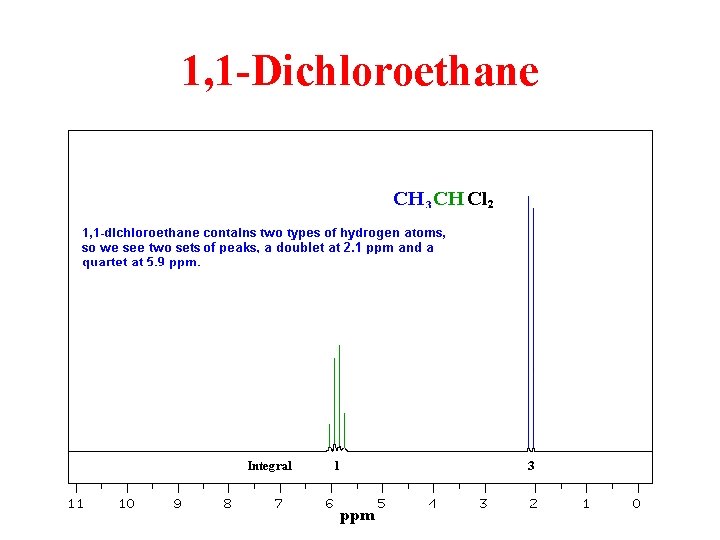
1, 1 -Dichloroethane
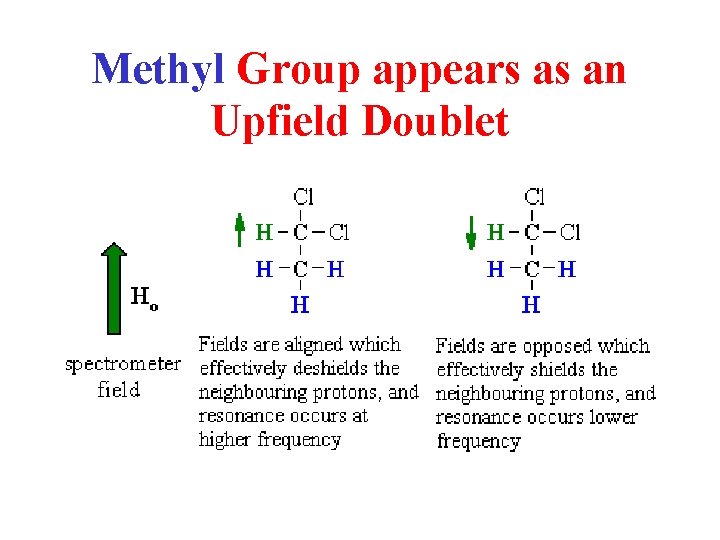
Methyl Group appears as an Upfield Doublet
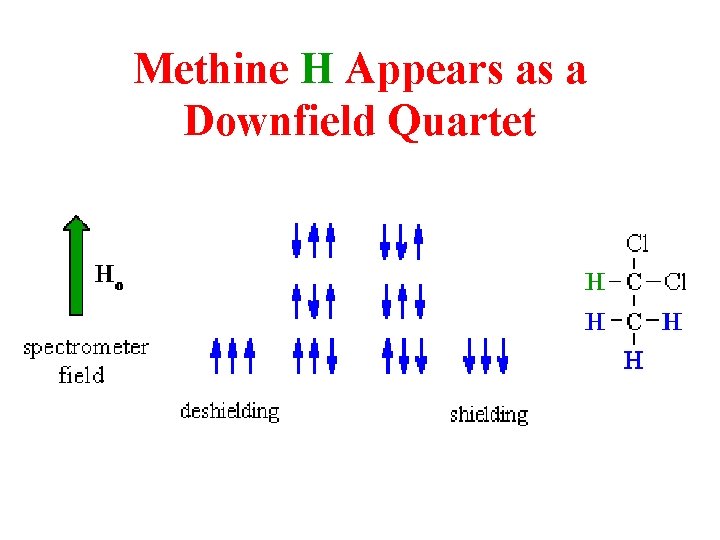
Methine H Appears as a Downfield Quartet
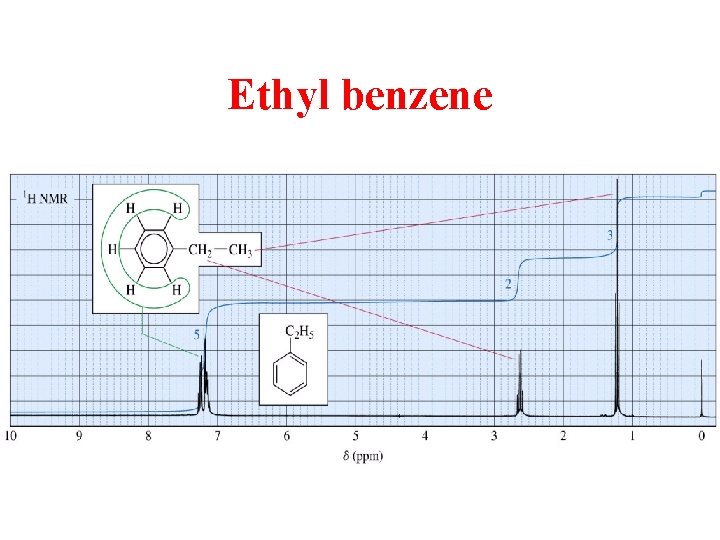
Ethyl benzene
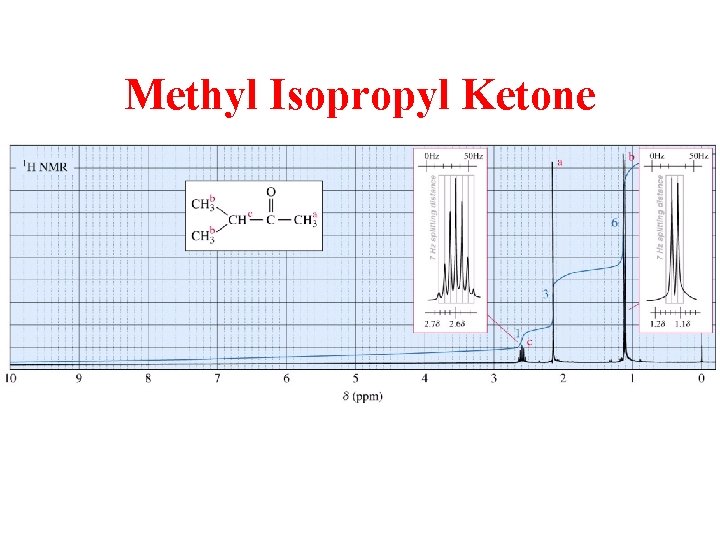
Methyl Isopropyl Ketone
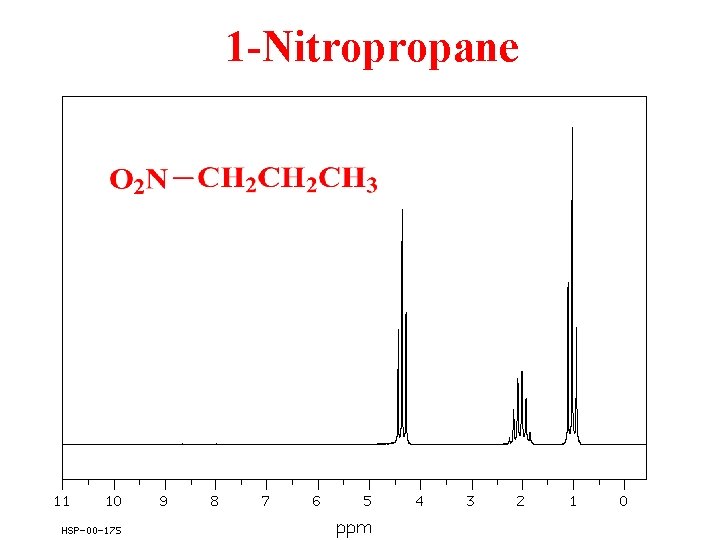
1 -Nitropropane
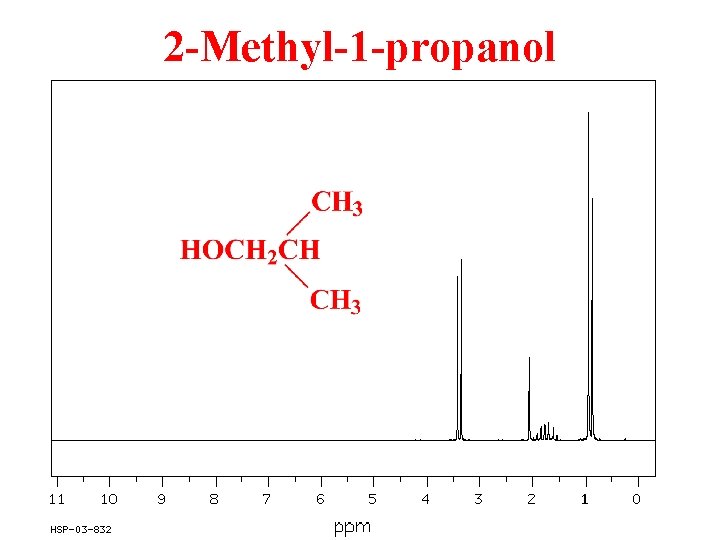
2 -Methyl-1 -propanol
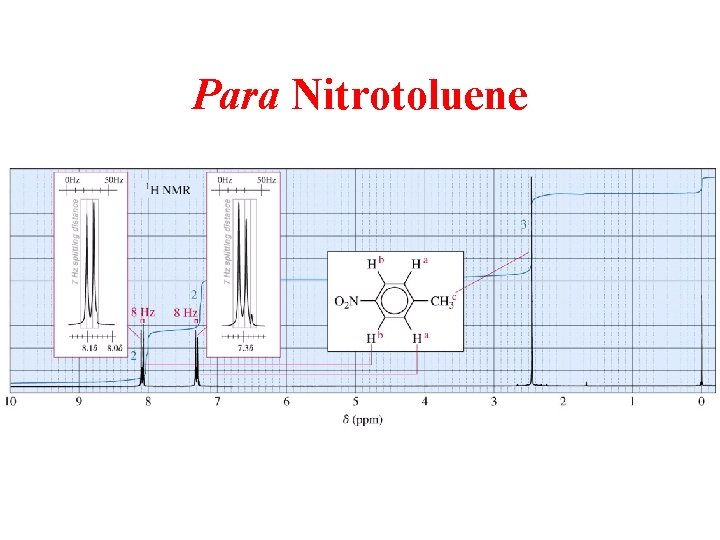
Para Nitrotoluene
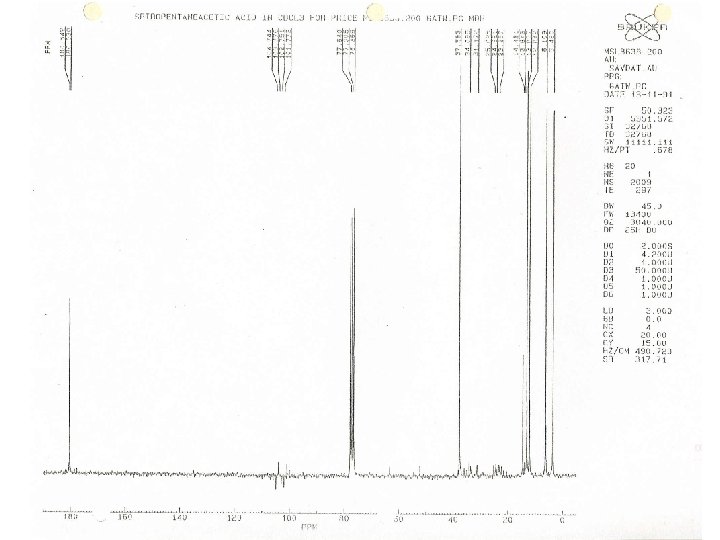
C-13 NMR Spectroscopy
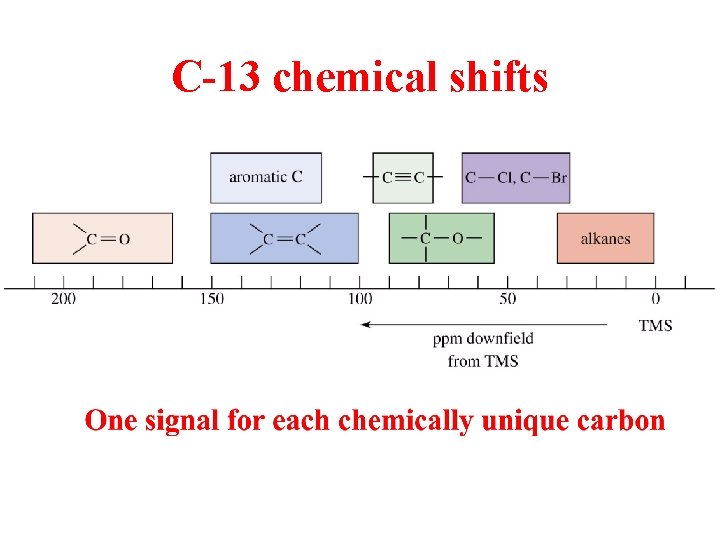
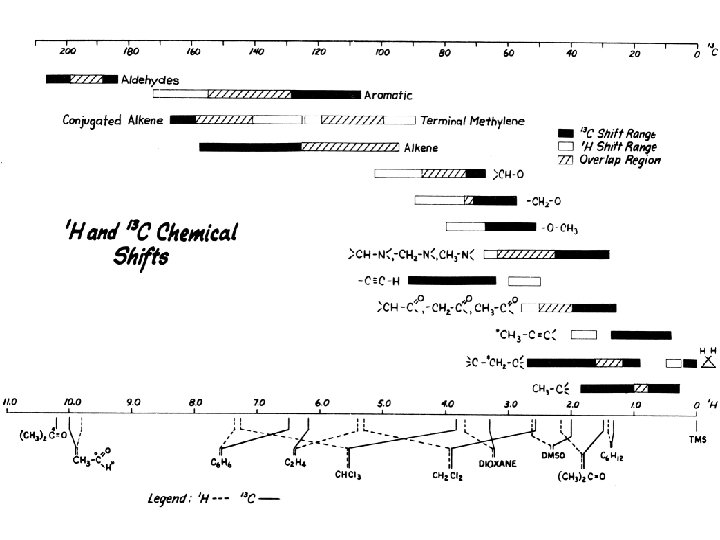
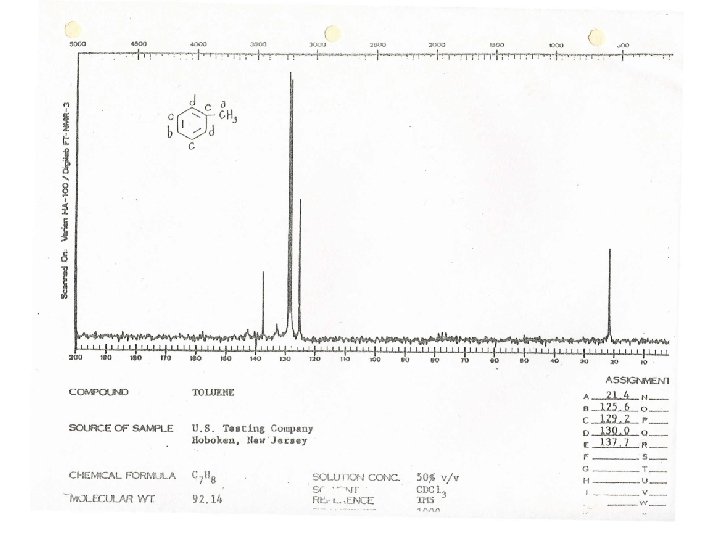
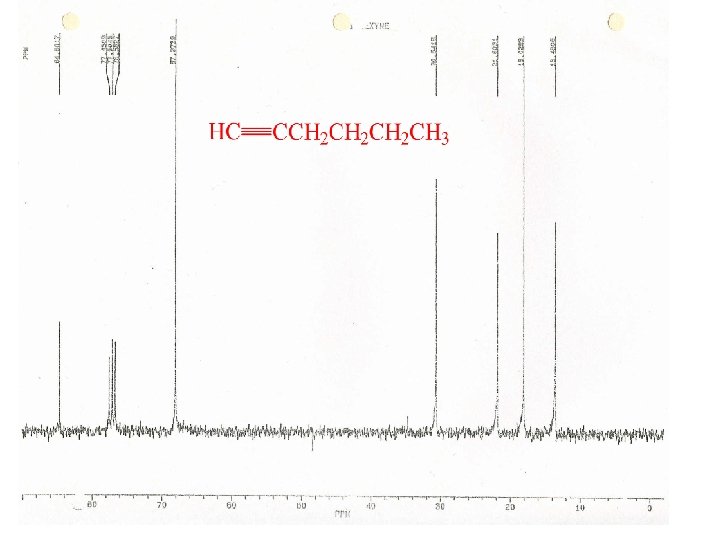
C-13 chemical shifts
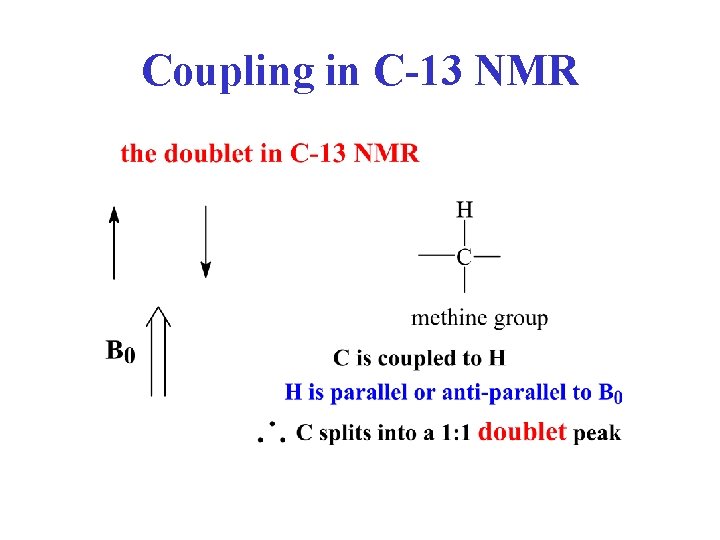
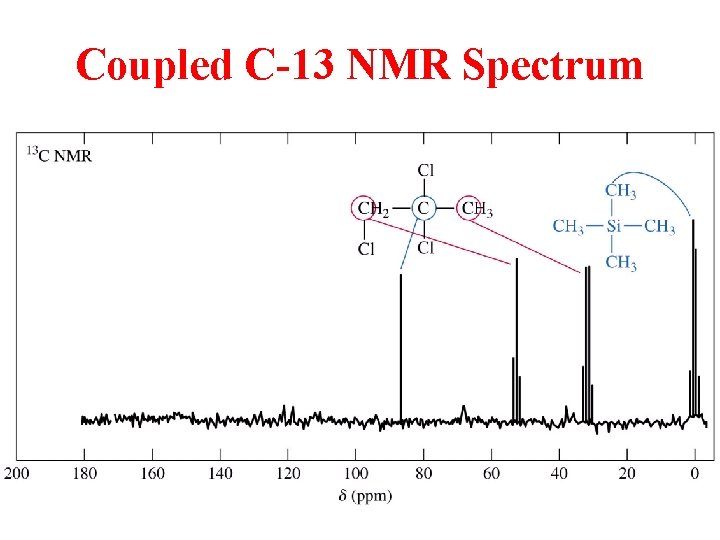
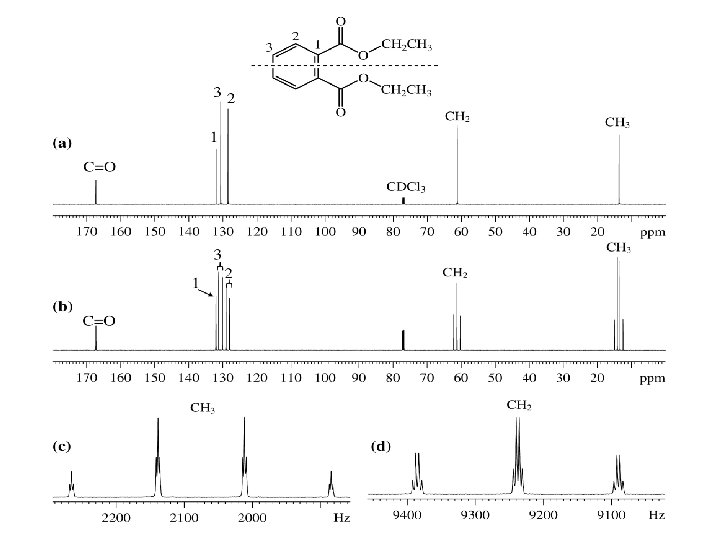
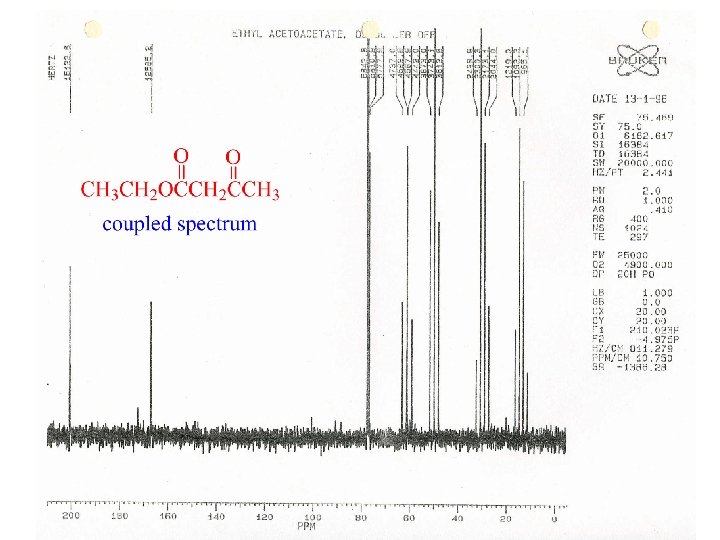
Coupling in C-13 NMR
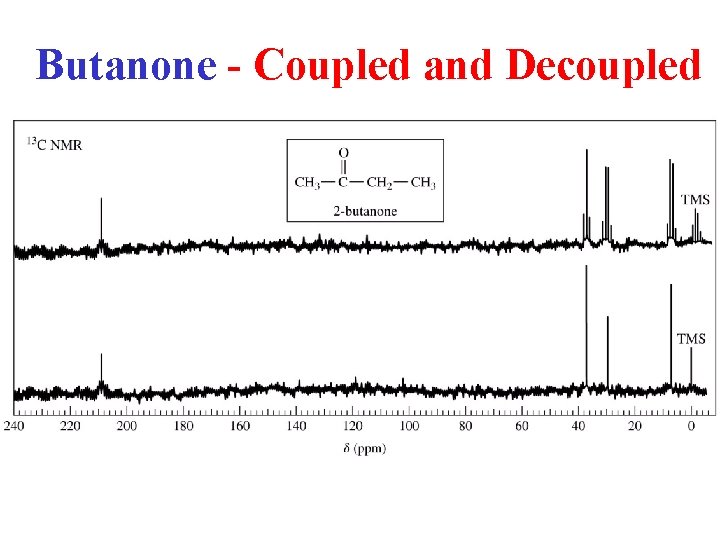
Butanone - Coupled and Decoupled
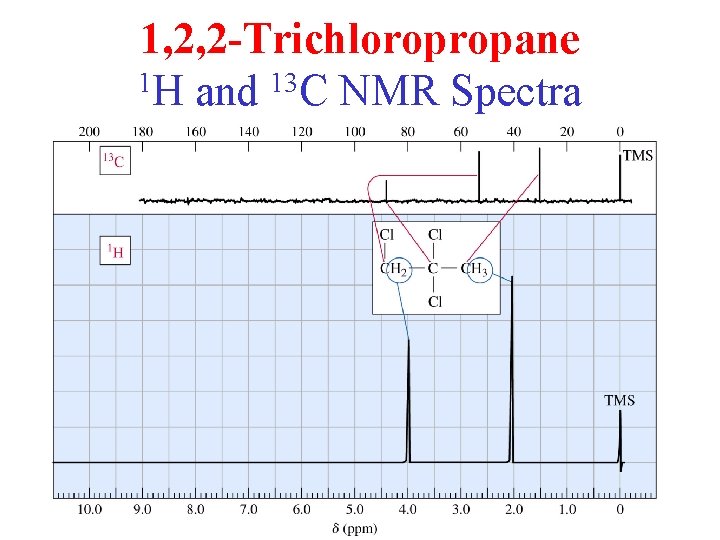
1, 2, 2 -Trichloropropane 1 H and 13 C NMR Spectra
Coupled C-13 NMR Spectrum