
PROTISTS Similarities and Differences in the Protist Kingdom
- Slides: 15
PROTISTS
Similarities and Differences in the Protist Kingdom • • • All are eukaryotes (cells with nuclei). Live in moist surroundings. Unicellular or multicellular. Autotrophs, heterotrophs, or both. Some can move - others cannot.
3 categories of Protists: • Animal-like • Fungus-like • Plant-like
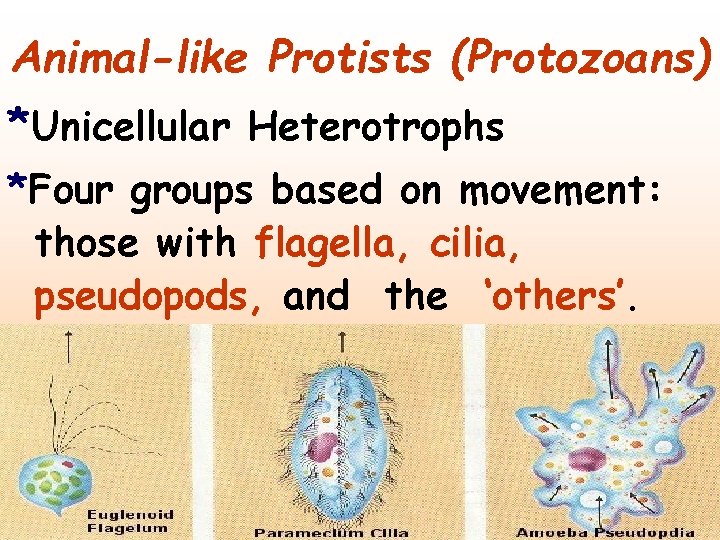
Animal-like Protists (Protozoans) *Unicellular Heterotrophs *Four groups based on movement: those with flagella, cilia, pseudopods, and the ‘others’.
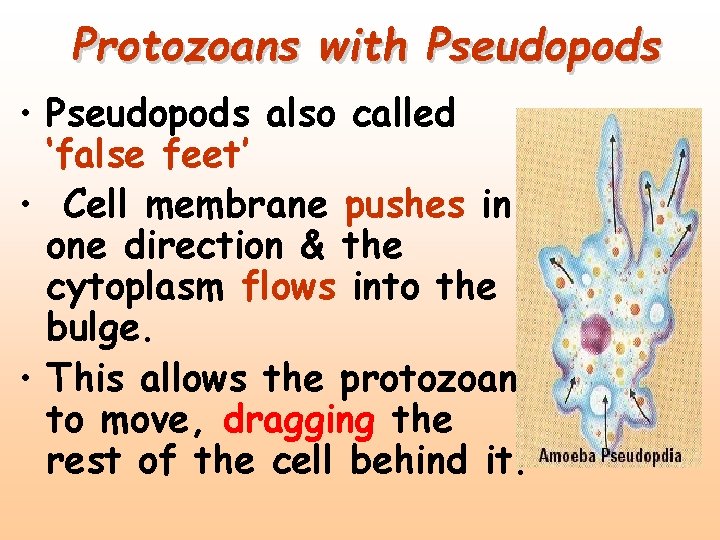
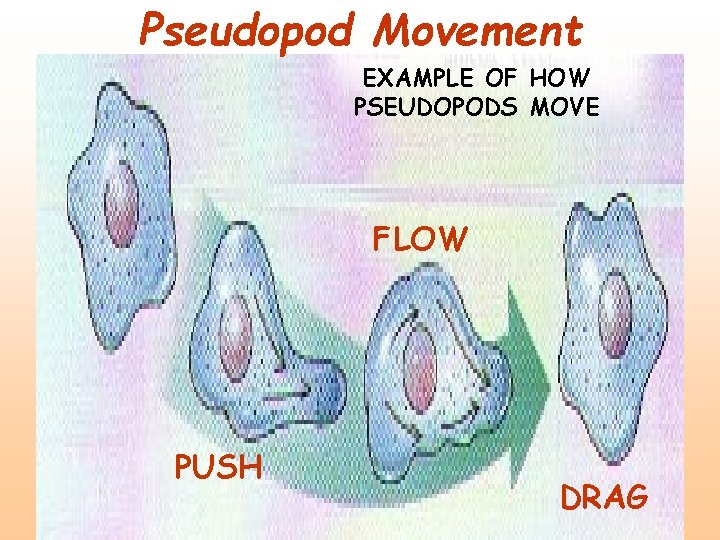
Protozoans with Pseudopods • Pseudopods also called ‘false feet’ • Cell membrane pushes in one direction & the cytoplasm flows into the bulge. • This allows the protozoan to move, dragging the rest of the cell behind it.
Pseudopod Movement EXAMPLE OF HOW PSEUDOPODS MOVE FLOW PUSH DRAG
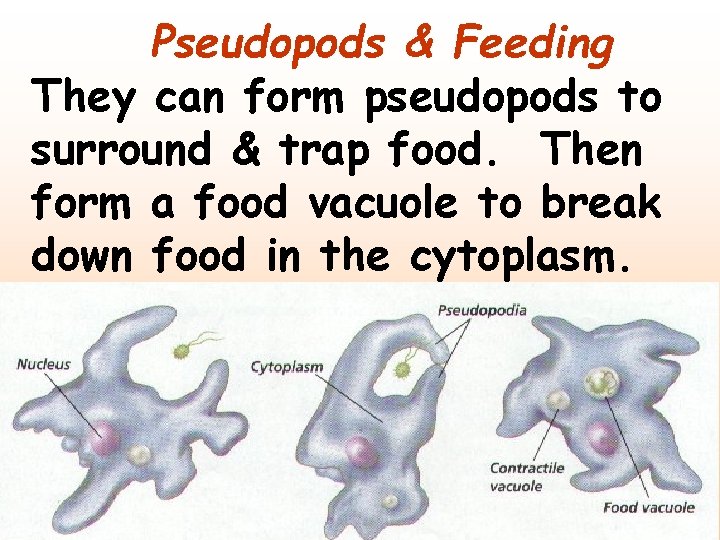
Pseudopods & Feeding They can form pseudopods to surround & trap food. Then form a food vacuole to break down food in the cytoplasm.
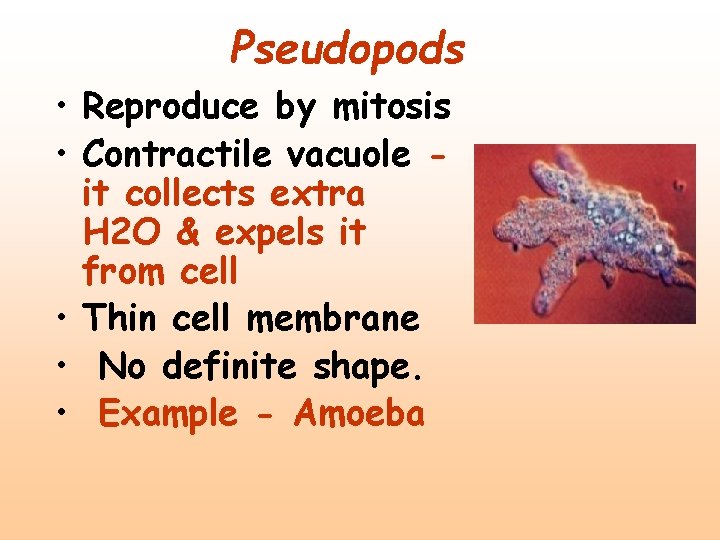
Pseudopods • Reproduce by mitosis • Contractile vacuole it collects extra H 2 O & expels it from cell • Thin cell membrane • No definite shape. • Example - Amoeba
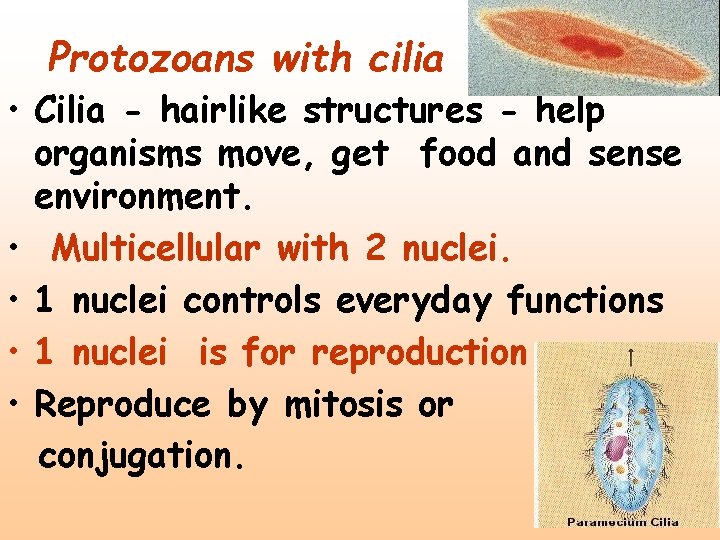
Protozoans with cilia • Cilia - hairlike structures - help organisms move, get food and sense environment. • Multicellular with 2 nuclei. • 1 nuclei controls everyday functions • 1 nuclei is for reproduction. • Reproduce by mitosis or conjugation.
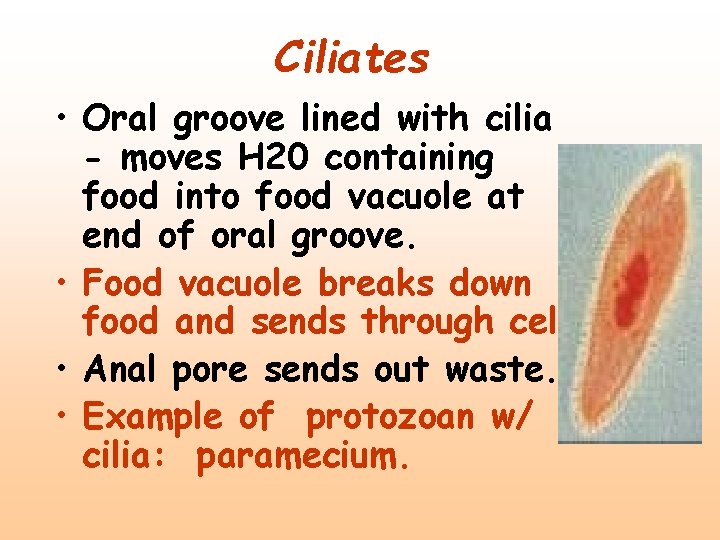
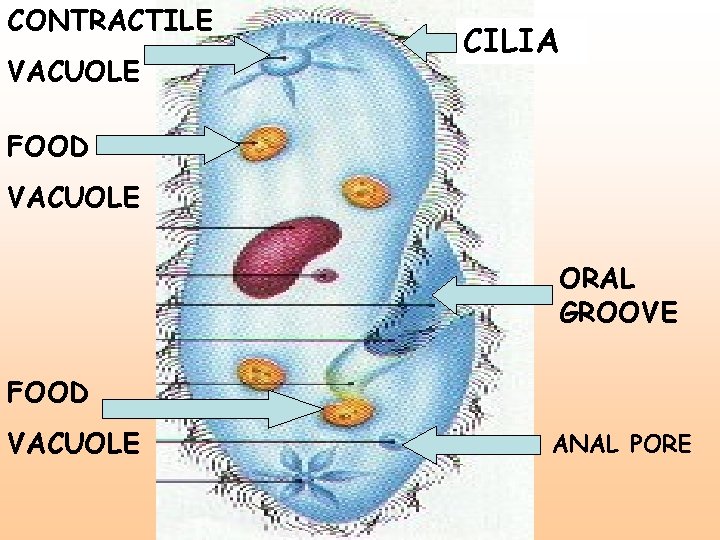
Ciliates • Oral groove lined with cilia - moves H 20 containing food into food vacuole at end of oral groove. • Food vacuole breaks down food and sends through cell. • Anal pore sends out waste. • Example of protozoan w/ cilia: paramecium.
CONTRACTILE VACUOLE CILIA FOOD VACUOLE ORAL GROOVE FOOD VACUOLE ANAL PORE
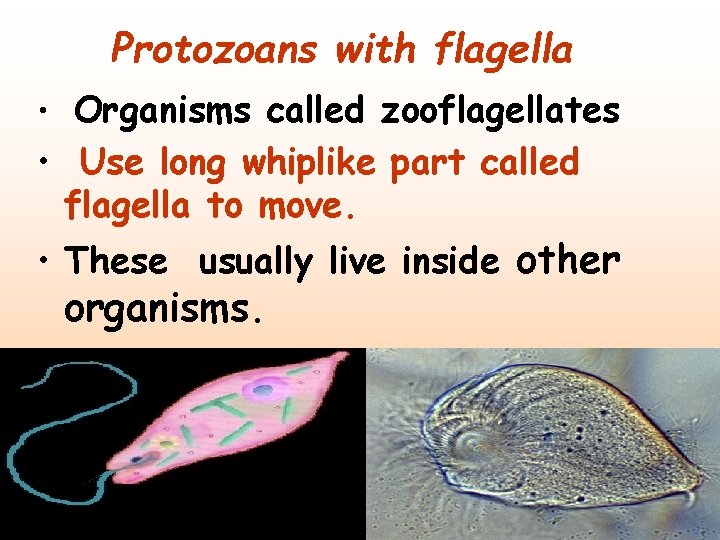
Protozoans with flagella • Organisms called zooflagellates • Use long whiplike part called flagella to move. • These usually live inside other organisms.
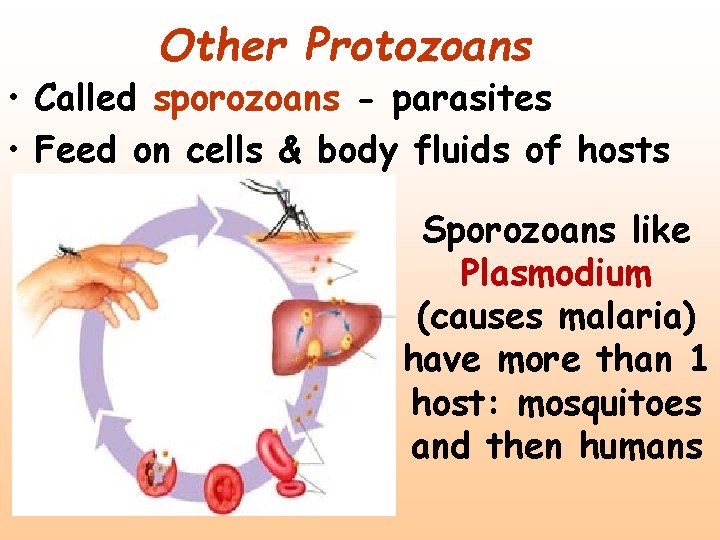
Other Protozoans • Called sporozoans - parasites • Feed on cells & body fluids of hosts Sporozoans like Plasmodium (causes malaria) have more than 1 host: mosquitoes and then humans
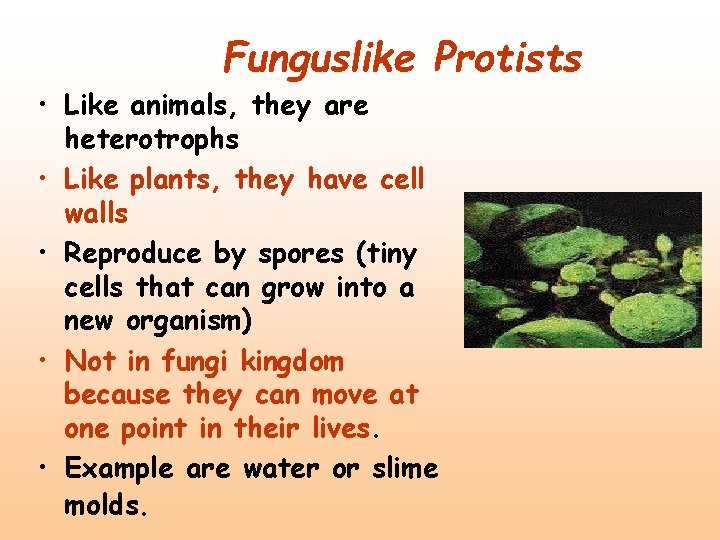
Funguslike Protists • Like animals, they are heterotrophs • Like plants, they have cell walls • Reproduce by spores (tiny cells that can grow into a new organism) • Not in fungi kingdom because they can move at one point in their lives. • Example are water or slime molds.
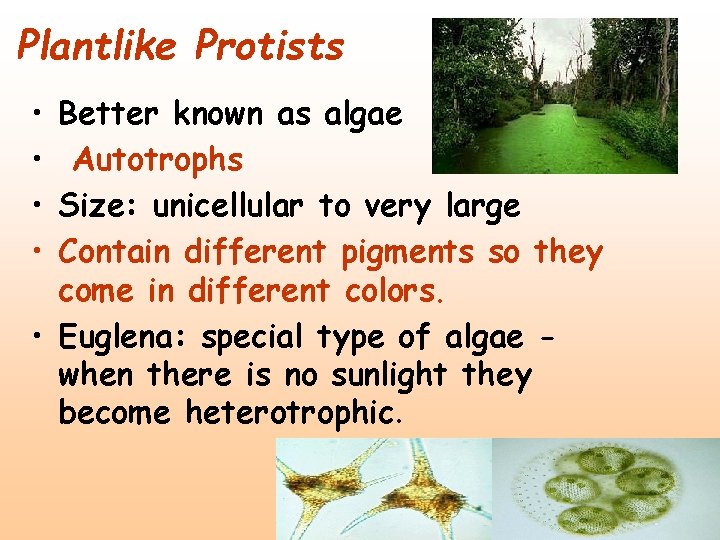
Plantlike Protists • • Better known as algae Autotrophs Size: unicellular to very large Contain different pigments so they come in different colors. • Euglena: special type of algae when there is no sunlight they become heterotrophic.