
Protists Kingdom Protista Characteristics 1 Unicellular 2 Eukaryotic


- Slides: 26
Protists • Kingdom – Protista • Characteristics 1. Unicellular 2. Eukaryotic 3. Many live as single cells or solitary 4. Some are colonial or live in groups
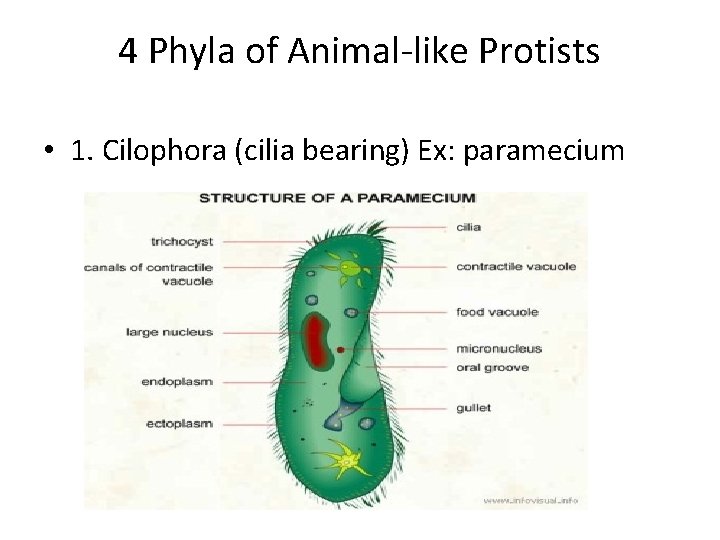
4 Phyla of Animal-like Protists • 1. Cilophora (cilia bearing) Ex: paramecium
Organelles of Cilophora • Cilia – hair like projections • Trichocysts – spiney projections used for defense • Gullet – obtains food • Anal Pore – waste materials emptied • Contractile Vacuole – pumps out excess H 2 O
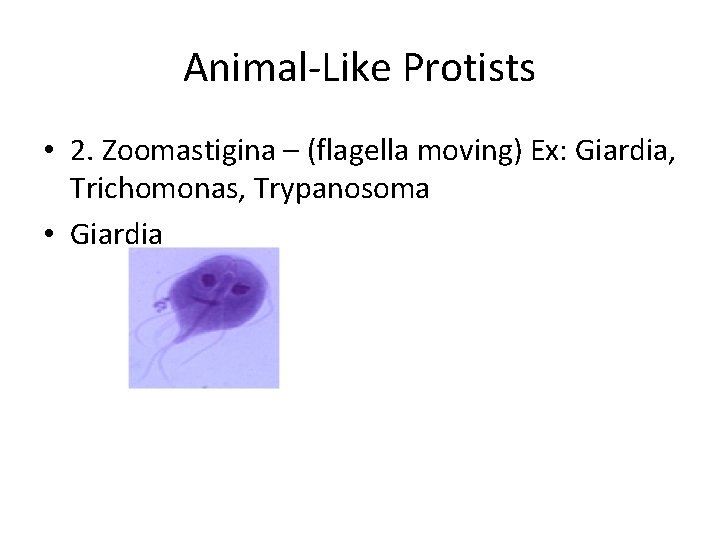
Animal-Like Protists • 2. Zoomastigina – (flagella moving) Ex: Giardia, Trichomonas, Trypanosoma • Giardia
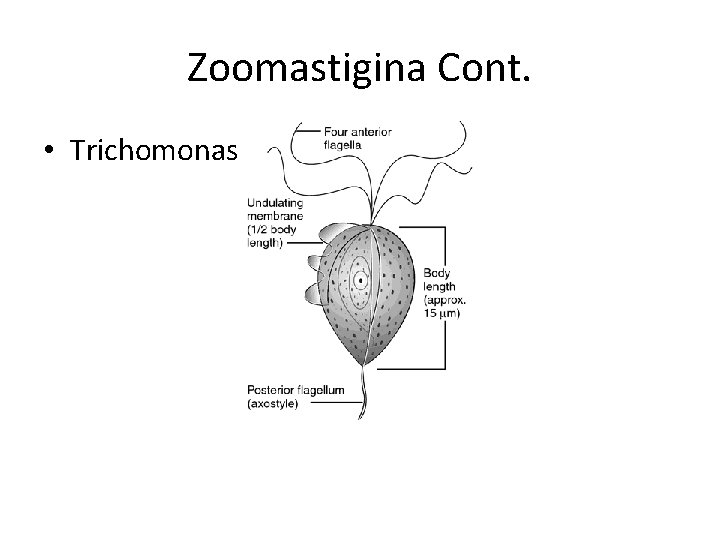
Zoomastigina Cont. • Trichomonas
Zoomastigina Cont. • Trypanosoma
Zoomastigina Characteristics • Flagella – whip-like structures used for movement • Absorb food through membranes • Reproduce by binary fission and sexual reproduction
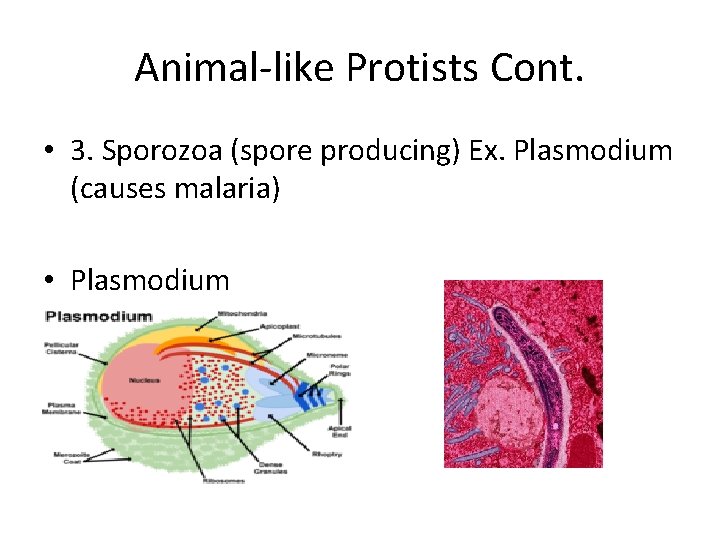
Animal-like Protists Cont. • 3. Sporozoa (spore producing) Ex. Plasmodium (causes malaria) • Plasmodium
Sporoza Characteristics • Non-motile – do not move • All are parasitic (live in a host and cause it harm) • Reproduce by spores • Usually live life cycle in several hosts
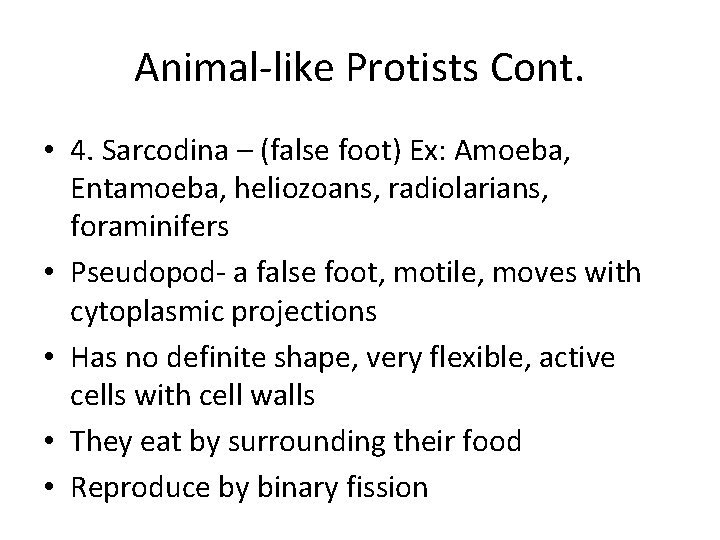
Animal-like Protists Cont. • 4. Sarcodina – (false foot) Ex: Amoeba, Entamoeba, heliozoans, radiolarians, foraminifers • Pseudopod- a false foot, motile, moves with cytoplasmic projections • Has no definite shape, very flexible, active cells with cell walls • They eat by surrounding their food • Reproduce by binary fission
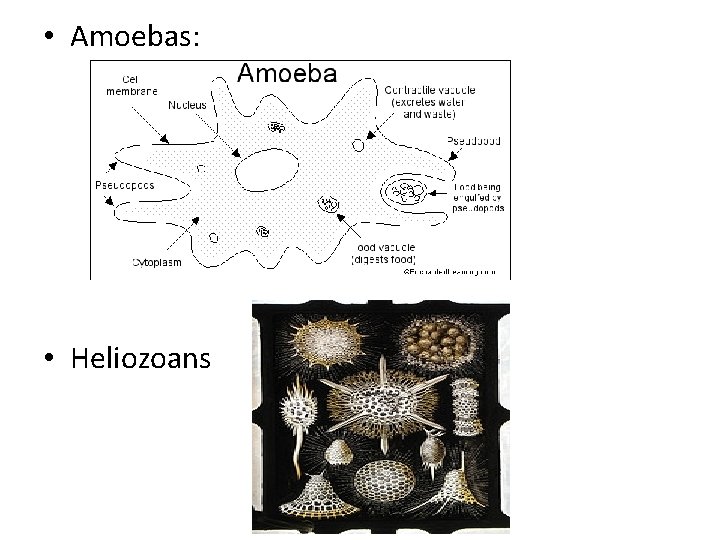
• Amoebas: • Heliozoans
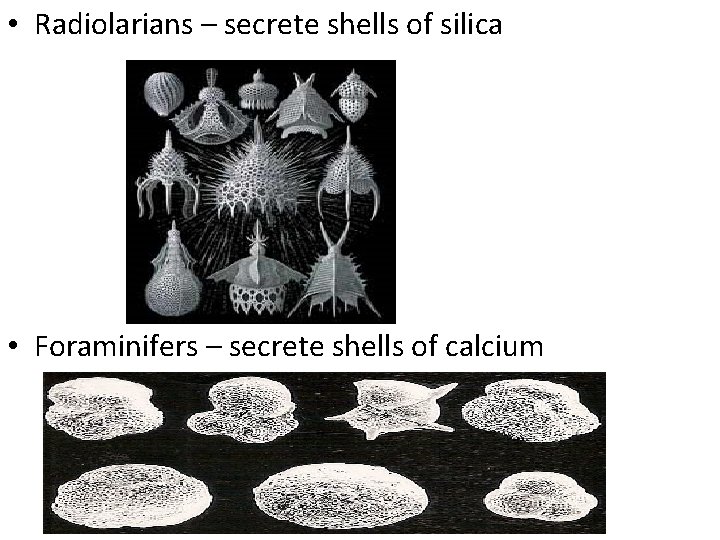
• Radiolarians – secrete shells of silica • Foraminifers – secrete shells of calcium
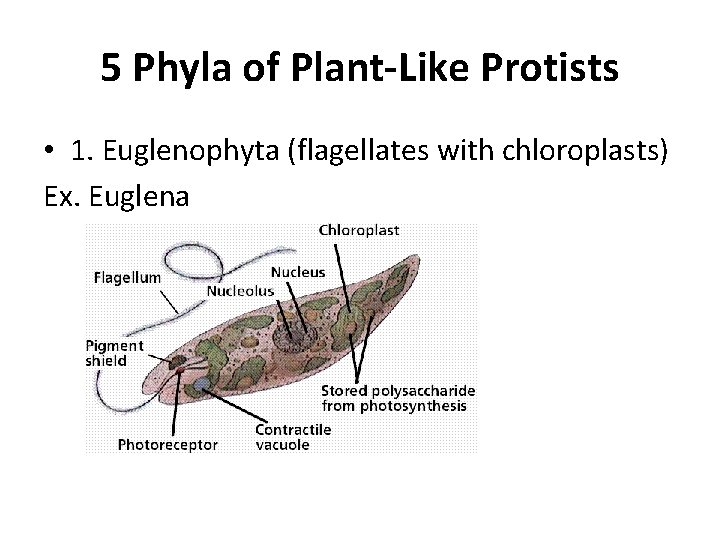
5 Phyla of Plant-Like Protists • 1. Euglenophyta (flagellates with chloroplasts) Ex. Euglena
Euglenophyta Cont. • They have chloroplasts • Have eyespot – helps them find bright areas • They are usually autotrophs (can be heterotroph when sunlight is not avaiable) • Very common protist
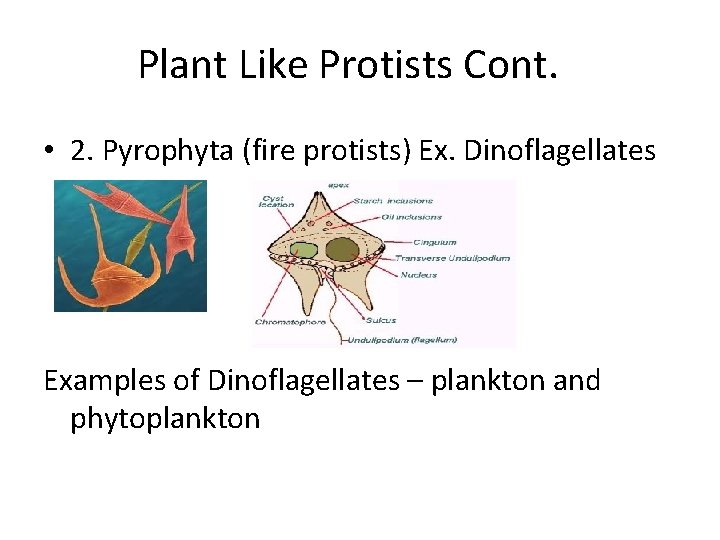
Plant Like Protists Cont. • 2. Pyrophyta (fire protists) Ex. Dinoflagellates Examples of Dinoflagellates – plankton and phytoplankton
Pyrophyta Cont. • Most are unicellular • Many are luminescent (they give off light if agitated) • They have bizarre shapes
Plant-Like Protists Cont. • 3. Chrysophyta (golden protists) Examples: yellow green algae, golden brown algae, diatoms • cell walls contain pectin instead of cellulose • Store food as oil rather than starch • Reproduce sexually and asexually
Chrysophyta Cont. • Yellow green algae
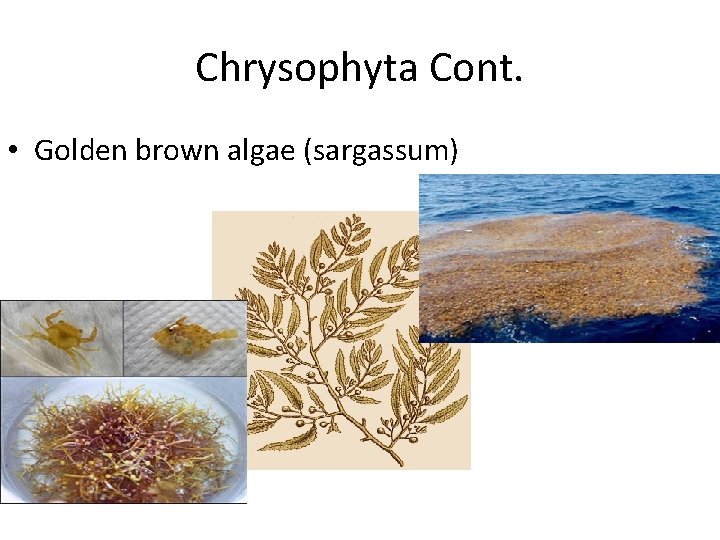
Chrysophyta Cont. • Golden brown algae (sargassum)
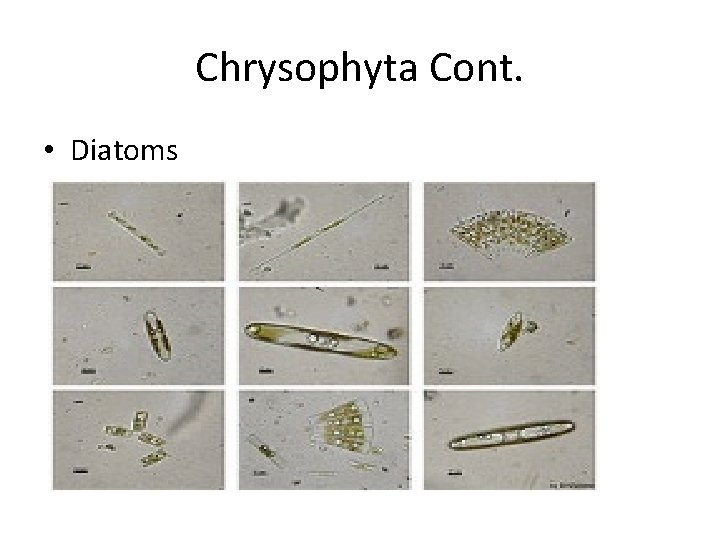
Chrysophyta Cont. • Diatoms
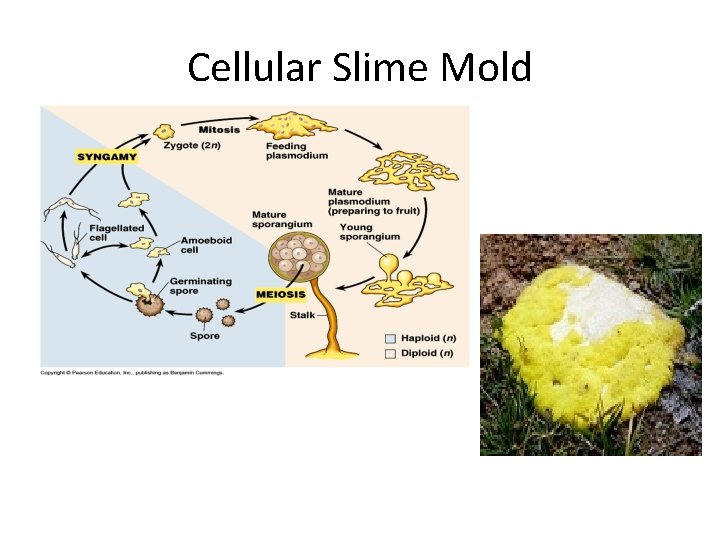
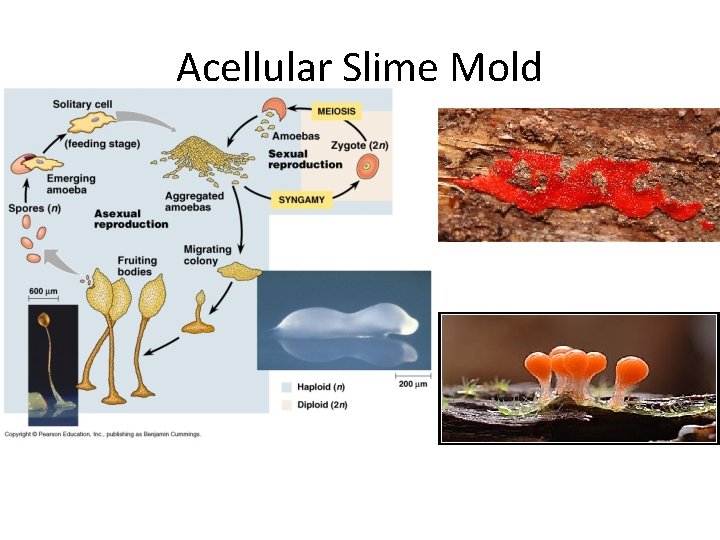
Plant-Like Protists Cont. • 4. Acrasiomycota (cellular slime mold) • 5. Myxomycota (acellular slime mold) • The slime molds appear amoeba-like and produce spores
Cellular Slime Mold
Acellular Slime Mold
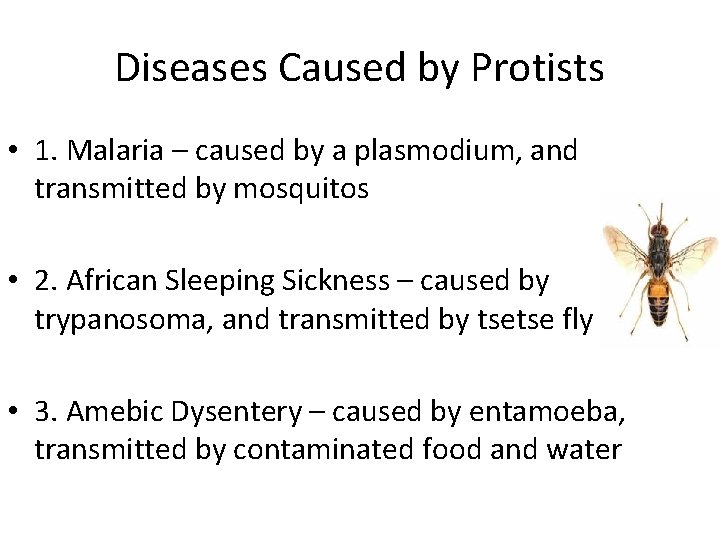
Diseases Caused by Protists • 1. Malaria – caused by a plasmodium, and transmitted by mosquitos • 2. African Sleeping Sickness – caused by trypanosoma, and transmitted by tsetse fly • 3. Amebic Dysentery – caused by entamoeba, transmitted by contaminated food and water
Helpful Protists • 1. Trichonympha – lives in the digestive enzymes of termites/wood roaches and they digest the cellulose because the termites/roaches can not • 2. Some protists serve as food for larger animals in oceans, ponds, and lakes • 3. Dinoflagellates – allow tiny animals that make coral to live with them allowing coral to grow in areas with low nutrients
Harmful Protists • Dinoflagellates Blooms – they emit a toxin that can kill fish and dolphins • More than 70% of photosynthesis that occurs on Earth goes on near the surface of the ocean. It helps provide lots of oxygen and food for ocean life