
PROTISTS EUGLENA AMOEBA PARAMECIUM VOLVOX What is a
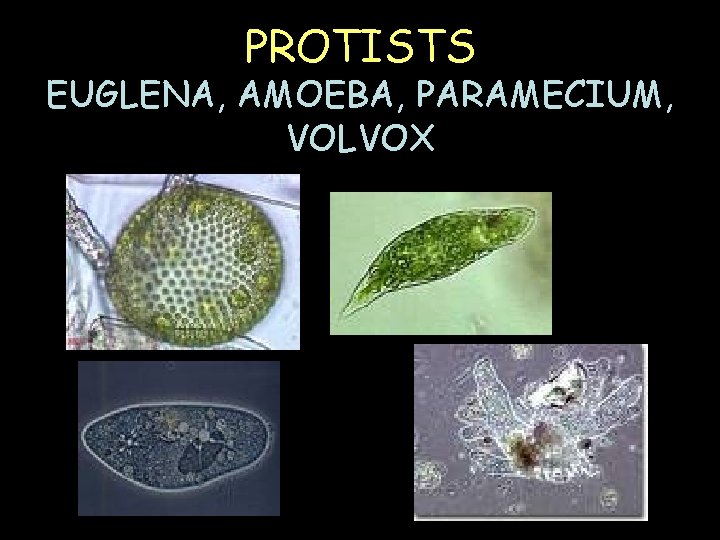
PROTISTS EUGLENA, AMOEBA, PARAMECIUM, VOLVOX
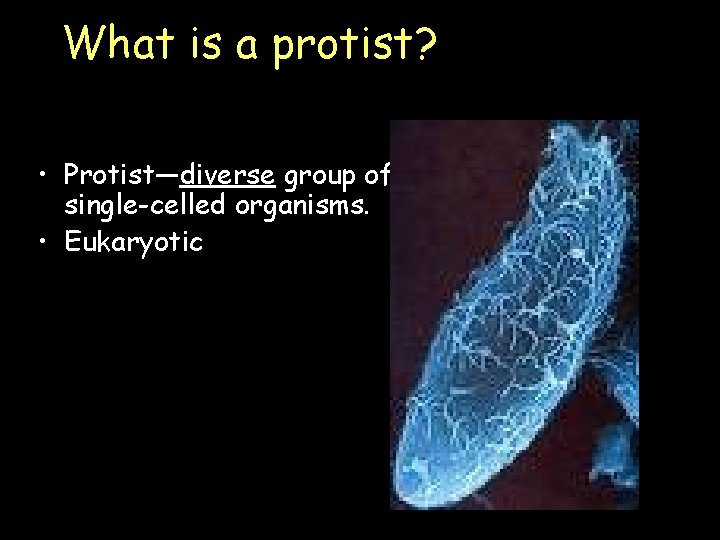
What is a protist? • Protist—diverse group of single-celled organisms. • Eukaryotic

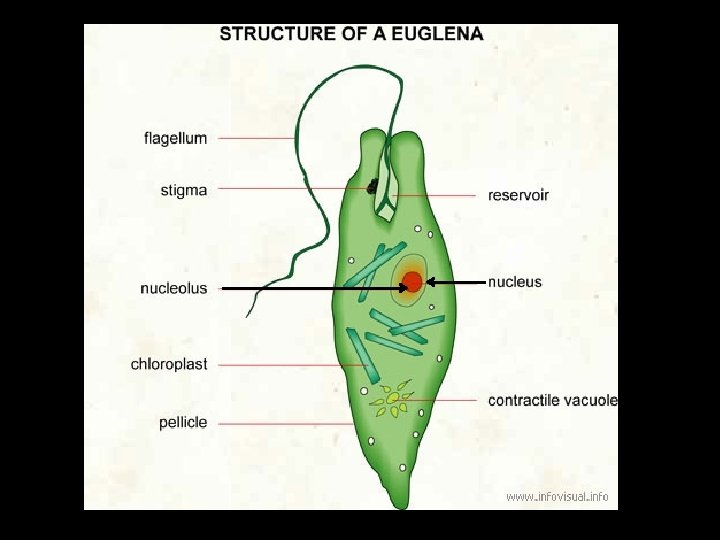
Euglena • Movement- flagellum • Flagella – a whip-like tail that moves quickly back and forth to propel (or move) the protist through water. • Producer- can do photosynthesis to make food • Hunter- captures food • Eyespot – an organelle in the euglena that is sensitive to light • Contractile vacuole collects excess water then shoots it out of the cell. • Reproduction- -asexual (binary fission)
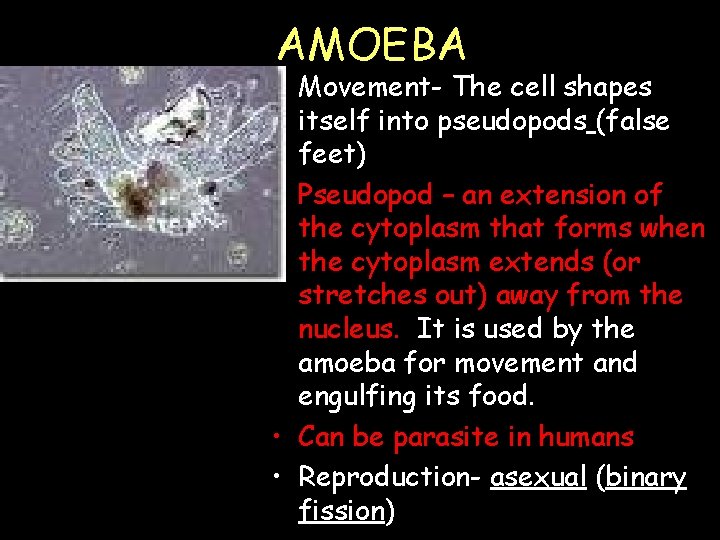
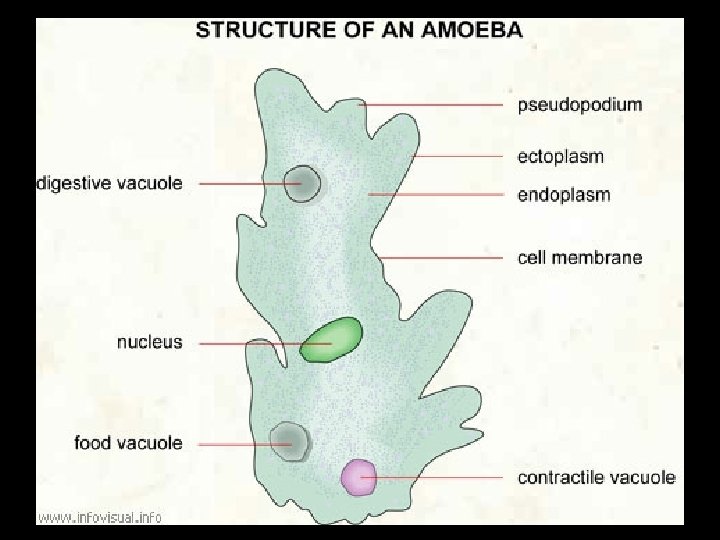
AMOEBA • Movement- The cell shapes itself into pseudopods (false feet) • Pseudopod – an extension of the cytoplasm that forms when the cytoplasm extends (or stretches out) away from the nucleus. It is used by the amoeba for movement and engulfing its food. • Can be parasite in humans • Reproduction- asexual (binary fission)
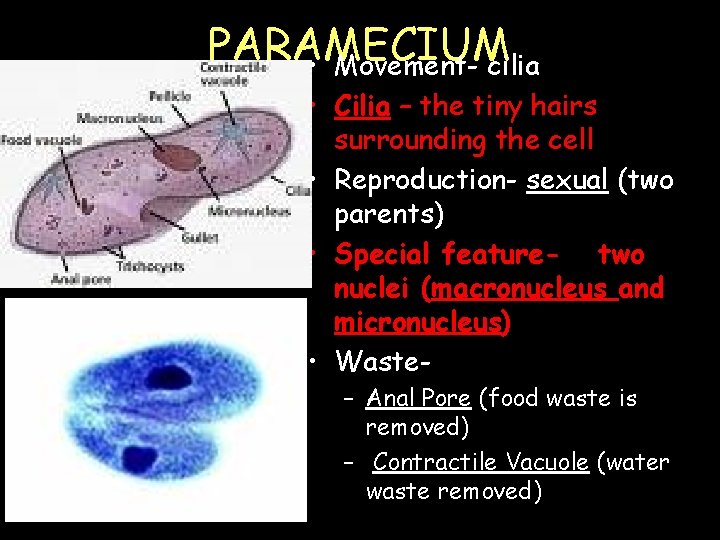
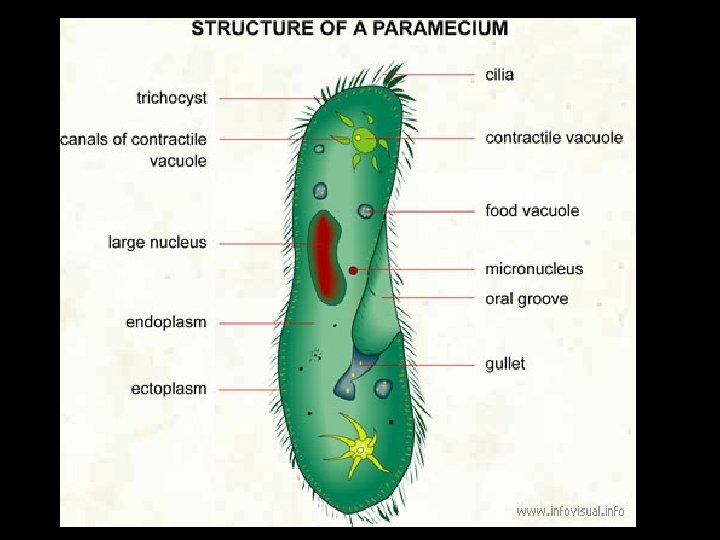
PARAMECIUM • Movement- cilia • Cilia – the tiny hairs surrounding the cell • Reproduction- sexual (two parents) • Special feature- two nuclei (macronucleus and micronucleus) • Waste– Anal Pore (food waste is removed) – Contractile Vacuole (water waste removed) • d for movement.
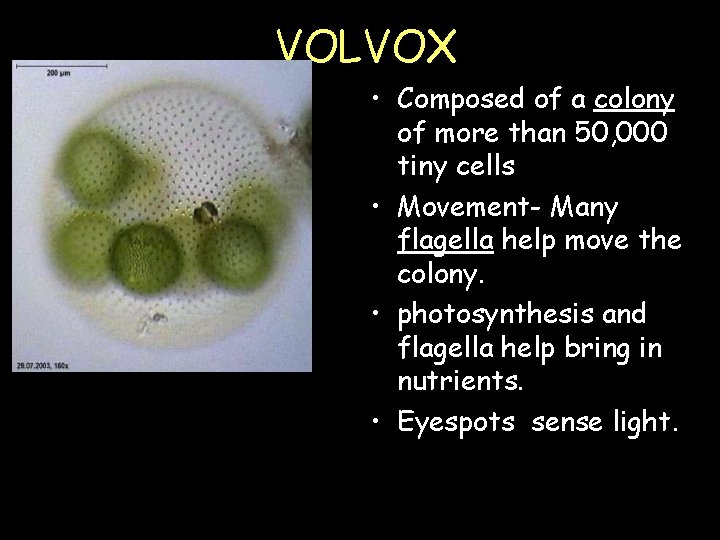
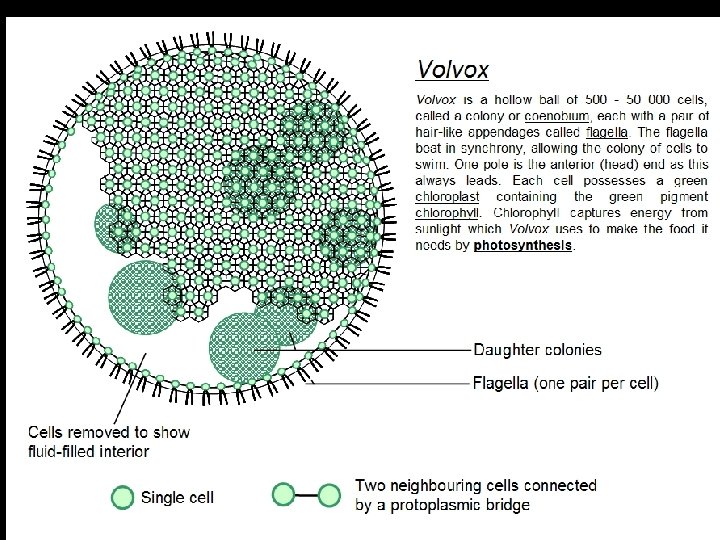
VOLVOX • Composed of a colony of more than 50, 000 tiny cells • Movement- Many flagella help move the colony. • photosynthesis and flagella help bring in nutrients. • Eyespots sense light.
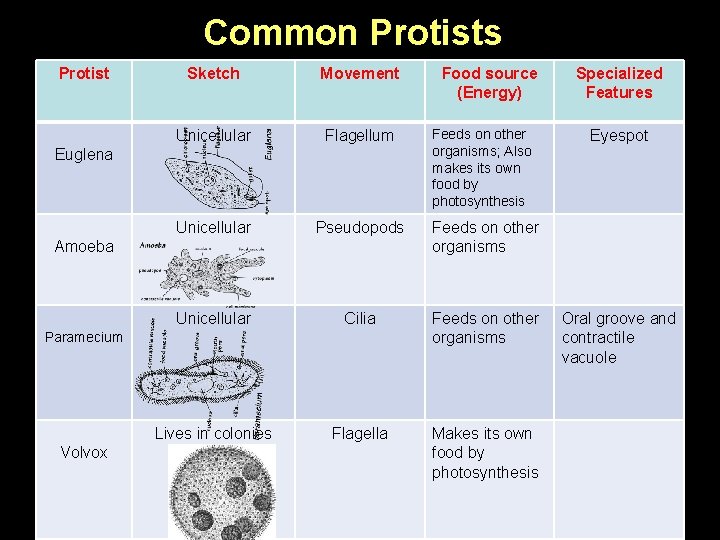
Common Protists Protist Sketch Movement Food source (Energy) Specialized Features Protists Groups and Features Unicellular Flagellum Feeds on other organisms; Also makes its own food by photosynthesis Unicellular Pseudopods Feeds on other organisms Unicellular Cilia Feeds on other organisms Lives in colonies Flagella Makes its own food by photosynthesis Euglena Amoeba Paramecium Volvox Eyespot Oral groove and contractile vacuole
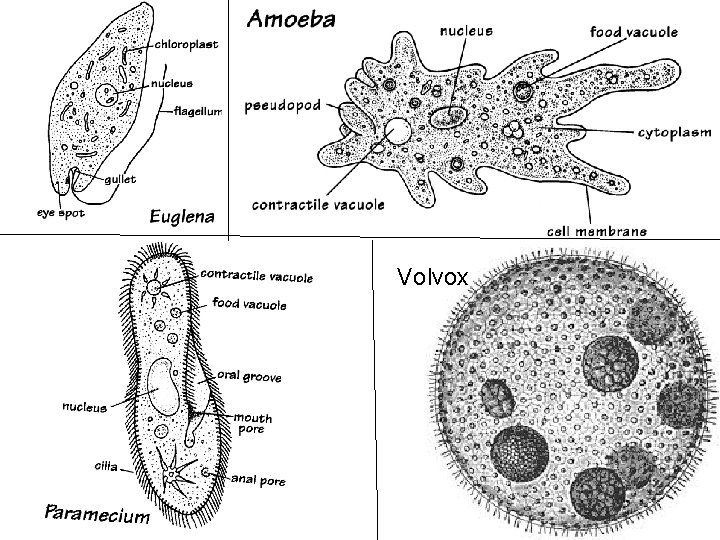
Volvox
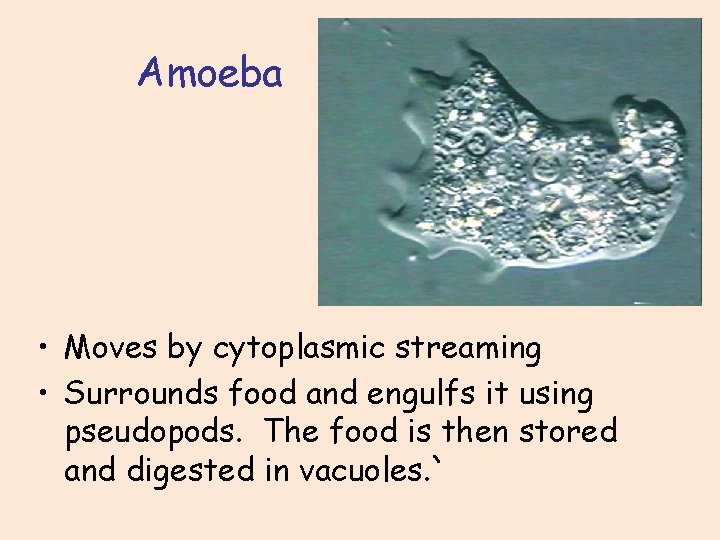
Amoeba • Moves by cytoplasmic streaming • Surrounds food and engulfs it using pseudopods. The food is then stored and digested in vacuoles. `
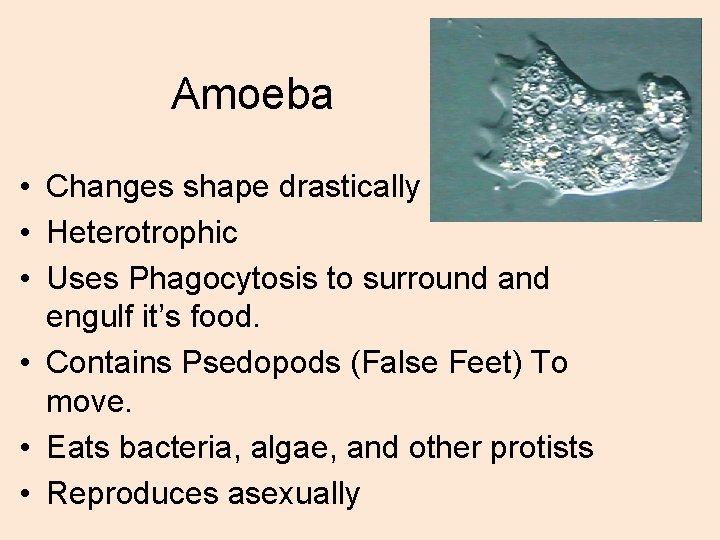
Amoeba • Changes shape drastically • Heterotrophic • Uses Phagocytosis to surround and engulf it’s food. • Contains Psedopods (False Feet) To move. • Eats bacteria, algae, and other protists • Reproduces asexually
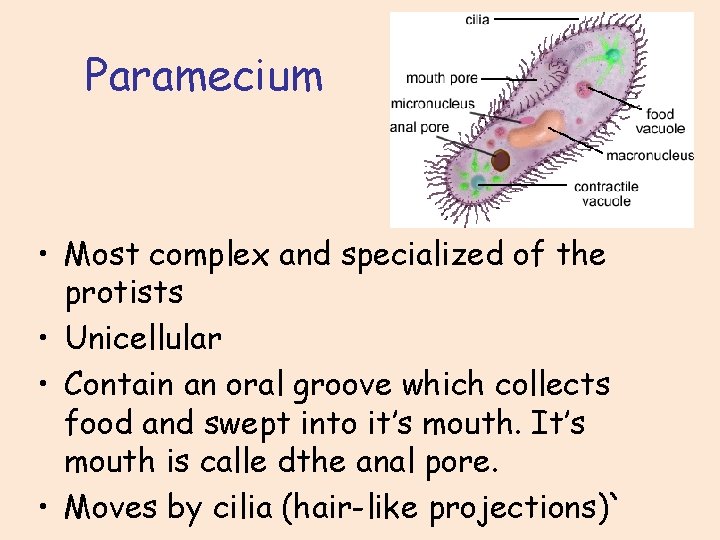
Paramecium • Most complex and specialized of the protists • Unicellular • Contain an oral groove which collects food and swept into it’s mouth. It’s mouth is calle dthe anal pore. • Moves by cilia (hair-like projections)`
Paramecium • Fast--Can move about 12 body lengths per second • Shape of a pill capsule • Heterotrophic • Relatively large • Common in pond scum and freshwater • Has two nuclei (macro and micro)`
Euglena • Found in Fresh and Salt Waters • Possesses a RED EYESPOT. This organelle helps with photosynthesis. • Autotrophic and Heterotrophic • Green in color which shows it is made up of chloroplasts when eating autotrophically. • Uses Phagocytosis (engulfing and surrounding it’s food) when eating heterotrophically.
Paramecium • Uses cilia to sweep food into the oral groove • Feeds on micro-organisms like bacteria, algae, and yeasts • Is covered in cilia so it spirals through water`
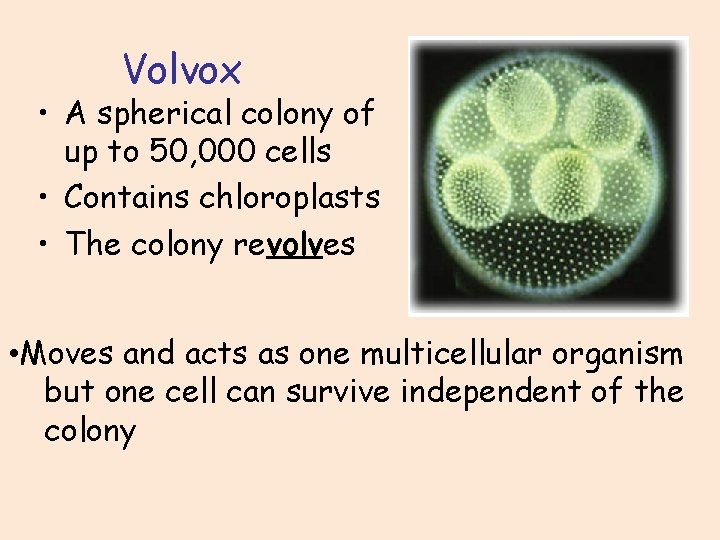
Volvox • A spherical colony of up to 50, 000 cells • Contains chloroplasts • The colony revolves • Moves and acts as one multicellular organism but one cell can survive independent of the colony
Volvox • Type of green algae • freshwater – ponds, ditches, puddles, lagoons • Colonies use flagella to swim • Cells have eyespots • Reproduces asexually and sexually • Autotrophic • Makes food by photosynthesis
- Slides: 20