
Proteomics Informatics Workshop Part III Protein Quantitation David

- Slides: 56
Proteomics Informatics Workshop Part III: Protein Quantitation David Fenyö February 25, 2011 • Metabolic labeling – SILAC • Chemical labeling • Label-free quantitation • Spectrum counting • Stoichiometry • Protein processing and degradation • Biomarker discovery and verification
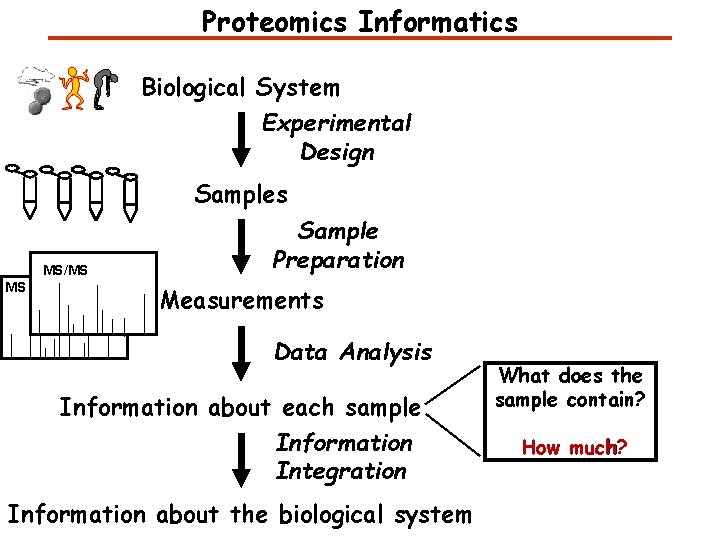
Proteomics Informatics Biological System Experimental Design Samples MS/MS MS Sample Preparation Measurements Data Analysis Information about each sample Information Integration Information about the biological system What does the sample contain? How much?
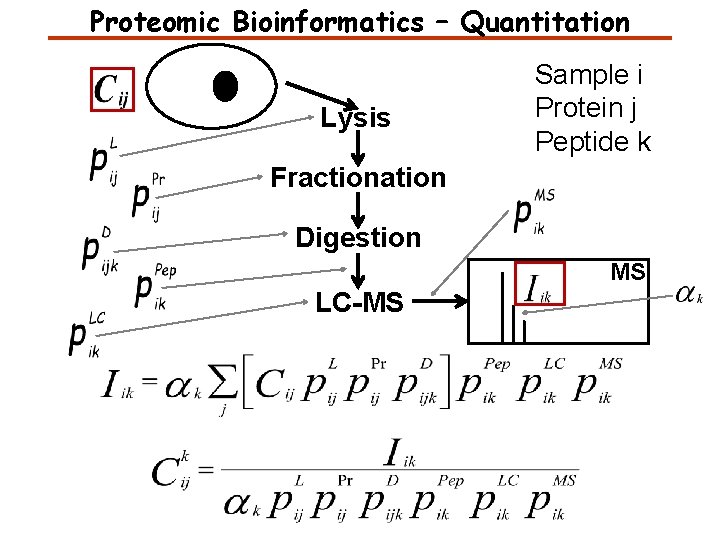
Proteomic Bioinformatics – Quantitation Lysis Sample i Protein j Peptide k Fractionation Digestion MS LC-MS
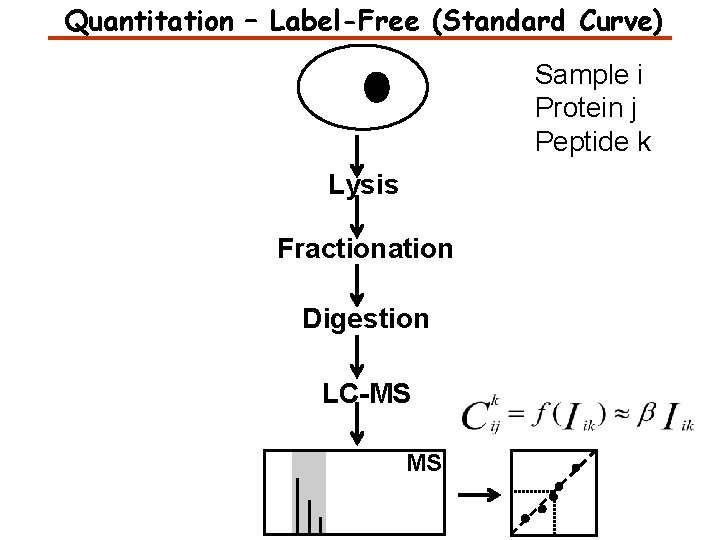
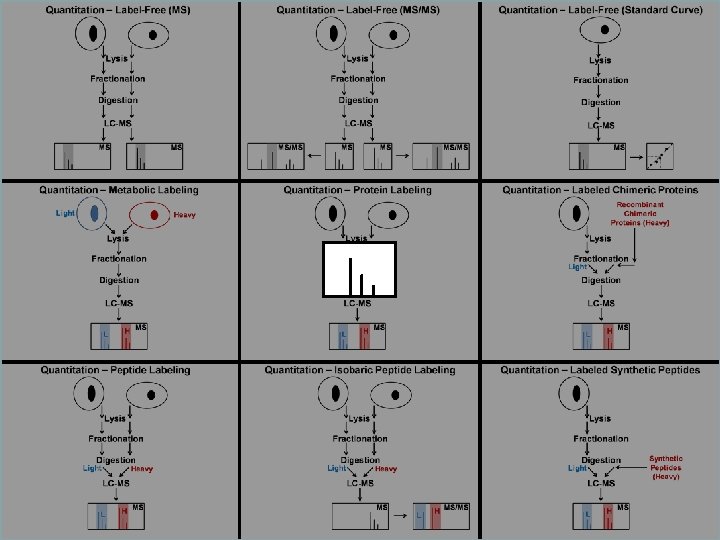
Quantitation – Label-Free (Standard Curve) Sample i Protein j Peptide k Lysis Fractionation Digestion LC-MS MS
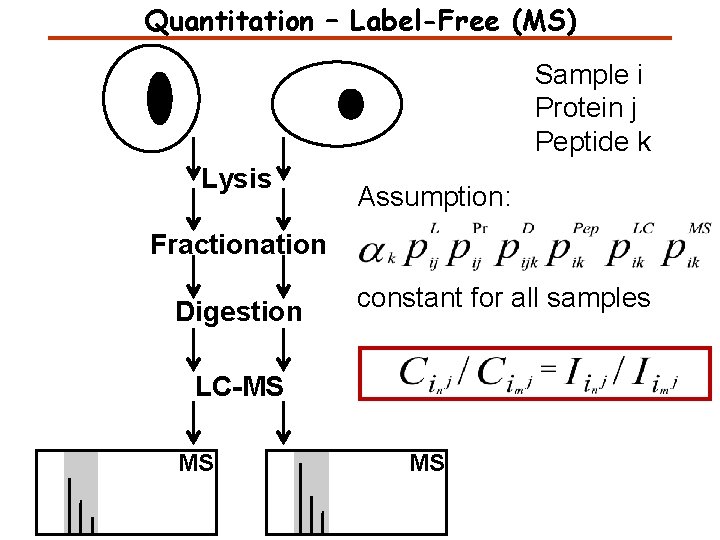
Quantitation – Label-Free (MS) Sample i Protein j Peptide k Lysis Assumption: Fractionation Digestion constant for all samples LC-MS MS MS
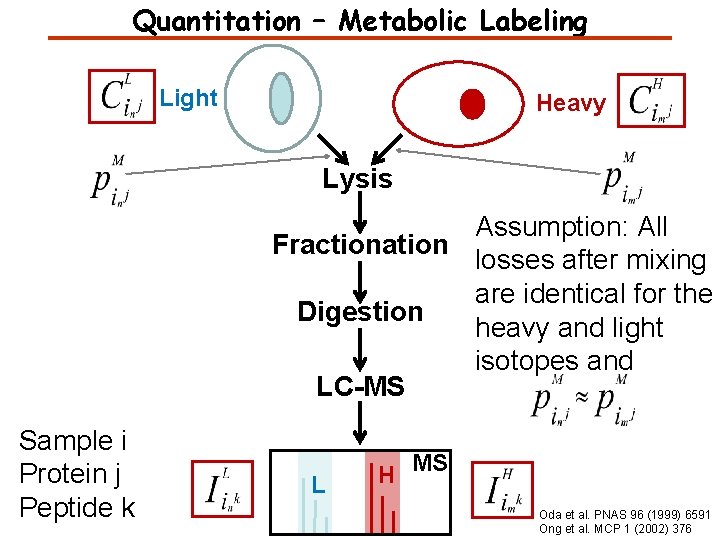
Quantitation – Metabolic Labeling Light Heavy Lysis Assumption: All Fractionation losses after mixing are identical for the Digestion heavy and light isotopes and LC-MS Sample i Protein j Peptide k L H MS Oda et al. PNAS 96 (1999) 6591 Ong et al. MCP 1 (2002) 376
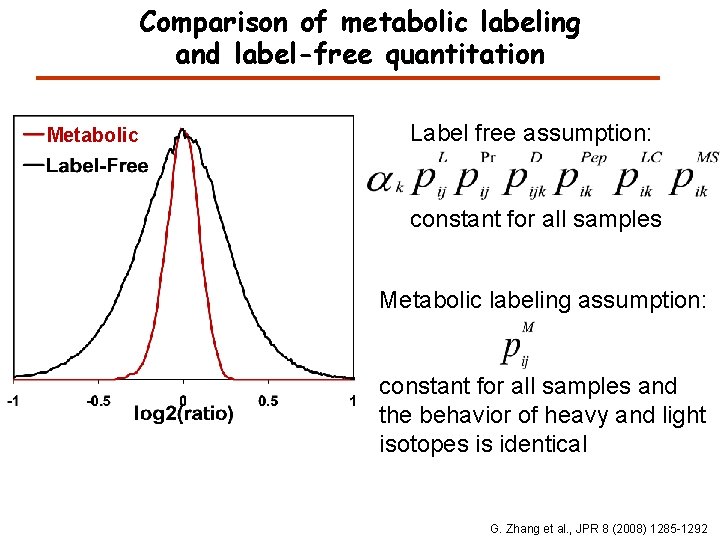
Comparison of metabolic labeling and label-free quantitation Metabolic Label free assumption: constant for all samples Metabolic labeling assumption: constant for all samples and the behavior of heavy and light isotopes is identical G. Zhang et al. , JPR 8 (2008) 1285 -1292
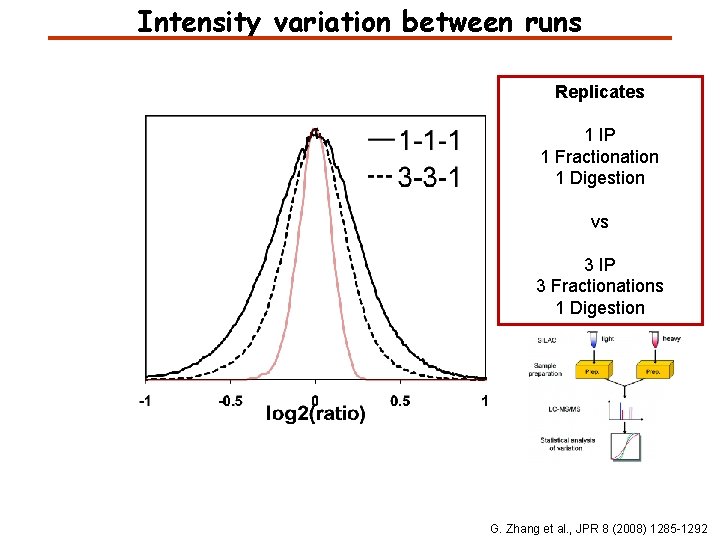
Intensity variation between runs Replicates 1 IP 1 Fractionation 1 Digestion vs 3 IP 3 Fractionations 1 Digestion G. Zhang et al. , JPR 8 (2008) 1285 -1292
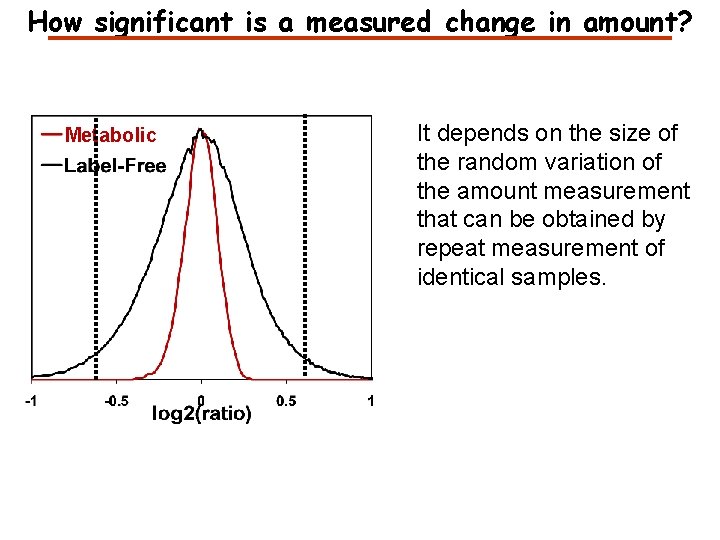
How significant is a measured change in amount? Metabolic It depends on the size of the random variation of the amount measurement that can be obtained by repeat measurement of identical samples.
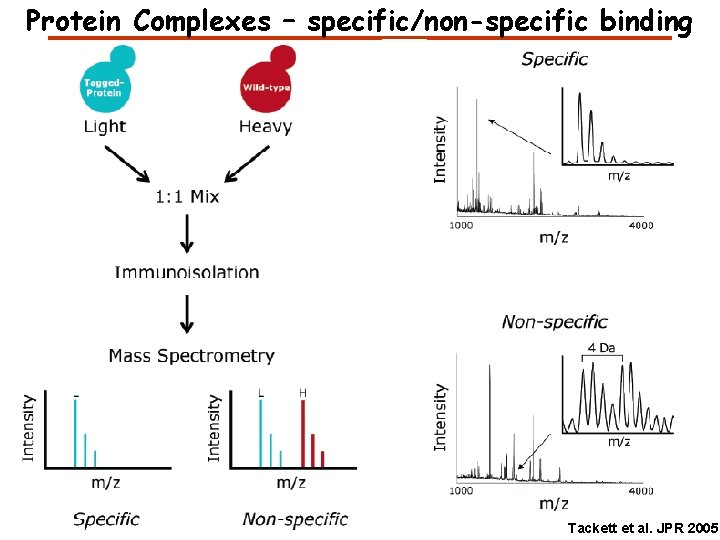
Protein Complexes – specific/non-specific binding Tackett et al. JPR 2005
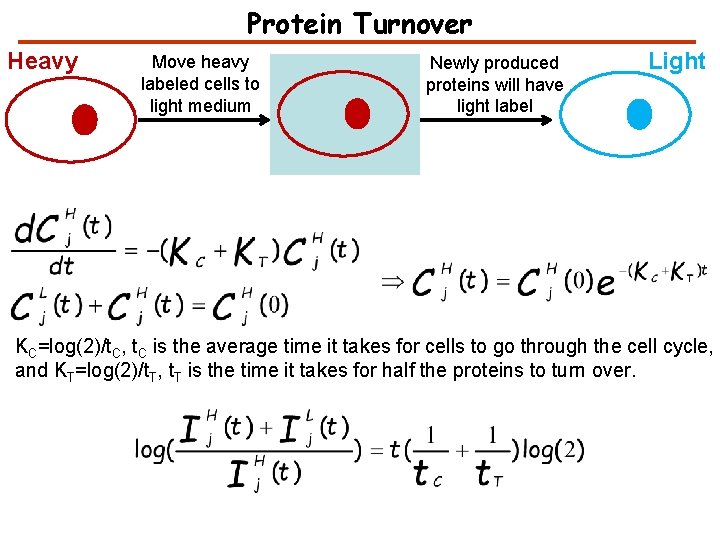
Protein Turnover Heavy Move heavy labeled cells to light medium Newly produced proteins will have light label Light KC=log(2)/t. C, t. C is the average time it takes for cells to go through the cell cycle, and KT=log(2)/t. T, t. T is the time it takes for half the proteins to turn over.
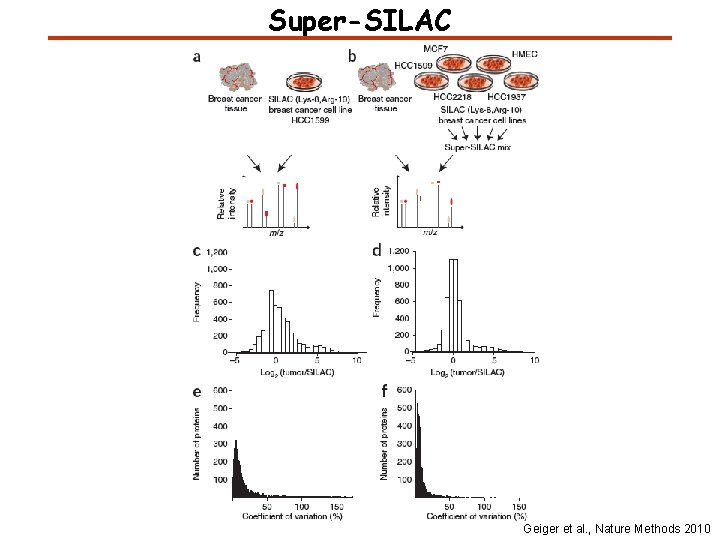
Super-SILAC Geiger et al. , Nature Methods 2010
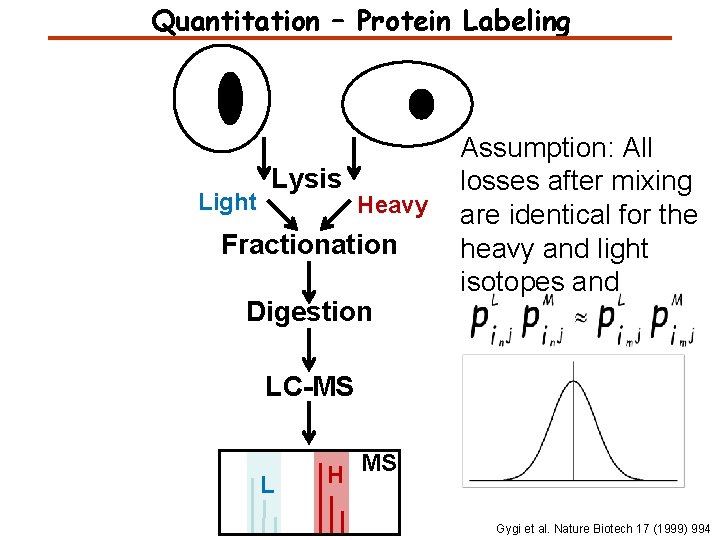
Quantitation – Protein Labeling Light Lysis Heavy Fractionation Digestion Assumption: All losses after mixing are identical for the heavy and light isotopes and LC-MS L H MS Gygi et al. Nature Biotech 17 (1999) 994
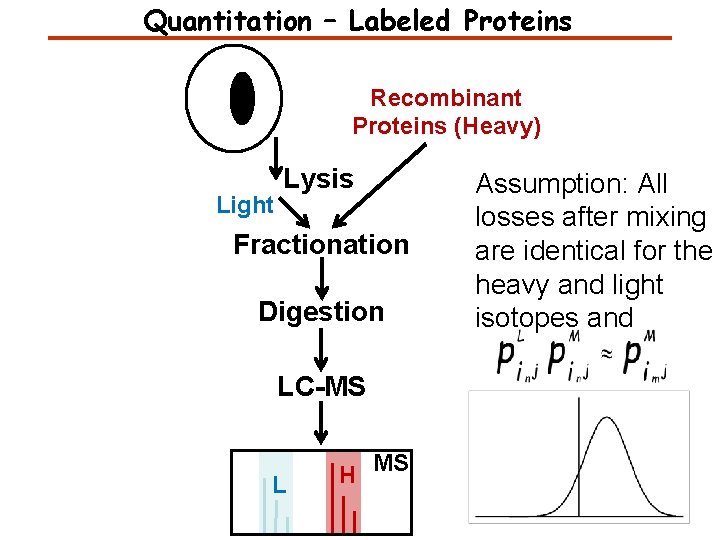
Quantitation – Labeled Proteins Recombinant Proteins (Heavy) Light Lysis Fractionation Digestion LC-MS L H MS Assumption: All losses after mixing are identical for the heavy and light isotopes and
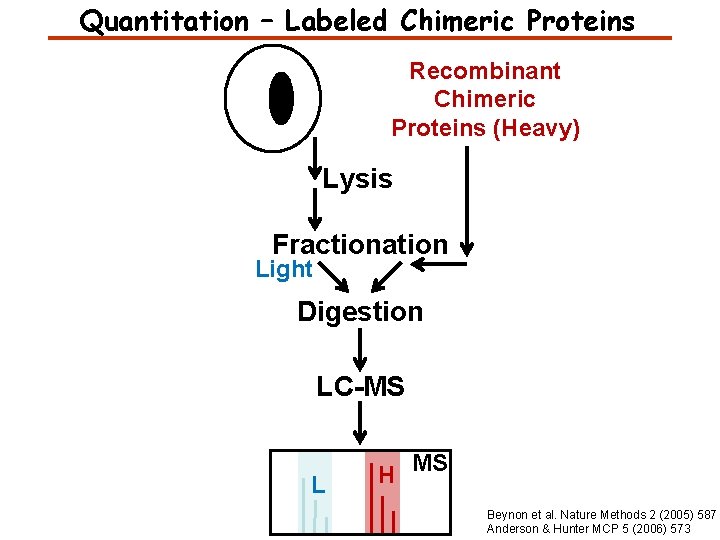
Quantitation – Labeled Chimeric Proteins Recombinant Chimeric Proteins (Heavy) Lysis Fractionation Light Digestion LC-MS L H MS Beynon et al. Nature Methods 2 (2005) 587 Anderson & Hunter MCP 5 (2006) 573
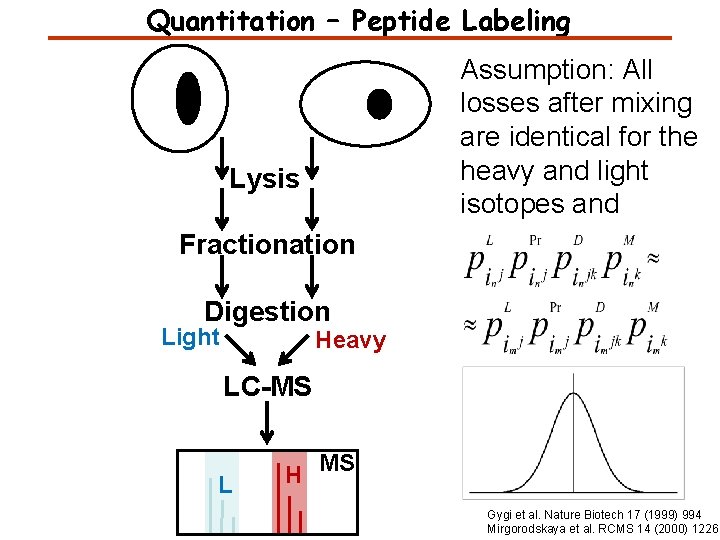
Quantitation – Peptide Labeling Assumption: All losses after mixing are identical for the heavy and light isotopes and Lysis Fractionation Digestion Light Heavy LC-MS L H MS Gygi et al. Nature Biotech 17 (1999) 994 Mirgorodskaya et al. RCMS 14 (2000) 1226
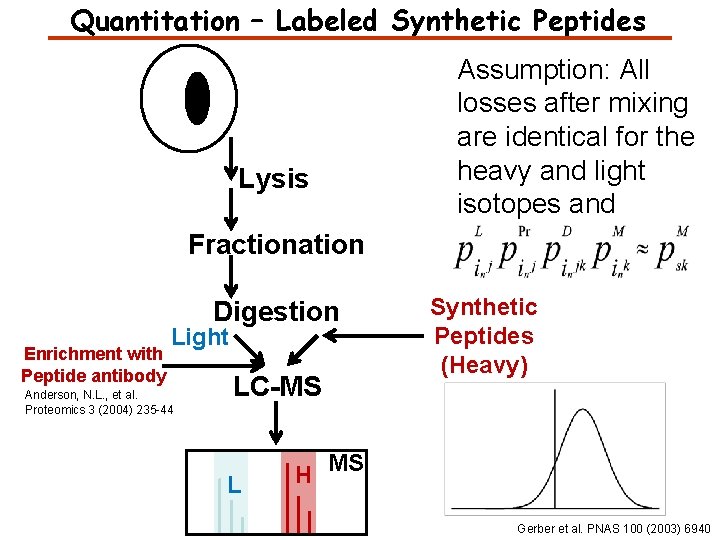
Quantitation – Labeled Synthetic Peptides Lysis Assumption: All losses after mixing are identical for the heavy and light isotopes and Fractionation Digestion Enrichment with Peptide antibody Light Anderson, N. L. , et al. Proteomics 3 (2004) 235 -44 LC-MS L Synthetic Peptides (Heavy) H MS Gerber et al. PNAS 100 (2003) 6940
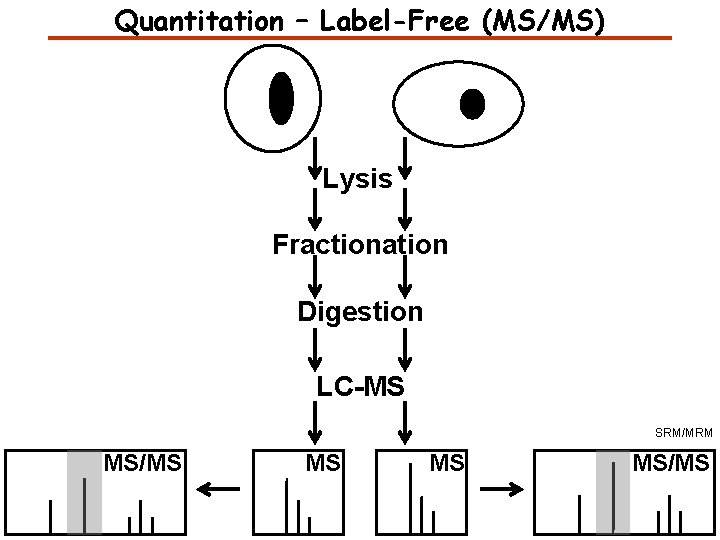
Quantitation – Label-Free (MS/MS) Lysis Fractionation Digestion LC-MS SRM/MRM MS/MS MS/MS
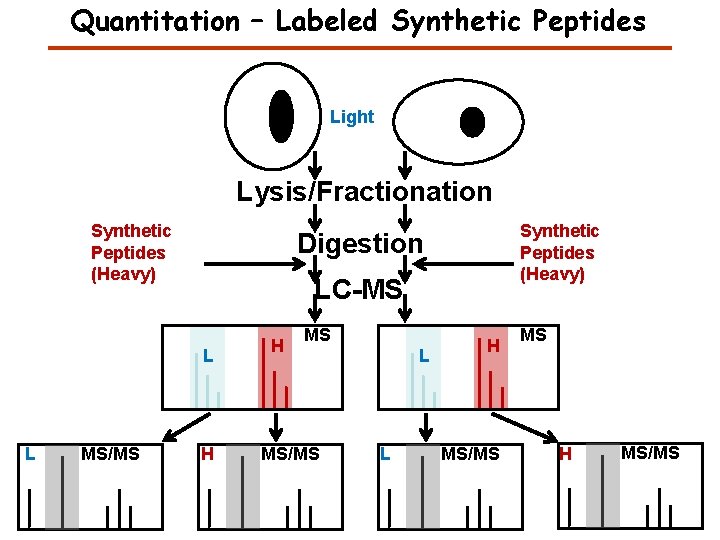
Quantitation – Labeled Synthetic Peptides Light Lysis/Fractionation Synthetic Peptides (Heavy) Digestion LC-MS L L MS/MS Synthetic Peptides (Heavy) H H MS MS/MS L L H MS/MS MS H MS/MS
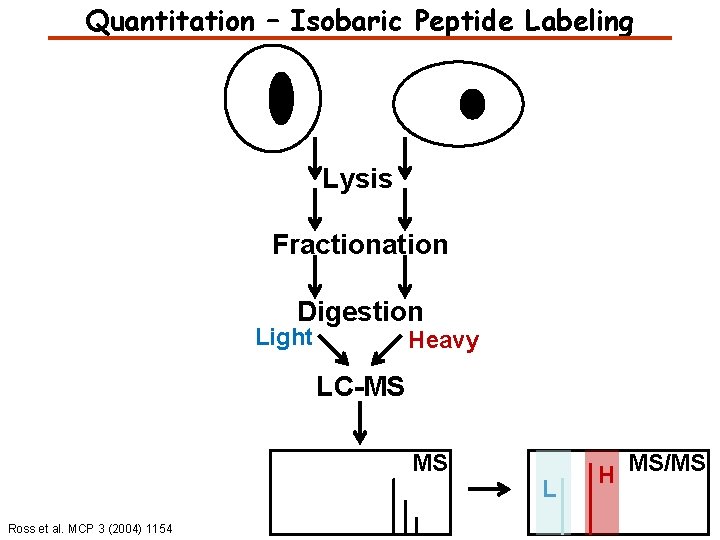
Quantitation – Isobaric Peptide Labeling Lysis Fractionation Digestion Light Heavy LC-MS MS Ross et al. MCP 3 (2004) 1154 L H MS/MS
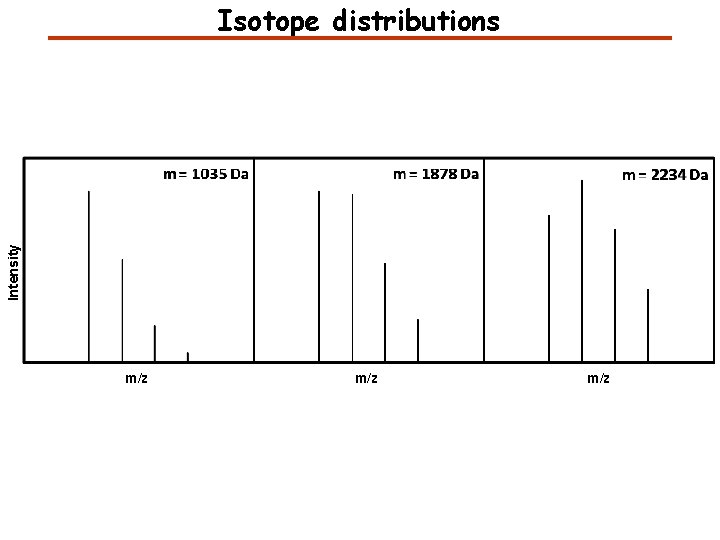
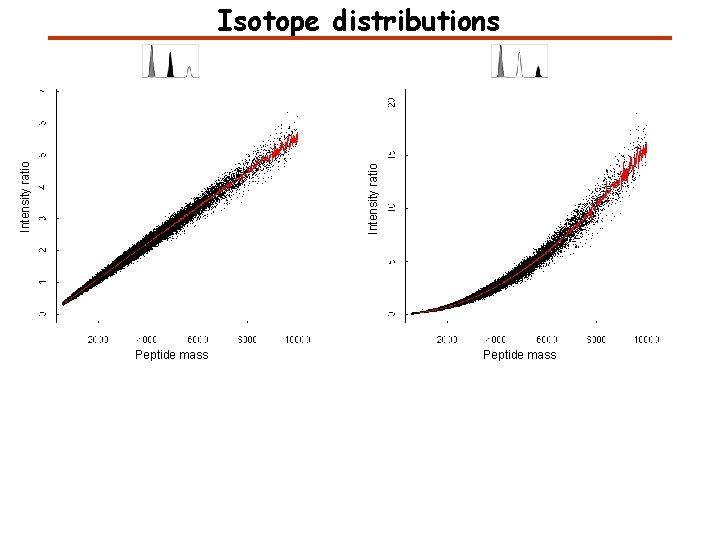
Intensity Isotope distributions m/z m/z
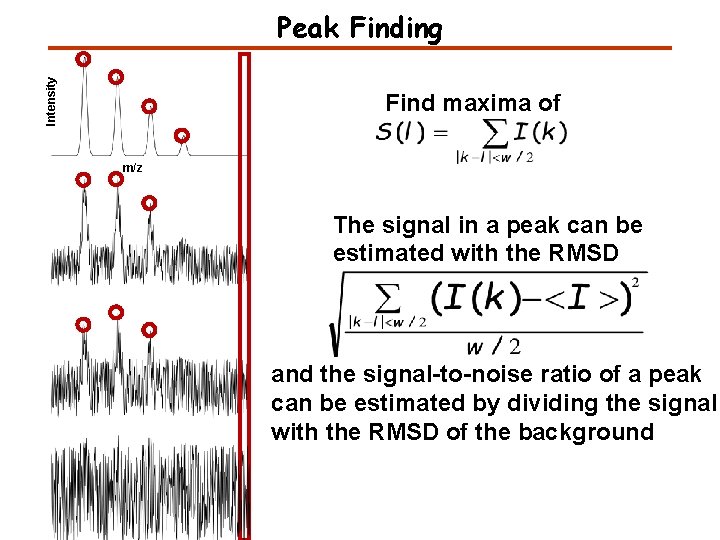
Intensity Peak Finding Find maxima of m/z The signal in a peak can be estimated with the RMSD and the signal-to-noise ratio of a peak can be estimated by dividing the signal with the RMSD of the background
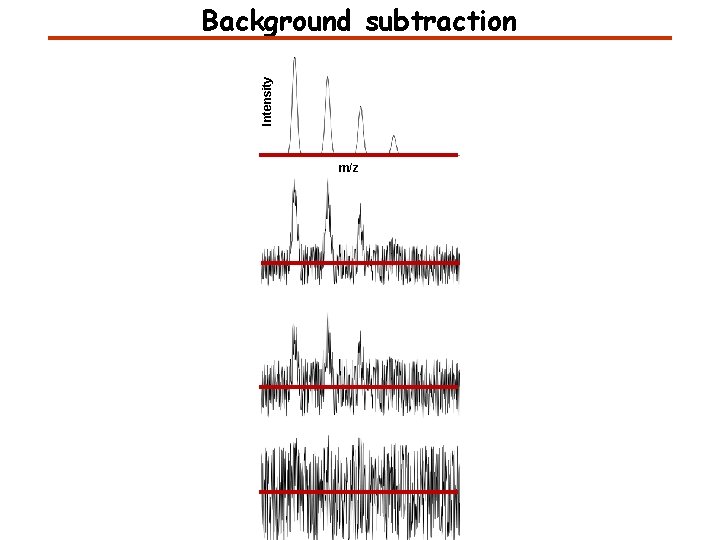
Intensity Background subtraction m/z
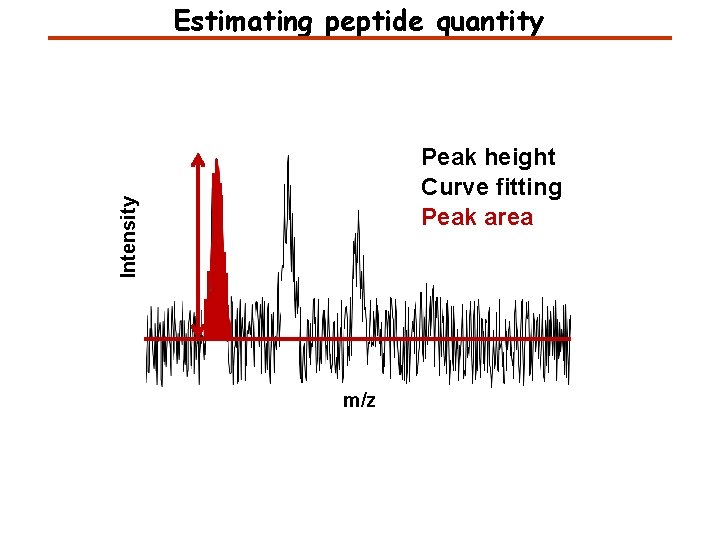
Estimating peptide quantity Intensity Peak height Curve fitting Peak area m/z
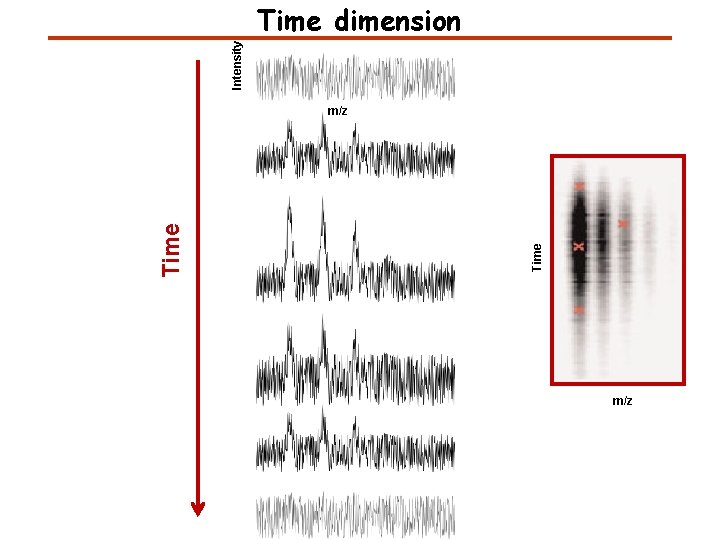
Intensity Time dimension Time m/z
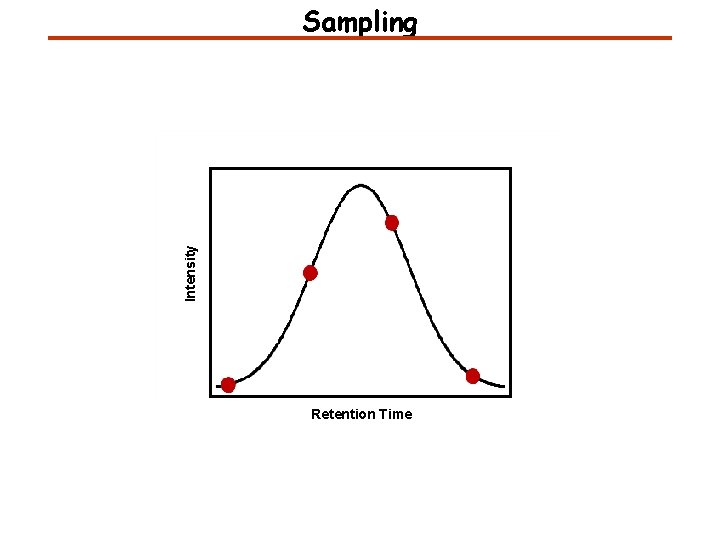
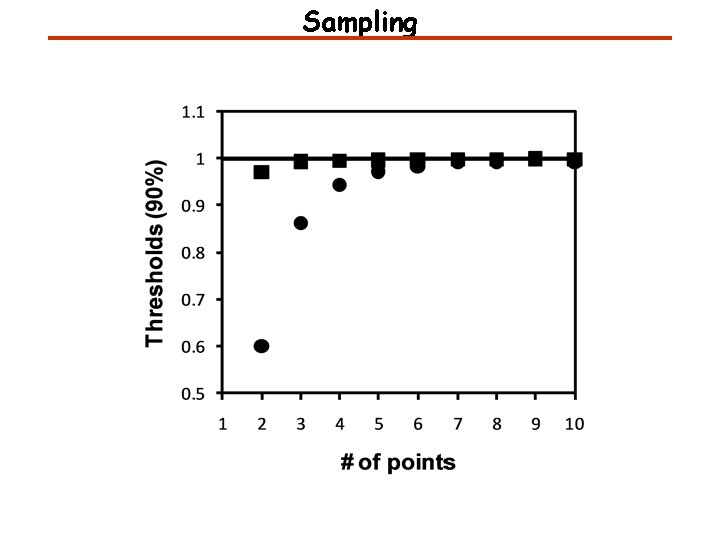
Intensity Sampling Retention Time
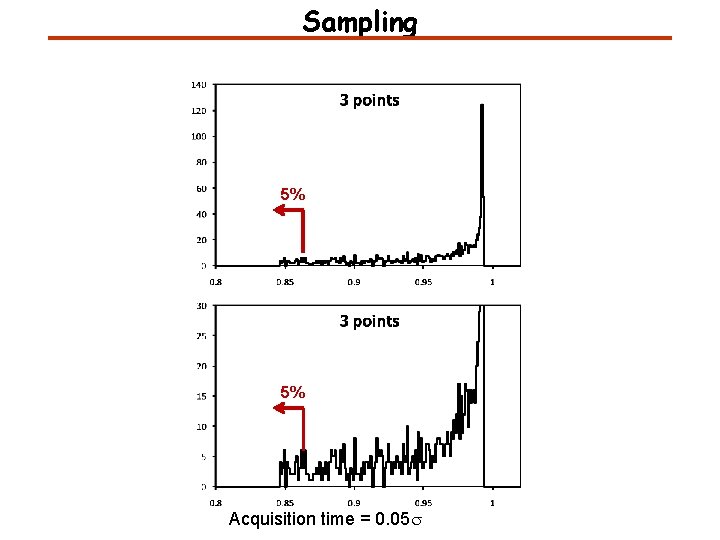
Sampling 5% 5% Acquisition time = 0. 05 s
Sampling
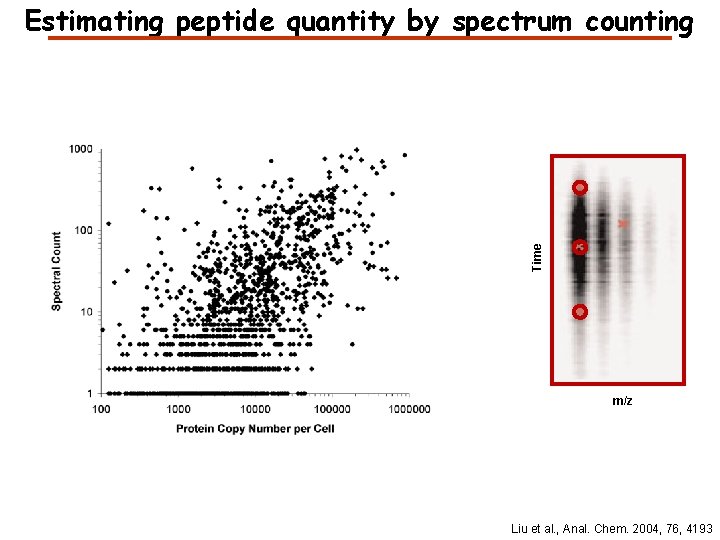
Time Estimating peptide quantity by spectrum counting m/z Liu et al. , Anal. Chem. 2004, 76, 4193
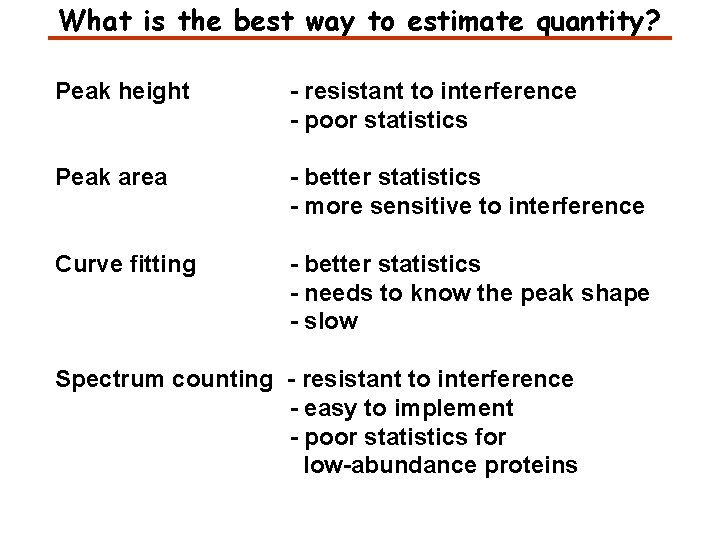
What is the best way to estimate quantity? Peak height - resistant to interference - poor statistics Peak area - better statistics - more sensitive to interference Curve fitting - better statistics - needs to know the peak shape - slow Spectrum counting - resistant to interference - easy to implement - poor statistics for low-abundance proteins
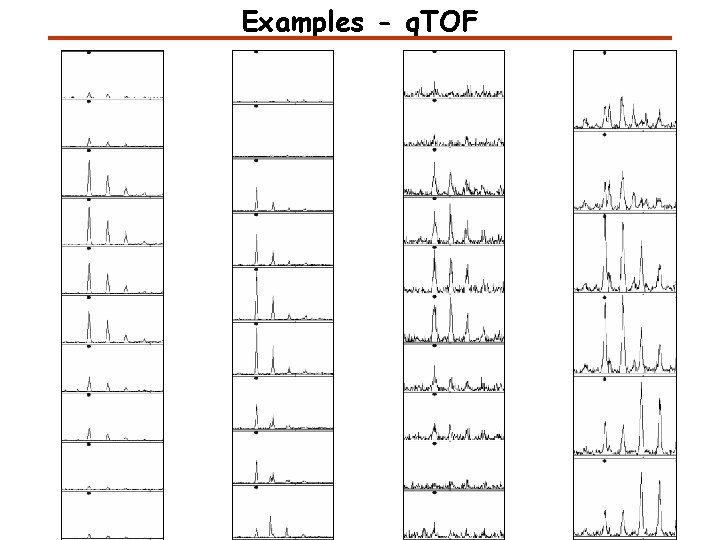
Examples - q. TOF
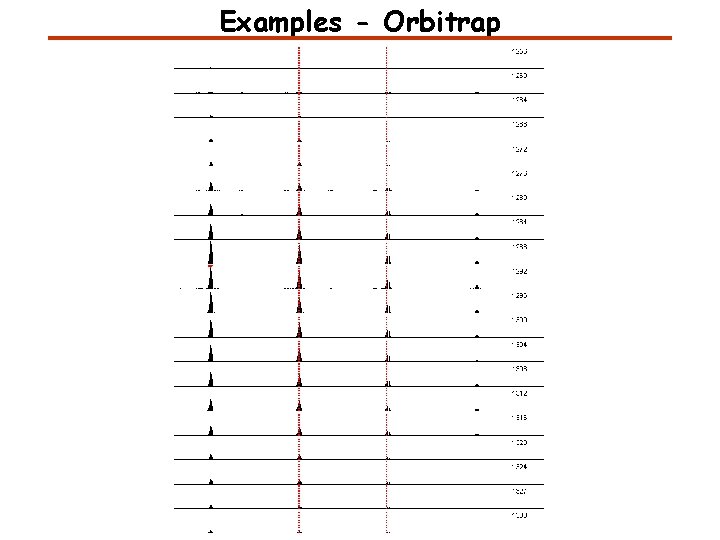
Examples - Orbitrap
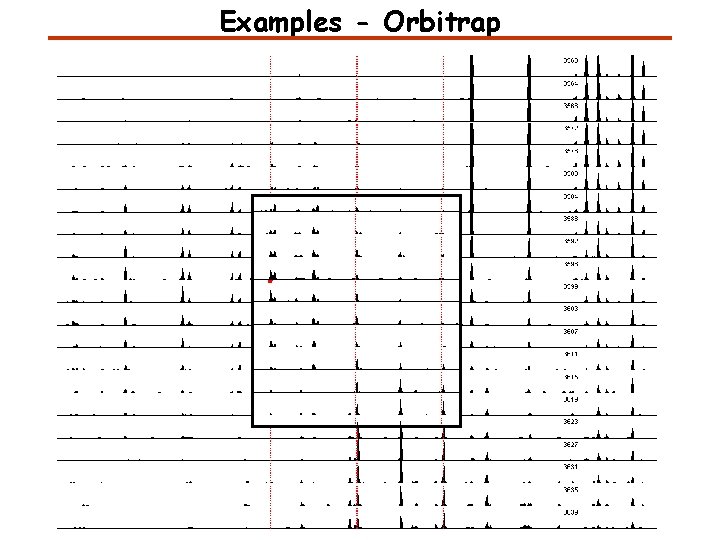
Examples - Orbitrap
Intensity ratio Isotope distributions Peptide mass
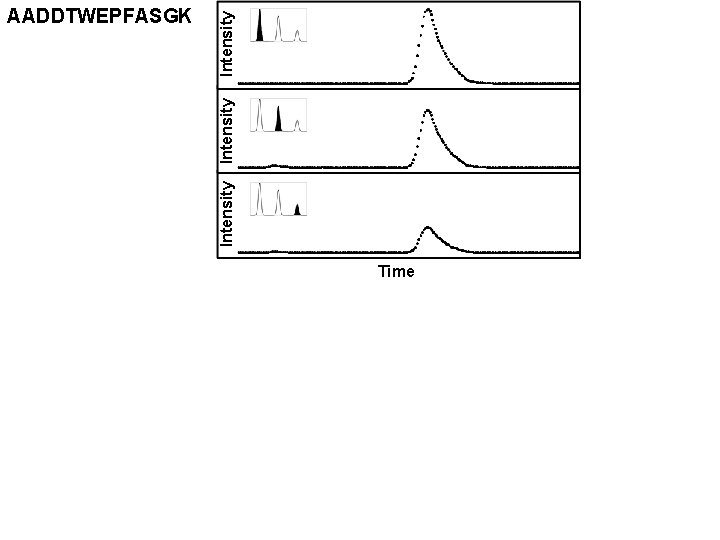
Intensity AADDTWEPFASGK Time
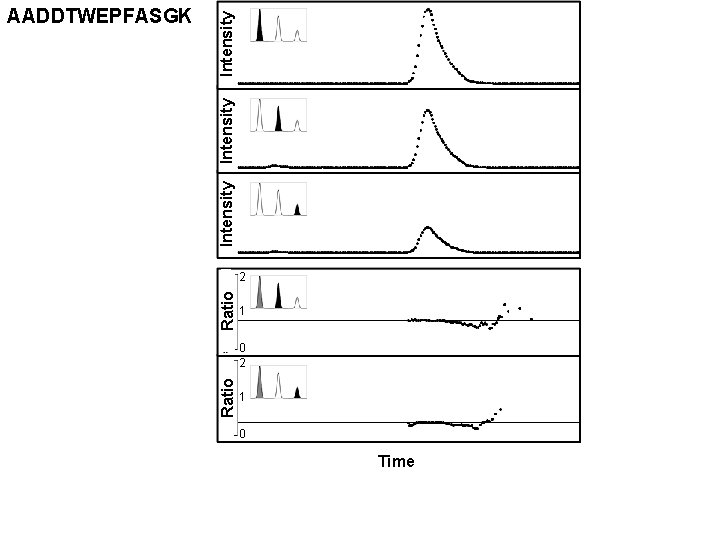
Ratio Intensity AADDTWEPFASGK 2 1 0 Time
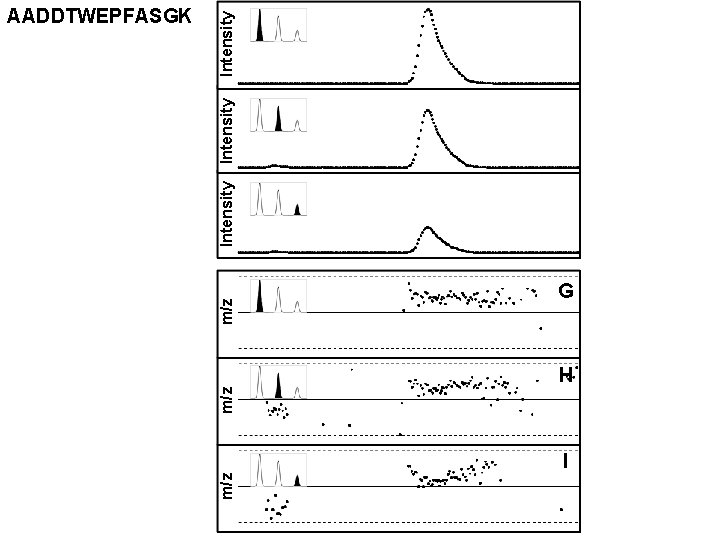
m/z m/z Intensity AADDTWEPFASGK G H I
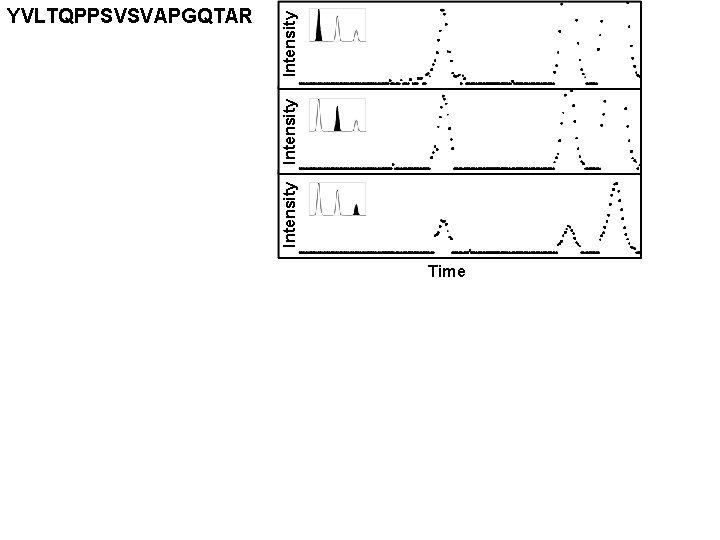
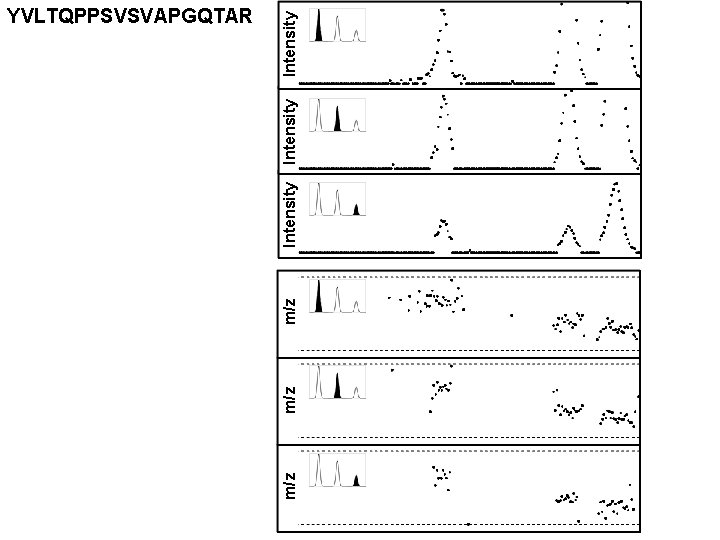
Intensity YVLTQPPSVSVAPGQTAR Time
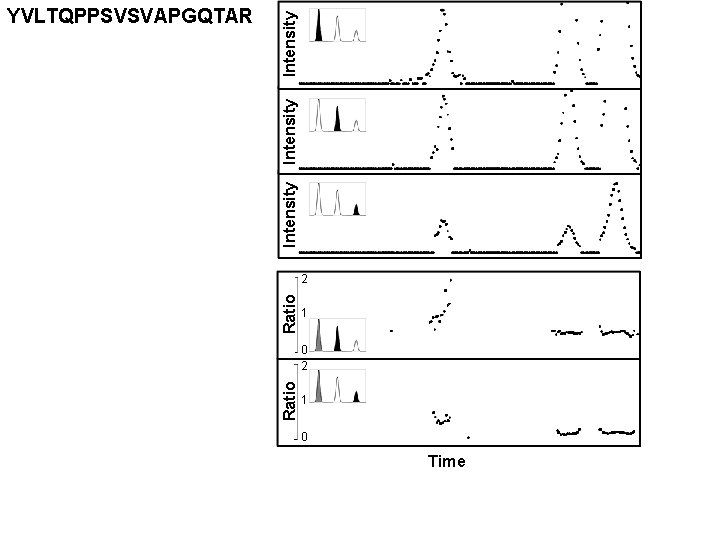
Ratio Intensity YVLTQPPSVSVAPGQTAR 2 1 0 Time
m/z m/z Intensity YVLTQPPSVSVAPGQTAR
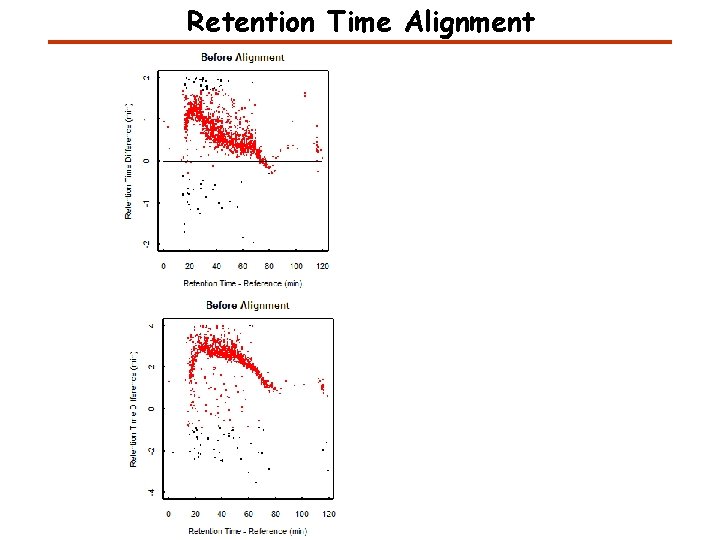
Retention Time Alignment
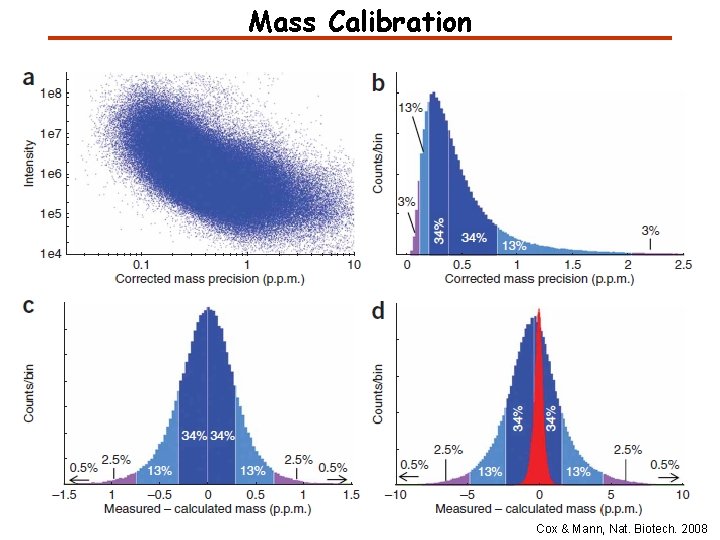
Mass Calibration Cox & Mann, Nat. Biotech. 2008
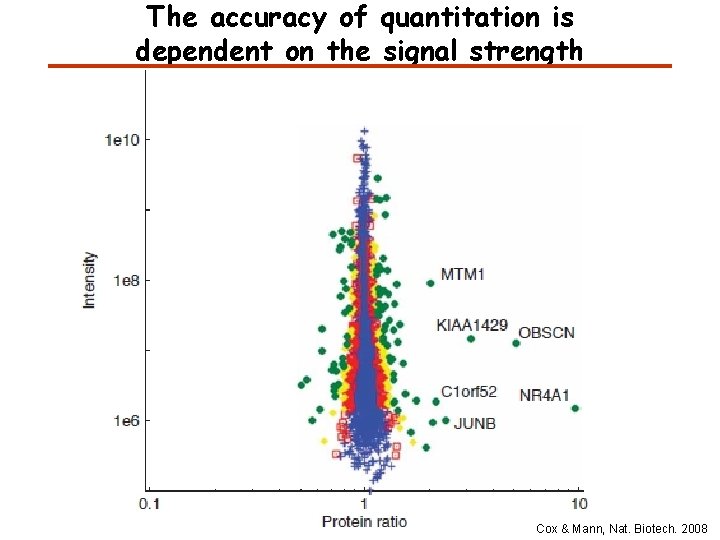
The accuracy of quantitation is dependent on the signal strength Cox & Mann, Nat. Biotech. 2008
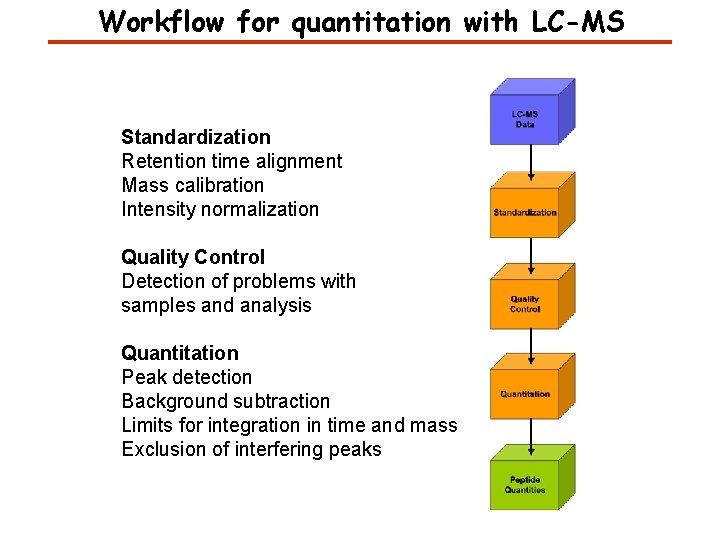
Workflow for quantitation with LC-MS Standardization Retention time alignment Mass calibration Intensity normalization Quality Control Detection of problems with samples and analysis Quantitation Peak detection Background subtraction Limits for integration in time and mass Exclusion of interfering peaks
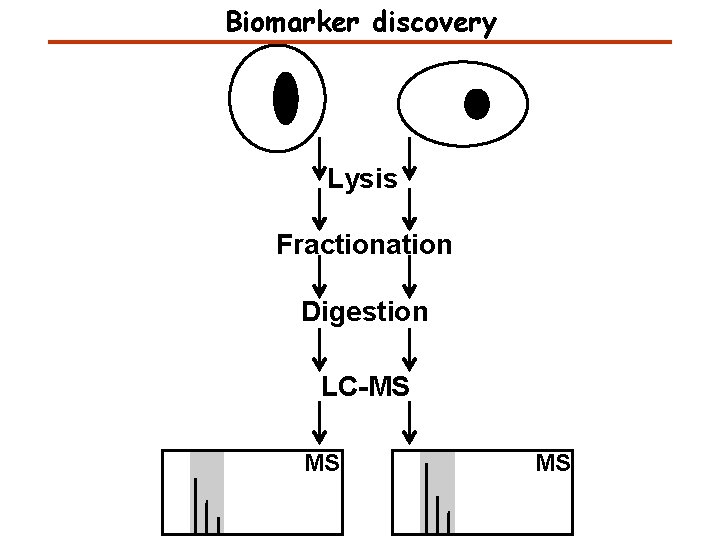
Biomarker discovery Lysis Fractionation Digestion LC-MS MS MS
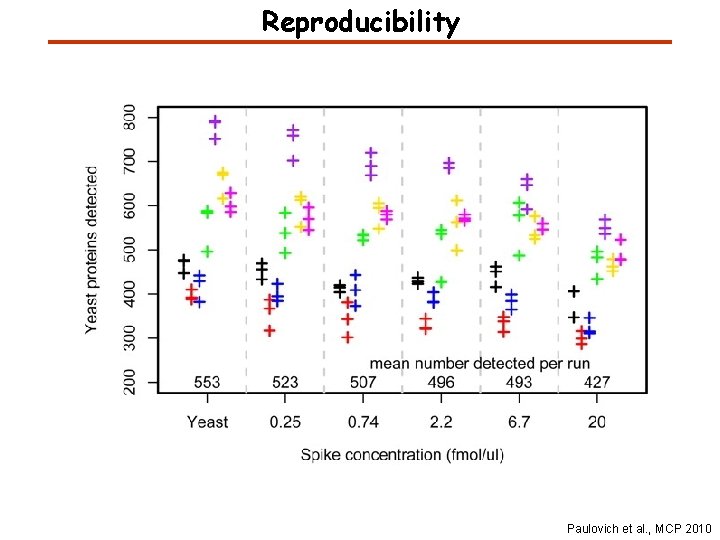
Reproducibility Paulovich et al. , MCP 2010
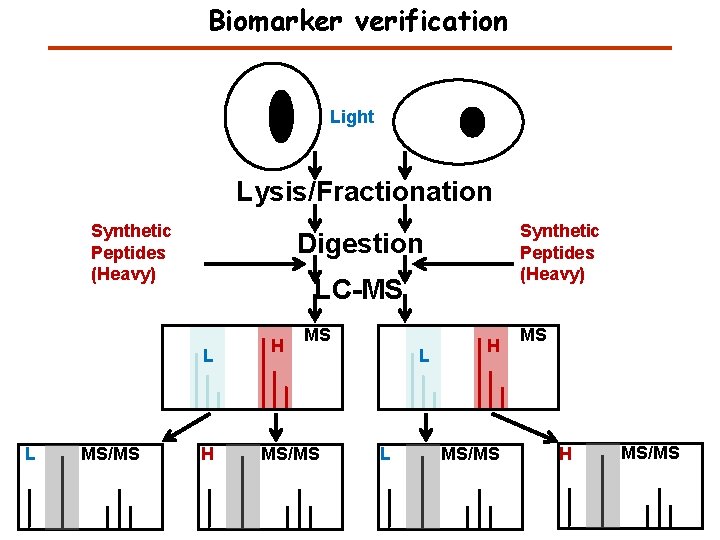
Biomarker verification Light Lysis/Fractionation Synthetic Peptides (Heavy) Digestion LC-MS L L MS/MS Synthetic Peptides (Heavy) H H MS MS/MS L L H MS/MS MS H MS/MS
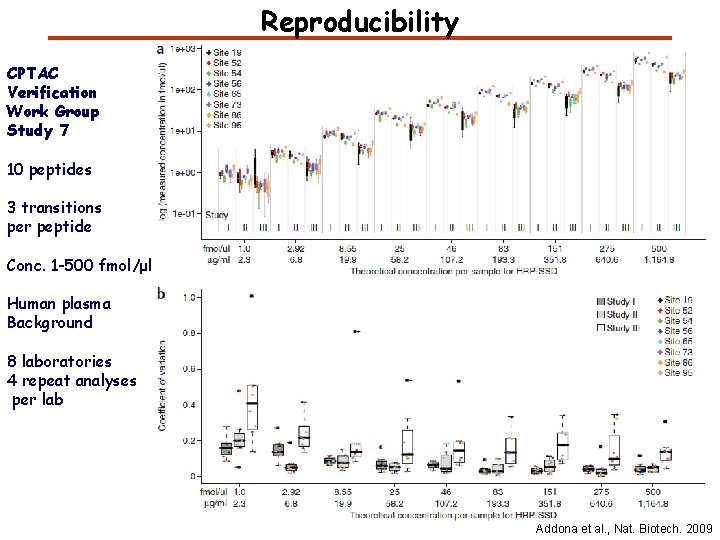
Reproducibility CPTAC Verification Work Group Study 7 10 peptides 3 transitions per peptide Conc. 1 -500 fmol/μl Human plasma Background 8 laboratories 4 repeat analyses per lab Addona et al. , Nat. Biotech. 2009
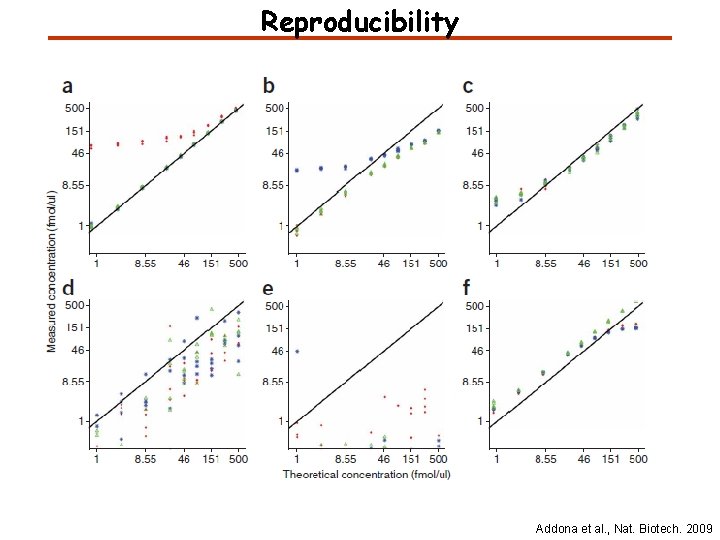
Reproducibility Addona et al. , Nat. Biotech. 2009
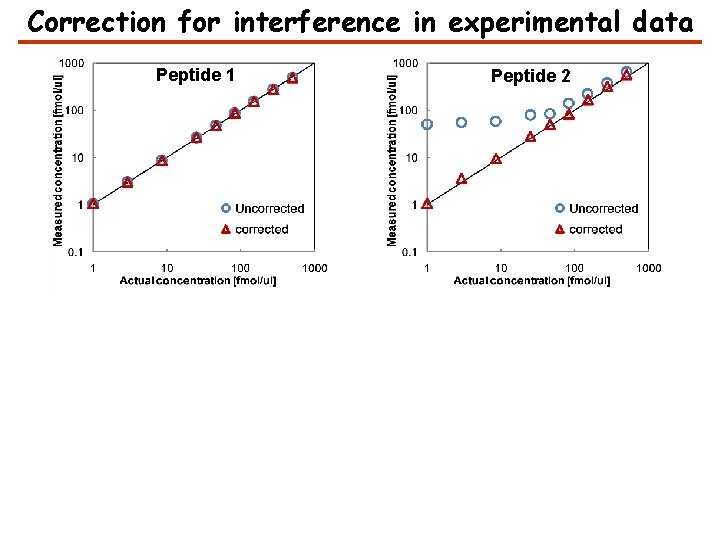
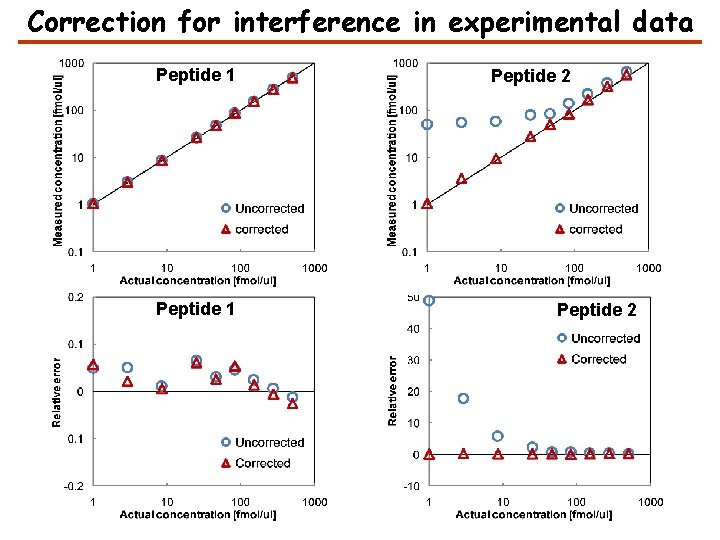
Correction for interference MRM analysis of low abundance proteins is sensitive to interference from other components of the sample that have the same precursor and fragment masses as the transitions that are monitored. During development of MRM assays, care is usually taken to avoid interference, but unanticipated interference can appear when the finished assay is applied to real samples.
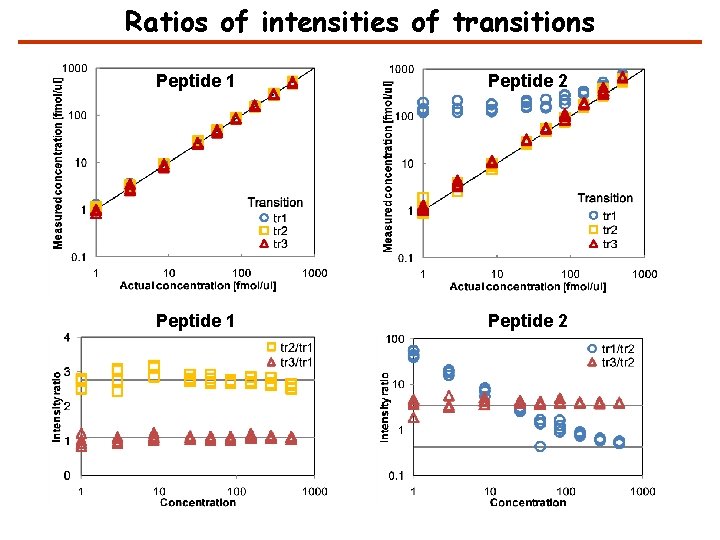
Ratios of intensities of transitions Peptide 1 Peptide 2
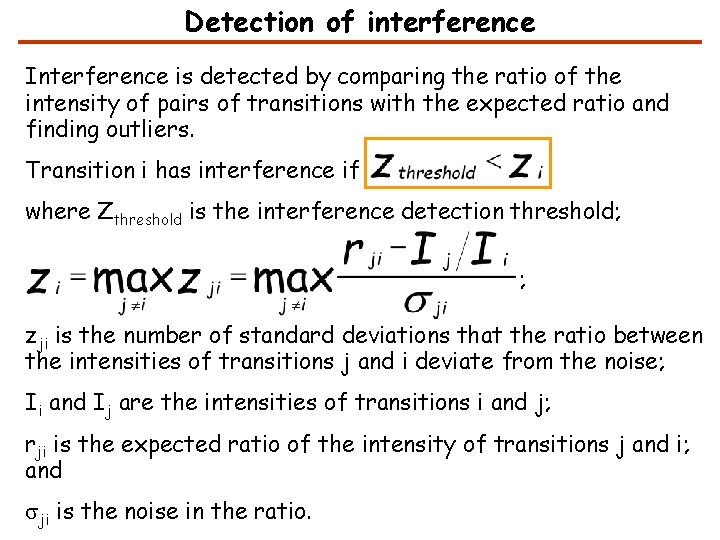
Detection of interference Interference is detected by comparing the ratio of the intensity of pairs of transitions with the expected ratio and finding outliers. Transition i has interference if where Zthreshold is the interference detection threshold; ; zji is the number of standard deviations that the ratio between the intensities of transitions j and i deviate from the noise; Ii and Ij are the intensities of transitions i and j; rji is the expected ratio of the intensity of transitions j and i; and sji is the noise in the ratio.
Correction for interference in experimental data Peptide 1 Peptide 2
Correction for interference in experimental data Peptide 1 Peptide 2
Proteomics Informatics Workshop Part I: Protein Identification, February 4, 2011 Part II: Protein Characterization, February 18, 2011 Part III: Protein Quantitation, February 25, 2011