
Proteins Structurally functionally diverse group of biomolecules Function
Proteins Structurally & functionally diverse group of biomolecules Function: involved in almost everything enzymes (pepsin, DNA polymerase) structure (keratin, collagen) transport (membrane proteins) defense (antibodies) movement (actin & myosin)
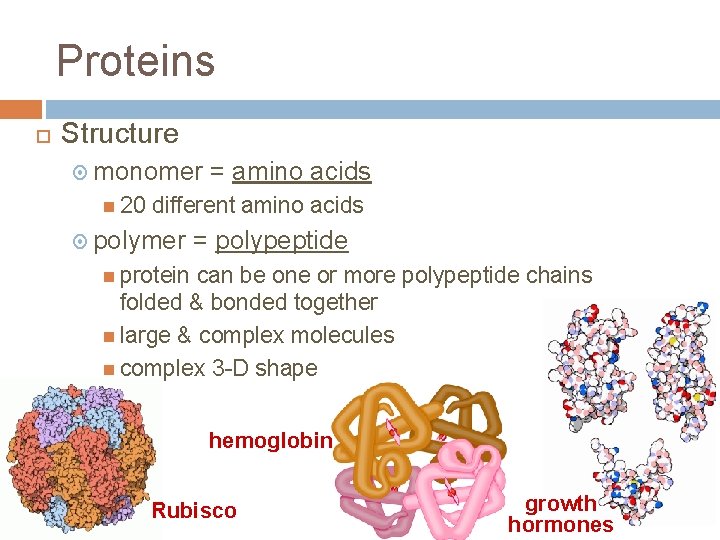
Proteins Structure monomer = amino acids 20 different amino acids polymer = polypeptide protein can be one or more polypeptide chains folded & bonded together large & complex molecules complex 3 -D shape hemoglobin Rubisco growth hormones

Amino acids Structure central carbon amino group carboxyl group (acid) R group (side chain) variable H O H | || —C— C—OH —N— | H R group different for each amino acid

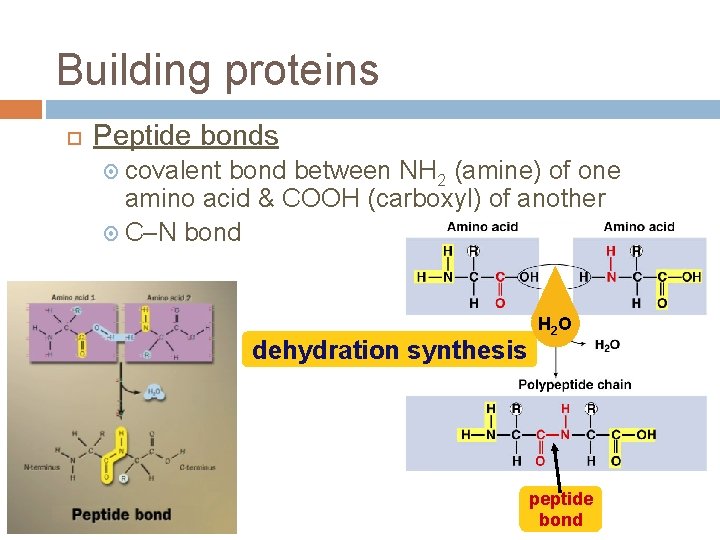
Building proteins Peptide bonds covalent bond between NH 2 (amine) of one amino acid & COOH (carboxyl) of another C–N bond dehydration synthesis H 2 O peptide bond

Protein structure & function Function depends on structure 3 -D structure twisted, folded, coiled into unique shape pepsin hemoglobin collagen

Primary (1°) structure Order of amino acids in chain amino acid sequence determined by gene (DNA) Forming peptide bonds

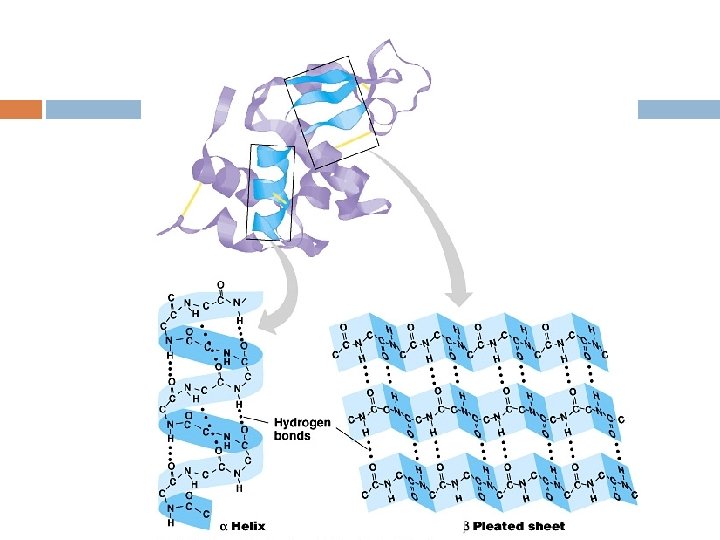
Secondary (2°) structure “Local folding” folding along short sections of polypeptide interactions between adjacent amino acids Forming H Bonds forms sections of 3 -D structure -helix -pleated sheet
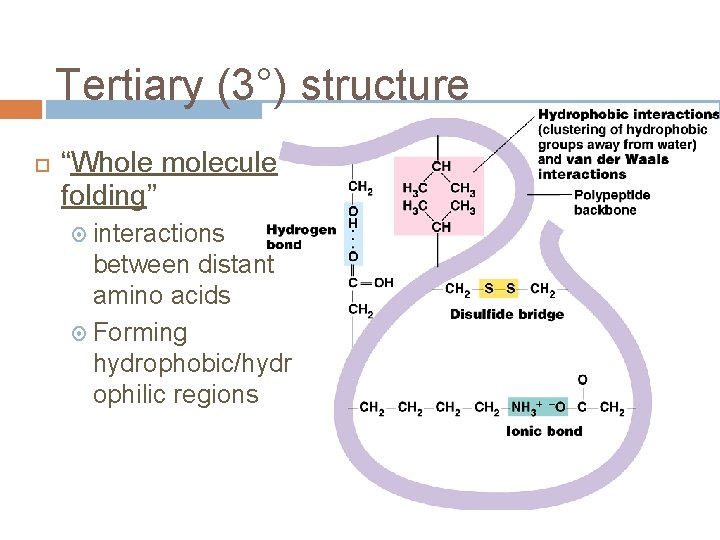
Tertiary (3°) structure “Whole molecule folding” interactions between distant amino acids Forming hydrophobic/hydr ophilic regions
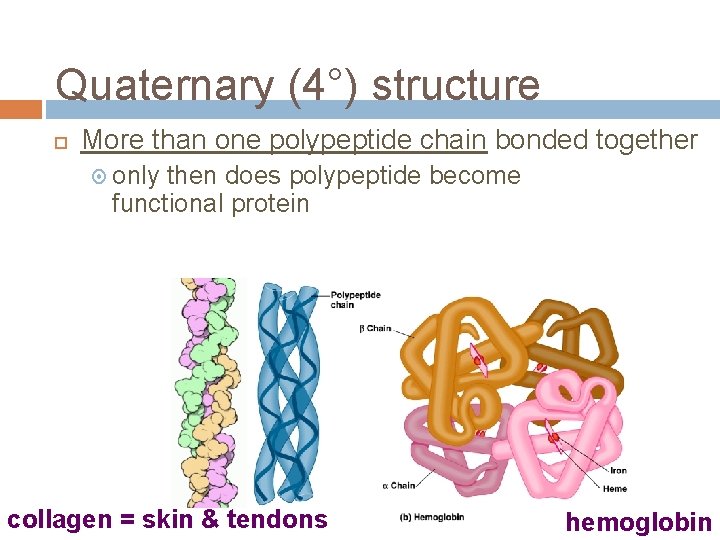
Quaternary (4°) structure More than one polypeptide chain bonded together only then does polypeptide become functional protein collagen = skin & tendons hemoglobin
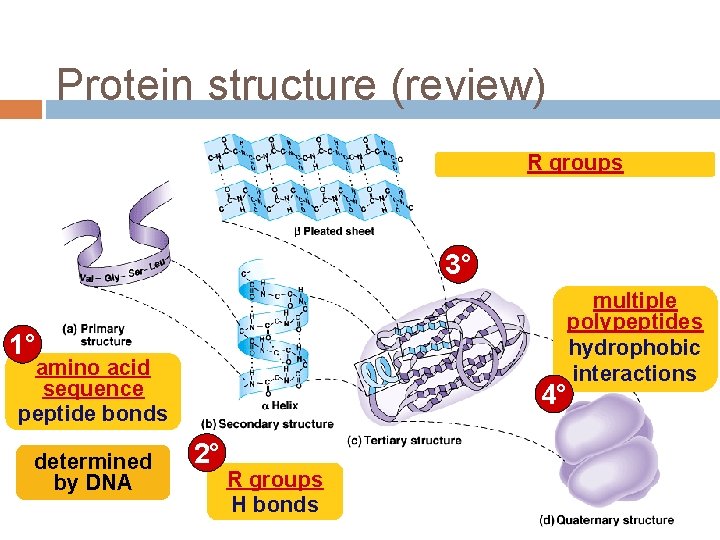
Protein structure (review) R groups 3° multiple polypeptides hydrophobic interactions 1° amino acid sequence peptide bonds determined by DNA 4° 2° R groups H bonds
Enzymes and Chemical Reactions 2. 6 Notes
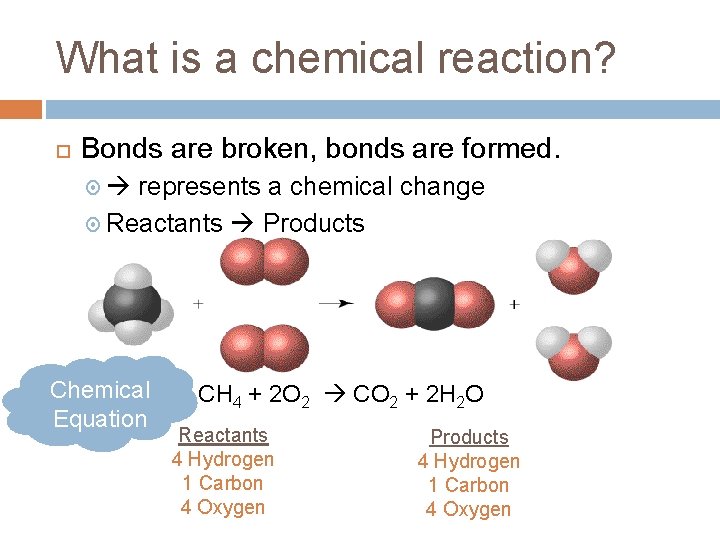
What is a chemical reaction? Bonds are broken, bonds are formed. represents a chemical change Reactants Products Chemical Equation CH 4 + 2 O 2 CO 2 + 2 H 2 O Reactants 4 Hydrogen 1 Carbon 4 Oxygen Products 4 Hydrogen 1 Carbon 4 Oxygen
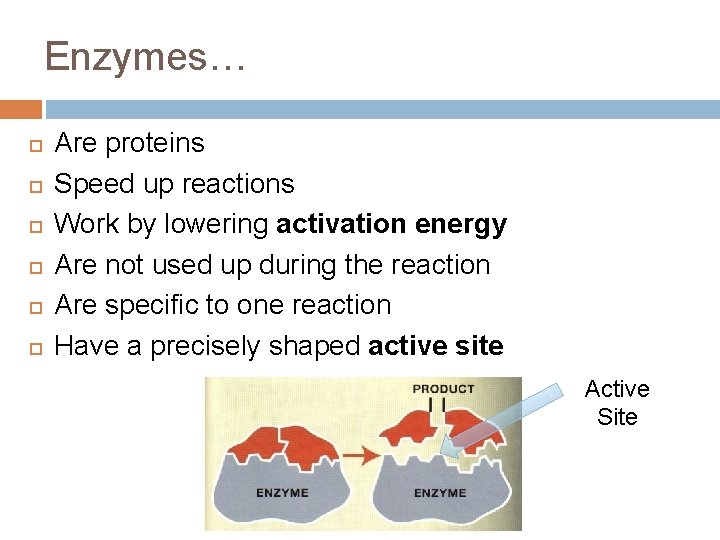
Enzymes… Are proteins Speed up reactions Work by lowering activation energy Are not used up during the reaction Are specific to one reaction Have a precisely shaped active site Active Site
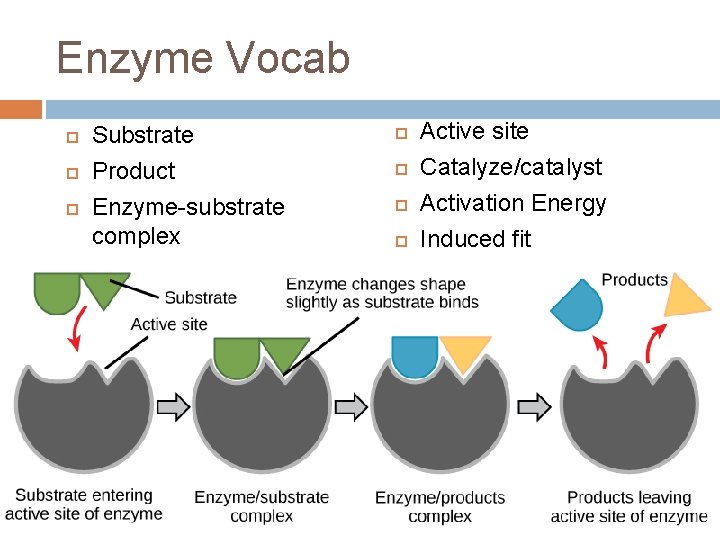
Enzyme Vocab Substrate Product Enzyme-substrate complex Active site Catalyze/catalyst Activation Energy Induced fit
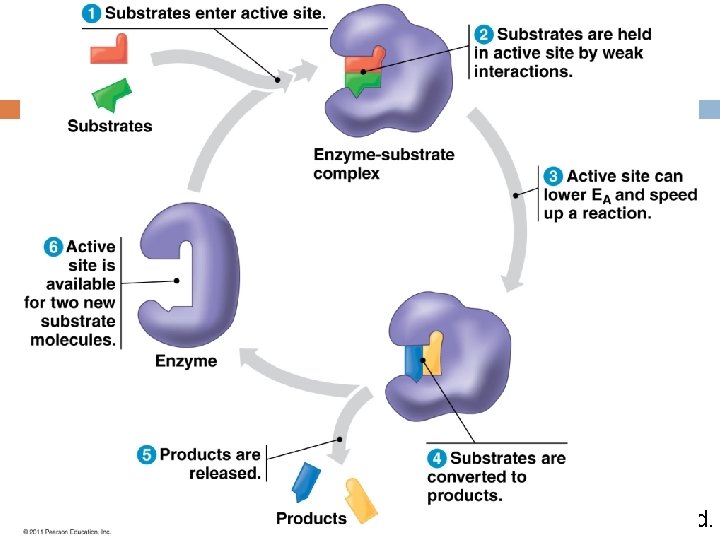
Enzymes are reused.
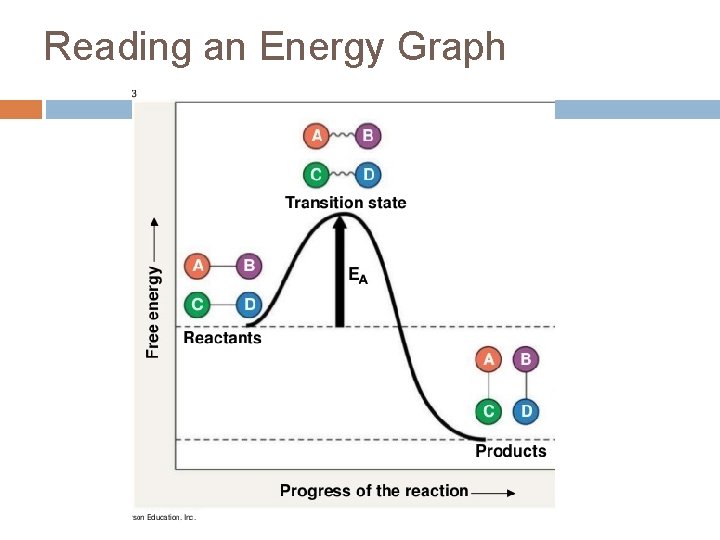
Reading an Energy Graph
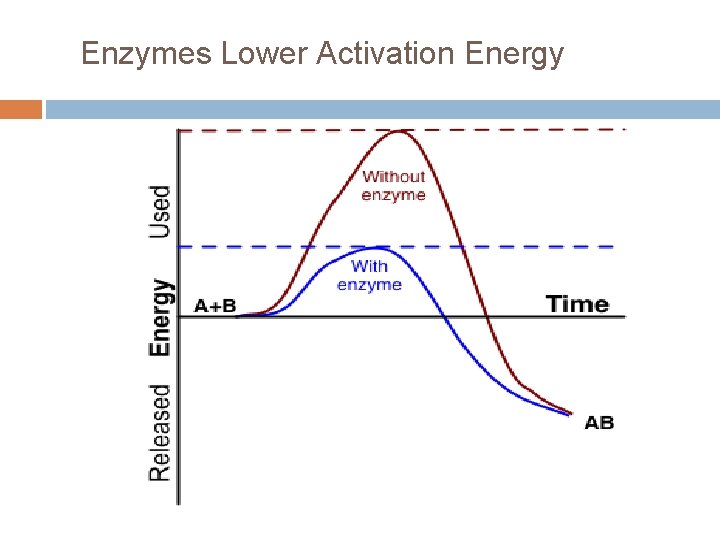
Enzymes Lower Activation Energy
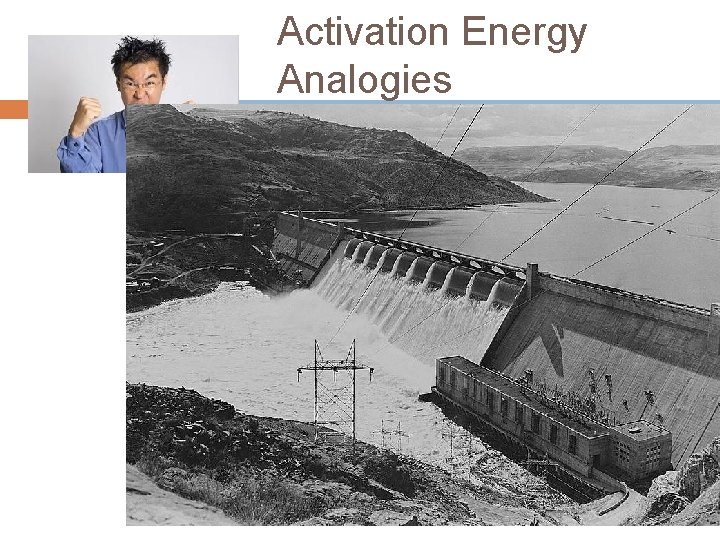
Activation Energy Analogies (a) an irritated person who needs only a bit more frustration to explode in anger (b) small waves that lift debris over a dam (c) lighting a match around lighter fluid. In each situation, the output is much greater than the input.
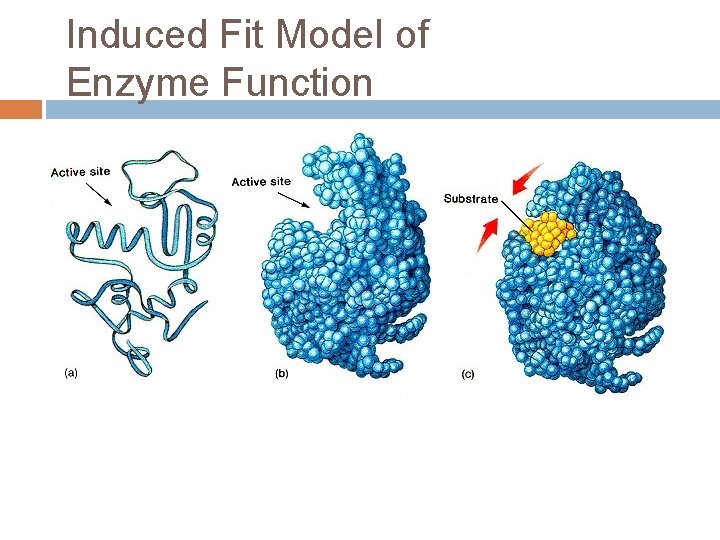
Induced Fit Model of Enzyme Function
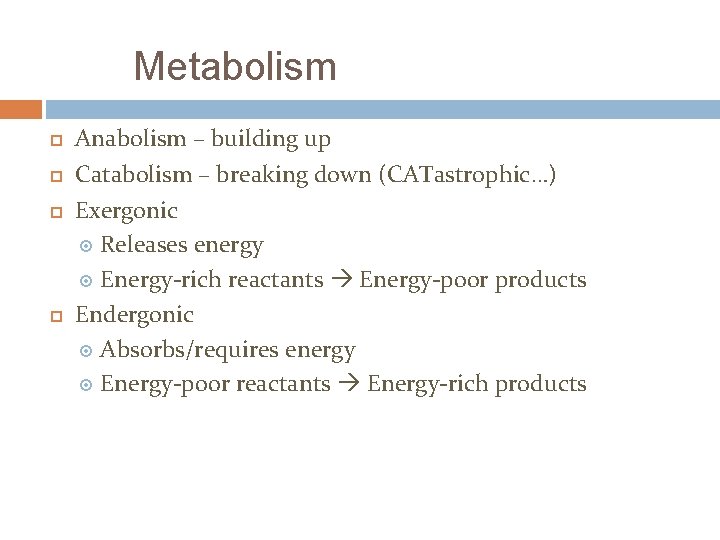
Metabolism Anabolism – building up Catabolism – breaking down (CATastrophic…) Exergonic Releases energy Energy-rich reactants Energy-poor products Endergonic Absorbs/requires energy Energy-poor reactants Energy-rich products
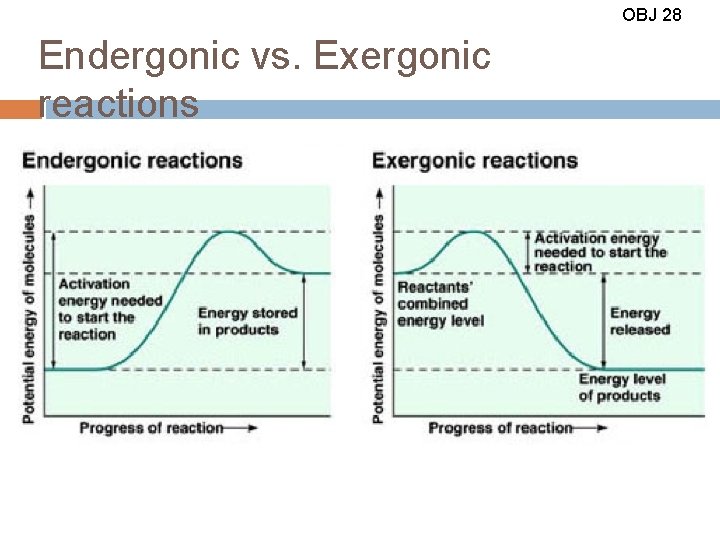
OBJ 28 Endergonic vs. Exergonic reactions
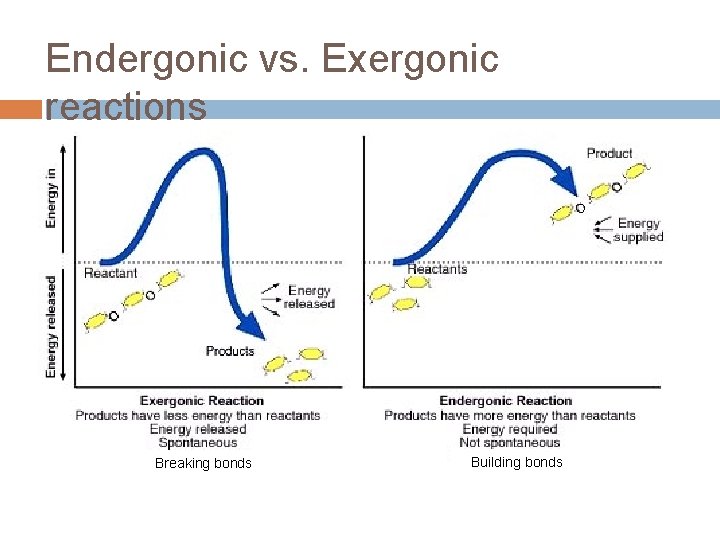
Endergonic vs. Exergonic reactions Breaking bonds Building bonds
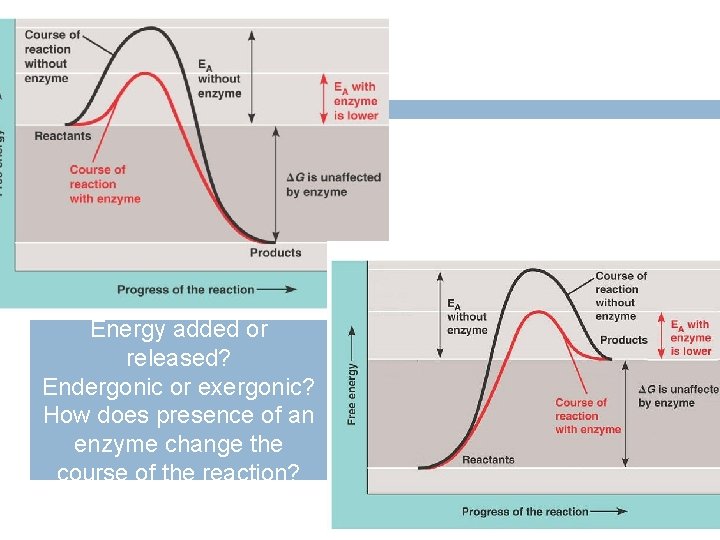
Energy added or released? Endergonic or exergonic? How does presence of an enzyme change the course of the reaction?
What Factors Affect Enzyme Activity?
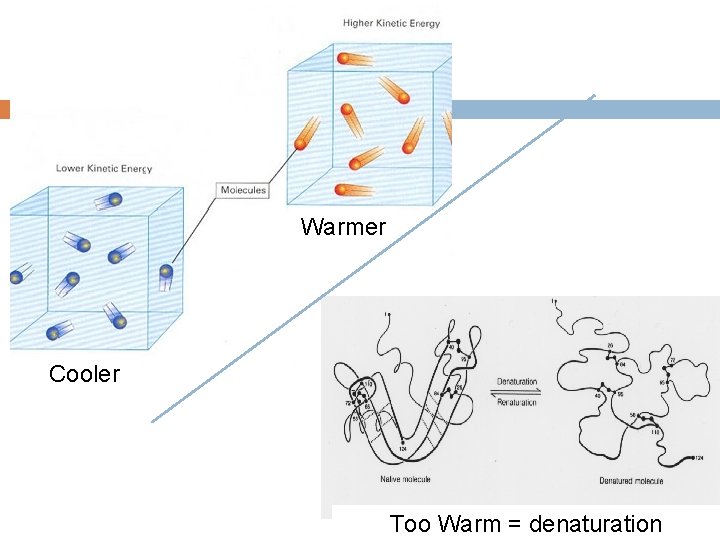
1. Temperature Warmer Cooler Too Warm = denaturation
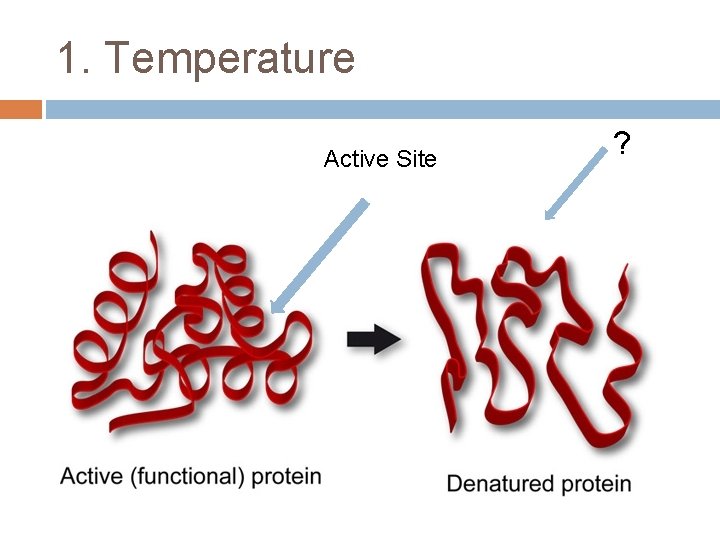
1. Temperature Active Site ?
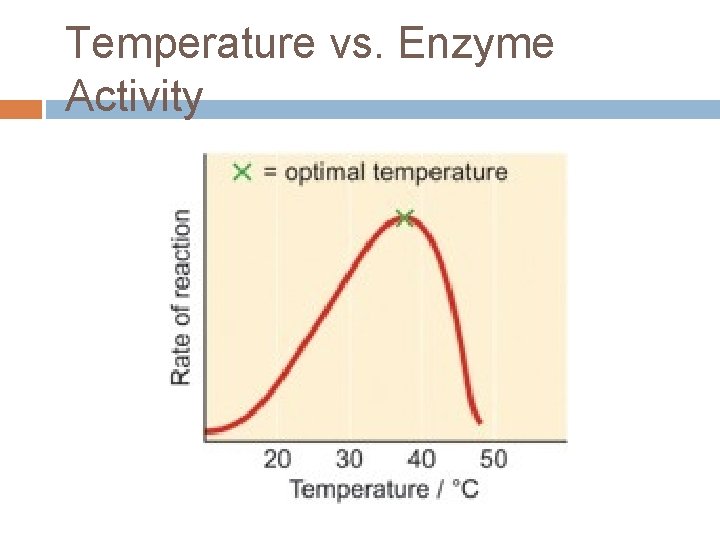
Temperature vs. Enzyme Activity
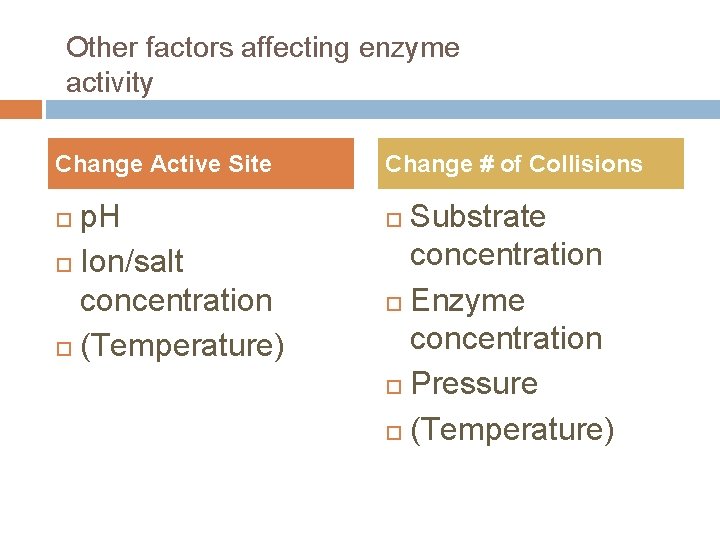
Other factors affecting enzyme activity Change Active Site p. H Ion/salt concentration (Temperature) Change # of Collisions Substrate concentration Enzyme concentration Pressure (Temperature)
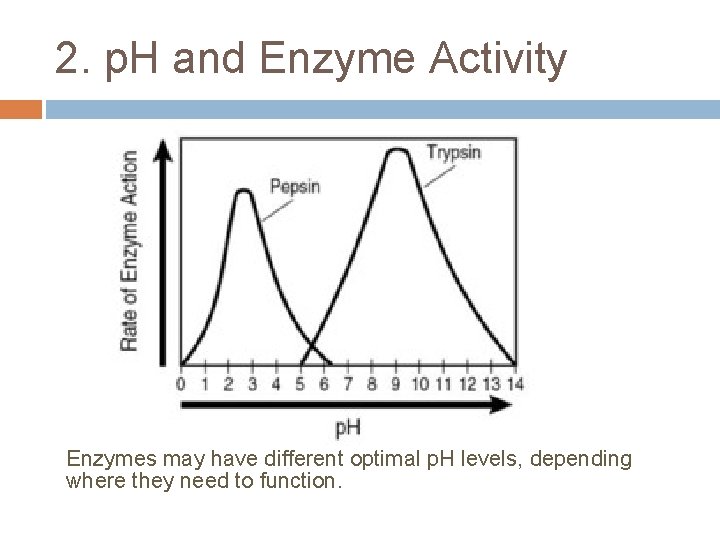
2. p. H and Enzyme Activity Enzymes may have different optimal p. H levels, depending where they need to function.
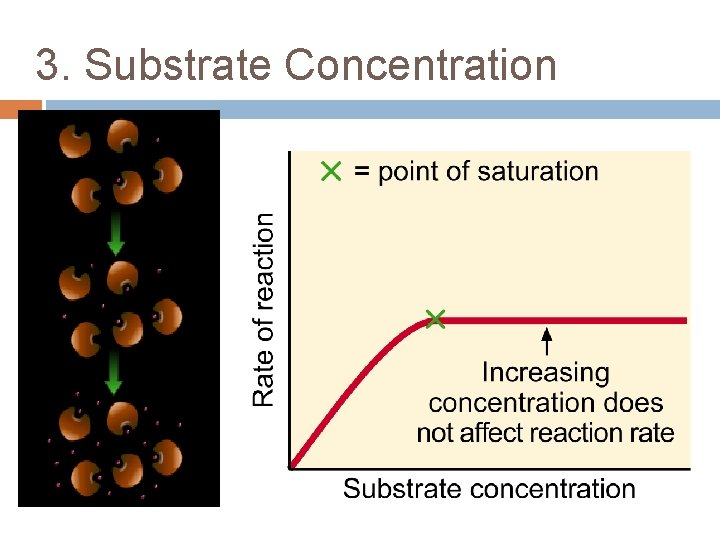
3. Substrate Concentration
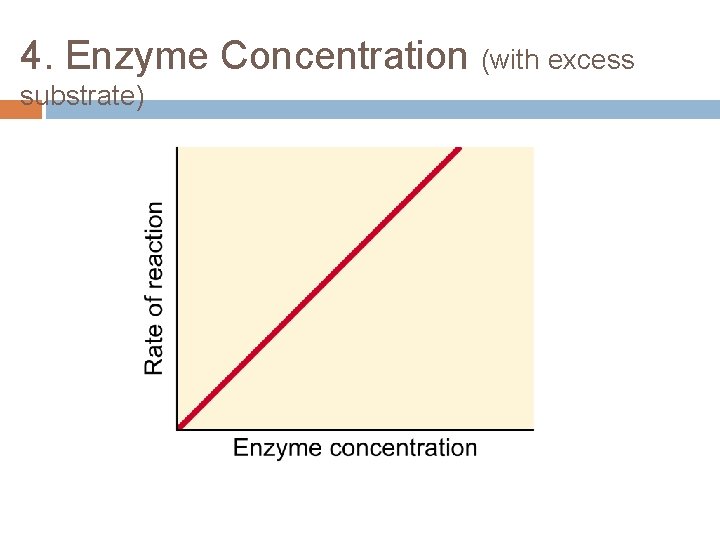
4. Enzyme Concentration (with excess substrate)
- Slides: 33