
Proteins Proteins Long linear chains of polypeptides Polypeptide
- Slides: 15
Proteins
Proteins ● Long linear chains of polypeptides ● Polypeptide – chain of amino acids
Types of Proteins ● Structural proteins ● Regulatory proteins ● Contractile proteins ● Transport proteins ● Storage proteins ● Protective proteins ● Membrane proteins ● Toxins ● Enzymes
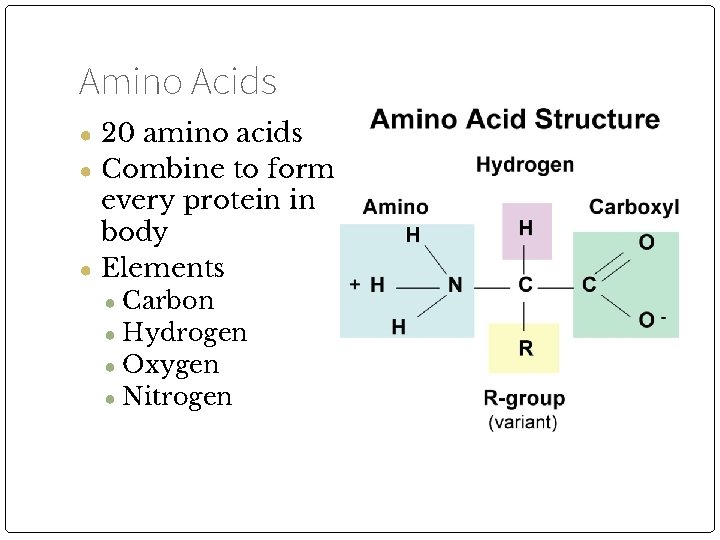
Amino Acids ● 20 amino acids ● Combine to form every protein in body ● Elements ● Carbon ● Hydrogen ● Oxygen ● Nitrogen
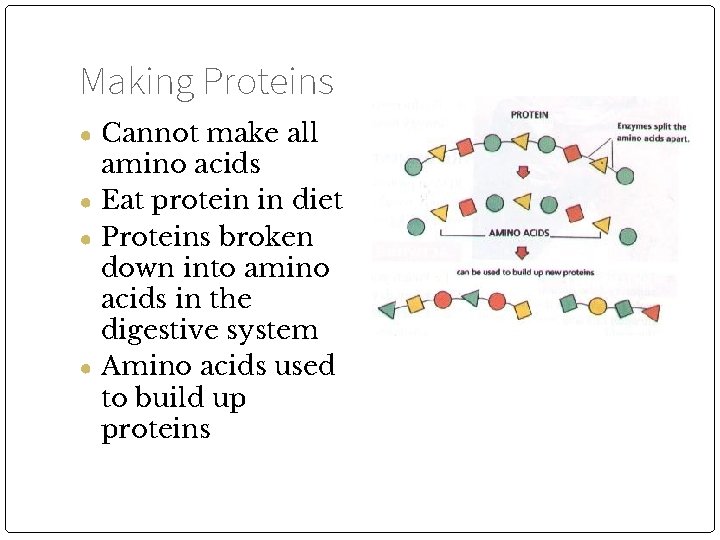
Making Proteins ● Cannot make all amino acids ● Eat protein in diet ● Proteins broken down into amino acids in the digestive system ● Amino acids used to build up proteins
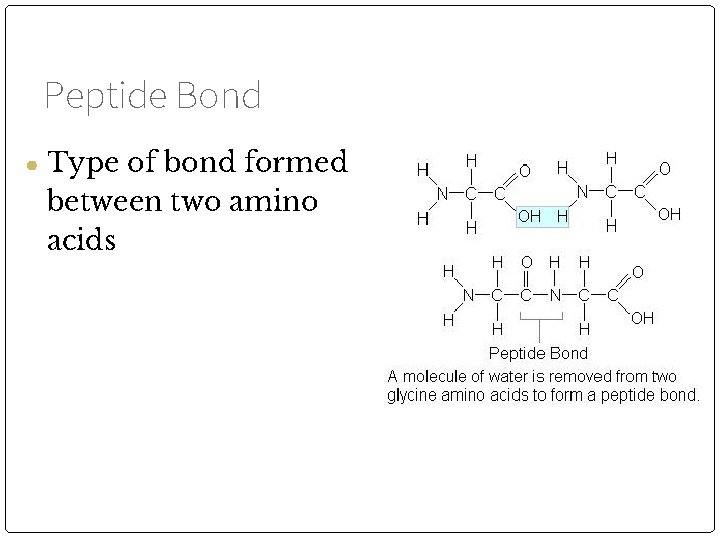
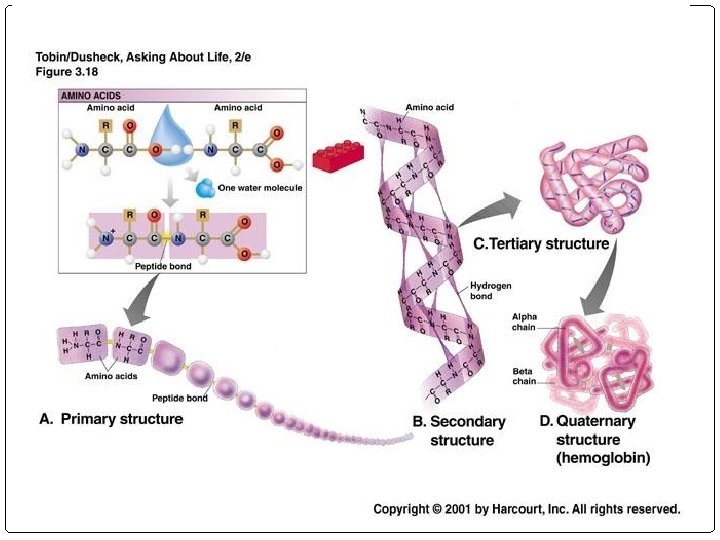
Peptide Bond ● Type of bond formed between two amino acids
Primary Structure ● Linear order of amino acid chain ● Sequence of amino acids ● Glycine – Leucine – Glycine – Alanine - Lysine ● Unique for each protein ● Dictates the secondary and tertiary structures
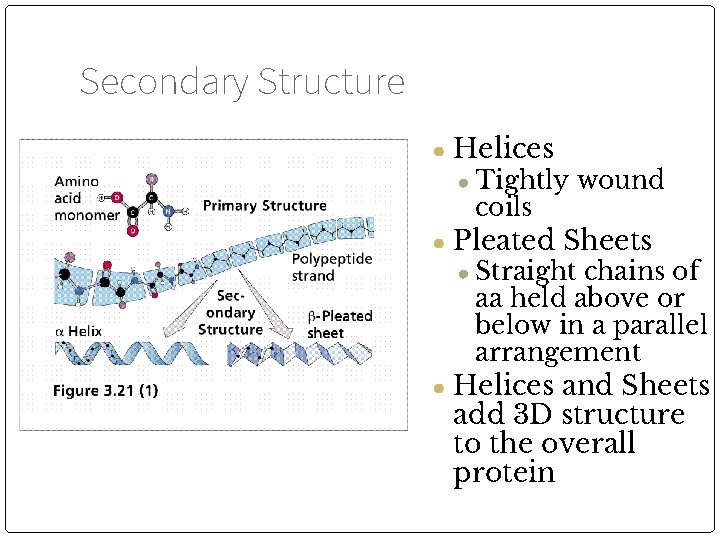
Secondary Structure ● Helices ● Tightly wound coils ● Pleated Sheets ● Straight chains of aa held above or below in a parallel arrangement ● Helices and Sheets add 3 D structure to the overall protein
Tertiary Structure ● Further bonding and interactions between amino acids ● Gives the whole protein its overall 3 D structure essential for function
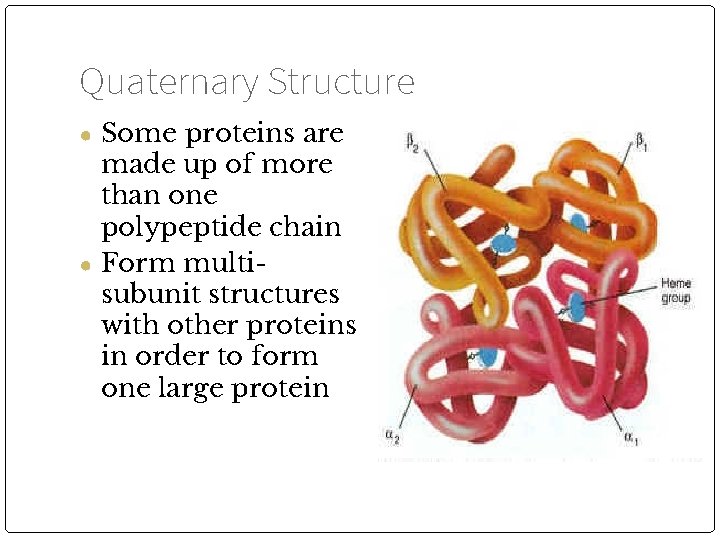
Quaternary Structure ● Some proteins are made up of more than one polypeptide chain ● Form multisubunit structures with other proteins in order to form one large protein
Denaturation ● Change 3 D shape ● Break bonds ● Causes of Denaturation: ● p. H changes ● Temperature changes ● Destroying protein shape disrupts function
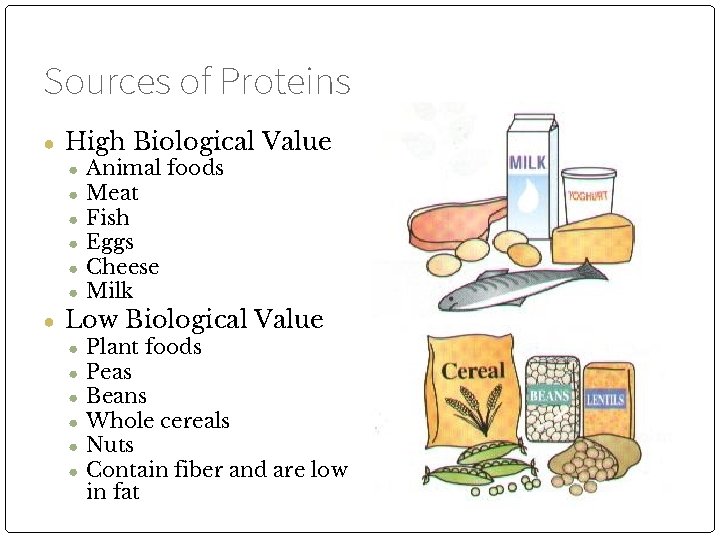
Sources of Proteins ● High Biological Value ● Animal foods ● Meat ● Fish ● Eggs ● Cheese ● Milk ● Low Biological Value ● Plant foods ● Peas ● Beans ● Whole cereals ● Nuts ● Contain fiber and are low in fat
Functions of Proteins ● Growth of new cells ● Repair of damaged cells ● Production of heat and energy ● Manufacture of enzymes, hormones and antibodies
Deficiency of Proteins ● Slowed growth in children ● Worn out cells are not replaced, prevents healing of wounds ● Malfunction of organs due to hormone or enzyme deficiency ● Susceptibility to disease, due to lack of antibodies