
Proteins Nucleic Acids SBI 3 U September 12
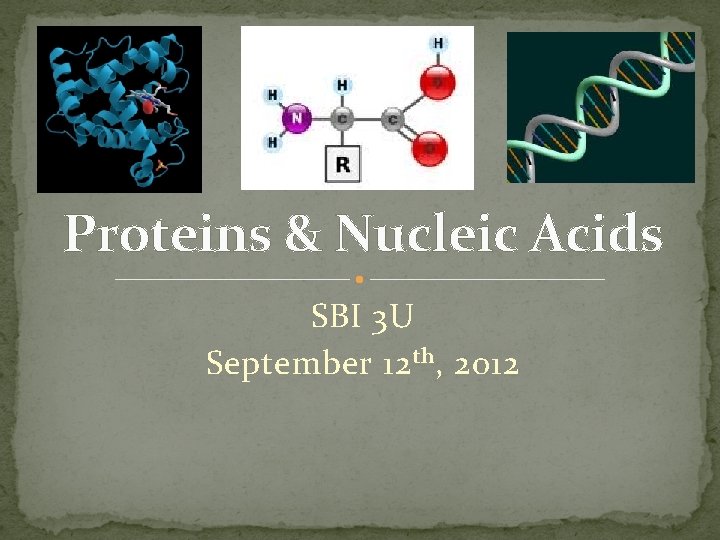
Proteins & Nucleic Acids SBI 3 U September 12 th, 2012
What are proteins? Think…
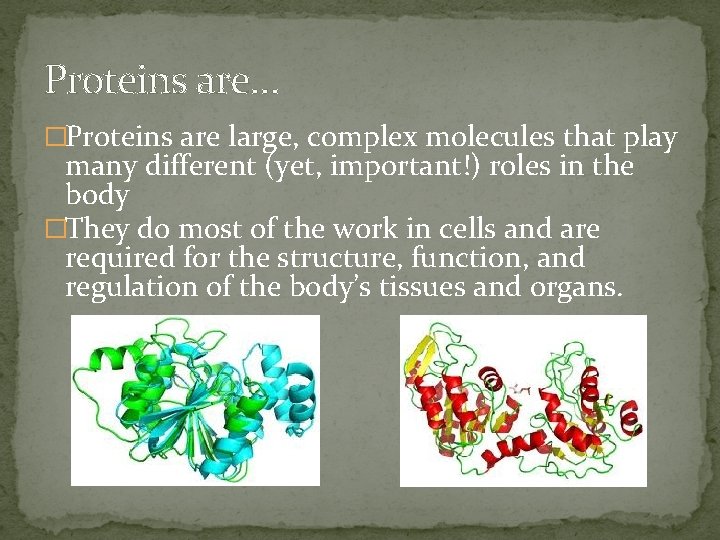
Proteins are… �Proteins are large, complex molecules that play many different (yet, important!) roles in the body �They do most of the work in cells and are required for the structure, function, and regulation of the body’s tissues and organs.
What are Proteins made of? Proteins are made of: �Hundreds or thousands of smaller units called amino acids, which are attached to one another in long chains. �There are 20 different types of amino acids that can be combined to make a protein �The sequence of amino acids determines each protein’s unique 3 -dimensional structure and its specific function.
Roles of Proteins Include… �Serving as antibodies -- protect the body from viruses and bacteria �Serving as enzymes – carry out chemical reactions in cells �Messengers – transmit signals to coordinate biological processes between different cells, tissues and organs �Structural support – provide structure and support �Transport – bind and carry atoms and small molecules within cells and throughout the body
What are Amino Acids? �Amino acids are the building blocks of protein �Each amino acid contains carbon, oxygen, hydrogen AND nitrogen �All amino acids contain an amino acid group, carboxyl group and a side chain (R group)
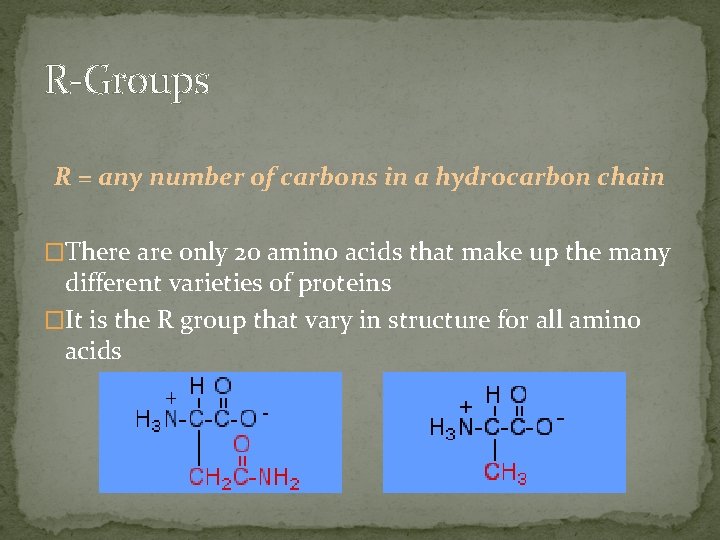
R-Groups R = any number of carbons in a hydrocarbon chain �There are only 20 amino acids that make up the many different varieties of proteins �It is the R group that vary in structure for all amino acids
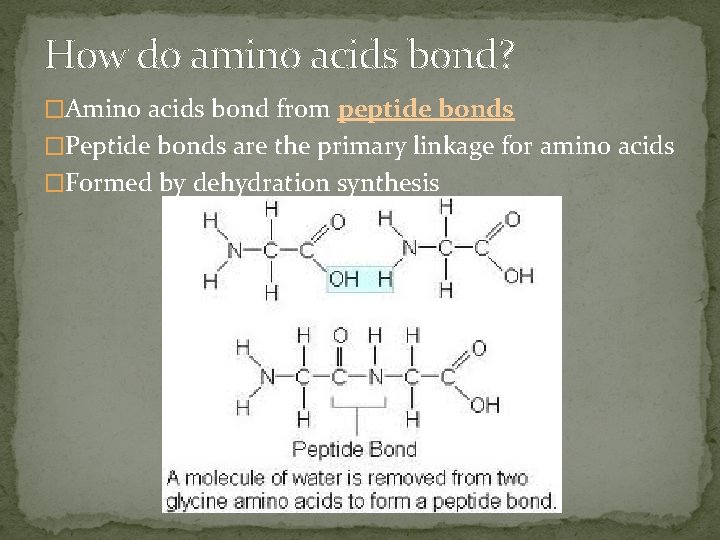
How do amino acids bond? �Amino acids bond from peptide bonds �Peptide bonds are the primary linkage for amino acids �Formed by dehydration synthesis
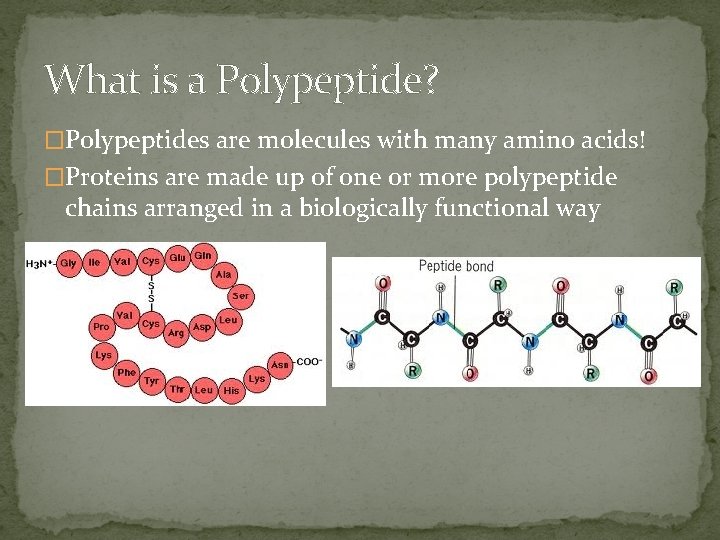
What is a Polypeptide? �Polypeptides are molecules with many amino acids! �Proteins are made up of one or more polypeptide chains arranged in a biologically functional way
For a protein to function properly it must have a particular shape! • Structure determines function • There are 4 types of protein structures: primary, secondary, tertiary and quaternary
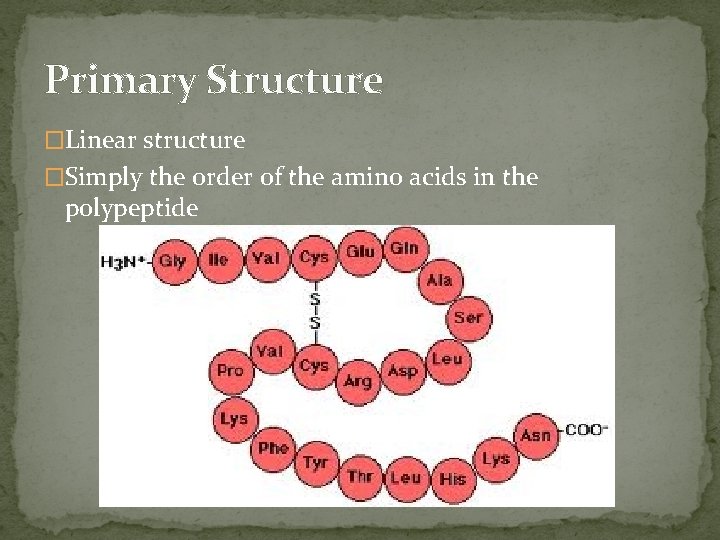
Primary Structure �Linear structure �Simply the order of the amino acids in the polypeptide
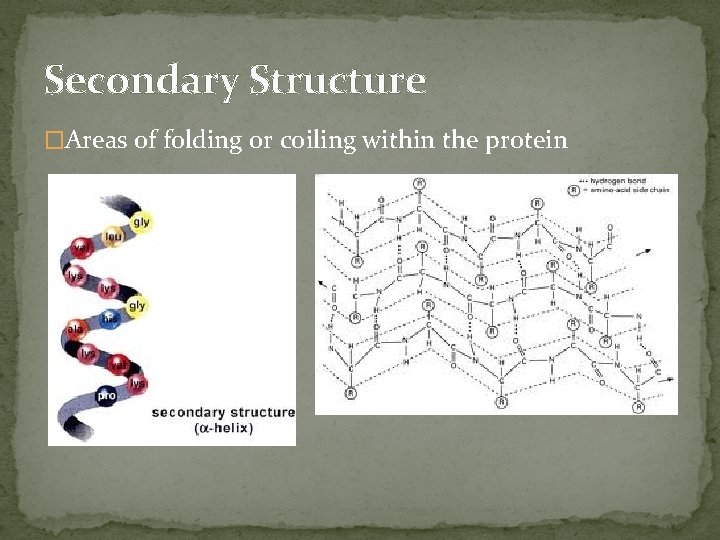
Secondary Structure �Areas of folding or coiling within the protein
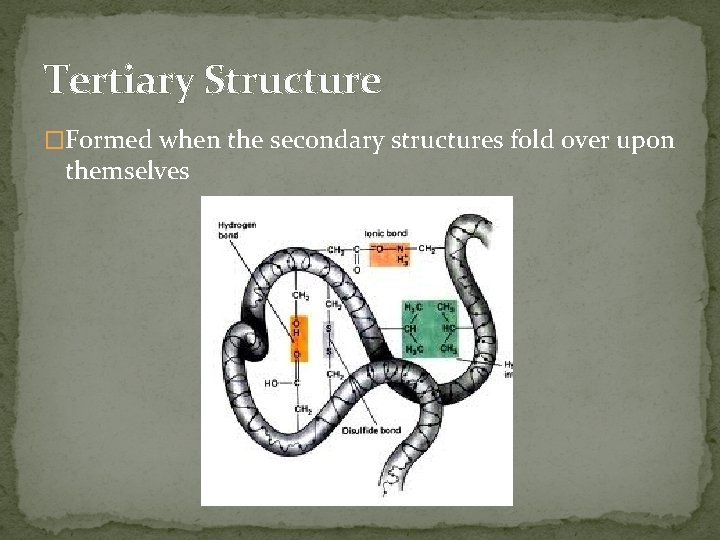
Tertiary Structure �Formed when the secondary structures fold over upon themselves
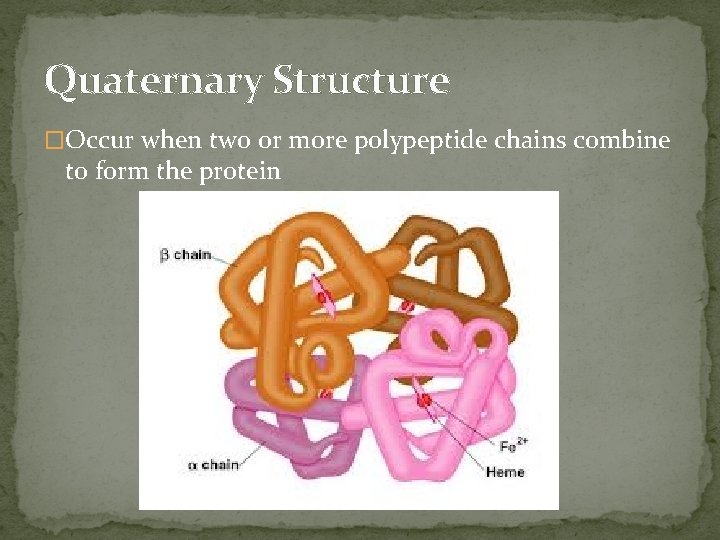
Quaternary Structure �Occur when two or more polypeptide chains combine to form the protein
What are Nucleic Acids? Think…
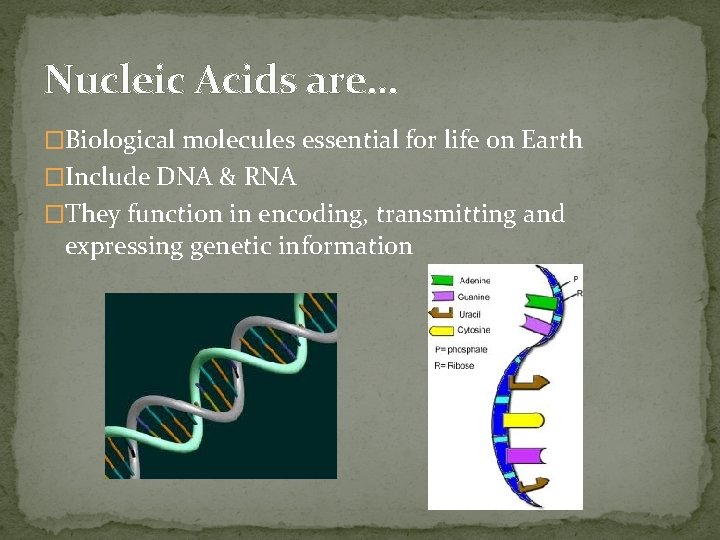
Nucleic Acids are… �Biological molecules essential for life on Earth �Include DNA & RNA �They function in encoding, transmitting and expressing genetic information
Nucleic Acids are polymers formed from monomer molecules called nucleotides
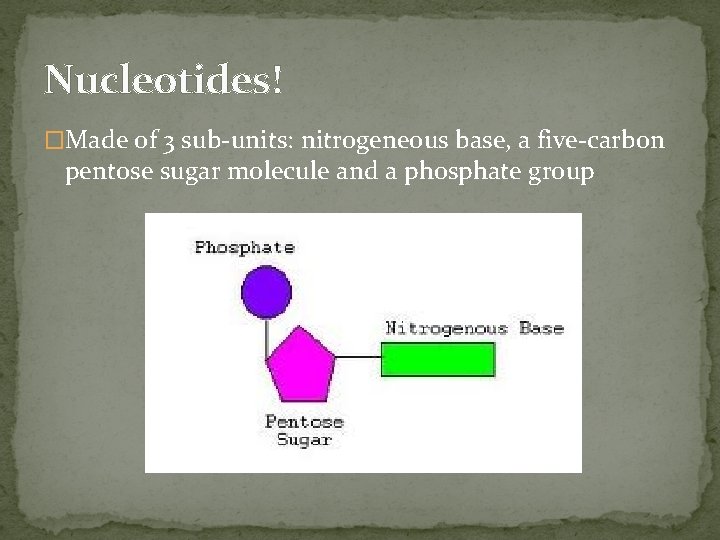
Nucleotides! �Made of 3 sub-units: nitrogeneous base, a five-carbon pentose sugar molecule and a phosphate group
DNA = Deoxyribonucleic Acid �Contains the genetic information used for development and functioning of all living things �The sugar and phosphate groups form the outer backbone of the molecule, while the bases point toward the interior �The nitrogen-containing base may be one of 4 compounds: adenine, guanine, cytosine, thymine �Double-stranded
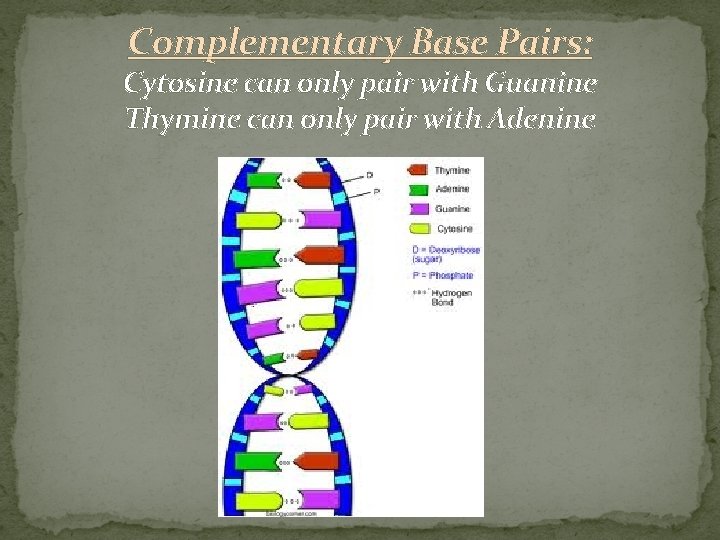
Complementary Base Pairs: Cytosine can only pair with Guanine Thymine can only pair with Adenine
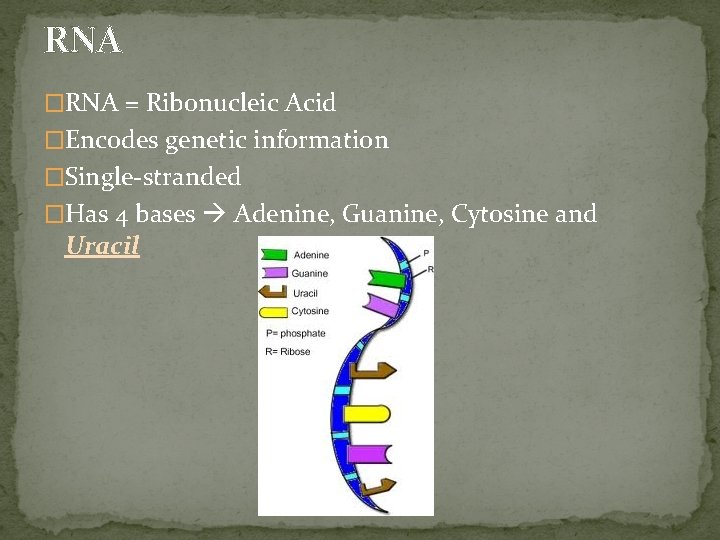
RNA �RNA = Ribonucleic Acid �Encodes genetic information �Single-stranded �Has 4 bases Adenine, Guanine, Cytosine and Uracil
ATP = Basic Source of Energy �ATP Adenosine Triphosphate �Temporarily stores energy and releases it �Three phosphate groups are attached to the ribose. ATP provides energy, when the 3 rd phosphate group detaches itself from the body. This produces energy and ADP (Adenosine Diphosphate) behind �Exergonic Reaction – reaction that releases energy �Endergonic Reaction – Reactions that require energy
- Slides: 22