
Proteins Learning Targets Amino acids are linked together

- Slides: 24
Proteins!
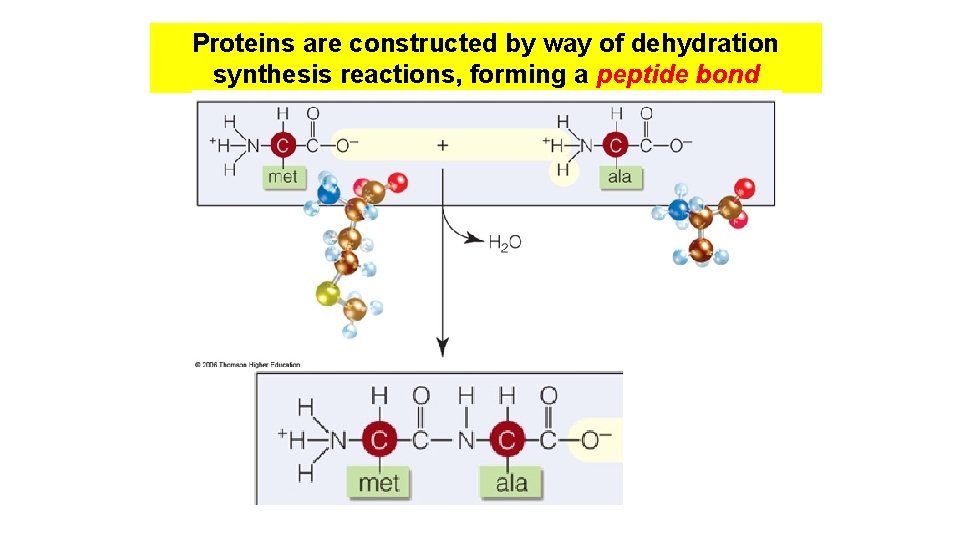
Learning Targets • Amino acids are linked together by condensation reactions to form polypeptides • There are 20 different amino acids used in polypeptides synthesized by ribosomes • Amino acid sequence is coded for by genes • Draw a generalized amino acid • Draw molecular diagrams to show the formation of a peptide bond
What are proteins? Proteins are biological macromolecules that carry out a large number of tasks within organisms. They catalyze metabolic reactions, replicate DNA, transport materials, and help an organism respond to stimuli. Basically, whenever you ask the question, “Wow, what molecule does that? ” the answer is a protein.
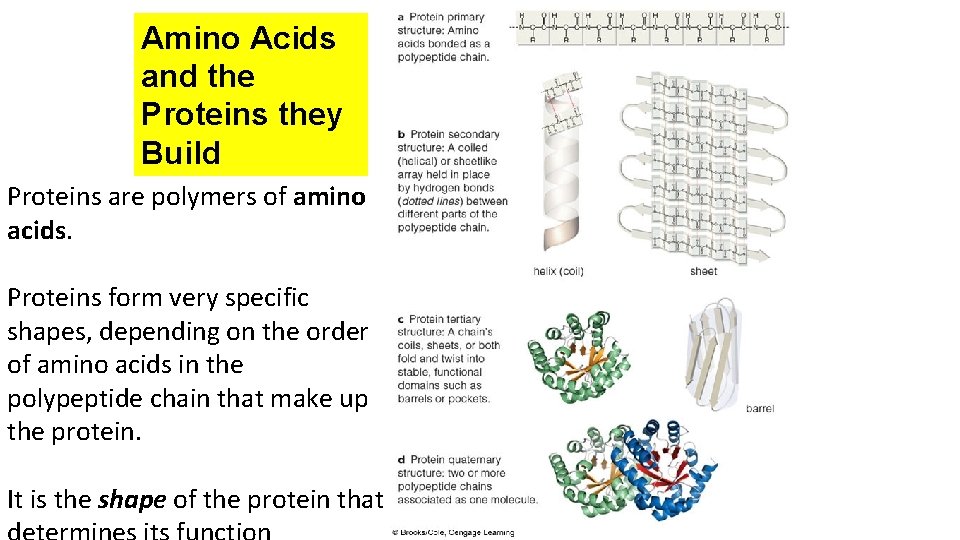
Amino Acids and the Proteins they Build Proteins are polymers of amino acids. Proteins form very specific shapes, depending on the order of amino acids in the polypeptide chain that make up the protein. It is the shape of the protein that
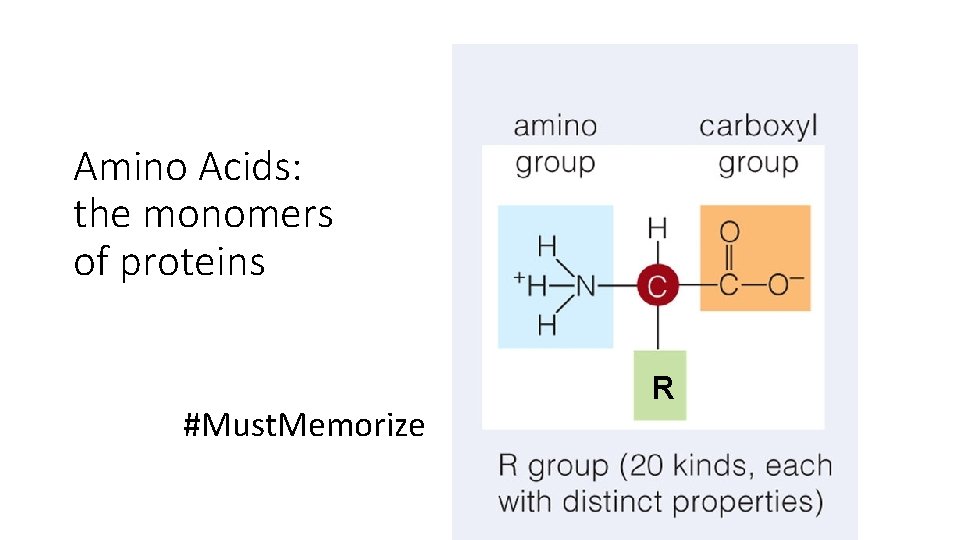
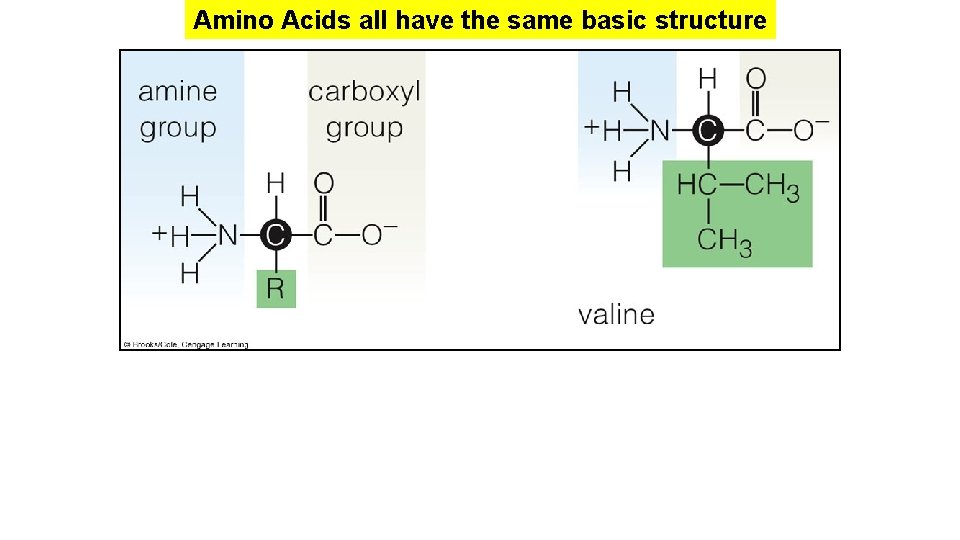
Amino Acids: the monomers of proteins #Must. Memorize R
Amino Acids all have the same basic structure
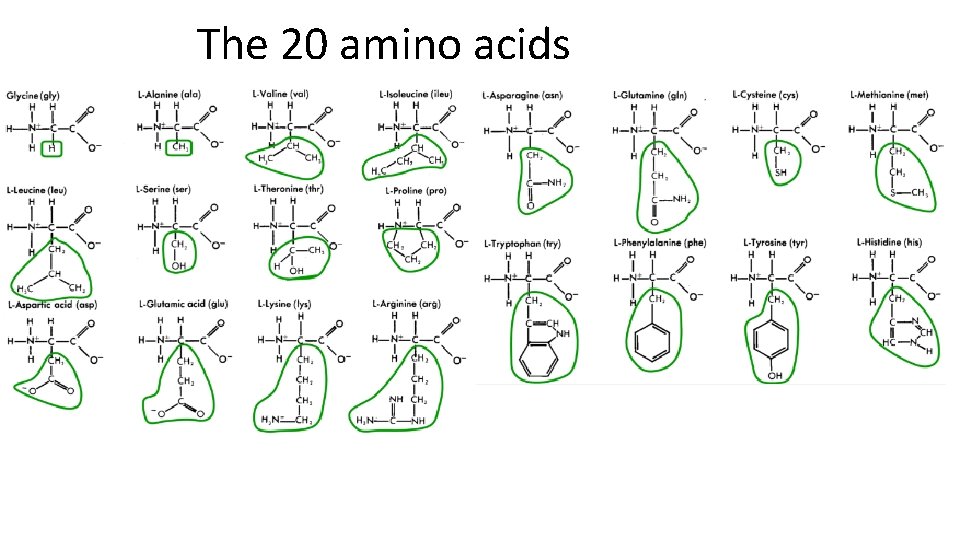
The 20 amino acids
Molecule building! Every student build an amino acid! Everyone at your table must build a different amino acid. Use your resources to look up the structures of different R groups
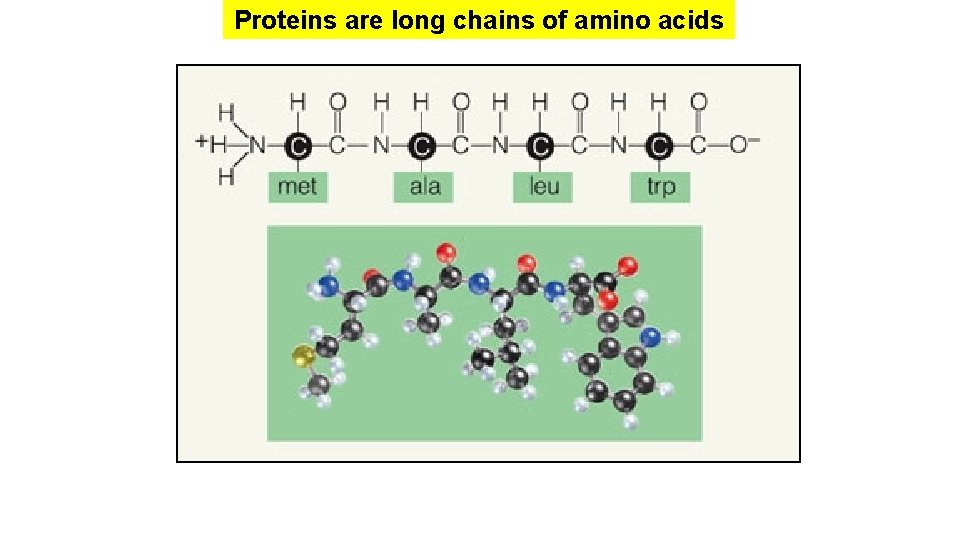
Proteins are long chains of amino acids
Proteins are constructed by way of dehydration synthesis reactions, forming a peptide bond
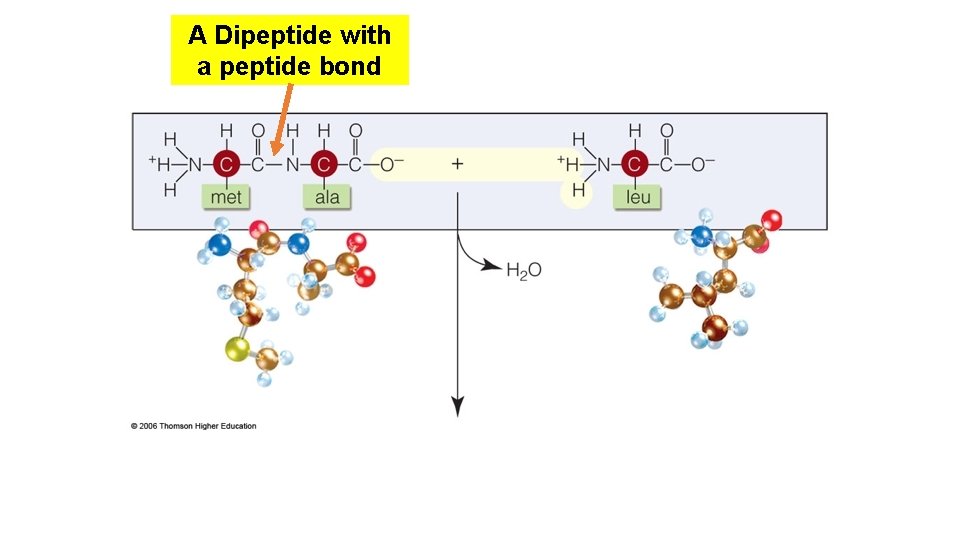
A Dipeptide with a peptide bond
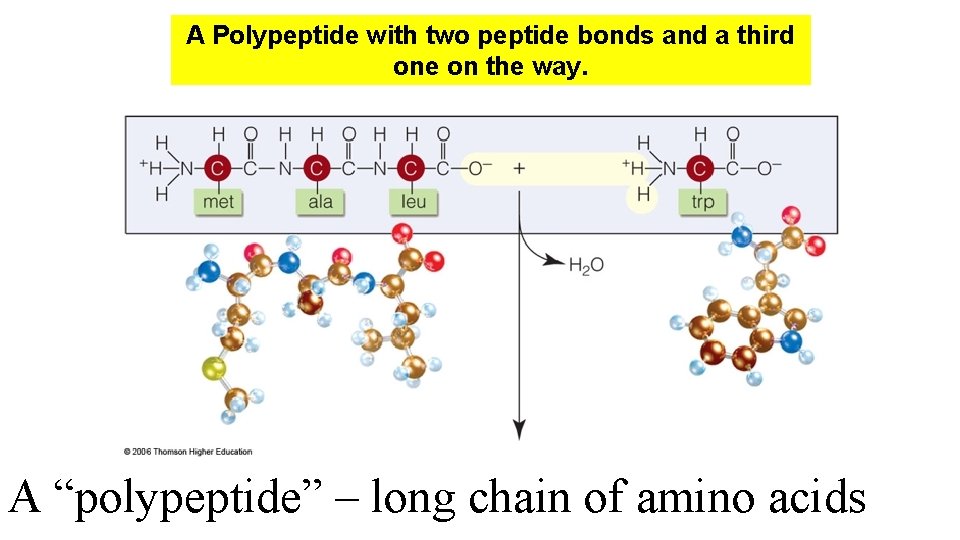
A Polypeptide with two peptide bonds and a third one on the way. A “polypeptide” – long chain of amino acids
Dehydration synthesis • Connect all of the amino acids at your table with a condensation reaction to form peptide bonds
Clean up the molecule building kits! • Some atoms may have moved around. Try to make sure that each kit has an equal number of atoms and bonds.
Ok, drawing time! Everyone choose an amino acid, and draw it on a piece of paper. Look at all of the amino acids at your table group Time to connect all of the amino acids at your table! Each person must diagram all of the condensation reactions and show the resulting polypeptide. Indicate the peptide bonds by highlighting them. Raise your hand when you are done so I can check.
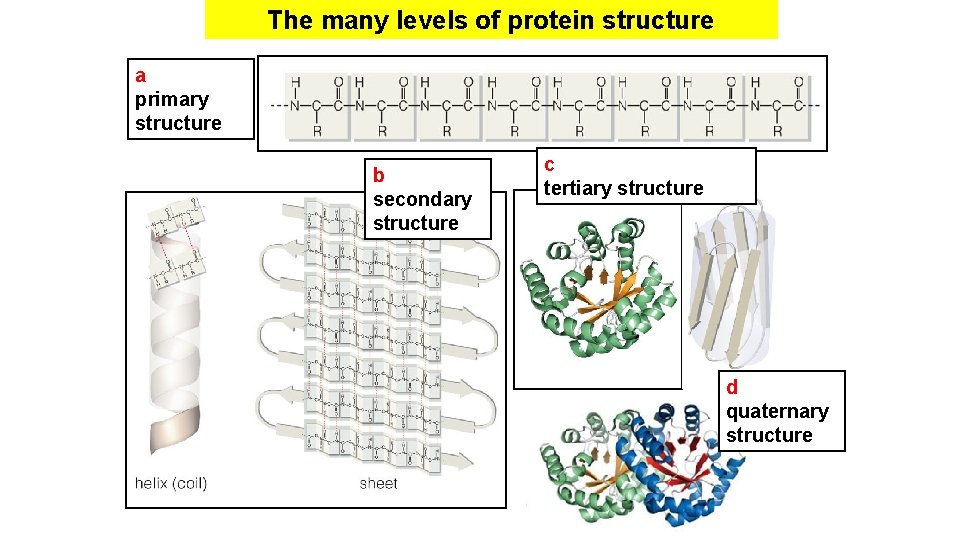
The many levels of protein structure a primary structure b secondary structure c tertiary structure d quaternary structure
Activity time! We will now briefly explain the different levels of protein structure with long amino acids sequences and tape.
Protein shape is a big deal because… A protein’s shape is what determines it’s function
What level of protein structure ultimately determines the shape of the protein? Primary! The specific amino acid sequence is coded for by genes.
Enzymes! Proteins serve many different functions, but one of these is to act as enzymes. Enzymes catalyze (speed up or facilitate) chemical reactions.
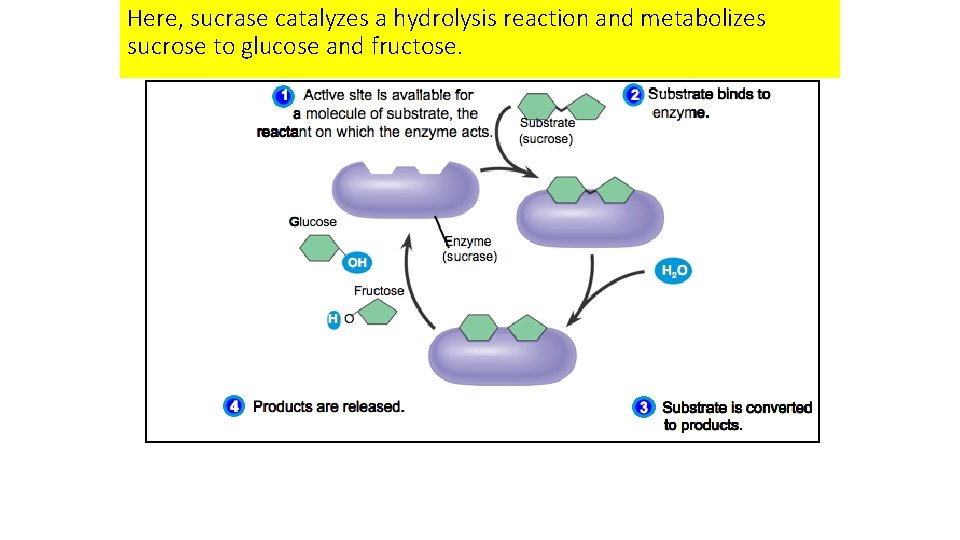
Here, sucrase catalyzes a hydrolysis reaction and metabolizes sucrose to glucose and fructose.
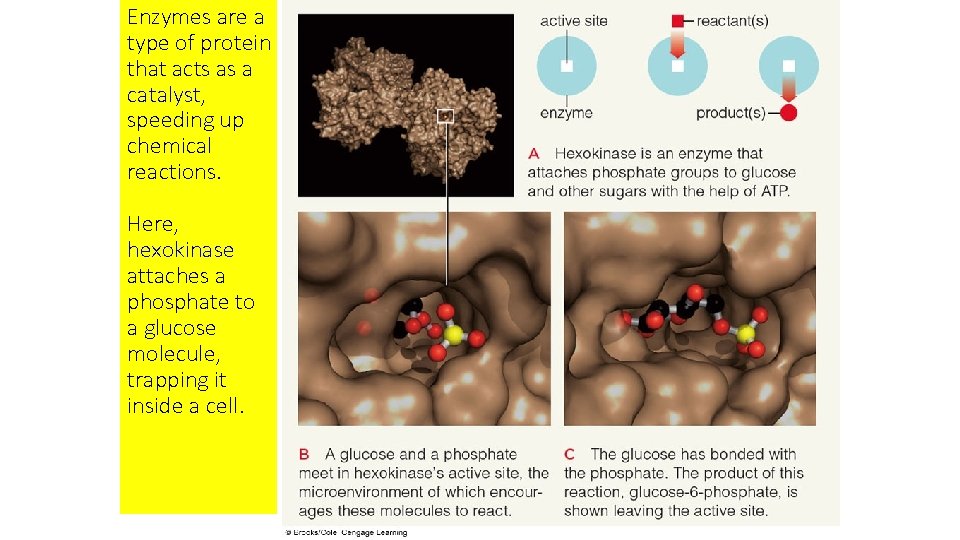
Enzymes are a type of protein that acts as a catalyst, speeding up chemical reactions. Here, hexokinase attaches a phosphate to a glucose molecule, trapping it inside a cell.
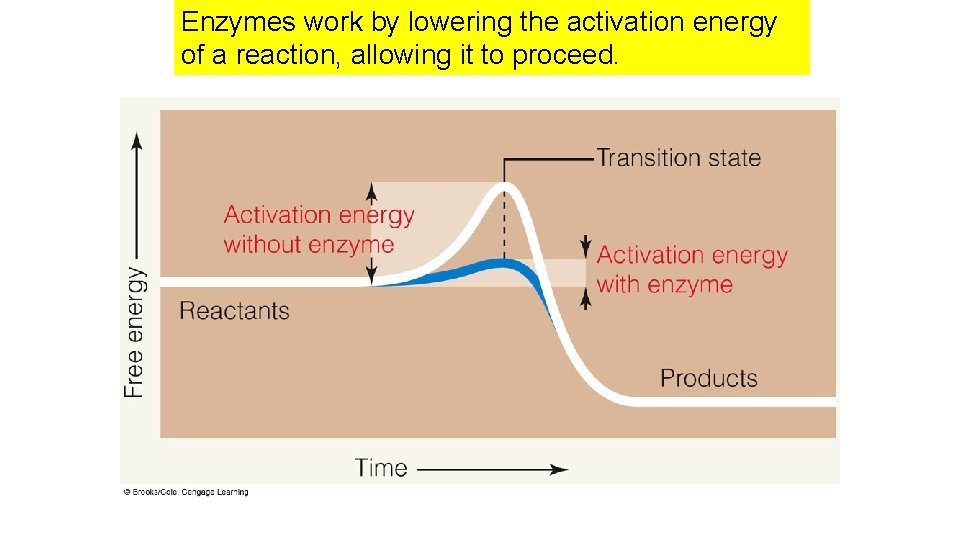
Enzymes work by lowering the activation energy of a reaction, allowing it to proceed.
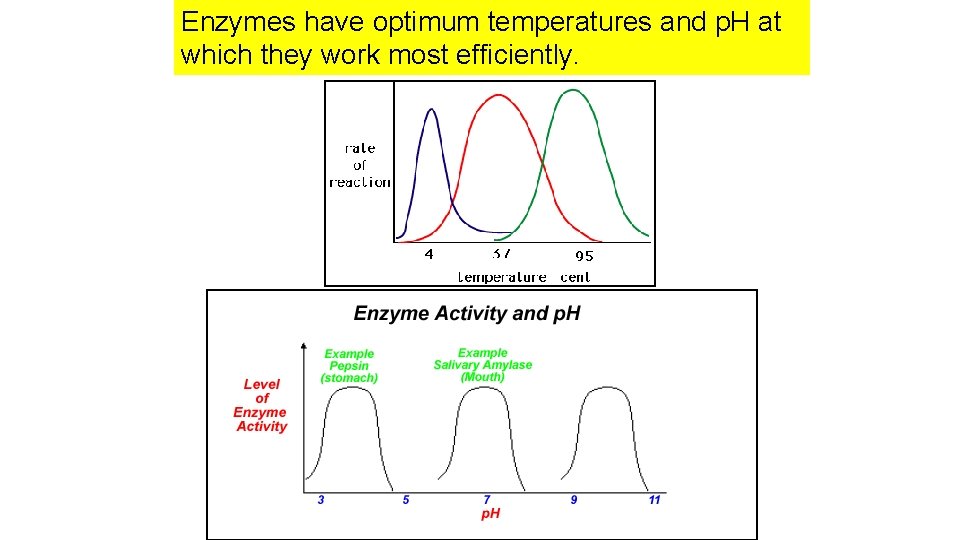
Enzymes have optimum temperatures and p. H at which they work most efficiently.