
Proteins From Foods to Cells in the Body
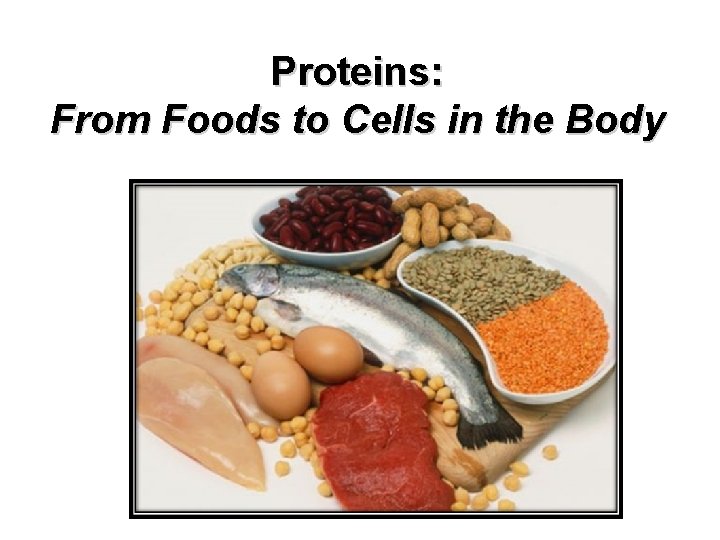
Proteins: From Foods to Cells in the Body
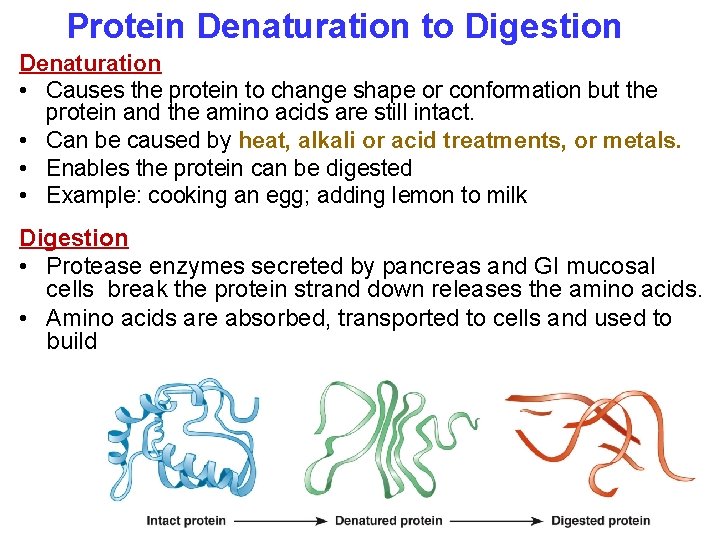
Protein Denaturation to Digestion Denaturation • Causes the protein to change shape or conformation but the protein and the amino acids are still intact. • Can be caused by heat, alkali or acid treatments, or metals. • Enables the protein can be digested • Example: cooking an egg; adding lemon to milk Digestion • Protease enzymes secreted by pancreas and GI mucosal cells break the protein strand down releases the amino acids. • Amino acids are absorbed, transported to cells and used to build
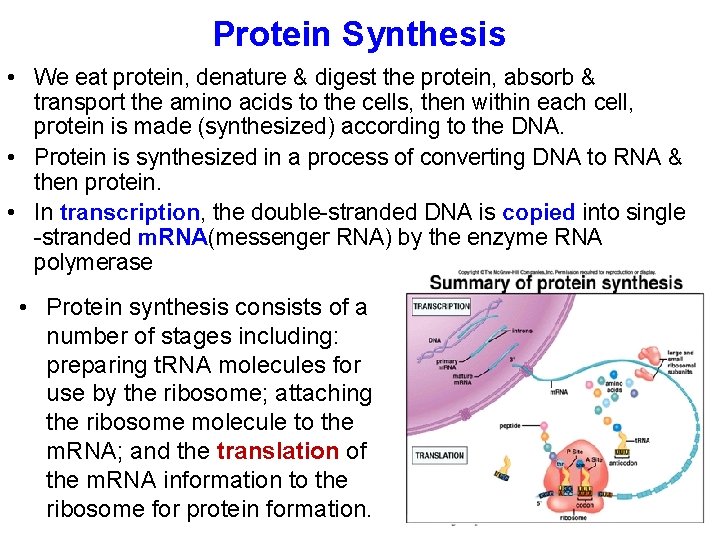
Protein Synthesis • We eat protein, denature & digest the protein, absorb & transport the amino acids to the cells, then within each cell, protein is made (synthesized) according to the DNA. • Protein is synthesized in a process of converting DNA to RNA & then protein. • In transcription, the double-stranded DNA is copied into single -stranded m. RNA(messenger RNA) by the enzyme RNA polymerase • Protein synthesis consists of a number of stages including: preparing t. RNA molecules for use by the ribosome; attaching the ribosome molecule to the m. RNA; and the translation of the m. RNA information to the ribosome for protein formation.
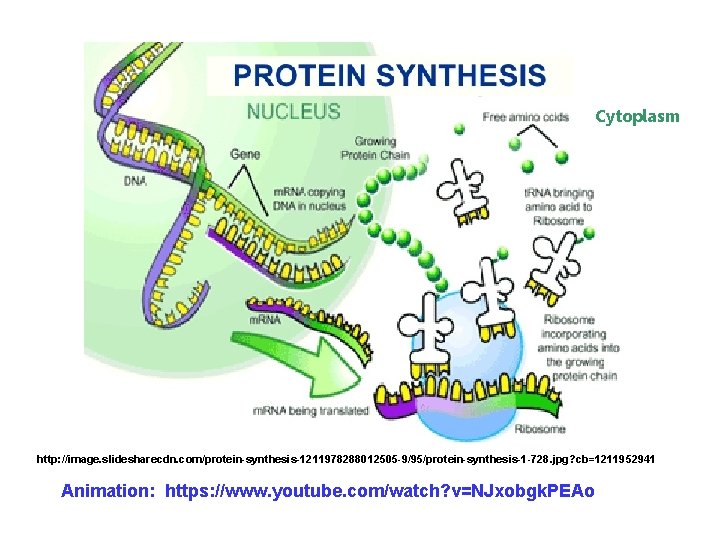
Cytoplasm http: //image. slidesharecdn. com/protein-synthesis-1211978288012505 -9/95/protein-synthesis-1 -728. jpg? cb=1211952941 Animation: https: //www. youtube. com/watch? v=NJxobgk. PEAo
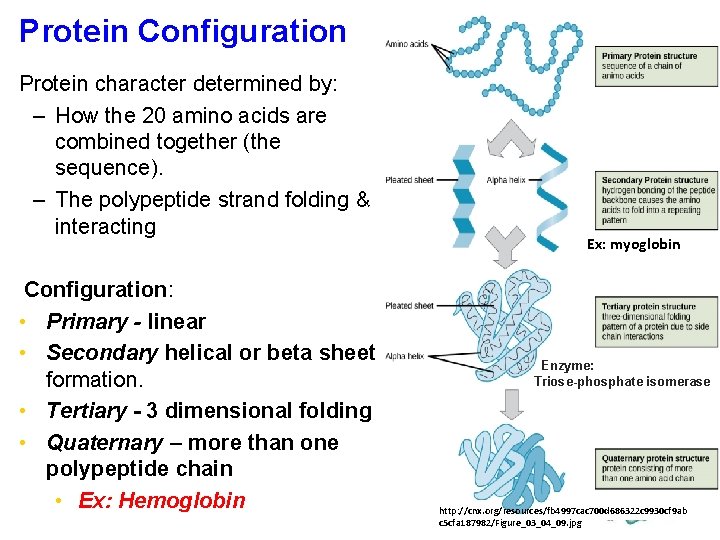
Protein Configuration Protein character determined by: – How the 20 amino acids are combined together (the sequence). – The polypeptide strand folding & interacting Configuration: • Primary - linear • Secondary helical or beta sheet formation. • Tertiary - 3 dimensional folding • Quaternary – more than one polypeptide chain • Ex: Hemoglobin Ex: myoglobin Enzyme: Triose-phosphate isomerase http: //cnx. org/resources/fb 4997 cac 700 d 686322 c 9930 cf 9 ab c 5 cfa 187982/Figure_03_04_09. jpg

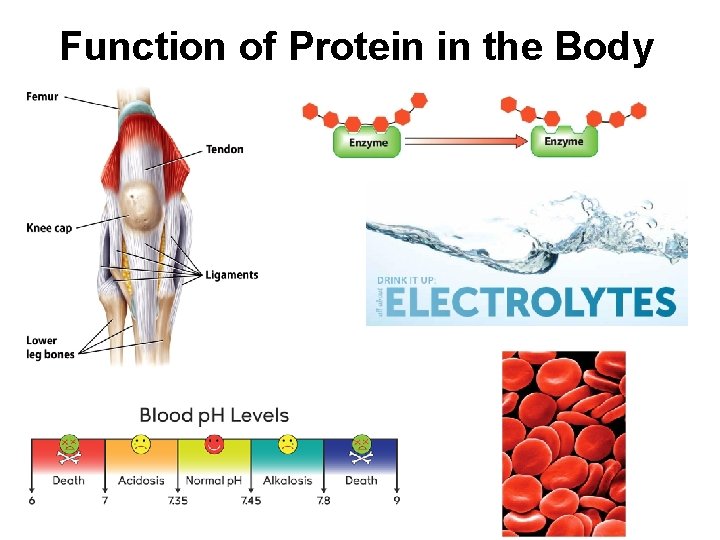
Functions of Body Proteins • Growth and maintenance replace, repair – skin, hair, bones, muscles, tendons, ligaments • Regulatory Roles – Body structures – Enzyme action – Hormones insulin & glucagon, secretin & cholecystokinin. – Antibodies, complement proteins, circulating components of immunity – Fluid (Albumin) and electrolyte balance – Acid-Base Balance (alkalosis, acidosis, buffers) – Transport Proteins • (sodium/potassium pump; lipoproteins) • Energy Production
Function of Protein in the Body
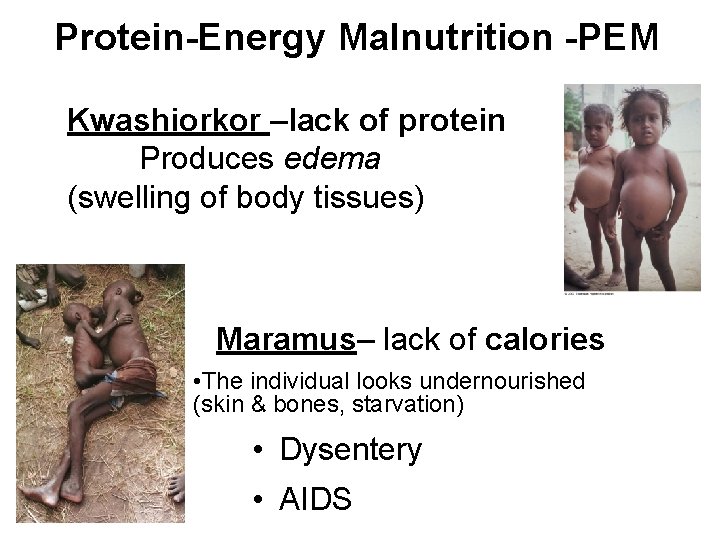
Protein-Energy Malnutrition -PEM Kwashiorkor –lack of protein Produces edema (swelling of body tissues) Maramus– lack of calories • The individual looks undernourished (skin & bones, starvation) • Dysentery • AIDS
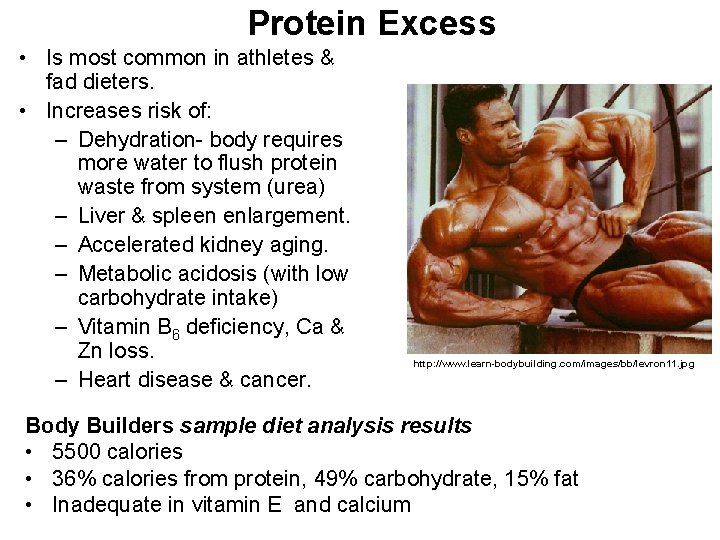
Protein Excess • Is most common in athletes & fad dieters. • Increases risk of: – Dehydration- body requires more water to flush protein waste from system (urea) – Liver & spleen enlargement. – Accelerated kidney aging. – Metabolic acidosis (with low carbohydrate intake) – Vitamin B 6 deficiency, Ca & Zn loss. – Heart disease & cancer. http: //www. learn-bodybuilding. com/images/bb/levron 11. jpg Body Builders sample diet analysis results • 5500 calories • 36% calories from protein, 49% carbohydrate, 15% fat • Inadequate in vitamin E and calcium
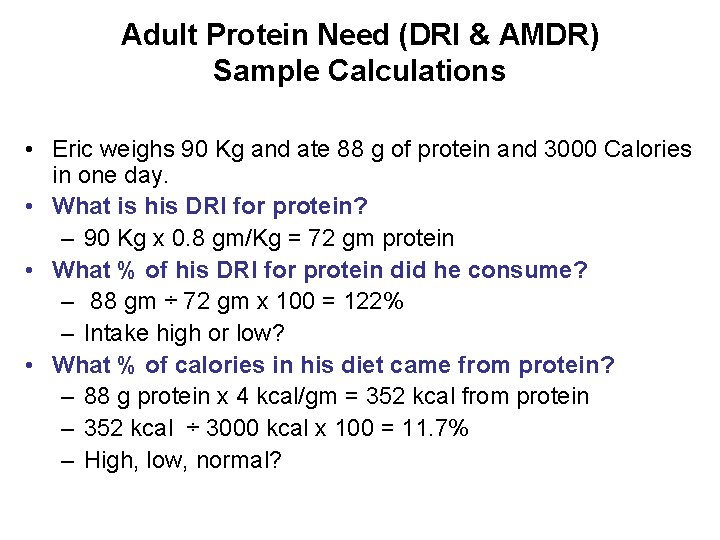
Adult Protein Need (DRI & AMDR) Sample Calculations • Eric weighs 90 Kg and ate 88 g of protein and 3000 Calories in one day. • What is his DRI for protein? – 90 Kg x 0. 8 gm/Kg = 72 gm protein • What % of his DRI for protein did he consume? – 88 gm ÷ 72 gm x 100 = 122% – Intake high or low? • What % of calories in his diet came from protein? – 88 g protein x 4 kcal/gm = 352 kcal from protein – 352 kcal ÷ 3000 kcal x 100 = 11. 7% – High, low, normal?
- Slides: 10