
Proteins Amino Acids Monomers of proteins 20 different
- Slides: 22
Proteins
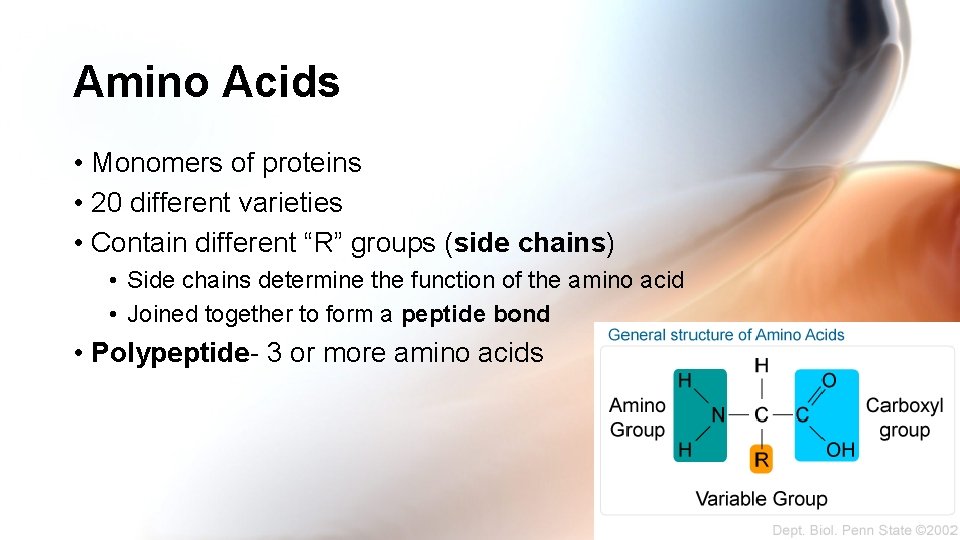
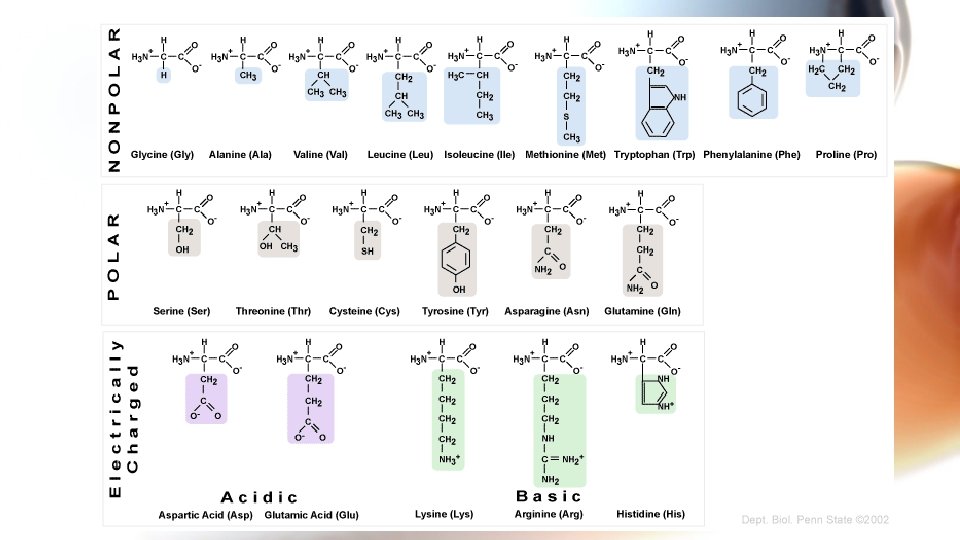
Amino Acids • Monomers of proteins • 20 different varieties • Contain different “R” groups (side chains) • Side chains determine the function of the amino acid • Joined together to form a peptide bond • Polypeptide- 3 or more amino acids
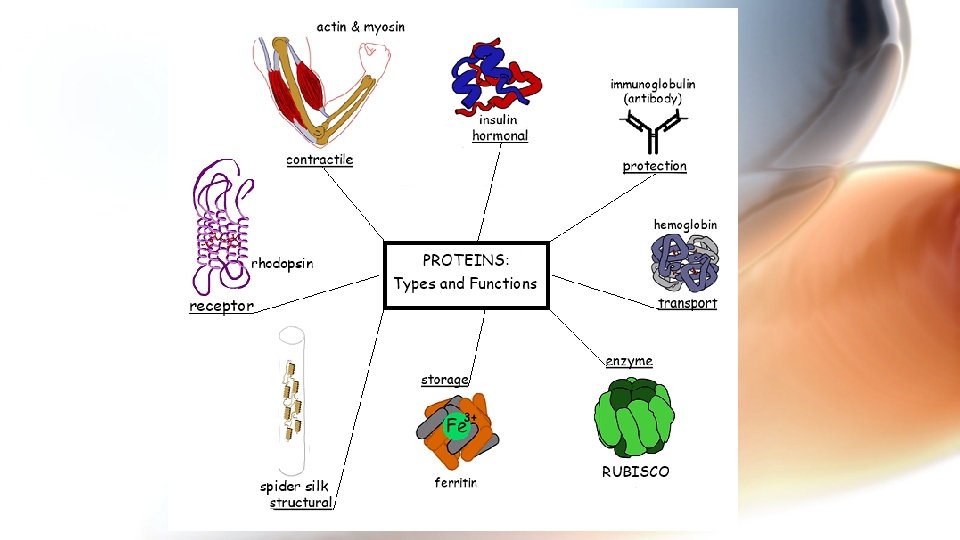
Proteins • Building blocks for all organic material made up of 20 different amino acids arranged in all different patterns • Polymers are created using peptide bonds • FORM FITS FUNCTION • • Speed up reactions Defense Storage Transport Communication Movement Structure
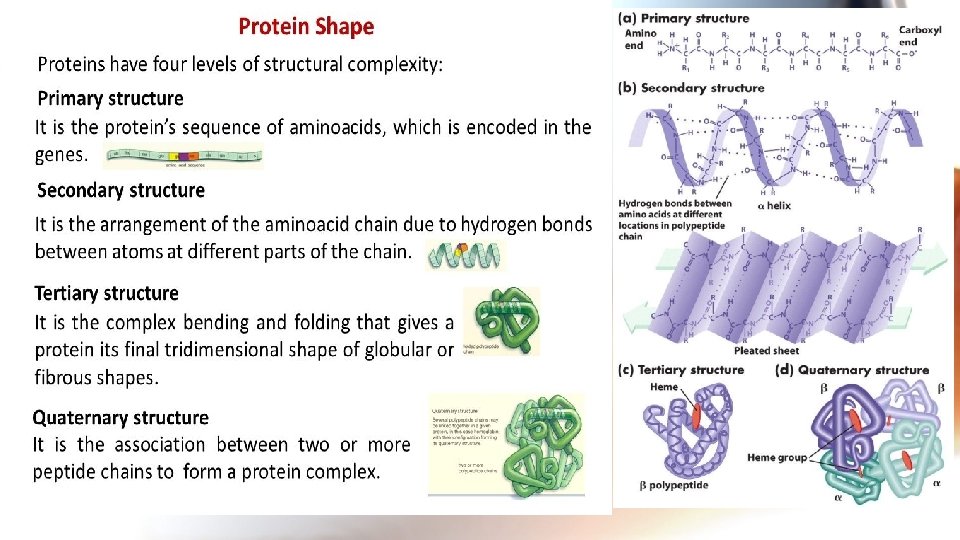
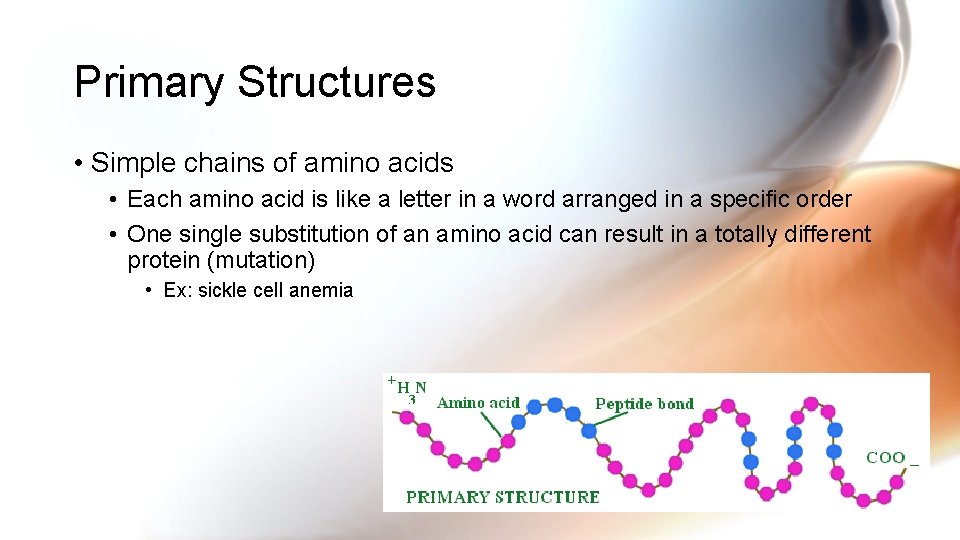
Primary Structures • Simple chains of amino acids • Each amino acid is like a letter in a word arranged in a specific order • One single substitution of an amino acid can result in a totally different protein (mutation) • Ex: sickle cell anemia
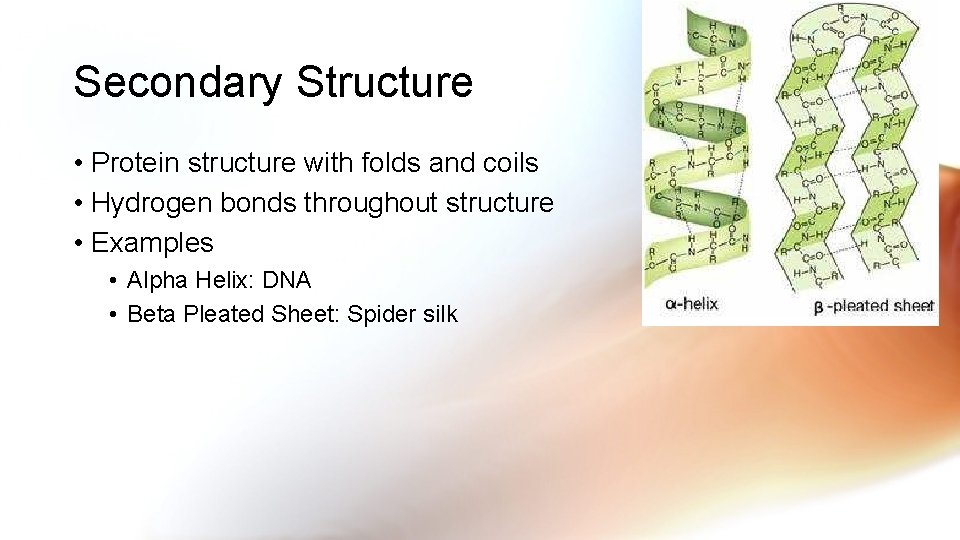
Secondary Structure • Protein structure with folds and coils • Hydrogen bonds throughout structure • Examples • Alpha Helix: DNA • Beta Pleated Sheet: Spider silk
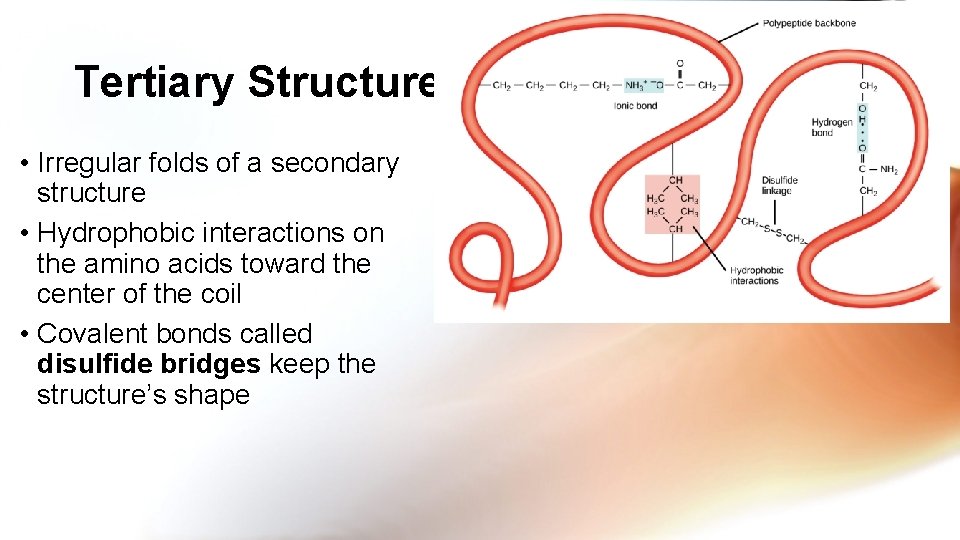
Tertiary Structure • Irregular folds of a secondary structure • Hydrophobic interactions on the amino acids toward the center of the coil • Covalent bonds called disulfide bridges keep the structure’s shape
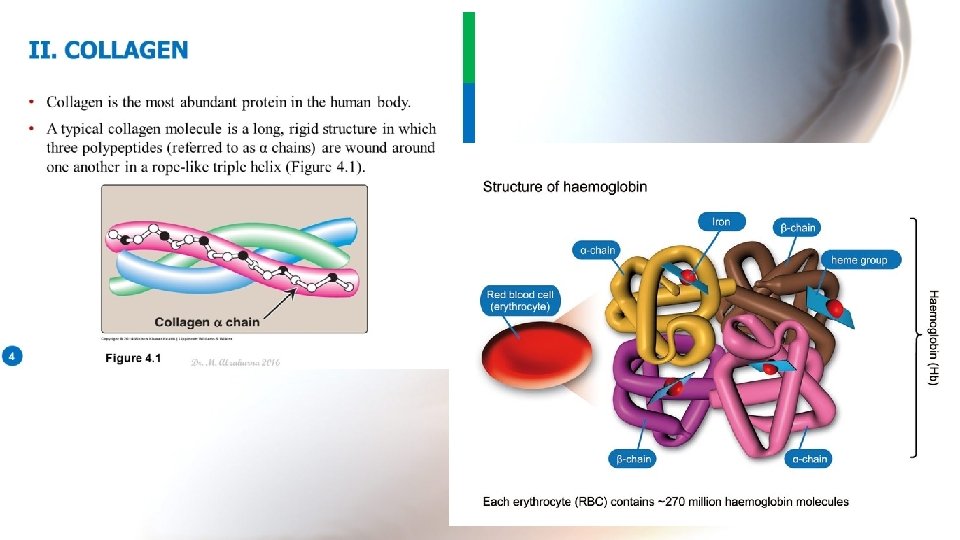
Quaternary Structure • Large macromolecule consisting of two or more polypeptide chains • EX: Collagen: coiled protein into a triple helix whose function is to maintain structure of tendons and ligaments and keeping your hair/skin/ and nails looking beautiful! • EX: Hemoglobin: globular protein with four subunits allowing for the binding to oxygen
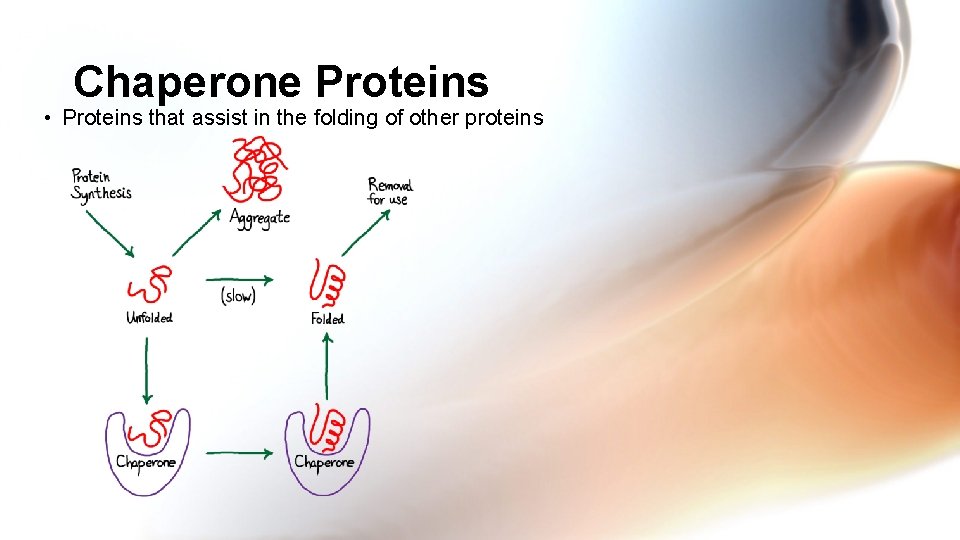
Chaperone Proteins • Proteins that assist in the folding of other proteins
Proteins (check up) • Provide 40% mass of the cells in your body • Form fits function • Composed of amino acids • Arranged in four types of structure patterns • Environment of formation determines the proteins shape and behavior • Temperature, p. H, ion concentration etc. can affect the ability of a protein to function by changing it’s shape (DENATURE)
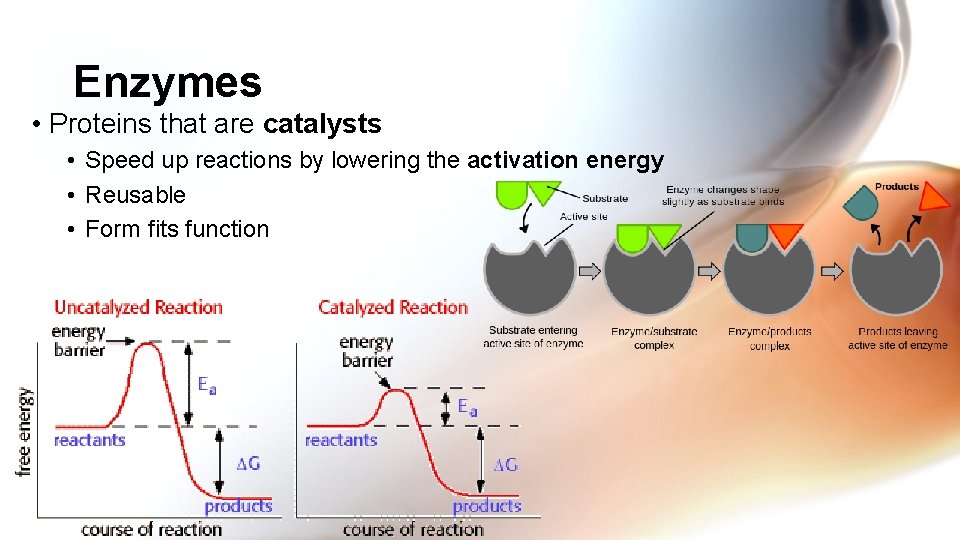
Enzymes • Proteins that are catalysts • Speed up reactions by lowering the activation energy • Reusable • Form fits function
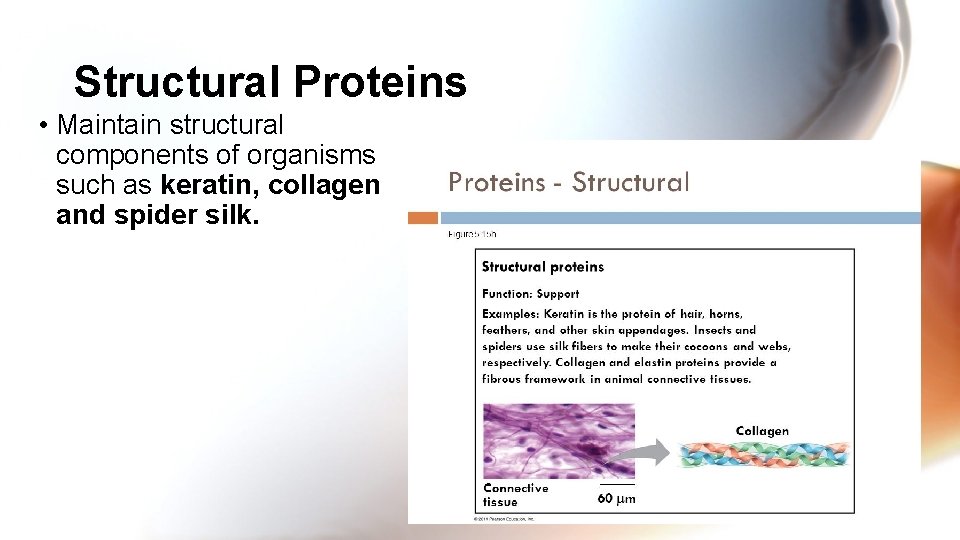
Structural Proteins • Maintain structural components of organisms such as keratin, collagen and spider silk.
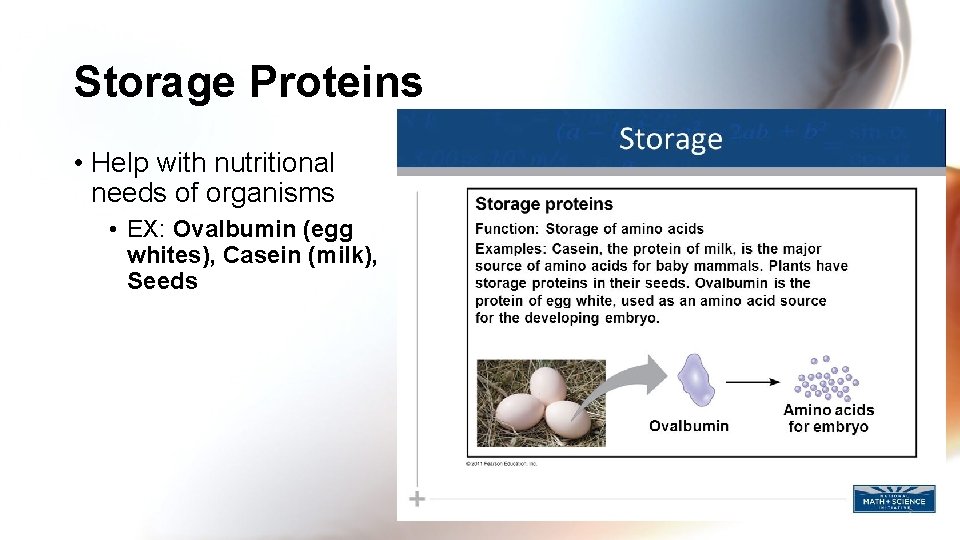
Storage Proteins • Help with nutritional needs of organisms • EX: Ovalbumin (egg whites), Casein (milk), Seeds
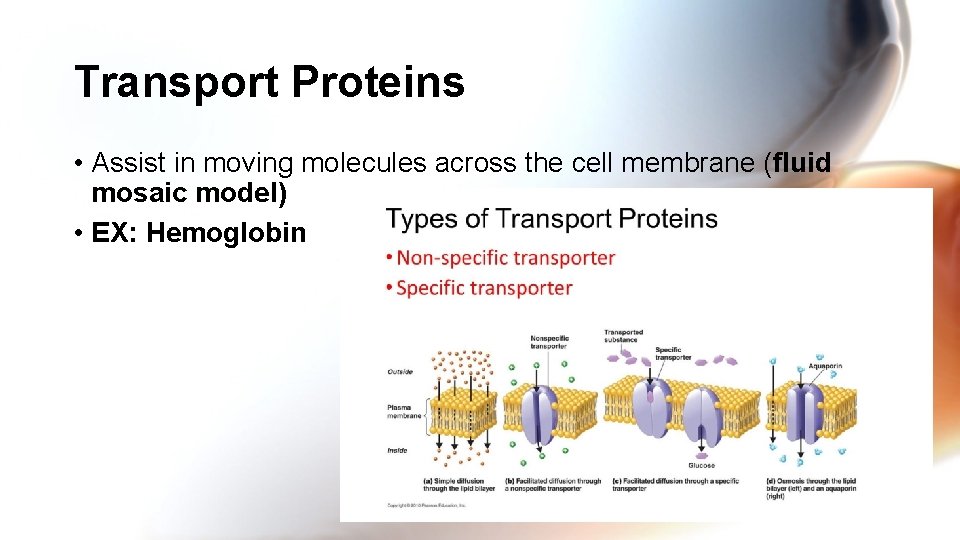
Transport Proteins • Assist in moving molecules across the cell membrane (fluid mosaic model) • EX: Hemoglobin
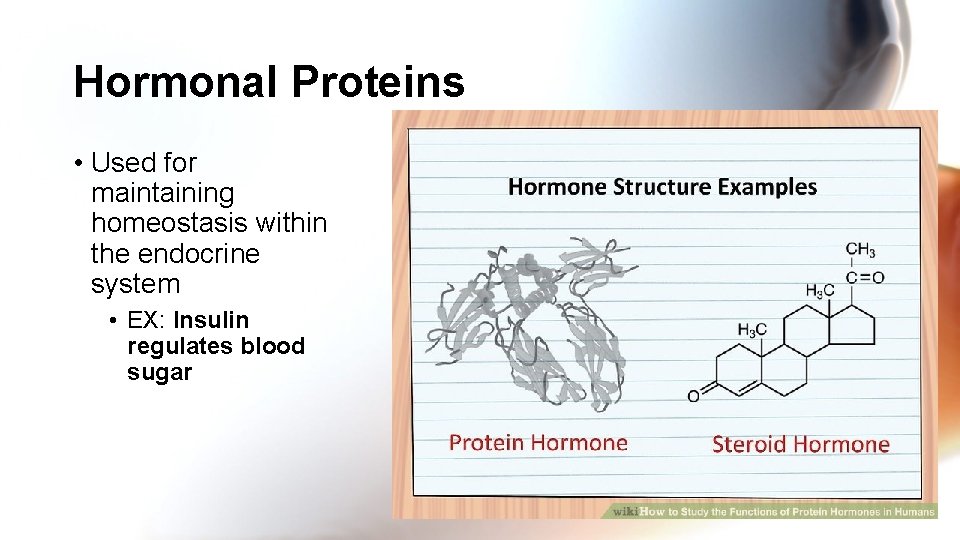
Hormonal Proteins • Used for maintaining homeostasis within the endocrine system • EX: Insulin regulates blood sugar
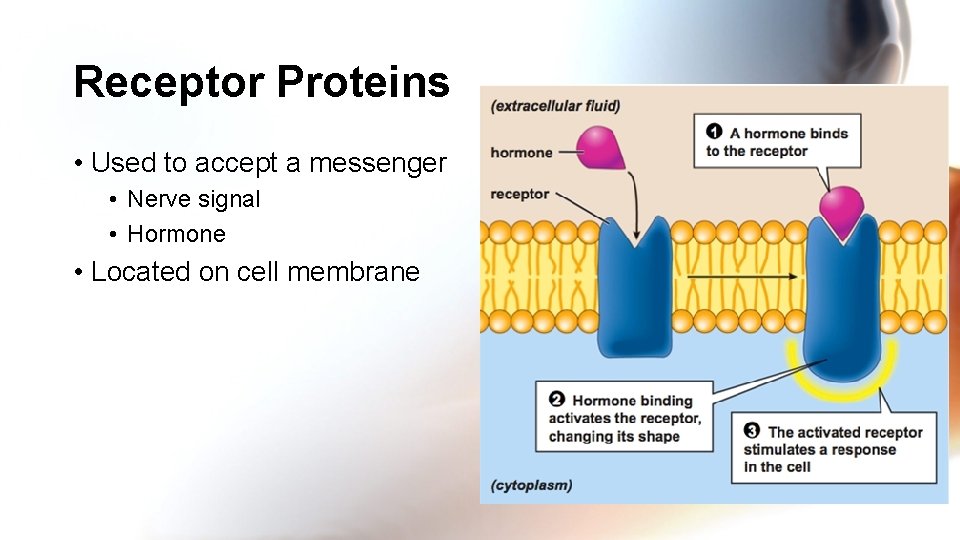
Receptor Proteins • Used to accept a messenger • Nerve signal • Hormone • Located on cell membrane
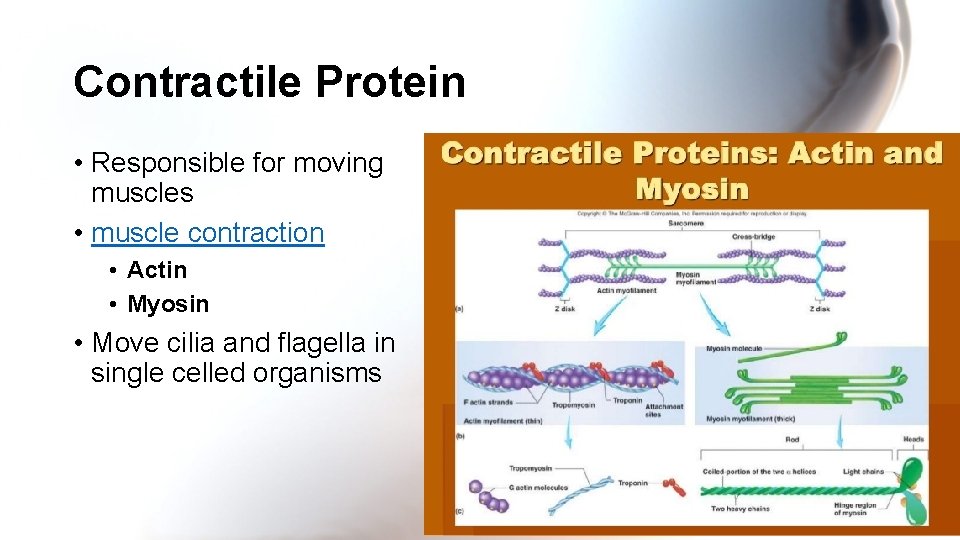
Contractile Protein • Responsible for moving muscles • muscle contraction • Actin • Myosin • Move cilia and flagella in single celled organisms
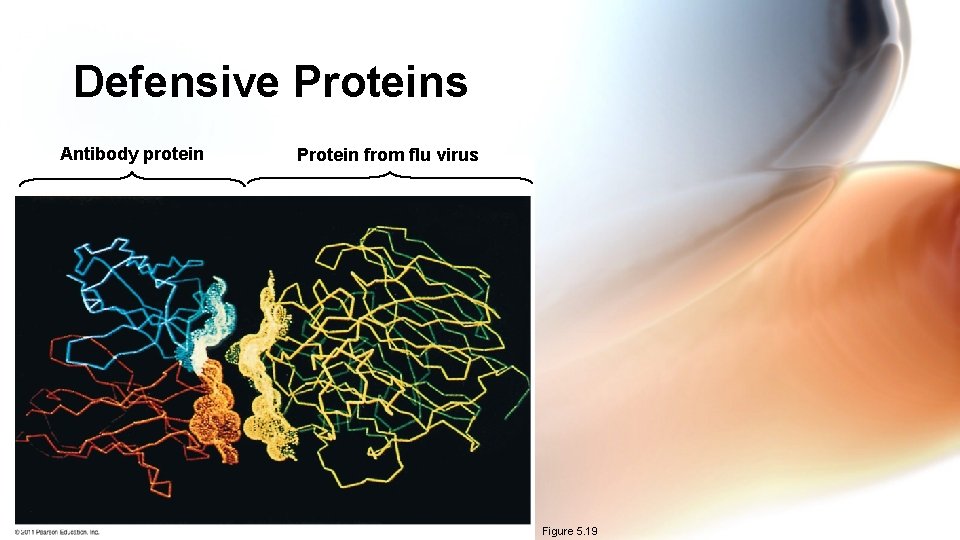
Defensive Proteins Antibody protein Protein from flu virus Figure 5. 19
Protein Crystallagraphy