
Proteinprotein interactions Introduction important field in cell biology
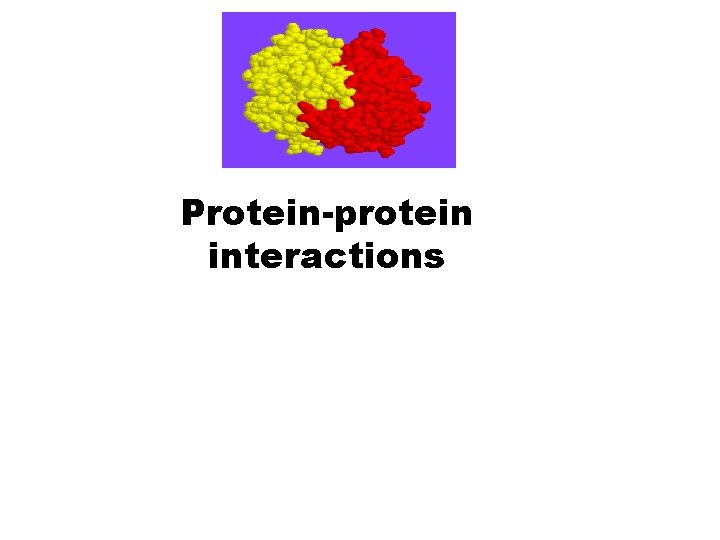
Protein-protein interactions
Introduction • important field in cell biology, biochemistry Localization and trafficking posttranslational modifications signaling networks • also important field in viral replication • very difficult to predict • two main patterns: ■ domain-domain interactions ■domain-peptide interactions
An example: virion assembly • The components come together and the Nucleocapsid is formed which in turn will become completed to the whole particle. • The assembly process begins when concentration of structural proteins is enough within the cell to drive the process. • Many protein-protein, protein-nucleic acid and in case of membrane viruses protein-membrane (fatty acid) interactions are needed. 3
The mechanism of interaction • • • Non-covalent so reversible Van del waals forces Hydrophobic interactions Electrostatic bonds Hydrogen bonds For strong couplings very accurate force field potentials are needed

How to study protein interaction?
Overview of techniques Gel filtration Far western blot Affinity chromatography Coimmunopercipitation • Capillary elecrophoresis • Biosensor • • • FRET microscopy Confocal microscopy 2 hybrid assay Protein microarry Maspec NMR Co-crystallization for crystallography
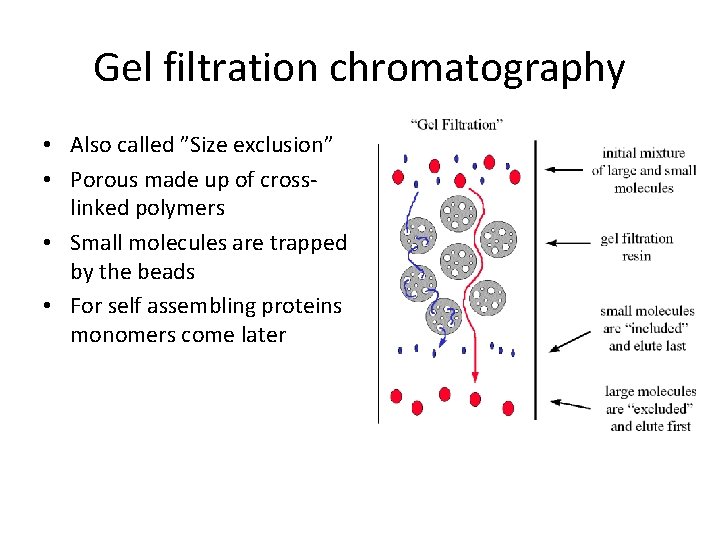
Gel filtration chromatography • Also called ”Size exclusion” • Porous made up of crosslinked polymers • Small molecules are trapped by the beads • For self assembling proteins monomers come later
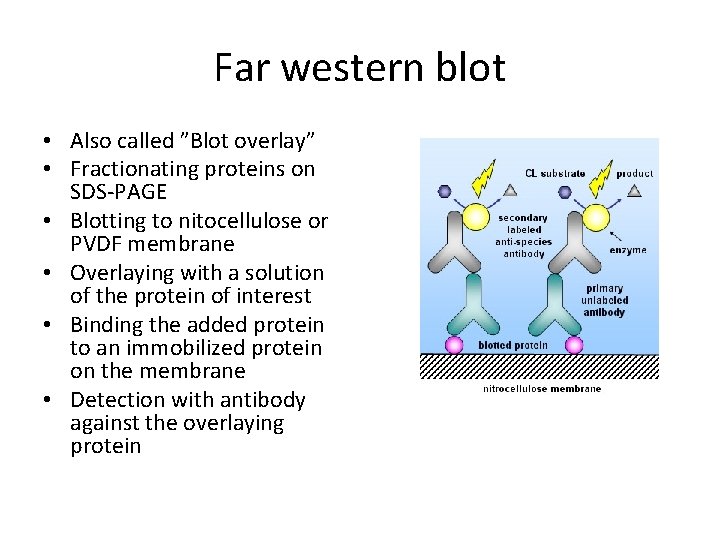
Far western blot • Also called ”Blot overlay” • Fractionating proteins on SDS-PAGE • Blotting to nitocellulose or PVDF membrane • Overlaying with a solution of the protein of interest • Binding the added protein to an immobilized protein on the membrane • Detection with antibody against the overlaying protein
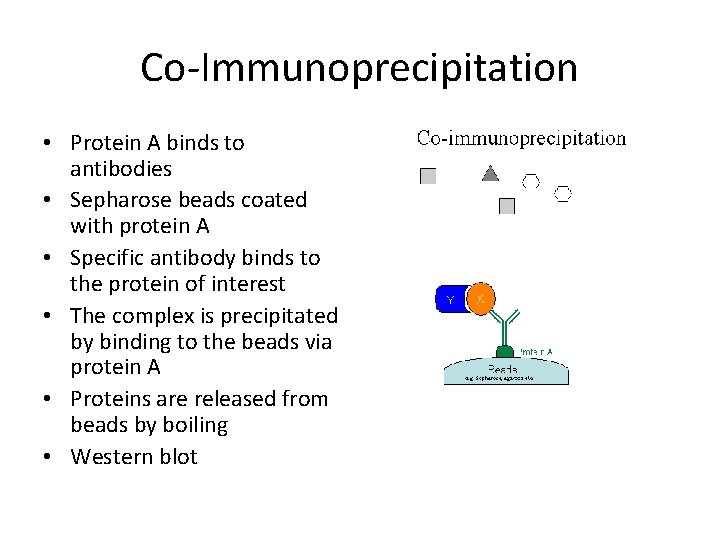
Co-Immunoprecipitation • Protein A binds to antibodies • Sepharose beads coated with protein A • Specific antibody binds to the protein of interest • The complex is precipitated by binding to the beads via protein A • Proteins are released from beads by boiling • Western blot
Affinity chromatography • In the case of His- tagged proteins • The His-tagged protein binds to nickel or cobalt column • His-tagged protein and it’s associated protein are eluted from the column by adding imidazole
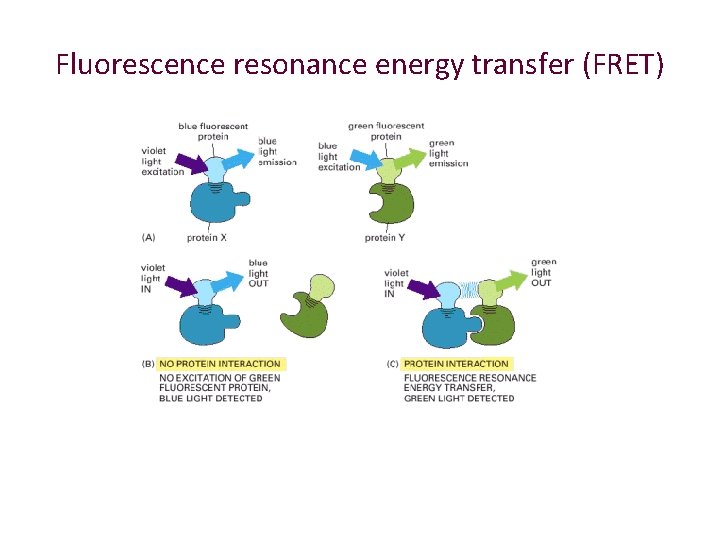
Fluorescence resonance energy transfer (FRET)

FRET cont • Cyan fluorescence protein (CFP) and yellow fluorescence protein (YFP) are spectral variants of GFP • Plasmid constructs to fuse the proteins of interest to CFP and YFP • Co-transfection of plasmids to the cells • Fixation of the cells and view by confocal microscopy • Disadvantage: False negative results: If the fluorophores are over 200Ǻ apart while the proteins interact with each other, no signal will be observed
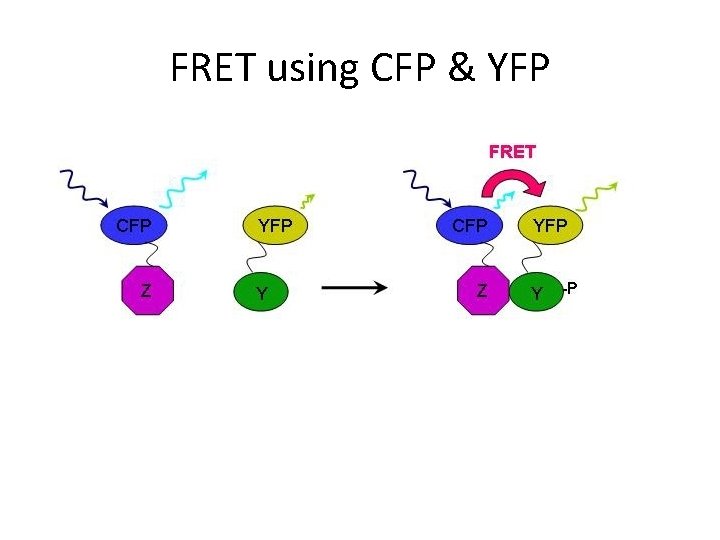
FRET using CFP & YFP
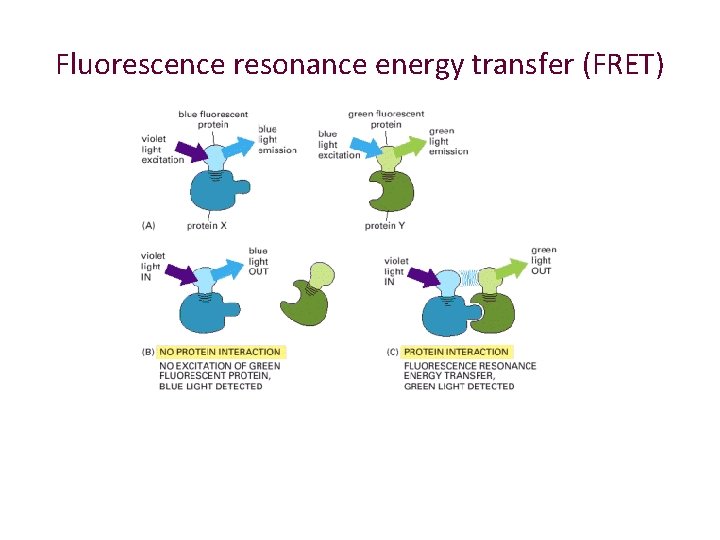
Fluorescence resonance energy transfer (FRET)
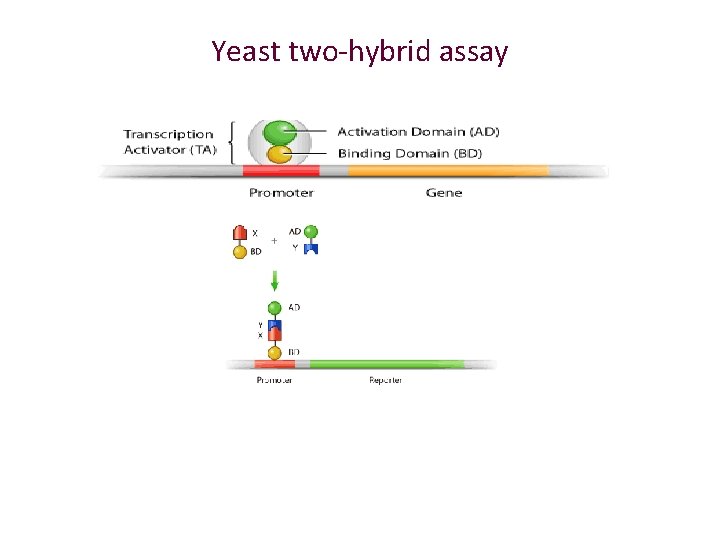
Yeast two-hybrid assay
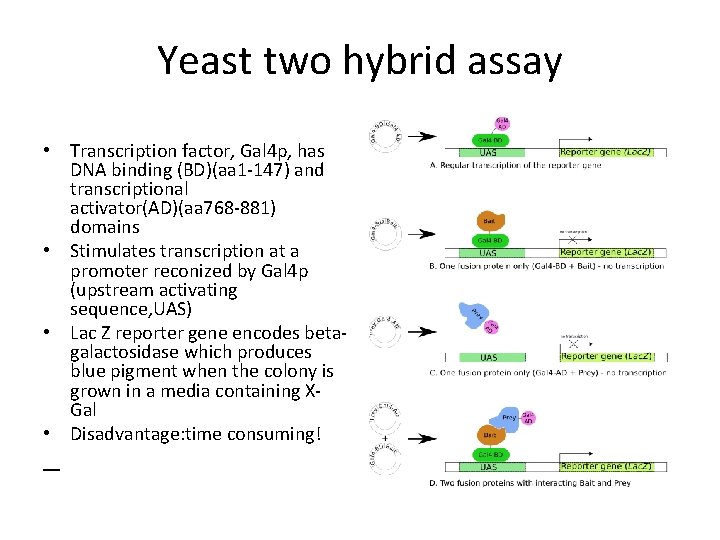
Yeast two hybrid assay • Transcription factor, Gal 4 p, has DNA binding (BD)(aa 1 -147) and transcriptional activator(AD)(aa 768 -881) domains • Stimulates transcription at a promoter reconized by Gal 4 p (upstream activating sequence, UAS) • Lac Z reporter gene encodes betagalactosidase which produces blue pigment when the colony is grown in a media containing XGal • Disadvantage: time consuming!
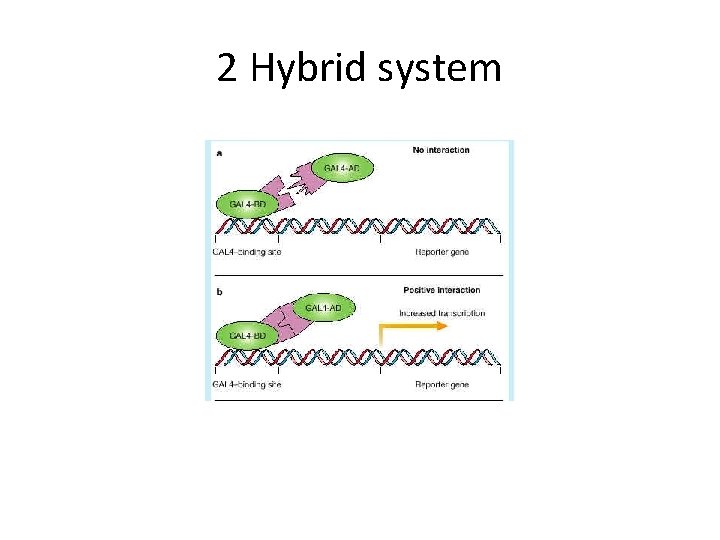
2 Hybrid system

Mamalian two-hybrid assay • Is analogous to Y 2 H assay • Plasmids: 1)Gal 4 p. BD-fusion vector 2)VP 16 AD-fusion vector(viral activator) 3)luciferase reporter plasmid contaning multiple copies of Gal 4 p binding sites(UAS) • Co-transfection: in the case of interaction, luciferase activity will be detected • Advantage: good for studying mammalian proteins: they may not fold correctly in yeast or they may require posttranlational modifications for protein interaction
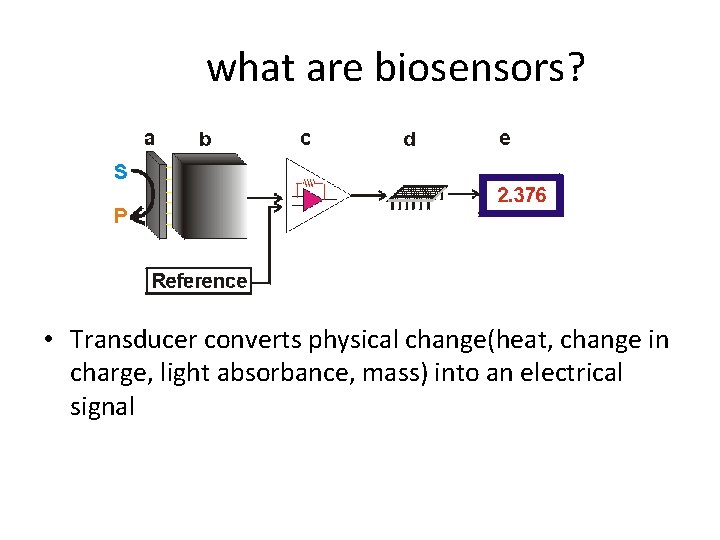
what are biosensors? • Transducer converts physical change(heat, change in charge, light absorbance, mass) into an electrical signal
Confocal microscopy • A good technique to detect intracellular colocalization of proteins • Point scan laser system minimizes overlaps in image (perfect for imaging Co-localization of proteins)
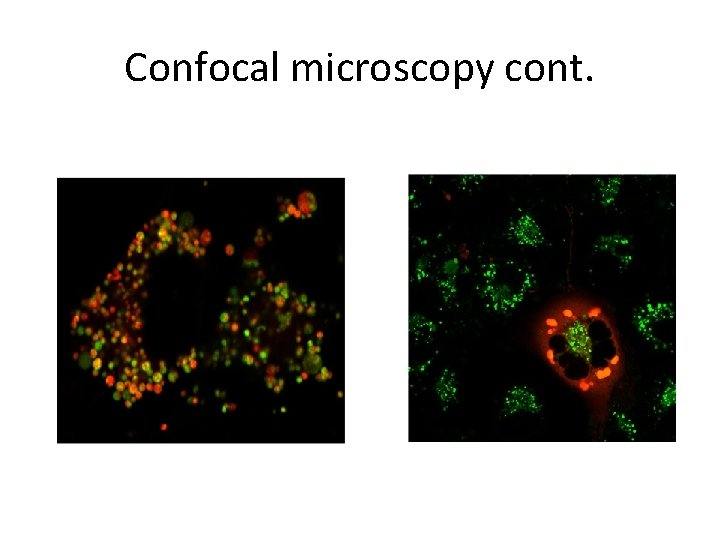
Confocal microscopy cont.
Overview of techniques Gel filtration Far western blot Affinity chromatography Coimmunopercipitation • Capillary elecrophoresis • • • FRET microscopy Confocal microscopy 2 hybrid assay Maspec NMR Co-crystallization for crystallography
- Slides: 22