
Protein Traps in Af CS Cells Dianne De

- Slides: 26
Protein Traps in Af. CS Cells Dianne De. Camp, Yan Ni, Hongjun Shu, Iain Fraser
HELP HELP 1. Objective 2. Strategy for WEHI Cells 3. Progress 4. Future Directions
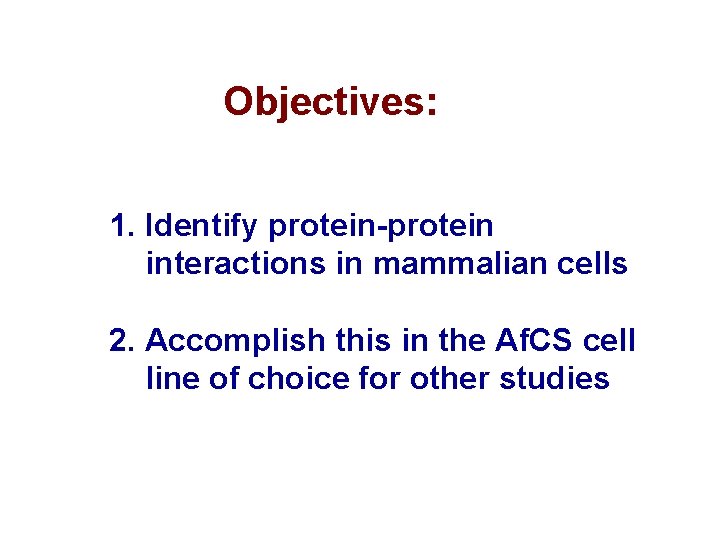
Objectives: 1. Identify protein-protein interactions in mammalian cells 2. Accomplish this in the Af. CS cell line of choice for other studies
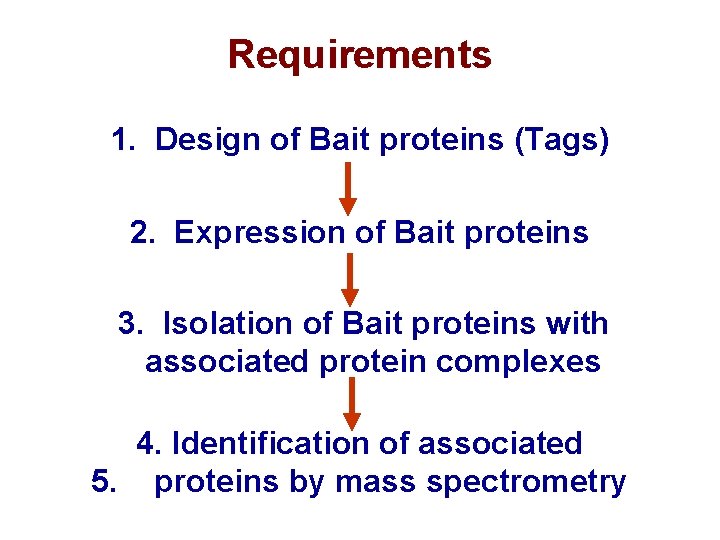
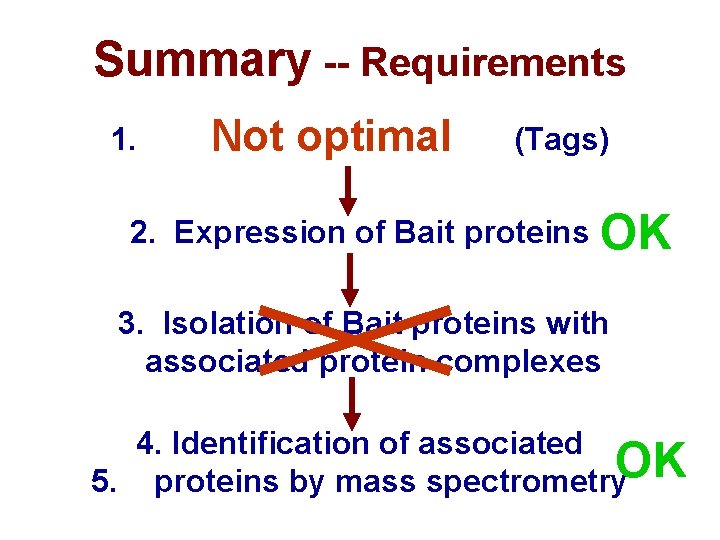
Requirements 1. Design of Bait proteins (Tags) 2. Expression of Bait proteins 3. Isolation of Bait proteins with associated protein complexes 4. Identification of associated 5. proteins by mass spectrometry
A Strategy for WEHI Cells A Tale of Two Tags
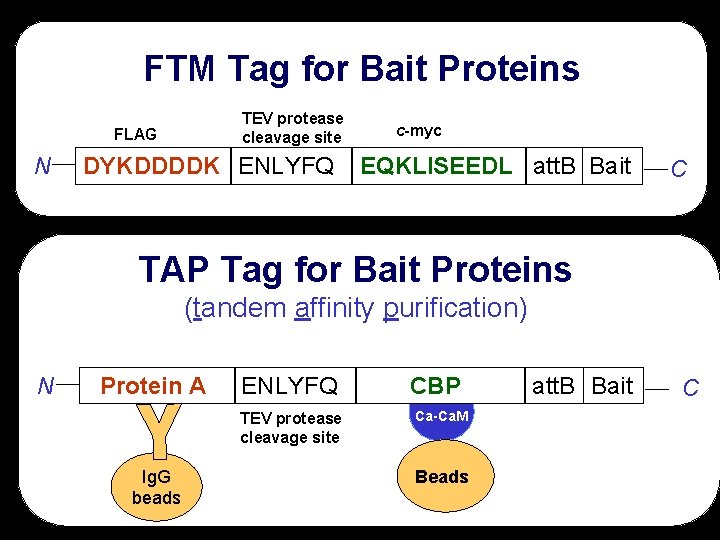
FTM Tag for Bait Proteins TEV protease cleavage site FLAG N DYKDDDDK ENLYFQ c-myc EQKLISEEDL att. B Bait C TAP Tag for Bait Proteins (tandem affinity purification) N Protein A ENLYFQ TEV protease cleavage site Ig. G beads CBP Ca-Ca. M Beads att. B Bait C
Expression of Bait Protein 1. Transfection 2. Infection with virus
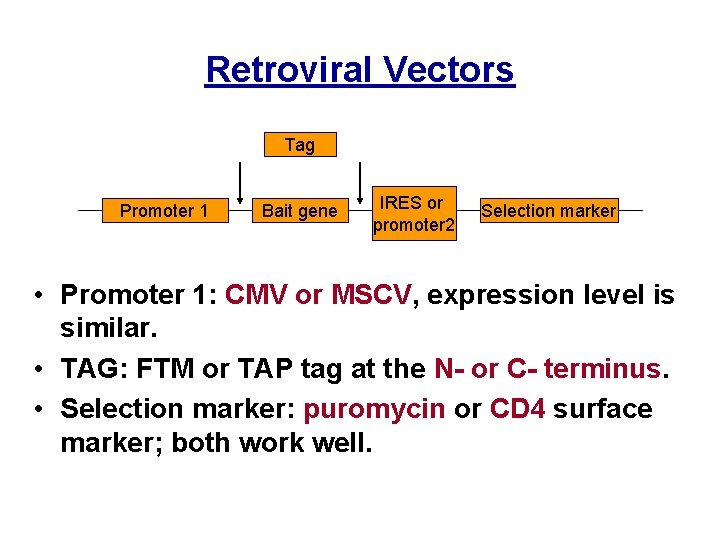
Retroviral Vectors Tag Promoter 1 Bait gene IRES or promoter 2 Selection marker • Promoter 1: CMV or MSCV, expression level is similar. • TAG: FTM or TAP tag at the N- or C- terminus. • Selection marker: puromycin or CD 4 surface marker; both work well.
Progress
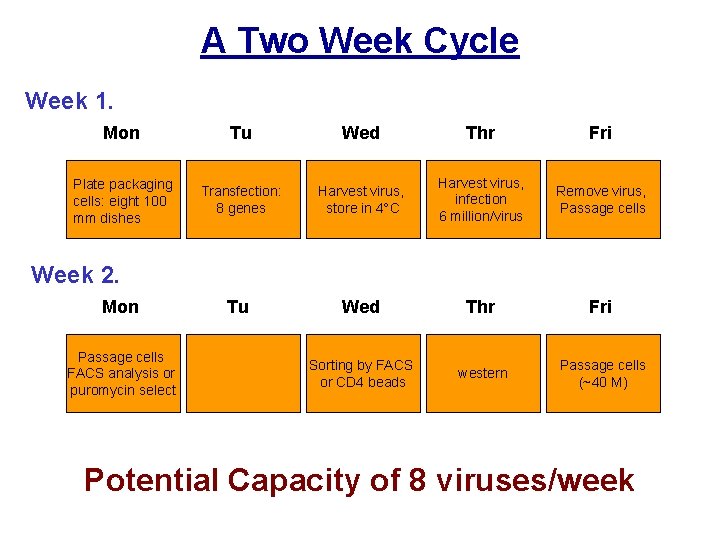
A Two Week Cycle Week 1. Mon Tu Wed Thr Fri Plate packaging cells: eight 100 mm dishes Transfection: 8 genes Harvest virus, store in 4 C Harvest virus, infection 6 million/virus Remove virus, Passage cells Tu Wed Thr Fri Sorting by FACS or CD 4 beads western Passage cells (~40 M) Week 2. Mon Passage cells FACS analysis or puromycin select Potential Capacity of 8 viruses/week
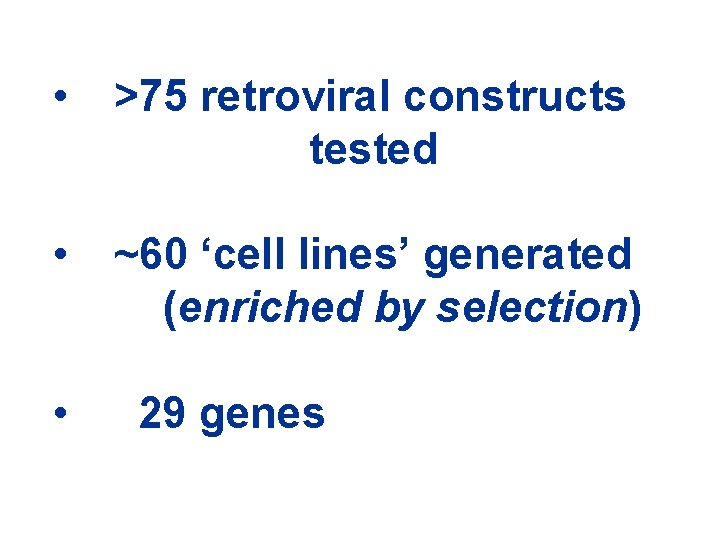
• >75 retroviral constructs tested • ~60 ‘cell lines’ generated xxx(enriched by selection) • 29 genes
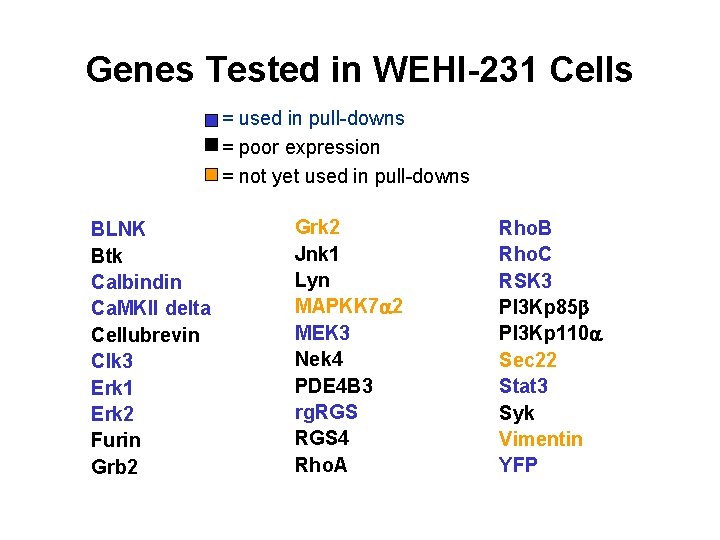
Genes Tested in WEHI-231 Cells = used in pull-downs = poor expression = not yet used in pull-downs BLNK Btk Calbindin Ca. MKII delta Cellubrevin Clk 3 Erk 1 Erk 2 Furin Grb 2 Grk 2 Jnk 1 Lyn MAPKK 7 a 2 MEK 3 Nek 4 PDE 4 B 3 rg. RGS 4 Rho. A Rho. B Rho. C RSK 3 PI 3 Kp 85 b PI 3 Kp 110 a Sec 22 Stat 3 Syk Vimentin YFP
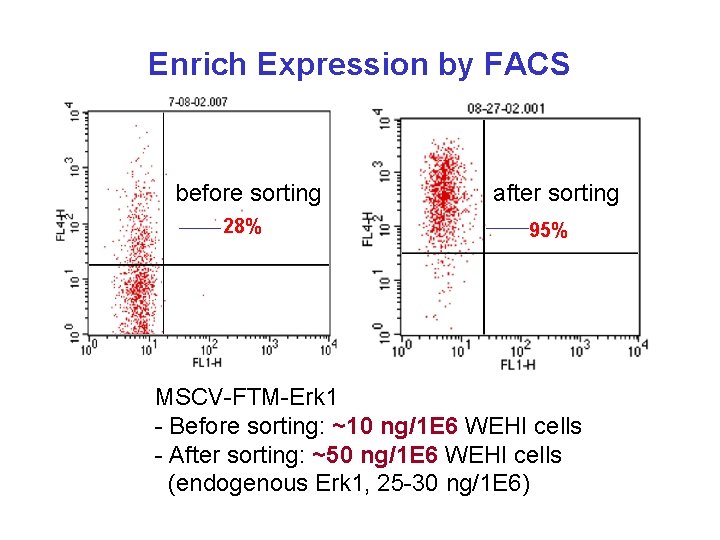
Enrich Expression by FACS before sorting 28% after sorting 95% MSCV-FTM-Erk 1 - Before sorting: ~10 ng/1 E 6 WEHI cells - After sorting: ~50 ng/1 E 6 WEHI cells (endogenous Erk 1, 25 -30 ng/1 E 6)
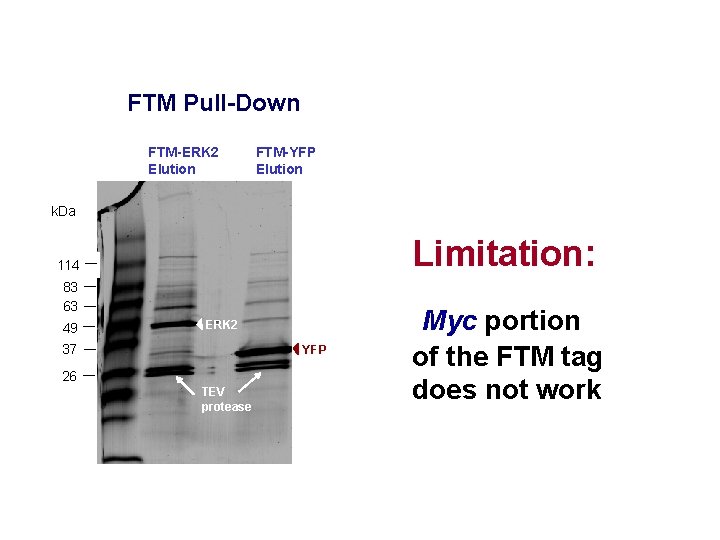
FTM Pull-Down FTM-ERK 2 Elution FTM-YFP Elution k. Da Limitation: 114 83 63 49 ERK 2 37 YFP 26 TEV protease Myc portion of the FTM tag does not work
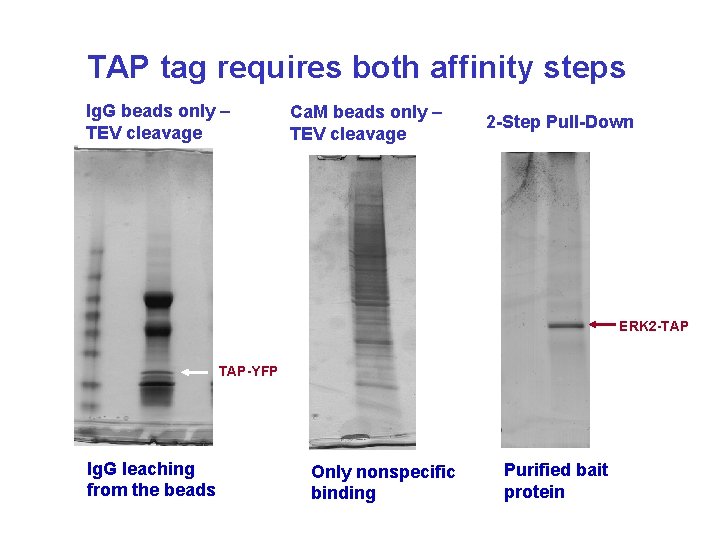
TAP tag requires both affinity steps Ig. G beads only – TEV cleavage Ca. M beads only – TEV cleavage 2 -Step Pull-Down ERK 2 -TAP TAP-YFP Ig. G leaching from the beads Only nonspecific binding Purified bait protein
TAP tagged baits can be isolated to essential homogeneity – but this is not the goal!
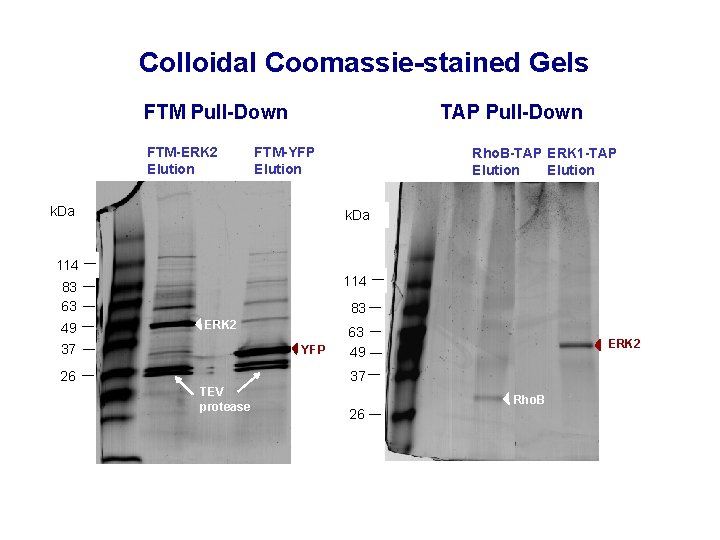
Colloidal Coomassie-stained Gels FTM Pull-Down FTM-ERK 2 Elution TAP Pull-Down FTM-YFP Elution k. Da 114 83 63 49 Rho. B-TAP ERK 1 -TAP Elution 83 ERK 2 37 YFP 26 63 49 ERK 2 37 TEV protease Rho. B 26
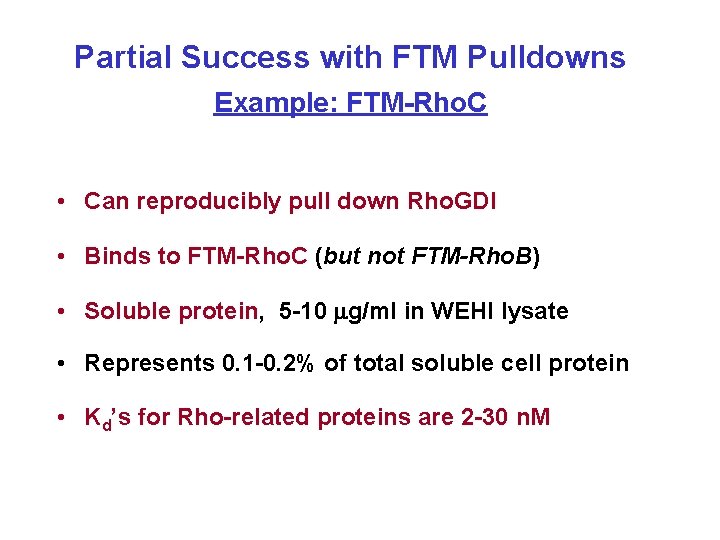
Partial Success with FTM Pulldowns Example: FTM-Rho. C • Can reproducibly pull down Rho. GDI • Binds to FTM-Rho. C (but not FTM-Rho. B) • Soluble protein, 5 -10 mg/ml in WEHI lysate • Represents 0. 1 -0. 2% of total soluble cell protein • Kd’s for Rho-related proteins are 2 -30 n. M
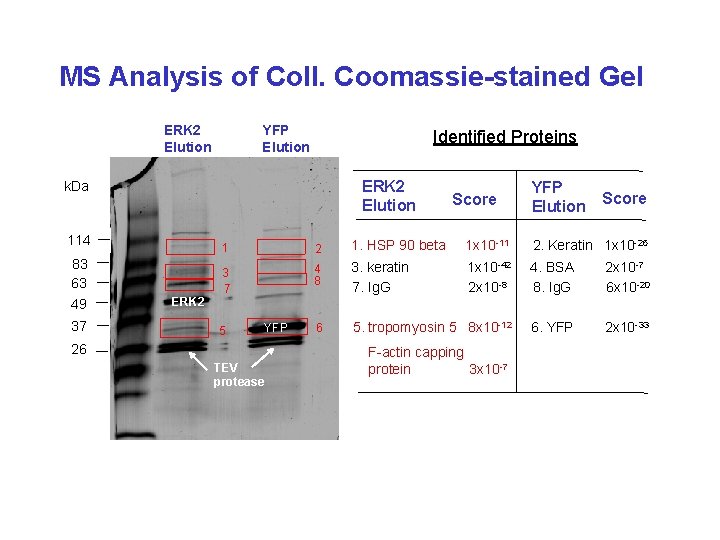
MS Analysis of Coll. Coomassie-stained Gel ERK 2 Elution YFP Elution Identified Proteins ERK 2 Elution k. Da 114 83 63 49 37 ERK 2 Score YFP Elution Score 1 2 1. HSP 90 beta 1 x 10 -11 2. Keratin 1 x 10 -26 3 7 4 8 3. keratin 7. Ig. G 1 x 10 -42 2 x 10 -8 4. BSA 8. Ig. G 2 x 10 -7 6 x 10 -20 6 5. tropomyosin 5 8 x 10 -12 6. YFP 2 x 10 -33 5 26 TEV protease YFP F-actin capping protein 3 x 10 -7
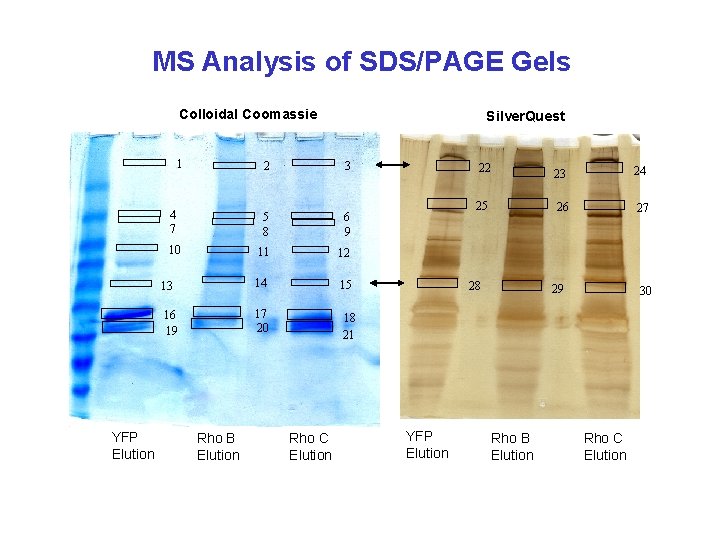
MS Analysis of SDS/PAGE Gels Colloidal Coomassie 1 YFP Elution Silver. Quest 2 3 4 7 5 8 6 9 10 11 12 13 14 15 16 19 17 20 18 21 Rho B Elution Rho C Elution 22 25 28 YFP Elution 23 24 26 27 29 Rho B Elution 30 Rho C Elution
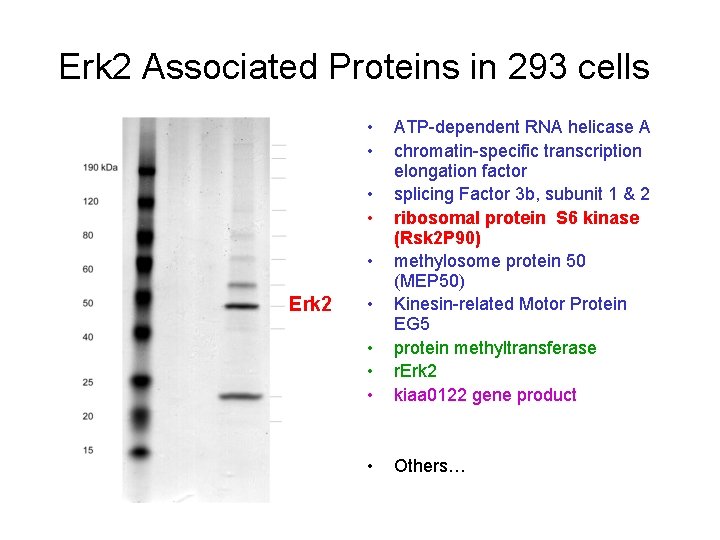
Erk 2 Associated Proteins in 293 cells • • • ATP-dependent RNA helicase A chromatin-specific transcription elongation factor splicing Factor 3 b, subunit 1 & 2 ribosomal protein S 6 kinase (Rsk 2 P 90) methylosome protein 50 (MEP 50) Kinesin-related Motor Protein EG 5 protein methyltransferase r. Erk 2 kiaa 0122 gene product • Others… • • • Erk 2 •
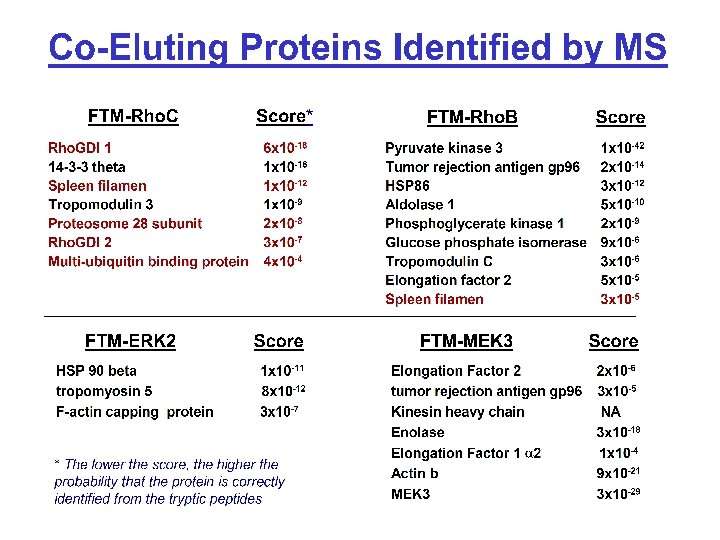
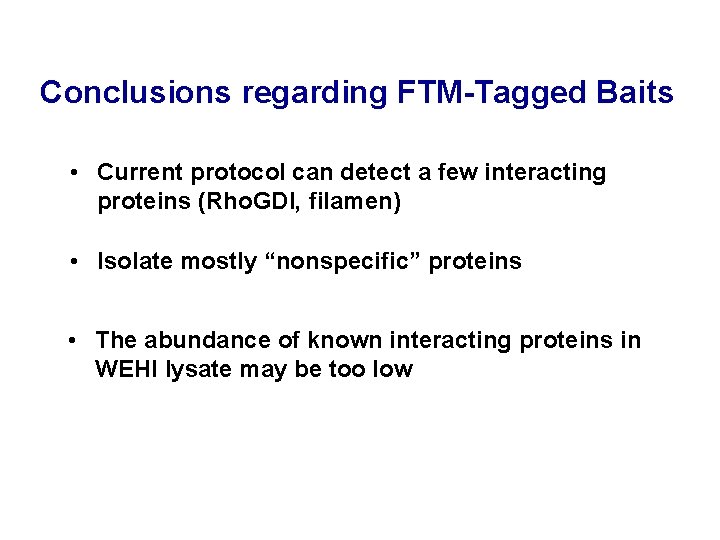
Conclusions regarding FTM-Tagged Baits • Current protocol can detect a few interacting proteins (Rho. GDI, filamen) • Isolate mostly “nonspecific” proteins • The abundance of known interacting proteins in WEHI lysate may be too low
Summary -- Requirements 1. Design Bait proteins (Tags) Notofoptimal 2. Expression of Bait proteins OK 3. Isolation of Bait proteins with associated protein complexes 4. Identification of associated OK 5. proteins by mass spectrometry
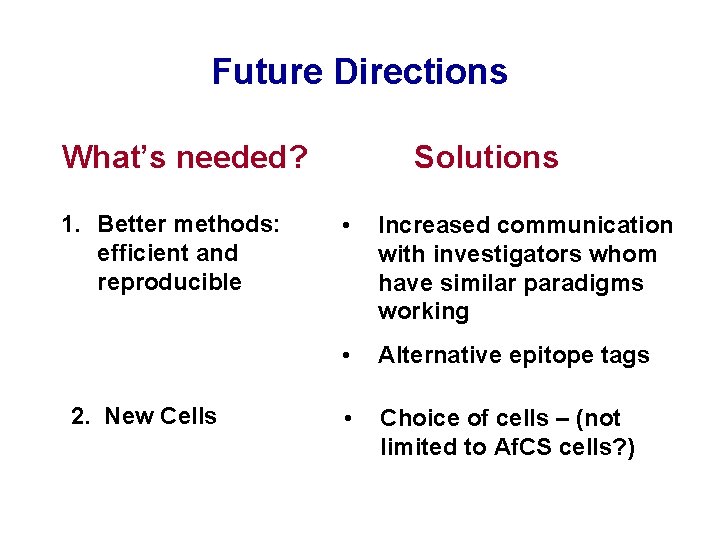
Future Directions What’s needed? 1. Better methods: efficient and reproducible 2. New Cells Solutions • Increased communication with investigators whom have similar paradigms working • Alternative epitope tags • Choice of cells – (not limited to Af. CS cells? )
She Chen Richard Davis Debalina Siddeeq Melissa Stalder Joelle Zavzavadjian