
Protein Targeting VBC609 Protein targeting Protein targeting or
Protein Targeting VBC-609
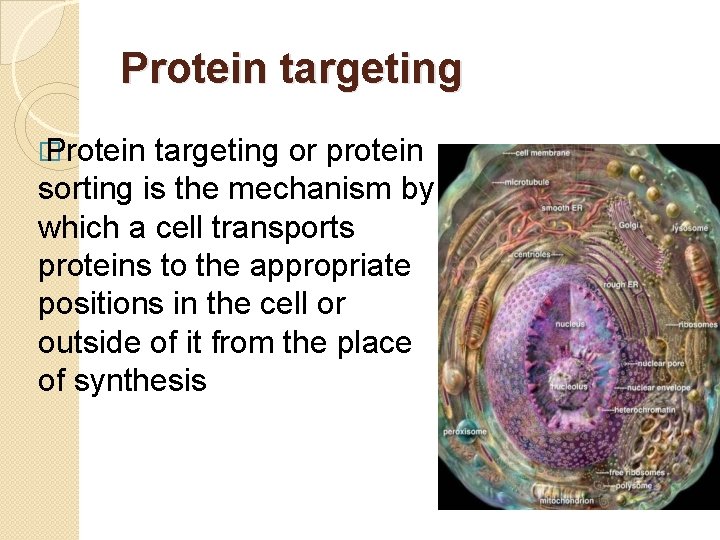
Protein targeting � Protein targeting or protein sorting is the mechanism by which a cell transports proteins to the appropriate positions in the cell or outside of it from the place of synthesis
Protein Targeting � Both in prokaryotes and eukaryotes, newly synthesized proteins must be delivered to a specific subcellular location or exported from the cell for correct activity. This phenomenon is called protein targeting. � Protein targeting is necessary for proteins that are destined to work outside the cytoplasm. � This delivery process is carried out based on information contained in the protein itself. � Correct sorting is crucial for the cell; errors can lead to diseases. Receptors – plasma membrane � DNA polymerase – nucleus � Catalase – peroxisomes � Insulin – outside �
�In 1970, Günter Blobel conducted experiments on the translocation of proteins across membranes. �He was awarded the 1999 Nobel Prize for his findings. He discovered that many proteins have a signal sequence, that is, a short amino acid sequence at one end that functions like a postal code for the target organelle.
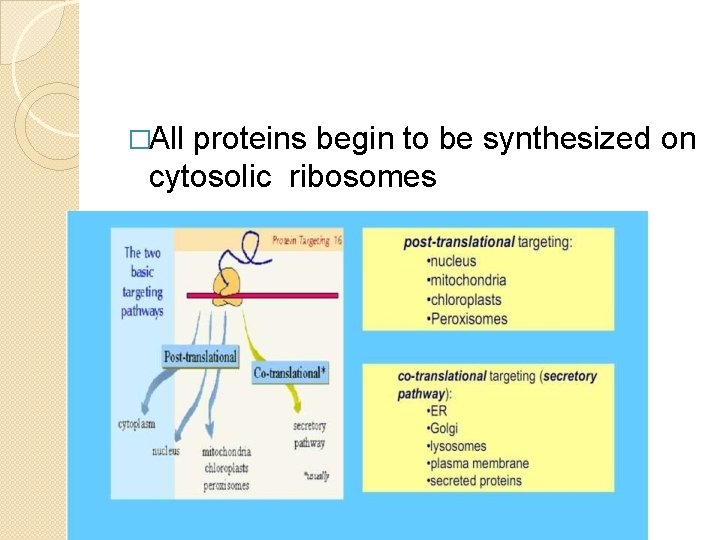
�All proteins begin to be synthesized on cytosolic ribosomes
�for cytosolic functional protein- the synthesis finished on free ribosomes and the peptide is released into the cytosol �Protein destined for nucleus, mitochondria or peroxisomes- synthesis is also finished on cytoplasmic ribosomes and the peptide is released to the cytosol (to be sorted later or post-translationally). �Protein to be secreted from the cell or it destined for the membranes- the ribosome with the nascent peptide is targeted to the ER (ER becomes rough) and sorting is done during translation (co- translationally).

Targeting sequence �Characteristic protein for the destination not the �Part of the polypeptide which can be cleaved later by signal peptidase or remain permanent part of protein �Can be located on N-, C-terminus or in the middle of the protein �The continuous stretch of amino acid residues in the chain that enables targeting are called signal peptides or targeting peptides
Types of signal sequences 1. Presequences � Thepresequences of the targeting peptides are often found at the N-terminal extension. � It is composed of between 6 -36 basic and hydrophobic amino acids. � In case of peroxisomes the targeting sequence is on the C-terminal extension mostly. � Signal sequences are removed from the finished protein by specialized signal peptidases once the sorting process has been completed
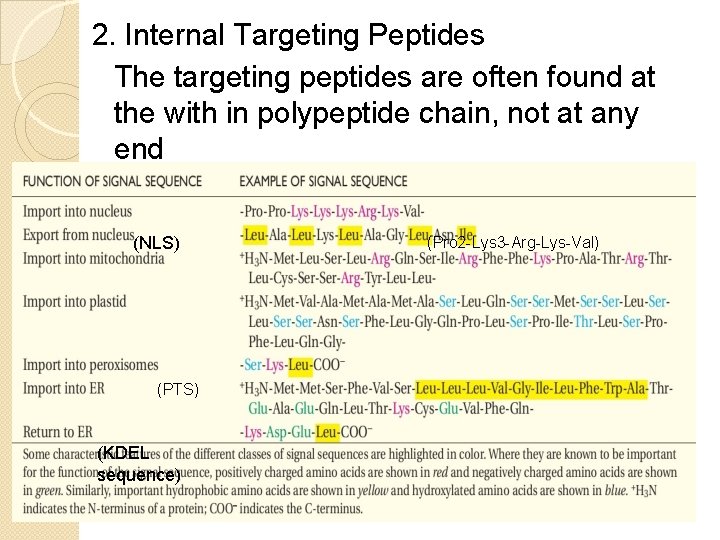
2. Internal Targeting Peptides The targeting peptides are often found at the with in polypeptide chain, not at any end (NLS) (PTS) (KDEL sequence) (Pro 2 -Lys 3 -Arg-Lys-Val)
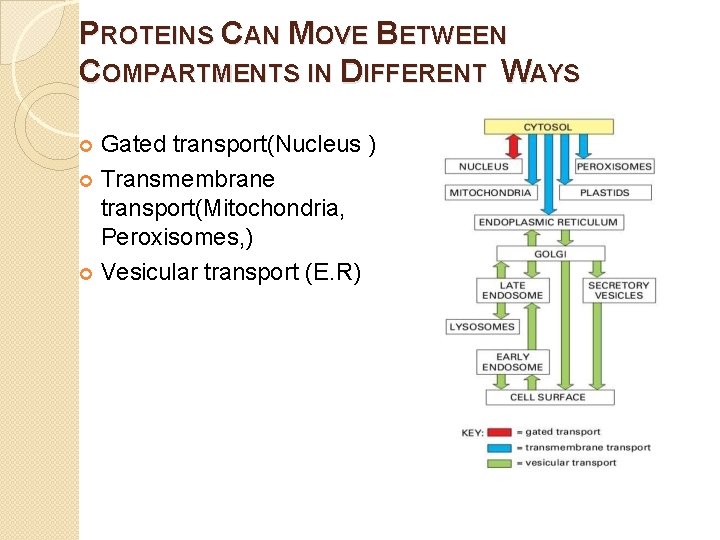
PROTEINS CAN MOVE BETWEEN COMPARTMENTS IN DIFFERENT WAYS Gated transport(Nucleus ) Transmembrane transport(Mitochondria, Peroxisomes, ) Vesicular transport (E. R)
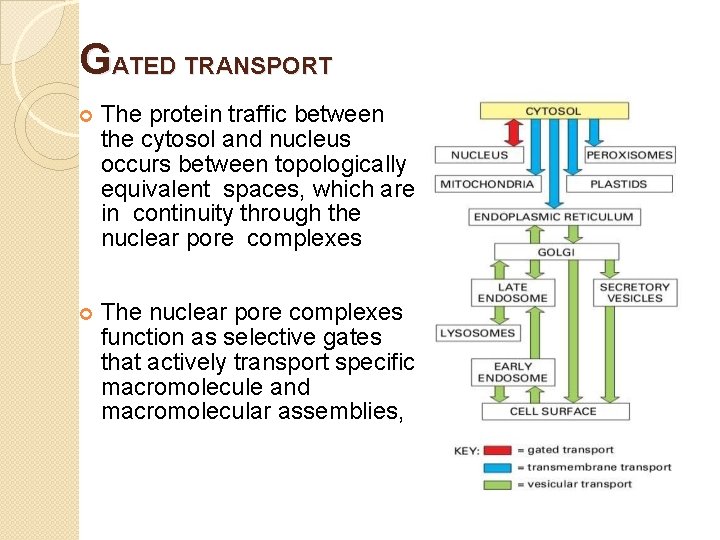
GATED TRANSPORT The protein traffic between the cytosol and nucleus occurs between topologically equivalent spaces, which are in continuity through the nuclear pore complexes The nuclear pore complexes function as selective gates that actively transport specific macromolecule and macromolecular assemblies,
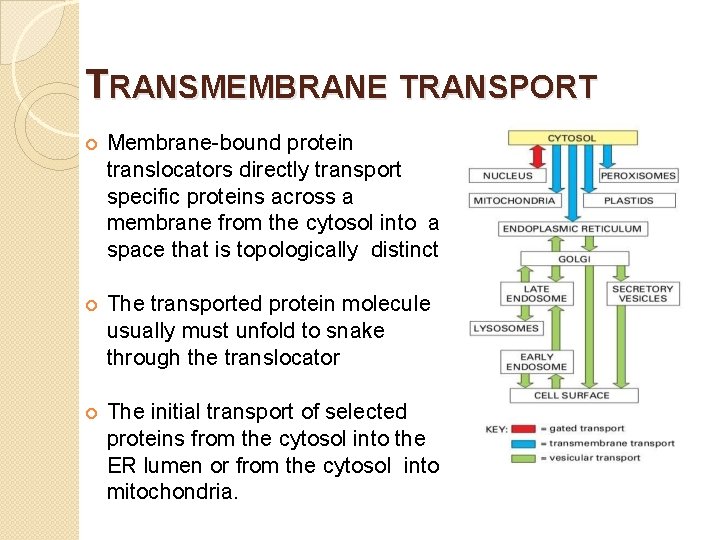
TRANSMEMBRANE TRANSPORT Membrane-bound protein translocators directly transport specific proteins across a membrane from the cytosol into a space that is topologically distinct The transported protein molecule usually must unfold to snake through the translocator The initial transport of selected proteins from the cytosol into the ER lumen or from the cytosol into mitochondria.
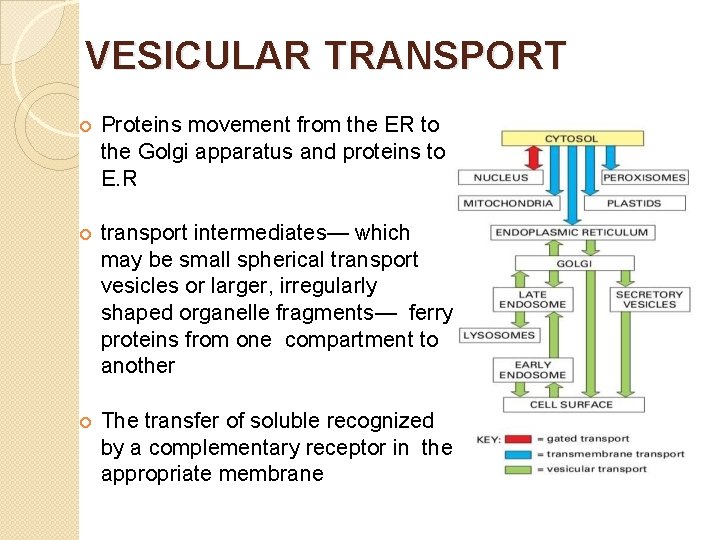
VESICULAR TRANSPORT Proteins movement from the ER to the Golgi apparatus and proteins to E. R transport intermediates— which may be small spherical transport vesicles or larger, irregularly shaped organelle fragments— ferry proteins from one compartment to another The transfer of soluble recognized by a complementary receptor in the appropriate membrane
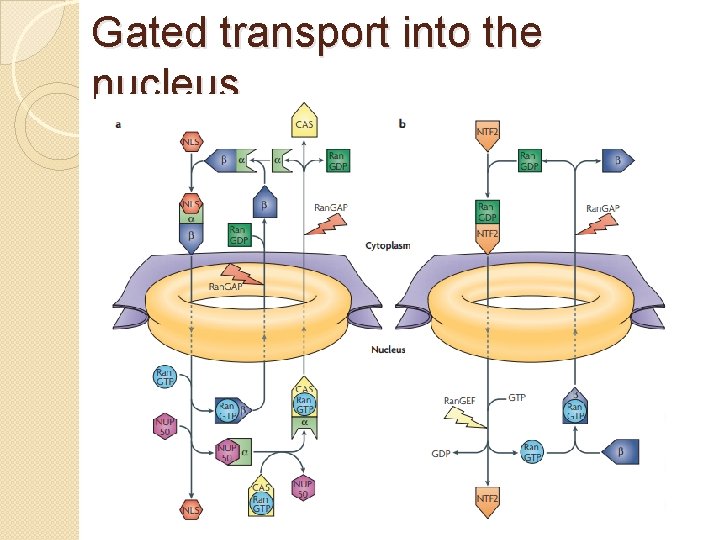
Gated transport into the nucleus
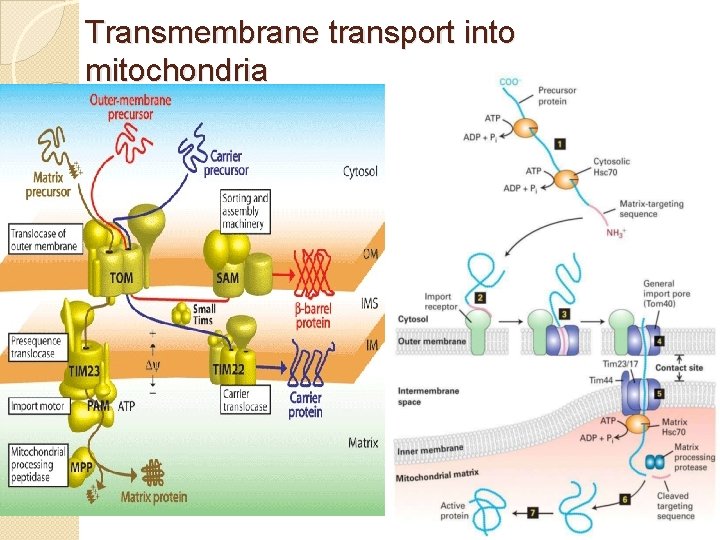
Transmembrane transport into mitochondria
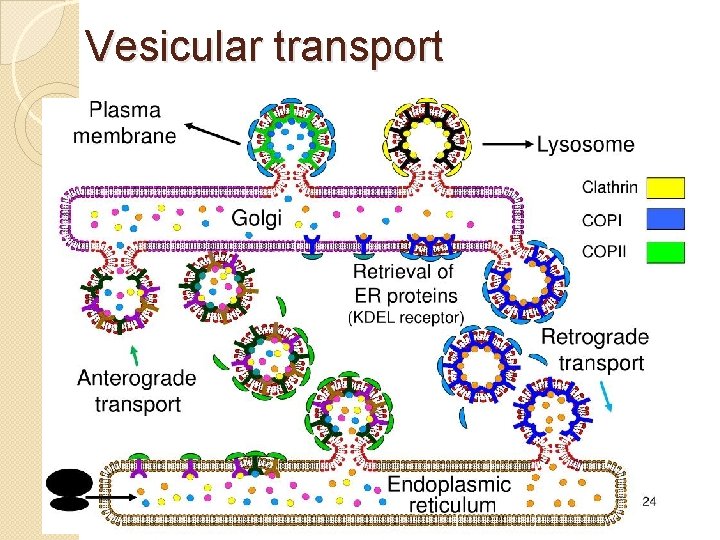
Vesicular transport
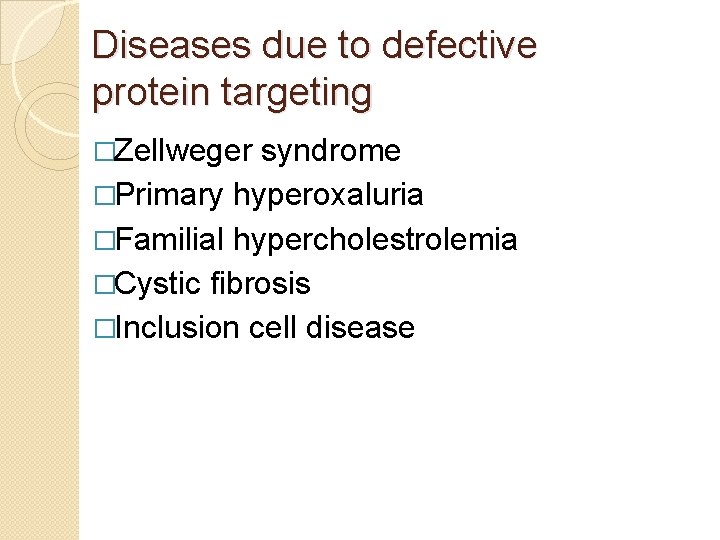
Diseases due to defective protein targeting �Zellweger syndrome �Primary hyperoxaluria �Familial hypercholestrolemia �Cystic fibrosis �Inclusion cell disease
- Slides: 17