
PROTEIN SYNTHESIS Transcription Translation Patterns of Life pg
- Slides: 32
PROTEIN SYNTHESIS -Transcription & Translation – ‘Patterns of Life’ pg 121 -133
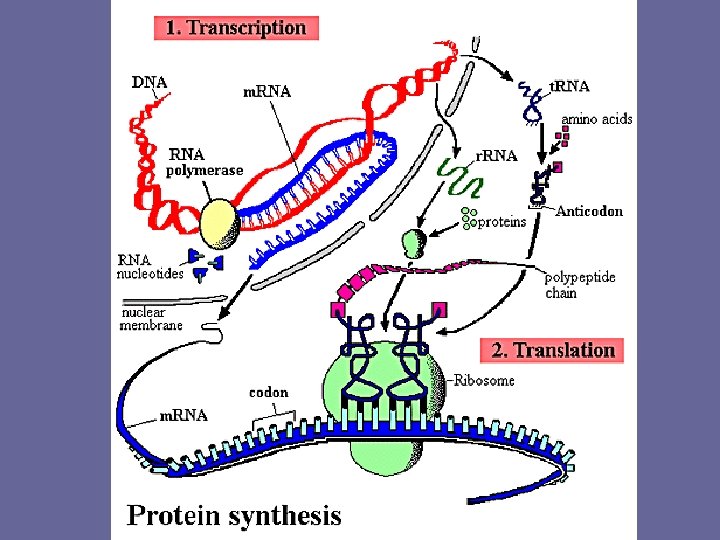
Introduction • DNA contains the code to make protein • DNA is in the nucleus • Protein is made in the ribosome • The information must get from the nucleus to the ribosome - m. RNA
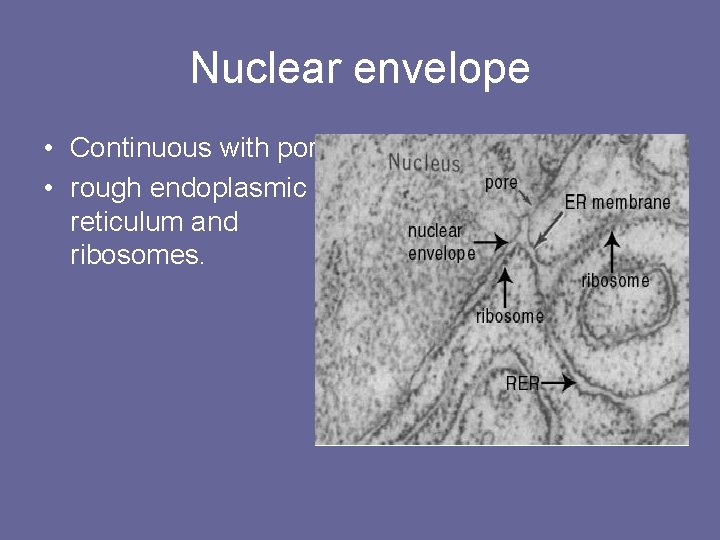
Nuclear envelope • Continuous with pores • rough endoplasmic reticulum and ribosomes.
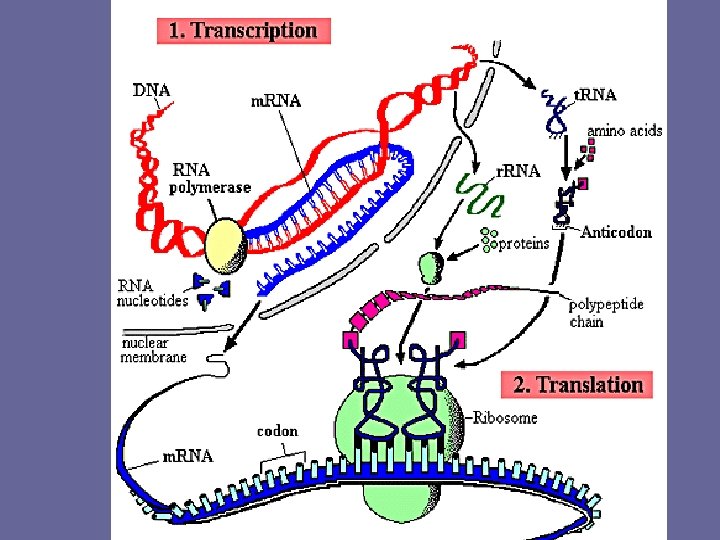
Key Pieces of Equipment • DNA • RNA – 3 types » Messenger » Transfer » Ribosomal (m. RNA) (t. RNA) (r. RNA) • RNA polymerase (protein)
RNA vs DNA • • Single stranded Thyamine (T) is replaced by Uracil(U) A lot smaller No oxygen molecule
RNA • Linear polymer • Bases: Purines (adenine & guanine) Pyrimidines (cytosine & uracil) • Most are single stranded, therefore does not form a double helix. Although can fold and twist into itself.
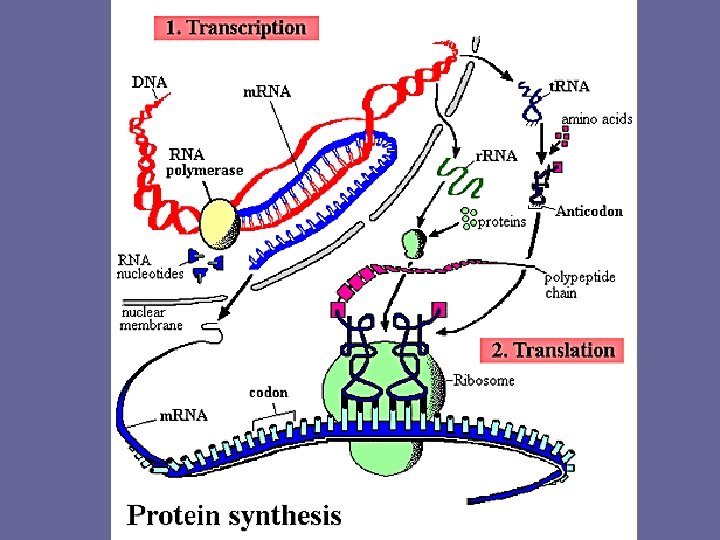
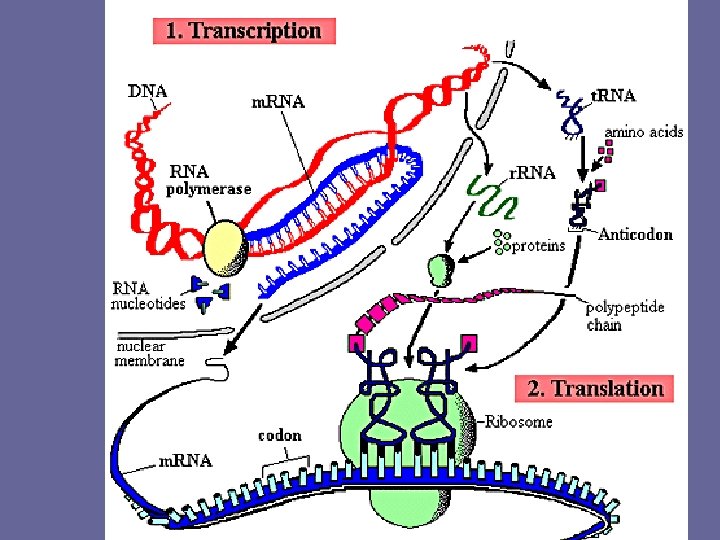
Messenger RNA • Codon a sequence of three nucleotides that code for a single amino acid • m. RNA carries the code from the nucleus to the ribosome
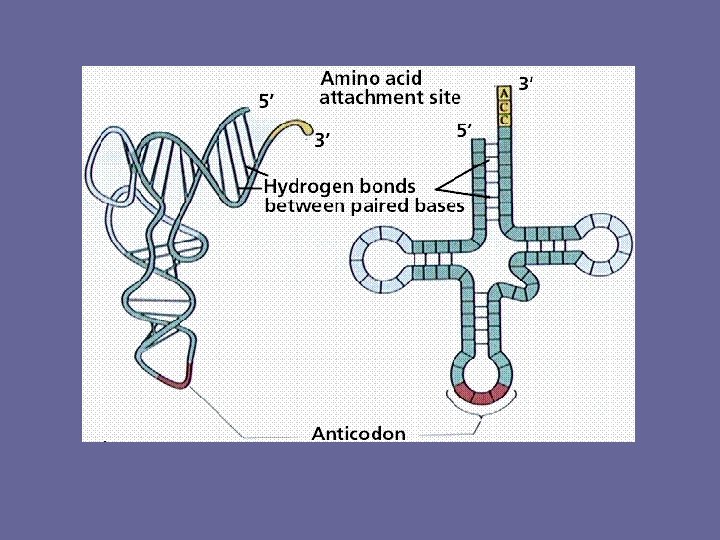
Transfer RNA • Transfer RNA (t. RNA): decodes the information • t. RNA has an anti-codon which matches a specific codon of m. RNA • Each t. RNA attaches to a specific amino acid that compliments its anti-codon • There are 20 different t. RNA types (one for each type of amino acid)
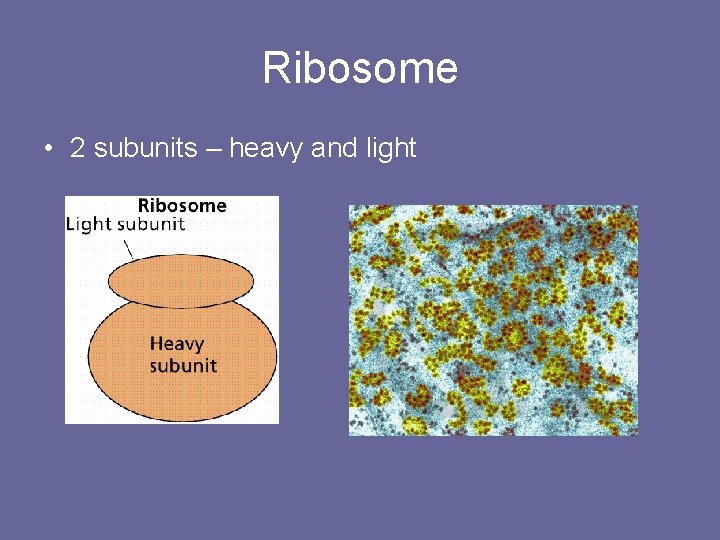
Ribosomal RNA • Ribosomal RNA (r. RNA): makes up approximately 50% of a ribosome. • The assembly place of protein synthesis.
Ribosome • 2 subunits – heavy and light
The Genetic Code • 20 different amino acids used to produce proteins. • The code for a specific amino acid is controlled by the 4 different nucleotides (T, C, A, G) in the DNA. • This code goes in sequences of three (Triplets) • A triplet codes for a single amino acid • WHY?
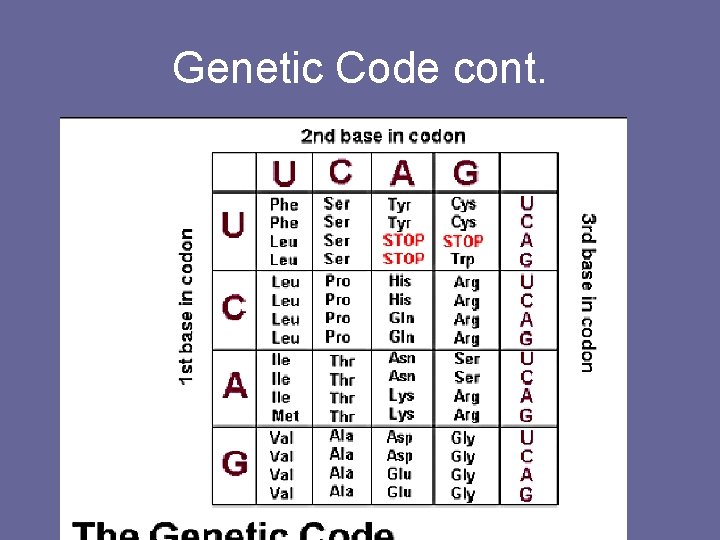
• These triplets produce codons in m. RNA • A codon codes for a specific amino acid • Some combinations act as STOP (UAA, UGA, UAG) and START (AUG) signals. • One codon is the start codon - AUG
Genetic Code cont.
Protein Synthesis-the process • Two parts to protein synthesis: – Translation of m. RNA from DNA » Occors in the nucleus – Transcription of m. RNA into a polypeptide chain » Occurs at the ribosome
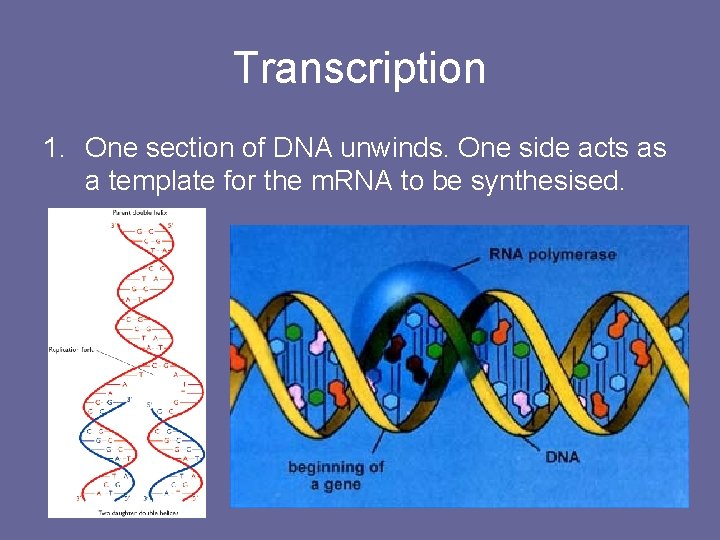
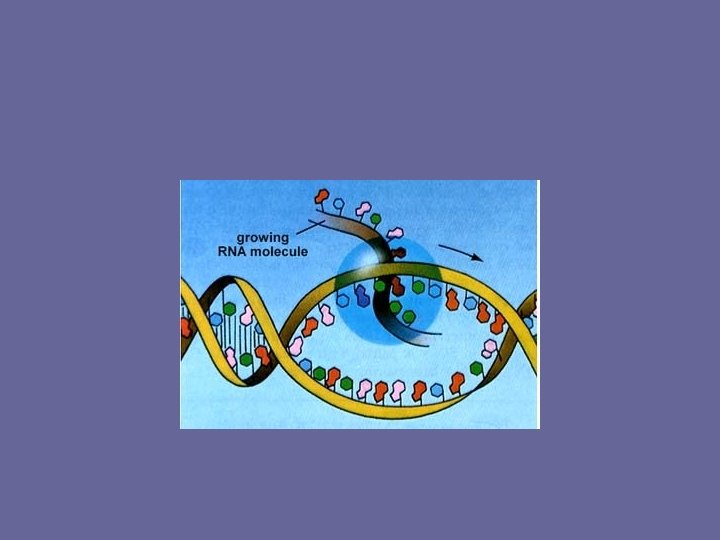
Transcription 1. One section of DNA unwinds. One side acts as a template for the m. RNA to be synthesised.
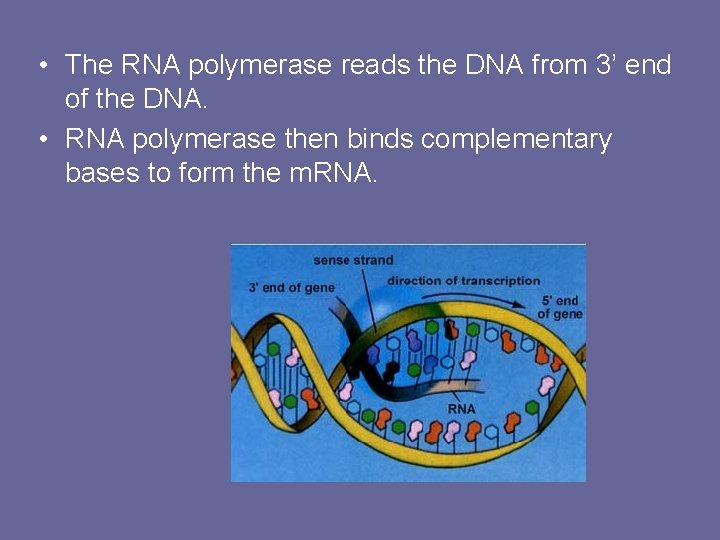
• The RNA polymerase reads the DNA from 3’ end of the DNA. • RNA polymerase then binds complementary bases to form the m. RNA.
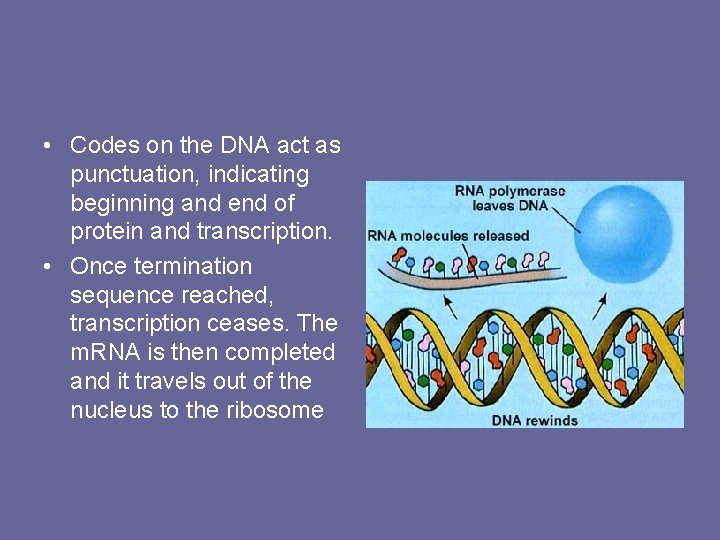
• Codes on the DNA act as punctuation, indicating beginning and end of protein and transcription. • Once termination sequence reached, transcription ceases. The m. RNA is then completed and it travels out of the nucleus to the ribosome
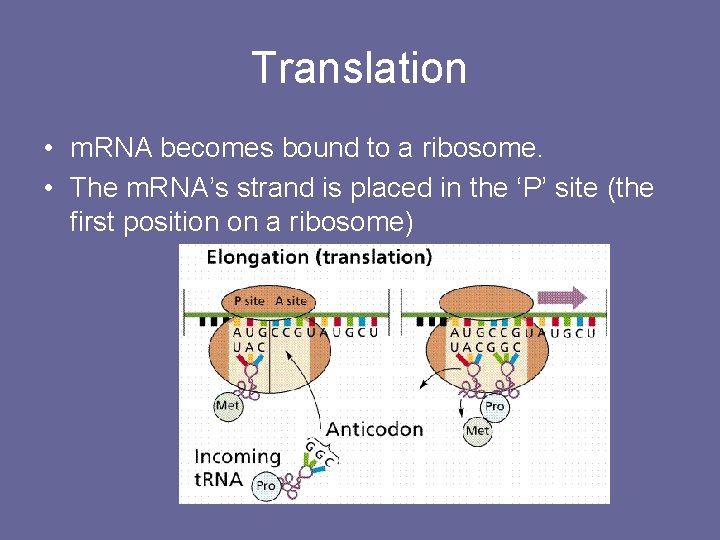
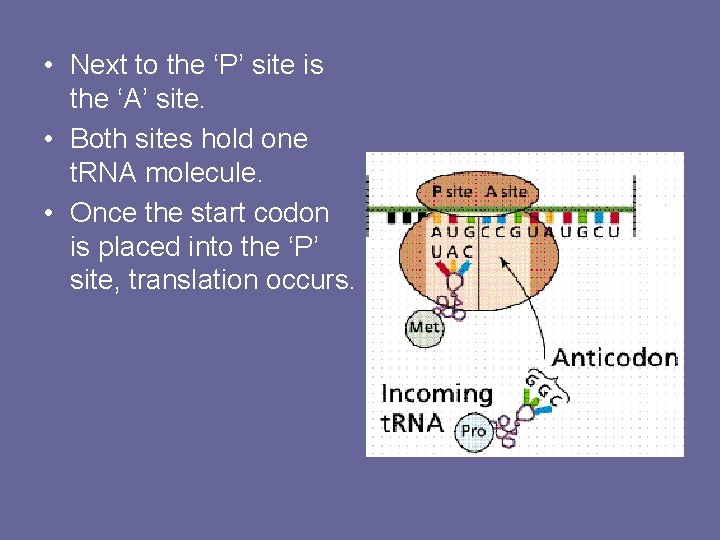
Translation • m. RNA becomes bound to a ribosome. • The m. RNA’s strand is placed in the ‘P’ site (the first position on a ribosome)
• Next to the ‘P’ site is the ‘A’ site. • Both sites hold one t. RNA molecule. • Once the start codon is placed into the ‘P’ site, translation occurs.
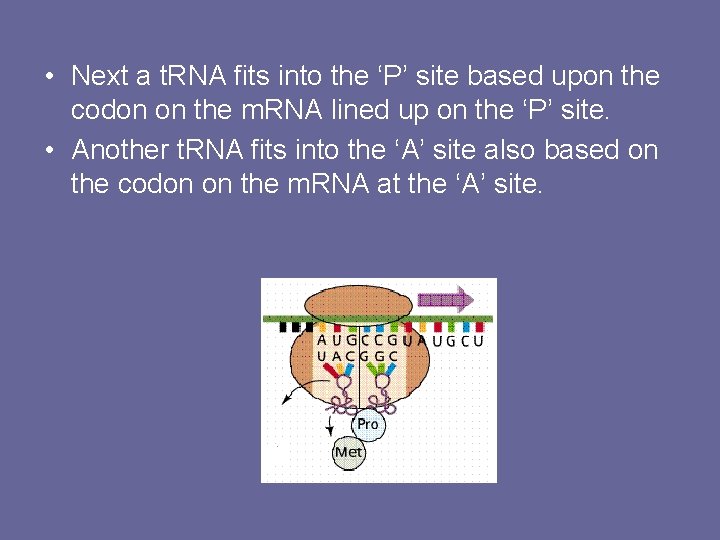
• Next a t. RNA fits into the ‘P’ site based upon the codon on the m. RNA lined up on the ‘P’ site. • Another t. RNA fits into the ‘A’ site also based on the codon on the m. RNA at the ‘A’ site.
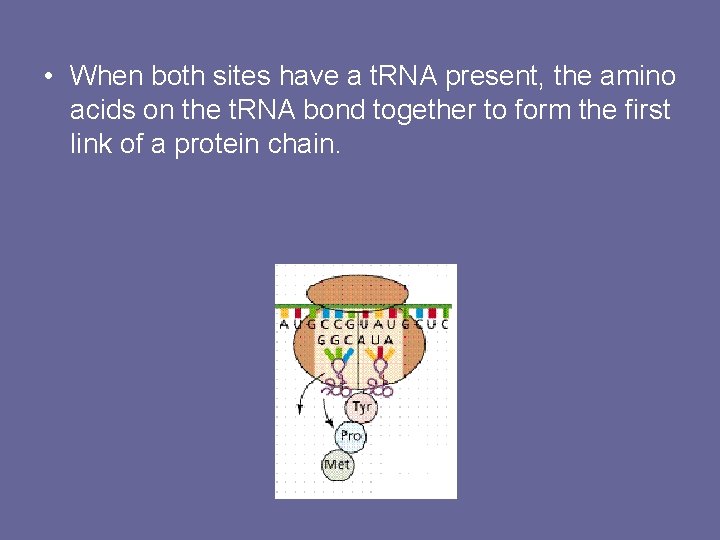
• When both sites have a t. RNA present, the amino acids on the t. RNA bond together to form the first link of a protein chain.
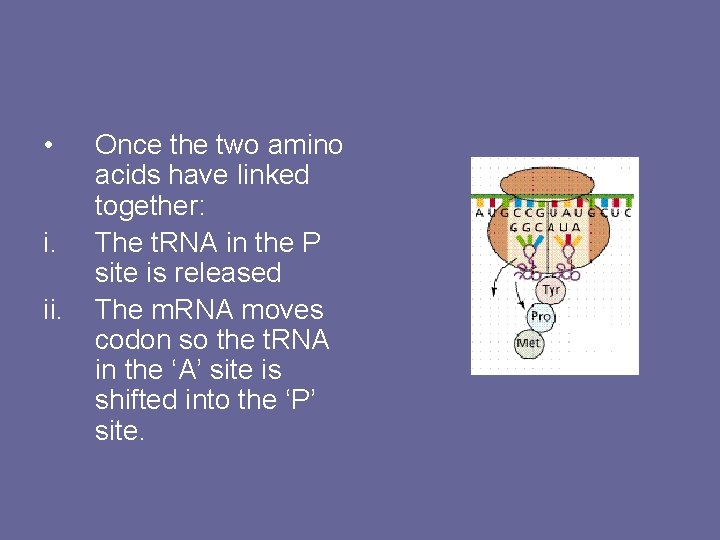
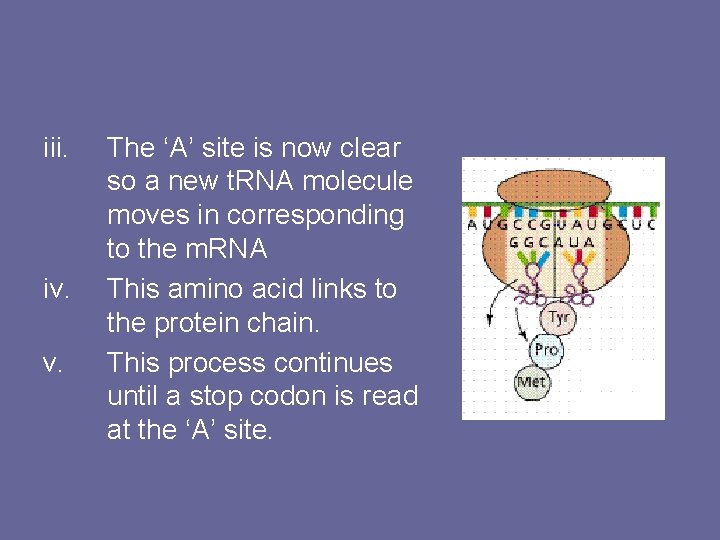
• i. ii. Once the two amino acids have linked together: The t. RNA in the P site is released The m. RNA moves codon so the t. RNA in the ‘A’ site is shifted into the ‘P’ site.
iii. iv. v. The ‘A’ site is now clear so a new t. RNA molecule moves in corresponding to the m. RNA This amino acid links to the protein chain. This process continues until a stop codon is read at the ‘A’ site.
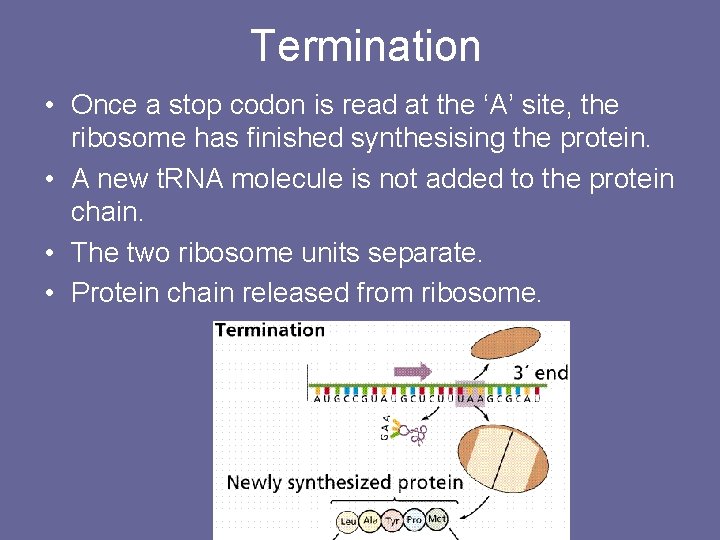
Termination • Once a stop codon is read at the ‘A’ site, the ribosome has finished synthesising the protein. • A new t. RNA molecule is not added to the protein chain. • The two ribosome units separate. • Protein chain released from ribosome.
Protein synthesis animation • http: //highered. mcgrawhill. com/sites/0072437316/student_view 0/ chapter 15/animations. html#