
PROTEIN SYNTHESIS TRANSCRIPTION Main Ideas TRANSCRIPTION In nucleus
- Slides: 17
PROTEIN SYNTHESIS TRANSCRIPTION
Main Ideas
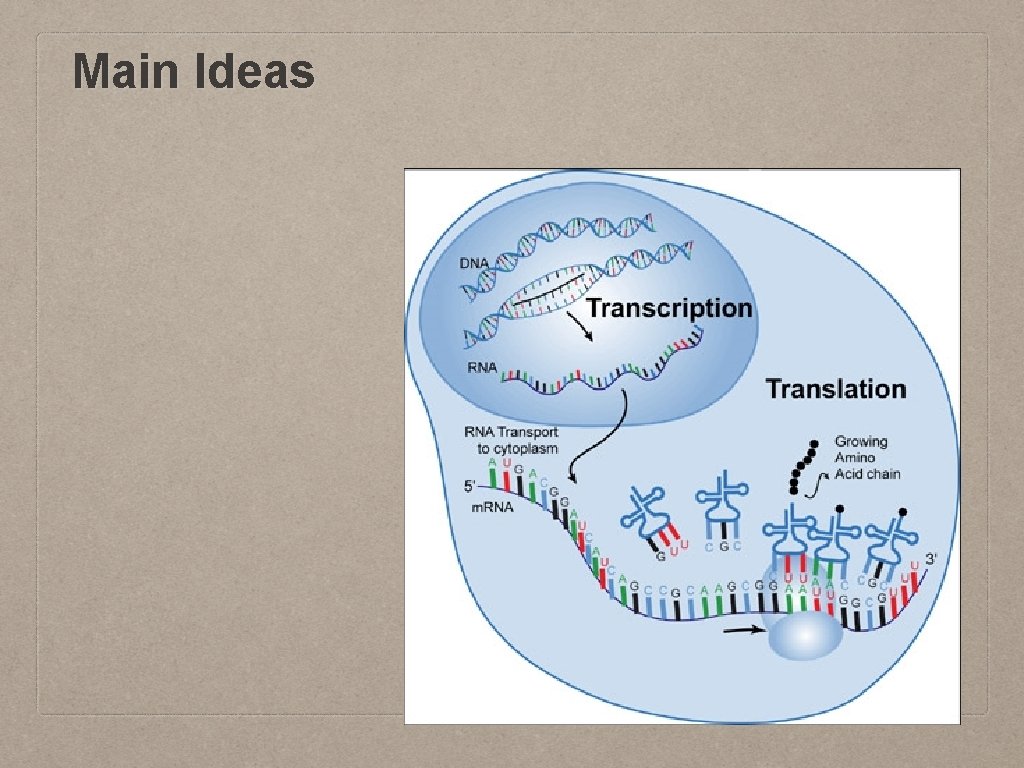
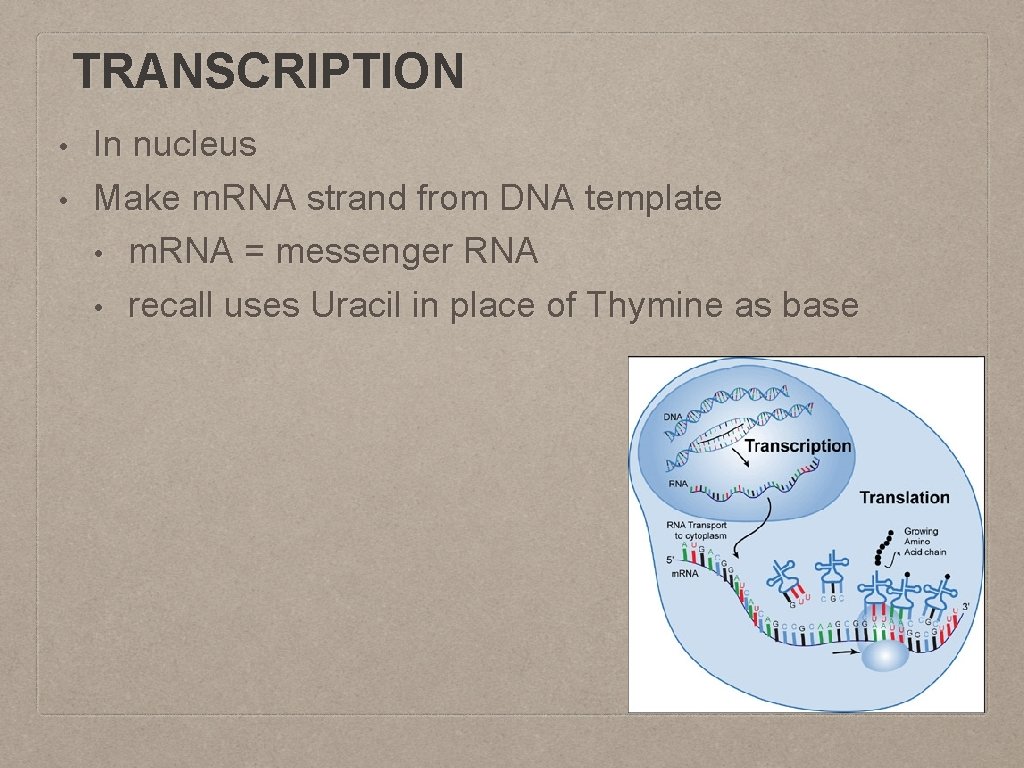
TRANSCRIPTION • • In nucleus Make m. RNA strand from DNA template • m. RNA = messenger RNA • recall uses Uracil in place of Thymine as base
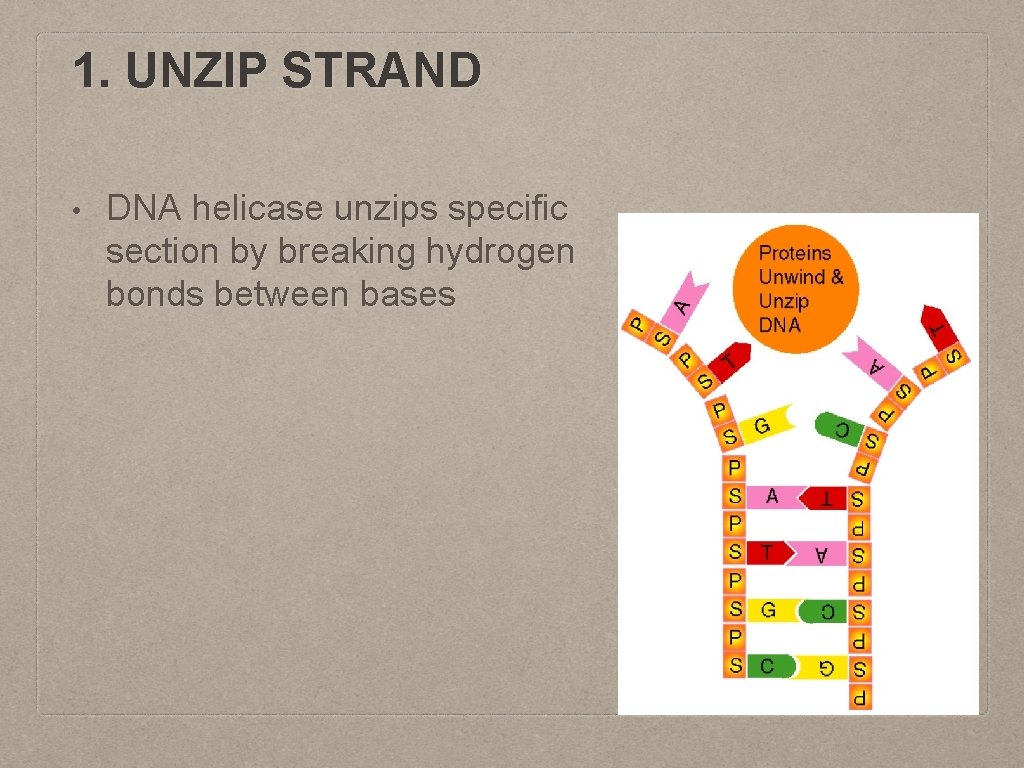
1. UNZIP STRAND • DNA helicase unzips specific section by breaking hydrogen bonds between bases
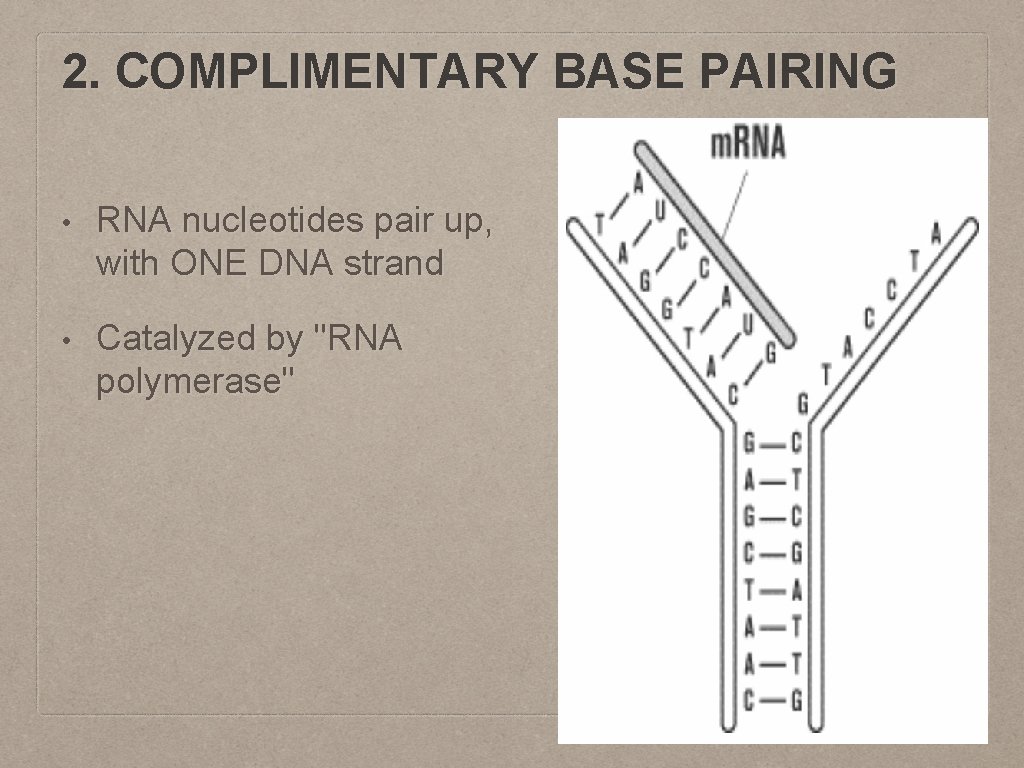
2. COMPLIMENTARY BASE PAIRING • RNA nucleotides pair up, with ONE DNA strand • Catalyzed by "RNA polymerase"
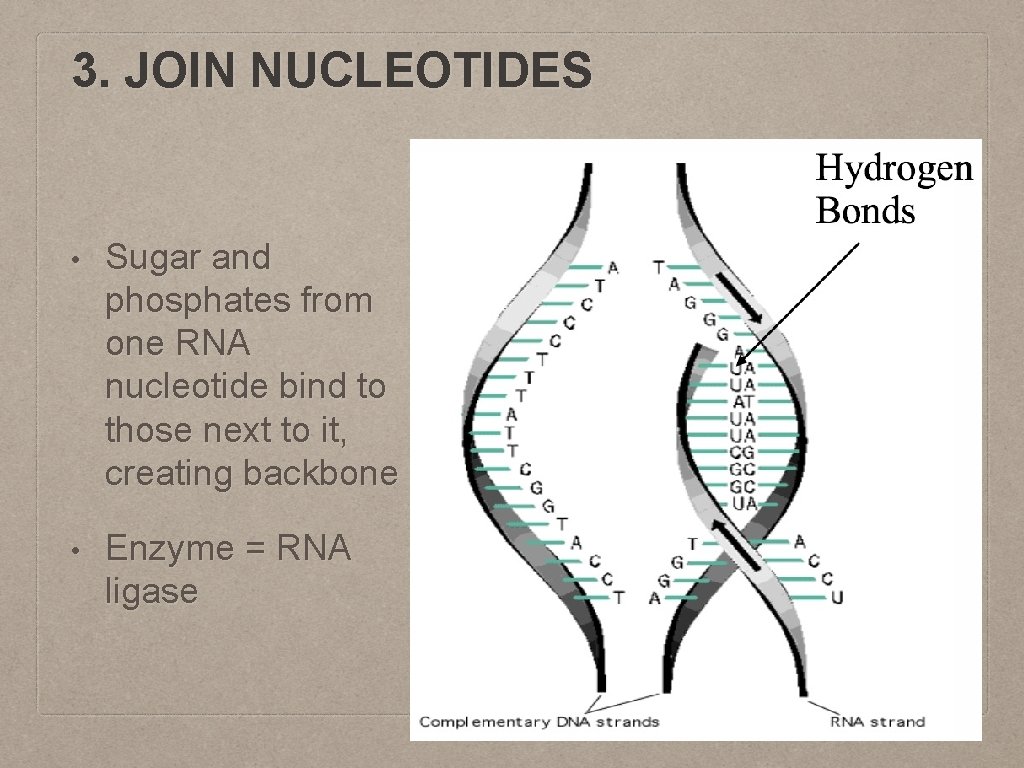
3. JOIN NUCLEOTIDES • Sugar and phosphates from one RNA nucleotide bind to those next to it, creating backbone • Enzyme = RNA ligase
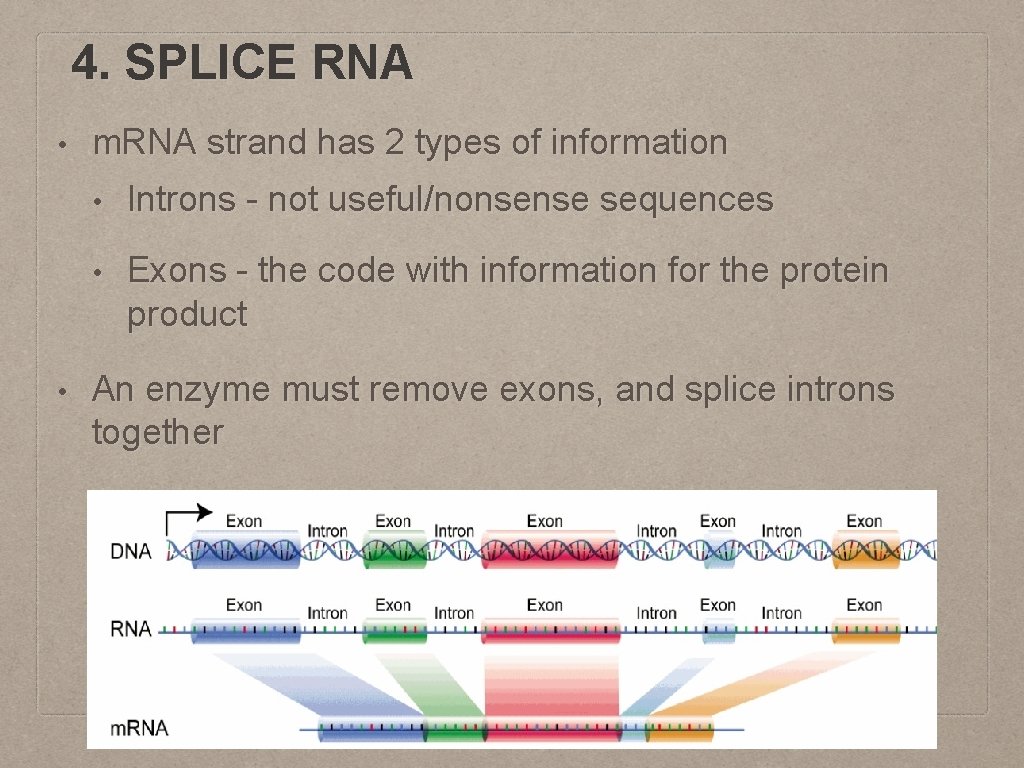
4. SPLICE RNA • • m. RNA strand has 2 types of information • Introns - not useful/nonsense sequences • Exons - the code with information for the protein product An enzyme must remove exons, and splice introns together
PROTEIN SYNTHESIS TRANSLATION (next day!)
To Do’s • Transcript/Translate Colouring Sheet • Dictionary • Intron, exon
PROTEIN SYNTHESIS • TRANSLATION
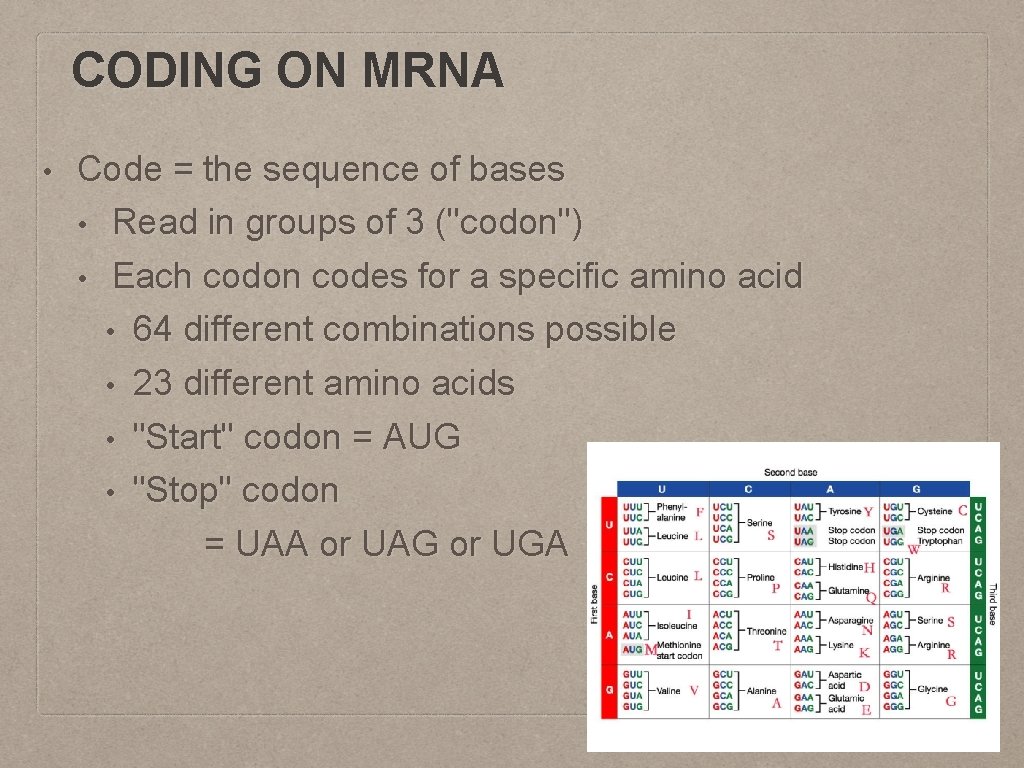
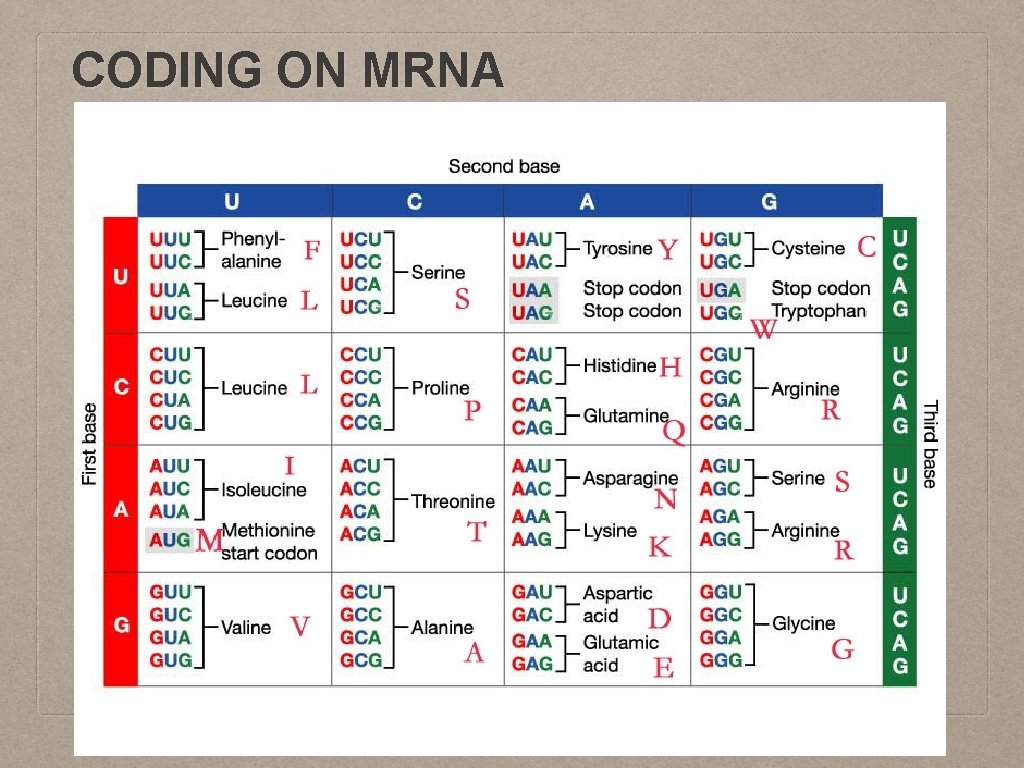
CODING ON MRNA • Code = the sequence of bases • Read in groups of 3 ("codon") • Each codon codes for a specific amino acid • 64 different combinations possible • 23 different amino acids • "Start" codon = AUG • "Stop" codon = UAA or UAG or UGA
CODING ON MRNA
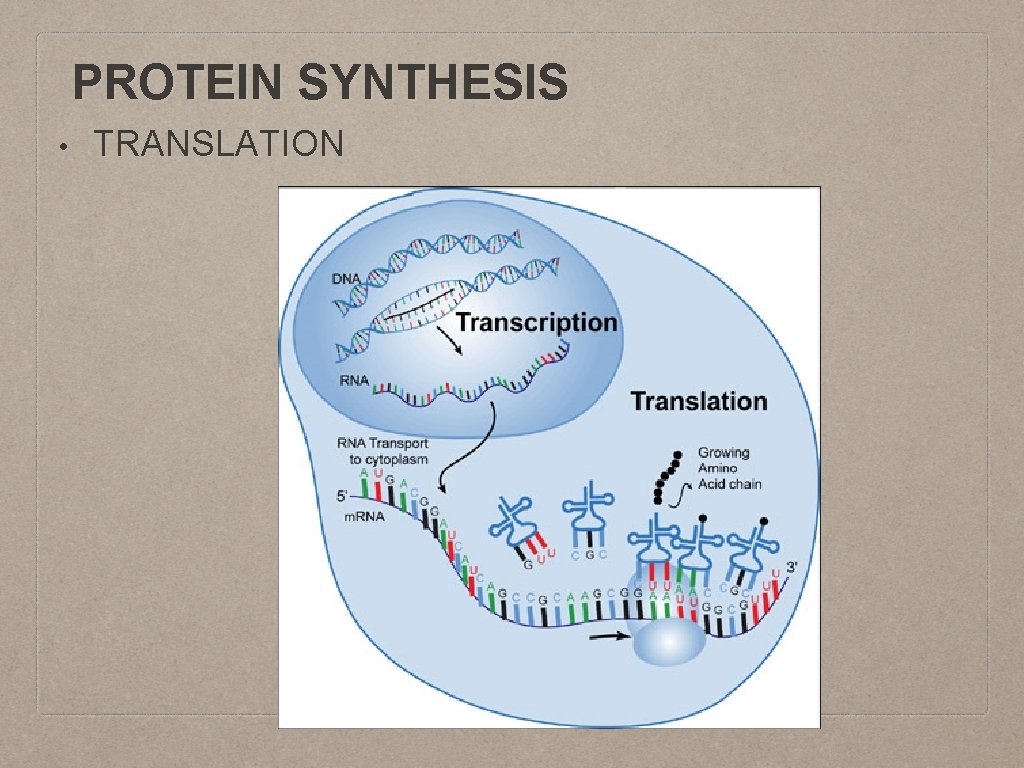
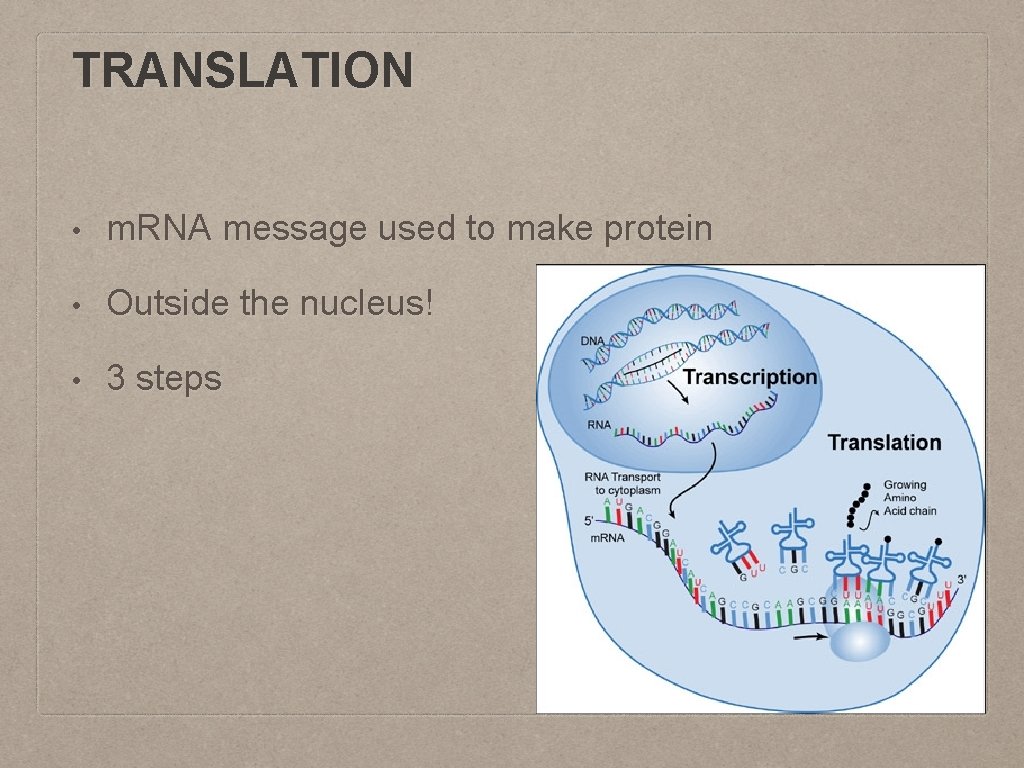
TRANSLATION • m. RNA message used to make protein • Outside the nucleus! • 3 steps
1. INITIATION • r. RNA (ribosome) and m. RNA attach • AUG initiates translation
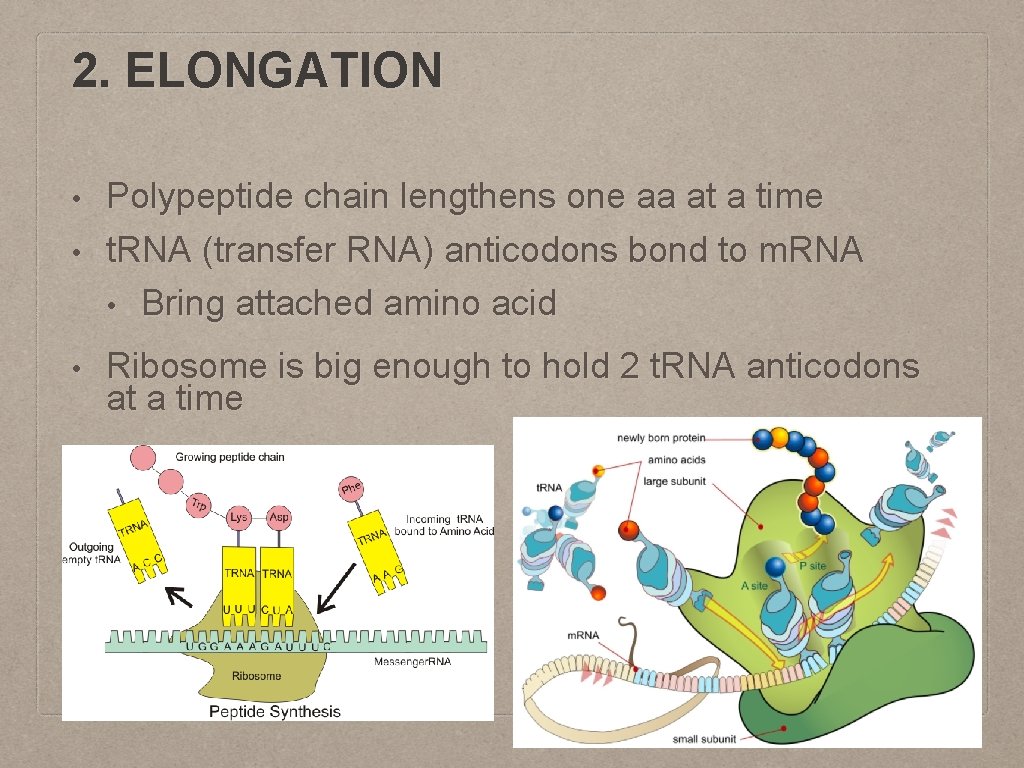
2. ELONGATION • Polypeptide chain lengthens one aa at a time t. RNA (transfer RNA) anticodons bond to m. RNA • Bring attached amino acid • Ribosome is big enough to hold 2 t. RNA anticodons at a time •
3. TERMINATION • Stop codon is read -- polypeptide chain is complete • t. RNA and polypeptide leave the ribosome
TO DO'S • Snorks! • Dictionary • r. RNA, t. RNA, codon, anticodon