
Protein Synthesis Transcription How is m RNA created
- Slides: 25
Protein Synthesis: Transcription How is m. RNA created from DNA?
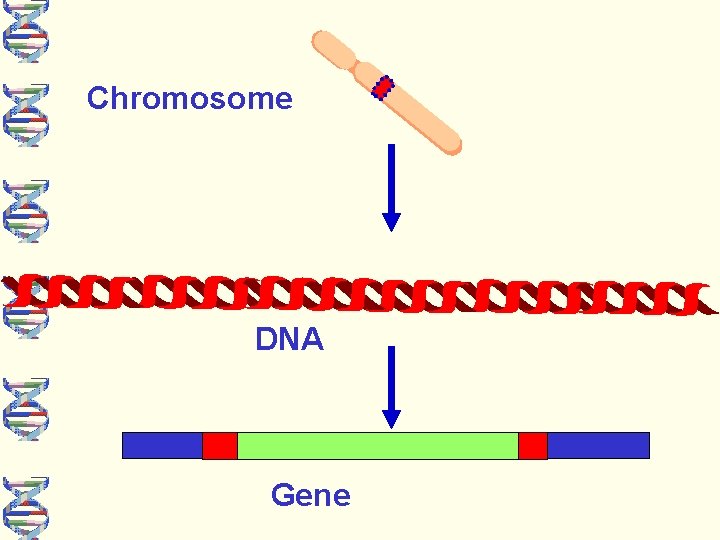
Chromosome DNA Gene
• Protein Synthesis is when DNA’s code is used by the cell to make proteins. This is also known as gene expression. • The genes “express themselves” when the proteins they code for are made. • IMPORTANT VOCABULARY: – GENE – BASE TRIPLET – CODON – ANTICODON – AMINO ACID – PROTEIN
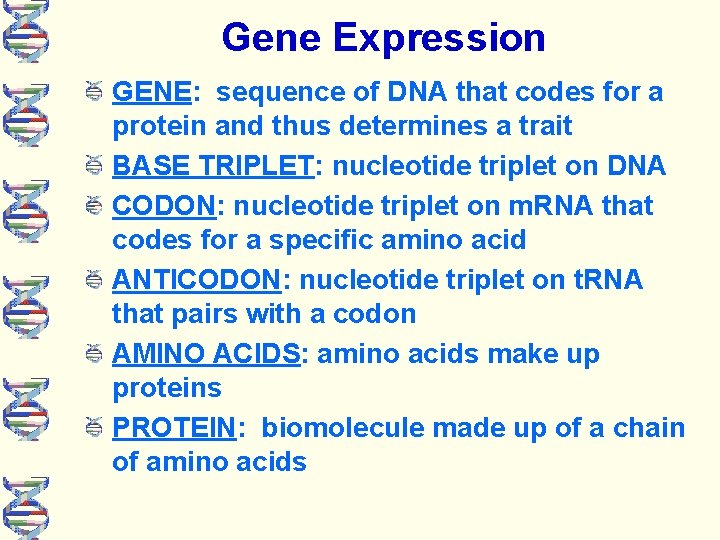
Gene Expression GENE: sequence of DNA that codes for a protein and thus determines a trait BASE TRIPLET: nucleotide triplet on DNA CODON: nucleotide triplet on m. RNA that codes for a specific amino acid ANTICODON: nucleotide triplet on t. RNA that pairs with a codon AMINO ACIDS: amino acids make up proteins PROTEIN: biomolecule made up of a chain of amino acids
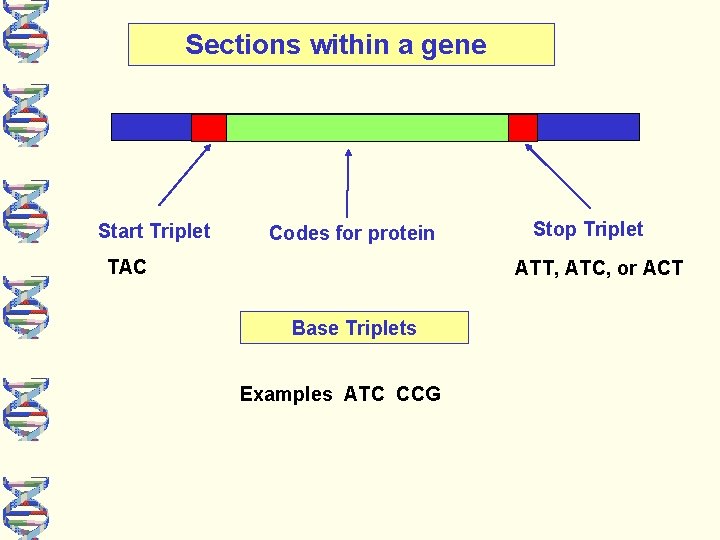
Sections within a gene Start Triplet Codes for protein TAC Stop Triplet ATT, ATC, or ACT Base Triplets Examples ATC CCG
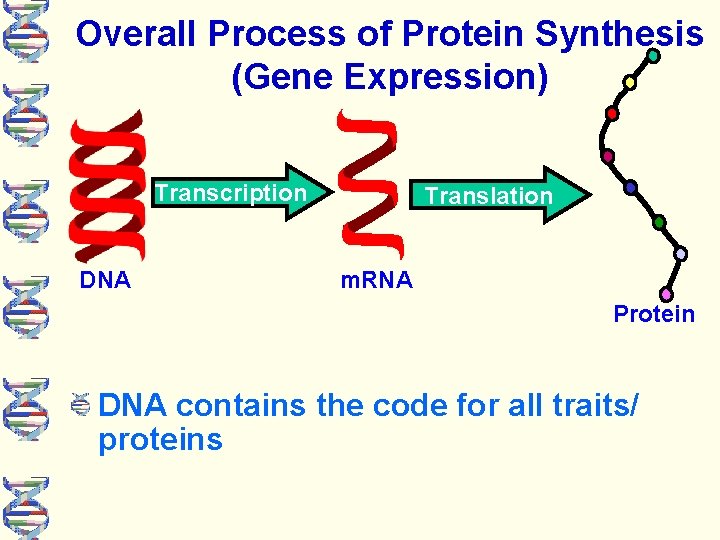
Overall Process of Protein Synthesis (Gene Expression) Transcription DNA Translation m. RNA Protein Transcription Translation Protein m. RNA DNA contains isismade the by bycode copying m. RNA forand all DNA’s traits/ t. RNA code for proteins a proteinis “deciphered” to build a Information protein. Information in DNA is “rewritten” as a molecule of m. RNA
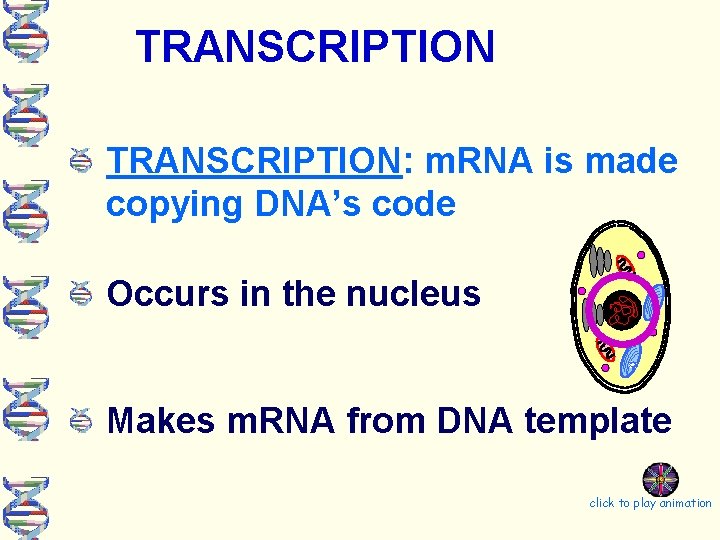
TRANSCRIPTION: m. RNA is made copying DNA’s code Occurs in the nucleus Makes m. RNA from DNA template click to play animation
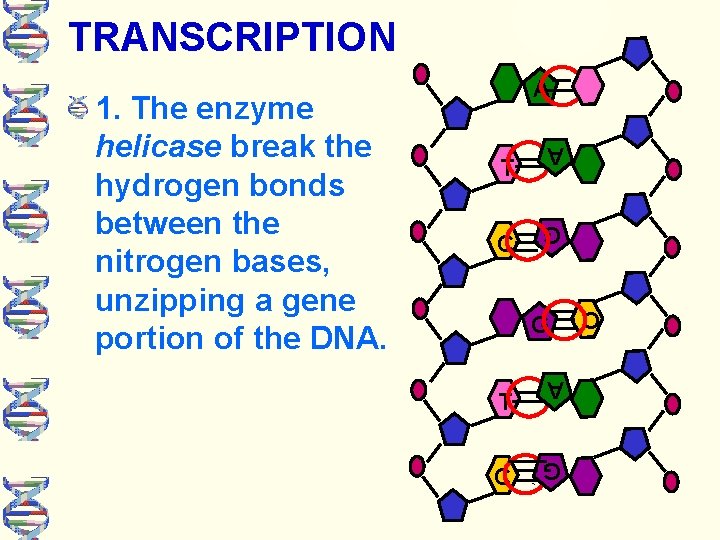
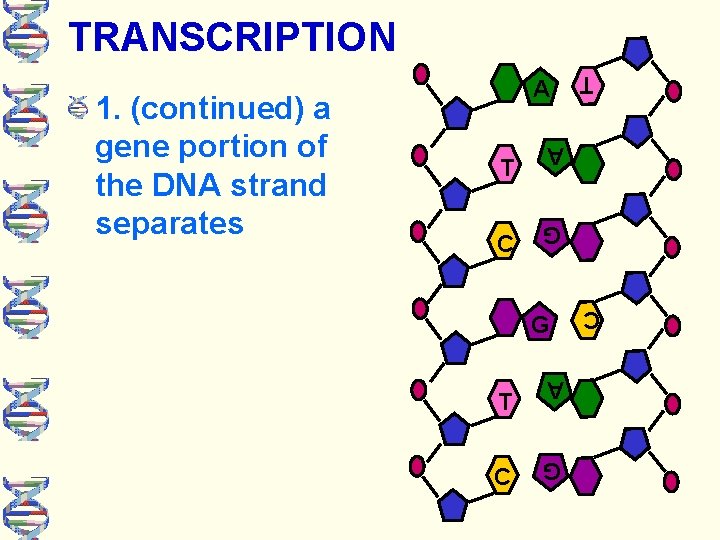
TRANSCRIPTION G T A C C C G T A G 1. The enzyme helicase break the hydrogen bonds between the nitrogen bases, unzipping a gene portion of the DNA. A
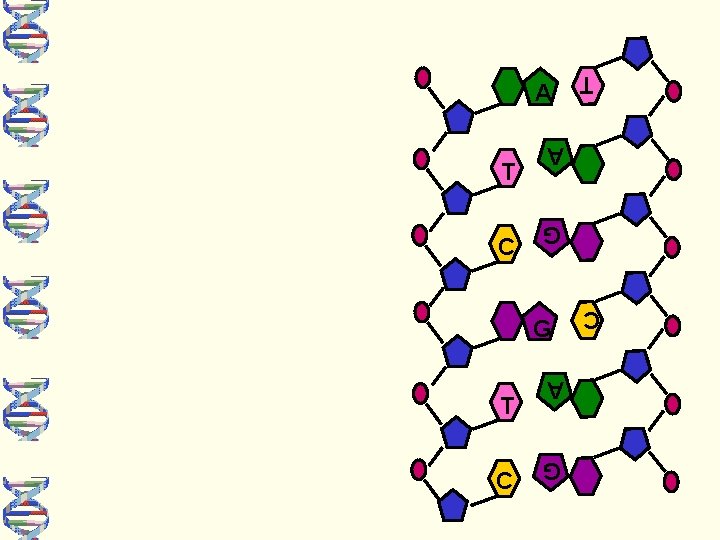
TRANSCRIPTION G G T A C C C A T T G 1. (continued) a gene portion of the DNA strand separates A
G G G C A T C C A T T A
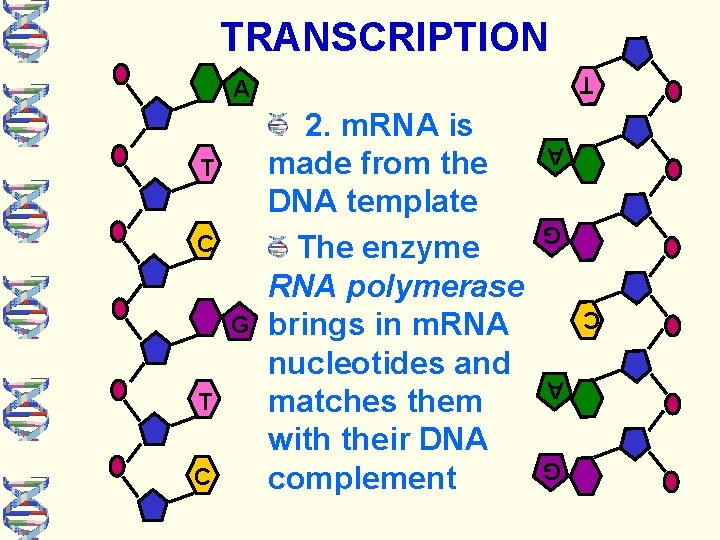
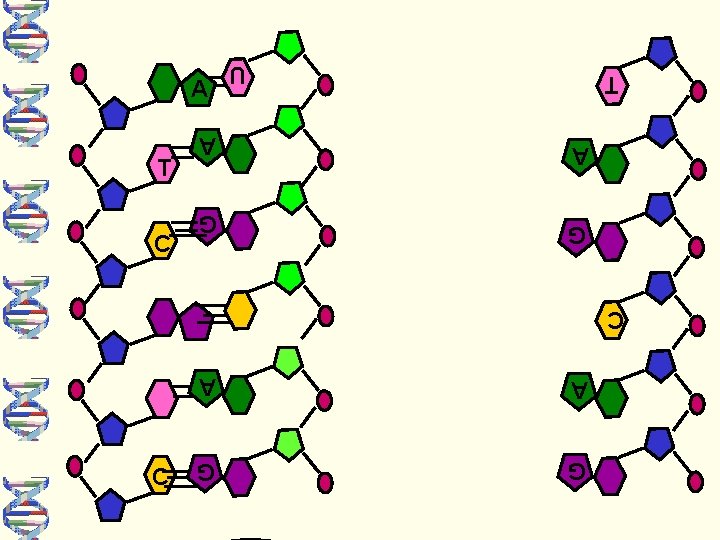
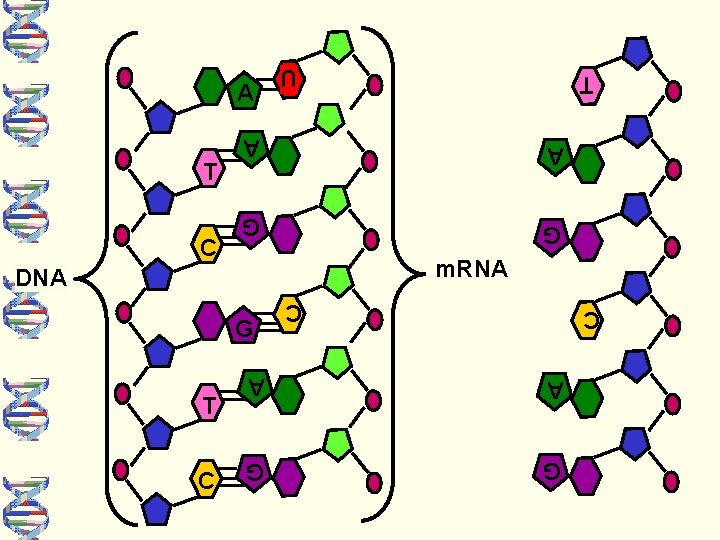
TRANSCRIPTION T A G C A T C G G C A T 2. m. RNA is made from the DNA template The enzyme RNA polymerase brings in m. RNA nucleotides and matches them with their DNA complement
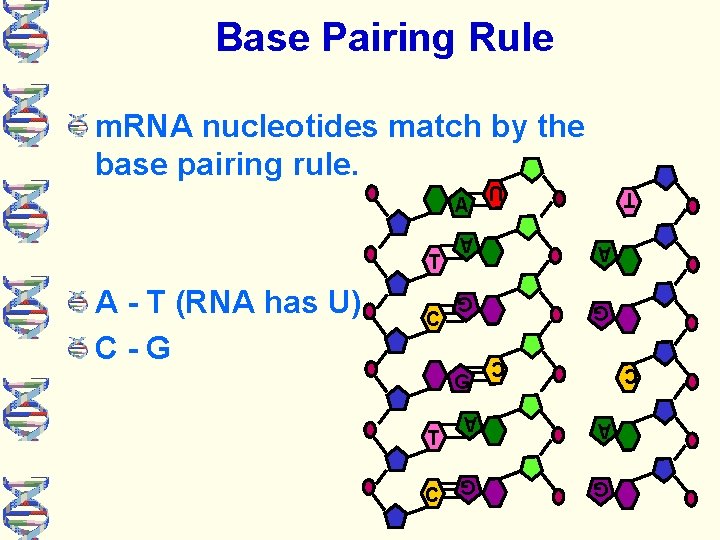
Base Pairing Rule m. RNA nucleotides match by the base pairing rule. A G G C A T C G C C A A - T (RNA has U) C-G U T T A
A A G G C T C A A G G T U C T A
A A G G m. RNA DNA A G G C A T C G C C U T T A
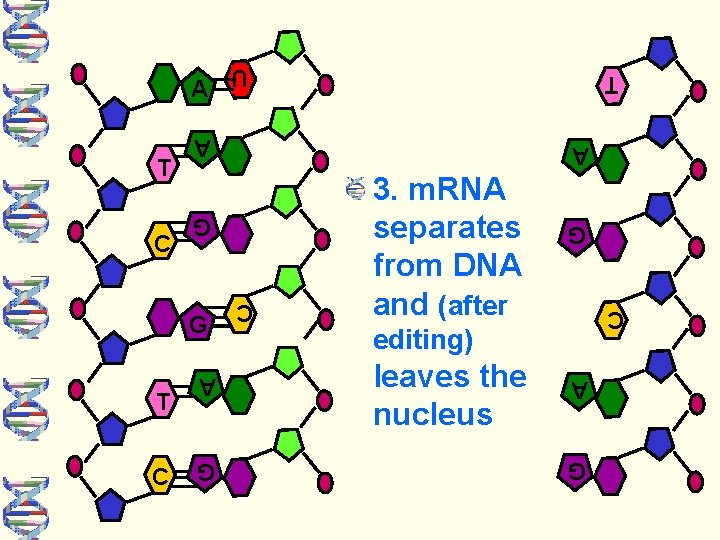
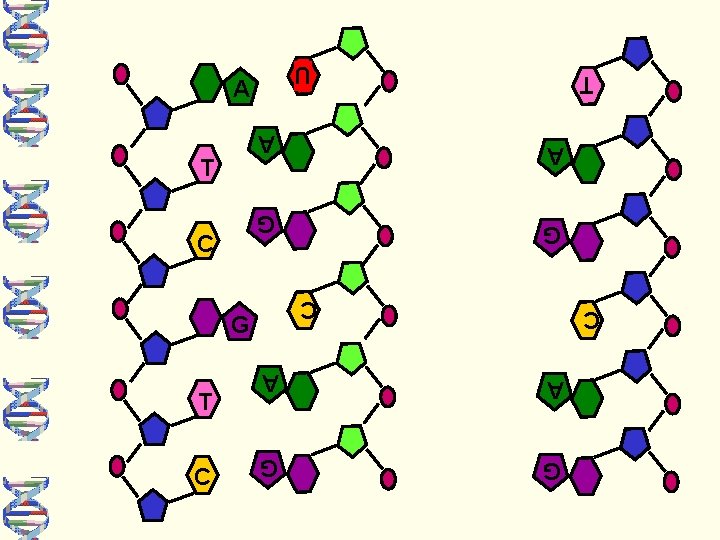
A C editing) G leaves the nucleus A G C 3. m. RNA separates from DNA and (after G G T A C U T T A
A A G G C C A A G G T C T G C T A U
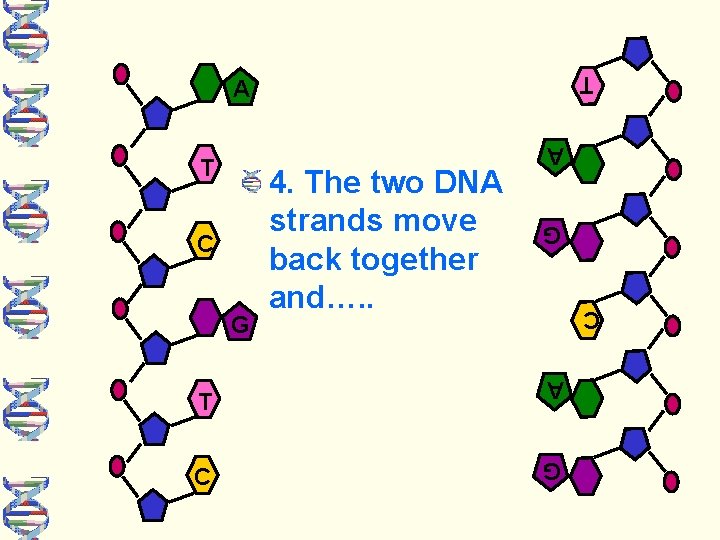
T A C G G C 4. The two DNA strands move back together and…. . A T T A C G
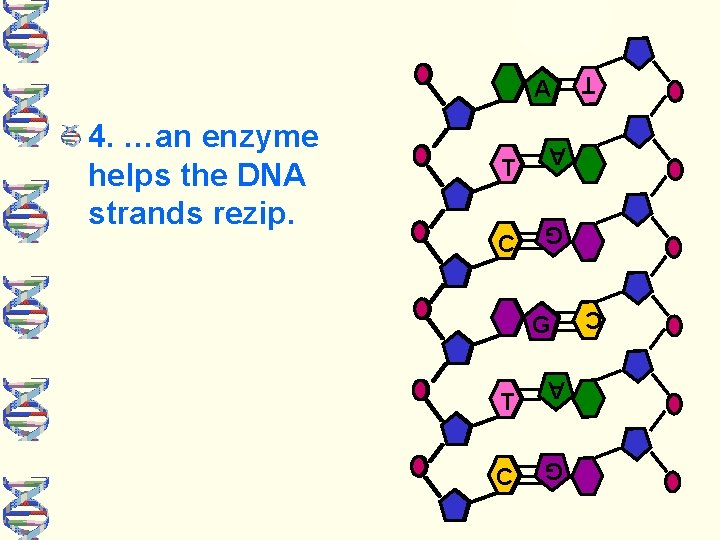
G T A C C C G T A G 4. …an enzyme helps the DNA strands rezip. T A
REVIEWING TRANSCRIPTION: m. RNA is made copying DNA’s code 1. DNA unzips 2. m. RNA is made from the DNA template 3. m. RNA separates from DNA and (after editing) leaves the nucleus 4. The DNA molecule rezips (closes back up. ) click to play animation
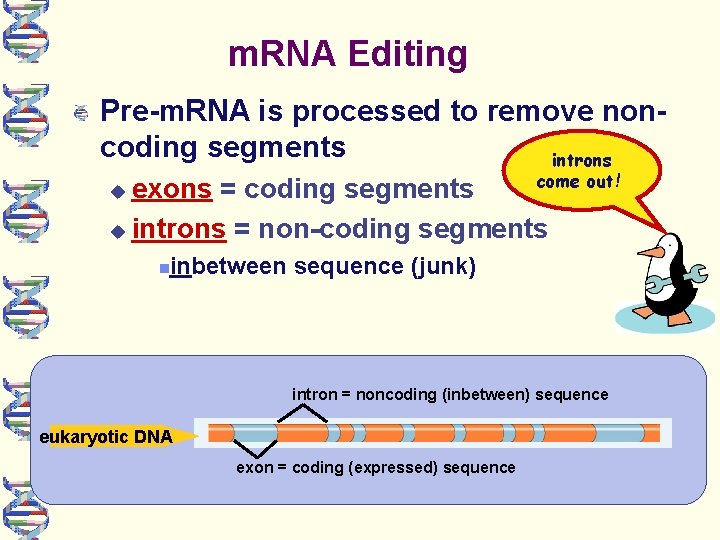
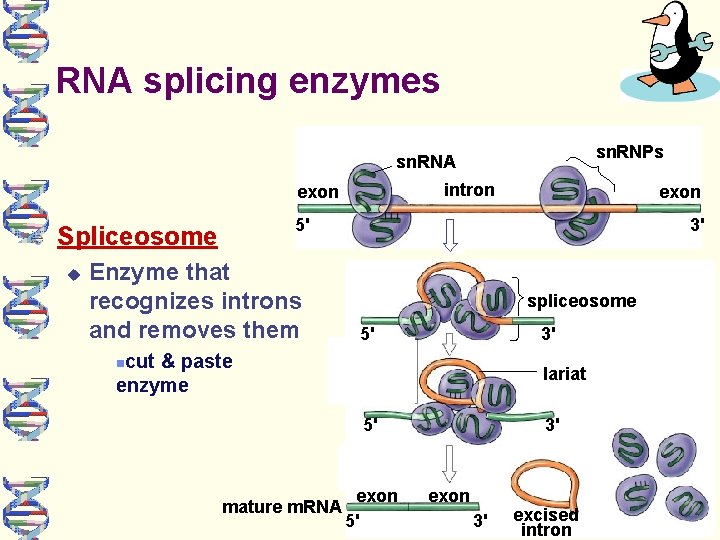
m. RNA Editing Pre-m. RNA is processed to remove noncoding segments introns come out! exons = coding segments introns = non-coding segments inbetween sequence (junk) intron = noncoding (inbetween) sequence eukaryotic DNA exon = coding (expressed) sequence
RNA splicing enzymes sn. RNPs sn. RNA intron exon 5' Spliceosome exon Enzyme that recognizes introns and removes them 3' spliceosome 5' 3' cut & paste enzyme lariat 5' mature m. RNA exon 5' 3' exon 3' excised intron
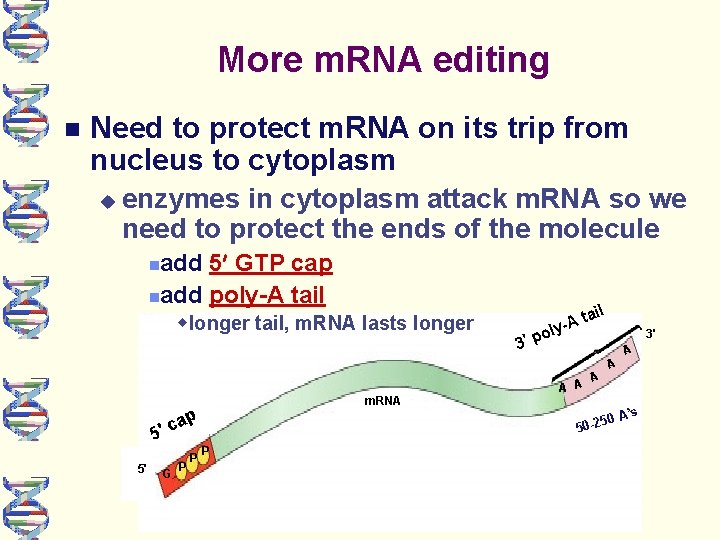
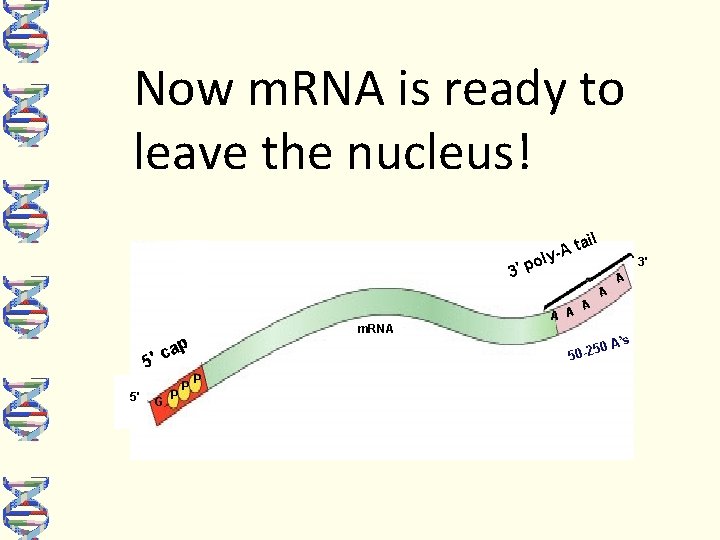
More m. RNA editing Need to protect m. RNA on its trip from nucleus to cytoplasm enzymes in cytoplasm attack m. RNA so we need to protect the ends of the molecule add 5 GTP cap add poly-A tail longer tail, m. RNA lasts longer il a t -A ly o 3' p 3' A A 5 5' m. RNA p a c ' G P P A A A s 0 A’ 5 50 -2 P
Now m. RNA is ready to leave the nucleus! il a t -A oly p ' 3 3' A A 5 5' m. RNA p a c ' G P P A A A s 0 A’ 5 50 -2 P
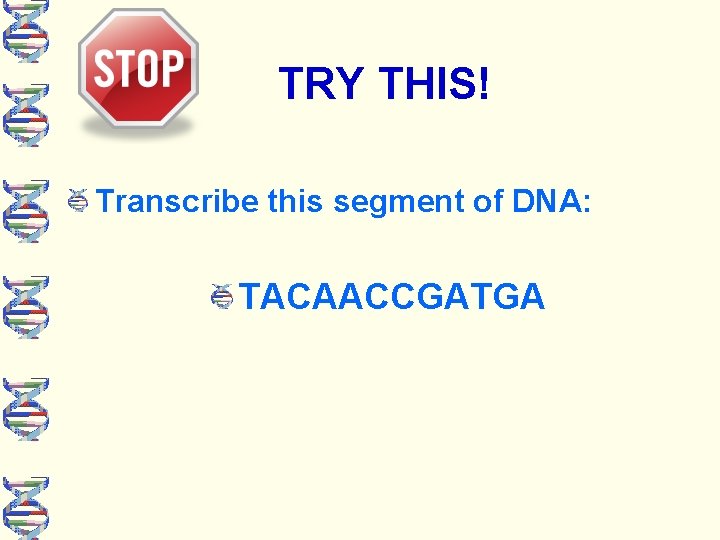
TRY THIS! Transcribe this segment of DNA: TACAACCGATGA
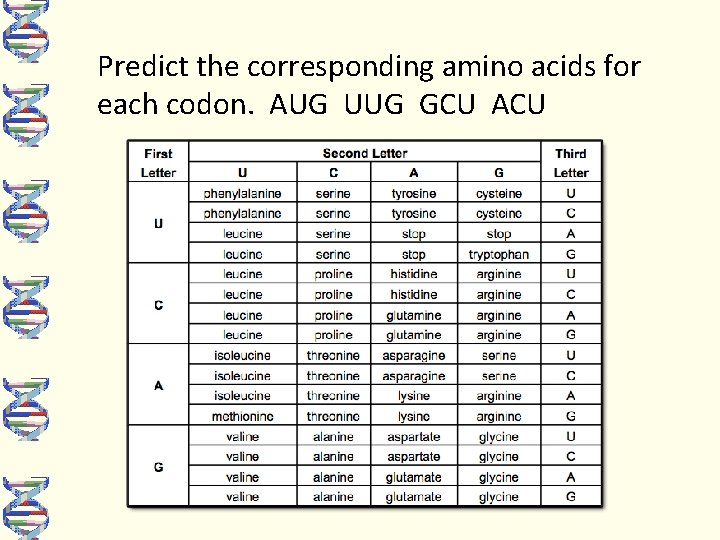
Predict the corresponding amino acids for each codon. AUG UUG GCU ACU