
Protein Synthesis To explain the process of protein
- Slides: 27
Protein Synthesis To explain the process of protein synthesis.
Ribose Nucleic Acid • • • Contains the sugar ribose Has uracil instead of thymine Single stranded Less stable than DNA Relatively smaller than DNA There are 3 types
Messenger RNA (m. RNA) • Carries the genetic information from DNA to the ribosomes. • A long string with nucleotides arranged in groups of 3 bases called Codons. • Each codon codes for a specific amino acid.
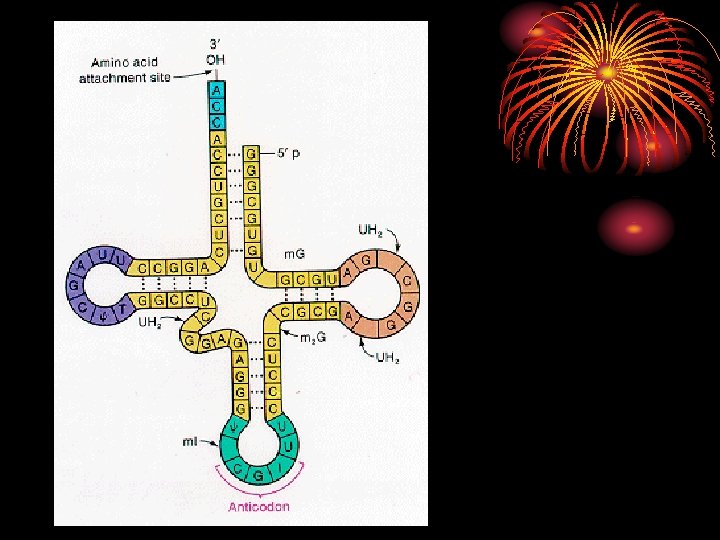
Transfer RNA (t. RNA) • A ‘clover leaf’ shaped molecule. • Has a 3 base Anticodon at one end and the appropriate amino acid at the other. • The function of t. RNA is to pick up the amino acid specific to each anticodon code and carry them to the ribosomes to be clicked into the proper order to make a protein.
Ribosomal RNA (r. RNA) • This makes up part of the structure of ribosomes – the site of protein synthesis in the cytoplasm. • Most abundant RNA. • Synthesised in the nucleolus. • Holds the m. RNA and t. RNA together so that a peptide bond can form between amino acids.
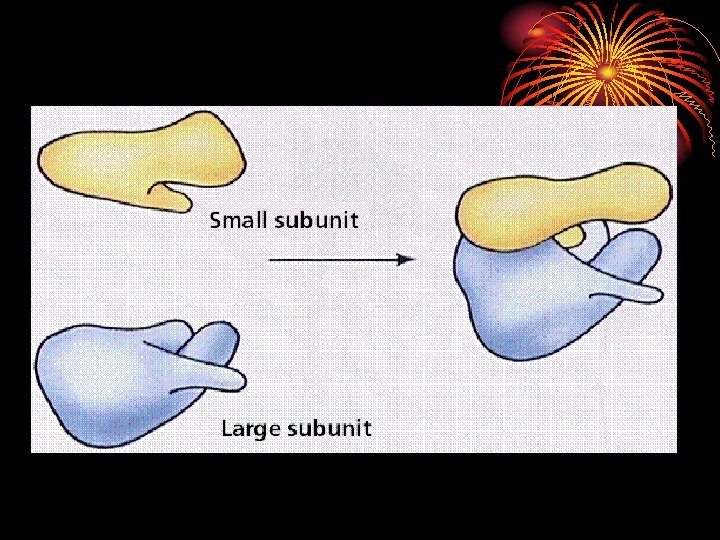
Ribosomes • Consists of 2 subunits, made in the nucleolus. • Pass out of the nucleus via the nuclear pores, into the cytoplasm. • The larger and smaller units do not join until they are attached to a m. RNA molecule.
Protein Synthesis • In the cell there are two codes: • The base code on the DNA • The amino acid code of the protein The first has to be brought to the second. This is done by two processes:
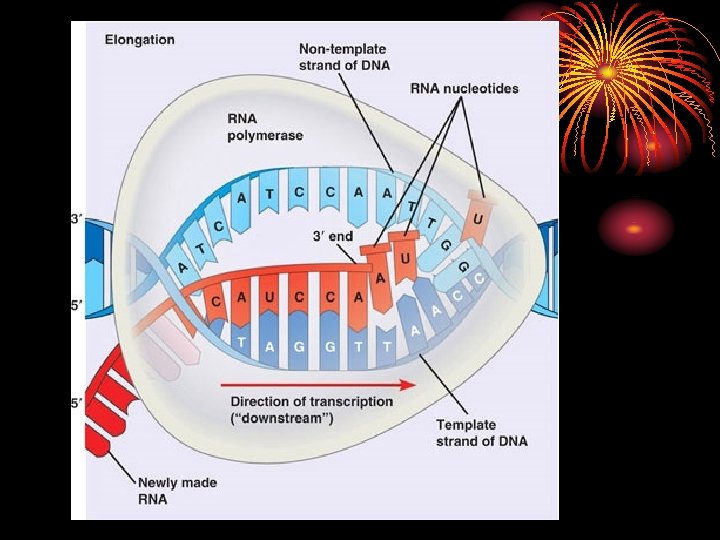
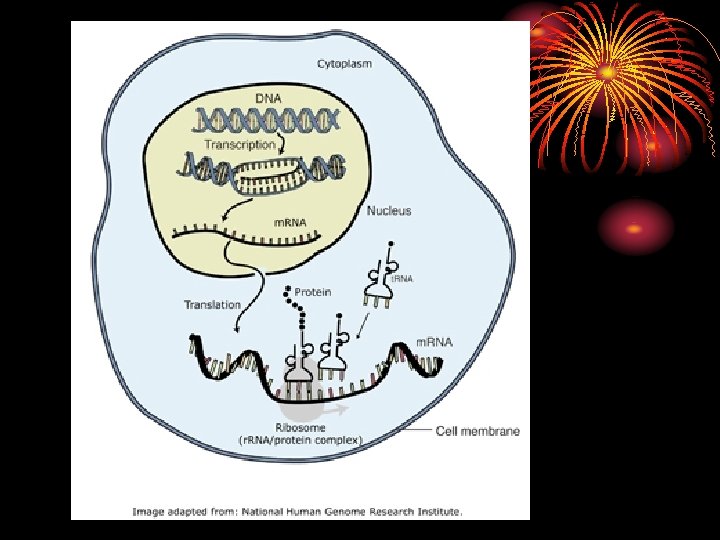
Transcription • The DNA code is transcribed onto a m. RNA. • A section of DNA unwinds and acts as a template on which the mirror image molecule of m. RNA is synthesised. • The rules of base pairing are strictly followed.
Transcription • Free nucleotides present in the nucleus are used. • Catalysed by the enzyme RNA polymerase. • Codes on the DNA act as punctuation, marking the beginning and end of the protein.
Transcription • When a strip of m. RNA is complete it diffuses out of the nucleus into the cytoplasm and attaches itself to the large and small subunits of a ribosome, where protein synthesis takes place.
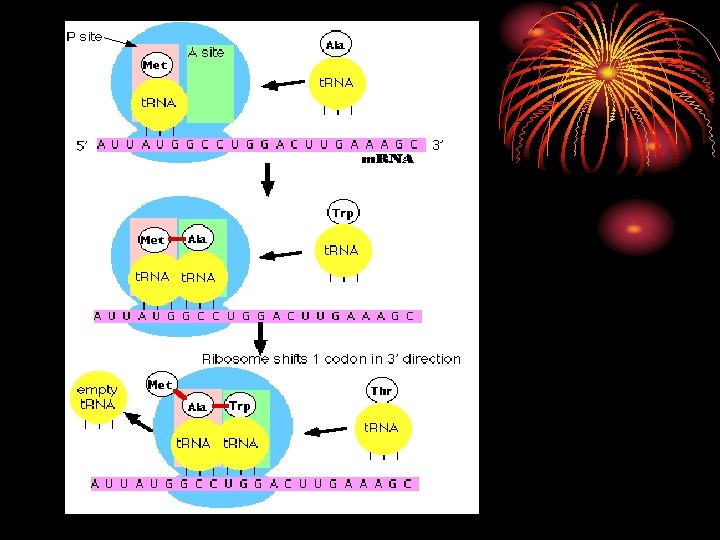
Translation • The m. RNA molecule passes through a slot between the large and small units of the ribosome, where it is translated into a protein. • The t. RNA carries the appropriate amino acid up to the ribosome.
Translation • The anticodon on the t. RNA matches with the codon on the m. RNA. • The r. RNA clicks the amino acid onto a growing polypeptide chain that will form the protein. • As each new amino acid is joined, the ribosome nudges the m. RNA strand along 3 ‘notches’.
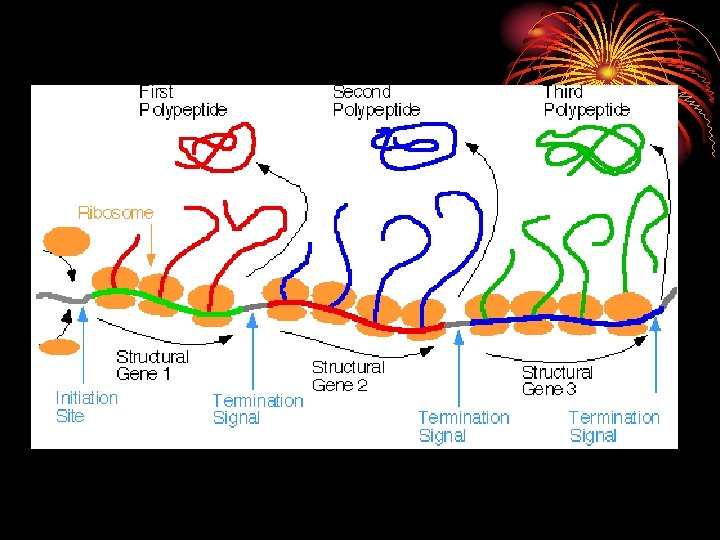
Cistrons • This is a region of nucleic acid that specifies a polypeptide sequence. • E. g. haemoglobin has 4 chains, 2 alpha and 2 beta chains, thus haemoglobin needs 2 cistrons to construct one molecule.
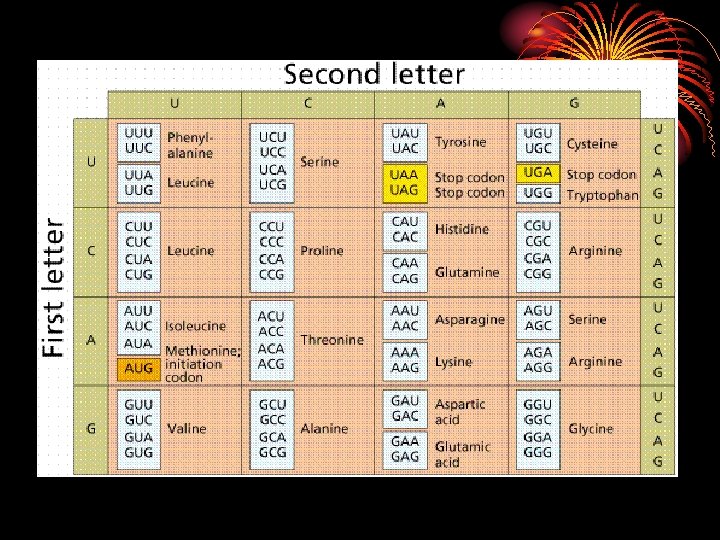
The Genetic Code • Living things use 20 different amino acids to produce proteins. • The genetic code uses sequences of 3 nucleotides for a total of 64 different combinations.
The Genetic Code • Some amino acids are specified for by more than one codon or DNA triplet. • This redundancy in the code is called degeneracy. It buffers the effect of mutations because if only one base changes, this does not necessarily change the amino acid picked up.
The Genetic Code • Some 3 base codes act as punctuation: • Start – AUG is the start signal, and specifies a modified form of MET, in most cases, this is cleaved off, leaving the next amino acid as the first in the protein. • Stop – UAA, UGA, UAG these stop signals are TER (terminate)
Protein Synthesis • Animation
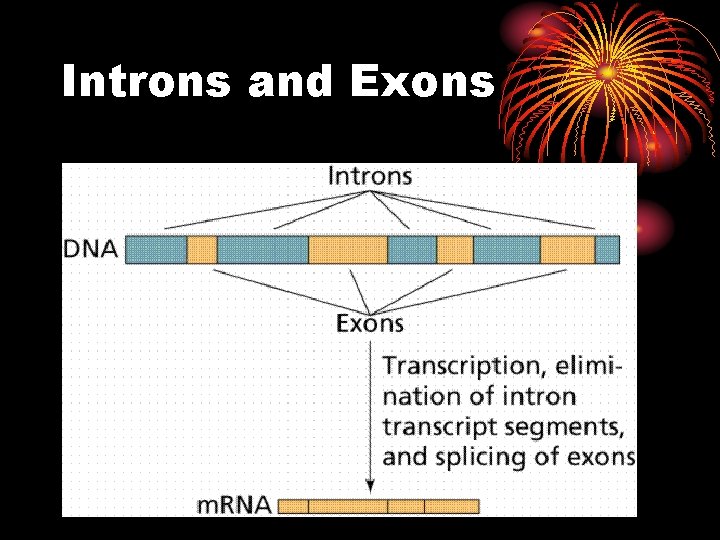
Introns and Exons • Exons are structural genes, which contain the genetic information to make the proteins. • Exons are transcribed.
Introns and Exons • Introns are not transcribed. • These are sections of DNA consisting of regulator genes and other genes that are not transcribed.
Introns and Exons