
Protein Synthesis The Role of the RNA Molecule
- Slides: 37
Protein Synthesis The Role of the RNA Molecule
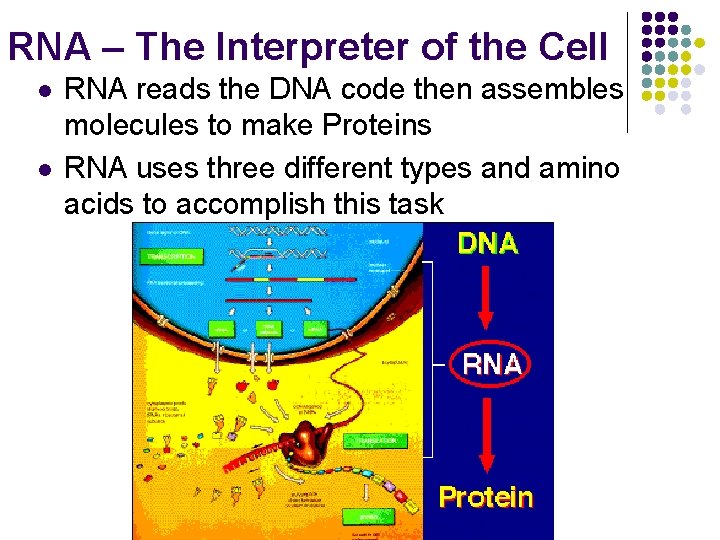
RNA – The Interpreter of the Cell l l RNA reads the DNA code then assembles molecules to make Proteins RNA uses three different types and amino acids to accomplish this task
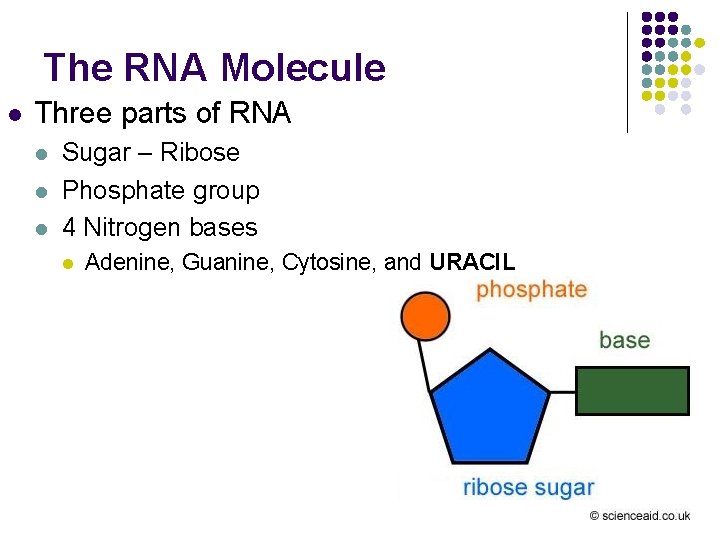
The RNA Molecule l Three parts of RNA l l l Sugar – Ribose Phosphate group 4 Nitrogen bases l Adenine, Guanine, Cytosine, and URACIL
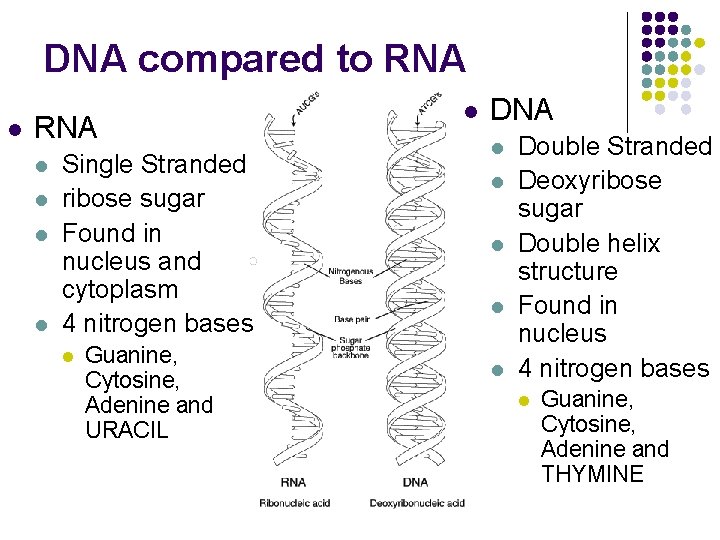
DNA compared to RNA l l l l Single Stranded ribose sugar Found in nucleus and cytoplasm 4 nitrogen bases l Guanine, Cytosine, Adenine and URACIL l DNA l l l Double Stranded Deoxyribose sugar Double helix structure Found in nucleus 4 nitrogen bases l Guanine, Cytosine, Adenine and THYMINE
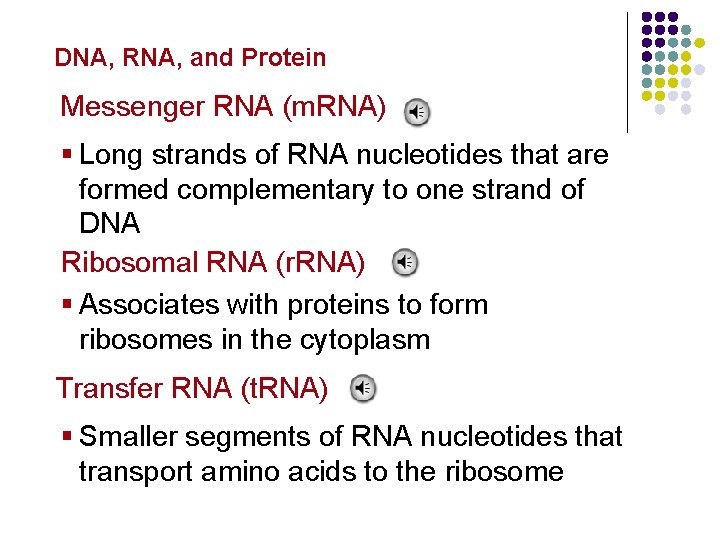
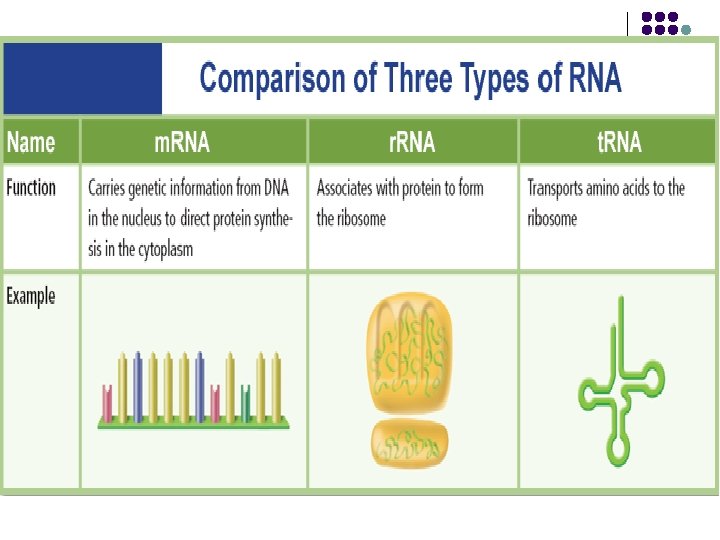
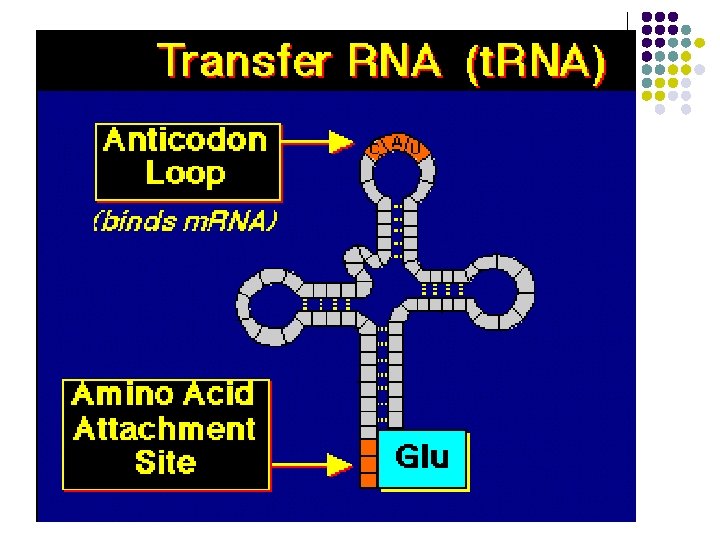
Molecular Genetics DNA, RNA, and Protein Messenger RNA (m. RNA) § Long strands of RNA nucleotides that are formed complementary to one strand of DNA Ribosomal RNA (r. RNA) § Associates with proteins to form ribosomes in the cytoplasm Transfer RNA (t. RNA) § Smaller segments of RNA nucleotides that transport amino acids to the ribosome
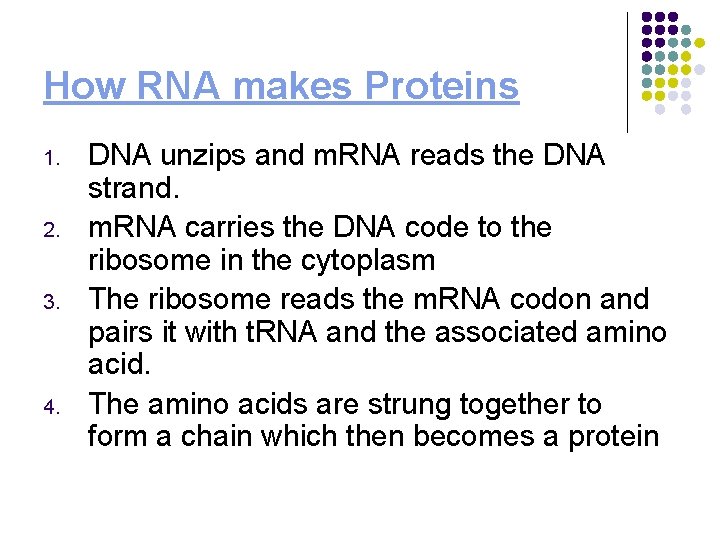
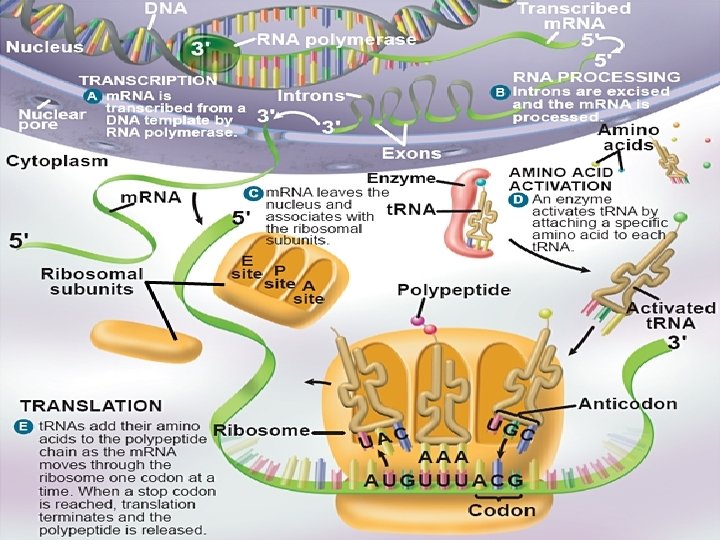
How RNA makes Proteins 1. 2. 3. 4. DNA unzips and m. RNA reads the DNA strand. m. RNA carries the DNA code to the ribosome in the cytoplasm The ribosome reads the m. RNA codon and pairs it with t. RNA and the associated amino acid. The amino acids are strung together to form a chain which then becomes a protein
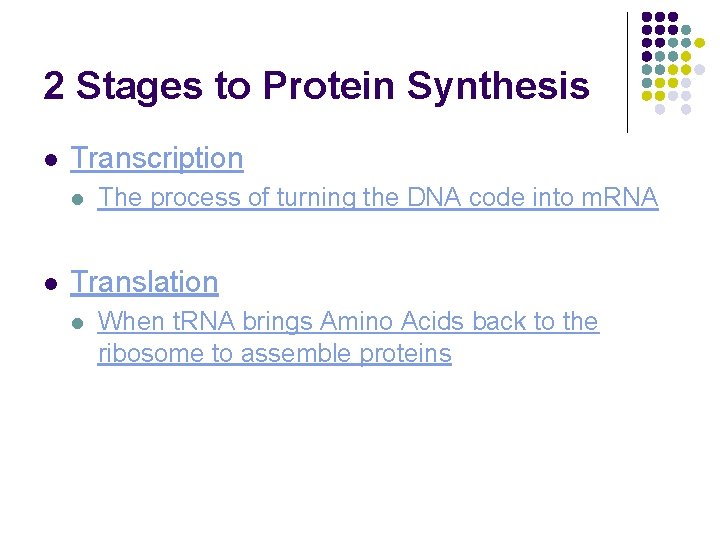
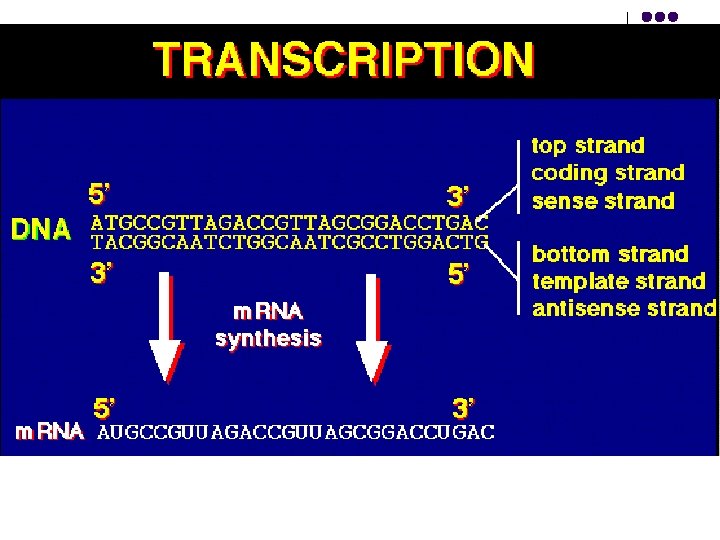
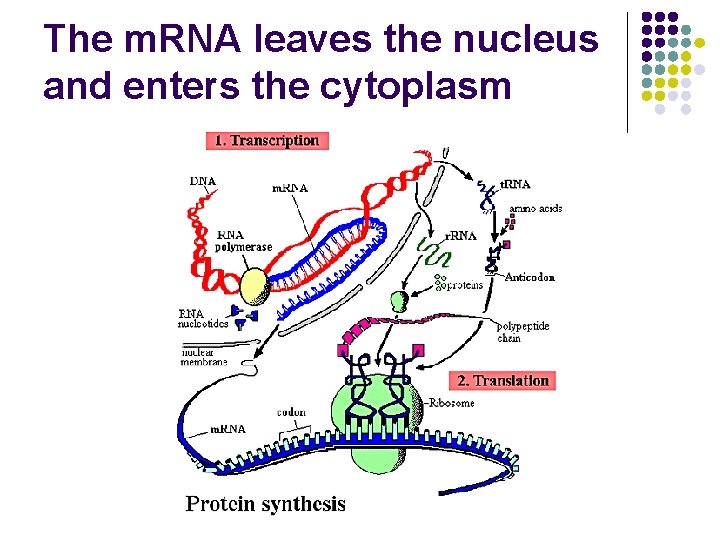
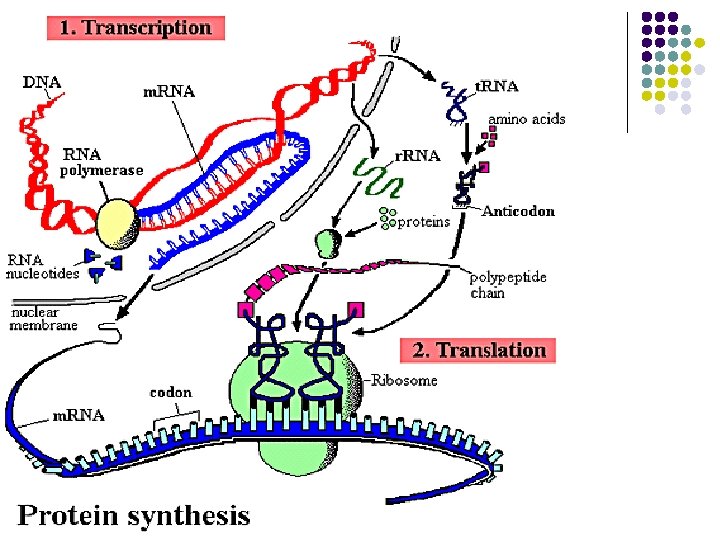
2 Stages to Protein Synthesis l Transcription l l The process of turning the DNA code into m. RNA Translation l When t. RNA brings Amino Acids back to the ribosome to assemble proteins
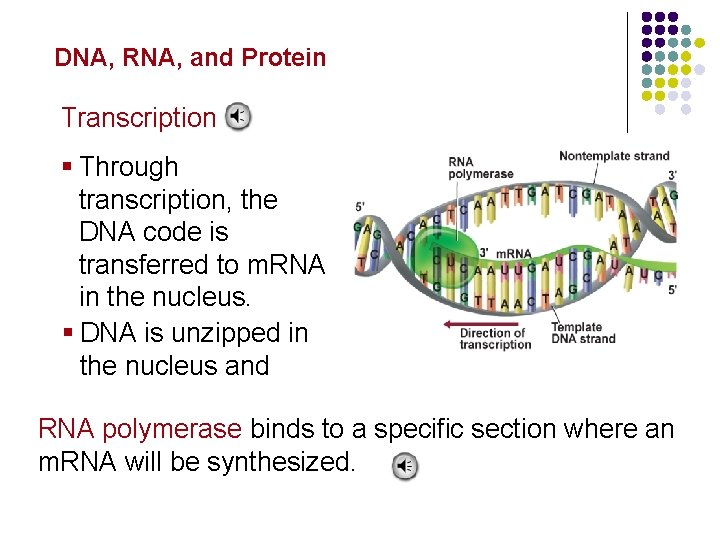
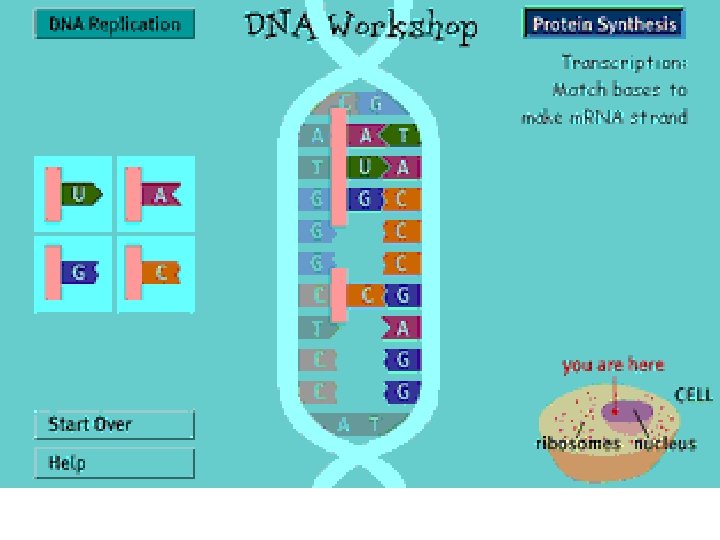
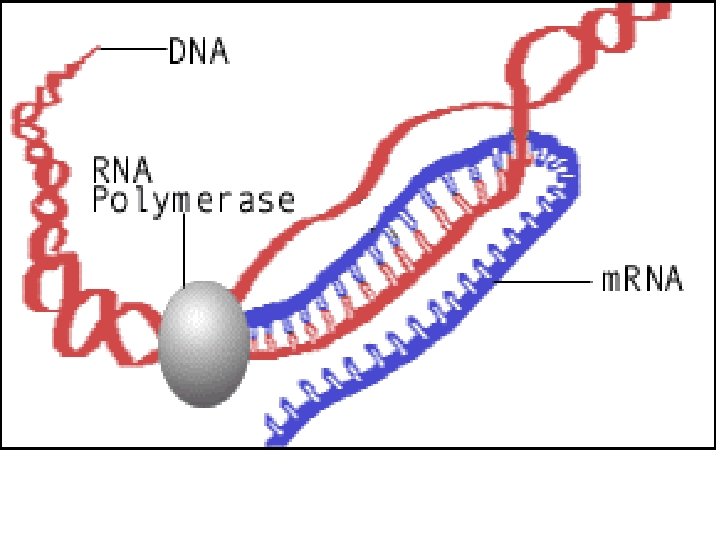
Molecular Genetics DNA, RNA, and Protein Transcription § Through transcription, the DNA code is transferred to m. RNA in the nucleus. § DNA is unzipped in the nucleus and RNA polymerase binds to a specific section where an m. RNA will be synthesized.
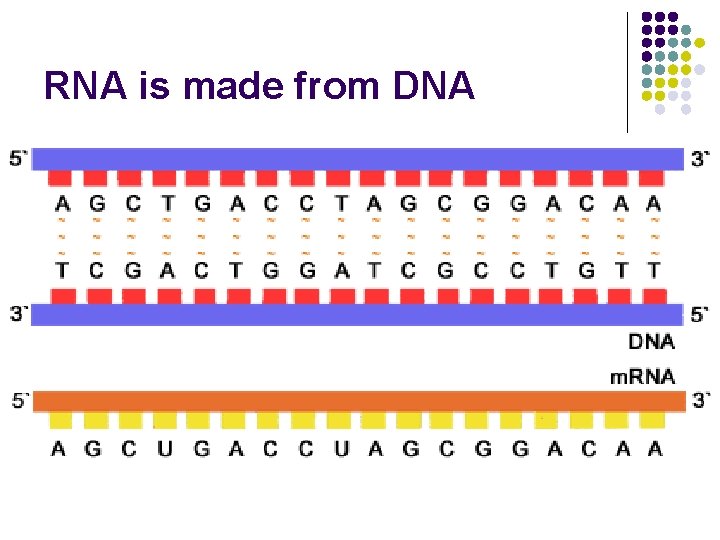
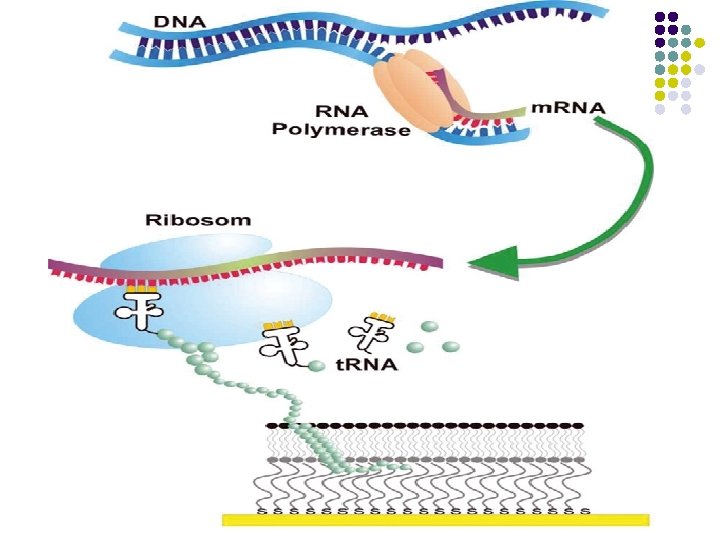
RNA is made from DNA
The m. RNA leaves the nucleus and enters the cytoplasm
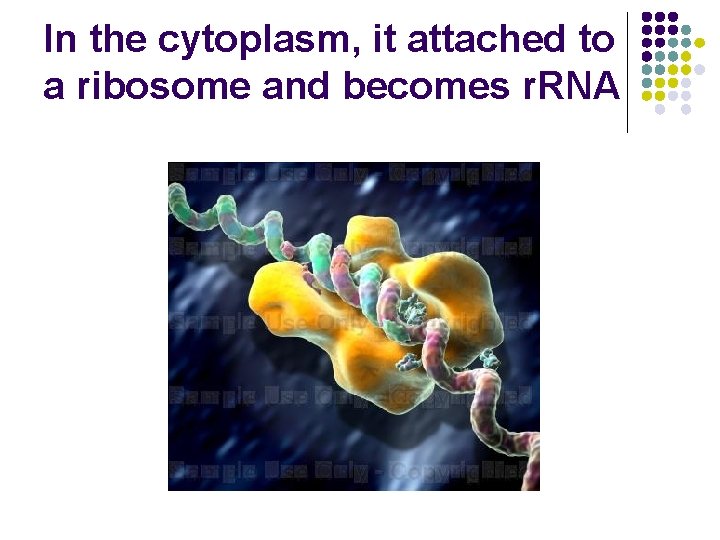
In the cytoplasm, it attached to a ribosome and becomes r. RNA
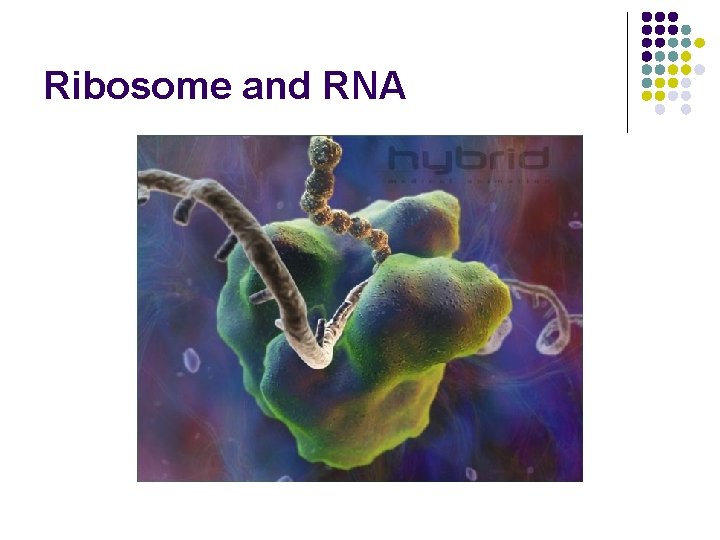
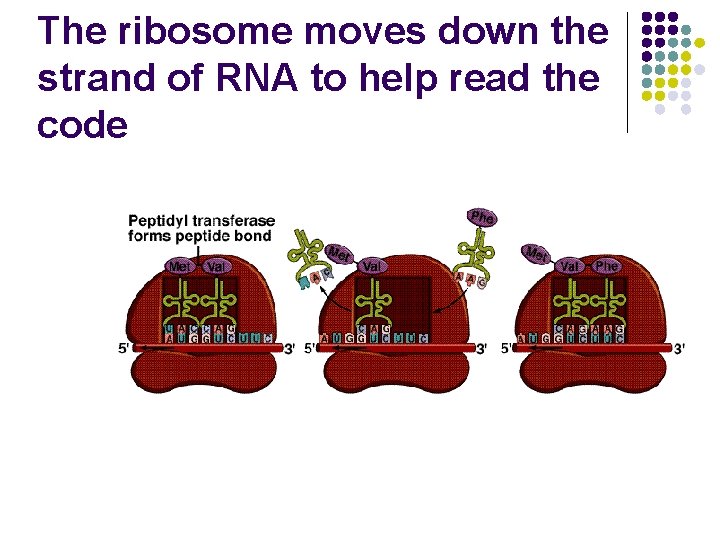
Ribosome and RNA
The ribosome moves down the strand of RNA to help read the code
Molecular Genetics DNA, RNA, and Protein The Code § Experiments during the 1960 s demonstrated that the DNA code was a three-base code. § The three-base code in DNA or m. RNA is called a codon.
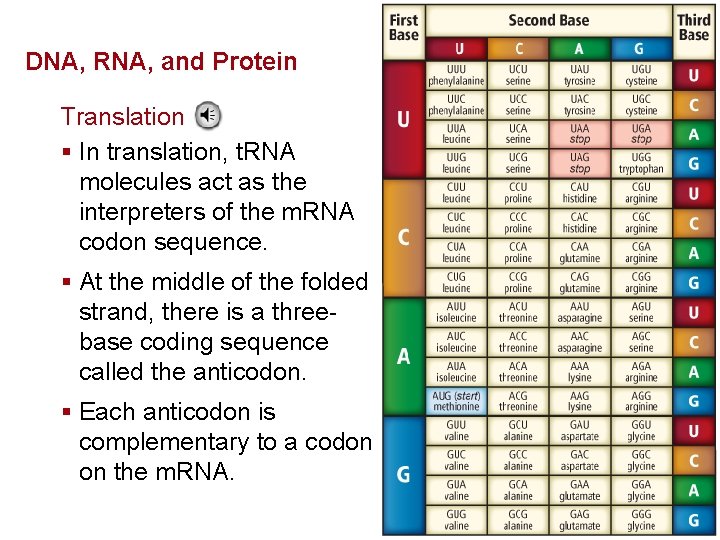
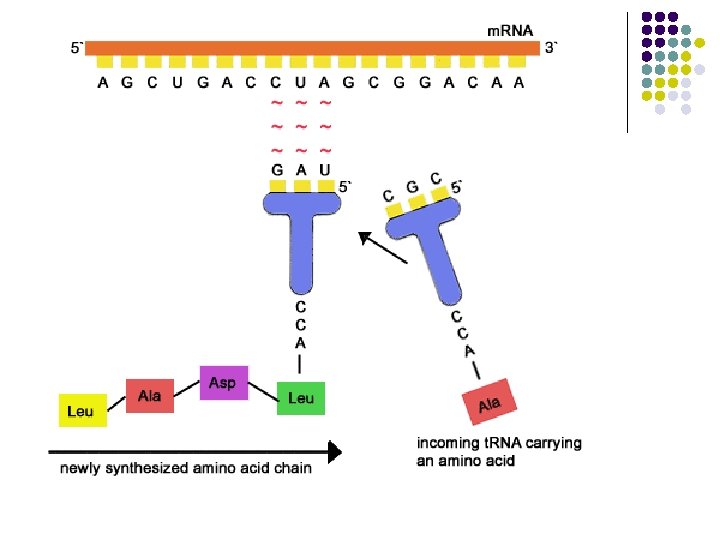
Molecular Genetics DNA, RNA, and Protein Translation § In translation, t. RNA molecules act as the interpreters of the m. RNA codon sequence. § At the middle of the folded strand, there is a threebase coding sequence called the anticodon. § Each anticodon is complementary to a codon on the m. RNA.
Mutations l Permanent change in a cell’s DNA, ranging in changes in a single base pair to deletions of large sections of chromosomes.
l Mutation can result in several different types of change in DNA sequences; these can either have no effect, alter the product of a gene, or prevent the gene from functioning properly or completely.
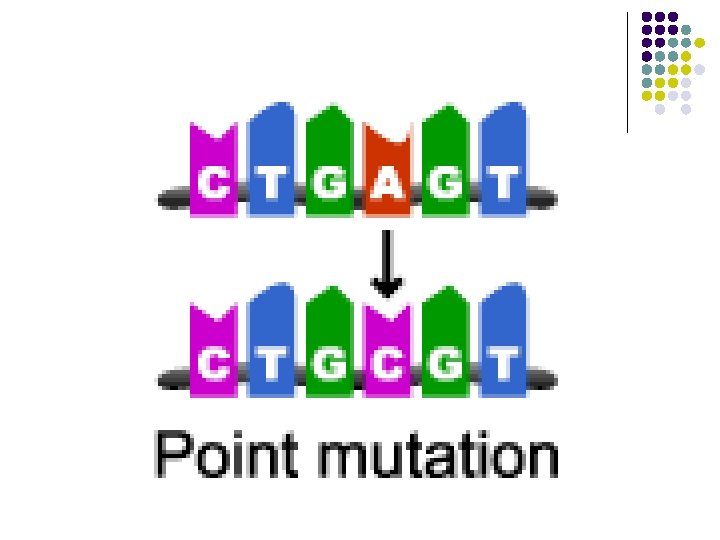
Mutations l Point mutation l l l When one DNA base is replaced Affects only one Amino Acid May or may not change the amino acid l l If it does, it changes the protein If it doesn’t, it is ok!!
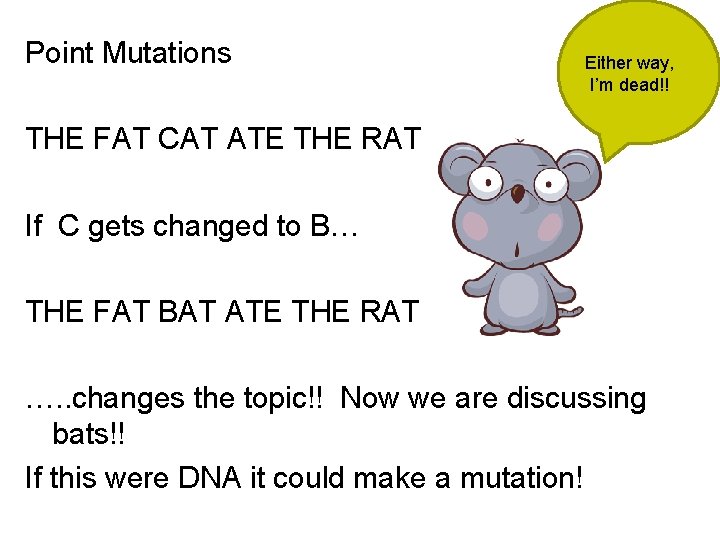
Point Mutations Either way, I’m dead!! THE FAT CAT ATE THE RAT If C gets changed to B… THE FAT BAT ATE THE RAT …. . changes the topic!! Now we are discussing bats!! If this were DNA it could make a mutation!
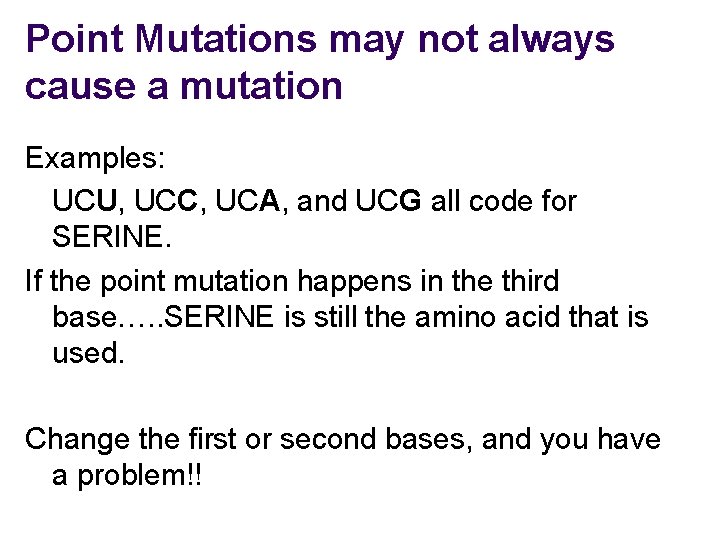
Point Mutations may not always cause a mutation Examples: UCU, UCC, UCA, and UCG all code for SERINE. If the point mutation happens in the third base…. . SERINE is still the amino acid that is used. Change the first or second bases, and you have a problem!!
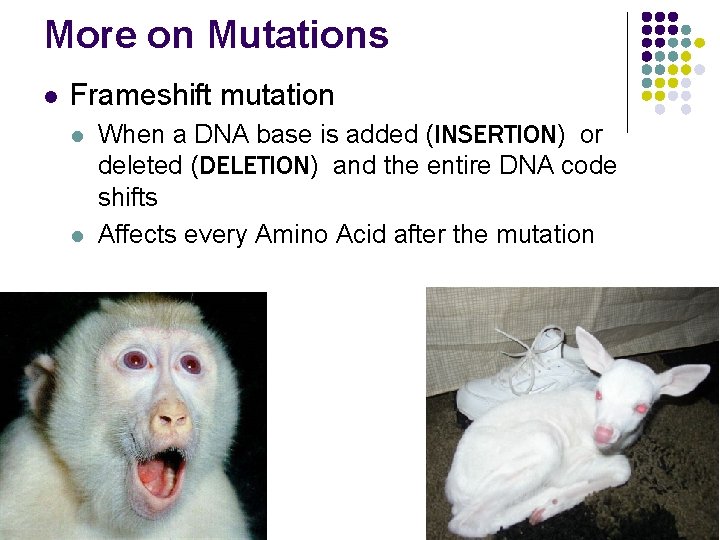
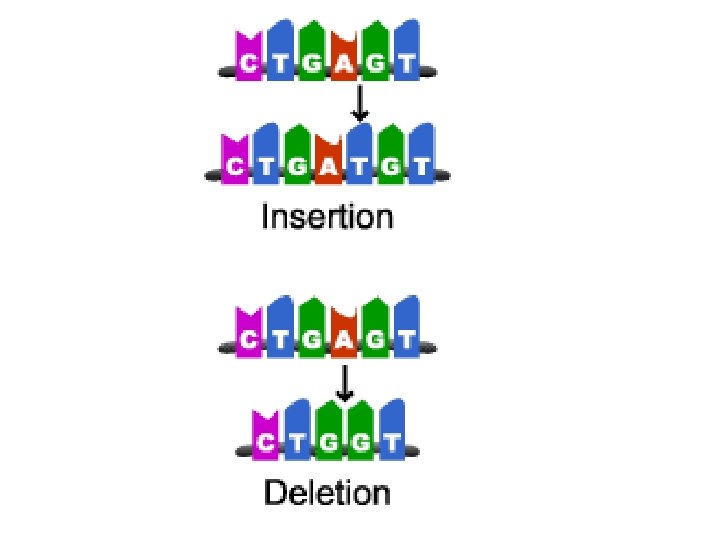
More on Mutations l Frameshift mutation l l When a DNA base is added (INSERTION) or deleted (DELETION) and the entire DNA code shifts Affects every Amino Acid after the mutation
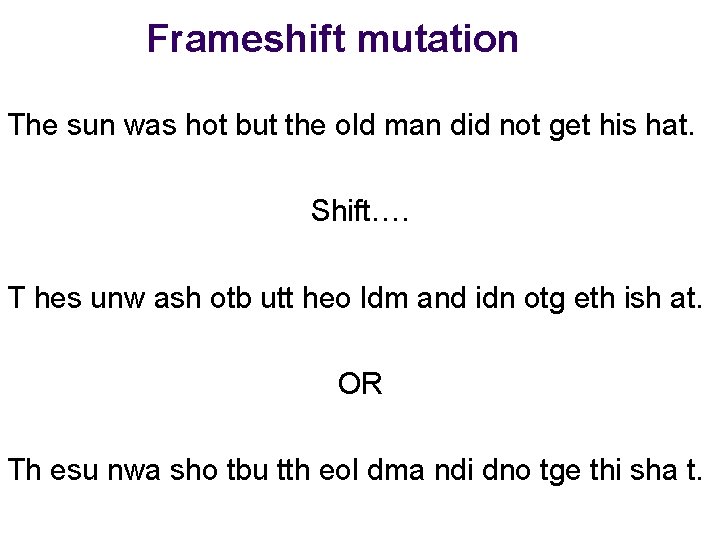
Frameshift mutation The sun was hot but the old man did not get his hat. Shift…. T hes unw ash otb utt heo ldm and idn otg eth ish at. OR Th esu nwa sho tbu tth eol dma ndi dno tge thi sha t.
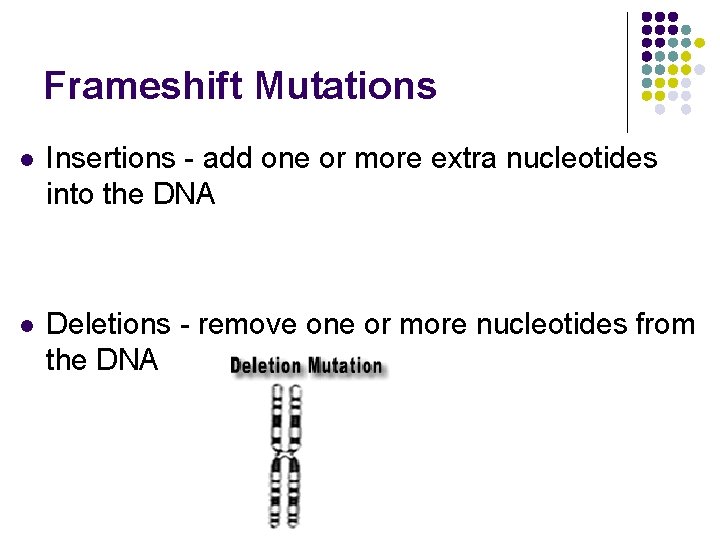
Frameshift Mutations l Insertions - add one or more extra nucleotides into the DNA l Deletions - remove one or more nucleotides from the DNA
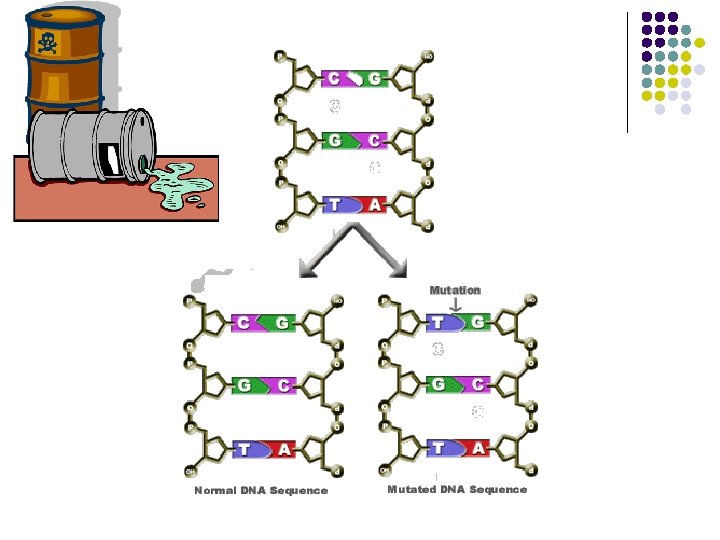
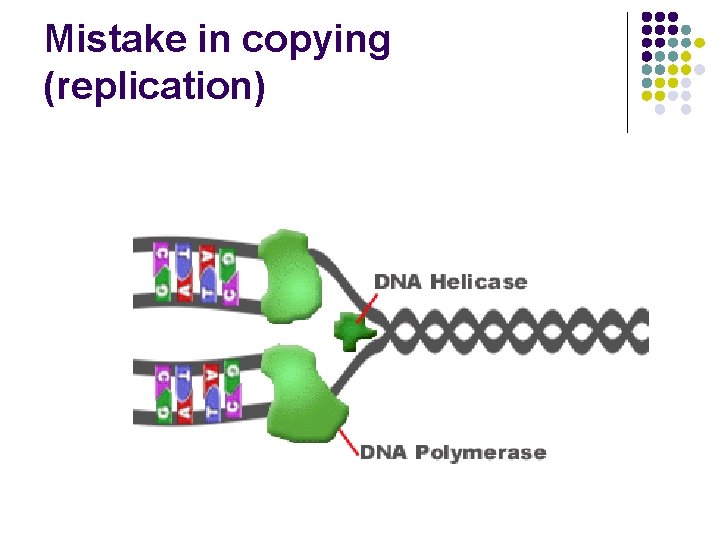
Mutation Causes--MUTAGENS l 1. 2. Mutations in DNA sequences generally occur through one of two processes: DNA damage from environmental agents such as ultraviolet light (sunshine), nuclear radiation or certain chemicals Mistakes that occur when a cell copies its DNA in preparation for cell division.
Mistake in copying (replication)