
Protein Synthesis Notes UNLIKE DNA RNA Contains the
- Slides: 24
Protein Synthesis Notes
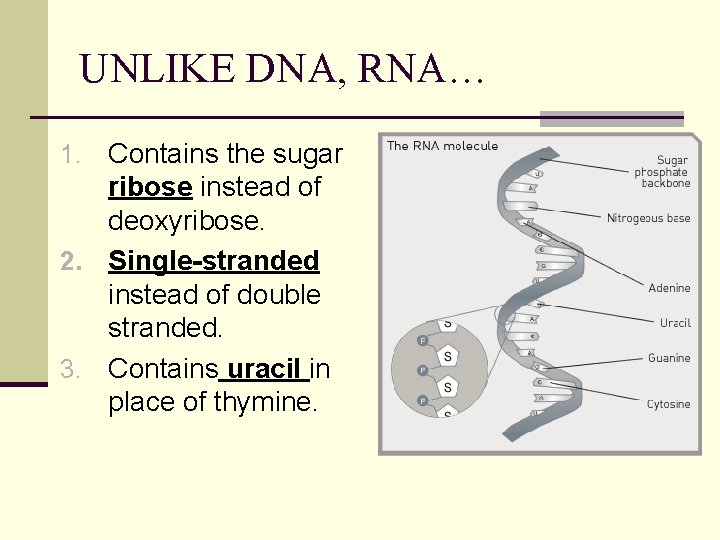
UNLIKE DNA, RNA… Contains the sugar ribose instead of deoxyribose. 2. Single-stranded instead of double stranded. 3. Contains uracil in place of thymine. 1.
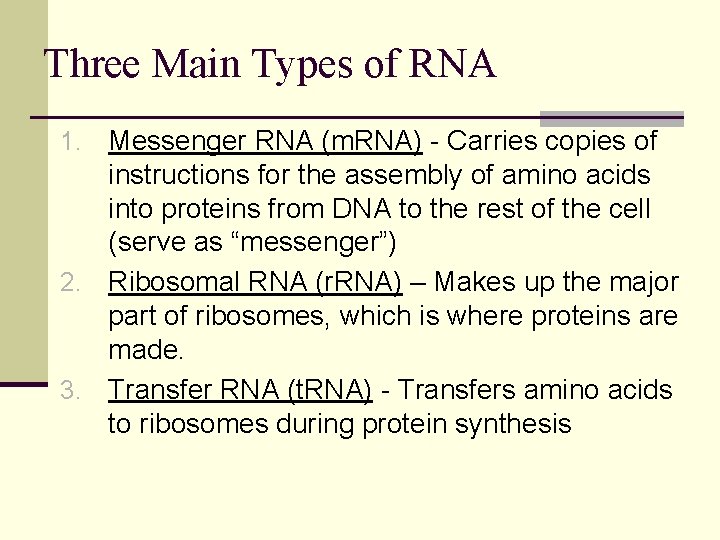
Three Main Types of RNA Messenger RNA (m. RNA) - Carries copies of instructions for the assembly of amino acids into proteins from DNA to the rest of the cell (serve as “messenger”) 2. Ribosomal RNA (r. RNA) – Makes up the major part of ribosomes, which is where proteins are made. 3. Transfer RNA (t. RNA) - Transfers amino acids to ribosomes during protein synthesis 1.
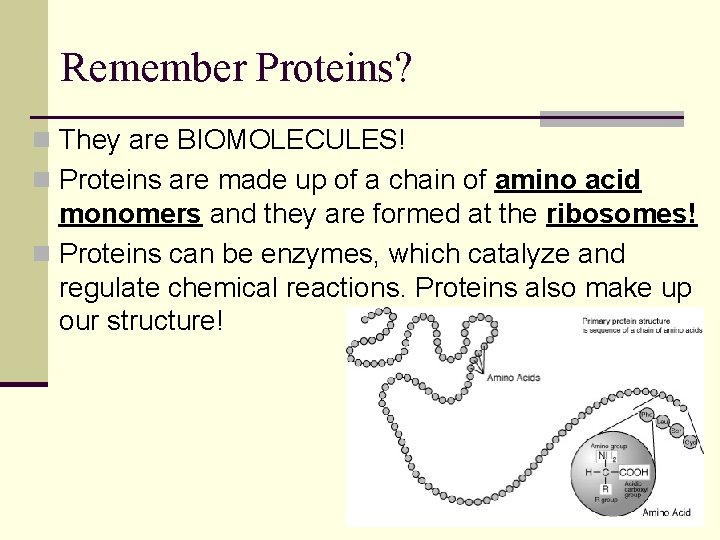
Remember Proteins? n They are BIOMOLECULES! n Proteins are made up of a chain of amino acid monomers and they are formed at the ribosomes! n Proteins can be enzymes, which catalyze and regulate chemical reactions. Proteins also make up our structure!
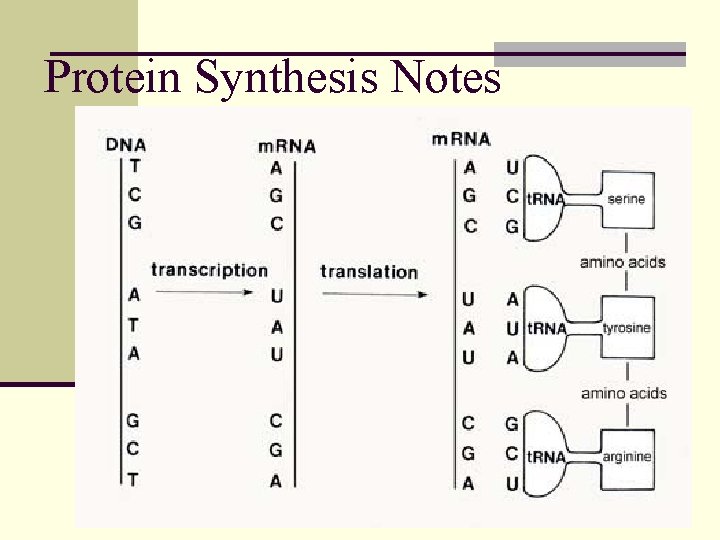
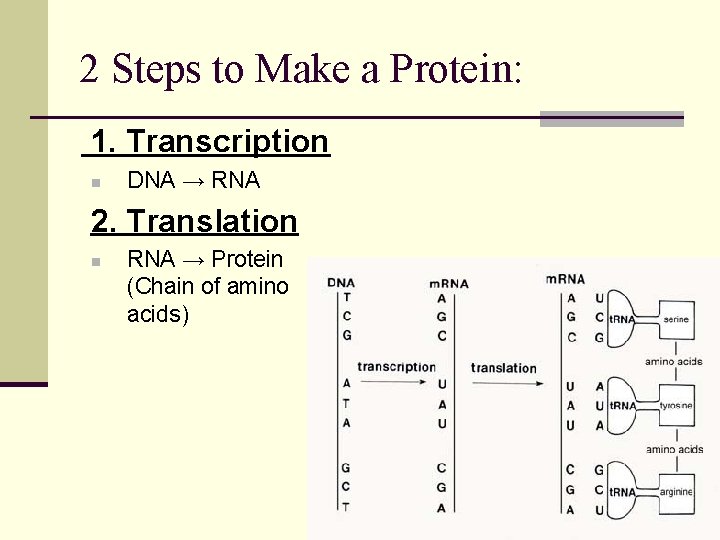
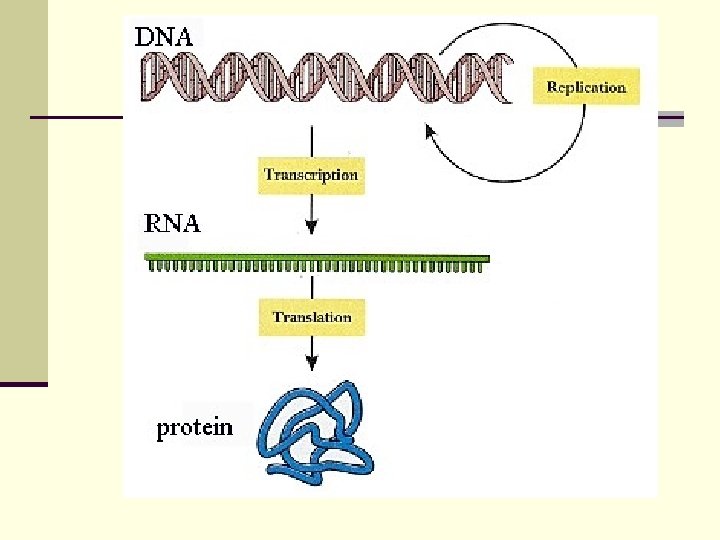
2 Steps to Make a Protein: 1. Transcription n DNA → RNA 2. Translation n RNA → Protein (Chain of amino acids)
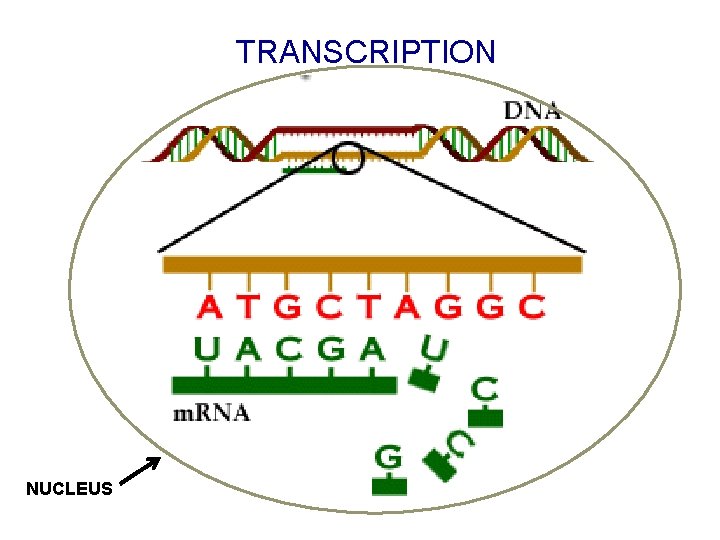
TRANSCRIPTION NUCLEUS
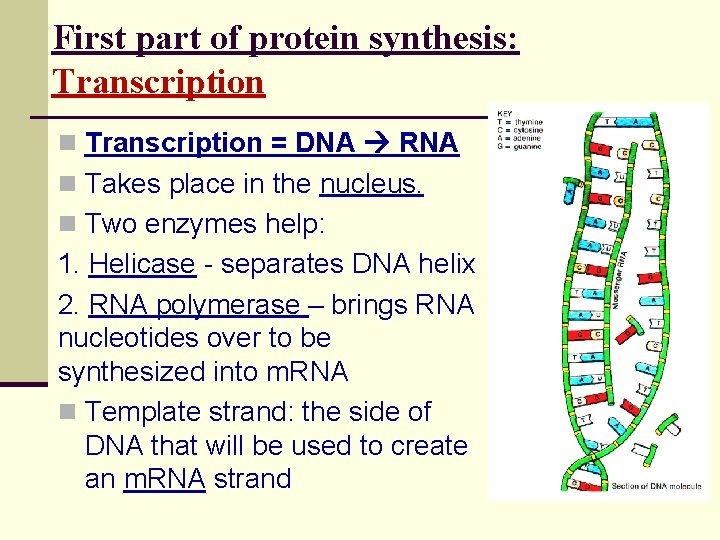
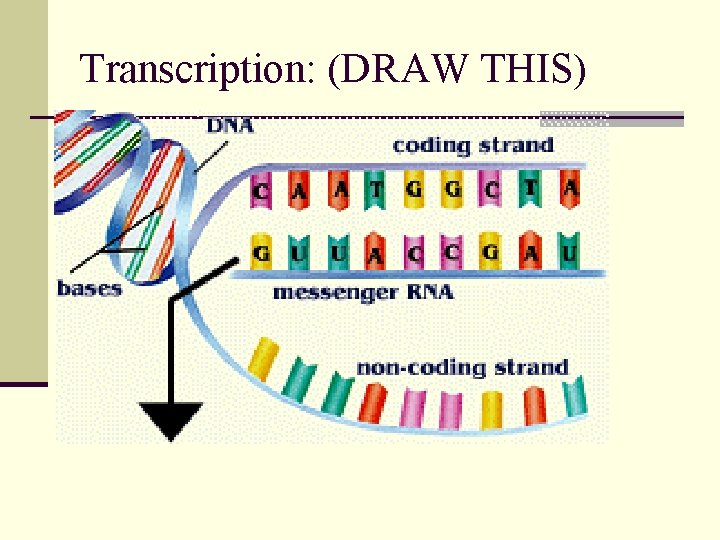
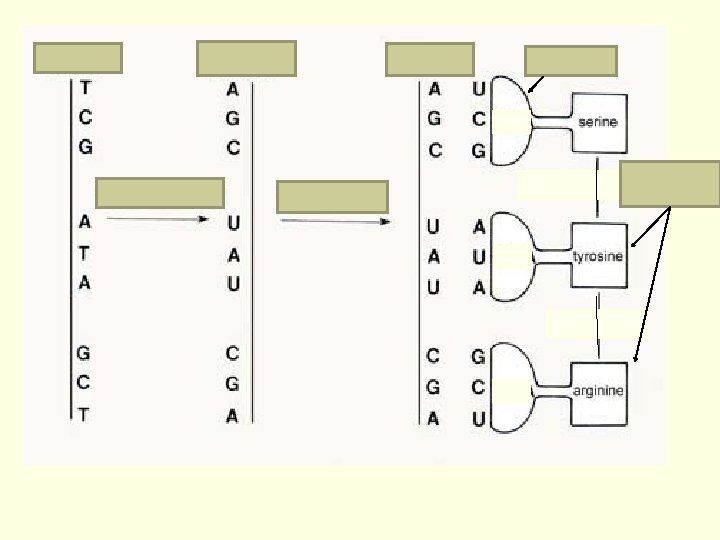
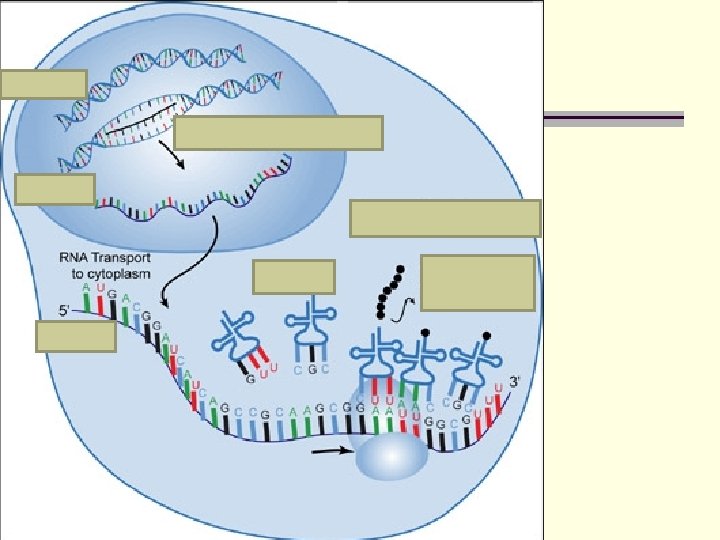
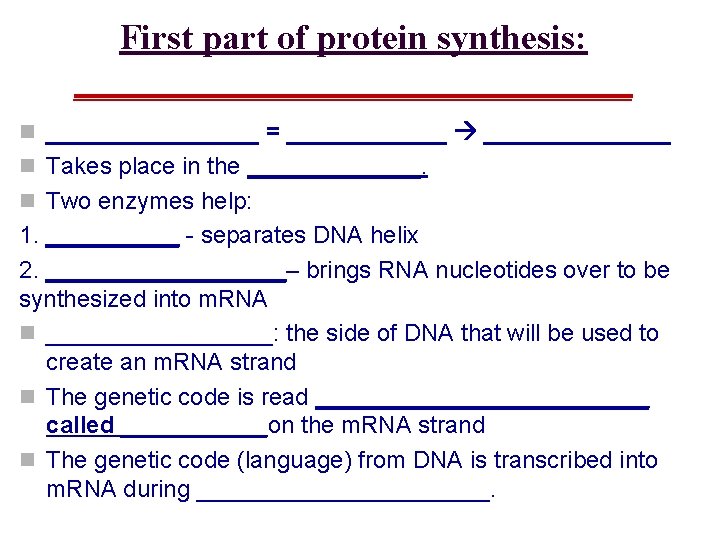
First part of protein synthesis: Transcription n Transcription = DNA RNA n Takes place in the nucleus. n Two enzymes help: 1. Helicase - separates DNA helix 2. RNA polymerase – brings RNA nucleotides over to be synthesized into m. RNA n Template strand: the side of DNA that will be used to create an m. RNA strand
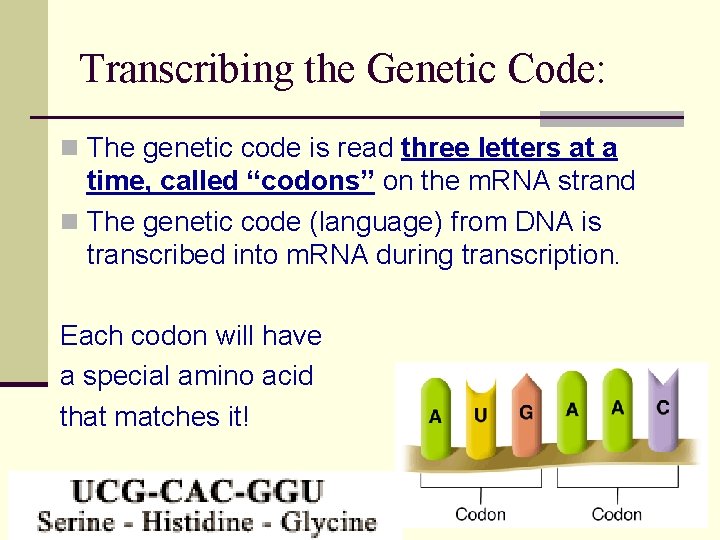
Transcribing the Genetic Code: n The genetic code is read three letters at a time, called “codons” on the m. RNA strand n The genetic code (language) from DNA is transcribed into m. RNA during transcription. Each codon will have a special amino acid that matches it!
Transcription: (DRAW THIS)
Transcription Animations n http: //www. ncc. gmu. edu/dna/m. RNAanim. htm n http: //www. johnkyrk. com/DNAtranscription. html n http: //www- class. unl. edu/biochem/gp 2/m_biology/animation/ gene/gene_a 2. html n http: //207. 4. 198/pub/flash/26/transmenu_s. s wf (very good but need to skip some parts)
IN YOUR OWN WORDS… n In your notebook, below the drawing- Describe the purpose and process of transcription. Use these stems! The purpose of transcription is…. The process of transcription is …
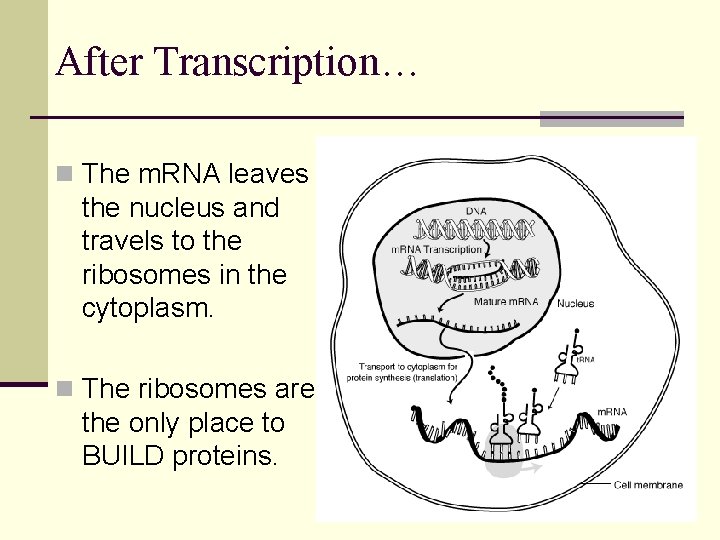
After Transcription… n The m. RNA leaves the nucleus and travels to the ribosomes in the cytoplasm. n The ribosomes are the only place to BUILD proteins.
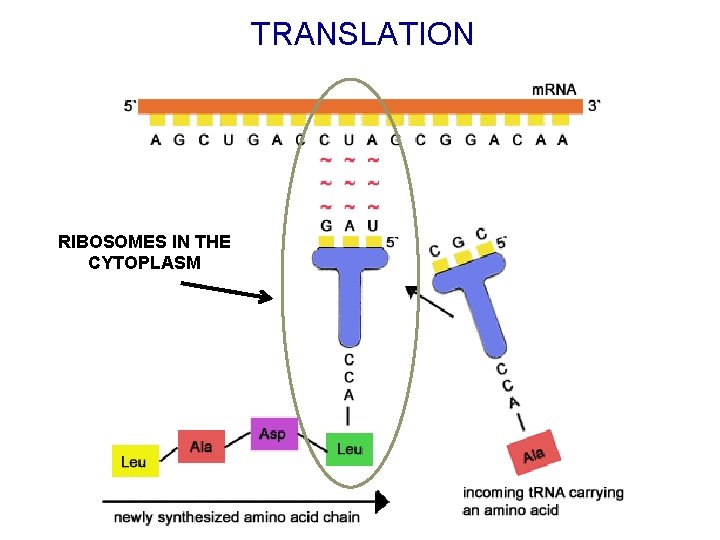
TRANSLATION RIBOSOMES IN THE CYTOPLASM
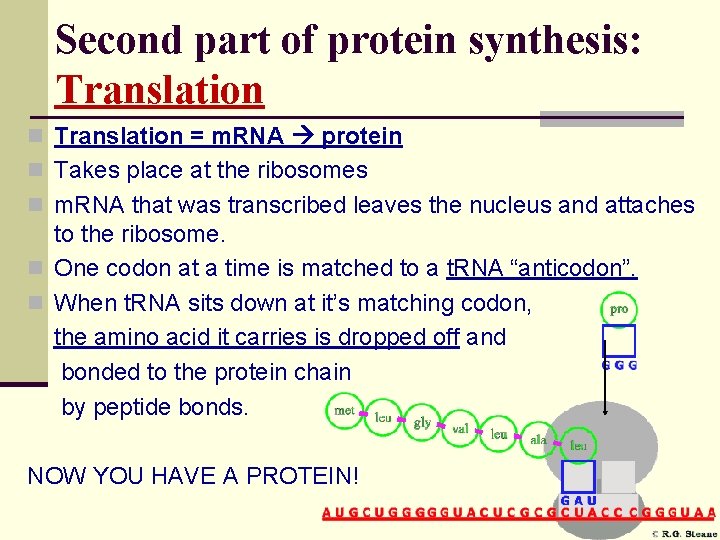
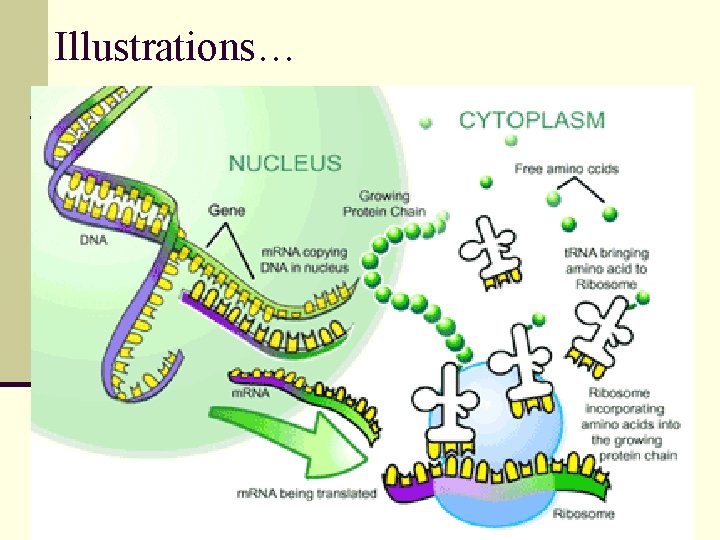
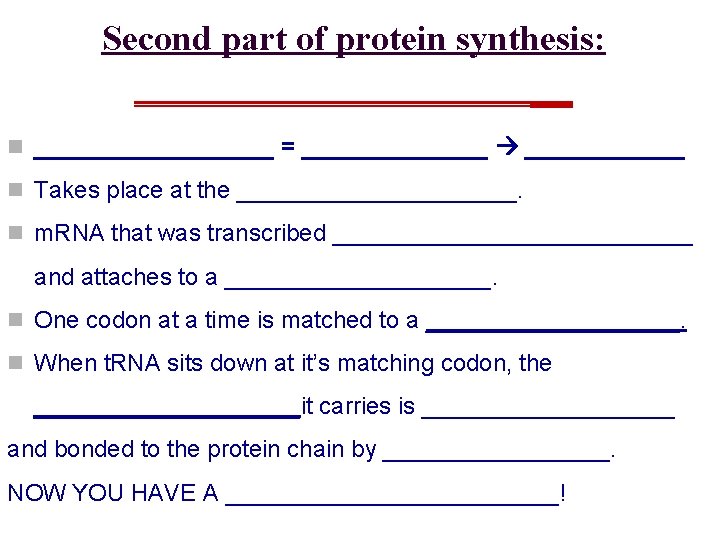
Second part of protein synthesis: Translation n Translation = m. RNA protein n Takes place at the ribosomes n m. RNA that was transcribed leaves the nucleus and attaches to the ribosome. n One codon at a time is matched to a t. RNA “anticodon”. n When t. RNA sits down at it’s matching codon, the amino acid it carries is dropped off and bonded to the protein chain by peptide bonds. NOW YOU HAVE A PROTEIN!
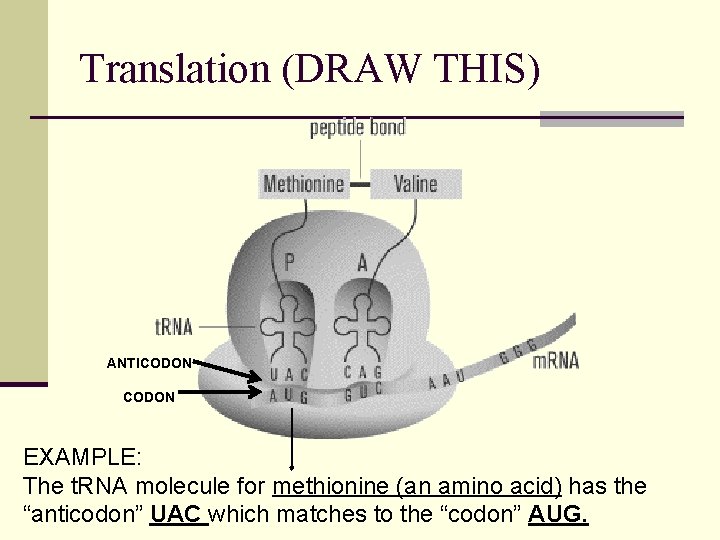
Translation (DRAW THIS) ANTICODON EXAMPLE: The t. RNA molecule for methionine (an amino acid) has the “anticodon” UAC which matches to the “codon” AUG.
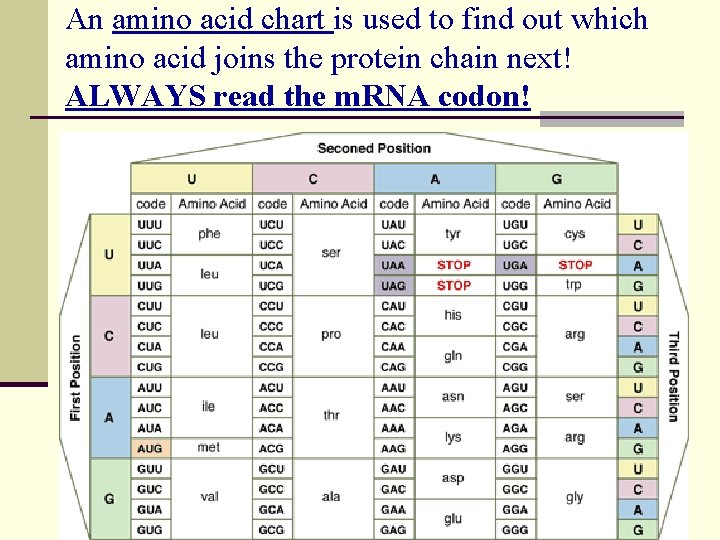
An amino acid chart is used to find out which amino acid joins the protein chain next! ALWAYS read the m. RNA codon!
Translation Animations n http: //207. 4. 198/pub/flash/26/transmenu_ s. swf (very good animation!)
IN YOUR OWN WORDS… n In your notebook, below the drawing- Describe the purpose and process of translation. Use these stems! The purpose of translation is…. The process of translation is …
Illustrations…
First part of protein synthesis: ________________ n ________ = _______ n Takes place in the _______. n Two enzymes help: 1. _____ - separates DNA helix 2. _________– brings RNA nucleotides over to be synthesized into m. RNA n _________: the side of DNA that will be used to create an m. RNA strand n The genetic code is read _____________ called ______on the m. RNA strand n The genetic code (language) from DNA is transcribed into m. RNA during ___________.
Second part of protein synthesis: ____________ n _________ = _______ n Takes place at the ___________. n m. RNA that was transcribed ______________ and attaches to a __________. n One codon at a time is matched to a __________. n When t. RNA sits down at it’s matching codon, the __________it carries is __________ and bonded to the protein chain by _________. NOW YOU HAVE A _____________!