
Protein synthesis From DNA to humanity and all

- Slides: 23
Protein synthesis: From DNA to humanity (and all other life-forms) © George A. Lozano
Overview n DNA recap n Codons n Transcription and translation
DNA n Deoxyribonucleic acid n “the recipe for life”
DNA n Replicates itself n But not always perfectly-mutations n Encodes information n Controls cell activity
Why PROTEIN synthesis? n Controls cell activity n Nearly all parts of any organism are made of proteins or by proteins. n Proteins and amino acids n 20 amino acids
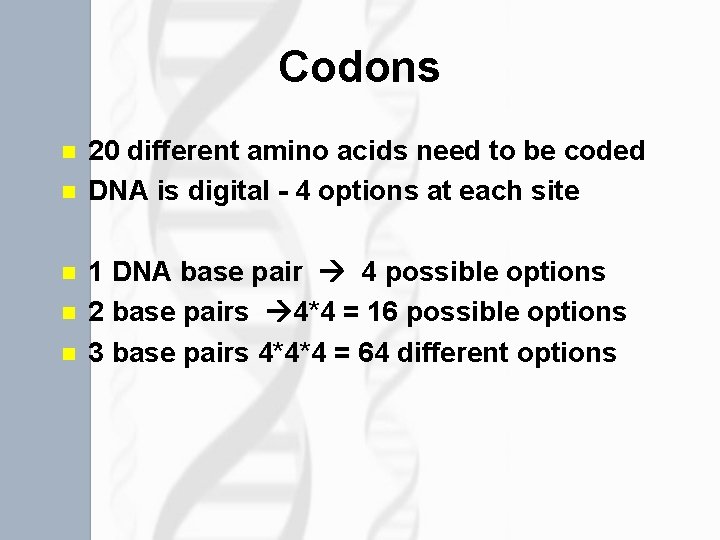
Codons n n n 20 different amino acids need to be coded DNA is digital - 4 options at each site 1 DNA base pair 4 possible options 2 base pairs 4*4 = 16 possible options 3 base pairs 4*4*4 = 64 different options
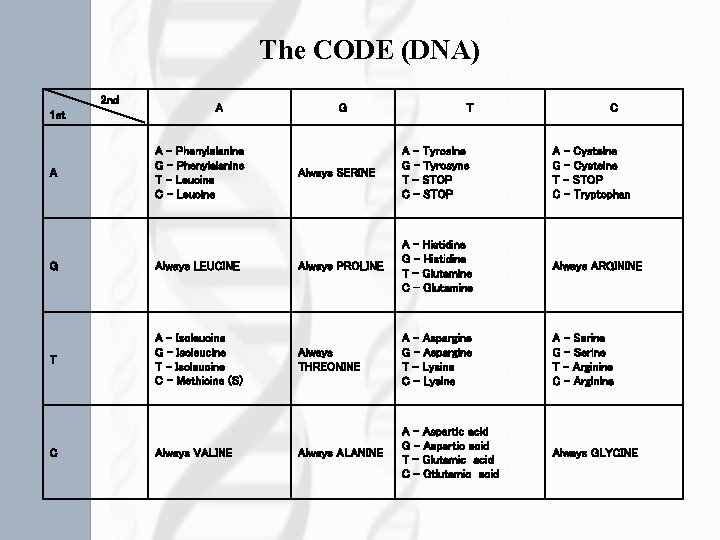
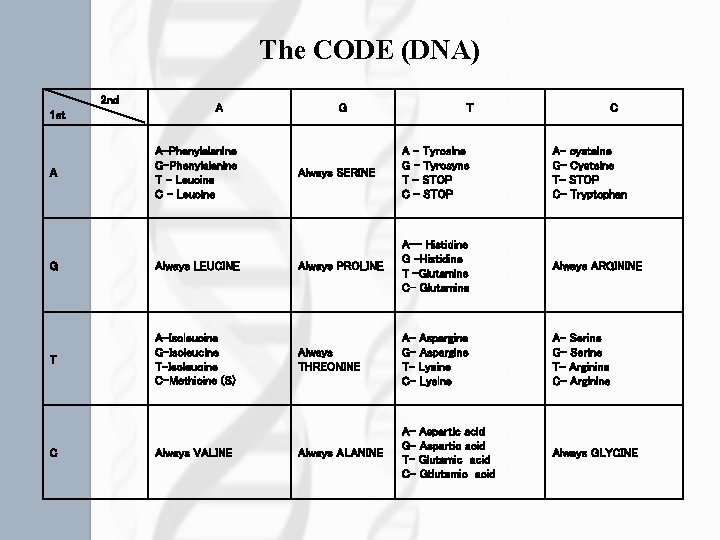
The CODE (DNA) 2 nd 1 st A A A - Phenylalanine G - Phenylalanine T - Leucine C - Leucine G Always LEUCINE T A - Isoleucine G - Isoleucine T - Isoleucine C - Methioine (S) C Always VALINE G T C Always SERINE A - Tyrosine G - Tyrosyne T - STOP C - STOP A - Cysteine G - Cysteine T - STOP C – Tryptophan Always PROLINE A - Histidine G - Histidine T - Glutamine C – Glutamine Always ARGININE Always THREONINE A - Aspargine G - Aspargine T - Lysine C - Lysine A - Serine G - Serine T - Arginine C - Arginine Always ALANINE A - Aspartic acid G - Aspartic acid T - Glutamic acid C - Gtlutamic acid Always GLYCINE
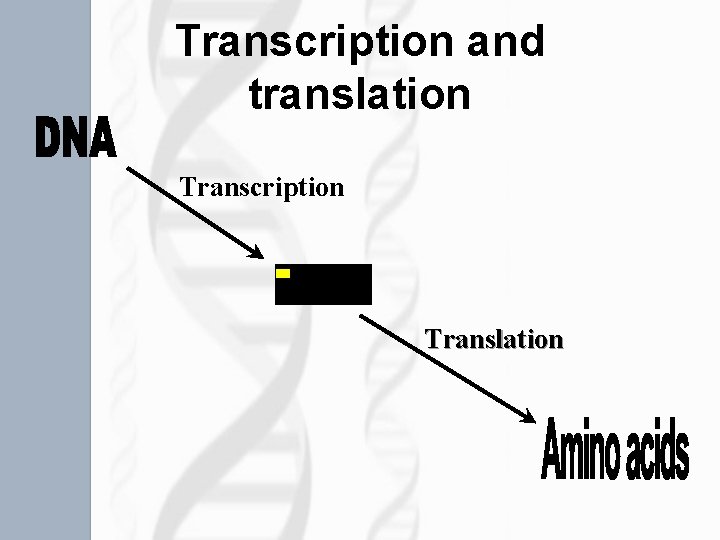
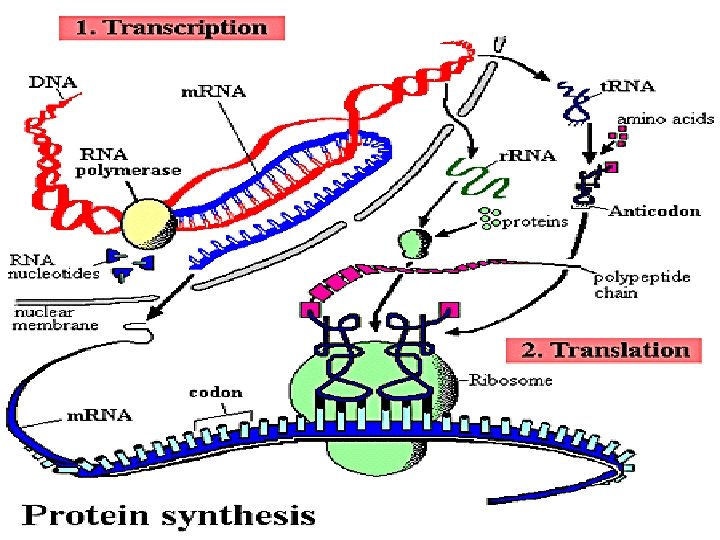
Transcription and translation Transcription Translation
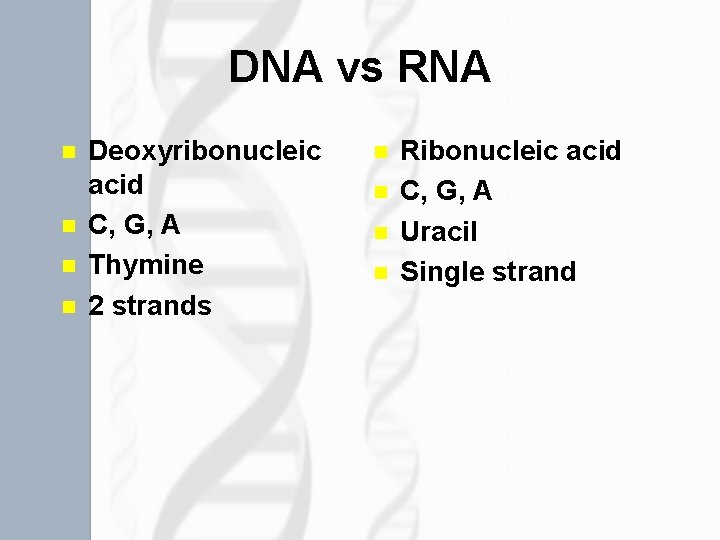
DNA vs RNA n n Deoxyribonucleic acid C, G, A Thymine 2 strands n n Ribonucleic acid C, G, A Uracil Single strand
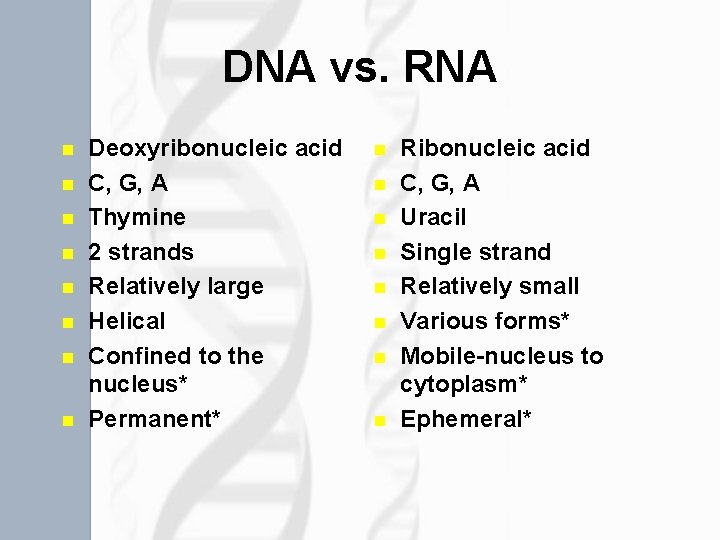
DNA vs. RNA n n n n Deoxyribonucleic acid C, G, A Thymine 2 strands Relatively large Helical Confined to the nucleus* Permanent* n n n n Ribonucleic acid C, G, A Uracil Single strand Relatively small Various forms* Mobile-nucleus to cytoplasm* Ephemeral*
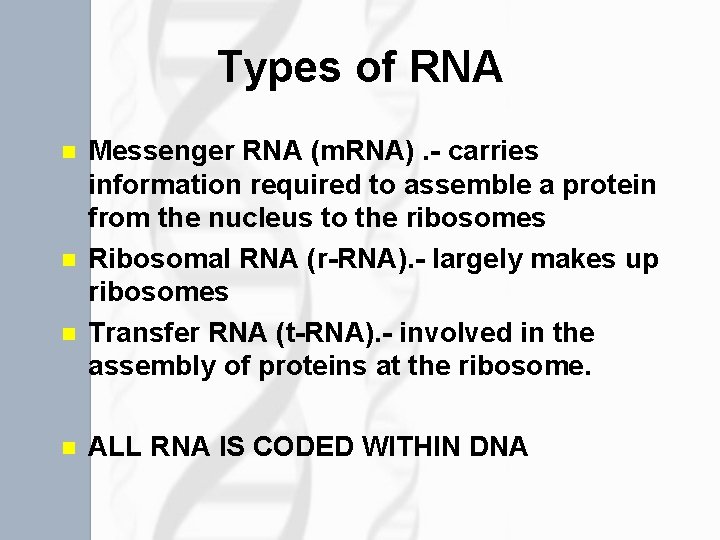
Types of RNA n n Messenger RNA (m. RNA). - carries information required to assemble a protein from the nucleus to the ribosomes Ribosomal RNA (r-RNA). - largely makes up ribosomes Transfer RNA (t-RNA). - involved in the assembly of proteins at the ribosome. ALL RNA IS CODED WITHIN DNA
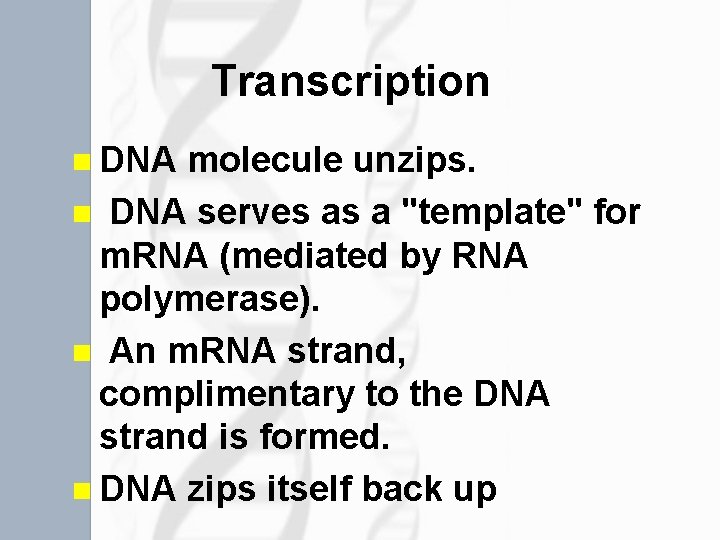
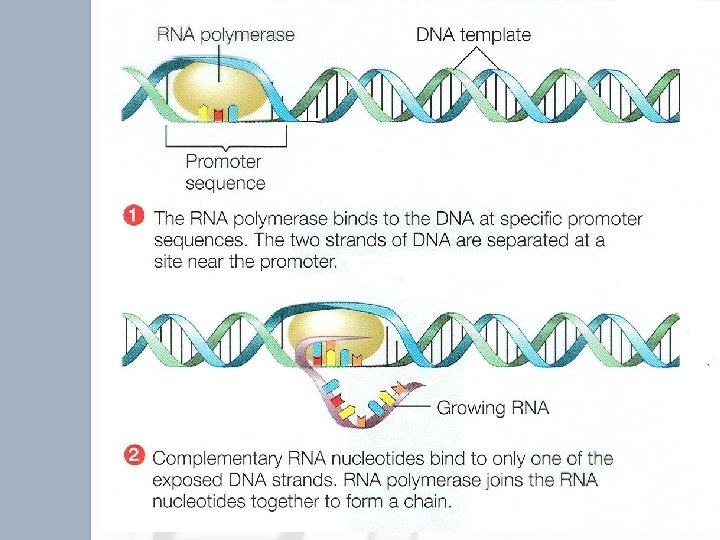
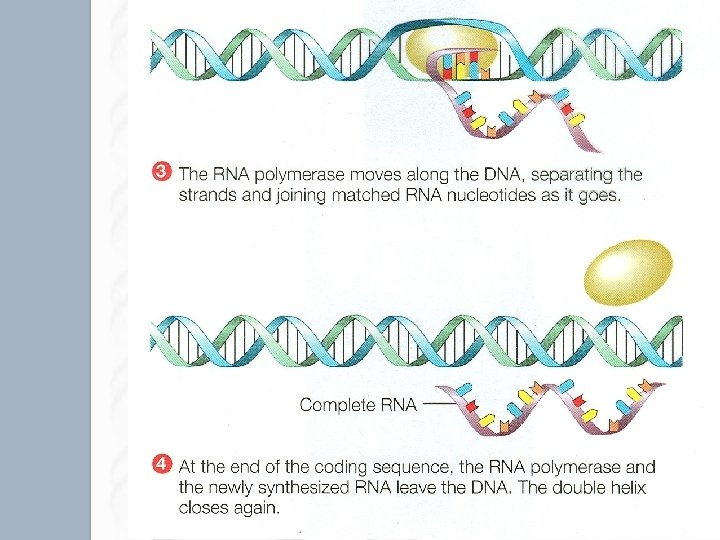
Transcription n DNA molecule unzips. n DNA serves as a "template" for m. RNA (mediated by RNA polymerase). n An m. RNA strand, complimentary to the DNA strand is formed. n DNA zips itself back up
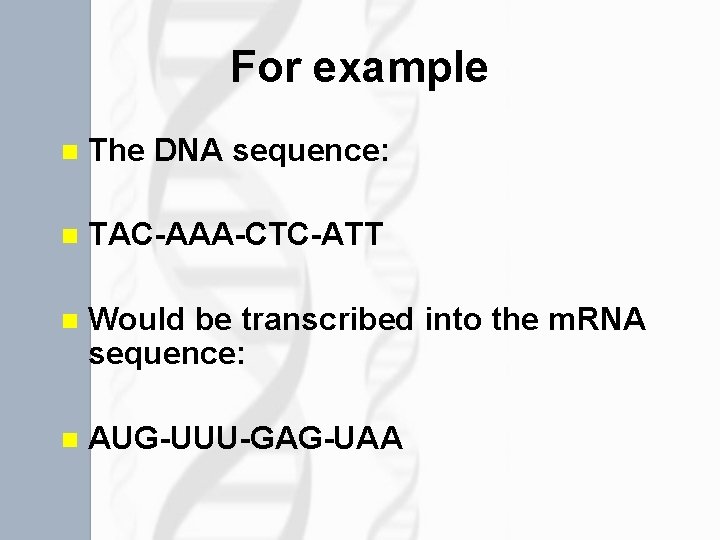
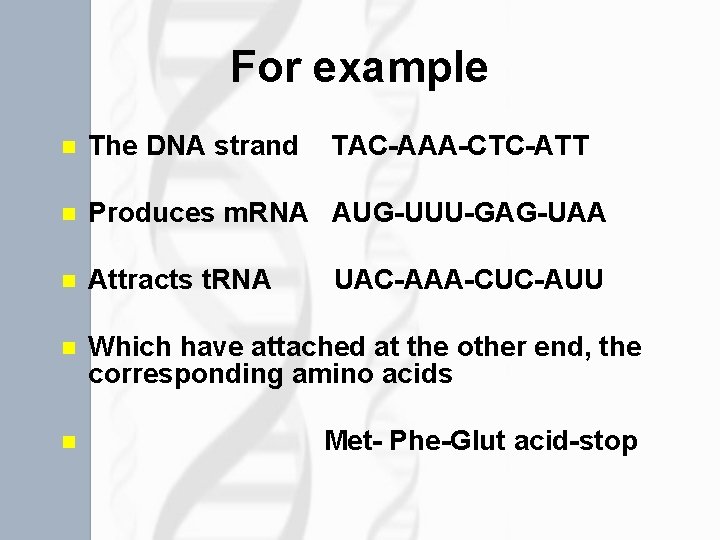
For example n The DNA sequence: n TAC-AAA-CTC-ATT n Would be transcribed into the m. RNA sequence: n AUG-UUU-GAG-UAA
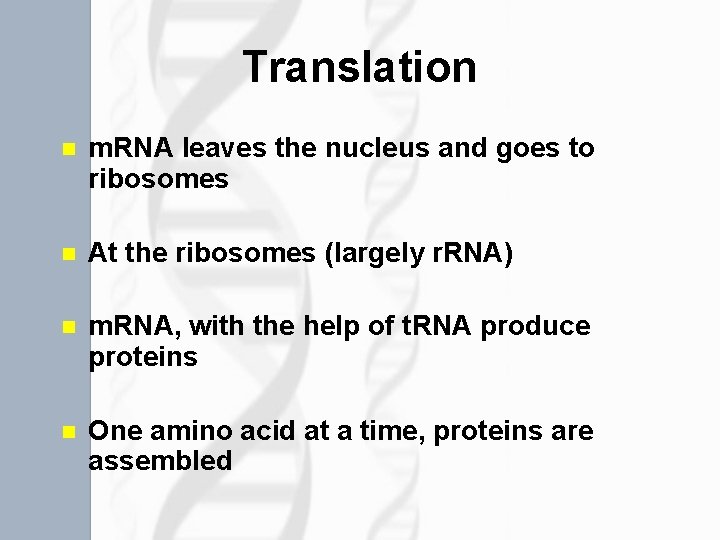
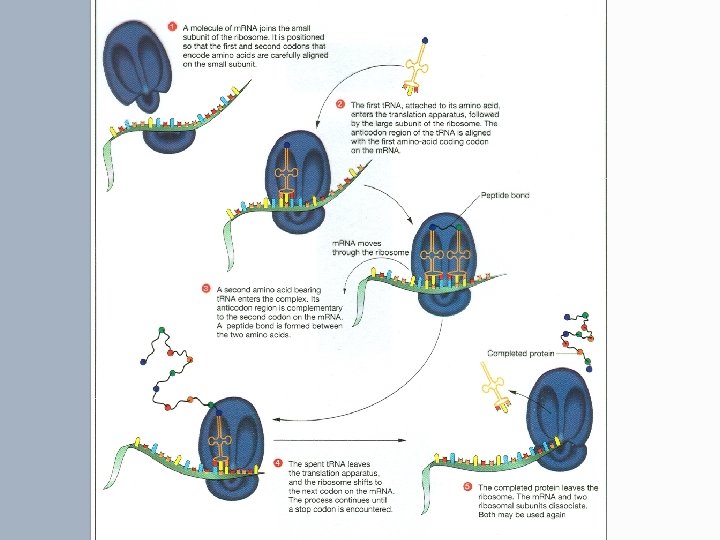
Translation n m. RNA leaves the nucleus and goes to ribosomes n At the ribosomes (largely r. RNA) n m. RNA, with the help of t. RNA produce proteins n One amino acid at a time, proteins are assembled
The CODE (DNA) 2 nd 1 st A A A-Phenylalanine G-Phenylalanine T - Leucine C – Leucine G Always LEUCINE T A-Isoleucine G-Isoleucine T-Isoleucine C-Methioine (S) C Always VALINE G T C Always SERINE A - Tyrosine G - Tyrosyne T - STOP C – STOP A- cysteine G- Cysteine T- STOP C- Tryptophan Always PROLINE A-- Histidine G -Histidine T -Glutamine C- Glutamine Always ARGININE Always THREONINE A- Aspargine G- Aspargine T- Lysine C- Lysine A- Serine G- Serine T- Arginine C- Arginine Always ALANINE A- Aspartic acid G- Aspartic acid T- Glutamic acid C- Gtlutamic acid Always GLYCINE
For example n The DNA strand TAC-AAA-CTC-ATT n Produces m. RNA AUG-UUU-GAG-UAA n Attracts t. RNA n Which have attached at the other end, the corresponding amino acids n Met- Phe-Glut acid-stop UAC-AAA-CUC-AUU
One last step n Several amino acids get connected and form a POLYPEPTIDE n One or more such POPYPEPTIDES forms a functioning PROTEIN n Proteins have complex structures
Summary n n n The code for life is within DNA This code is for the production of proteins Proteins regulate all cell activity The code is first transcribed to m. RNA Then it is translated into amino acid chains These amino acid chains form proteins
Some implications n Universal code n Mutations n Genetic engineering n The genome project © George A. Lozano