
Protein Synthesis formation of proteins Info for protein
- Slides: 17
Protein Synthesis (formation of proteins)
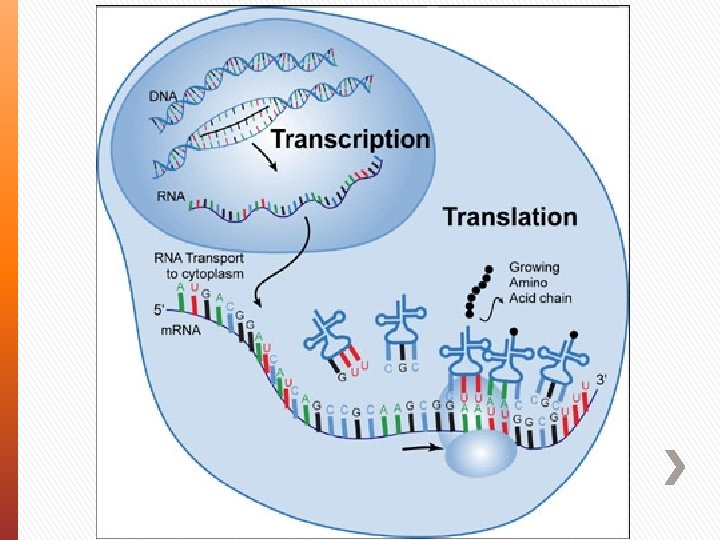
» Info for protein synthesis is contained in DNA in the nucleus » the code needs to get outside the nucleus to the ribosomes
» DNA is too big to leave the nucleus » RNA » ribonucleic acid
3 Differences between DNA and RNA 1) ribose sugar instead of deoxyribose sugar 2) RNA is single stranded
3) RNA has uracil (U) in place of thymine » U bonds only with A
3 types of RNA 1) m. RNA » messenger RNA - takes information from DNA to ribosomes
2) r. RNA » ribosomal RNA - combines with proteins to form ribosomes 3) t. RNA » transfer RNA - transfers amino acid to ribosome
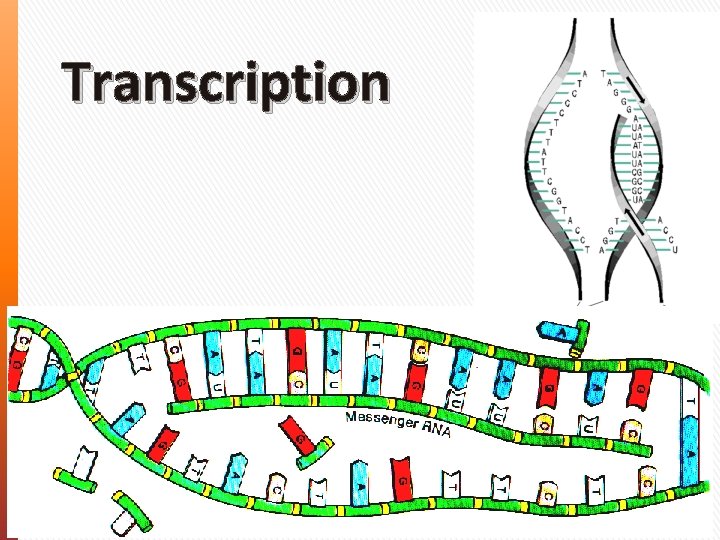
Transcription » forming m. RNA from DNA » In the nucleus » portion of DNA needing to be read is split and free RNA nucleotides pair with exposed DNA bases
Transcription
» When finished, m. RNA leaves the nucleus » DNA strands rejoin » m. RNA moves to ribosomes for translation
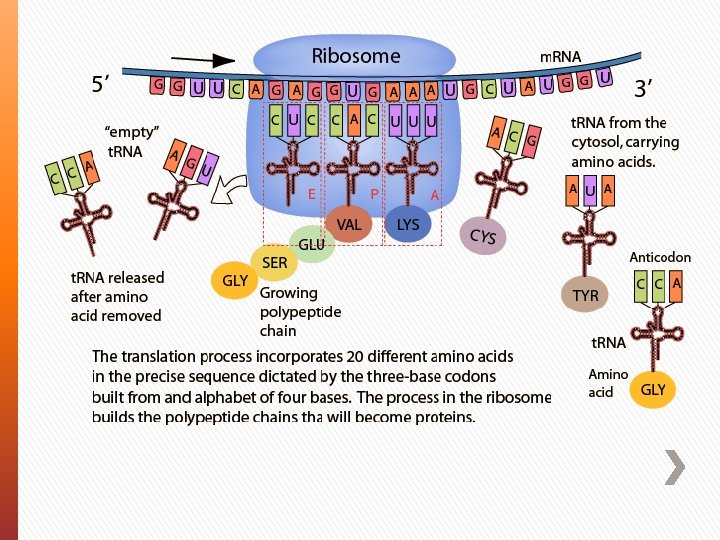
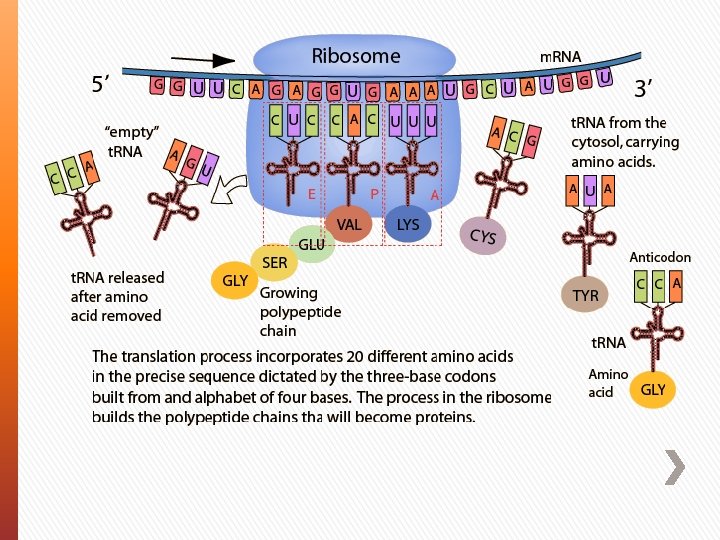
Translation » converting m. RNA code to sequence of amino acids (protein) » At the ribosome » end of m. RNA attaches to ribosome
» Code is read three bases at a time » codon - three nitrogen bases in m. RNA that represent an amino acid » list of codons in Table 11. 1 on p 292
» t. RNA transfers one amino acid » each t. RNA has a three base anticodon that complements one codon (if codon = AUG, anticodon = UAC) » each t. RNA carries only one kind of amino acid
» t. RNA forms a temporary bond with m. RNA codon » amino acids of neighboring t. RNAs form peptide bonds » this continues until the end of the m. RNA which completes the protein » Translation Demo