
PROTEIN SYNTHESIS DNA vs RNA Make a Venn
- Slides: 11
PROTEIN SYNTHESIS
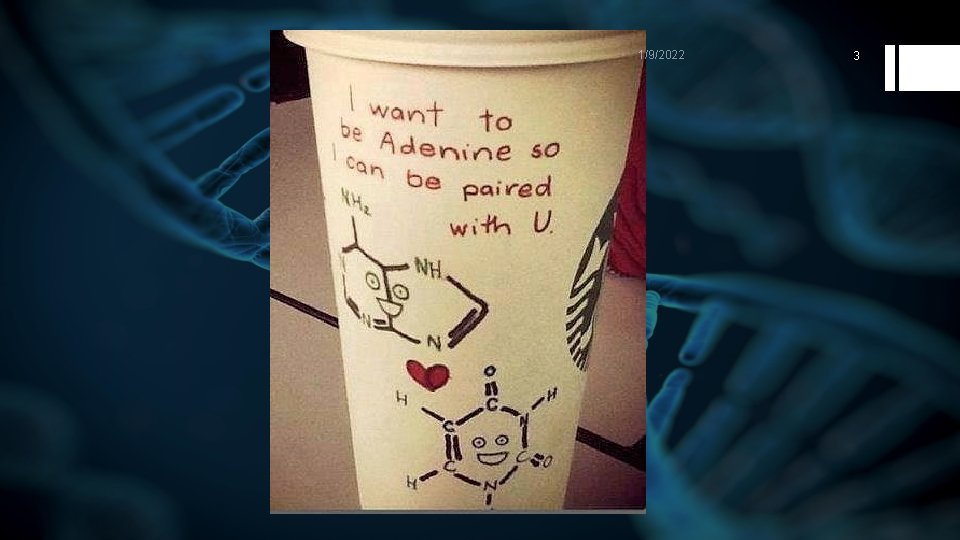
DNA vs. RNA (Make a Venn Diagram) DNA -Deoxyribose -Thymine -Double Helix RNA -ribose -Uracil -single twisted strand Both -Nucleic acid -Nucleotides: C, G, A
1/9/2022 3
Protein Synthesis §The process of taking DNA and bringing the “chemical code” to life. We do this by making proteins that we need to carry out life-sustaining processes. §Two key steps: §Transcription §Translation
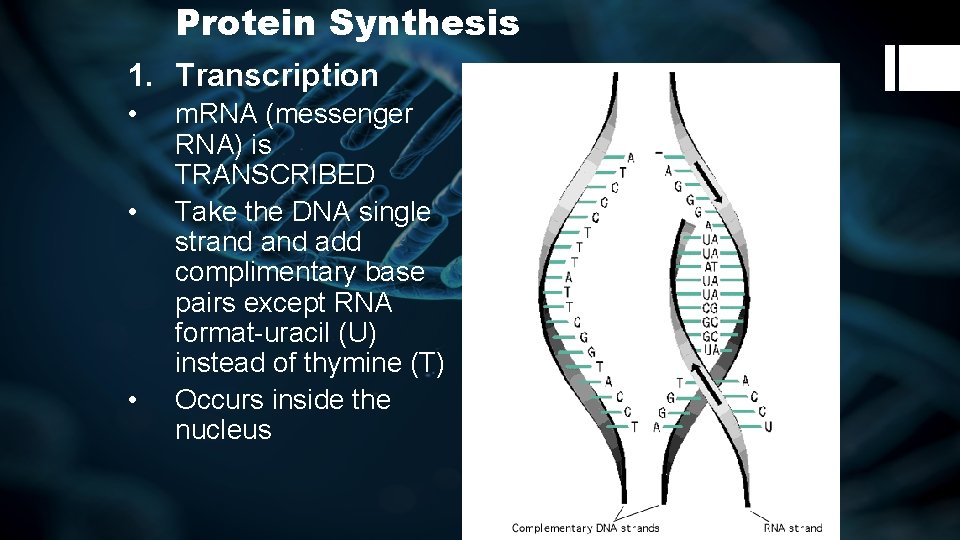
Protein Synthesis 1. Transcription • • • m. RNA (messenger RNA) is TRANSCRIBED Take the DNA single strand add complimentary base pairs except RNA format-uracil (U) instead of thymine (T) Occurs inside the nucleus
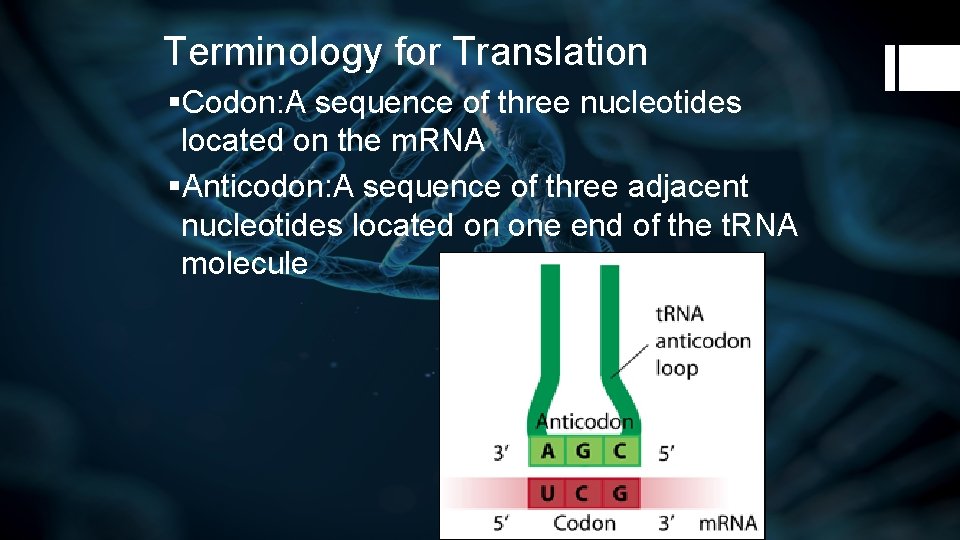
Terminology for Translation §Codon: A sequence of three nucleotides located on the m. RNA §Anticodon: A sequence of three adjacent nucleotides located on one end of the t. RNA molecule
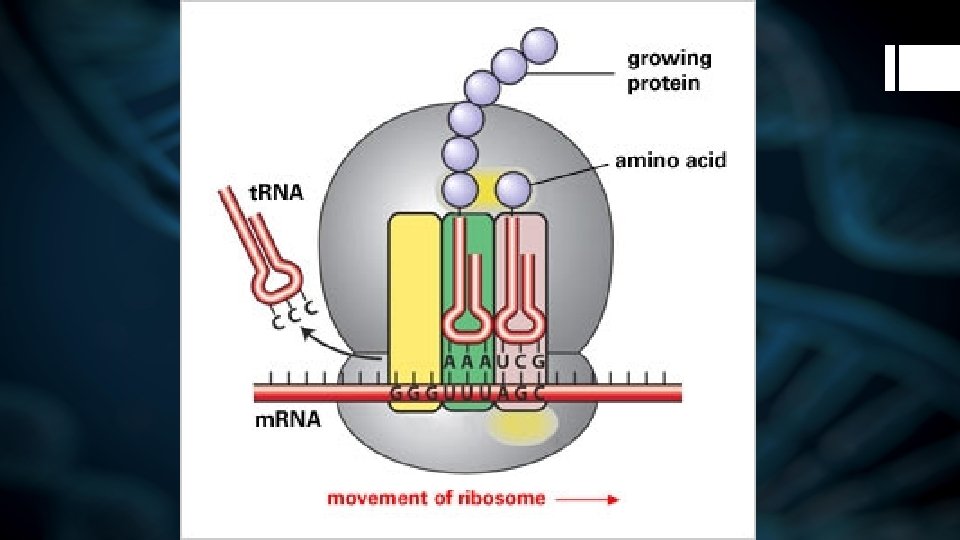
2. Translation • Occurs inside a ribosome. • Codon on m. RNA that will match the anticodon on the t. RNA • t. RNA links the anticodon to the codon • t. RNA has an amino acid attacheddetermined by codon. As codon/anticodon is matched amino acids are bound together by means of a peptide bond • Linking amino acids together forms a polypeptide chain, which is folded into proteins.
Why do we need Protein Synthesis? • • • Make proteins- chain of amino acids. We need proteins for growth and development of cells More specifically, we need polypeptide chains (proteins) with a specific code so it can do a specific job within our body
Few more things about protein synthesis: 1. DNA can never leave the nucleus 2. Transcription occurs in the nucleus 3. Translation occurs at the ribosome (in cytoplasm) 4. There is always a ‘start’ message (AUG) and a ‘stop’ message (UGA). -start gets the ribosome working -stop lets the ribosome release the polypeptide chain.
1/9/2022 11