
Protein Synthesis DNA refresher Individual nucleotide bases work
Protein Synthesis
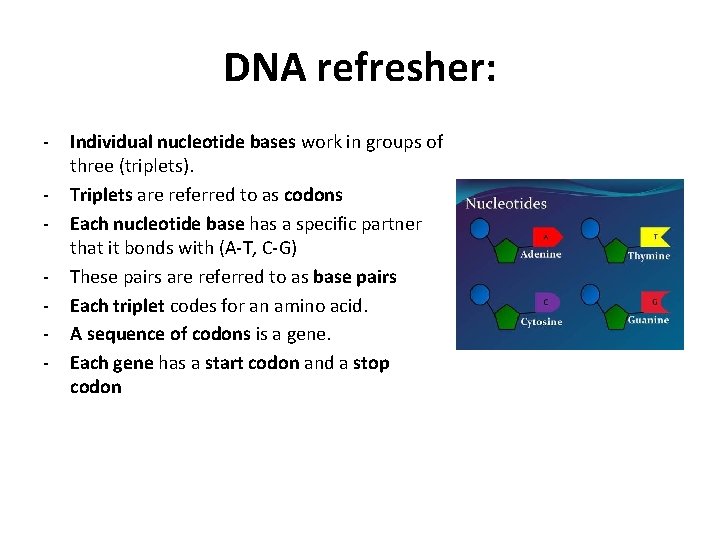
DNA refresher: - Individual nucleotide bases work in groups of three (triplets). Triplets are referred to as codons Each nucleotide base has a specific partner that it bonds with (A-T, C-G) These pairs are referred to as base pairs Each triplet codes for an amino acid. A sequence of codons is a gene. Each gene has a start codon and a stop codon
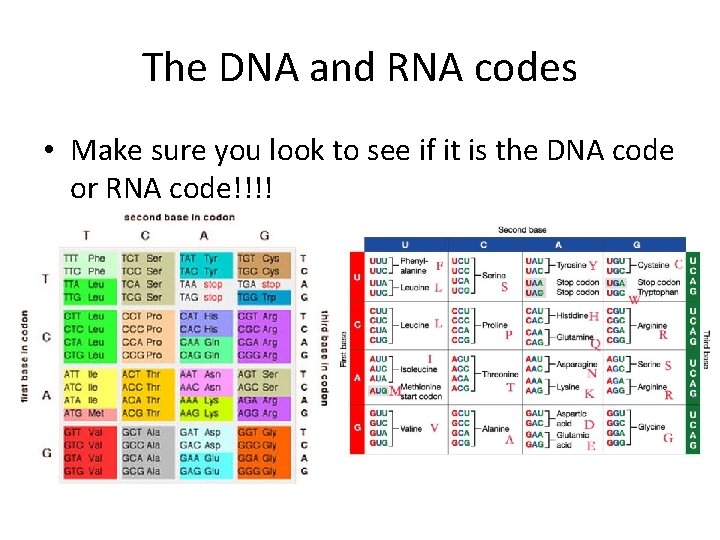
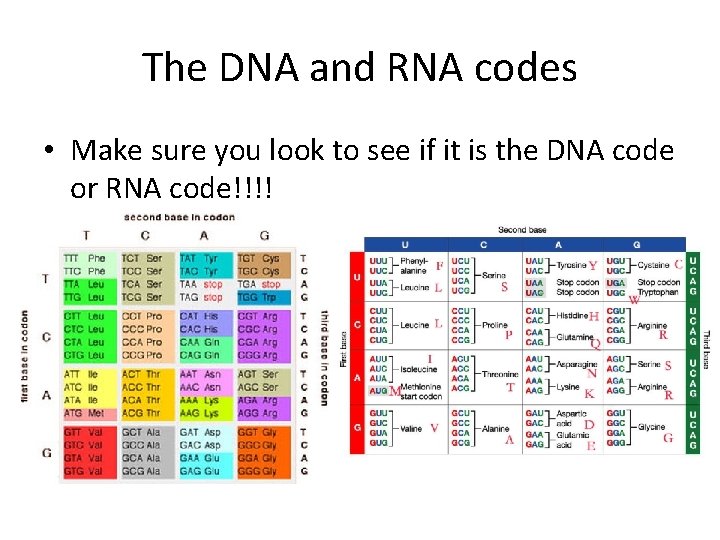
The DNA and RNA codes • Make sure you look to see if it is the DNA code or RNA code!!!!
– There are twenty amino acids – Because DNA is doubled stranded, each codon has an opposite codon comprising complementary bases. This is called the anti codon. – DNA never leaves the nucleus, however protein synthesis takes place outside the nucleus, so RNA is required to work like a photocopy.
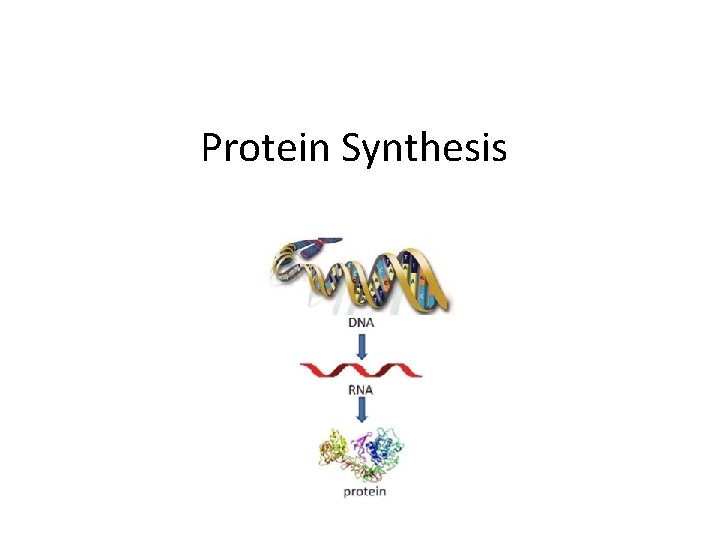
Protein Synthesis Protein synthesis is the process of turning genetic code into amino acid sequences, polypeptides and proteins. It has two major steps: 1. Transcription 2. Translation
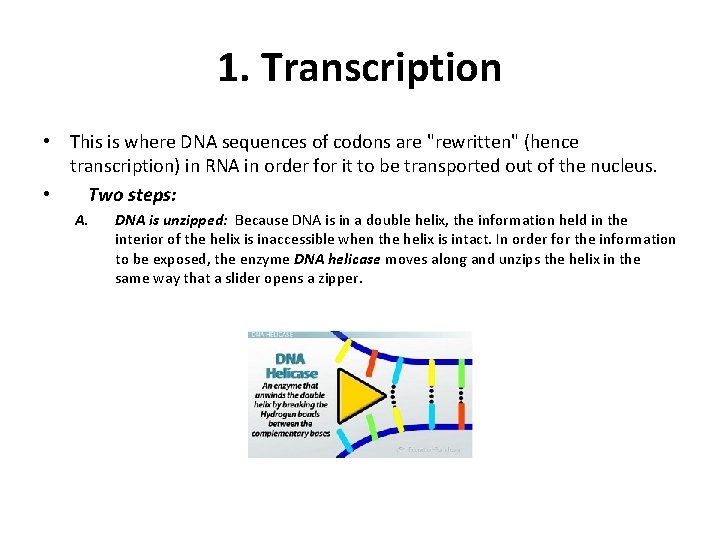
1. Transcription • This is where DNA sequences of codons are "rewritten" (hence transcription) in RNA in order for it to be transported out of the nucleus. • Two steps: A. DNA is unzipped: Because DNA is in a double helix, the information held in the interior of the helix is inaccessible when the helix is intact. In order for the information to be exposed, the enzyme DNA helicase moves along and unzips the helix in the same way that a slider opens a zipper.

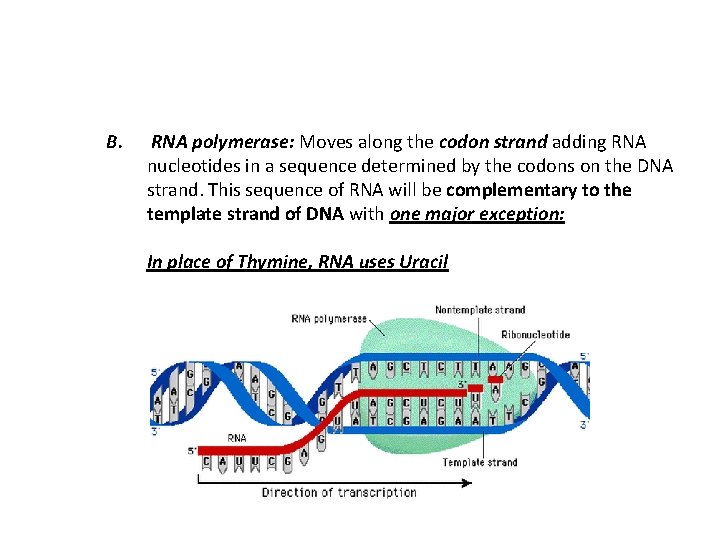
B. RNA polymerase: Moves along the codon strand adding RNA nucleotides in a sequence determined by the codons on the DNA strand. This sequence of RNA will be complementary to the template strand of DNA with one major exception: In place of Thymine, RNA uses Uracil

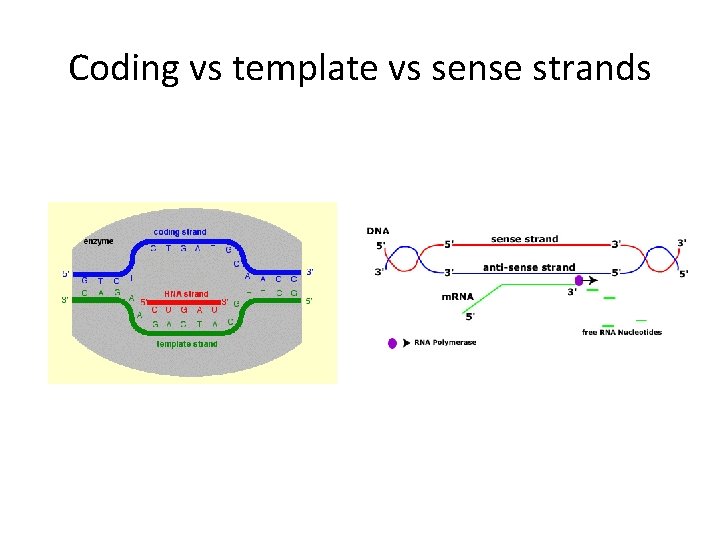
Coding vs template vs sense strands
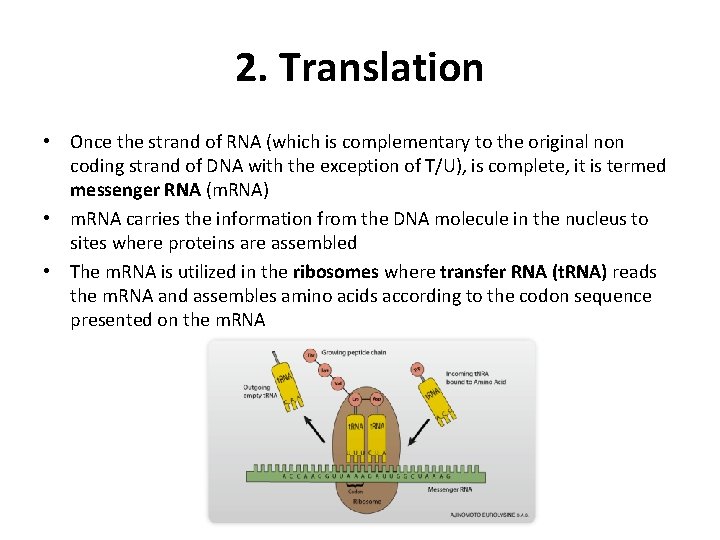
2. Translation • Once the strand of RNA (which is complementary to the original non coding strand of DNA with the exception of T/U), is complete, it is termed messenger RNA (m. RNA) • m. RNA carries the information from the DNA molecule in the nucleus to sites where proteins are assembled • The m. RNA is utilized in the ribosomes where transfer RNA (t. RNA) reads the m. RNA and assembles amino acids according to the codon sequence presented on the m. RNA

The DNA and RNA codes • Make sure you look to see if it is the DNA code or RNA code!!!!
- Slides: 15