
PROTEIN SYNTHESIS AND MUTATIONS DNA Replication DNA is
- Slides: 10
PROTEIN SYNTHESIS AND MUTATIONS
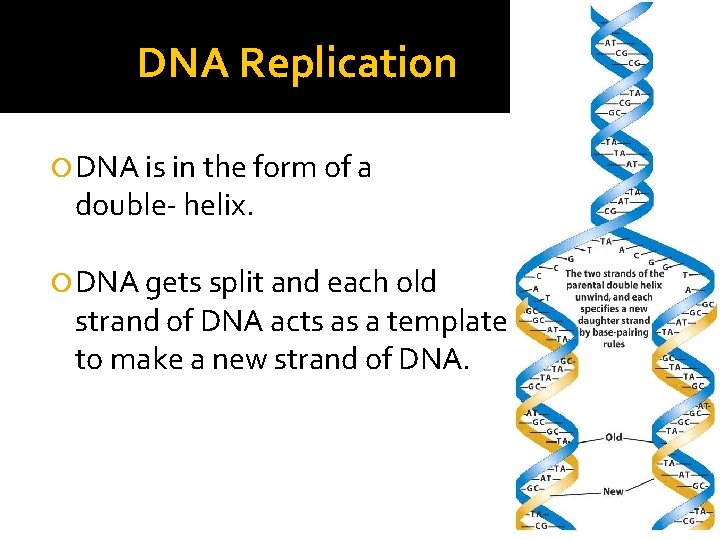
DNA Replication DNA is in the form of a double- helix. DNA gets split and each old strand of DNA acts as a template to make a new strand of DNA.
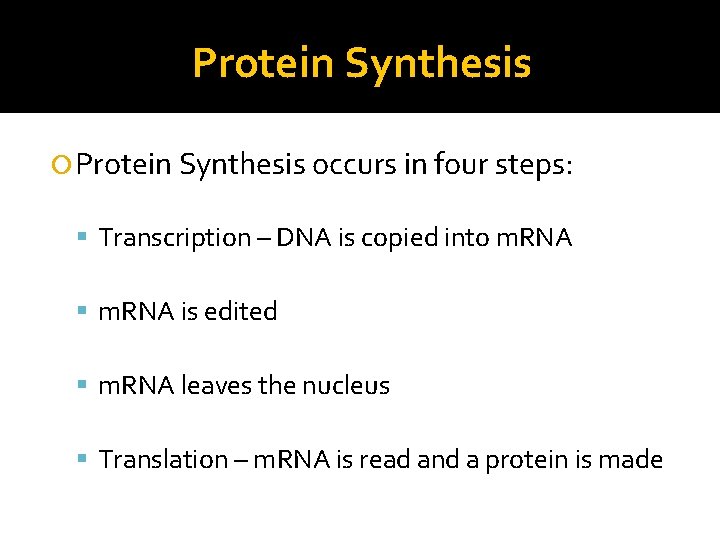
Protein Synthesis occurs in four steps: Transcription – DNA is copied into m. RNA is edited m. RNA leaves the nucleus Translation – m. RNA is read and a protein is made
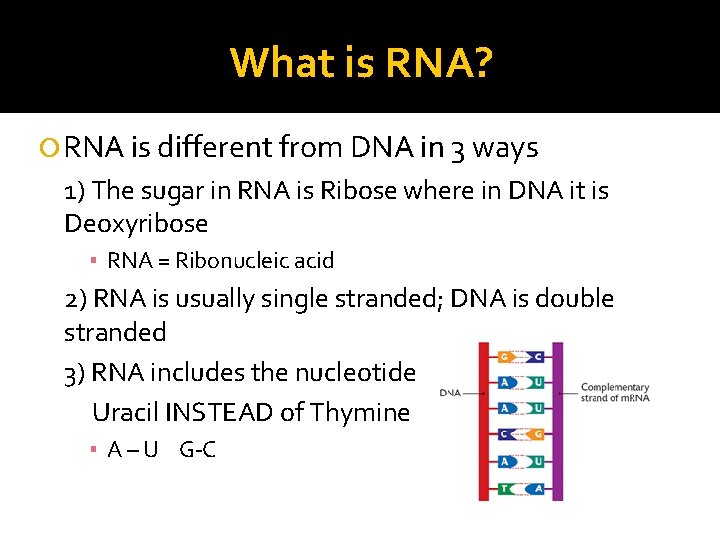
What is RNA? RNA is different from DNA in 3 ways 1) The sugar in RNA is Ribose where in DNA it is Deoxyribose ▪ RNA = Ribonucleic acid 2) RNA is usually single stranded; DNA is double stranded 3) RNA includes the nucleotide Uracil INSTEAD of Thymine ▪ A – U G-C
3 types of RNA Messenger RNA (m. RNA) Carries the genetic code from the DNA, out of the nucleus, to the ribosomes, where it then attaches to the ribosome. Ribosomal RNA (r. RNA) RNA found inside of the ribosomes that make up their structure, and reads the m. RNA via codons. Transfer RNA (t. RNA) RNA that carries the amino acids into the ribosomes to make a protein.
Protein Synthesis Step 1: Transcription-Copy DNA into m. RNA Step 2: m. RNA leaves the nucleus and goes to the ribosomes Step 3: Ribosomes read the m. RNA and hook on the correct amino acid
Mistakes can OCCUR!!! Mistakes in the DNA are known as mutations. Not all mutations are necessarily bad, but many are detrimental (harmful) Two Types of Mutations ▪ Chromosomal mutations-large pieces of the DNA ▪ ***You’ll learn more about this one in highschool ▪ Gene mutations-Individual nucleotide errors ▪ ***This will be the only one we are covering!
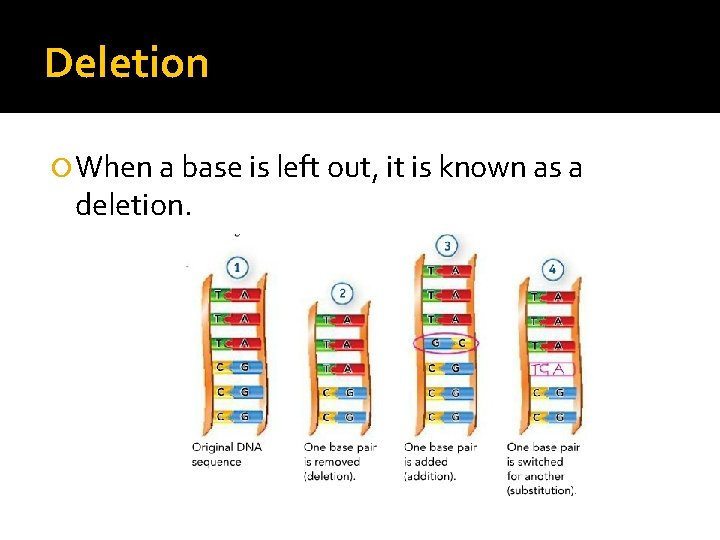
Deletion When a base is left out, it is known as a deletion.
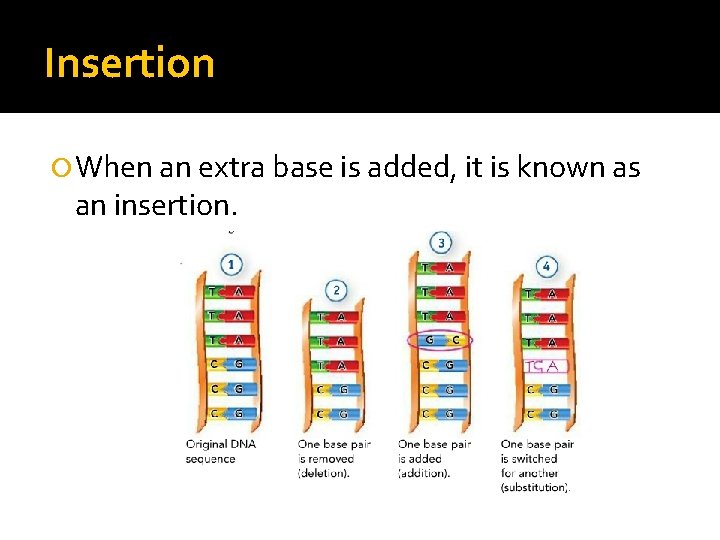
Insertion When an extra base is added, it is known as an insertion.
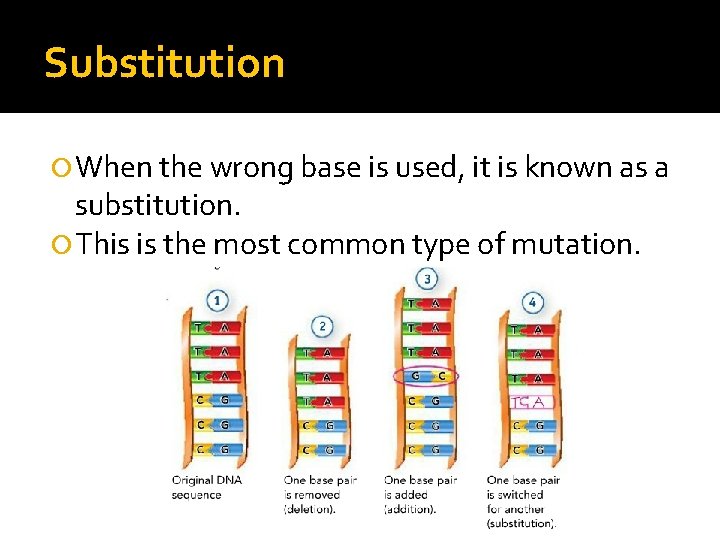
Substitution When the wrong base is used, it is known as a substitution. This is the most common type of mutation.