
Protein Synthesis and Gene Expression In the early
- Slides: 48
Protein Synthesis and Gene Expression § In the early 1980 s, genetic engineers began producing recombinant bovine growth hormone (r. BGH) § Made by genetically engineered bacteria § The gene for the cow growth hormone that carries instructions for making BGH is inserted into the bacteria § The bacteria start produces the hormone § Scientists can collect the hormone and inject into cows § In cows, growth hormones increase body size and milk production © 2013 Pearson Education, Inc.
Protein Synthesis and Gene Expression: From Gene to Protein § Protein synthesis – the process of using instructions carried on a gene to create proteins. § Several steps are involved and require both DNA and RNA. § Gene – a sequence of DNA that encodes a protein § Protein – a large molecule composed of amino acids © 2013 Pearson Education, Inc.
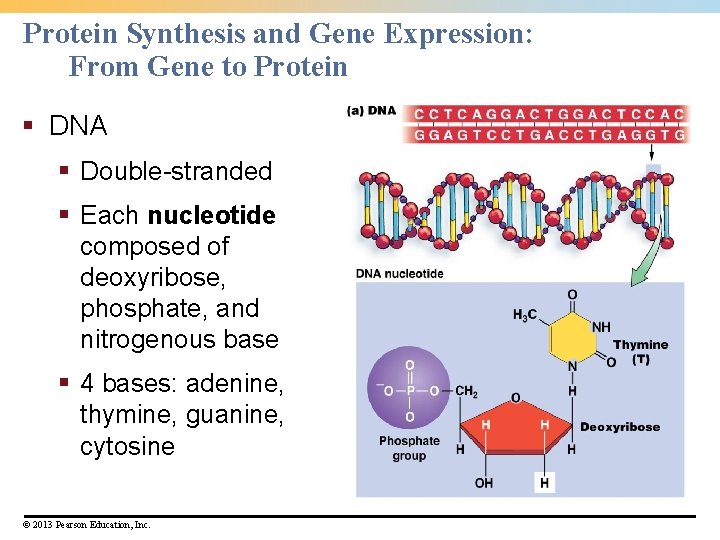
Protein Synthesis and Gene Expression: From Gene to Protein § DNA § Double-stranded § Each nucleotide composed of deoxyribose, phosphate, and nitrogenous base § 4 bases: adenine, thymine, guanine, cytosine © 2013 Pearson Education, Inc.
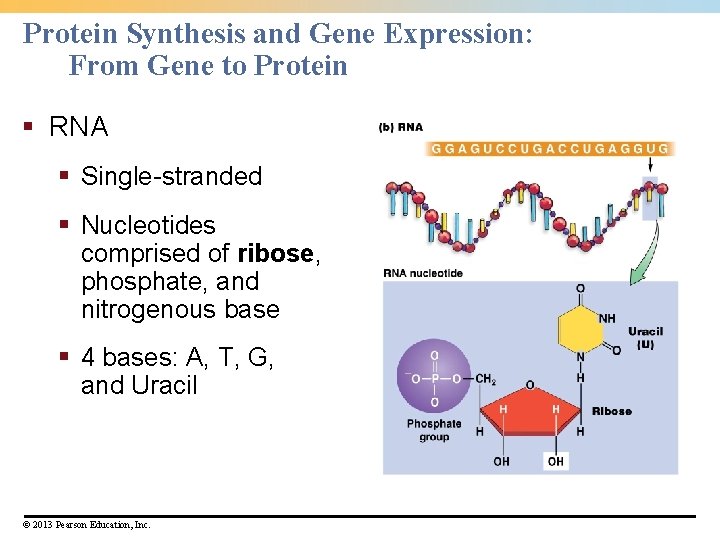
Protein Synthesis and Gene Expression: From Gene to Protein § RNA § Single-stranded § Nucleotides comprised of ribose, phosphate, and nitrogenous base § 4 bases: A, T, G, and Uracil © 2013 Pearson Education, Inc.
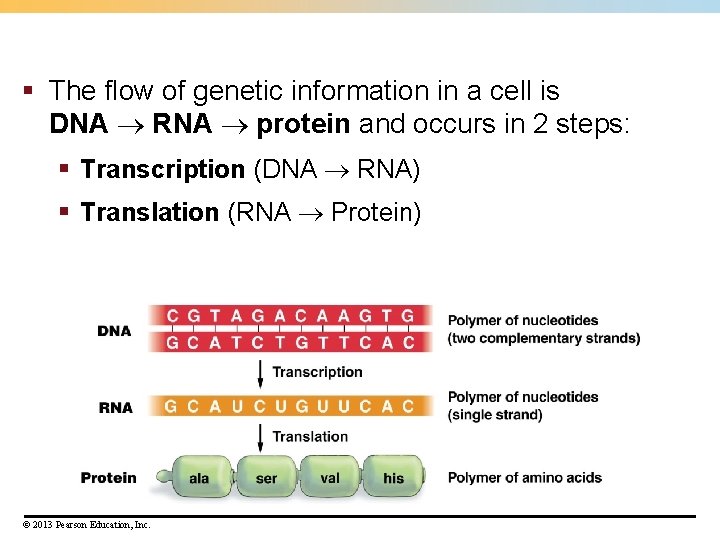
§ The flow of genetic information in a cell is DNA RNA protein and occurs in 2 steps: § Transcription (DNA RNA) § Translation (RNA Protein) © 2013 Pearson Education, Inc.
Protein Synthesis and Expression: From Gene to Protein §There are 2 steps in going from gene to protein § Transcription (DNA RNA) § Translation (RNA Protein) © 2013 Pearson Education, Inc.
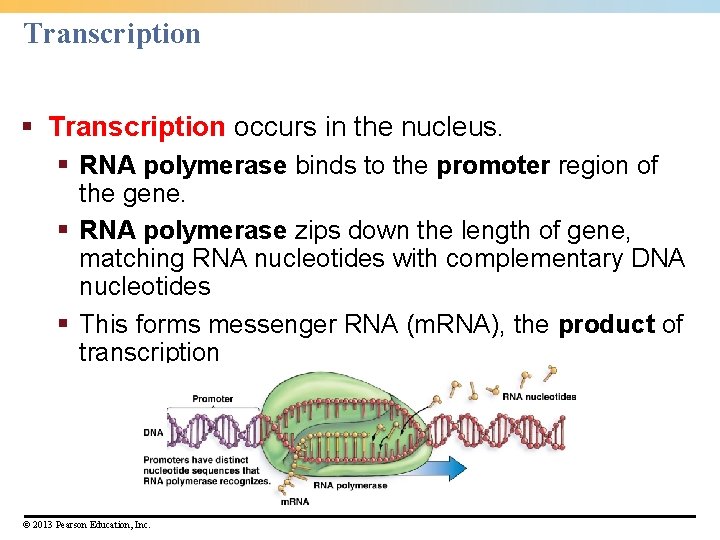
Transcription § Transcription occurs in the nucleus. § RNA polymerase binds to the promoter region of the gene. § RNA polymerase zips down the length of gene, matching RNA nucleotides with complementary DNA nucleotides § This forms messenger RNA (m. RNA), the product of transcription © 2013 Pearson Education, Inc.
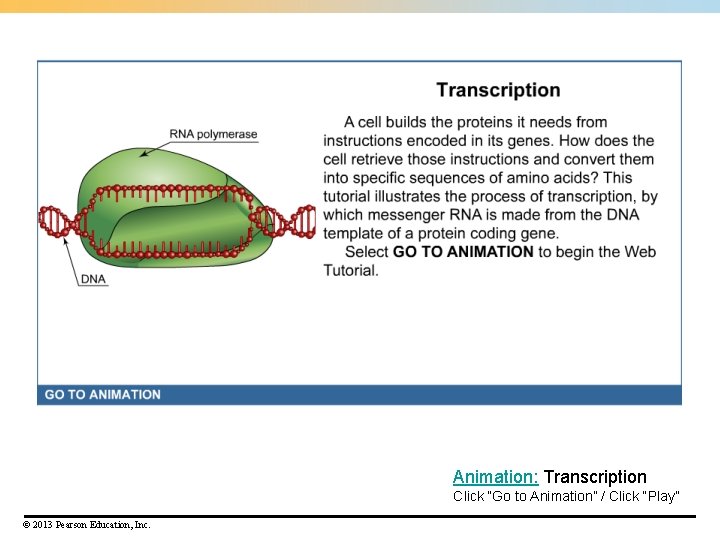
Animation: Transcription Click “Go to Animation” / Click “Play” © 2013 Pearson Education, Inc.
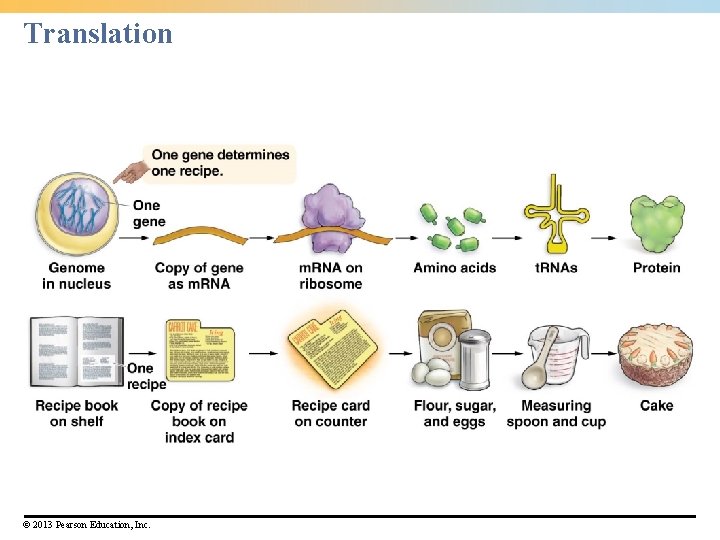
Translation § Translation occurs in the cytoplasm (outside the nucleus). § Translation requires: m. RNA (made during transcription), amino acids, energy (ATP), and some helper molecules. § Ribosomes § Transfer RNA (t. RNA) © 2013 Pearson Education, Inc.
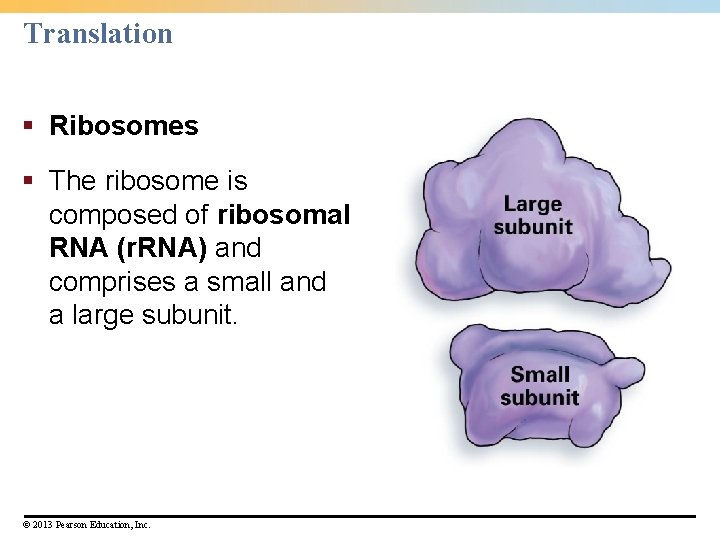
Translation § Ribosomes § The ribosome is composed of ribosomal RNA (r. RNA) and comprises a small and a large subunit. © 2013 Pearson Education, Inc.
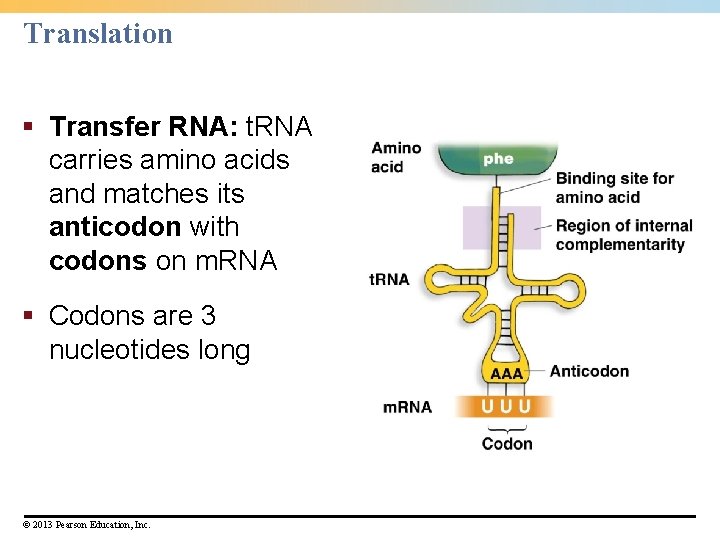
Translation § Transfer RNA: t. RNA carries amino acids and matches its anticodon with codons on m. RNA § Codons are 3 nucleotides long © 2013 Pearson Education, Inc.
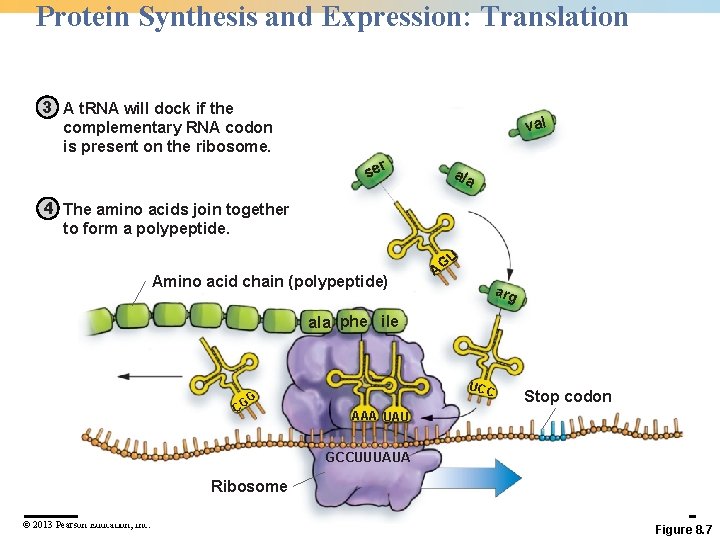
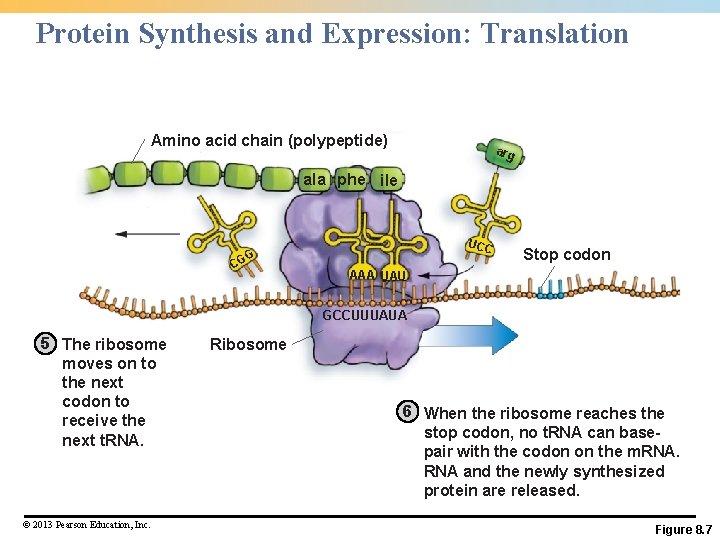
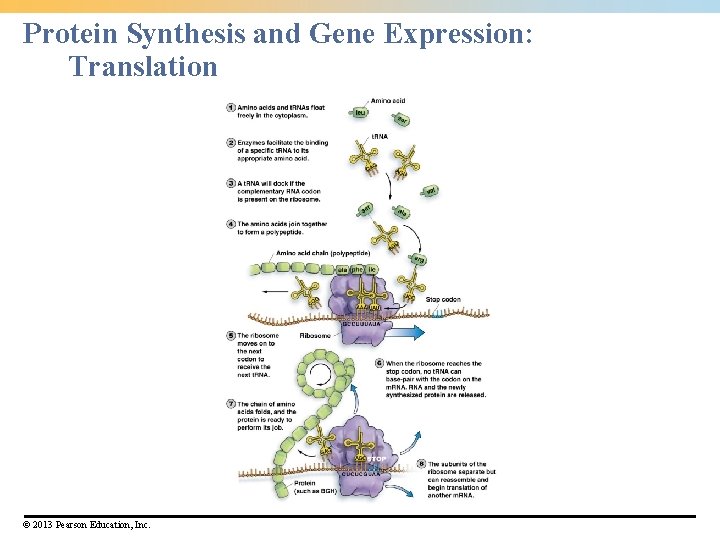
Translation § A protein is put together one amino acid at a time. § The ribosome attaches to the m. RNA at the promoter region. § Ribosome facilitates the docking of t. RNA anticodons to m. RNA codons. § When two t. RNAs are adjacent, a bond is formed between their amino acids. § Forms a peptide chain of amino acid © 2013 Pearson Education, Inc.
Translation © 2013 Pearson Education, Inc.
Protein Synthesis and Expression: Translation 3 A t. RNA will dock if the complementary RNA codon is present on the ribosome. val r se ala 4 The amino acids join together to form a polypeptide. U Amino acid chain (polypeptide) AG arg ala phe ile GG C UCC Stop codon AAA UAU GCCUUUAUA Ribosome © 2013 Pearson Education, Inc. Figure 8. 7
Protein Synthesis and Expression: Translation Amino acid chain (polypeptide) arg ala phe ile UCC GG C Stop codon AAA UAU GCCUUUAUA 5 The ribosome moves on to the next codon to receive the next t. RNA. © 2013 Pearson Education, Inc. Ribosome 6 When the ribosome reaches the stop codon, no t. RNA can basepair with the codon on the m. RNA and the newly synthesized protein are released. Figure 8. 7
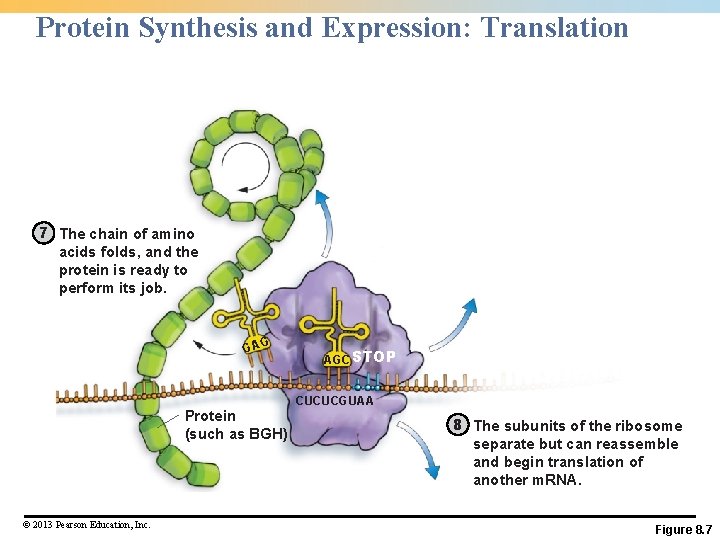
Protein Synthesis and Expression: Translation 7 The chain of amino acids folds, and the protein is ready to perform its job. GAG Protein (such as BGH) © 2013 Pearson Education, Inc. AGC STOP CUCUCGUAA 8 The subunits of the ribosome separate but can reassemble and begin translation of another m. RNA. Figure 8. 7
Protein Synthesis and Gene Expression: Translation © 2013 Pearson Education, Inc.
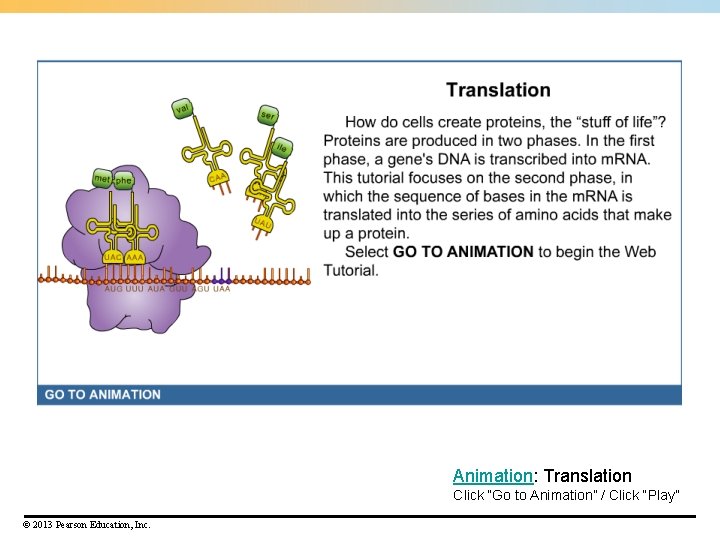
Animation: Translation Click “Go to Animation” / Click “Play” © 2013 Pearson Education, Inc.
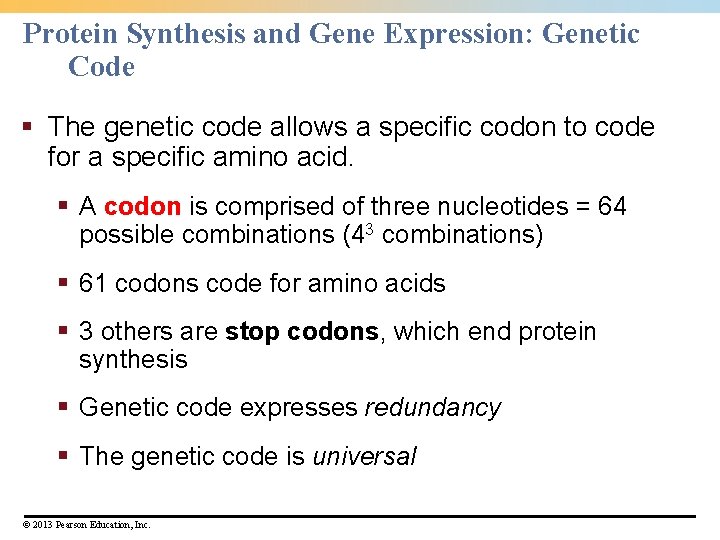
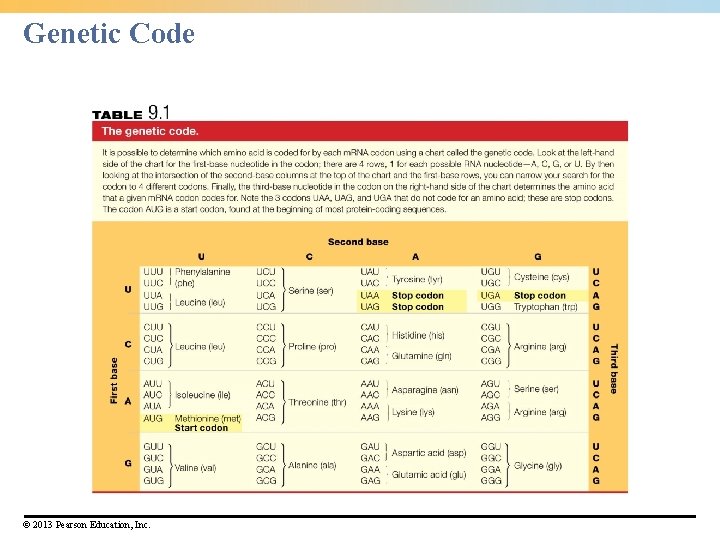
Protein Synthesis and Gene Expression: Genetic Code § The genetic code allows a specific codon to code for a specific amino acid. § A codon is comprised of three nucleotides = 64 possible combinations (43 combinations) § 61 codons code for amino acids § 3 others are stop codons, which end protein synthesis § Genetic code expresses redundancy § The genetic code is universal © 2013 Pearson Education, Inc.
Genetic Code © 2013 Pearson Education, Inc.
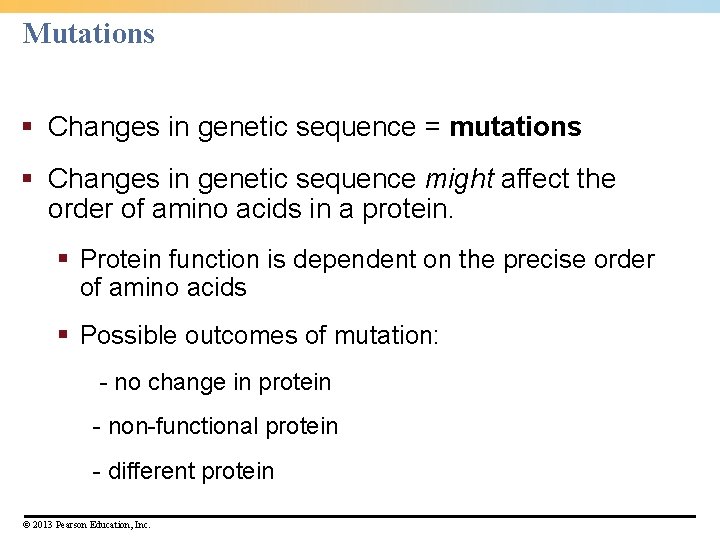
Mutations § Changes in genetic sequence = mutations § Changes in genetic sequence might affect the order of amino acids in a protein. § Protein function is dependent on the precise order of amino acids § Possible outcomes of mutation: - no change in protein - non-functional protein - different protein © 2013 Pearson Education, Inc.
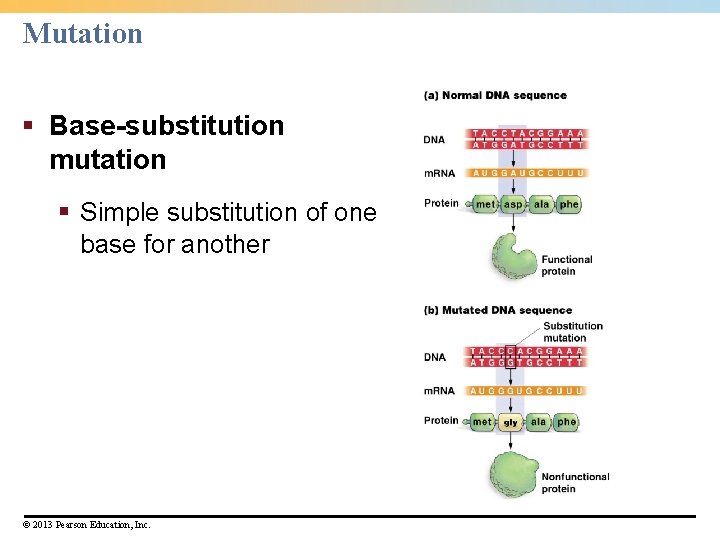
Mutation § Base-substitution mutation § Simple substitution of one base for another © 2013 Pearson Education, Inc.
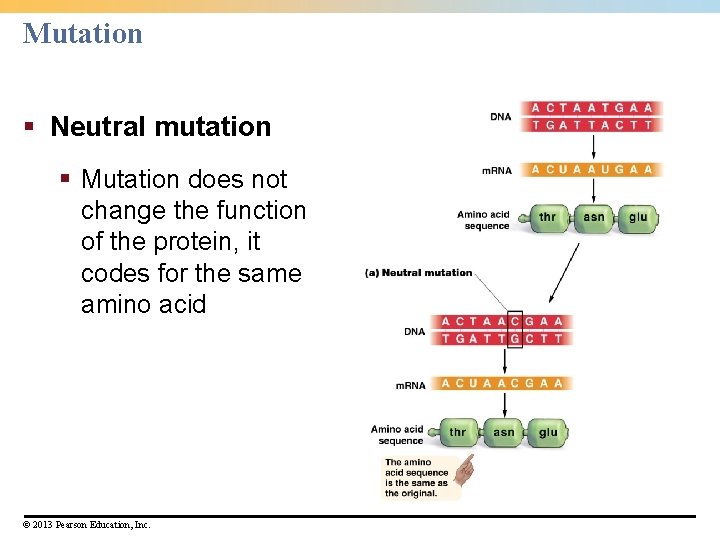
Mutation § Neutral mutation § Mutation does not change the function of the protein, it codes for the same amino acid © 2013 Pearson Education, Inc.
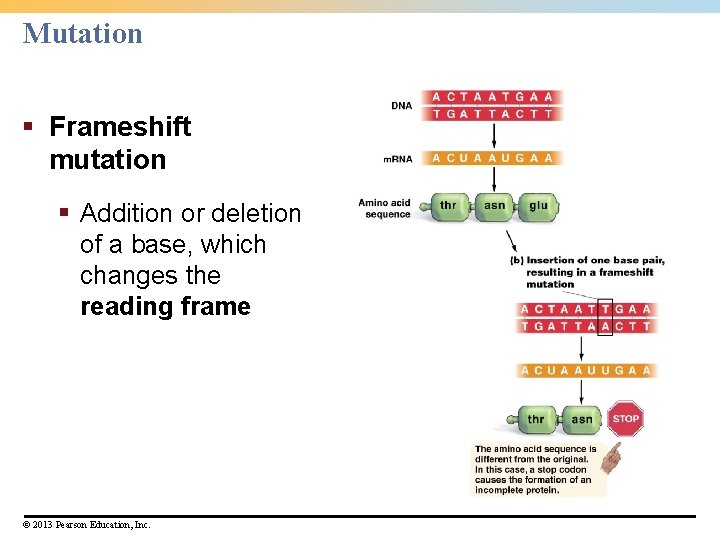
Mutation § Frameshift mutation § Addition or deletion of a base, which changes the reading frame © 2013 Pearson Education, Inc.
An Overview of Gene Expression § Each cell in your body (except sperm and egg cells) has the same DNA. § But each cell only expresses a small percentage of genes. § Example: Nerve and muscle cells perform very different functions, thus they use different genes. § Turning a gene or a set of genes on or off = regulating gene expression © 2013 Pearson Education, Inc.
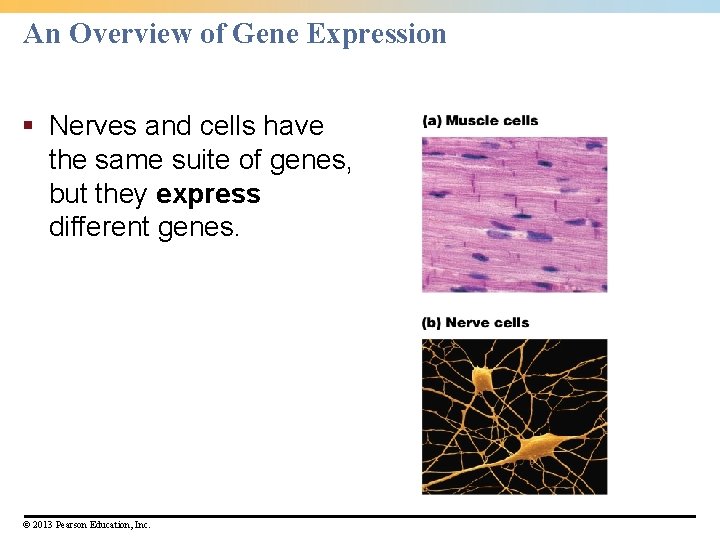
An Overview of Gene Expression § Nerves and cells have the same suite of genes, but they express different genes. © 2013 Pearson Education, Inc.
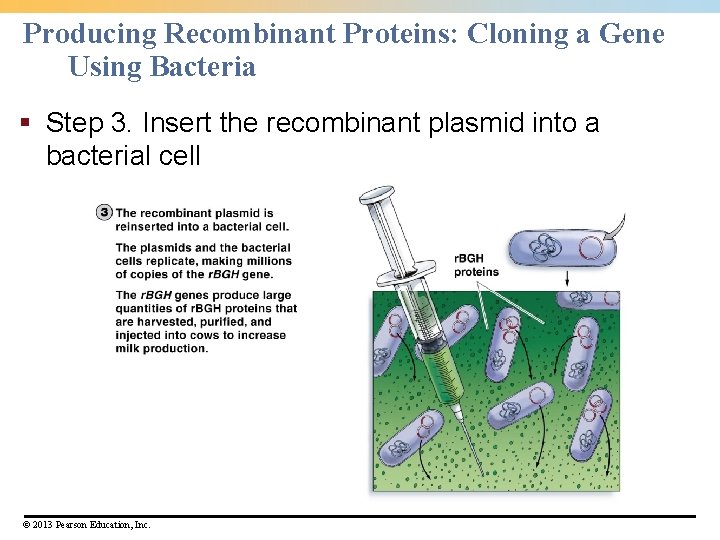
Producing Recombinant Proteins: Cloning a Gene Using Bacteria § r. BGH is a protein, and is coded by a specific gene. § Transfer of r. BGH gene to bacteria allows for growth under ideal conditions. § Bacteria can serve as “factories” for production of r. BGH. § Cloning of the gene is making many copies of that gene. © 2013 Pearson Education, Inc.
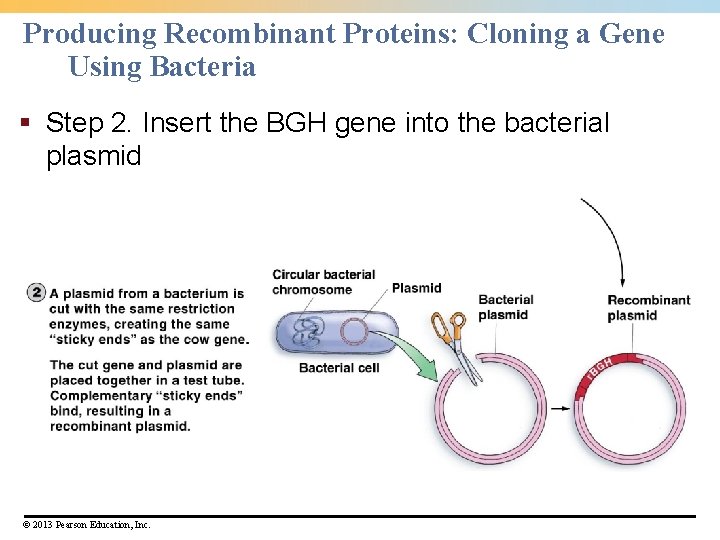
Producing Recombinant Proteins: Cloning a Gene Using Bacteria § Restriction enzymes – Used by bacteria as a form of defense. Restriction enzymes cut DNA at specific sequences. They are important in biotechnology because they allow scientists to make precise cuts in DNA. § Plasmid – Small, circular piece of bacterial DNA that exists separate from the bacterial chromosome. Plasmids are important because they can act as a ferry to carry a gene into a cell. © 2013 Pearson Education, Inc.
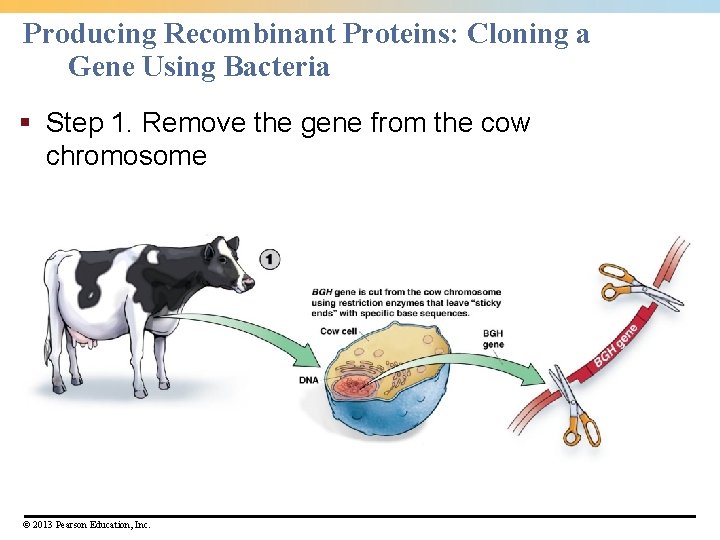
Producing Recombinant Proteins: Cloning a Gene Using Bacteria § Step 1. Remove the gene from the cow chromosome © 2013 Pearson Education, Inc.
Producing Recombinant Proteins: Cloning a Gene Using Bacteria § Step 2. Insert the BGH gene into the bacterial plasmid © 2013 Pearson Education, Inc.
Producing Recombinant Proteins: Cloning a Gene Using Bacteria § Recombinant – Indicates material that has been genetically engineered: a gene that has been removed from its original genome and combined with another. § After step 2, the GBH is now referred to as recombinant GBH or r. GBH. © 2013 Pearson Education, Inc.
Producing Recombinant Proteins: Cloning a Gene Using Bacteria § Step 3. Insert the recombinant plasmid into a bacterial cell © 2013 Pearson Education, Inc.
Producing Recombinant Proteins: Cloning a Gene Using Bacteria § About 1/3 of cows in the US are injected with r. BGH increases milk volume from cows by about 20%. § The same principles apply to other proteins. § Clotting proteins for hemophiliacs are produced using similar methods. § Insulin for diabetics is also produced in this way. § FDA approval is needed for any new food that is not generally recognized as safe (GRAS). © 2013 Pearson Education, Inc.
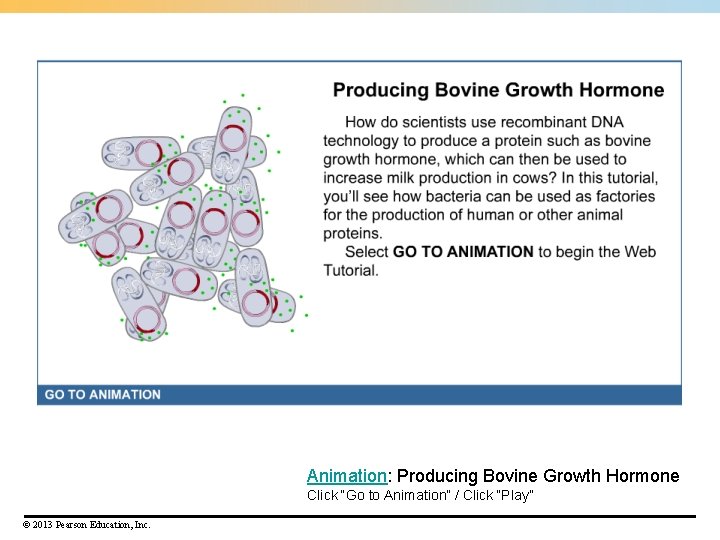
Animation: Producing Bovine Growth Hormone Click “Go to Animation” / Click “Play” © 2013 Pearson Education, Inc.
Bio. Flix: Protein Synthesis © 2013 Pearson Education, Inc.
Genetically Modified Foods § All agricultural products are the result of genetic modification through selective breeding. Artificial selection does not move genes from one organism to another, but does drastically change the characteristics of a population. § Genetically modifying foods § Increase shelf life, yield, or nutritional value § Golden rice has been genetically engineered to produce beta-carotene, which increases the rice’s nutritional yield. © 2013 Pearson Education, Inc.
Genetically Modified Foods § Transgenic organism – the result of the incorporation of a gene from one organism to the genome of another. Also referred to as a genetically modified organism (GMO). § Benefits: Crops can be engineered for resistance to pests, thus farmers can spray fewer chemicals. § Concerns: Pests can become resistant to chemicals. GM crop plants may transfer genes to wild relatives. © 2013 Pearson Education, Inc.
§There is a lot of misinformation in the news/public about GMOs §However, in a world with over 7 billion people, can we live without GMOs? © 2013 Pearson Education, Inc.
Genetically Modified Humans: Stem Cells § Stem cells – undifferentiated cells, capable of growing in to many different kinds of cells and tissues § Stems cells might be used to treat degenerative diseases such as Alzheimer’s or Parkinson’s. § Using stem cells to produce healthy tissue is called therapeutic cloning. § Stem cells could also be used to grow specific tissues to treat burns, heart attack damage, or replacement cartilage in joints. § Stems cells are totipotent, meaning they can become any other cell in the body. © 2013 Pearson Education, Inc.
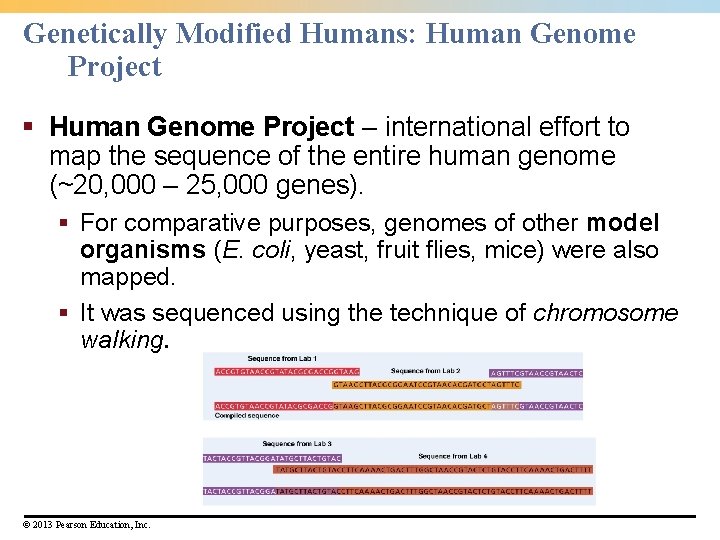
Genetically Modified Humans: Human Genome Project § Human Genome Project – international effort to map the sequence of the entire human genome (~20, 000 – 25, 000 genes). § For comparative purposes, genomes of other model organisms (E. coli, yeast, fruit flies, mice) were also mapped. § It was sequenced using the technique of chromosome walking. © 2013 Pearson Education, Inc.
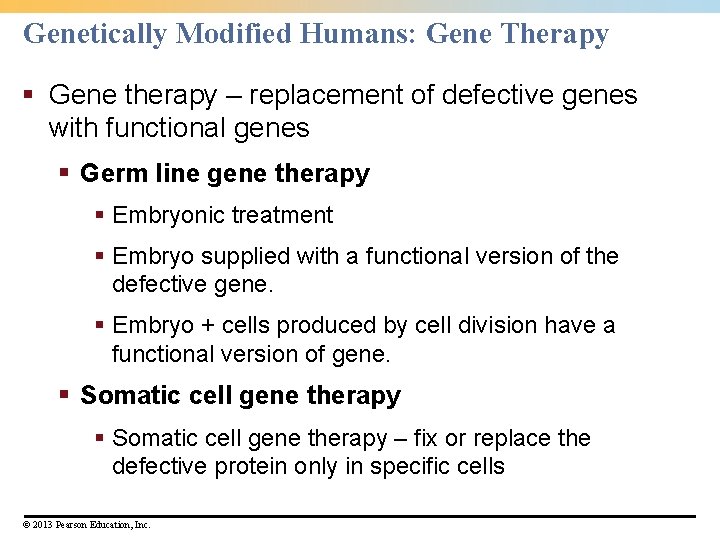
Genetically Modified Humans: Gene Therapy § Gene therapy – replacement of defective genes with functional genes § Germ line gene therapy § Embryonic treatment § Embryo supplied with a functional version of the defective gene. § Embryo + cells produced by cell division have a functional version of gene. § Somatic cell gene therapy – fix or replace the defective protein only in specific cells © 2013 Pearson Education, Inc.
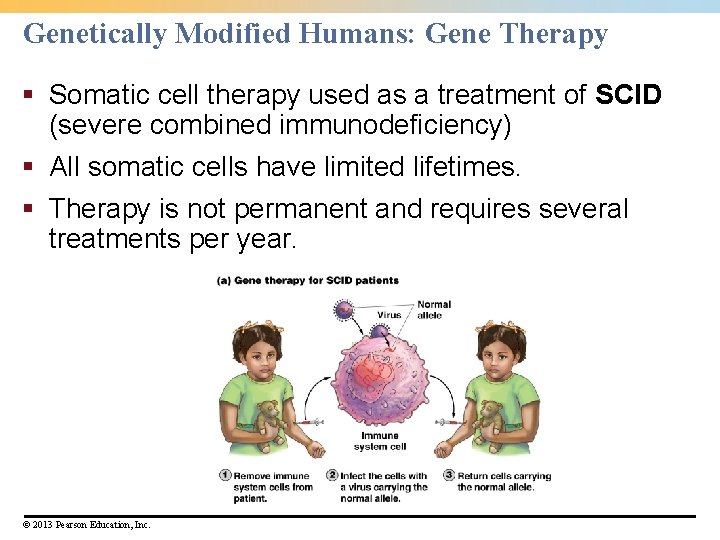
Genetically Modified Humans: Gene Therapy § Somatic cell therapy used as a treatment of SCID (severe combined immunodeficiency) § All somatic cells have limited lifetimes. § Therapy is not permanent and requires several treatments per year. © 2013 Pearson Education, Inc.
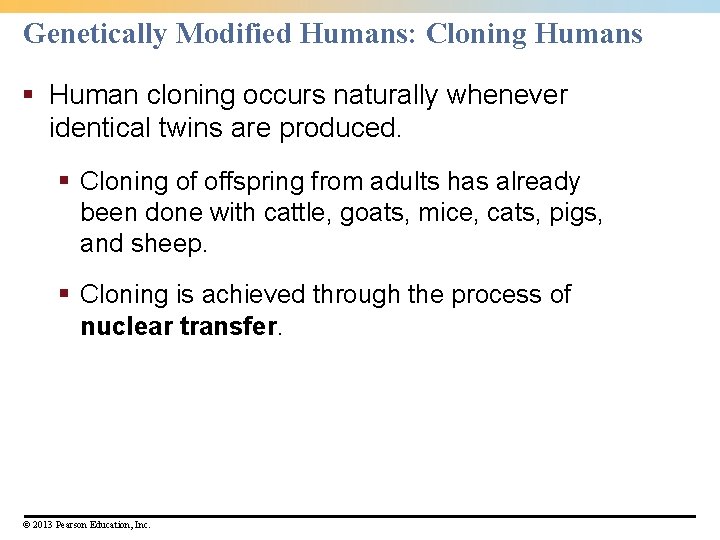
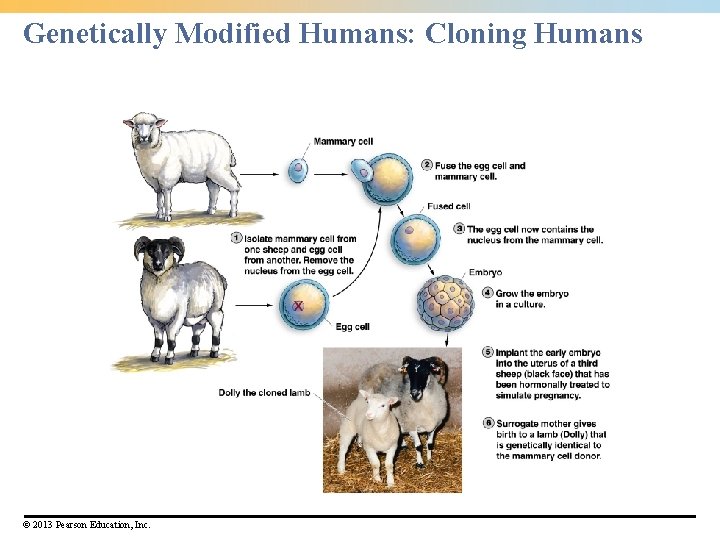
Genetically Modified Humans: Cloning Humans § Human cloning occurs naturally whenever identical twins are produced. § Cloning of offspring from adults has already been done with cattle, goats, mice, cats, pigs, and sheep. § Cloning is achieved through the process of nuclear transfer. © 2013 Pearson Education, Inc.
Genetically Modified Humans: Cloning Humans © 2013 Pearson Education, Inc.
Which of the following types of RNA carries amino acids to the growing polypeptide chain? §m. RNA §t. RNA §r. RNA §RNA does not carry amino acids © 2013 Pearson Education, Inc.
A sequence of m. RNA, called a codon, reads ACU. How will the set of nucleotides on the anticodon of the t. RNA read? §ACU §UGA §TGA §AUG © 2013 Pearson Education, Inc.
Approximately what percentage of the population has eaten genetically engineered food? § 50% § 70% § 90% § 100% © 2013 Pearson Education, Inc.
When scientists try to replace defective human genes with functional genes they are performing ____. §gene therapy §in vitro fertilization §therapeutic cloning §nuclear transfer © 2013 Pearson Education, Inc.