
Protein Synthesis 2 stages 1 Transcription 2 Translation
- Slides: 13
Protein Synthesis • 2 stages • 1) Transcription • 2) Translation
WAIT, WHAT DOES SYNTHESIS MEAN?
TRANSCRIPTION 1. WHERE: NUCLEUS 2. WHAT: DNA double helix unzips 3. WHO: m. RNA
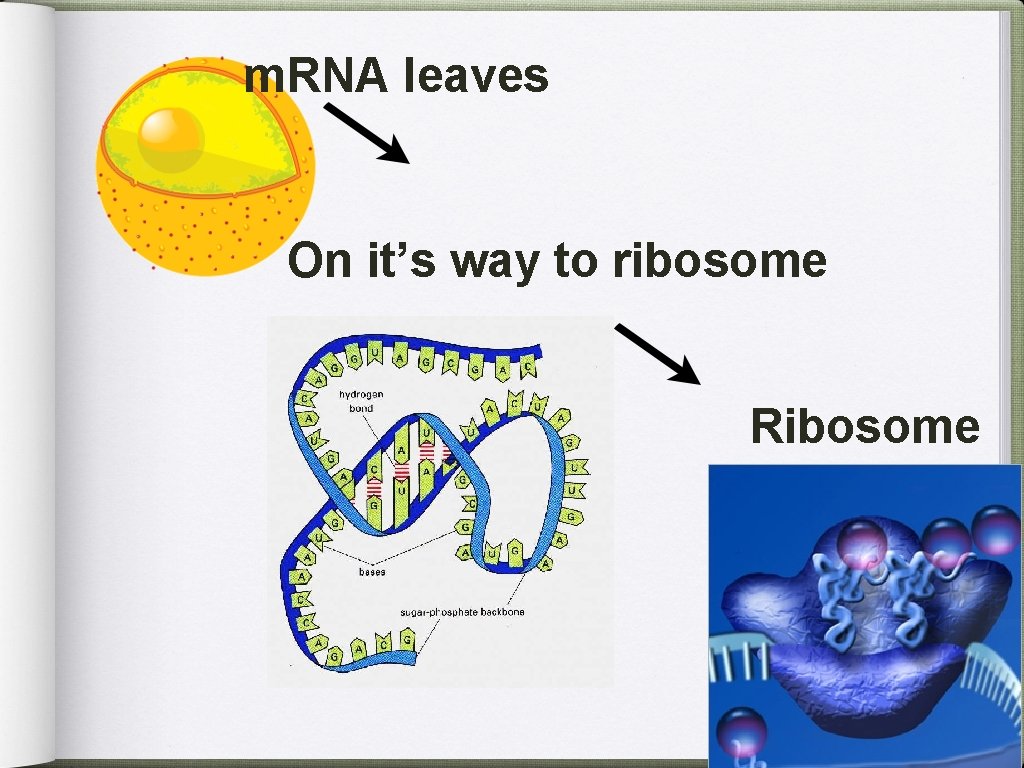
Transcription 1. m. RNA copies the DNA code 2. m. RNA leaves the nucleus and brings the code to a ribosome 3. Similar to DNA Replication, but RNA is single stranded and uses U instead of T
m. RNA leaves On it’s way to ribosome Ribosome
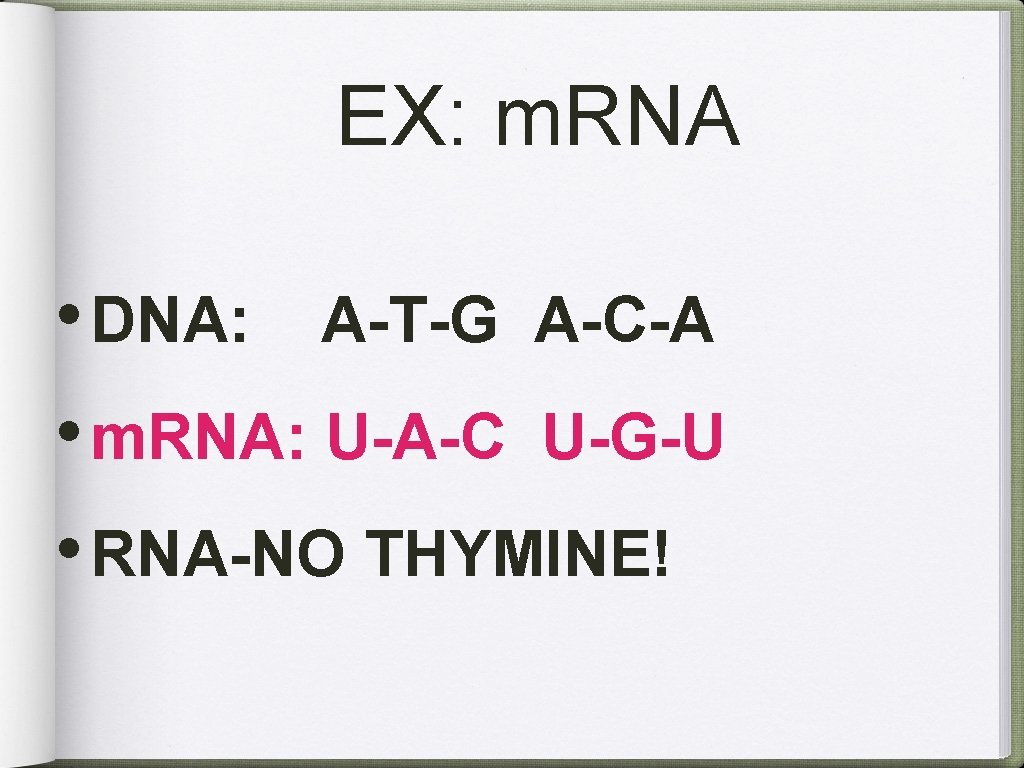
EX: m. RNA • DNA: A-T-G A-C-A • m. RNA: U-A-C U-G-U • RNA-NO THYMINE!
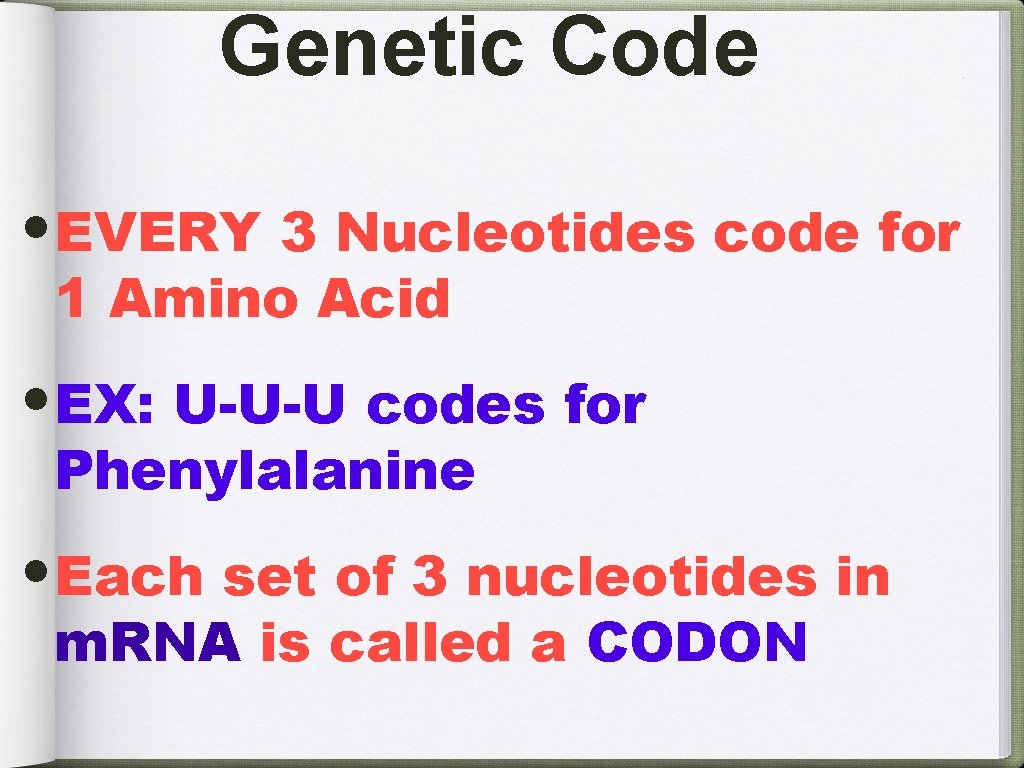
Genetic Code • EVERY 3 Nucleotides code for 1 Amino Acid • EX: U-U-U codes for Phenylalanine • Each set of 3 nucleotides in m. RNA is called a CODON
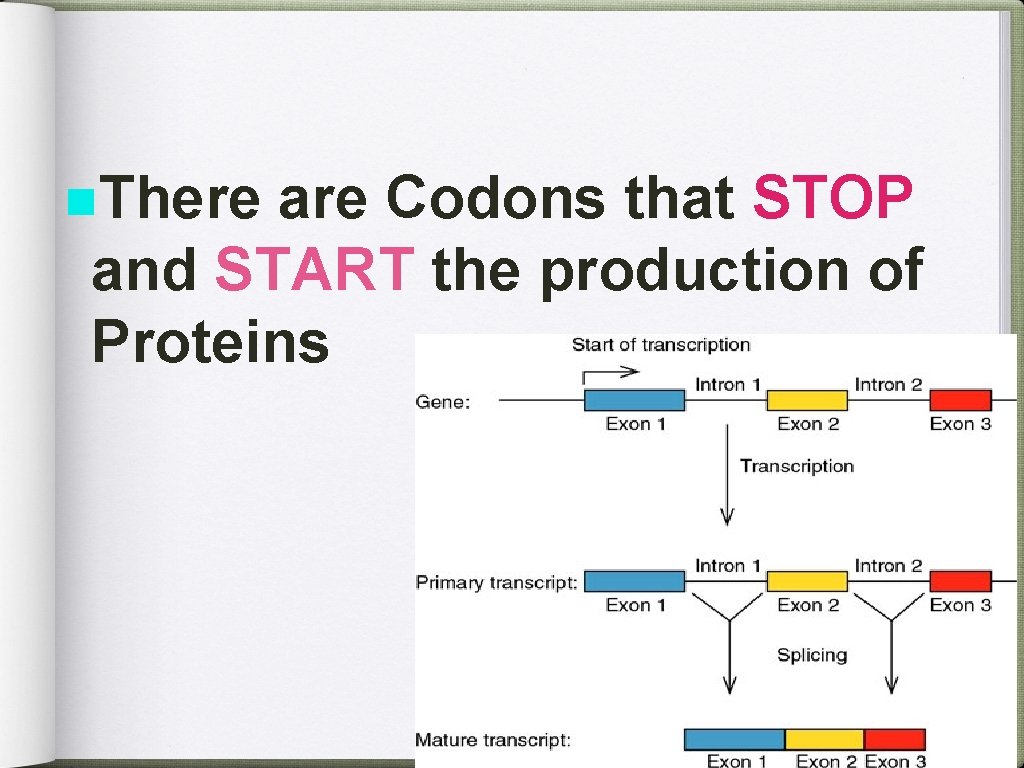
n. There are Codons that STOP and START the production of Proteins
2. Translation 1. WHERE: Cytoplasm and ribosomes 2. m. RNA molecule attaches to a ribosome 3. As each codon of the m. RNA moves through the ribosome, the proper amino acid is brought in by t. RNA an attached to the m. RNA.
Translation 1. The anticodon on t. RNA matches the codon of m. RNA. 2. m. RNA continues to move through the ribosome and t. RNA continues to add amino acids.
What’s an Anticodon? • It is the complement of the Codon • Remember the codon is 3 nucleotides from m. RNA
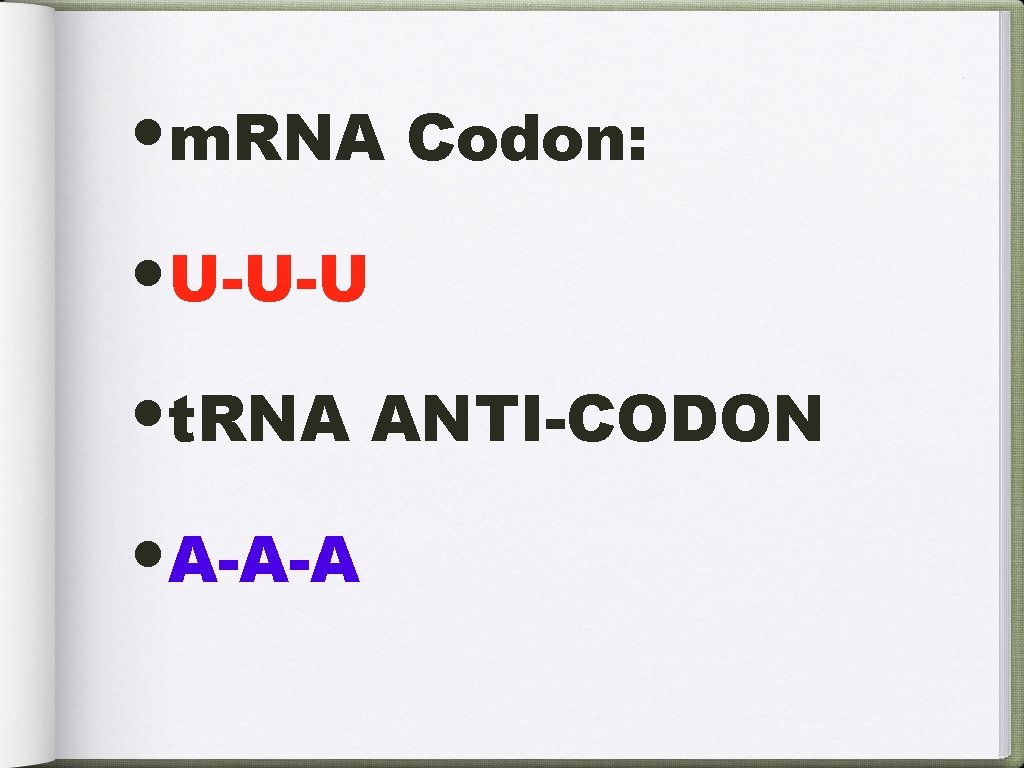
• m. RNA Codon: • U-U-U • t. RNA ANTI-CODON • A-A-A
t. RNA n. Carries the Anticodon on one end n. An Amino acid is located on the other end of t. RNA