
Protein structure For nursing Faculty By Dr Rehab
Protein structure For nursing Faculty • By Dr Rehab Omer • Faculty of Medicine, U of D •
Def. Polymer of amino acids with 50 or more amino acid residues. Classification of proteins • No universal system for classification, so no perfect system 1. on the basis of solubility: albumin, globulin depending on their solubility in aquous salt solutions.
2) on the basis of the shape : fibrous, globular 3) On the basis of biologic function : enzymes, hormones, etc
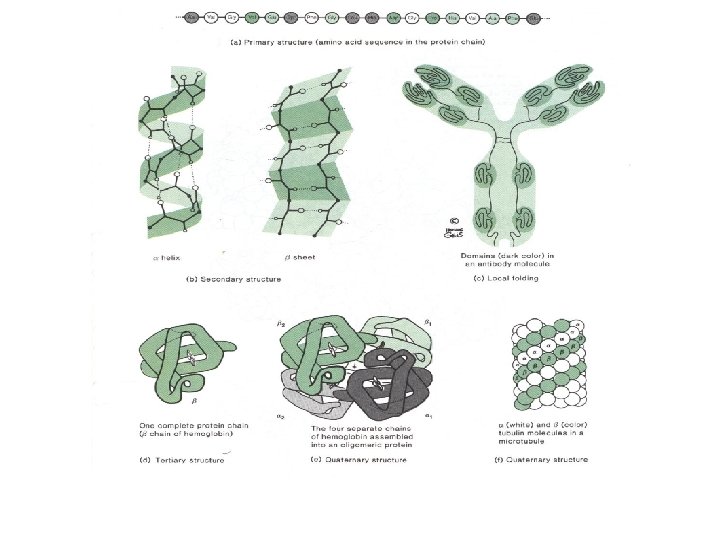
Structure of protein • there are four orders of protein structure 1) primary structure Is the order in which the amino acids are joined together in sequence and it includes the location of any disulfide bonds.
2) Secondary structure This is a region with regular repeating units of conformation of the polypeptide it describe the relation between the adjacent amino acid

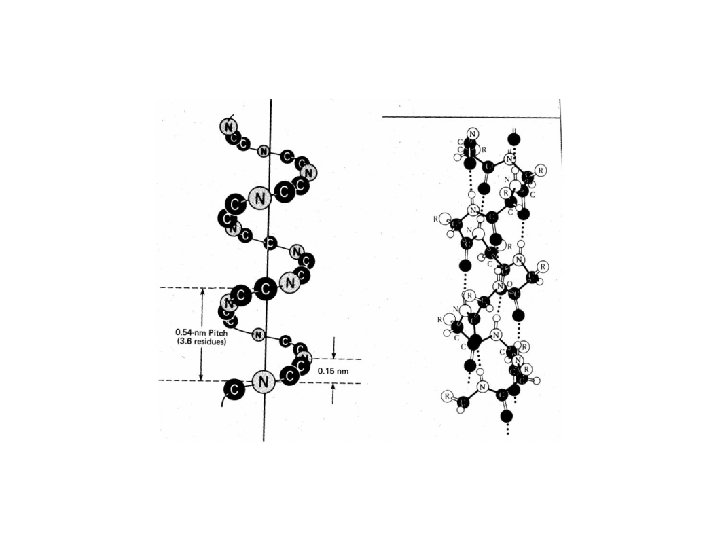
A. alpha-helix – right-handed helical structure in which there is – 3. 6 residues/turn – the helix is stabilized by hydrogen bonds N----H----O between the N atom of amino acid and O of the 4 th amino acid in the primary structure. – Proline can not fit because it can not form the proper H bonds and lead to break in the helix.
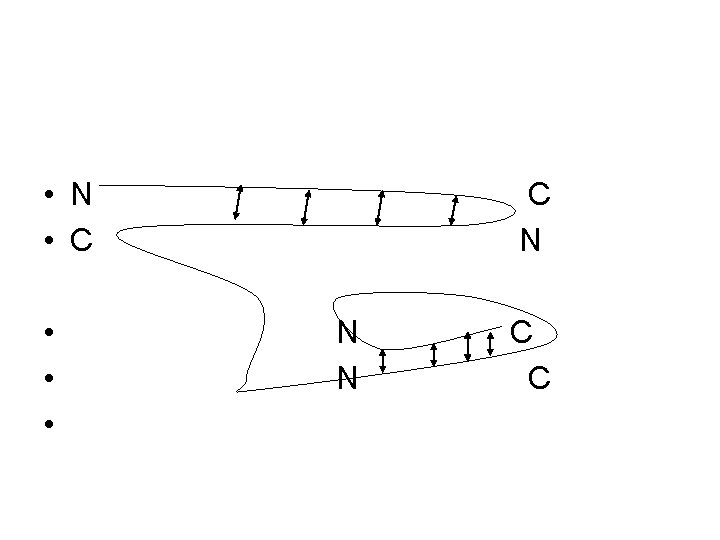
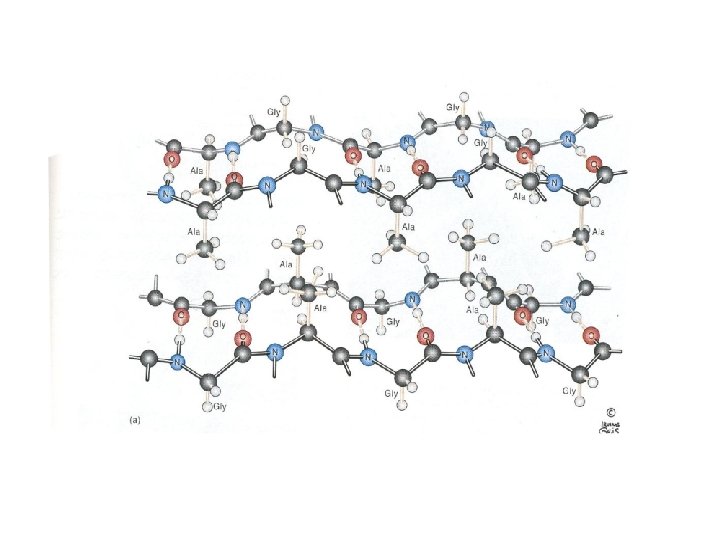
B) B-Sheets • These are regular regions contain 5 -10 from different regions in the primary structure lie fully extended and parallel or antiparallel to each other and it is stabilized by H bonds.
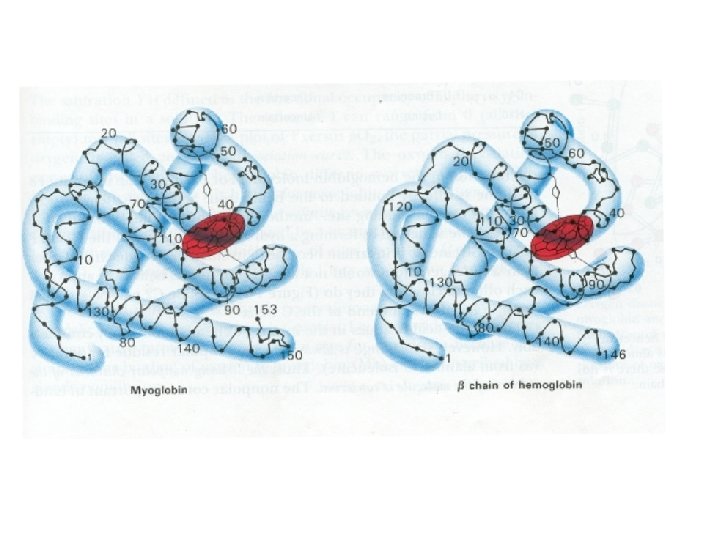
3) Tertiary structure • the tertiary structure describe the 3 dimensional structure of a protein stabilized by • H bonds • Electrostatic bonds • Hydrophobic forces
D) Quaternary structure • Protein that is formed of two or more polypeptide chains held by non covalent bonds has quaternary structure. • The individual polypeptide is called protomer or monomer or subunit.
Protein denaturation The disruption of the secondary, tertury and quaternary structure is called denaturation and can be caused by different physical and chemical methods • Heat • p. H change • Urea • Sodium dodecyl sulfate • Heavy metal
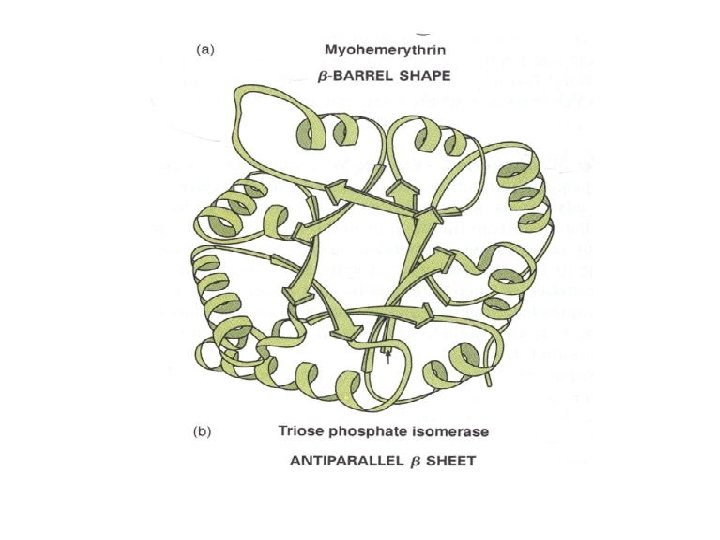
The result of denutration is Loss of function of protein( e, g enzymes , hormones) Decrease solubility Increase digestability Schematic representation of protein structure • Cylinder for alpha helix • Arrows for B-sheets
- Slides: 17