
Protein structure Angles in the protein backbone spdbf
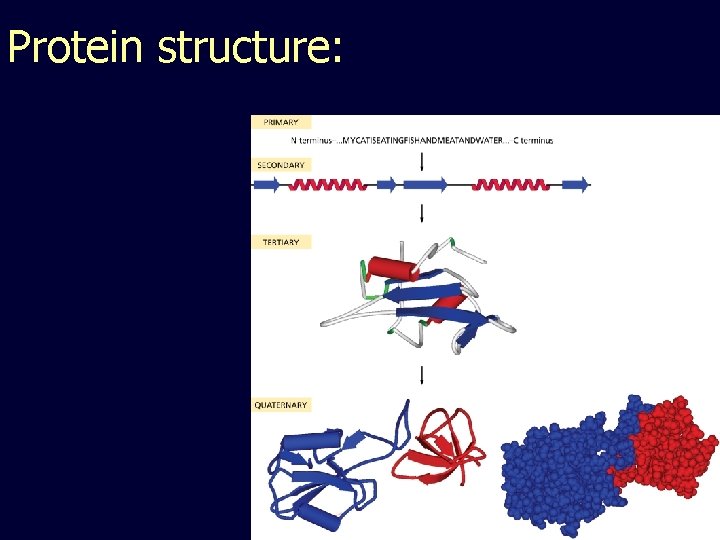
Protein structure:
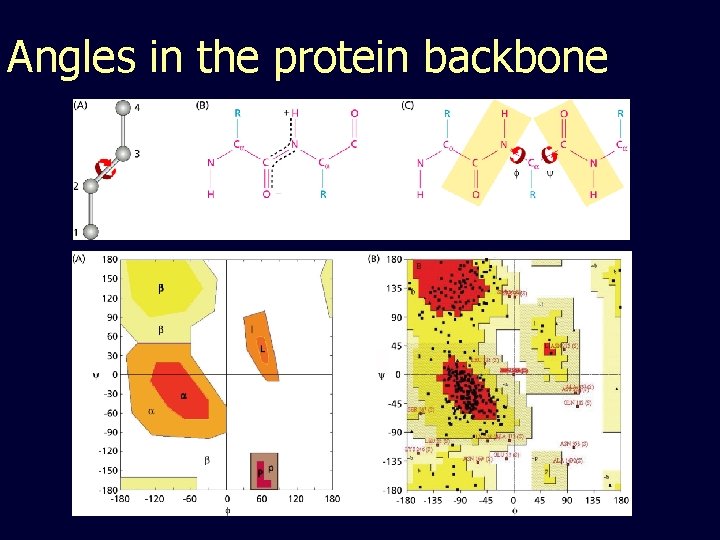
Angles in the protein backbone
spdbf - viewer aka Deep View Free and powerful program Steep learning curve Interacts with modeling server available at http: //ca. expasy. org/ http: //spdbv. vital-it. ch/ Gale Rhodes’ Tutorial is at http: //www. usm. maine. edu/~rhodes/SP VTut/index. html
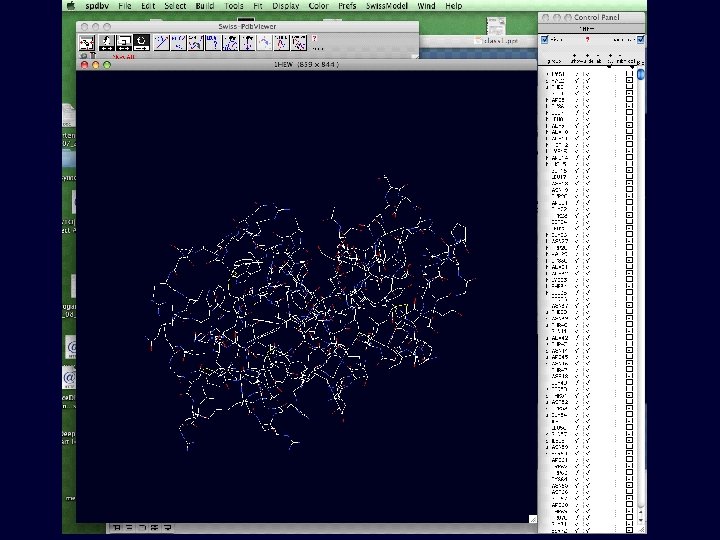
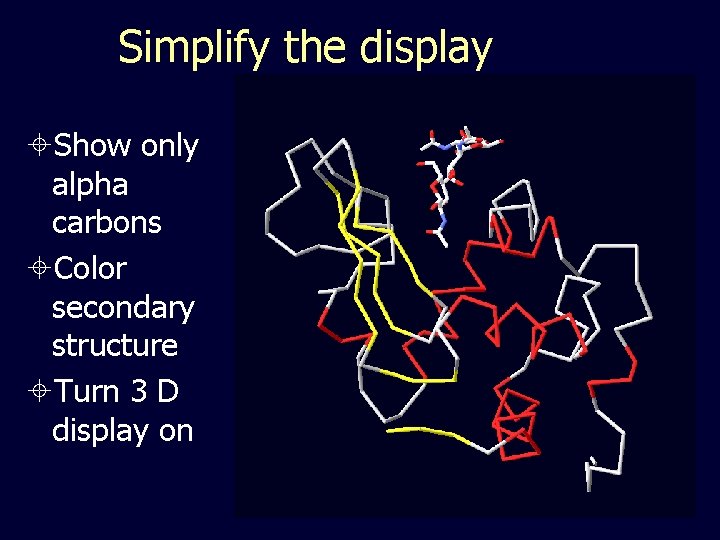
Simplify the display Show only alpha carbons Color secondary structure Turn 3 D display on
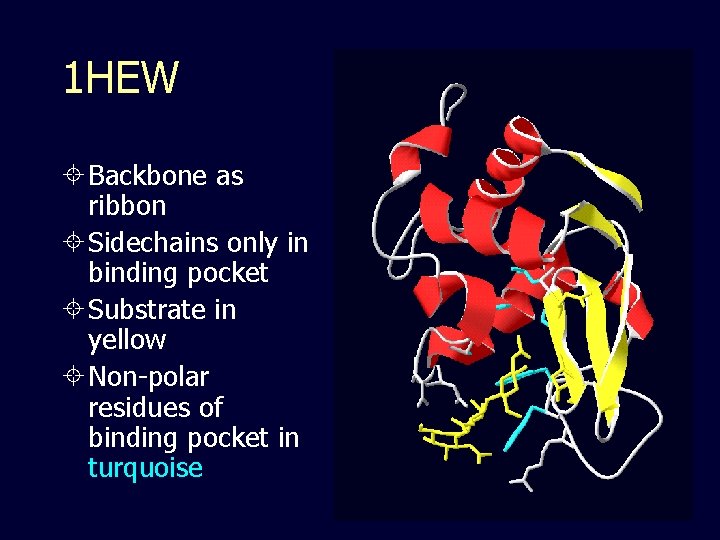
1 HEW Backbone as ribbon Sidechains only in binding pocket Substrate in yellow Non-polar residues of binding pocket in turquoise
Theodosius Dobzhansky "Nothing in biology makes sense except in the light of evolution"
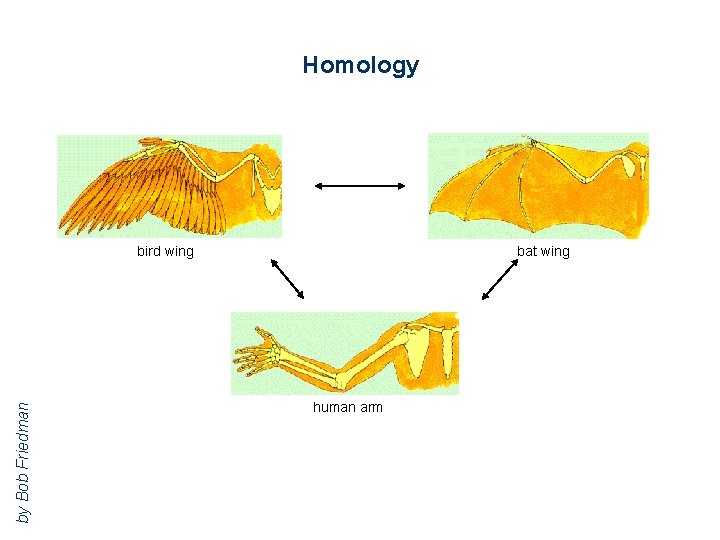
Homology by Bob Friedman bird wing bat wing human arm
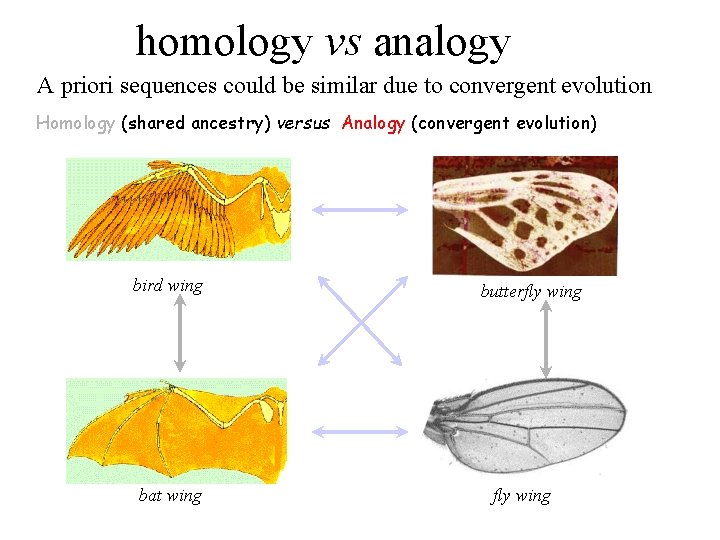
homology vs analogy A priori sequences could be similar due to convergent evolution Homology (shared ancestry) versus Analogy (convergent evolution) bird wing bat wing butterfly wing
Related proteins Present day proteins evolved through substitution and selection from ancestral proteins. Related proteins have similar sequence AND similar structure AND similar function. In the above mantra "similar function" can refer to: • identical function, • similar function, e. g. : • identical reactions catalyzed in different organisms; or • same catalytic mechanism but different substrate (malic and lactic acid dehydrogenases); • similar subunits and domains that are brought together through a (hypothetical) process called domain shuffling, e. g. nucleotide binding domains in hexokinse, myosin, HSP 70, and ATPsynthases.
homology Two sequences are homologous, if there existed an ancestral molecule in the past that is ancestral to both of the sequences Homology is a "yes" or "no" character (don't know is also possible). Either sequences (or characters share ancestry or they don't (like pregnancy). Molecular biologist often use homology as synonymous with similarity of percent identity. One often reads: sequence A and B are 70% homologous. To an evolutionary biologist this sounds as wrong as 70% pregnant. Types of Homology Orthology: bifurcation in molecular tree reflects speciation Paralogy: bifurcation in molecular tree reflects gene duplication
Sequence Similarity vs Homology The following is based on observation and not on an a priori truth: If two (complex) sequences show significant similarity in their primary sequence, they have shared ancestry, and probably similar function. (although some proteins acquired radically new functional assignments, lysozyme -> lense crystalline).
The Size of Protein Sequence Space (back of the envelope calculation) Consider a protein of 600 amino acids. Assume that for every position there could be any of the twenty possible amino acid. Then the total number of possibilities is 20 choices for the first position times 20 for the second position times 20 to the third. . = 20 to the 600 = 4*10 780 different proteins possible with lengths of 600 amino acids. For comparison the universe contains only about 1089 protons and has an age of about 5*1017 seconds or 5*1029 picoseconds. If every proton in the universe were a super computer that explored one possible protein sequence per picosecond, we only would have explored 5*10118 sequences, i. e. a negligible fraction of the possible sequences with length 600 (one in about 10662).
no similarity vs no homology If two (complex) sequences show significant similarity in their primary sequence, they have shared ancestry, and probably similar function. THE REVERSE IS NOT TRUE: PROTEINS WITH THE SAME OR SIMILAR FUNCTION DO NOT ALWAYS SHOW SIGNIFICANT SEQUENCE SIMILARITY for one of two reasons: a) they evolved independently (e. g. different types of nucleotide binding sites); or b) they underwent so many substitution events that there is no readily detectable similarity remaining. Corollary: PROTEINS WITH SHARED ANCESTRY DO NOT ALWAYS SHOW SIGNIFICANT SIMILARITY.
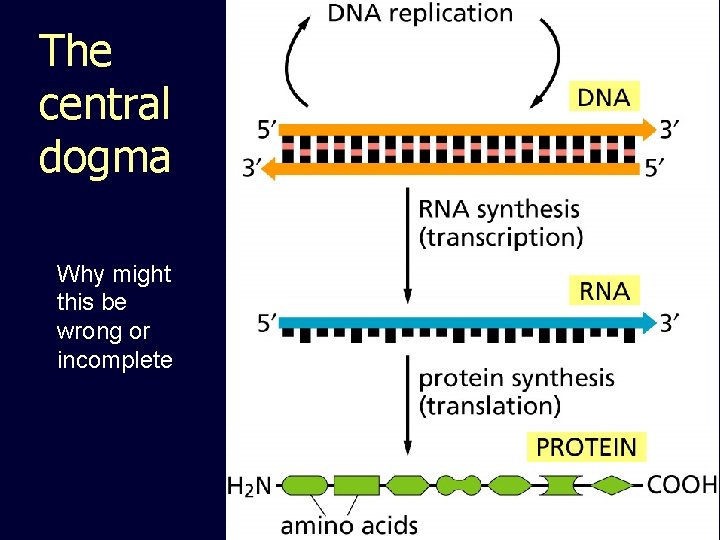
The central dogma Why might this be wrong or incomplete
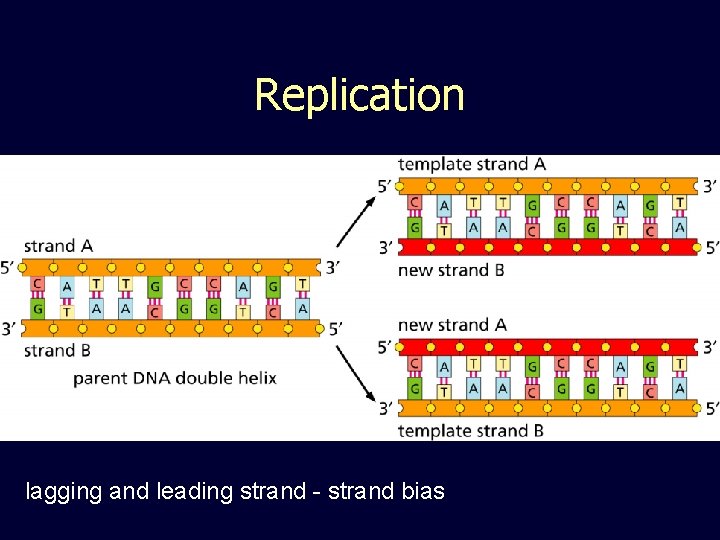
Replication lagging and leading strand - strand bias
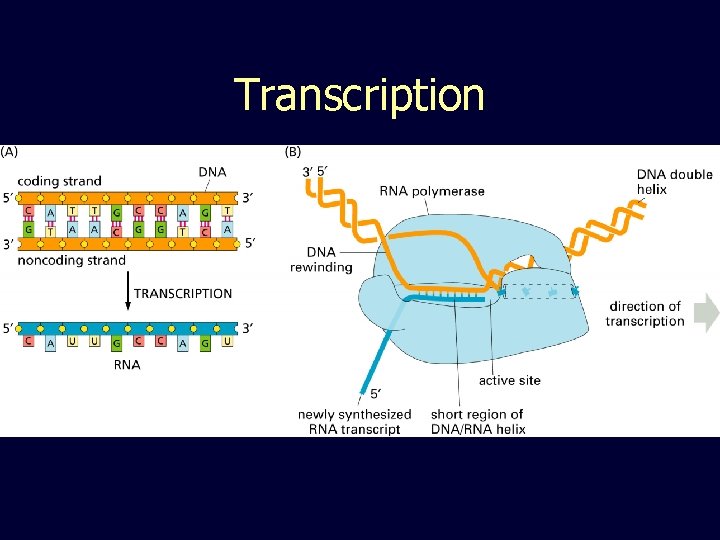
Transcription
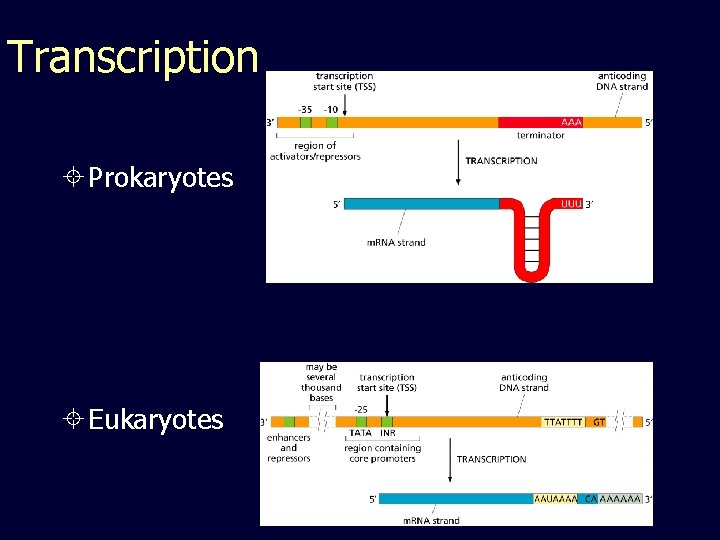
Transcription Prokaryotes Eukaryotes
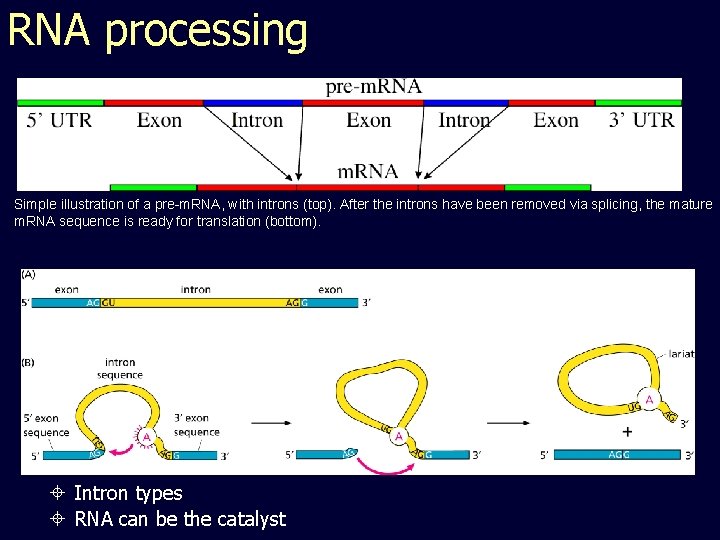
RNA processing Simple illustration of a pre-m. RNA, with introns (top). After the introns have been removed via splicing, the mature m. RNA sequence is ready for translation (bottom). Intron types RNA can be the catalyst
RNA enzymes:
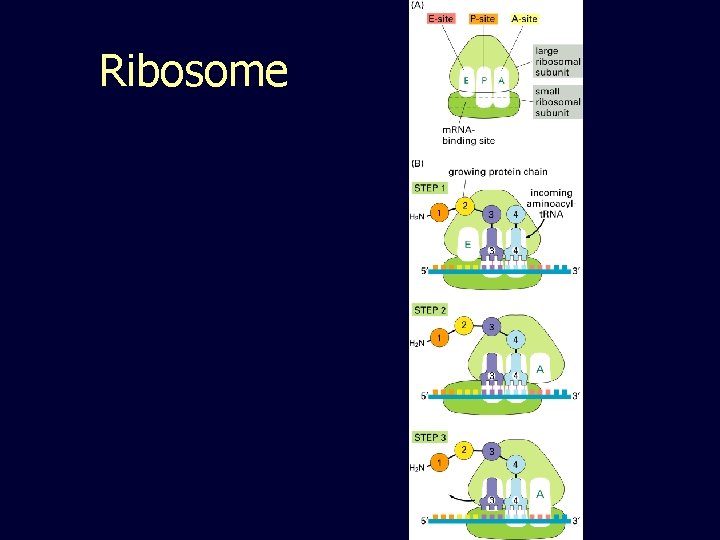
Ribosome
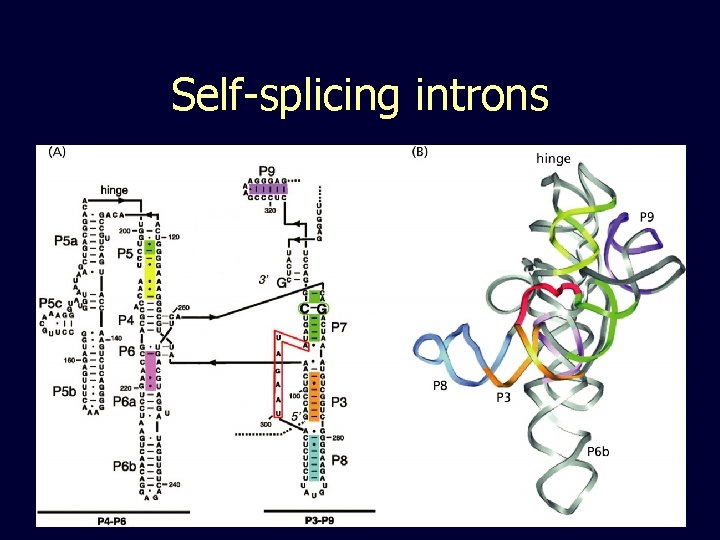
Self-splicing introns
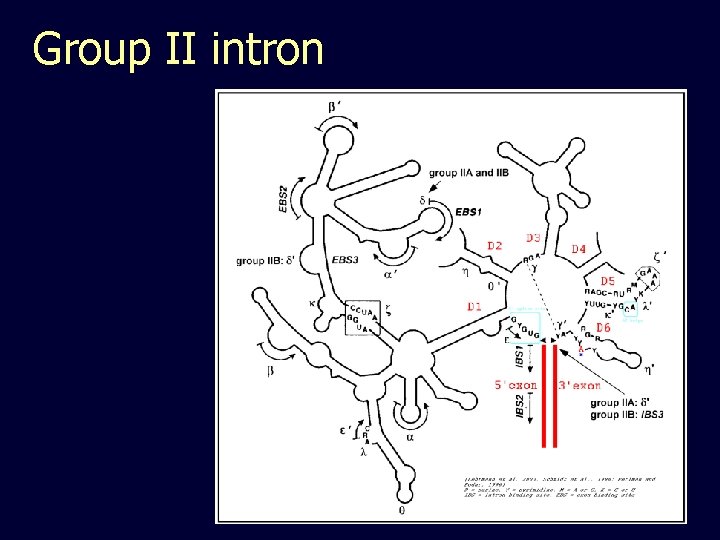
Group II intron
The RNA world concept What arguments support an “RNA world” preceding a two biopolymer world?
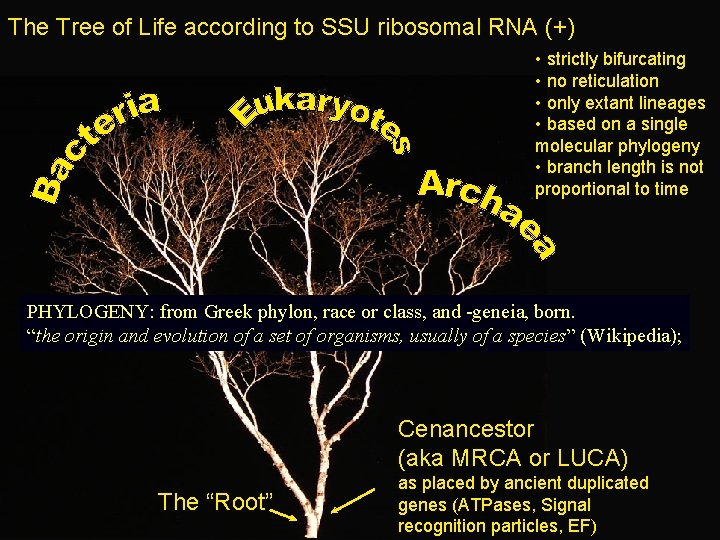
The Tree of Life according to SSU ribosomal RNA (+) • strictly bifurcating • no reticulation • only extant lineages • based on a single molecular phylogeny • branch length is not proportional to time PHYLOGENY: from Greek phylon, race or class, and -geneia, born. “the origin and evolution of a set of organisms, usually of a species” (Wikipedia); Cenancestor (aka MRCA or LUCA) The “Root” as placed by ancient duplicated genes (ATPases, Signal recognition particles, EF)
Tree, Web, or Coral of Life? “The tree of life should perhaps be called the coral of life, base of branches dead” Page B 26 from Charles Darwin’s (1809 -1882) notebook (1837) Charles Darwin Photo by J. Cameron, 1869
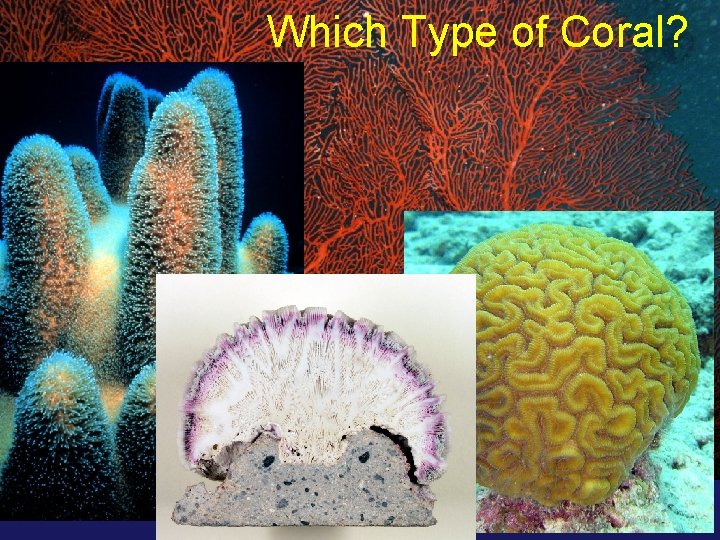
Which Type of Coral?
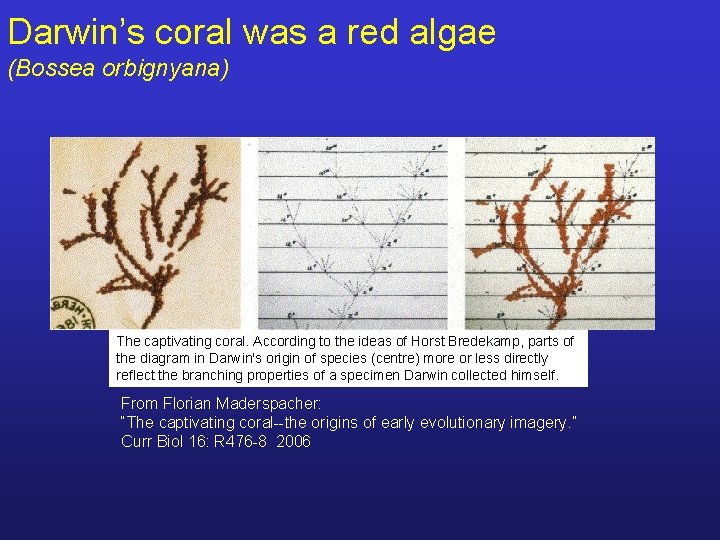
Darwin’s coral was a red algae (Bossea orbignyana) The captivating coral. According to the ideas of Horst Bredekamp, parts of the diagram in Darwin's origin of species (centre) more or less directly reflect the branching properties of a specimen Darwin collected himself. From Florian Maderspacher: “The captivating coral--the origins of early evolutionary imagery. ” Curr Biol 16: R 476 -8 2006
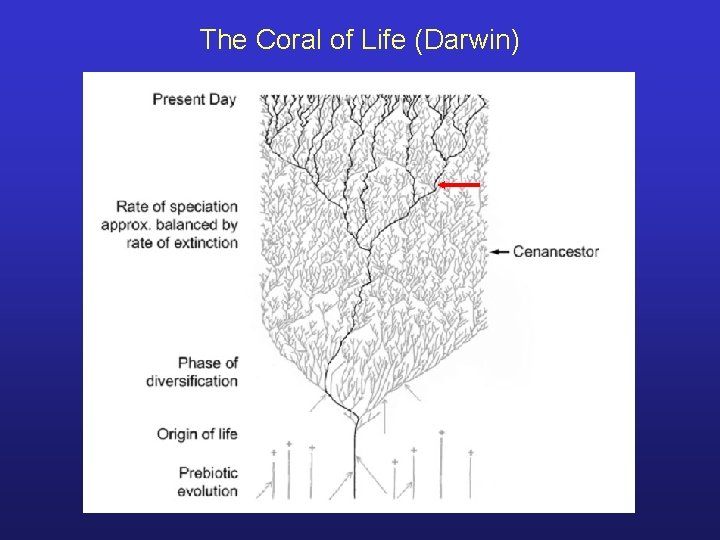
The Coral of Life (Darwin)
Gene Transfer and Phylogenetic Reconstruction: Friends or Foes? Popular view Gene transfer is a disruptive force in phylogenetic reconstruction. New view Events of ancient gene transfer are valuable tools for reconstructing organismal phylogeny.
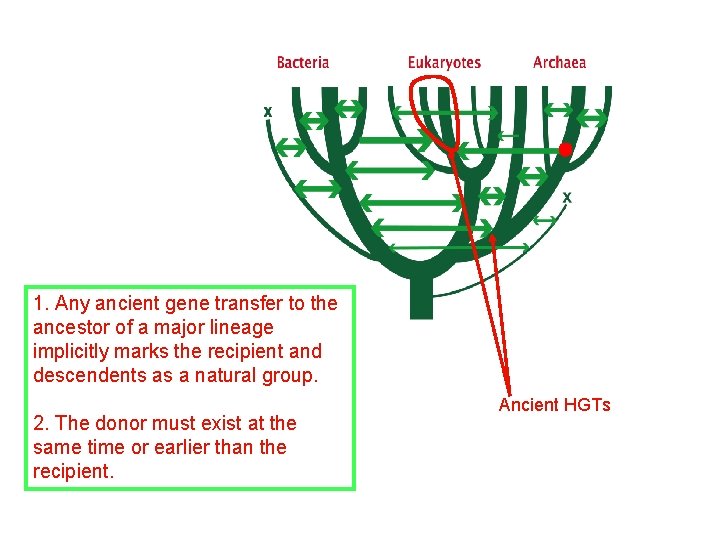
1. Any ancient gene transfer to the ancestor of a major lineage implicitly marks the recipient and descendents as a natural group. 2. The donor must exist at the same time or earlier than the recipient. Ancient HGTs
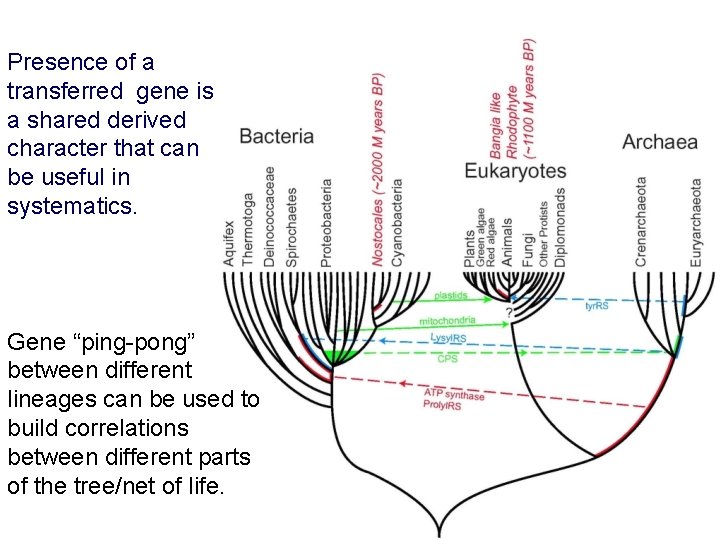
Presence of a transferred gene is a shared derived character that can be useful in systematics. Gene “ping-pong” between different lineages can be used to build correlations between different parts of the tree/net of life.
- Slides: 32