
Protein Purification and Analysis Numbers of genes Humans
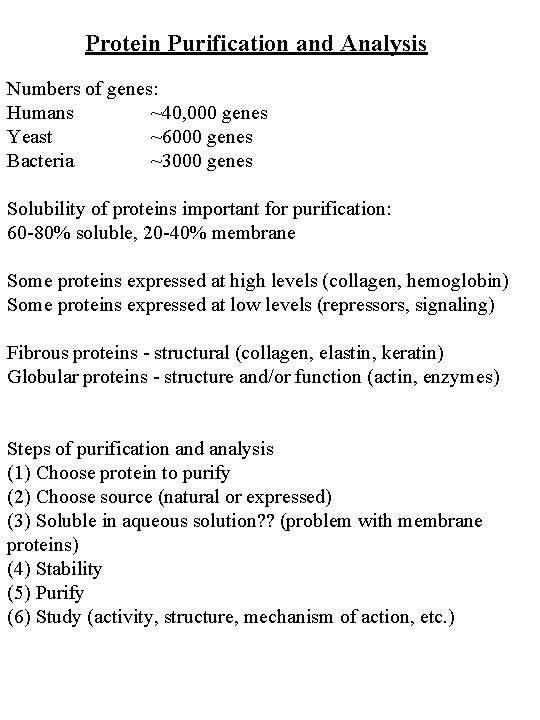
Protein Purification and Analysis Numbers of genes: Humans ~40, 000 genes Yeast ~6000 genes Bacteria ~3000 genes Solubility of proteins important for purification: 60 -80% soluble, 20 -40% membrane Some proteins expressed at high levels (collagen, hemoglobin) Some proteins expressed at low levels (repressors, signaling) Fibrous proteins - structural (collagen, elastin, keratin) Globular proteins - structure and/or function (actin, enzymes) Steps of purification and analysis (1) Choose protein to purify (2) Choose source (natural or expressed) (3) Soluble in aqueous solution? ? (problem with membrane proteins) (4) Stability (5) Purify (6) Study (activity, structure, mechanism of action, etc. )
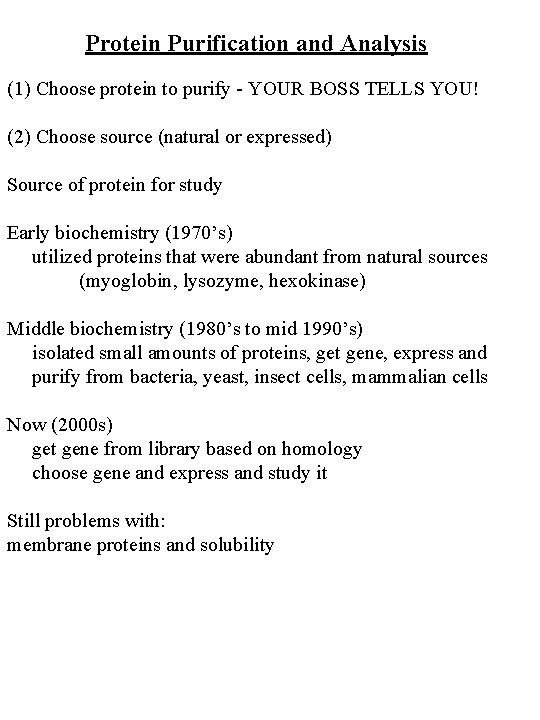
Protein Purification and Analysis (1) Choose protein to purify - YOUR BOSS TELLS YOU! (2) Choose source (natural or expressed) Source of protein for study Early biochemistry (1970’s) utilized proteins that were abundant from natural sources (myoglobin, lysozyme, hexokinase) Middle biochemistry (1980’s to mid 1990’s) isolated small amounts of proteins, get gene, express and purify from bacteria, yeast, insect cells, mammalian cells Now (2000 s) get gene from library based on homology choose gene and express and study it Still problems with: membrane proteins and solubility
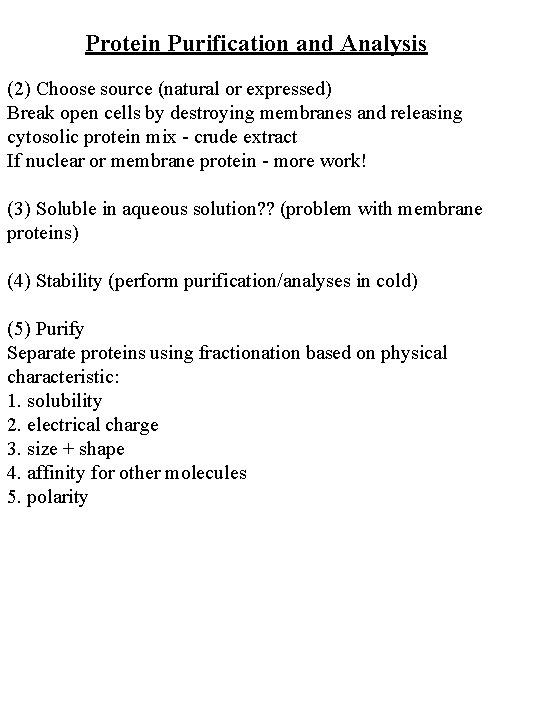
Protein Purification and Analysis (2) Choose source (natural or expressed) Break open cells by destroying membranes and releasing cytosolic protein mix - crude extract If nuclear or membrane protein - more work! (3) Soluble in aqueous solution? ? (problem with membrane proteins) (4) Stability (perform purification/analyses in cold) (5) Purify Separate proteins using fractionation based on physical characteristic: 1. solubility 2. electrical charge 3. size + shape 4. affinity for other molecules 5. polarity
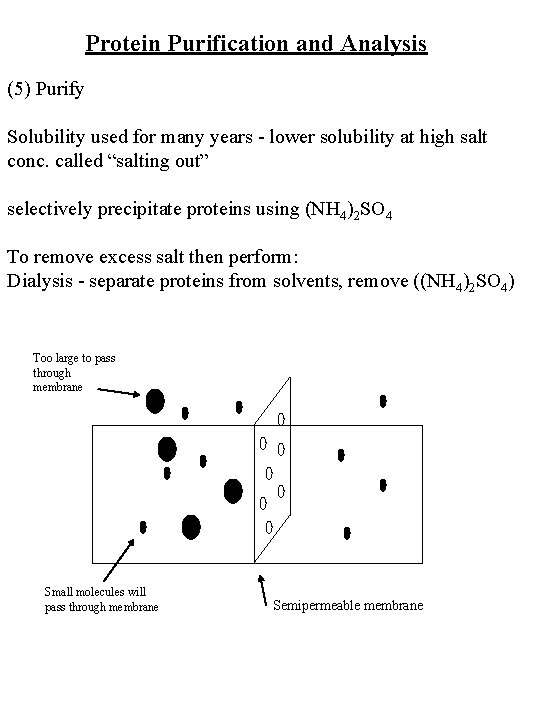
Protein Purification and Analysis (5) Purify Solubility used for many years - lower solubility at high salt conc. called “salting out” selectively precipitate proteins using (NH 4)2 SO 4 To remove excess salt then perform: Dialysis - separate proteins from solvents, remove ((NH 4)2 SO 4) Too large to pass through membrane Small molecules will pass through membrane Semipermeable membrane
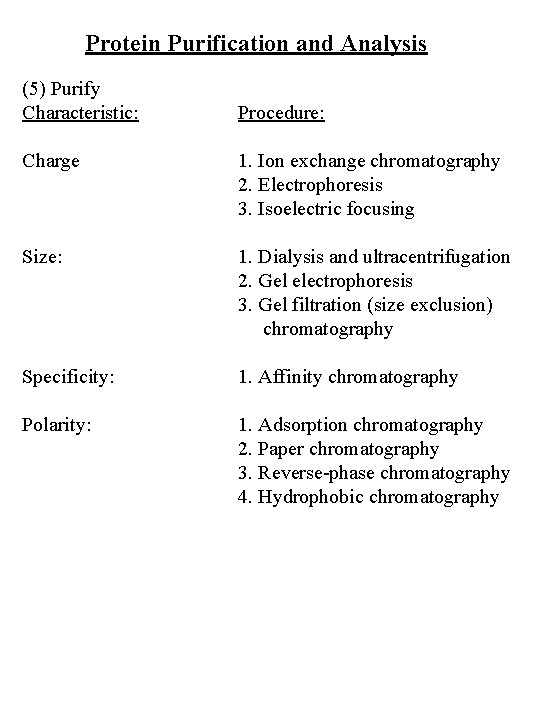
Protein Purification and Analysis (5) Purify Characteristic: Procedure: Charge 1. Ion exchange chromatography 2. Electrophoresis 3. Isoelectric focusing Size: 1. Dialysis and ultracentrifugation 2. Gel electrophoresis 3. Gel filtration (size exclusion) chromatography Specificity: 1. Affinity chromatography Polarity: 1. Adsorption chromatography 2. Paper chromatography 3. Reverse-phase chromatography 4. Hydrophobic chromatography
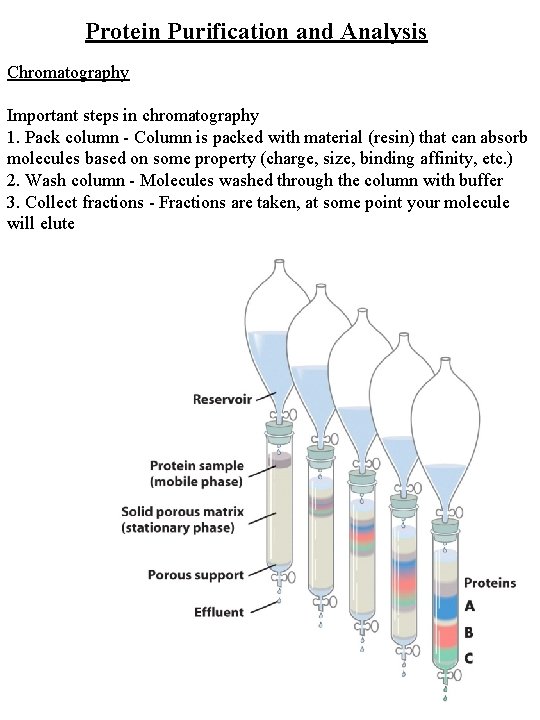
Protein Purification and Analysis Chromatography Important steps in chromatography 1. Pack column - Column is packed with material (resin) that can absorb molecules based on some property (charge, size, binding affinity, etc. ) 2. Wash column - Molecules washed through the column with buffer 3. Collect fractions - Fractions are taken, at some point your molecule will elute
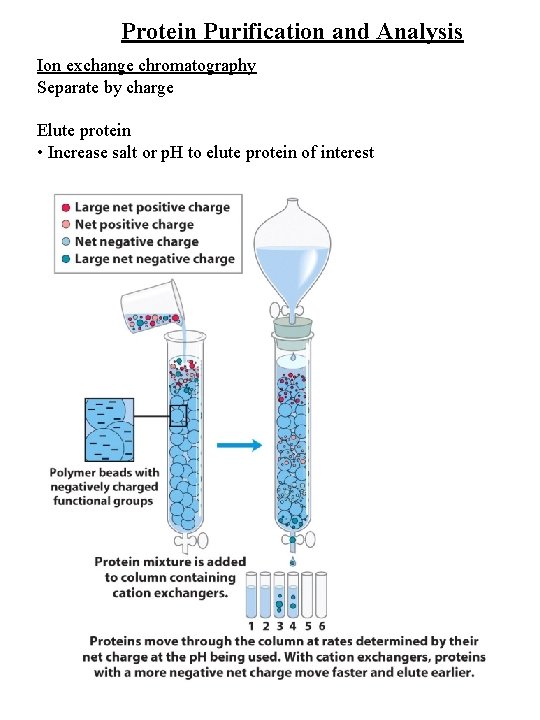
Protein Purification and Analysis Ion exchange chromatography Separate by charge Elute protein • Increase salt or p. H to elute protein of interest
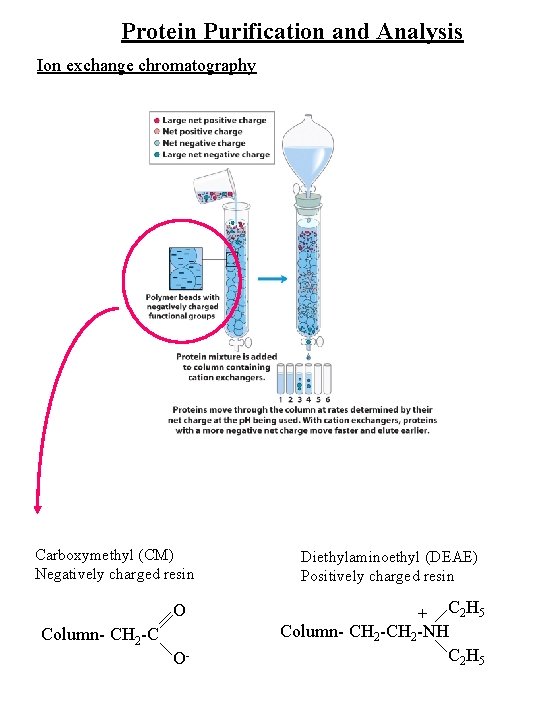
Protein Purification and Analysis Ion exchange chromatography Carboxymethyl (CM) Negatively charged resin O Column- CH 2 -C O- Diethylaminoethyl (DEAE) Positively charged resin + C 2 H 5 Column- CH 2 -NH C 2 H 5
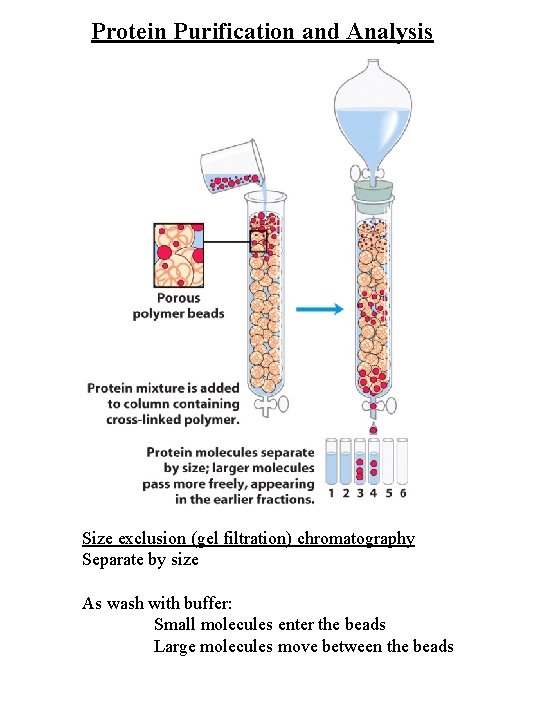
Protein Purification and Analysis Size exclusion (gel filtration) chromatography Separate by size As wash with buffer: Small molecules enter the beads Large molecules move between the beads
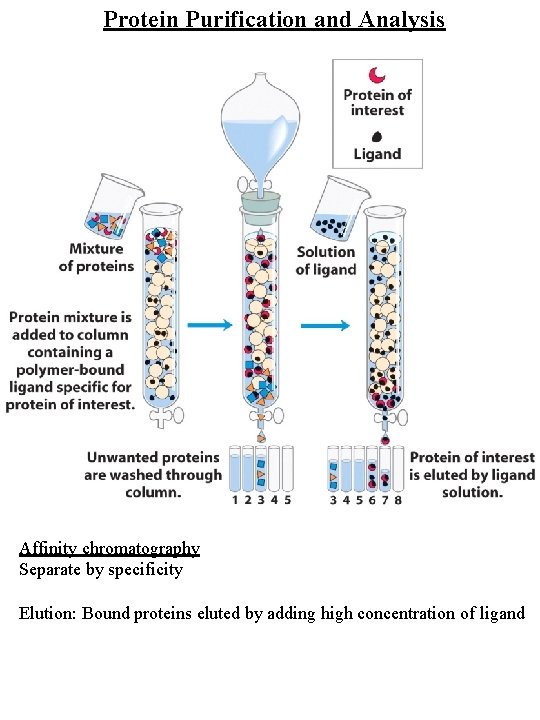
Protein Purification and Analysis Affinity chromatography Separate by specificity Elution: Bound proteins eluted by adding high concentration of ligand
Protein Purification and Analysis Additional Chromatography info HPLC (high-performance liquid chromatography) Column can be: hydrophobic, (+) or (-) charged, stereospecific, etc. Resin needs to have incompressible beads high pressure pumps speed the movement of proteins down the column HPLC limits protein band spreading - increase resolution
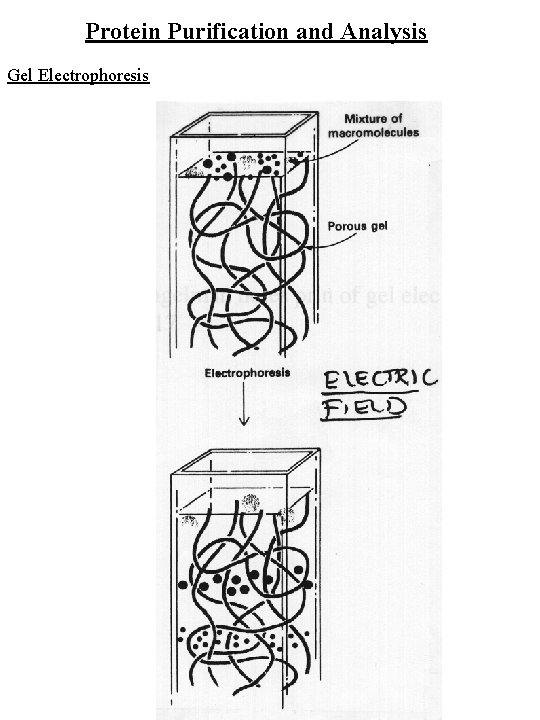
Protein Purification and Analysis Gel Electrophoresis
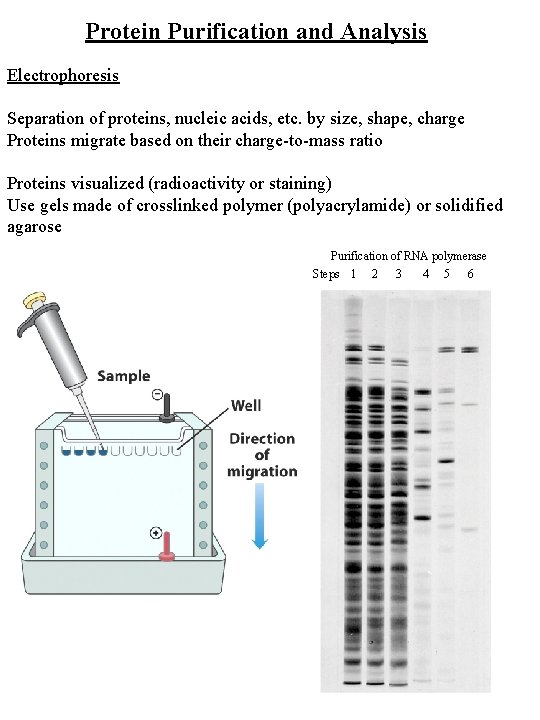
Protein Purification and Analysis Electrophoresis Separation of proteins, nucleic acids, etc. by size, shape, charge Proteins migrate based on their charge-to-mass ratio Proteins visualized (radioactivity or staining) Use gels made of crosslinked polymer (polyacrylamide) or solidified agarose Purification of RNA polymerase Steps 1 2 3 4 5 6
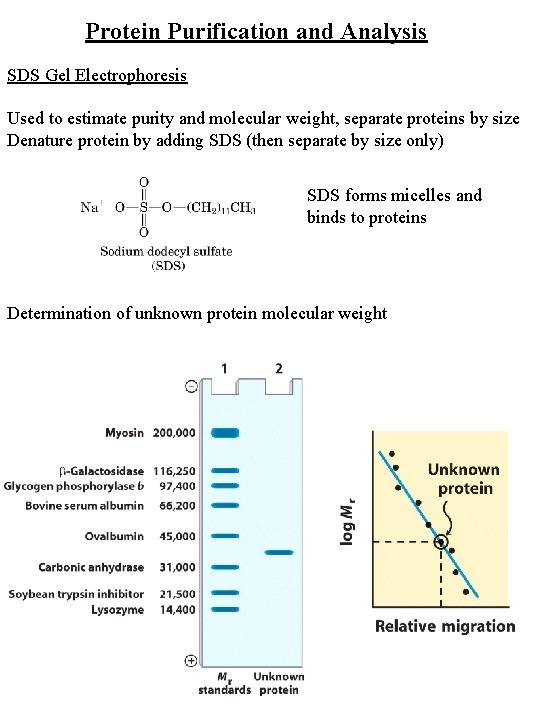
Protein Purification and Analysis SDS Gel Electrophoresis Used to estimate purity and molecular weight, separate proteins by size Denature protein by adding SDS (then separate by size only) SDS forms micelles and binds to proteins Determination of unknown protein molecular weight
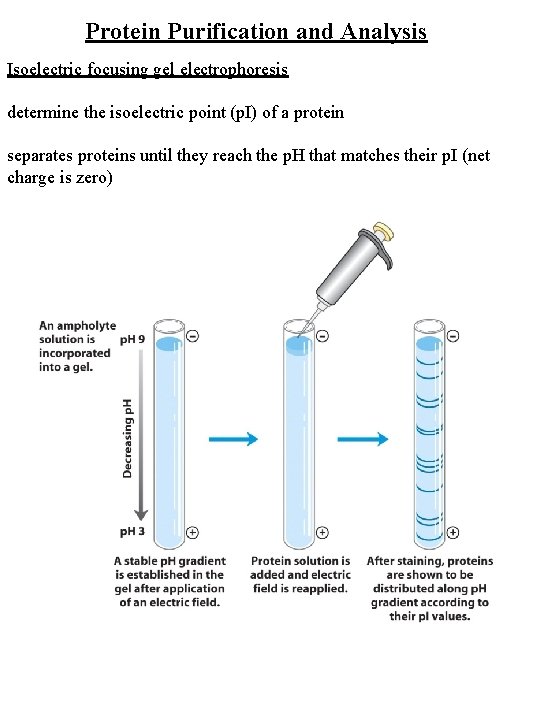
Protein Purification and Analysis Isoelectric focusing gel electrophoresis determine the isoelectric point (p. I) of a protein separates proteins until they reach the p. H that matches their p. I (net charge is zero)

Protein Purification and Analysis Centrifugation Separate proteins by size or density Differential centrifugation - separates large from small particles Isopycnic (sucrose-density) centrifugation - separates particles of different densities
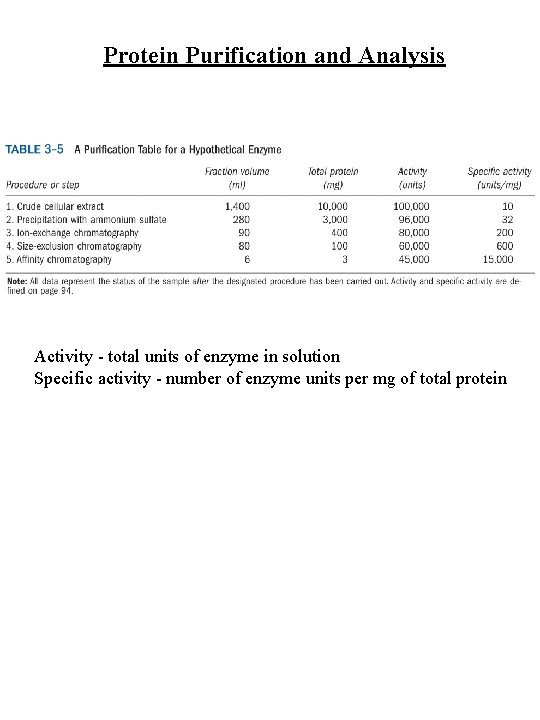
Protein Purification and Analysis Activity - total units of enzyme in solution Specific activity - number of enzyme units per mg of total protein
Protein Sequencing Function of protein depends on its amino acid sequence Proteins with different functions always have different sequences Changing just 1 amino acid can make a protein defective Functionally similar proteins from different species have similar sequences Steps for sequencing large protein: 1. Cleave S-S bonds 2. Separate subunits 3. Determine N-terminus of protein 4. Determine amino acid composition 5. Use cleavage agents to digest protein into smaller fragments 6. Amino acid composition and sequence of fragments 7. Use overlapping fragments to get full sequence
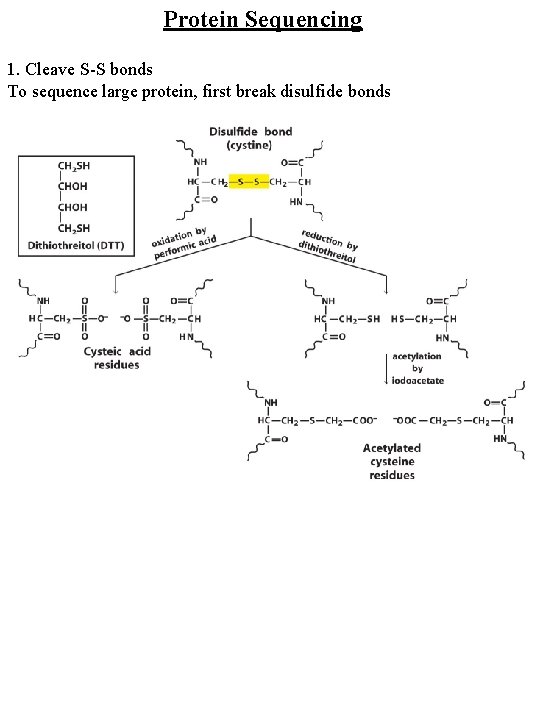
Protein Sequencing 1. Cleave S-S bonds To sequence large protein, first break disulfide bonds
Protein Folding and Denaturation 2. Separate subunits Denaturation = loss of 3 D structure resulting in loss of function Denaturation affects weak interactions, such as H-bonds Denature proteins by: Heat, extreme p. H, add organics (alcohol, acetone) Add urea, guanidine hydrochloride, detergent separate subunits by gel electrophoresis, chromatography, etc.
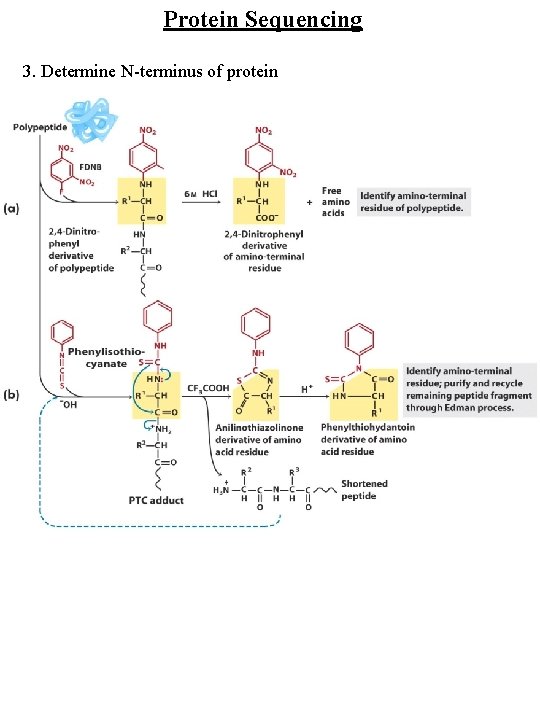
Protein Sequencing 3. Determine N-terminus of protein
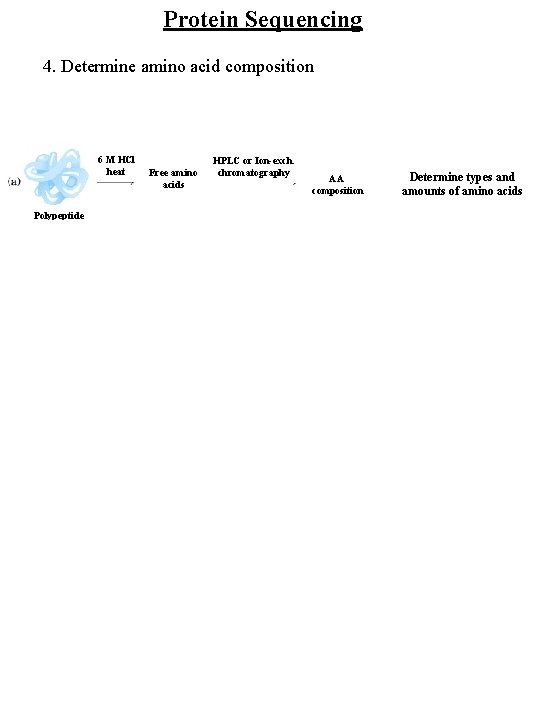
Protein Sequencing 4. Determine amino acid composition 6 M HCl heat Free amino acids HPLC or Ion-exch. chromatography AA composition Determine types and amounts of amino acids Polypeptide FDNB + Free amino acids 6 M HCl 2, 4 -Dinitrophenyl derivative of protein 2, 4 -Dinitrophenyl derivative of amino-terminal AA Identify amino-terminal residue of protein Determine number of polypeptides Phenylisothiocyanate + Trifluoroacetic acid Phenylisothio. Cyanate derivative of aminoterminal AA Identify amino-terminal residue of protein Purify and recycle remaining peptide fragment through Edman process
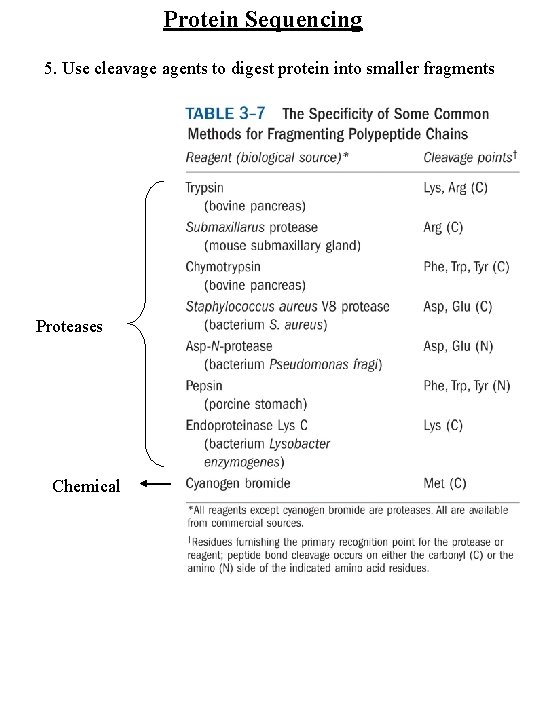
Protein Sequencing 5. Use cleavage agents to digest protein into smaller fragments Proteases Chemical
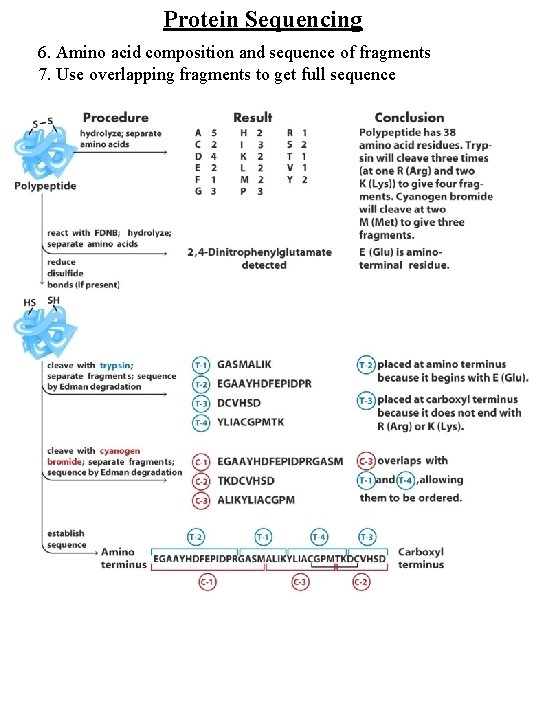
Protein Sequencing 6. Amino acid composition and sequence of fragments 7. Use overlapping fragments to get full sequence
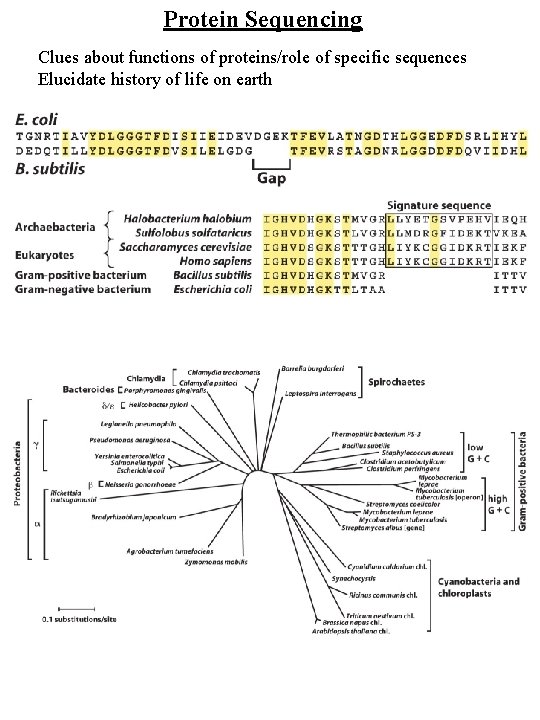
Protein Sequencing Clues about functions of proteins/role of specific sequences Elucidate history of life on earth
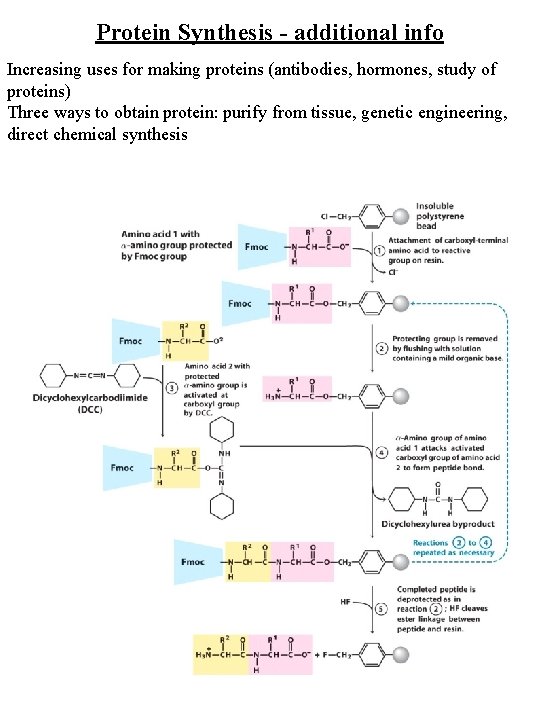
Protein Synthesis - additional info Increasing uses for making proteins (antibodies, hormones, study of proteins) Three ways to obtain protein: purify from tissue, genetic engineering, direct chemical synthesis
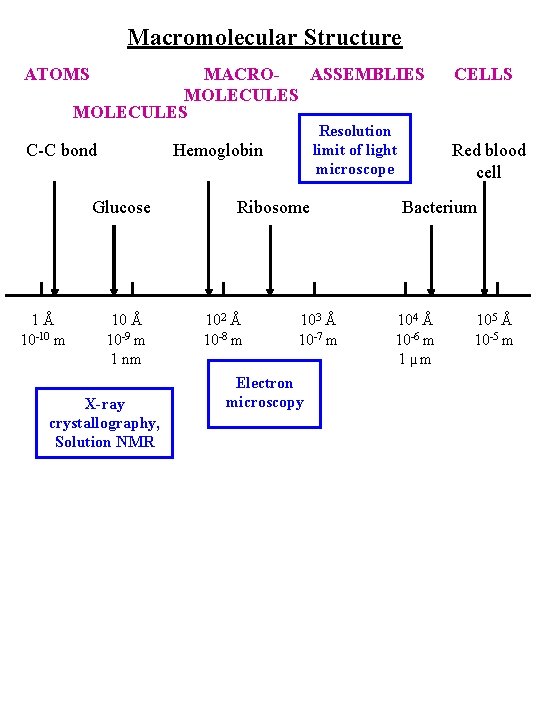
Macromolecular Structure ATOMS MACROASSEMBLIES MOLECULES C-C bond Hemoglobin Glucose 1Å 10 -10 m Resolution limit of light microscope 10 Å 10 -9 m 1 nm X-ray crystallography, Solution NMR Ribosome 102 Å 10 -8 m 103 Å 10 -7 m Electron microscopy CELLS Red blood cell Bacterium 104 Å 10 -6 m 1 µm 105 Å 10 -5 m
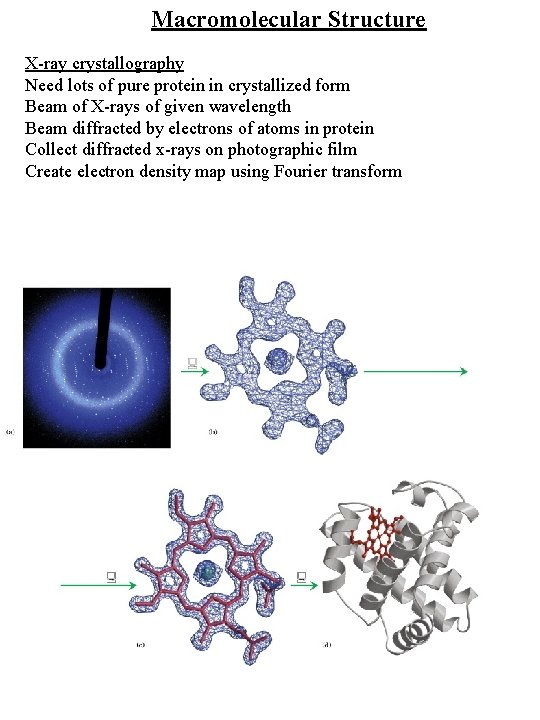
Macromolecular Structure X-ray crystallography Need lots of pure protein in crystallized form Beam of X-rays of given wavelength Beam diffracted by electrons of atoms in protein Collect diffracted x-rays on photographic film Create electron density map using Fourier transform
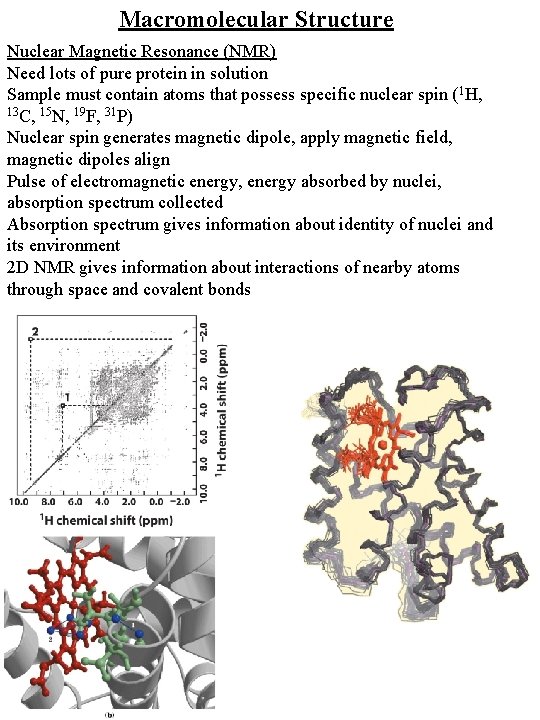
Macromolecular Structure Nuclear Magnetic Resonance (NMR) Need lots of pure protein in solution Sample must contain atoms that possess specific nuclear spin (1 H, 13 C, 15 N, 19 F, 31 P) Nuclear spin generates magnetic dipole, apply magnetic field, magnetic dipoles align Pulse of electromagnetic energy, energy absorbed by nuclei, absorption spectrum collected Absorption spectrum gives information about identity of nuclei and its environment 2 D NMR gives information about interactions of nearby atoms through space and covalent bonds
- Slides: 29