
PROTEIN PATTERN DATABASES PROTEIN SEQUENCES SUPERFAMILY DOMAIN MOTIF
PROTEIN PATTERN DATABASES
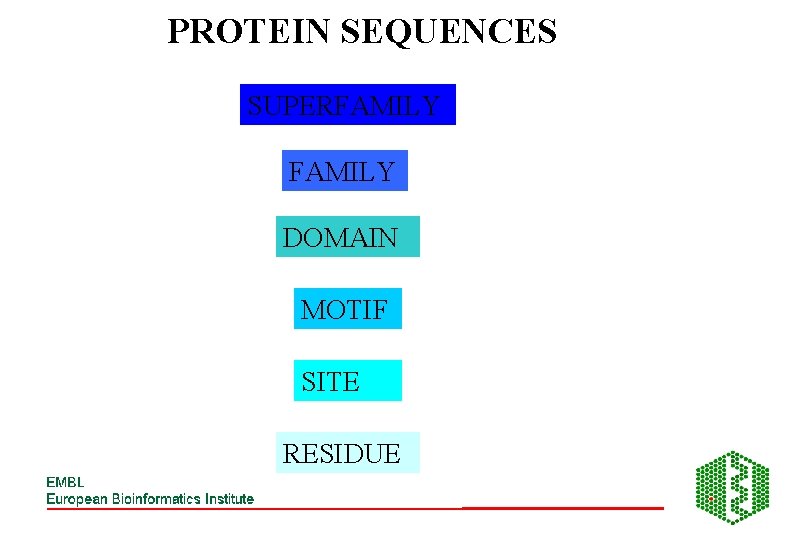
PROTEIN SEQUENCES SUPERFAMILY DOMAIN MOTIF SITE RESIDUE
BASIC INFORMATION COMES FROM SEQUENCE • Multiple alignments of related sequences- can build up consensus sequences of known families, domains, motifs or sites. • Pattern • Matrix • Profile • HMM
COMMON PROTEIN PATTERN DATABASES • • Prosite patterns Prosite profiles Pfam SMART Prints TIGRFAMs BLOCKS Alignment databases • Pro. Dom • PIR-ALN • Proto. Map • Domo • Pro. Class
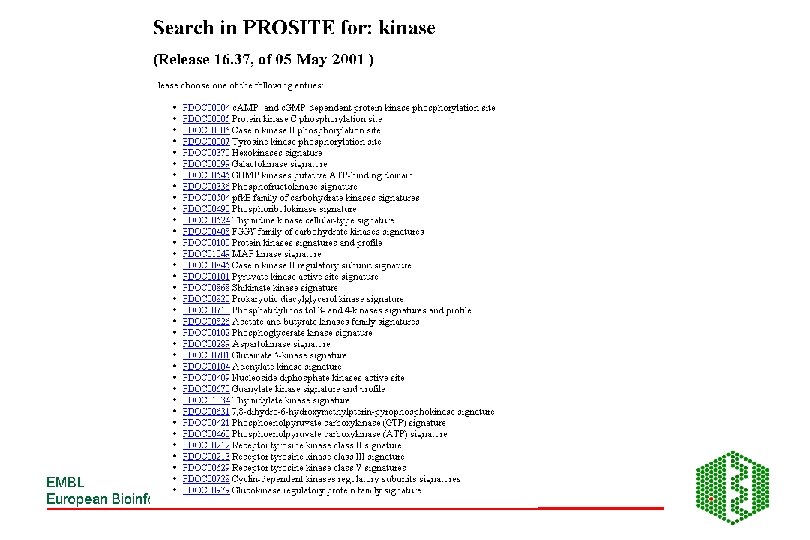
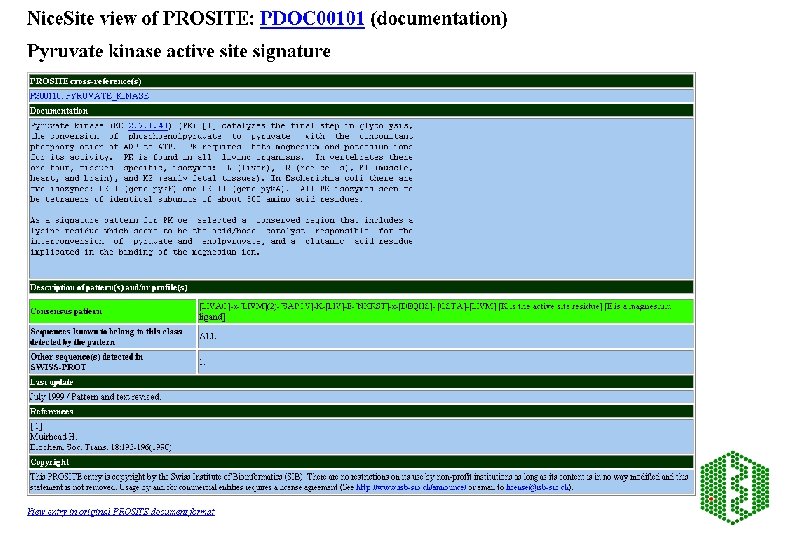
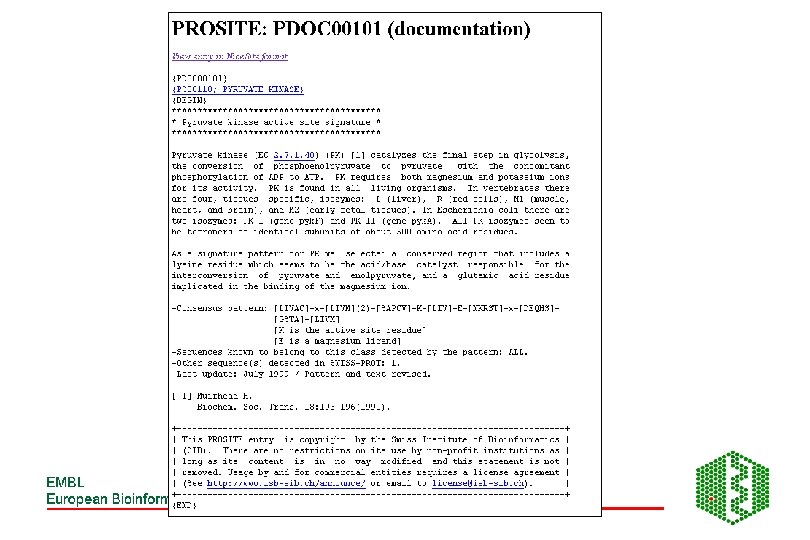
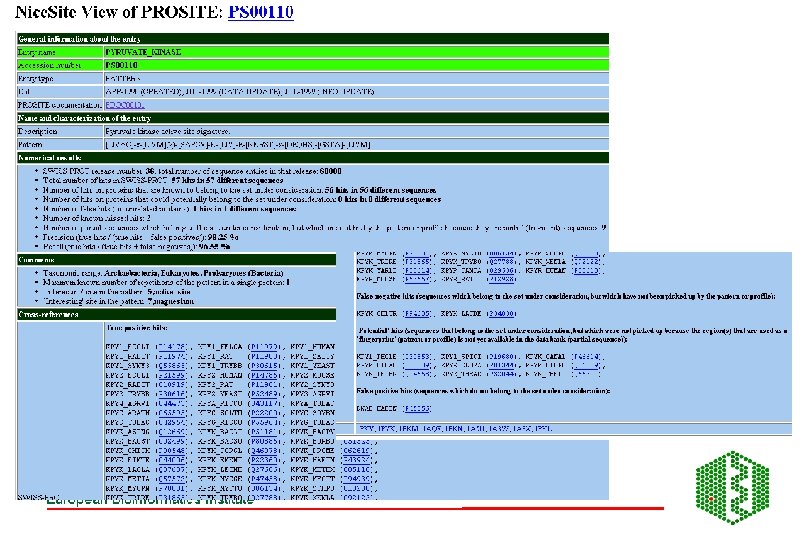
PROSITE Patterns and profiles • http: //www. expasy. ch/prosite/ • Building a pattern: a. ) from literature -test against SP, update if necessary b. ) new patterns: Start with reviewed protein family, known functional sites: • • • enzyme catalytic site, attachment site eg heme, metal ion binding site cysteines for disulphide bonds, molecule (GTP) or protein binding site
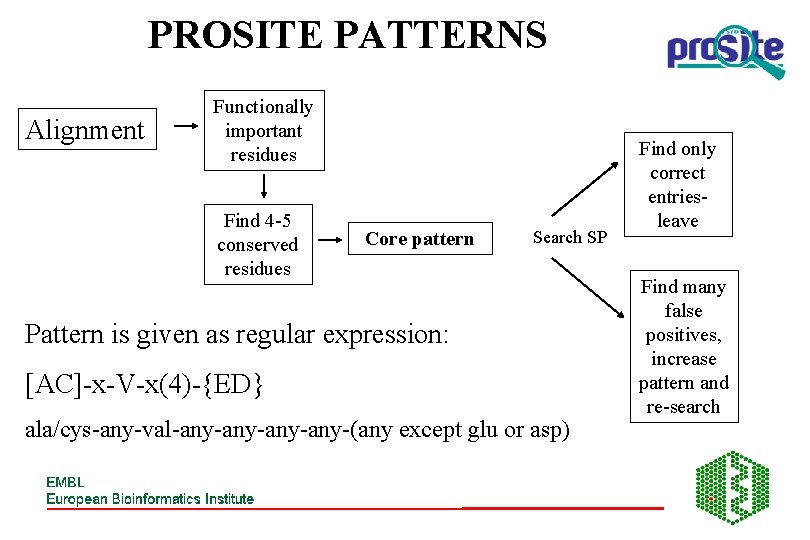
PROSITE PATTERNS Alignment Functionally important residues Find 4 -5 conserved residues Core pattern Search SP Pattern is given as regular expression: [AC]-x-V-x(4)-{ED} ala/cys-any-val-any-any-(any except glu or asp) Find only correct entriesleave Find many false positives, increase pattern and re-search
PROSITE PROFILES • Not confined to small regions, cover whole protein or domain and has more info on allowed aa at each position • Start with multiple seq alignment -uses a symbol comparison table to convert residue frequency distributions into weights • Result- table of position-specific amino acid weights and gap costs- calculate a similarity score for any alignment between a profile and a sequence, or parts of a profile and a sequence • Tested on SP, refined. Begin as prefiles then integrated
Pfam • http: //www. sanger. ac. uk/Software/Pfam/index. shtml • Database of HMMs for domains and families • HMMs are built from HMMER 2 (Bayesian statistical models), can use two modes ls or fs, all domains should be matched with ls • Use Bits scores, thresholds are chosen manually using E-value from extreme fit distribution • Two parts to Pfam: éPfam. A -manually curated éPfam. B -automatic clustering of rest of SPTR from Pro. Dom using Domainer • Use -looking at domain structure of SPTR protein or new sequence
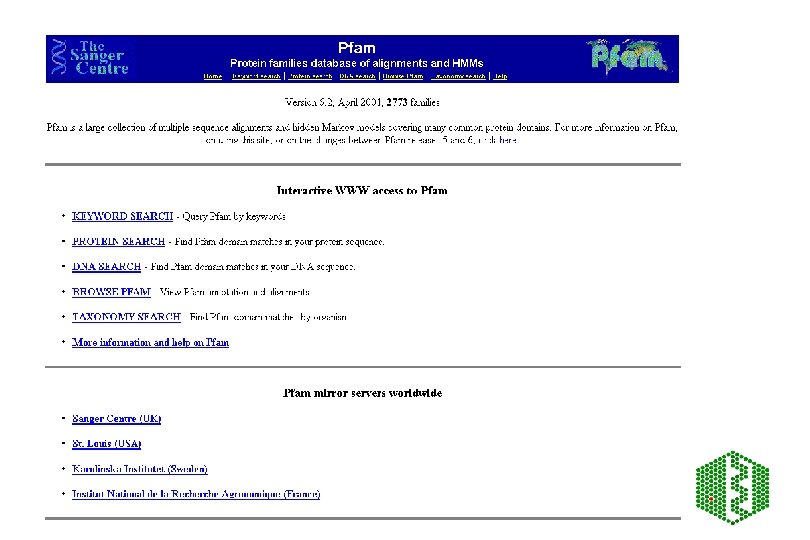
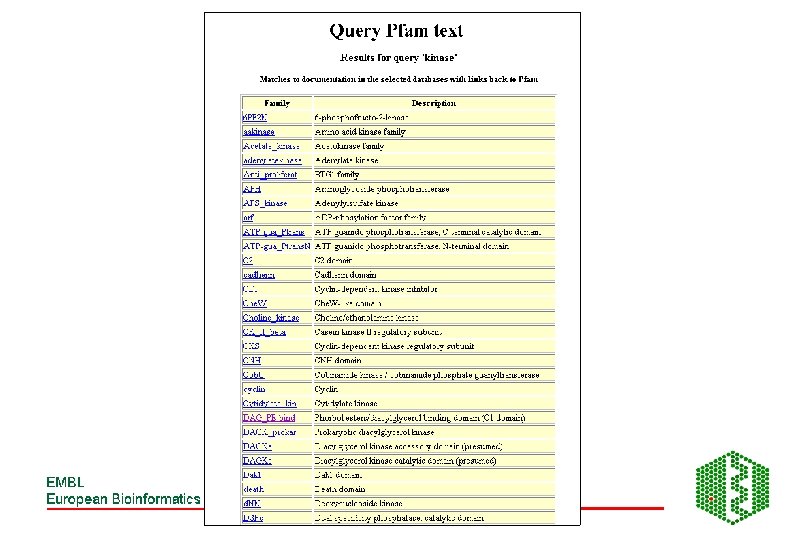
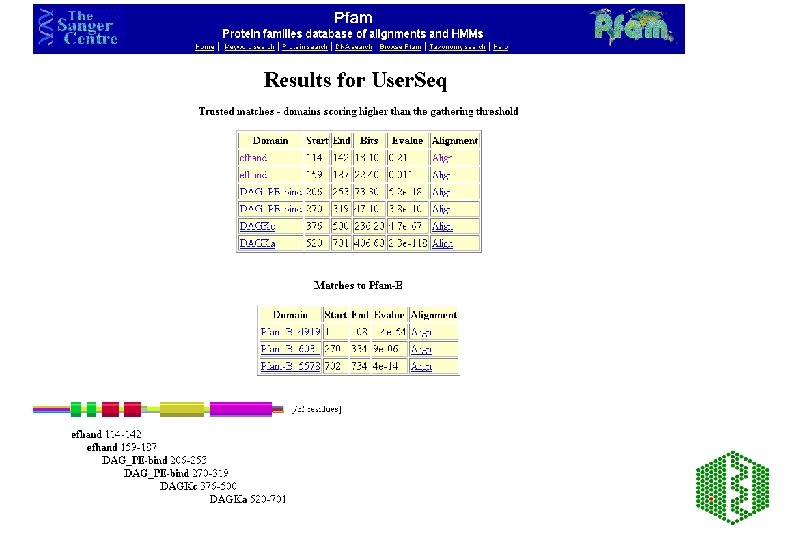
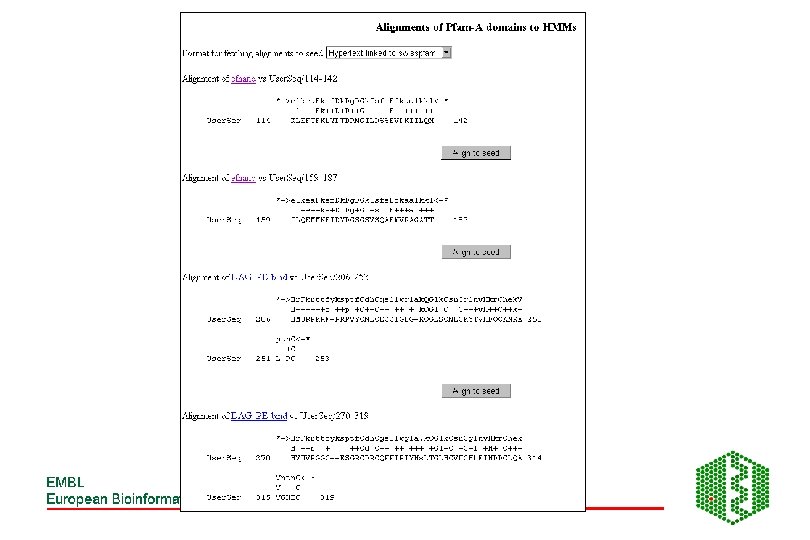
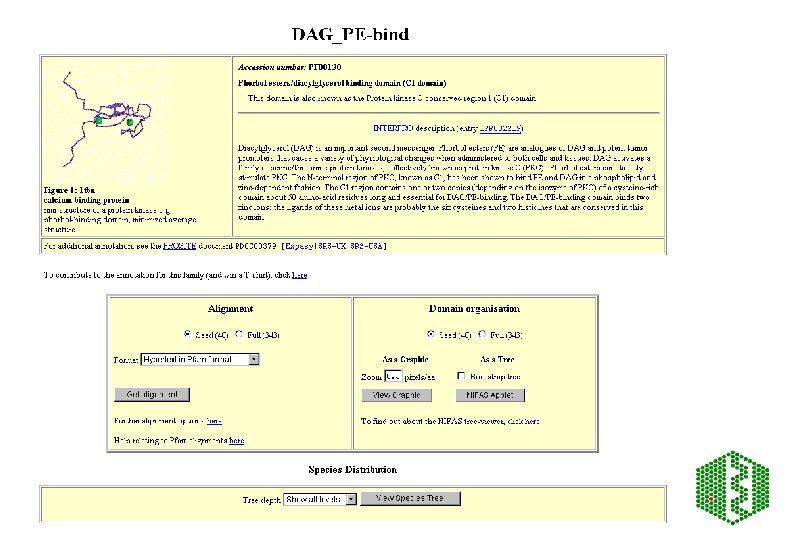
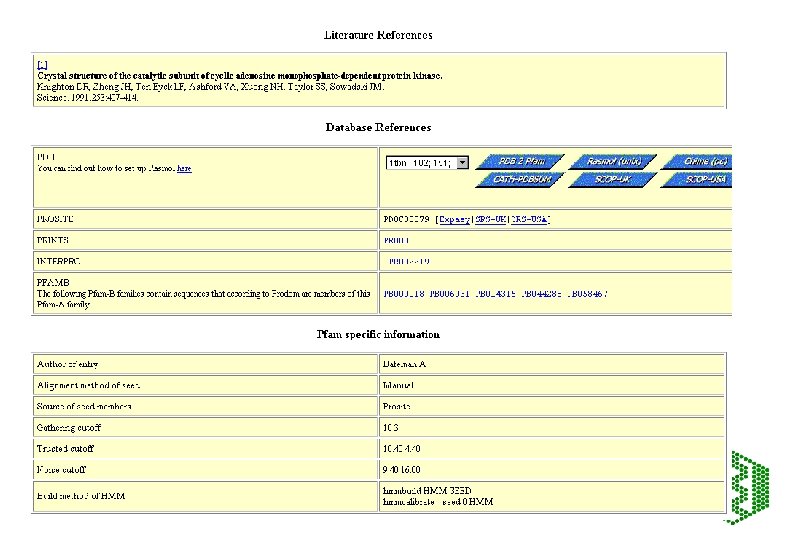
Additional features of Pfam • Pfam. A has about 65% coverage of SPTR, rest is covered by Pfam. B • Can search directly with DNA -Wise 2 package • Can view taxonomic range of each entry • Can view proteins with similar domain structure and view of all family members • Links to other databases including 3 D structure • Note: No 2 Pfam. A HMMs should overlap
SMART- Simple Modular Architecture Research Tool • http: //smart. embl-heidelberg. de/ • Relies on hand curated multiple sequence alignments of representative family members from PSI-BLAST- builds HMMsused to search database for more seq for alignment- iterative searching until no more homologues detected • Store Ep (highest per protein E-value of T) and En (lowest per protein E-value of N) values • Will predict domain homologue with sequence if – Ep < E-value <En and E-value <1. 0
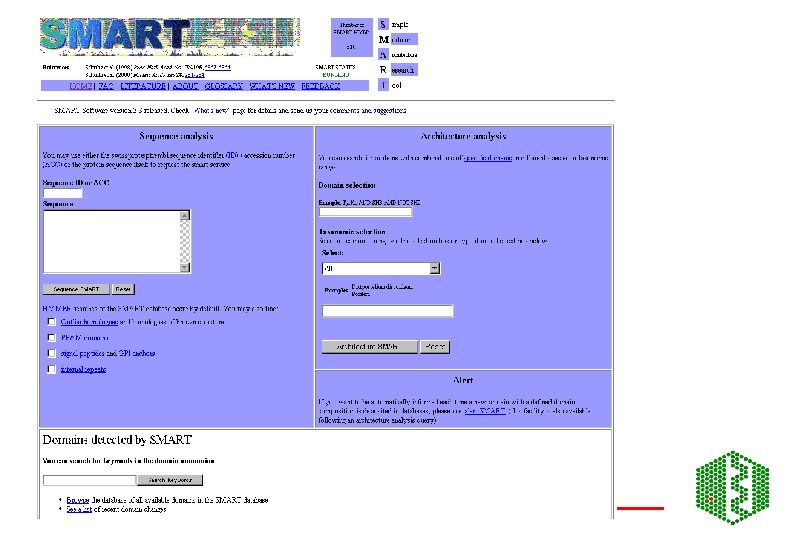
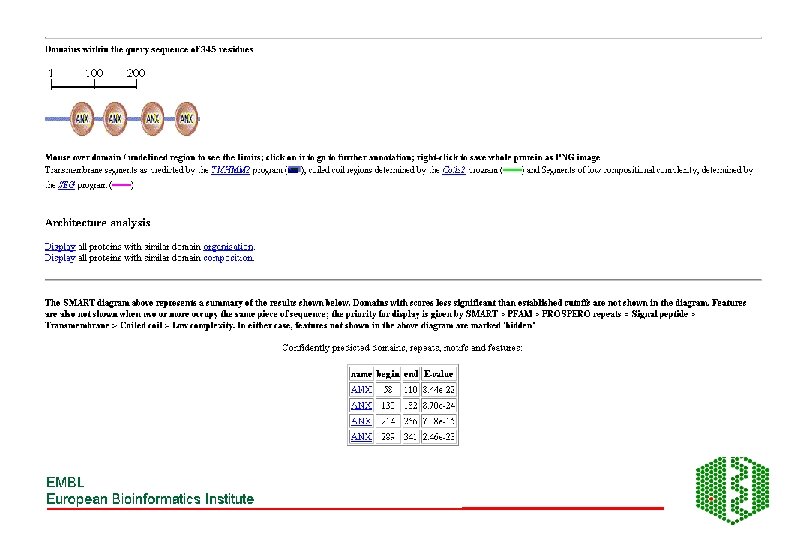
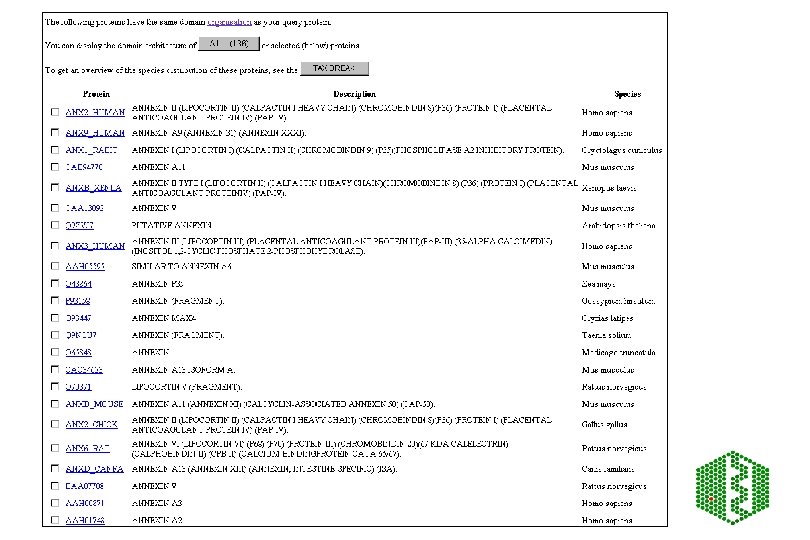
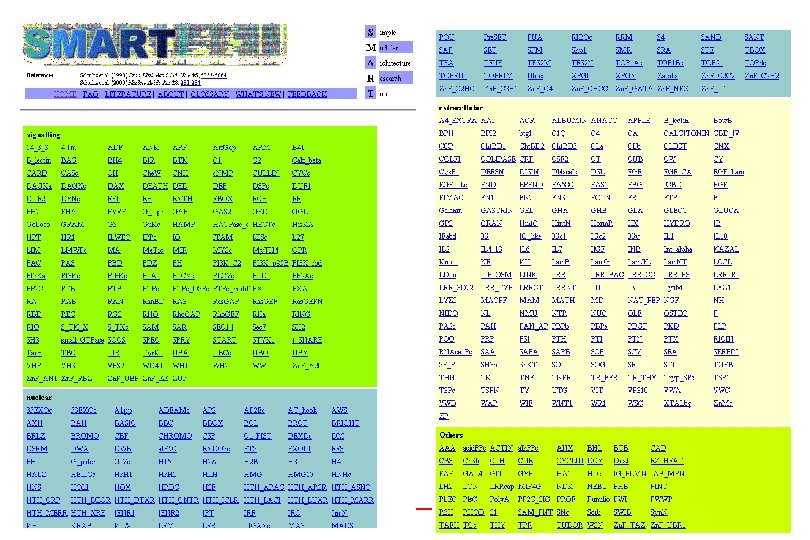
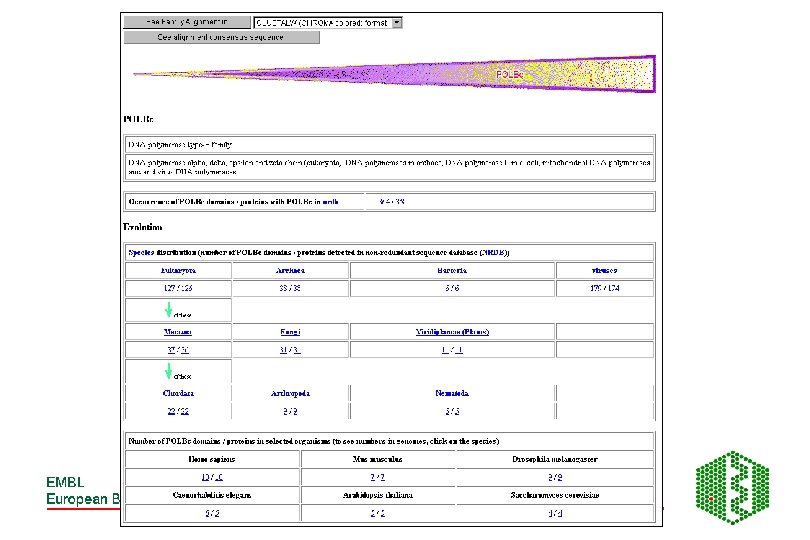
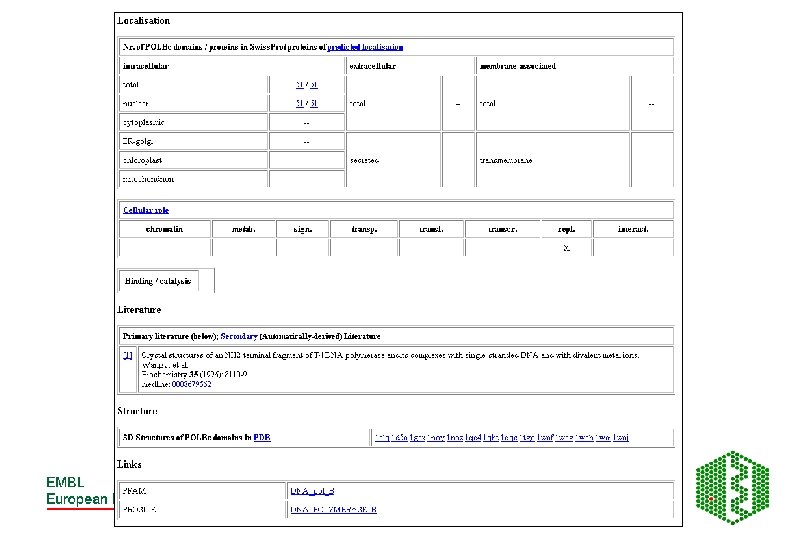
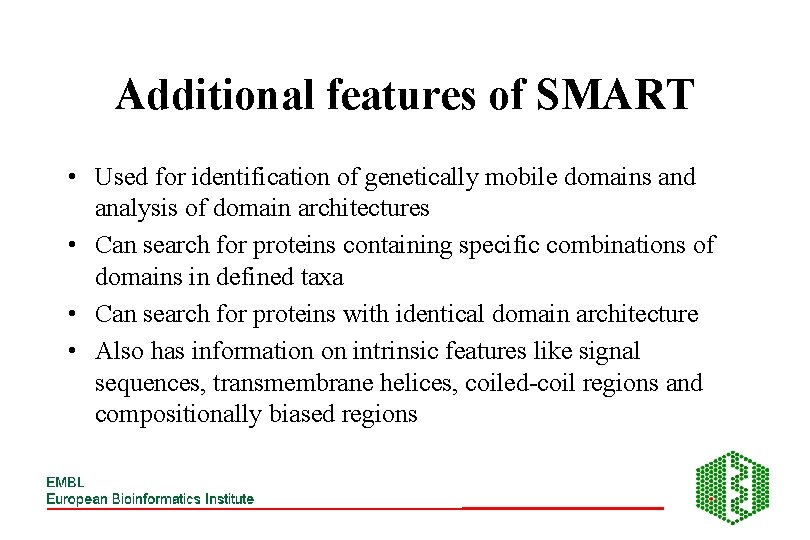
Additional features of SMART • Used for identification of genetically mobile domains and analysis of domain architectures • Can search for proteins containing specific combinations of domains in defined taxa • Can search for proteins with identical domain architecture • Also has information on intrinsic features like signal sequences, transmembrane helices, coiled-coil regions and compositionally biased regions
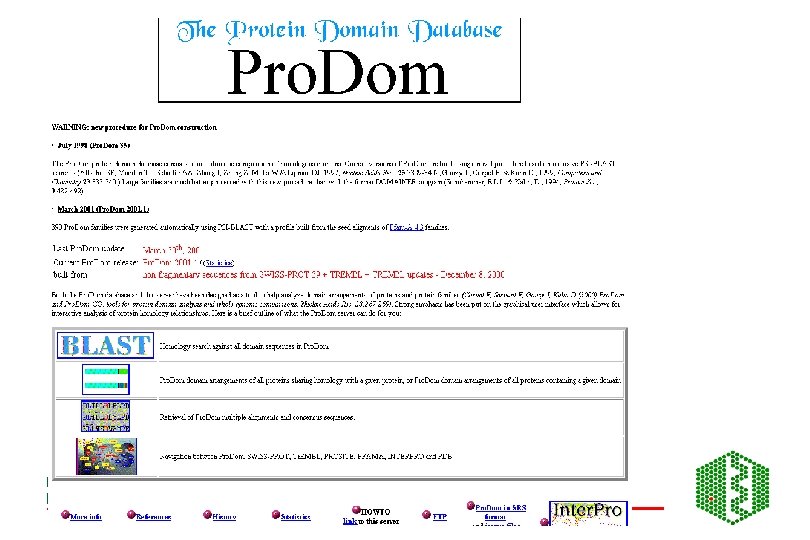
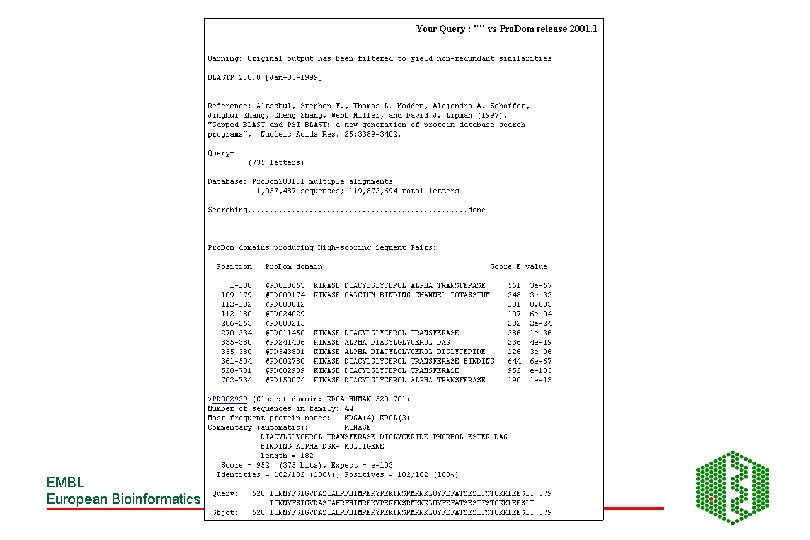
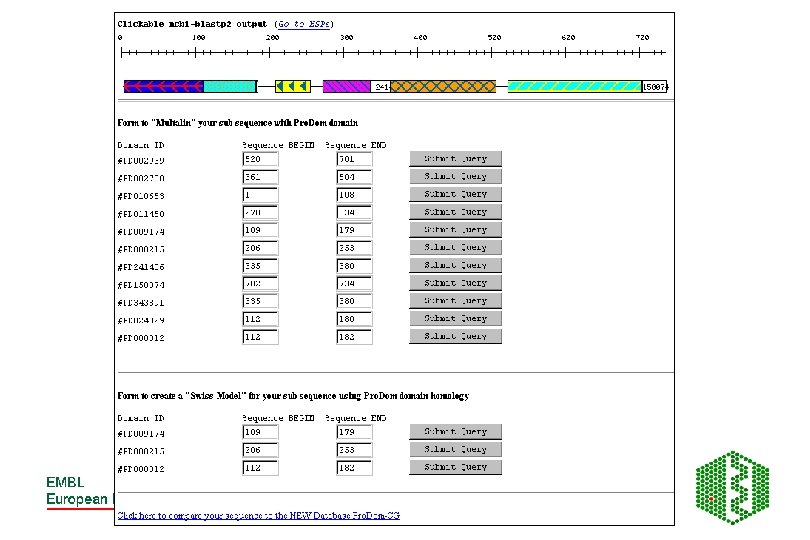
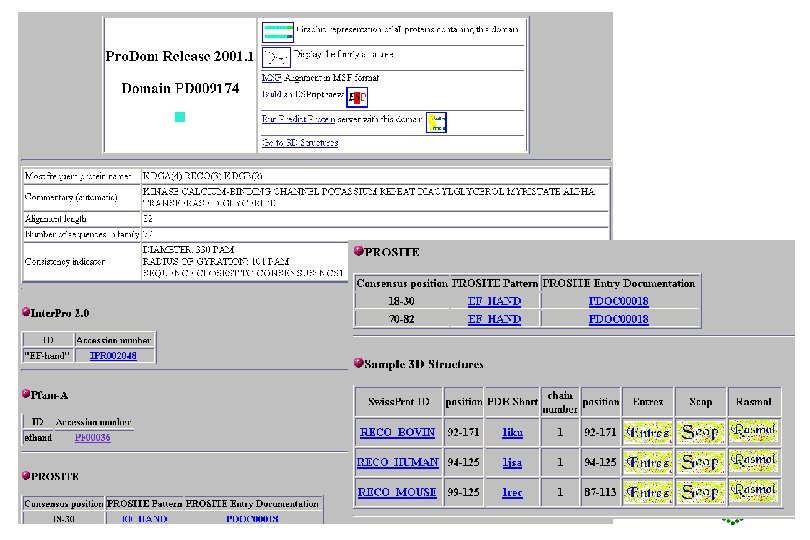
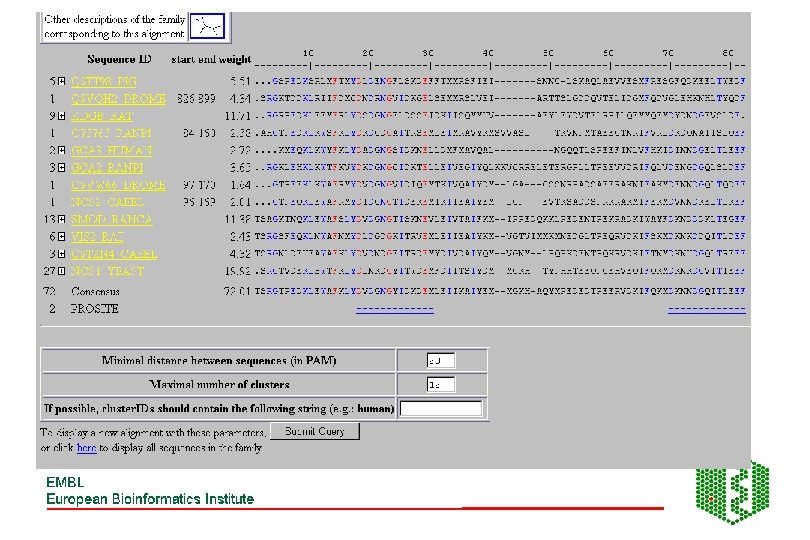
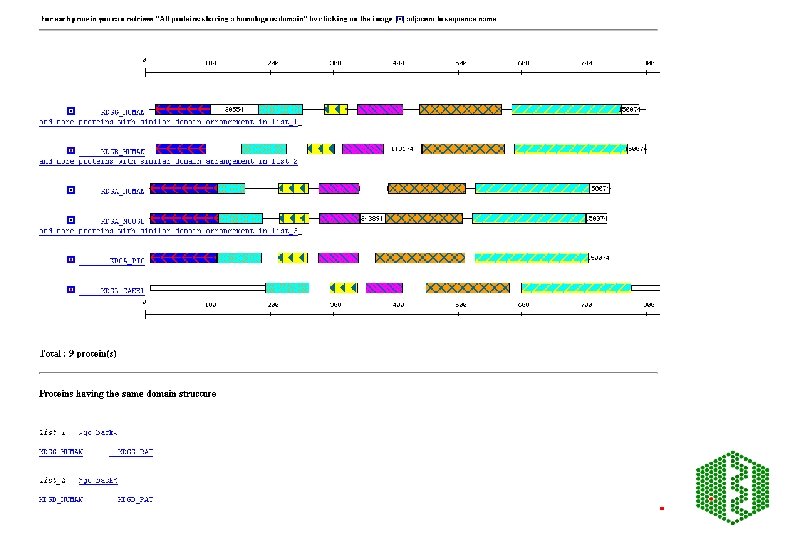
Pro. Dom • http: //www. toulouse. inra. fr/prodom. html • Groups all sequences in SPTR into domains ->150 000 families • Use automatic process to build up domains -DOMAINER • For expert curated families, use Pfam. A alignments to build new Pro. Dom families • Use diameter (max distance between two domains in family) and radius of gyration root mean square of distance between domain and family consensus), both counted in PAM (percent accepted mutations (no per 100 aa) to measure consistency of a family, lower these values, more homogeneous family
Building of Pro. Dom families DB initialisation: SEG, split modified seq, sort by size Extract shortest sequence as a query Query DB looking for internal repeats Remove new found domains, sort by size PSI-BLAST Repeated until database is empty Extract first repeat use as a query New Pro. Dom domain family
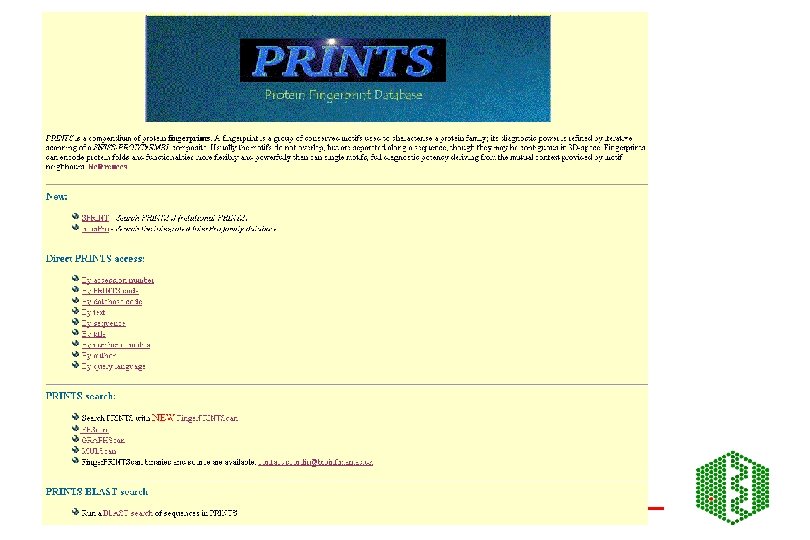
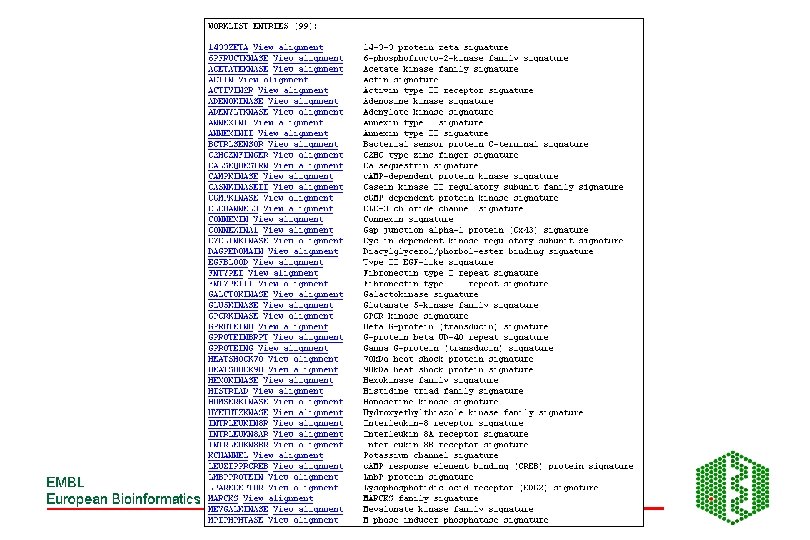
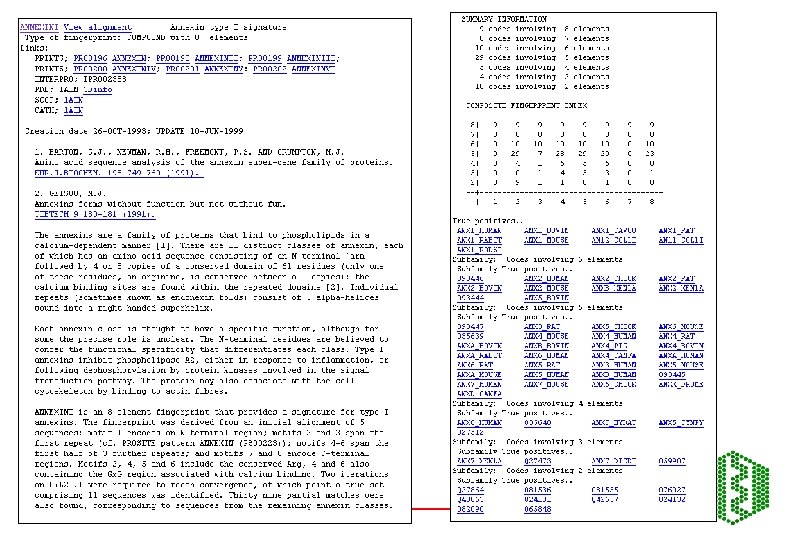
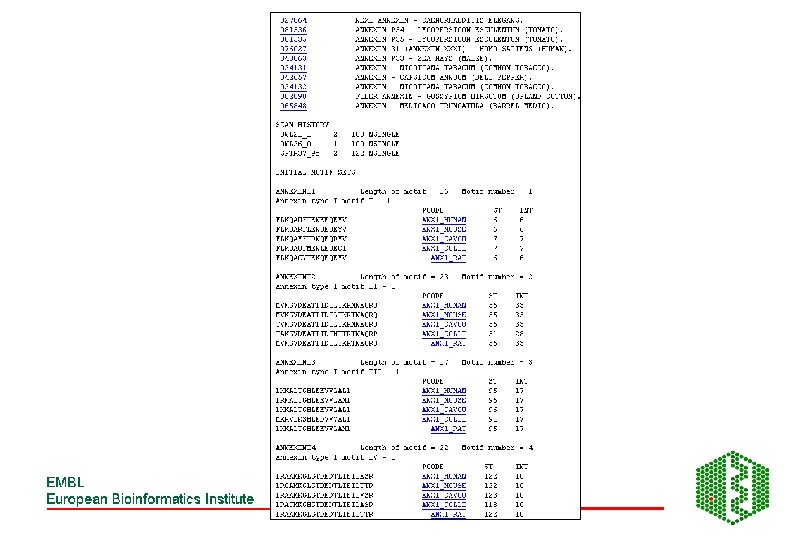
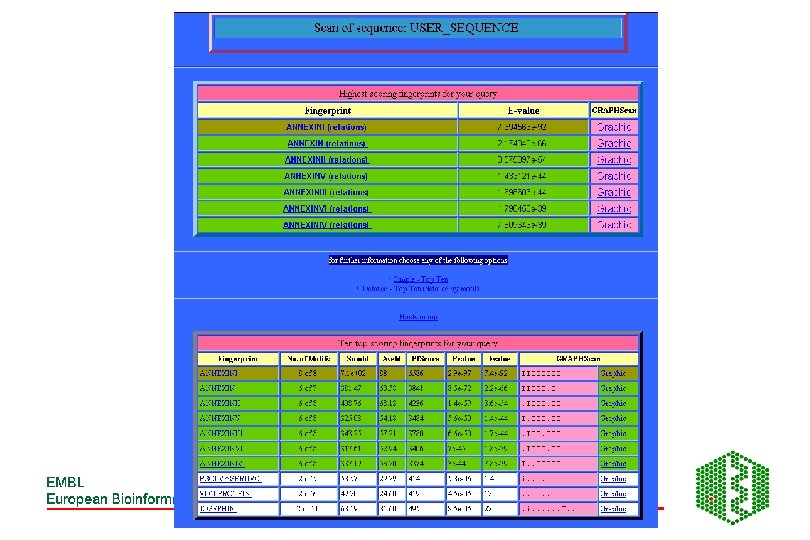
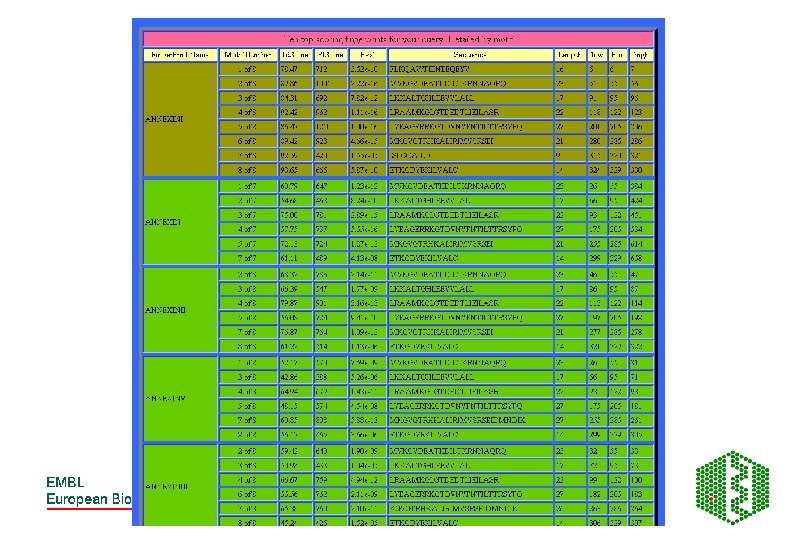
PRINTS -Fingerprint DB • http: //www. bioinf. man. ac. uk/dbbrowser/PRINTS/ • Fingerprint- set of motifs used to predict occurrence of similar motifs in a sequence • Built by iterative scanning of OWL database • Multiple sequence alignment- identify conserved motifs- scan database with each motif- correlate hitlists for each- should have more sequences now- generate more motifs- repeat until convergence • Recognition of individual elements in fingerprint is mutually conditional • True members match all elements in order, subfamily match part of fingerprint
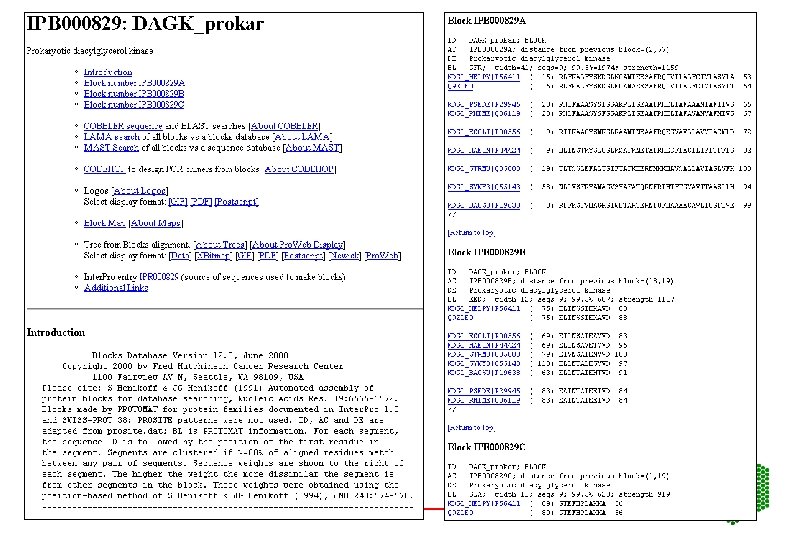
BLOCKS • http: //www. blocks. fhcrc. org/ • Multiply aligned ungapped segments corresponding to most highly conserved regions of proteins- represented in profile • Built up using PROTOMAT (BLOSUM scoring model), calibrated against SWISS-PROT, use LAMA to search blocks against blocks • Starting sequences from Prosite, PRINTS, Pfam, Pro. Dom and Domo - total of 2129 families
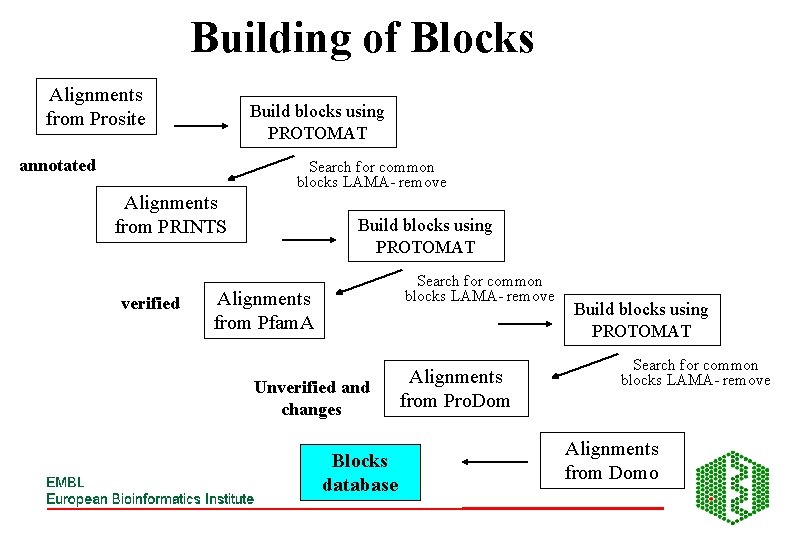
Building of Blocks Alignments from Prosite Build blocks using PROTOMAT annotated Search for common blocks LAMA- remove Alignments from PRINTS verified Build blocks using PROTOMAT Search for common blocks LAMA- remove Alignments from Pfam. A Unverified and changes Blocks database Alignments from Pro. Dom Build blocks using PROTOMAT Search for common blocks LAMA- remove Alignments from Domo
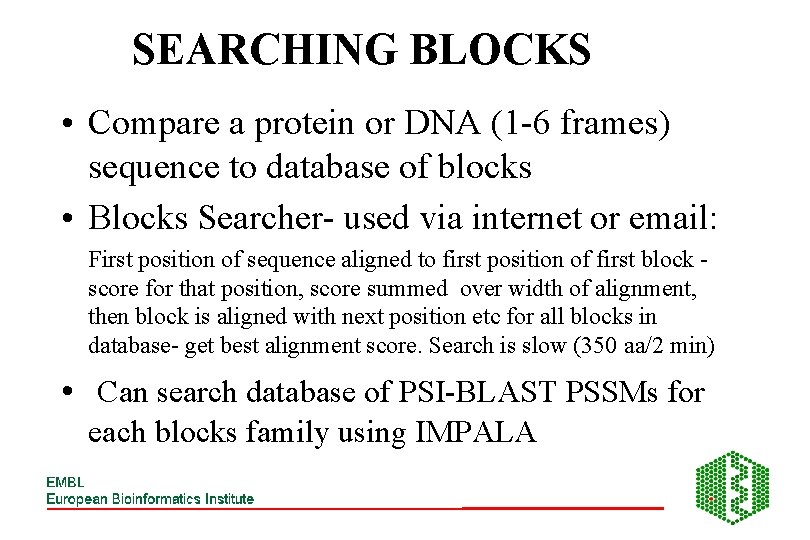
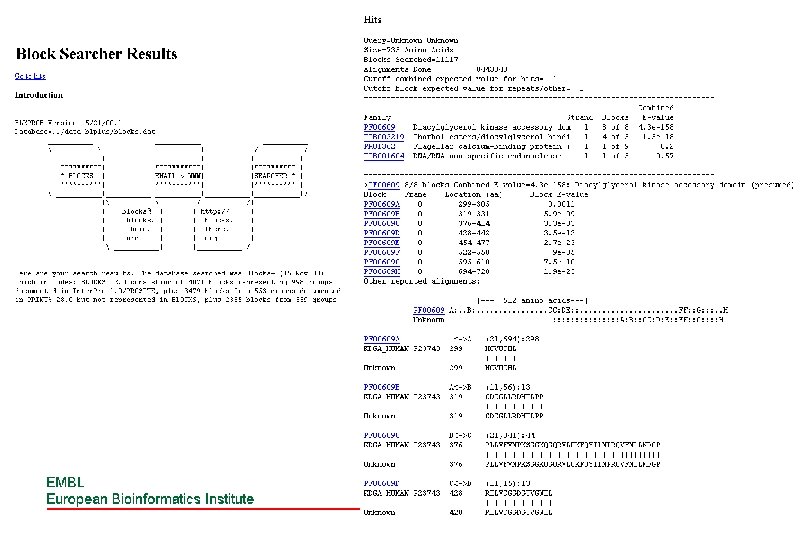
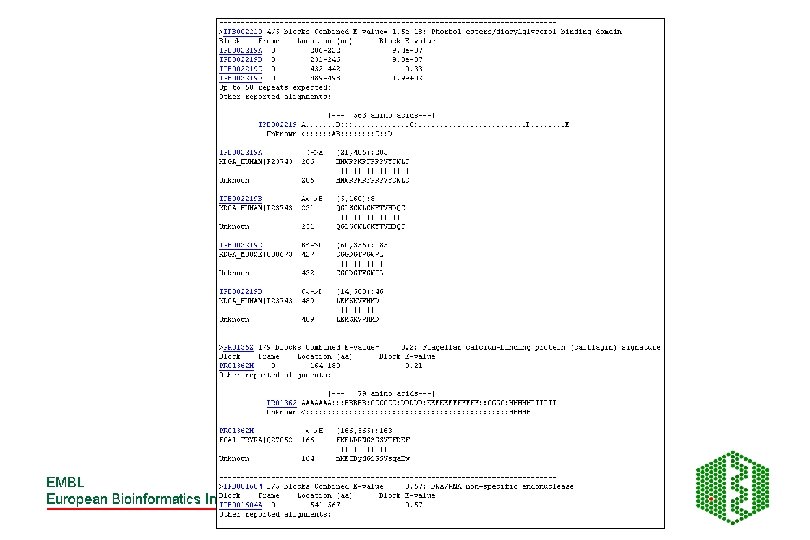
SEARCHING BLOCKS • Compare a protein or DNA (1 -6 frames) sequence to database of blocks • Blocks Searcher- used via internet or email: First position of sequence aligned to first position of first block score for that position, score summed over width of alignment, then block is aligned with next position etc for all blocks in database- get best alignment score. Search is slow (350 aa/2 min) • Can search database of PSI-BLAST PSSMs for each blocks family using IMPALA
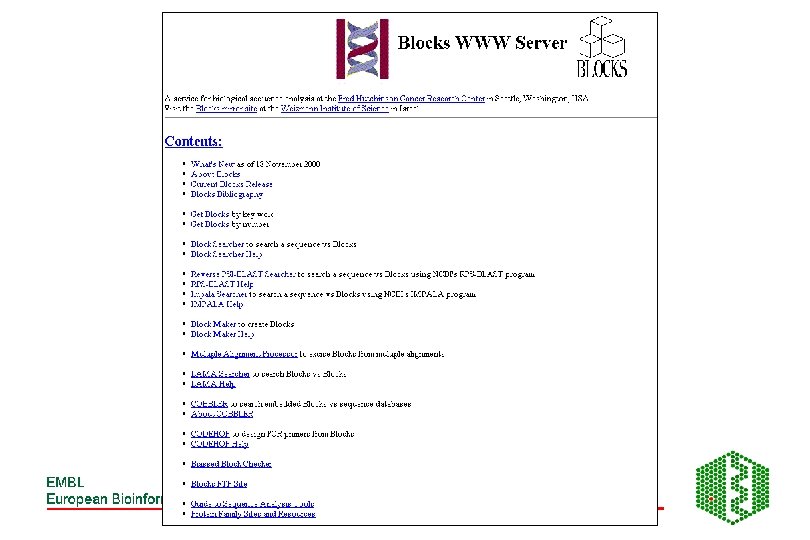
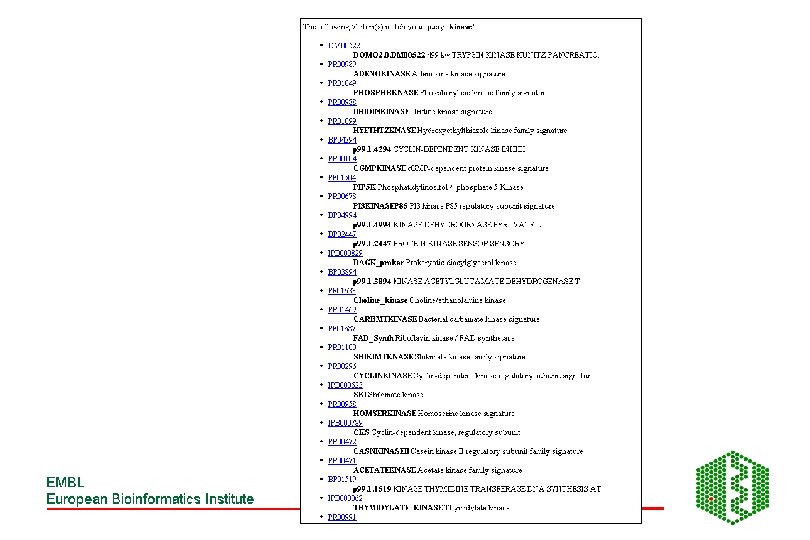
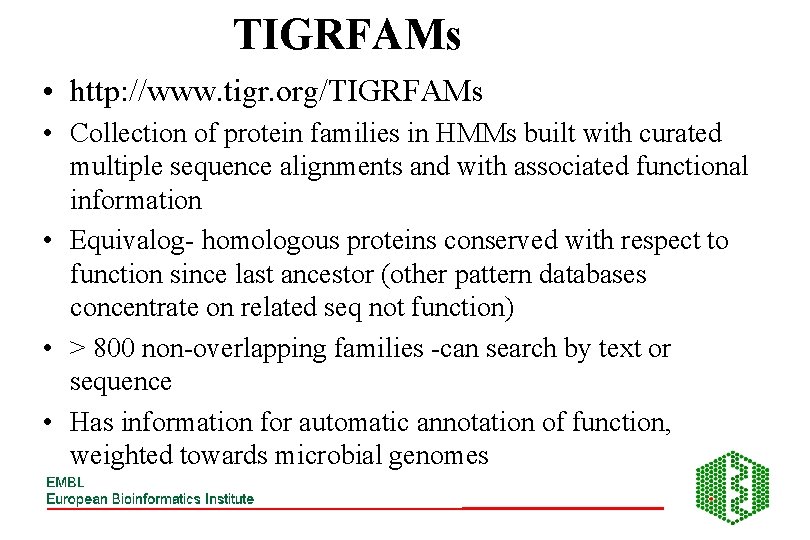
TIGRFAMs • http: //www. tigr. org/TIGRFAMs • Collection of protein families in HMMs built with curated multiple sequence alignments and with associated functional information • Equivalog- homologous proteins conserved with respect to function since last ancestor (other pattern databases concentrate on related seq not function) • > 800 non-overlapping families -can search by text or sequence • Has information for automatic annotation of function, weighted towards microbial genomes
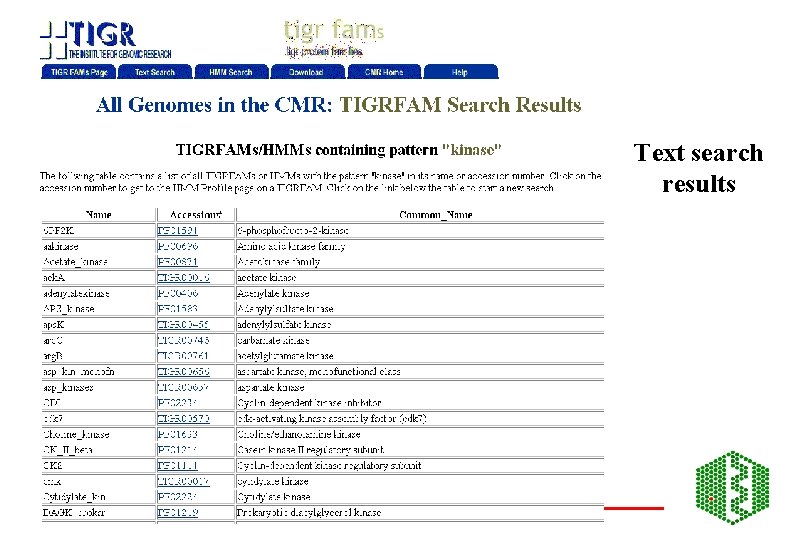
Text search results
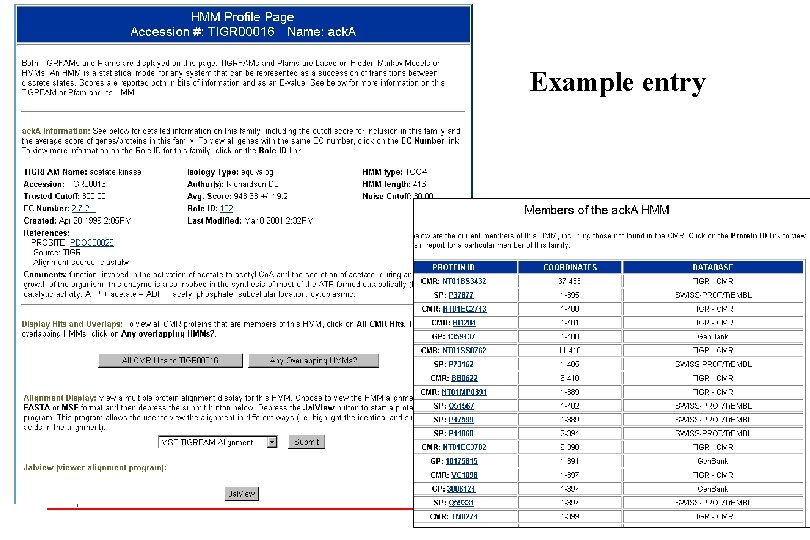
Example entry
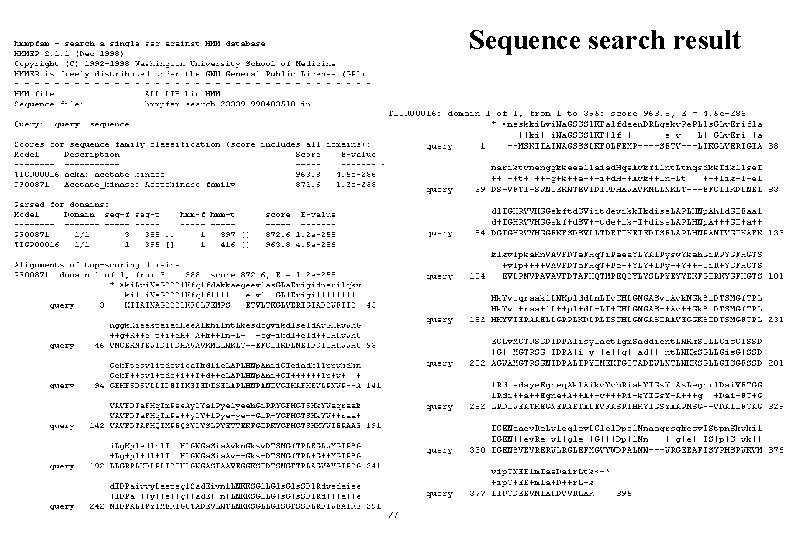
Sequence search result
PIR-ALN • http: //www-nbrf. georgetown. edu/pirwww/ search/textpiraln. html • Database of annotated protein sequence alignments derived automatically from PIR PSD • Includes alignments at superfamily (whole sequence), family (45% identity) and domain (in more than one superfamily) levels • 3983 alignments, 1480 superfamilies, 371 domains • Can search by protein accession number or text
PROTOMAP • http: //www. protomap. cs. huji. ac. il • Automatic classification of all SWISS-PROT proteins into groups of related proteins (also including Tr. EMBL now) • Based on pairwise similarities • Has hierarchical organisation for sub- and super-family distinctions • 13 354 clusters, 5869 2 proteins, 1403 10 • Keeps SP annotation eg description, keywords • Can search with a sequence -classify it into existing clusters
DOMO • http: //www. infobiogen. fr/srs 6 bin/cgi-bin/wgetz? page+Lib. Info+-lib+DOMO (SRS) • Database of gapped multiple sequence alignments from SWISS-PROT and PIR • Domain boundaries inferred automatically, rather than from 3 D data • Has 8877 alignments, 99058 domains, and repeats • Each entry is one homologous domain, has annotation on related proteins, functional families, evolutionary tree etc
Pro. Class • http: //pir. georgetown. edu/gfserver/proclass. html • Non-redundant protein database organized by family relationships defined by Prosite patterns and PIR superfamilies. • Facilitates protein family information retrieval, domain and family relationships, and classifies multi-domain proteins • Contains 155, 868 sequence entries
SBASE (Agricultural Biotechnology Centre) • http: //sbase. abc. hu/main. html • Protein domain library from clustering of functional and structural domains • SBASE entries - grouped by Standard names (SN groups) that designate various functional and structural domains of protein sequences- relies on good annotation of domains • Detects subclasses too • Can do similarity search with BLAST or PSI-BLAST
Integrating Pattern databases • • Meta. Fam IPro. Class CDD Inter. Pro
METAFAM • http: //metafam. ahc. umn. edu/ • Protein family classification built with Blocks+, DOMO, Pfam, PIR-ALN, PRINTS, Prosite, Pro. Dom, SBASE, SYSTERS • Automatically create supersets of overlapping families using set-theory to compare databasesreference domains covering total area • Use non-redundant protein set from SPTR & PIR
IPro. Class • http: //pir. georgetown. edu/iproclass/ • Integrated database linking Pro. Class, PIR-ALN, Prosite, Pfam and Blocks • Contains >20000 non-redundant SP & PIR proteins, 28000 superfamilies, 2600 domains, 1300 motifs, 280 PTMs • Can be searched by text or sequence
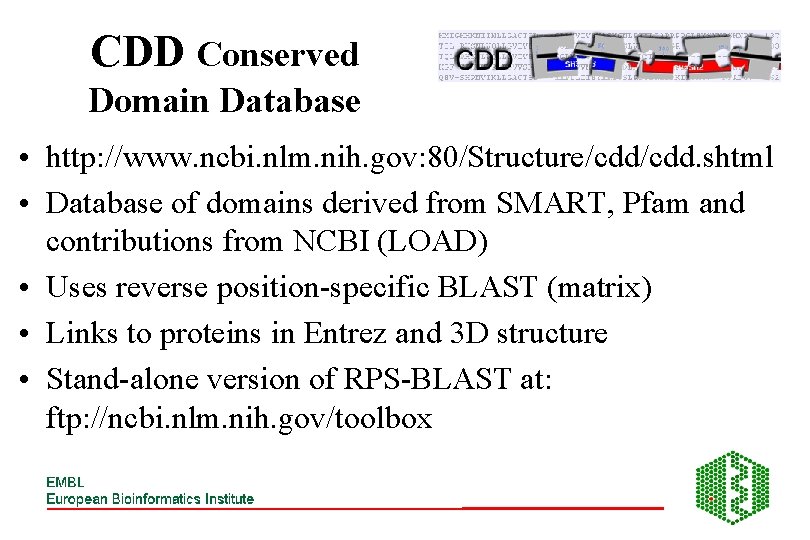
CDD Conserved Domain Database • http: //www. ncbi. nlm. nih. gov: 80/Structure/cdd. shtml • Database of domains derived from SMART, Pfam and contributions from NCBI (LOAD) • Uses reverse position-specific BLAST (matrix) • Links to proteins in Entrez and 3 D structure • Stand-alone version of RPS-BLAST at: ftp: //ncbi. nlm. nih. gov/toolbox
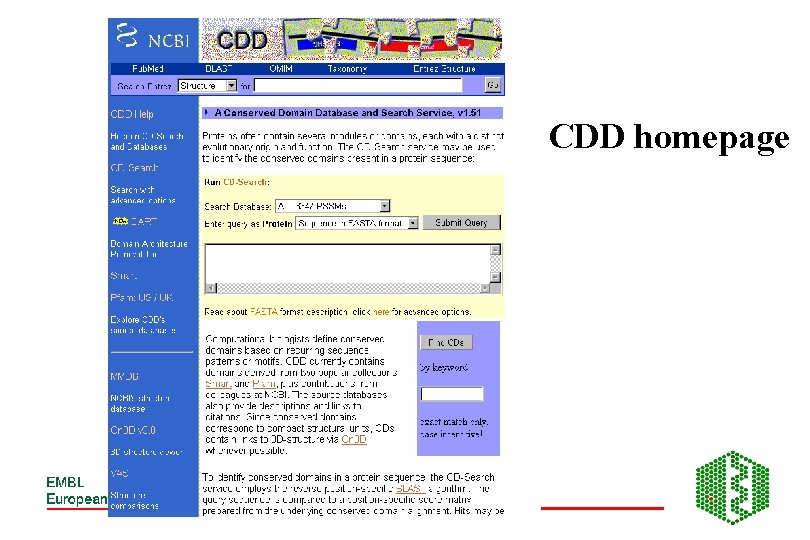
CDD homepage
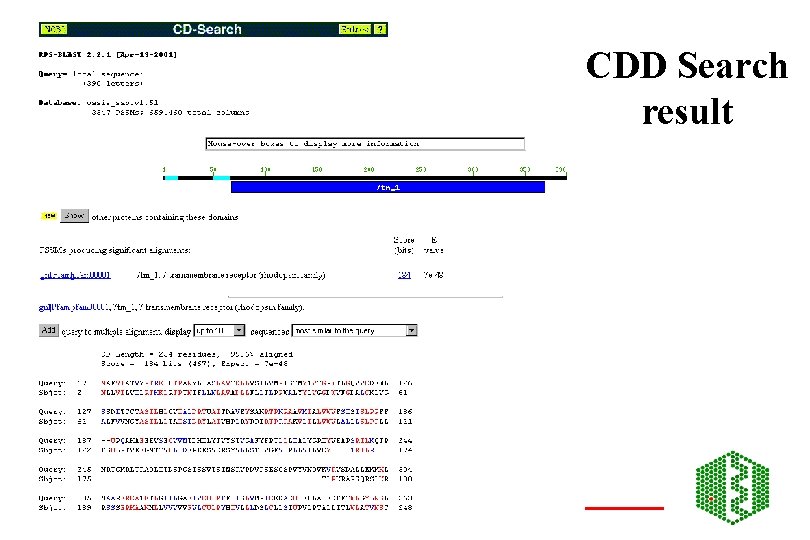
CDD Search result
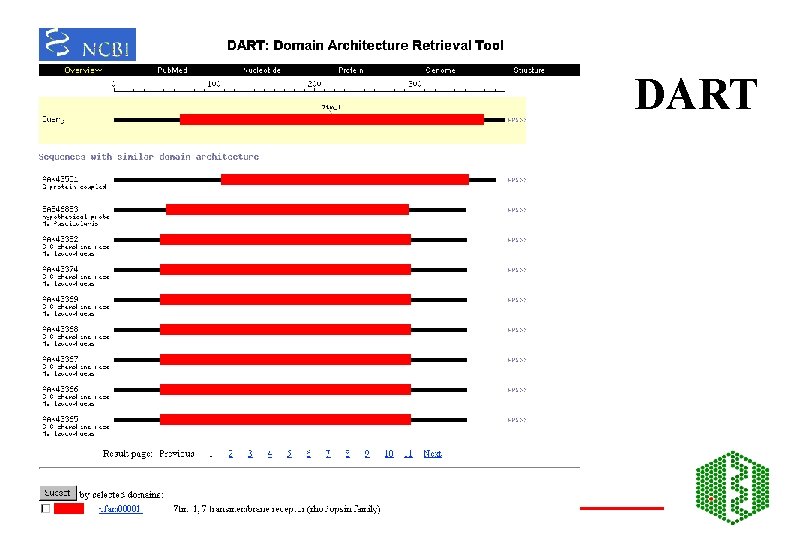
DART
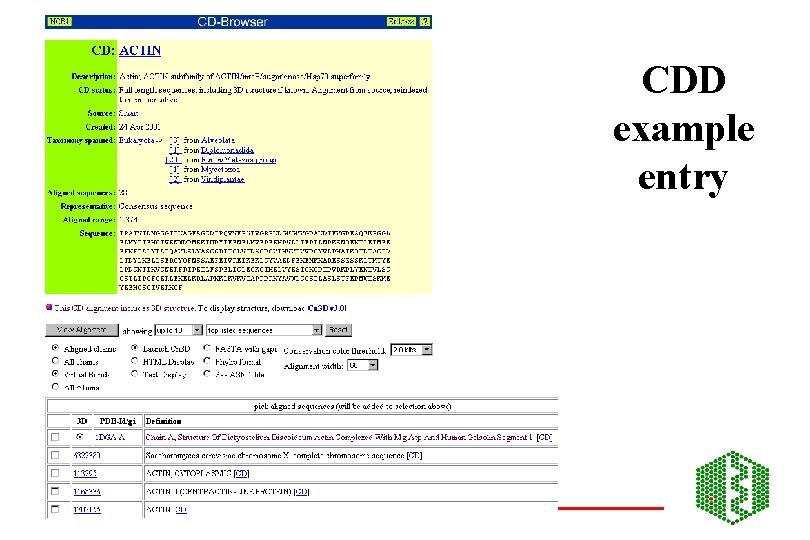
CDD example entry
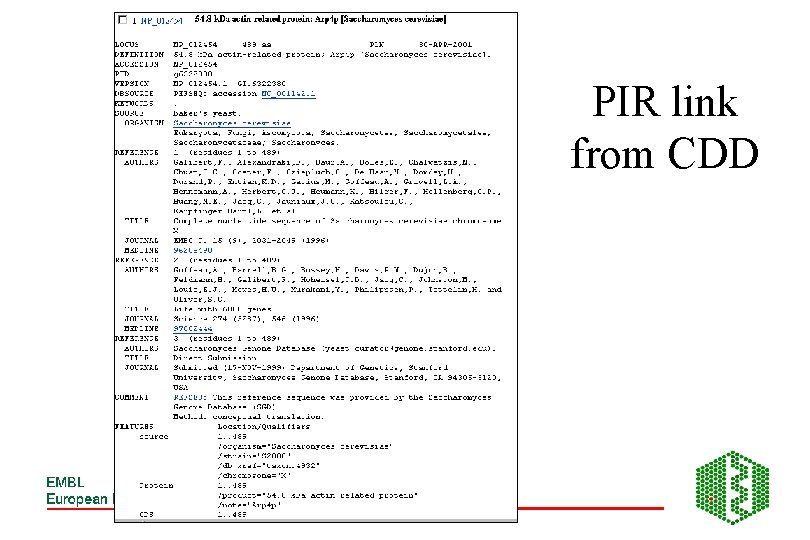
PIR link from CDD
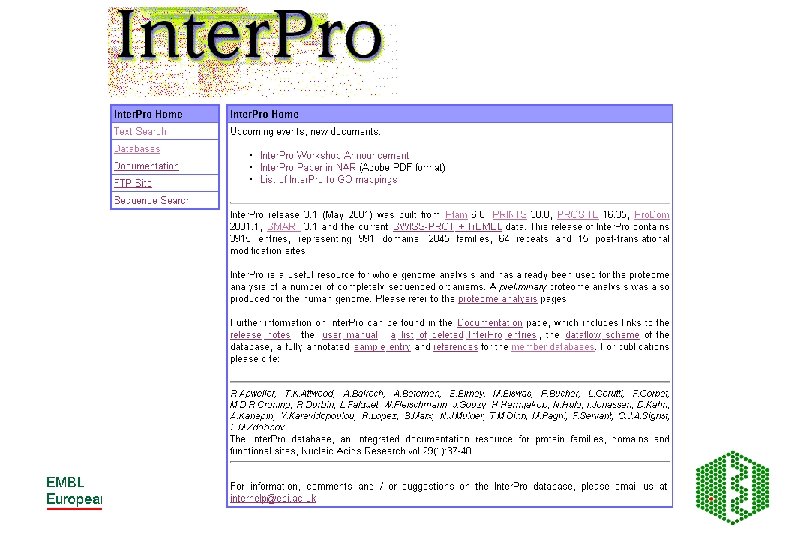
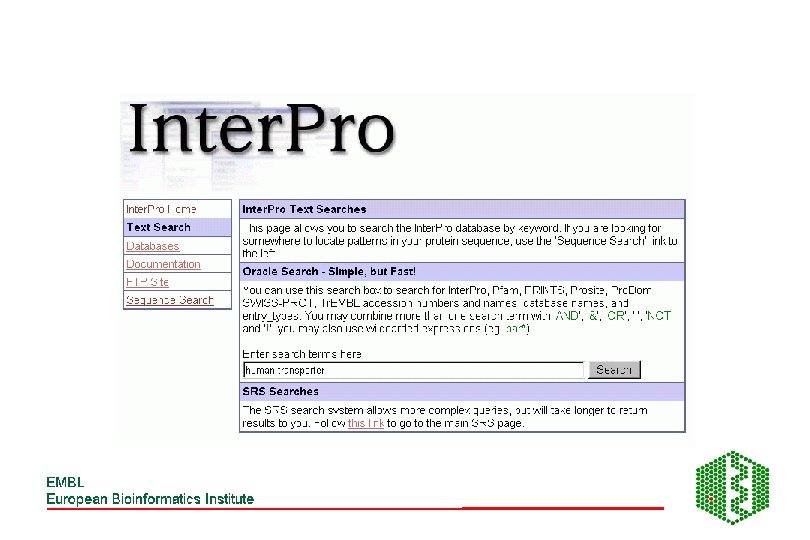
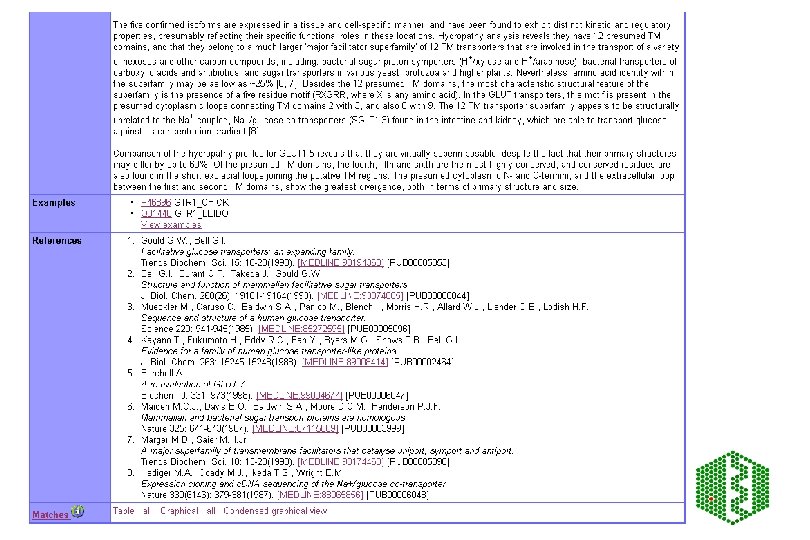
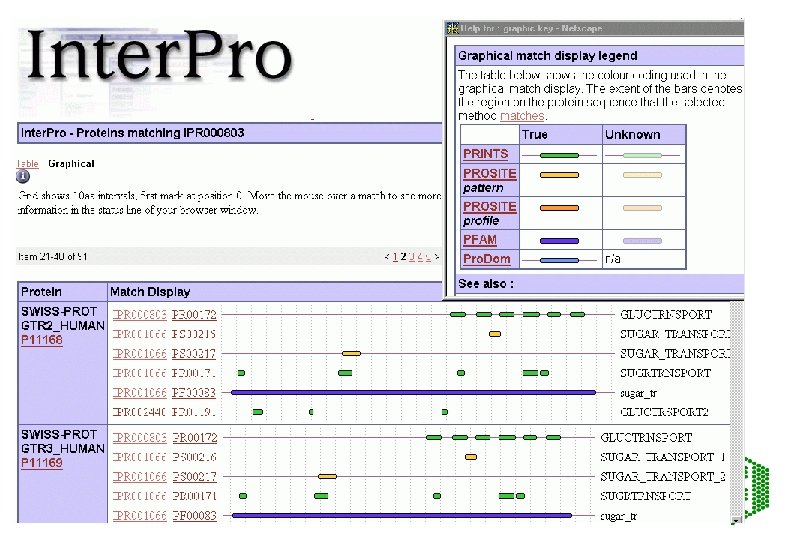
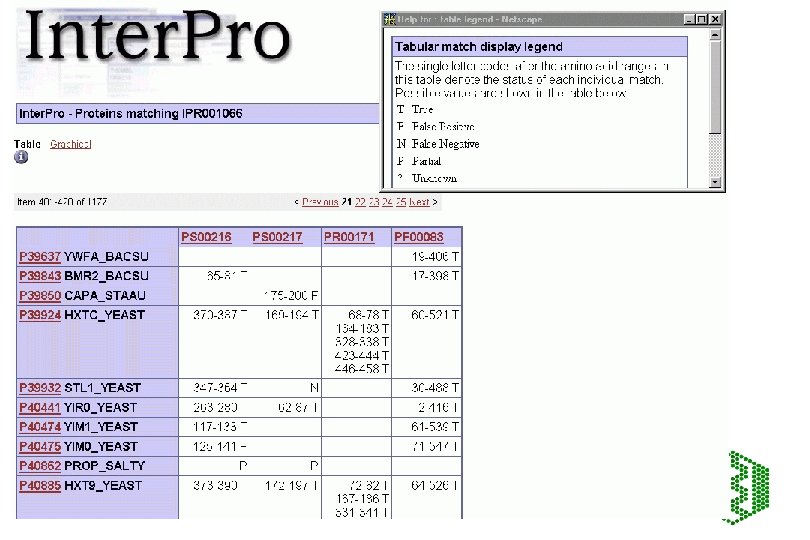
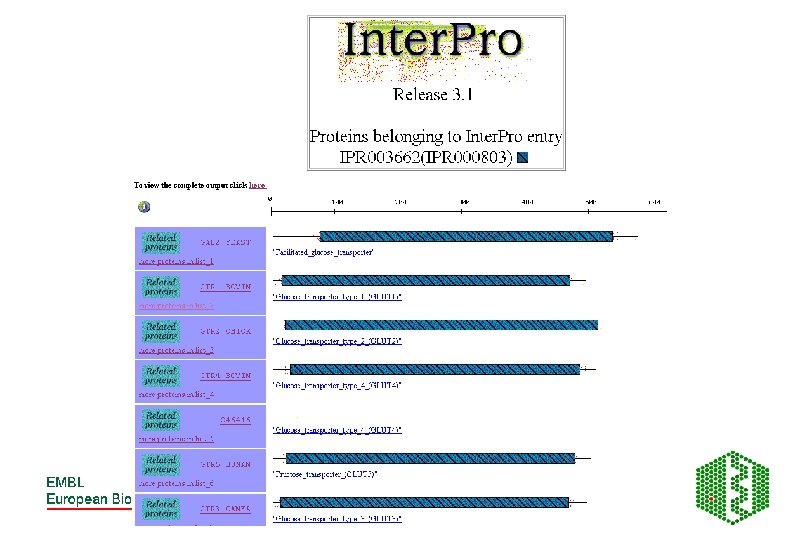
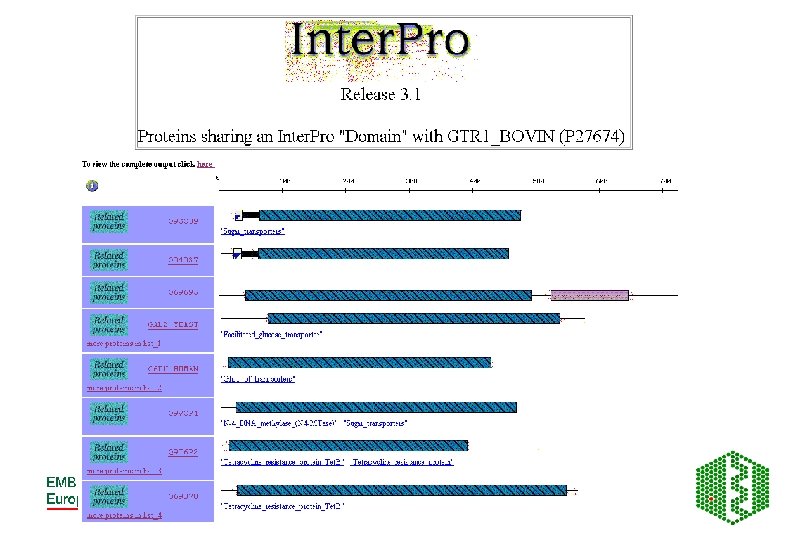
INTERPRO • http: //www. ebi. ac. uk/interpro • Integration of different signature recognition methods (PROSITE, PRINTS, PFAM, Pro. Dom and SMART)
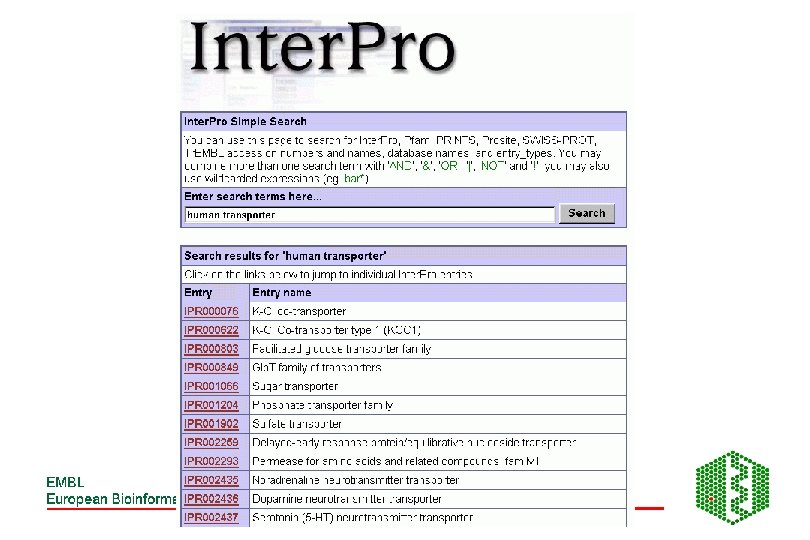
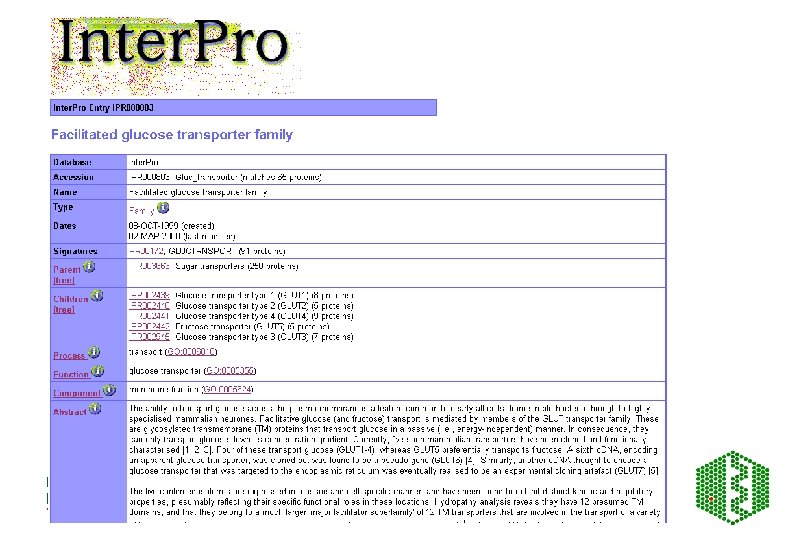
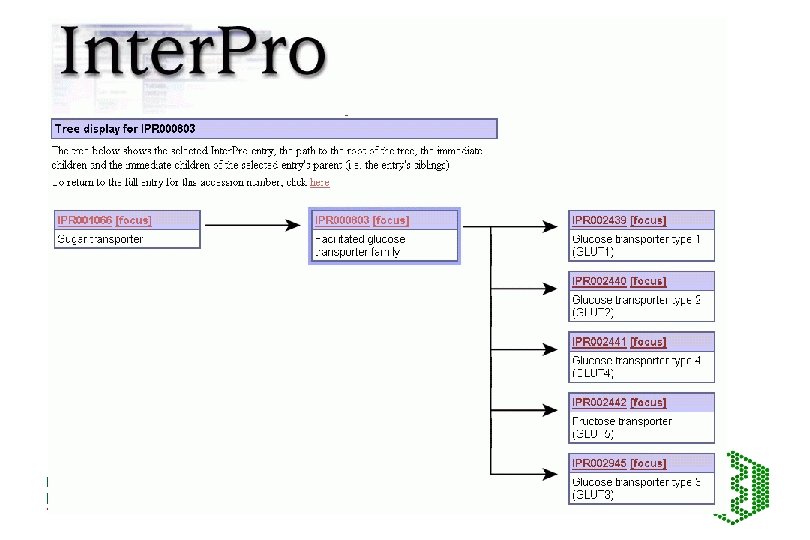
Inter. Pro release 3 • Built from PROSITE, PRINTS, Pfam, Pro. Dom, SMART, SWISS-PROT and Tr. EMBL • Contains 3915 entries encoded by 7714 different regular expressions, profiles, fingerprints, Hidden Markov Models and Pro. Dom domains • Inter. Pro provides >1 million Inter. Pro matches hits against 532403 SWISSPROT + Tr. EMBL protein sequences (68% coverage) • Direct access to the underlying Oracle database • A XML flatfile is available at ftp: //ftp. ebi. ac. uk/pub/databases/interpro/ • SRS implementation • Text- and sequence-based searches
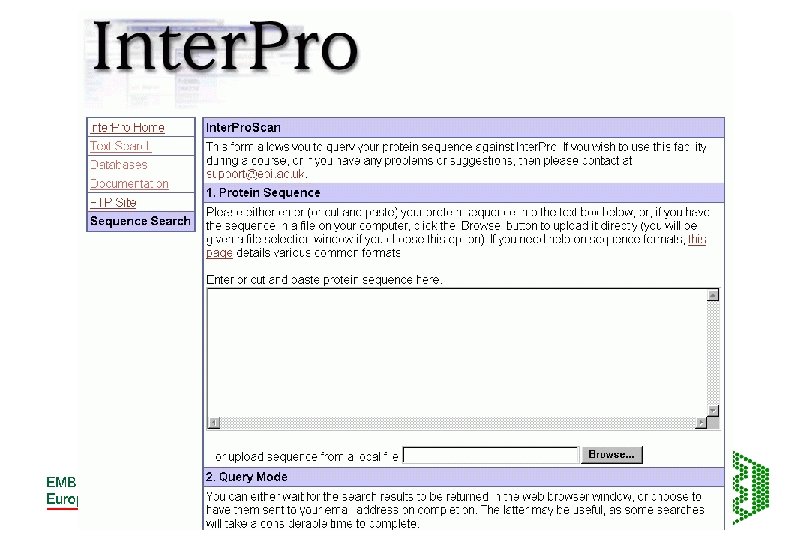
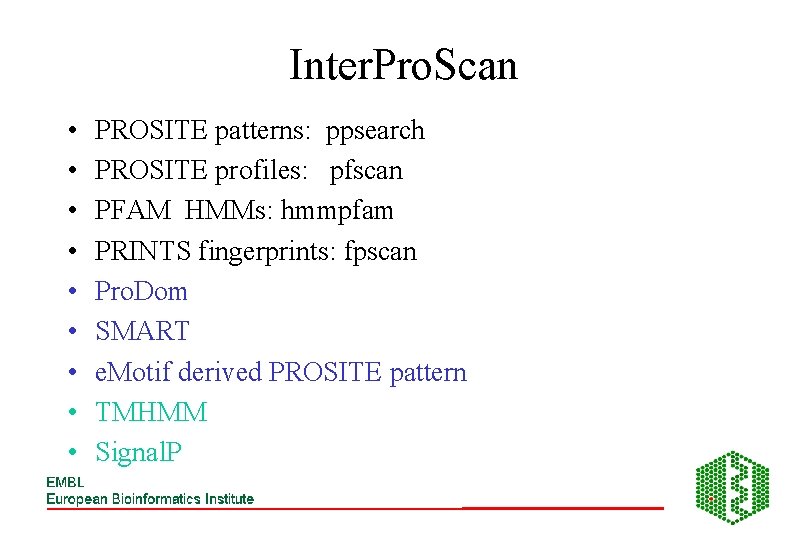
Inter. Pro. Scan • • • PROSITE patterns: ppsearch PROSITE profiles: pfscan PFAM HMMs: hmmpfam PRINTS fingerprints: fpscan Pro. Dom SMART e. Motif derived PROSITE pattern TMHMM Signal. P
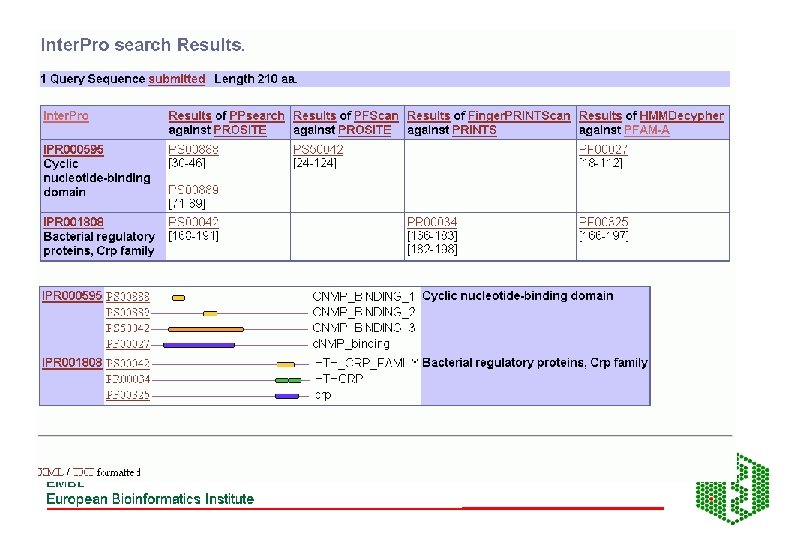
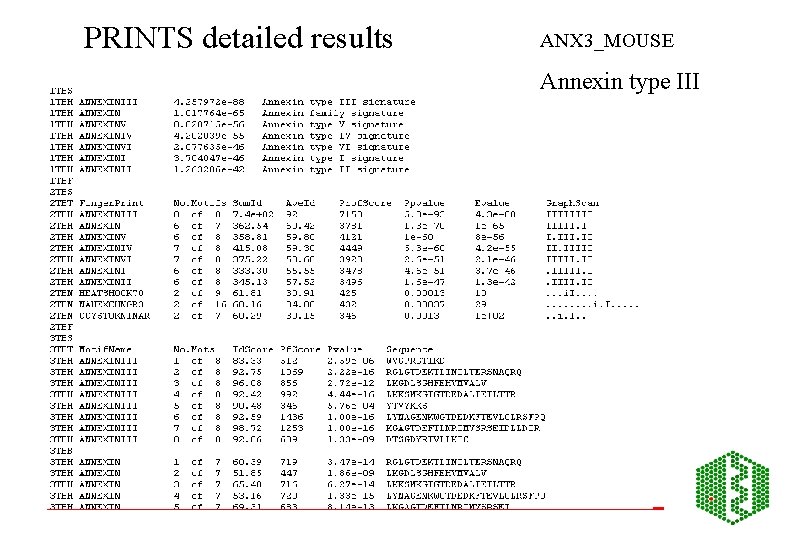
PRINTS detailed results ANX 3_MOUSE Annexin type III
SUMMARY • Many different protein signature databases from small patterns to alignments to complex HMMs • Have different strengths and weaknesses • Have different database formats • Therefore: best to combine methods, preferably in a database with them already merged for simple analysis with consistent format

Protein Secondary Structure • CATH (Class, Architecture, Topology, Homology) http: //www. biochem. ucl. ac. uk/dbbrowser/cath/ • SCOP (structural classification of proteins) -hierarchical database of protein folds http: //scop. mrc -lmb. cam. ac. uk/scop • FSSP Fold classification using structure-structure alignment of proteins http: //www 2. ebi. ac. uk/fssp. html • TOPS Cartoon representation of topology showing helices and strands http: //tops. ebi. ac. uk/tops/
- Slides: 88