
PROTEIN PATTERN DATABASES PROTEIN SEQUENCES SUPERFAMILY DOMAIN MOTIF
PROTEIN PATTERN DATABASES
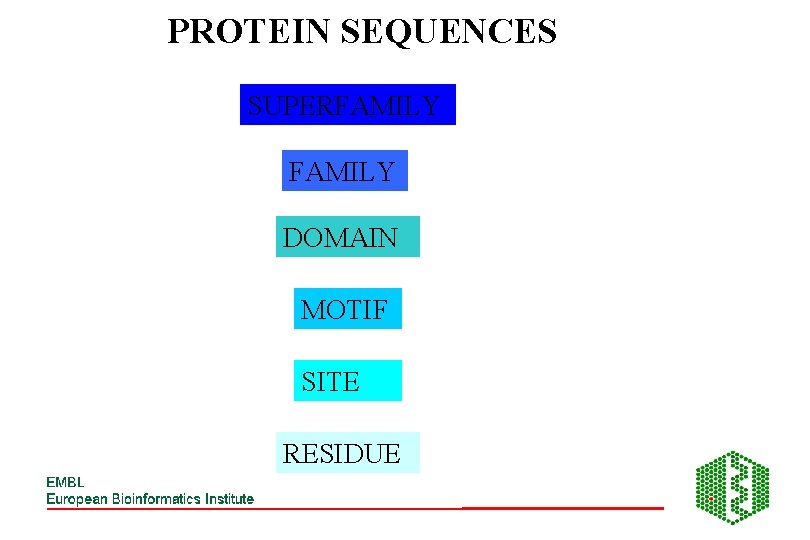
PROTEIN SEQUENCES SUPERFAMILY DOMAIN MOTIF SITE RESIDUE
BASIC INFORMATION COMES FROM SEQUENCE • Multiple alignments of related sequences- can build up consensus sequences of known families, domains, motifs or sites. • Pattern • Matrix • Profile • HMM
COMMON PROTEIN PATTERN DATABASES • • Prosite patterns Prosite profiles Pfam SMART Prints TIGRFAMs BLOCKS Alignment databases • Pro. Dom • PIR-ALN • Proto. Map • Domo • Pro. Class

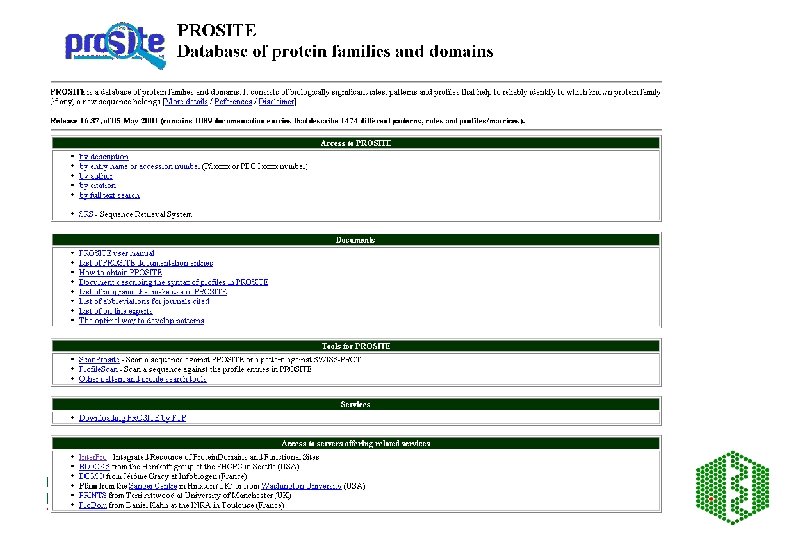
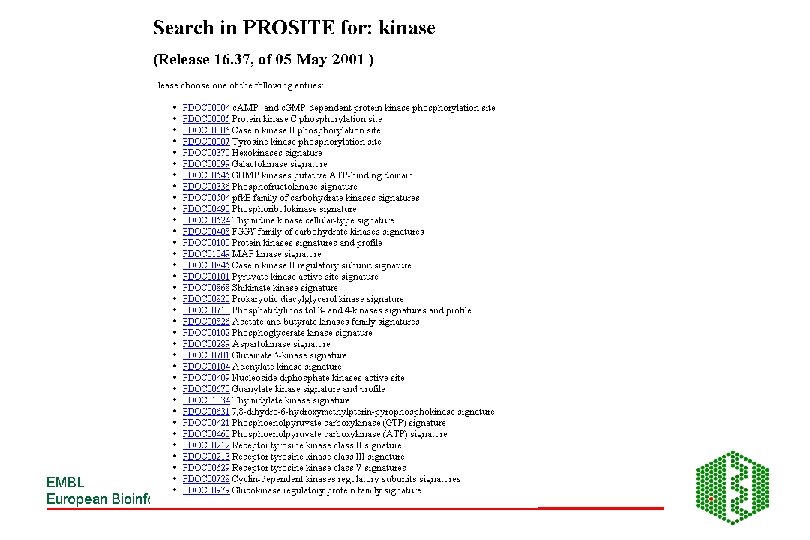
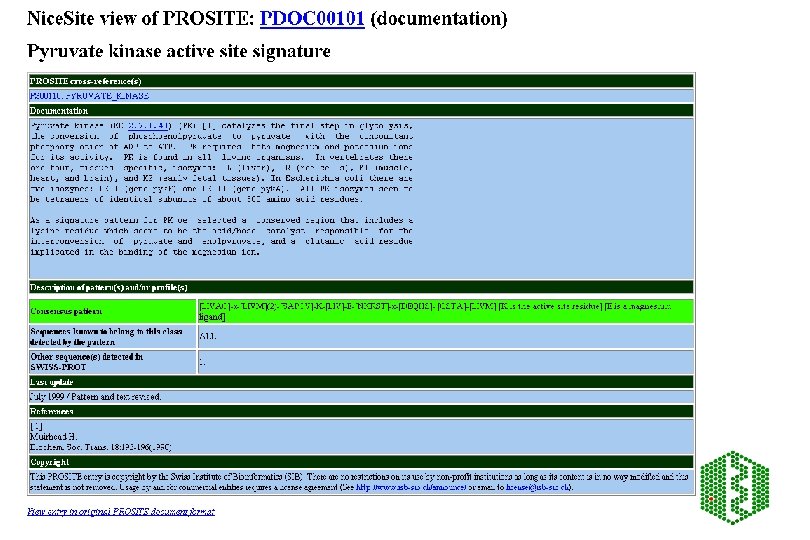
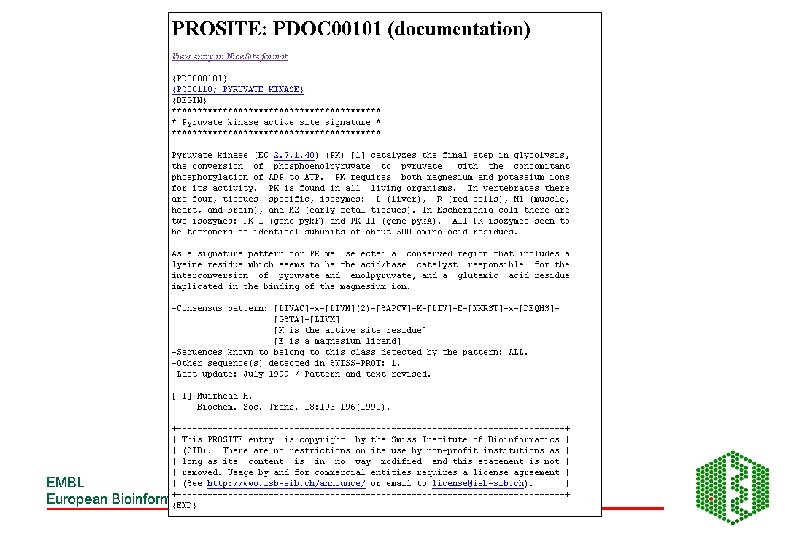
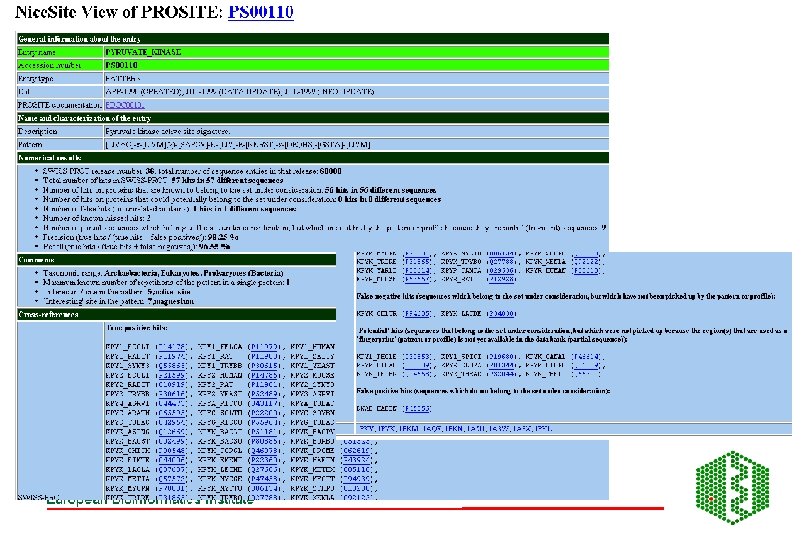
PROSITE Patterns and profiles • http: //www. expasy. ch/prosite/ • Building a pattern: a. ) from literature -test against SP , update if necessary b. ) new patterns: Start with reviewed protein family, known functional sites: • • • enzyme catalytic site, attachment site eg heme, metal ion binding site cysteines for disulphide bonds, molecule (GTP) or protein binding site
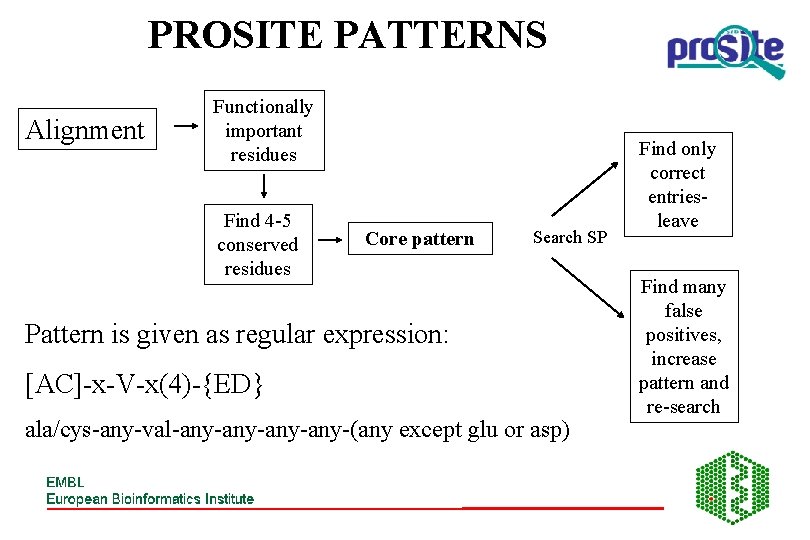
PROSITE PATTERNS Alignment Functionally important residues Find 4 -5 conserved residues Core pattern Search SP Pattern is given as regular expression: [AC]-x-V-x(4)-{ED} ala/cys-any-val-any-any-(any except glu or asp) Find only correct entriesleave Find many false positives, increase pattern and re-search
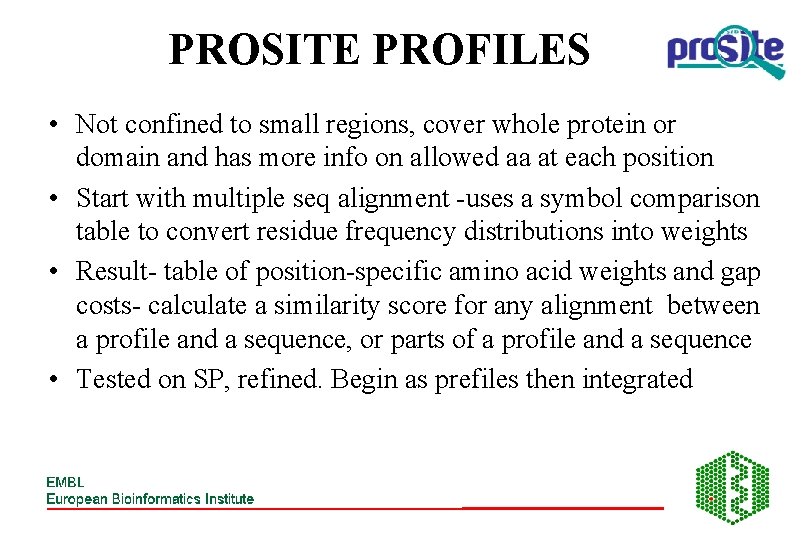
PROSITE PROFILES • Not confined to small regions, cover whole protein or domain and has more info on allowed aa at each position • Start with multiple seq alignment -uses a symbol comparison table to convert residue frequency distributions into weights • Result- table of position-specific amino acid weights and gap costs- calculate a similarity score for any alignment between a profile and a sequence, or parts of a profile and a sequence • Tested on SP, refined. Begin as prefiles then integrated
Pfam • http: //www. sanger. ac. uk/Software/Pfam/index. shtml • Database of HMMs for domains and families • HMMs are built from HMMER 2 (Bayesian statistical models), can use two modes ls or fs, all domains should be matched with ls • Use Bits scores (? ? ) thresholds are chosen manually using E-value from extreme fit distribution • Two parts to Pfam: éPfam. A -manually curated éPfam. B -automatic clustering of rest of SPTR from Pro. Dom using Domainer • Use -looking at domain structure of SPTR protein or new sequence
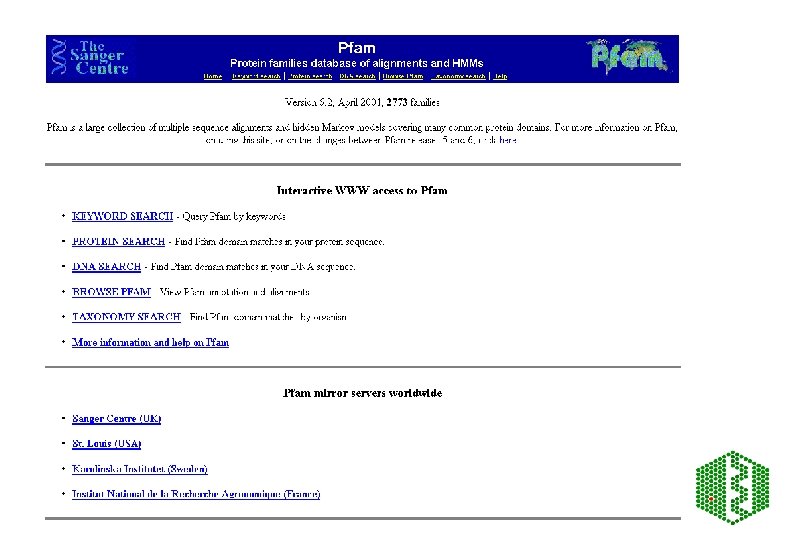
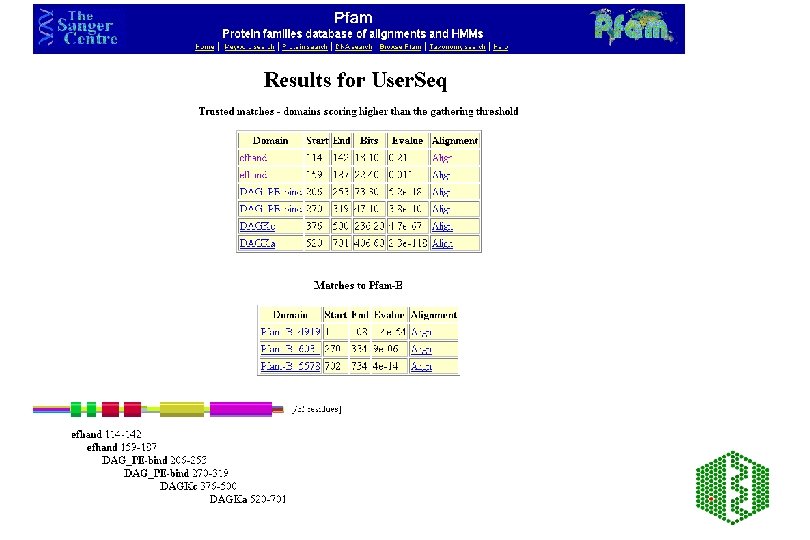
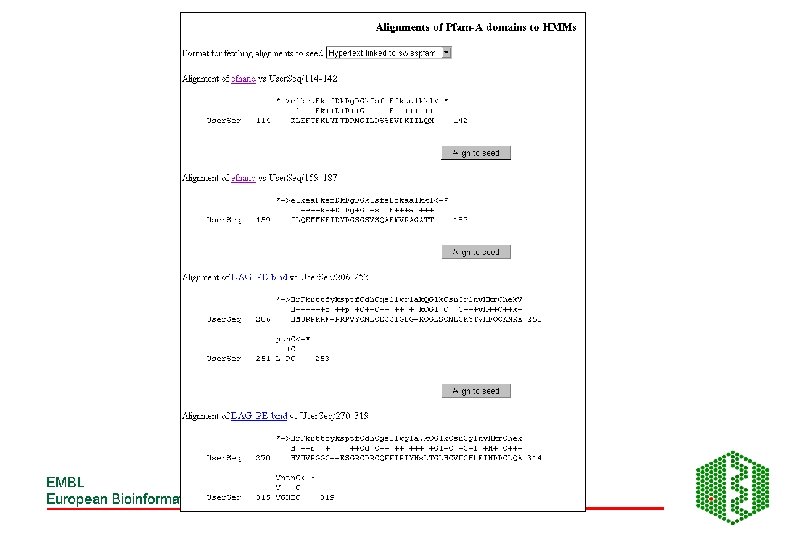
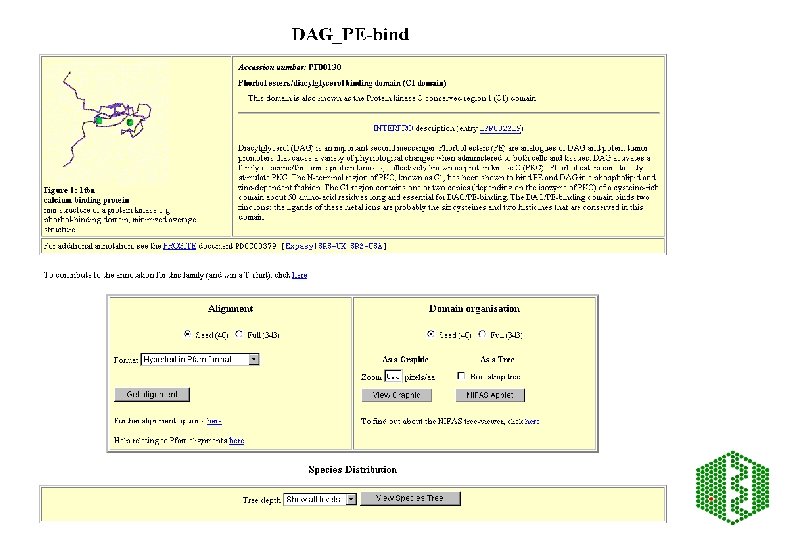
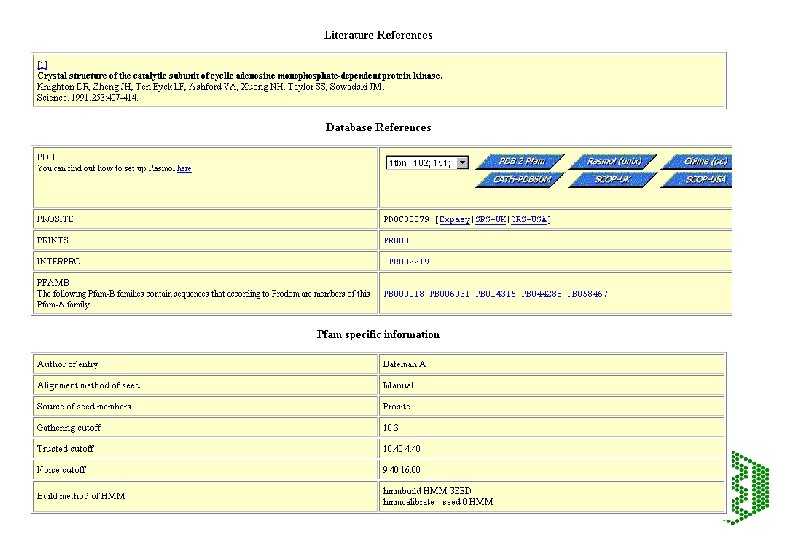
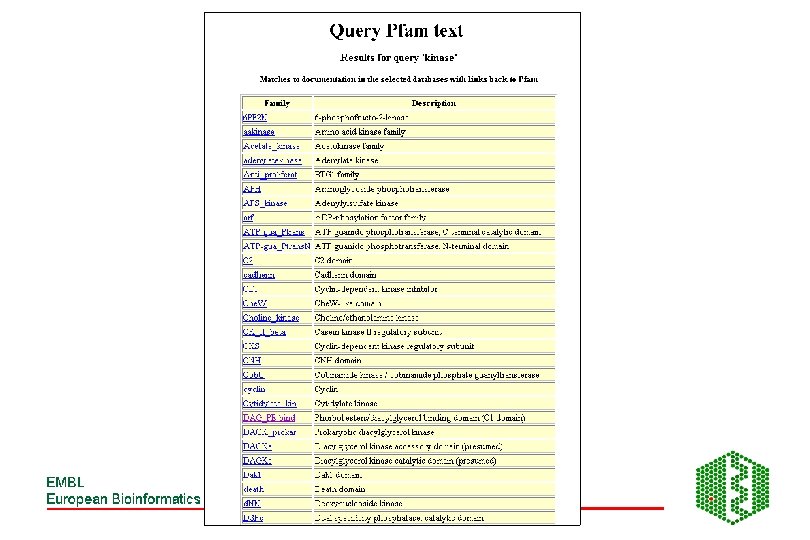
Additional features of Pfam • Pfam. A has about 65% coverage of SPTR, rest is covered by Pfam. B • Can search directly with DNA -Wise 2 package • Can view taxonomic range of each entry • Can view proteins with similar domain structure and view of all family members • Links to other databases including 3 D structure • Note: No 2 Pfam. A HMMs should overlap
SMART- Simple Modular Architecture Research Tool • http: //smart. embl-heidelberg. de/ • Relies on hand curated multiple sequence alignments of representative family members from PSI-BLAST- builds HMMsused to search database for more seq for alignment- iterative searching until no more homologues detected • Store Ep (highest per protein E-value of T) and En (lowest per protein E-value of N) values • Will predict domain homologue with sequence if – Ep < E-value <En and E-value <1. 0
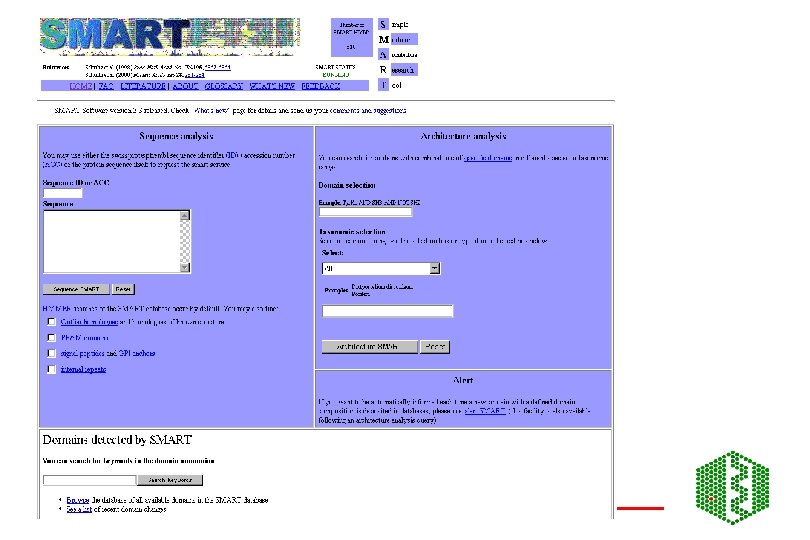
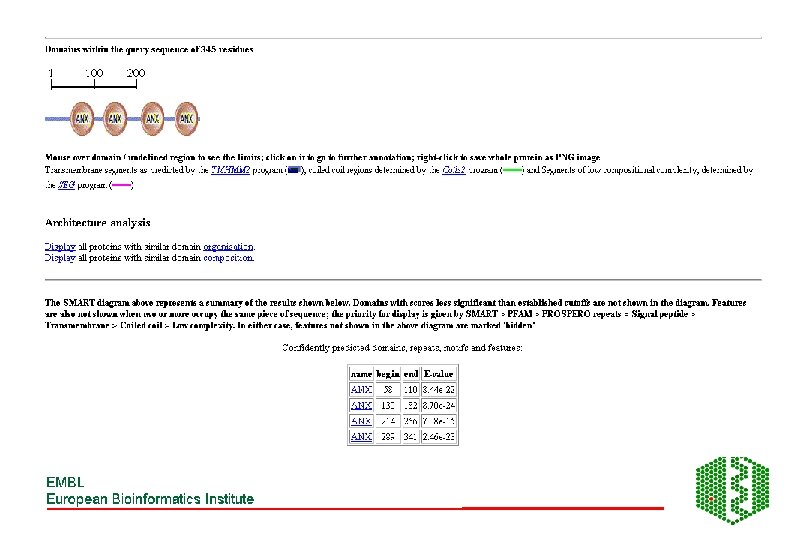
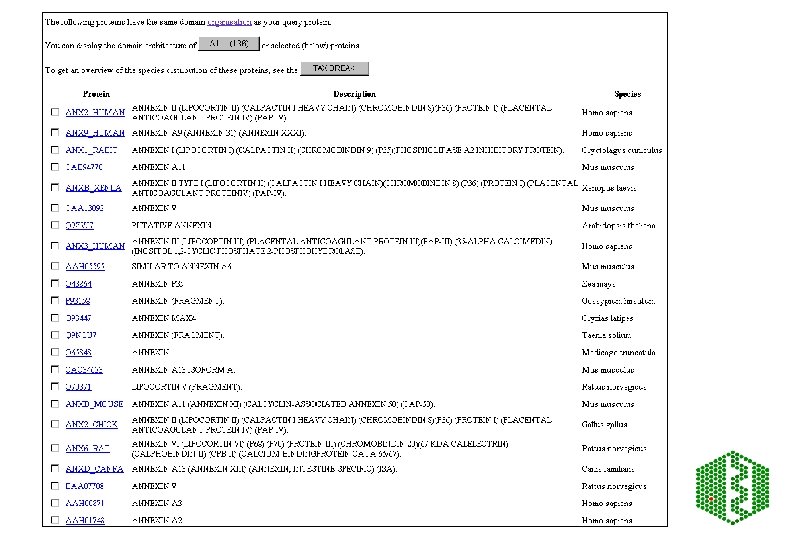
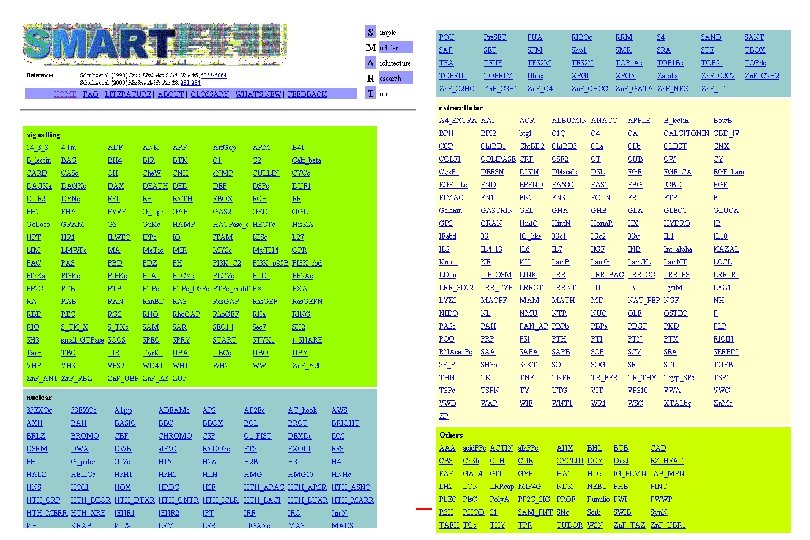
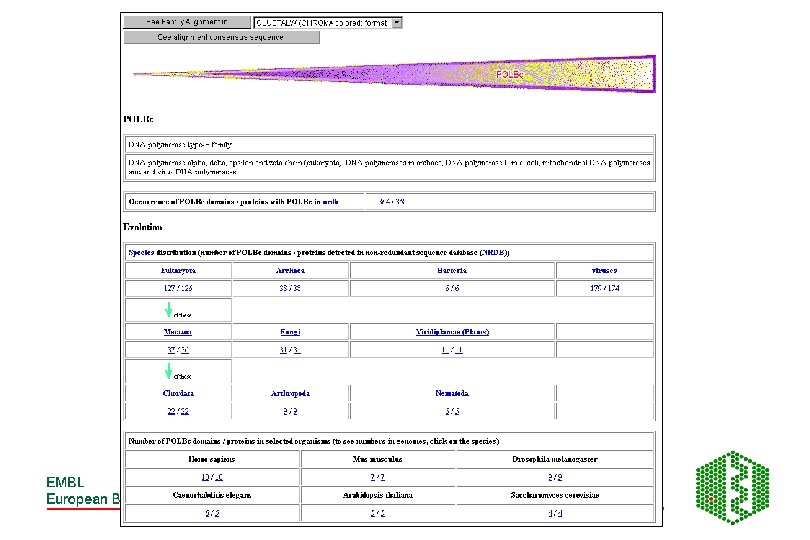
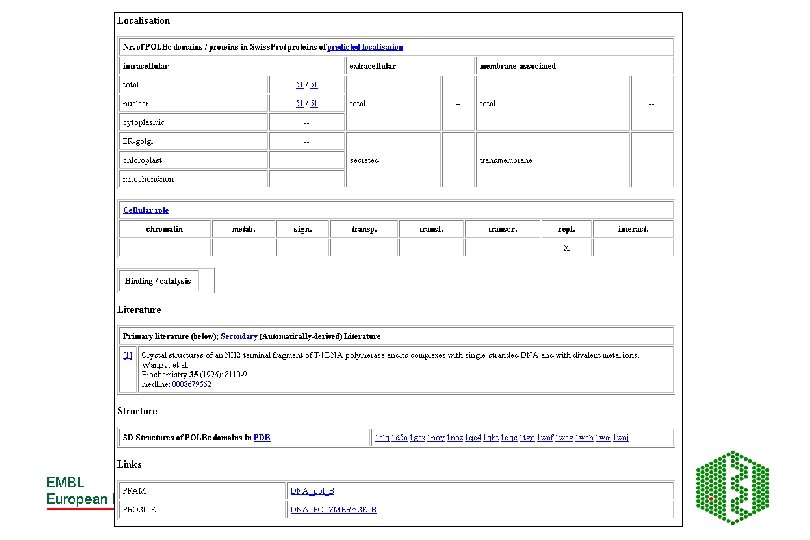
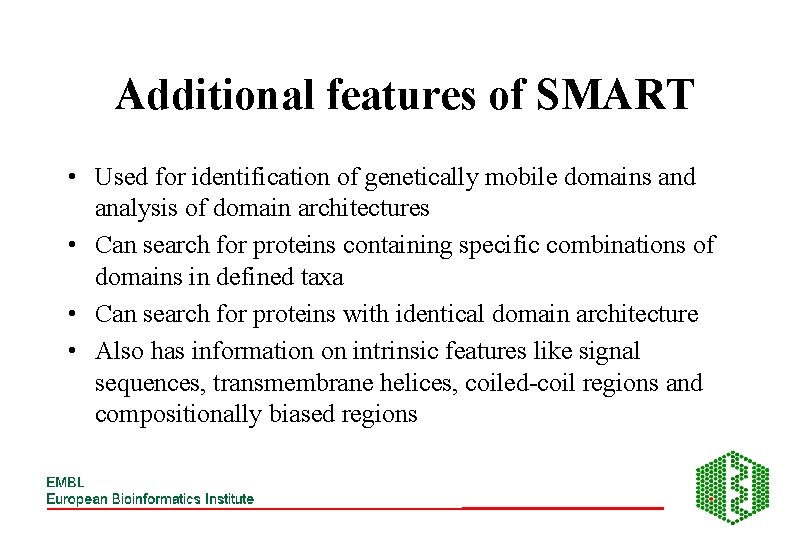
Additional features of SMART • Used for identification of genetically mobile domains and analysis of domain architectures • Can search for proteins containing specific combinations of domains in defined taxa • Can search for proteins with identical domain architecture • Also has information on intrinsic features like signal sequences, transmembrane helices, coiled-coil regions and compositionally biased regions
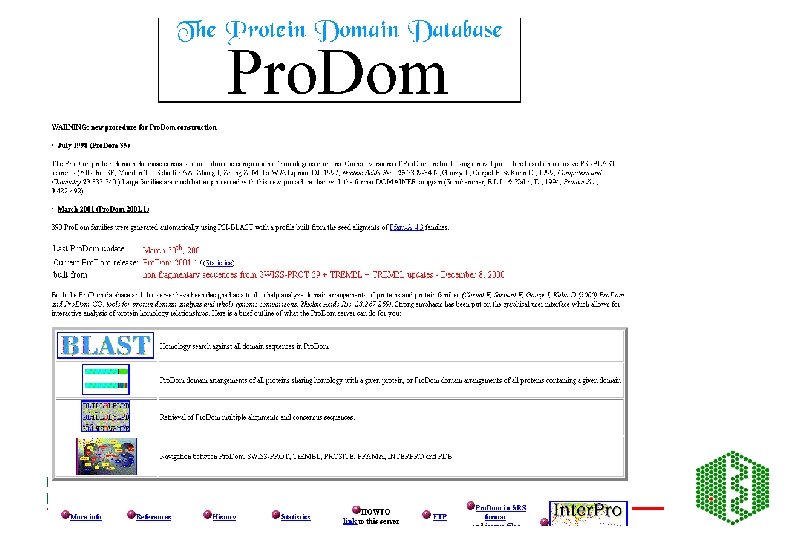
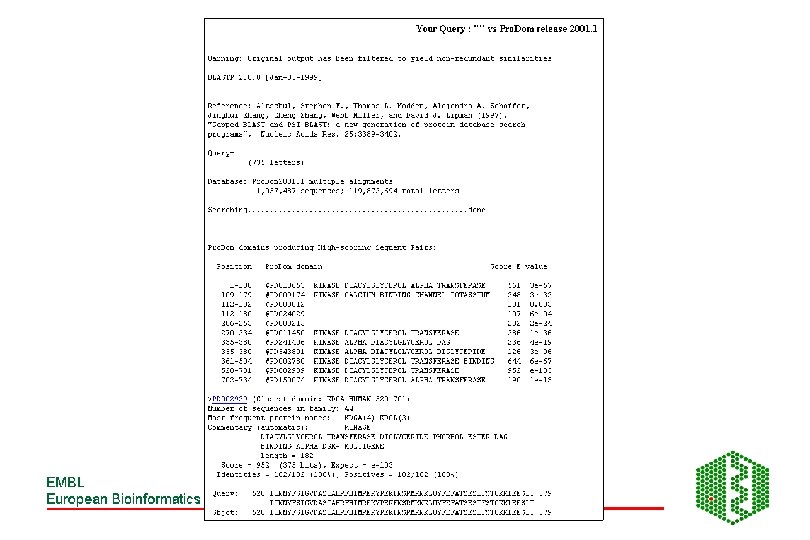
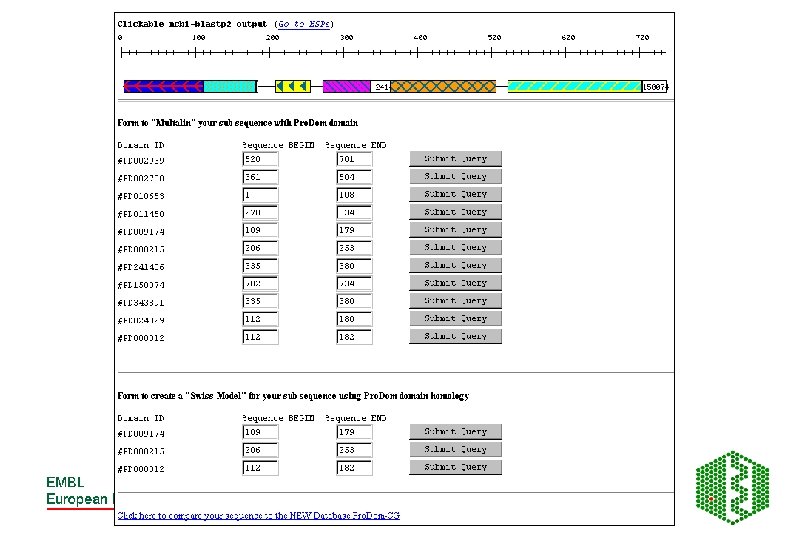
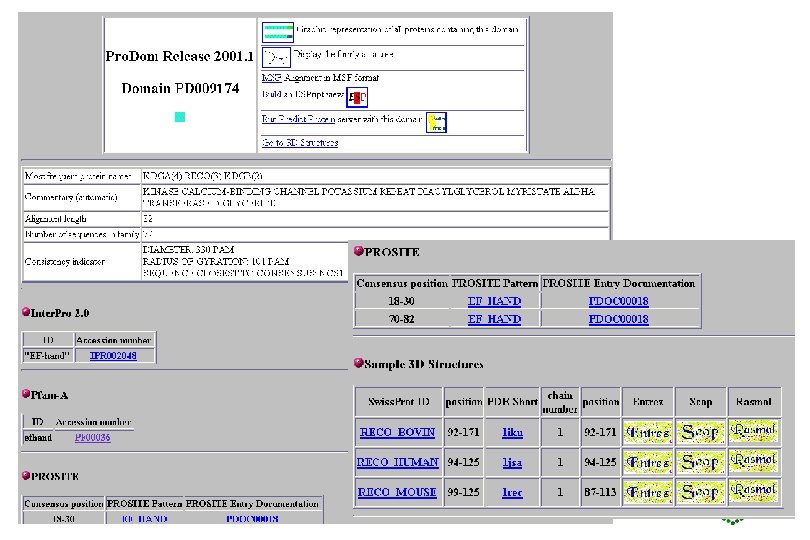
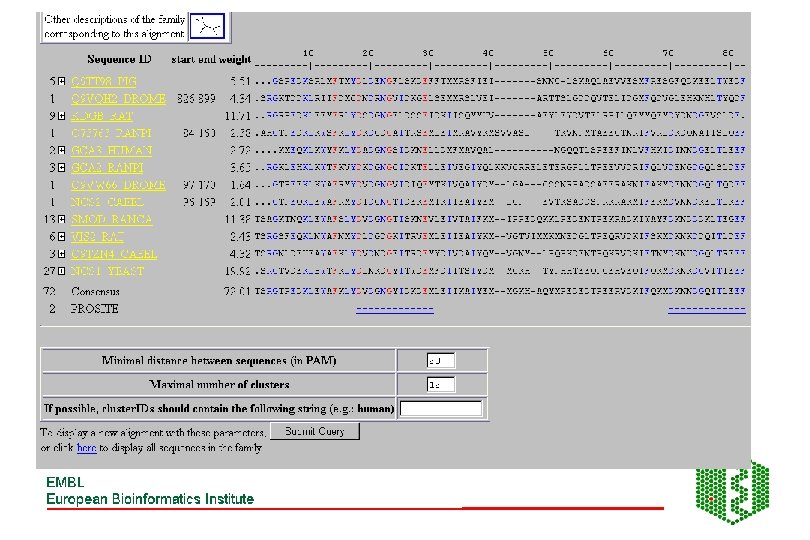
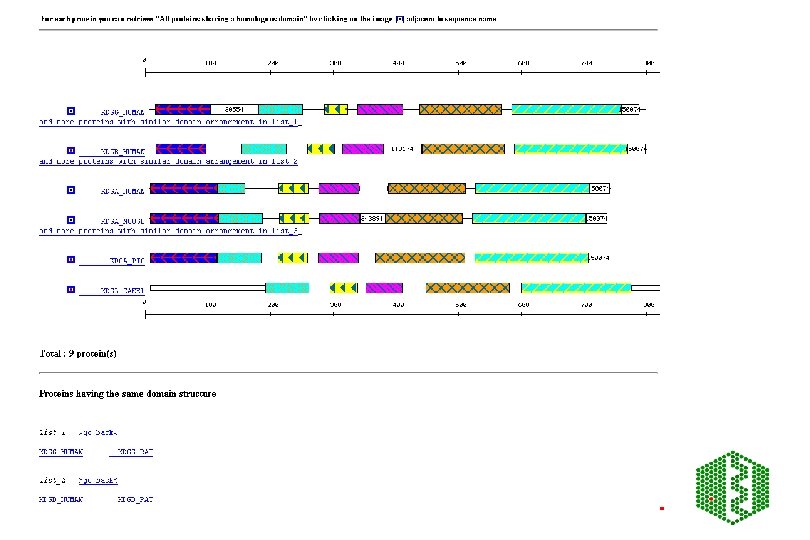
Pro. Dom • http: //www. toulouse. inra. fr/prodom. html • Groups all sequences in SPTR into domains ->150 000 families • Use automatic process to build up domains -DOMAINER • For expert curated families, use Pfam. A alignments to build new Pro. Dom families • Use diameter (max distance between two domains in family) and radius of gyration root mean square of distance between domain and family consensus), both counted in PAM (percent accepted mutations (no per 100 aa) to measure consistency of a family, lower these values, more homogeneous family
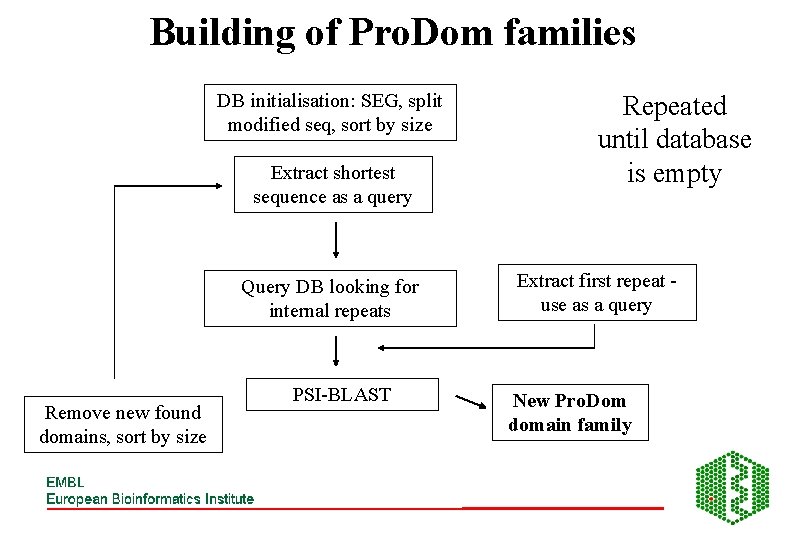
Building of Pro. Dom families DB initialisation: SEG, split modified seq, sort by size Extract shortest sequence as a query Query DB looking for internal repeats Remove new found domains, sort by size PSI-BLAST Repeated until database is empty Extract first repeat use as a query New Pro. Dom domain family
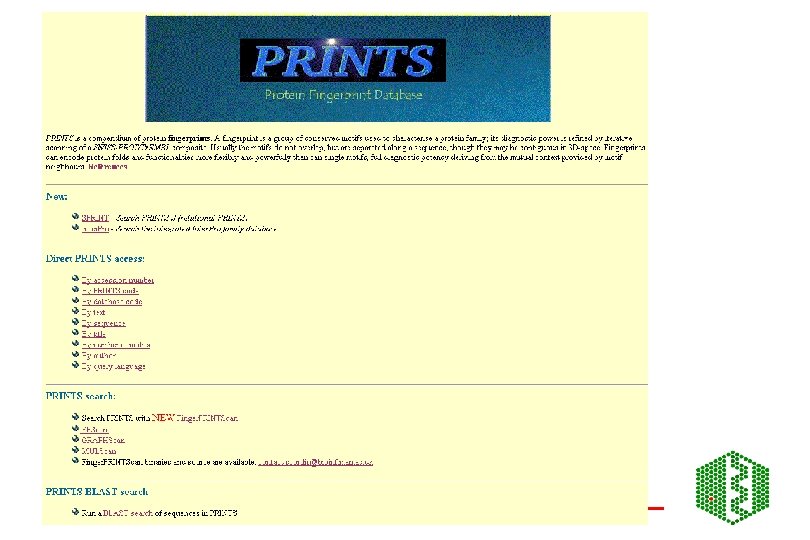
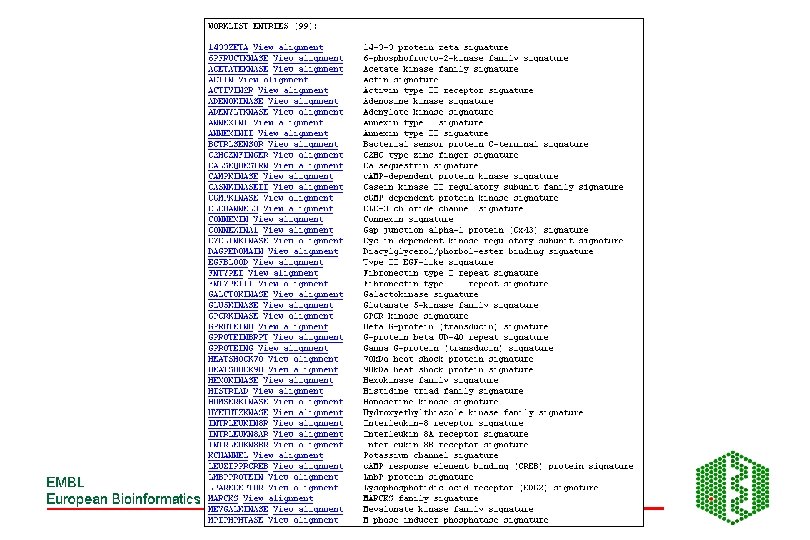
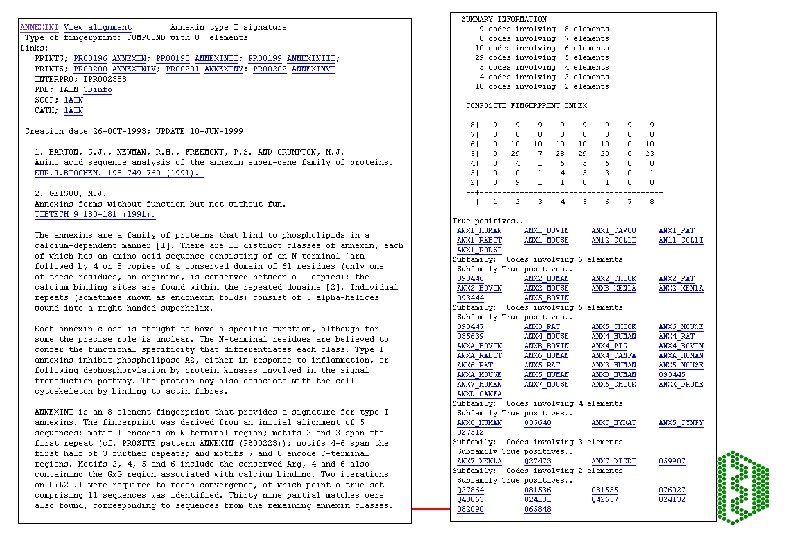
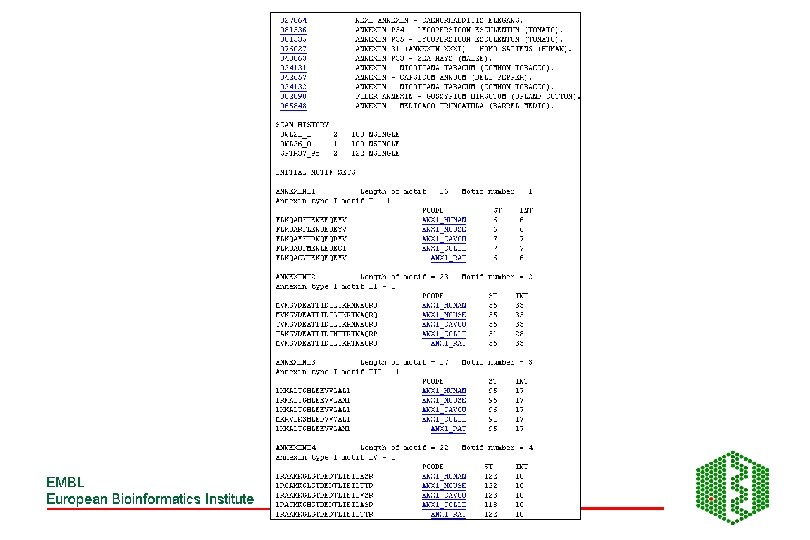
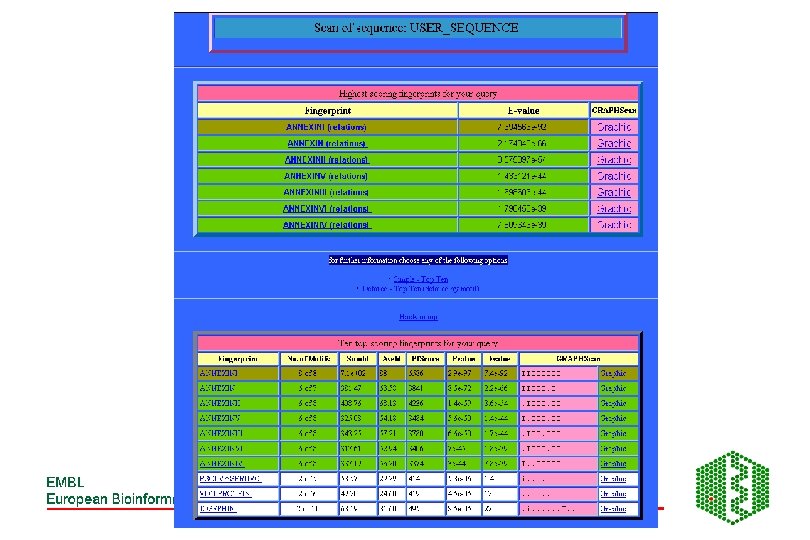
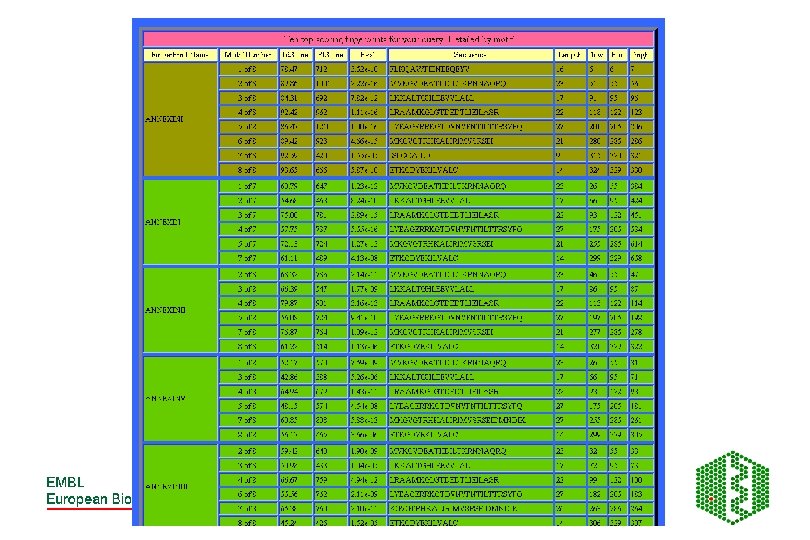
PRINTS -Fingerprint DB • http: //www. bioinf. man. ac. uk/dbbrowser/PRINTS/ • Fingerprint- set of motifs used to predict occurrence of similar motifs in a sequence • Built by iterative scanning of OWL database • Multiple sequence alignment- identify conserved motifs- scan database with each motif- correlate hitlists for each- should have more sequences now- generate more motifs- repeat until convergence • Recognition of individual elements in fingerprint is mutually conditional • True members match all elements in order, subfamily match part of fingerprint
- Slides: 43