
Protein Metabolism Introduction The amino acids the final

Protein Metabolism
Introduction The amino acids, the final class of biomolecules that, through their oxidative degradation, make a significant contribution to the generation of metabolic energy. The fraction of metabolic energy obtained from amino acids, whether they are derived from dietary protein or from tissue protein, varies greatly with the type of organism and with metabolic conditions. Carnivores can obtain (immediately following a meal) up to 90% of their energy requirements from amino acid oxidation, whereas herbivores may fill only a small fraction of their energy needs by this route. Most microorganisms can scavenge amino acids from their environment and use them as fuel when required by metabolic conditions.
Introduction Plants, however, rarely if ever oxidize amino acids to provide energy; the carbohydrate produced from CO 2 and H 2 O in photosynthesis is generally their sole energy source. Amino acid concentrations in plant tissues are carefully regulated to just meet the requirements for biosynthesis of proteins, nucleic acids, and other molecules needed to support growth. Amino acid catabolism does occur in plants, but its purpose is to produce metabolites for other biosynthetic pathways.
Introduction In animals, amino acids undergo oxidative degradation in three different metabolic circumstances: 1. During the normal synthesis and degradation of cellular proteins (protein turnover), some amino acids that are released from protein breakdown and are not needed for new protein synthesis undergo oxidative degradation. 2. When a diet is rich in protein and the ingested amino acids exceed the body’s needs for protein synthesis, the surplus is catabolized; amino acids cannot be stored. 3. During starvation or in uncontrolled diabetes mellitus, when carbohydrates are either unavailable or not properly utilized, cellular proteins are used as fuel. Under all these metabolic conditions, amino acids lose their amino groups to form -keto acids, the “carbon skeletons” of amino acids. The -keto acids undergo oxidation to CO 2 and H 2 O or, often more importantly, provide three- and four-carbon units that can be converted by gluconeogenesis into glucose, the fuel for brain, skeletal muscle, and other tissues.
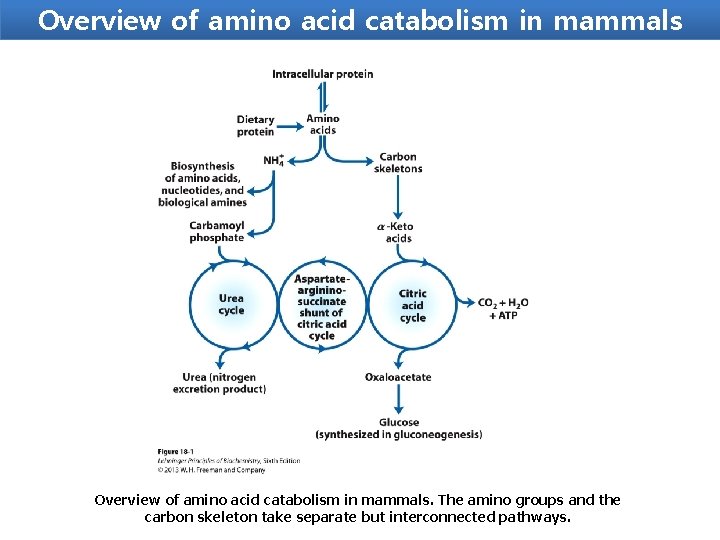
Overview of amino acid catabolism in mammals. The amino groups and the carbon skeleton take separate but interconnected pathways.
Metabolic Fates of Amino Groups Nitrogen, N 2, is abundant in the atmosphere but is too inert for use in most biochemical processes. Because only a few microorganisms can convert N 2 to biologically useful forms such as NH 3, amino groups are carefully husbanded in biological systems.
Metabolic Fates of Amino Groups Amino acids play central roles in nitrogen metabolism Four amino acids play central roles in nitrogen metabolism: glutamate, glutamine, alanine, and aspartate. These particular amino acids are the ones most easily converted into citric acid cycle intermediates: glutamate and glutamine to αketoglutarate, alanine to pyruvate, and aspartate to oxaloacetate. Glutamate and glutamine are especially important, acting as a kind of general collection point for amino groups. In the cytosol of liver cells (hepatocytes), amino groups from most amino acids are transferred to α-ketoglutarate to form glutamate, which enters mitochondria and gives up its amino group to form NH+4. Excess ammonia generated in most other tissues is converted to the amide nitrogen of glutamine, which passes to the liver, then into liver mitochondria. Glutamine or glutamate or both are present in higher concentrations than other amino acids in most tissues.
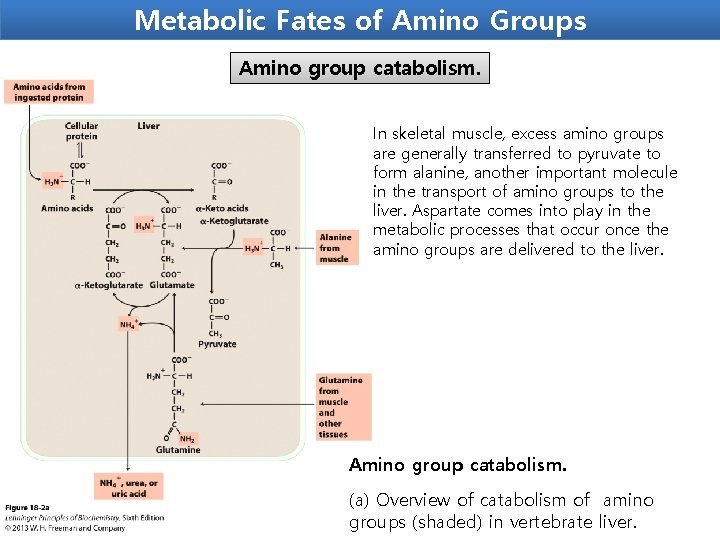
Metabolic Fates of Amino Groups Amino group catabolism. In skeletal muscle, excess amino groups are generally transferred to pyruvate to form alanine, another important molecule in the transport of amino groups to the liver. Aspartate comes into play in the metabolic processes that occur once the amino groups are delivered to the liver. Amino group catabolism. (a) Overview of catabolism of amino groups (shaded) in vertebrate liver.
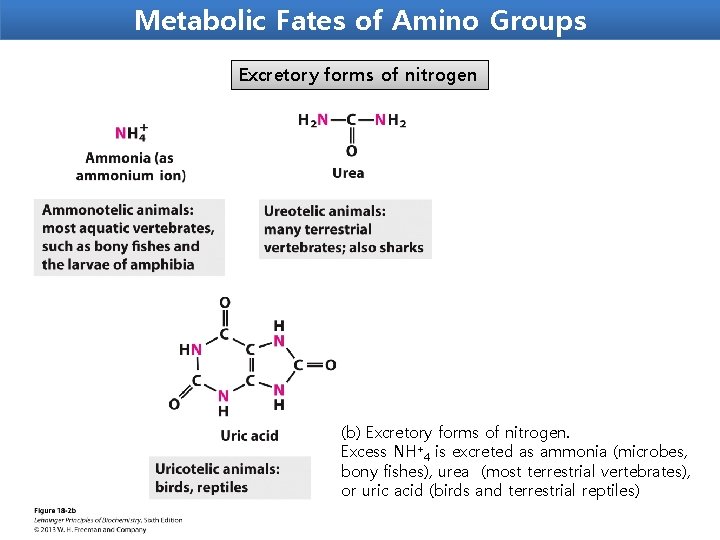
Metabolic Fates of Amino Groups Excretory forms of nitrogen (b) Excretory forms of nitrogen. Excess NH+4 is excreted as ammonia (microbes, bony fishes), urea (most terrestrial vertebrates), or uric acid (birds and terrestrial reptiles)
Amino acid Metabolism Catabolic Pathway - Transamination - Oxidative deamination

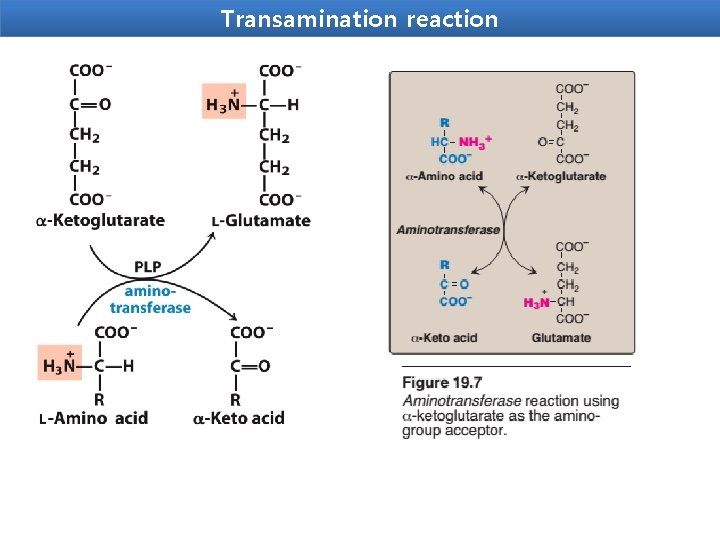
Transamination reaction Transamination The transfer of an α-amino group from one amino acid to an α-ketoacid with simultaneous conversion another ketoacid to an amino acid catalysed by the enzyme aminotransferase is called transamination. The first step in the catabolism of most amino acids is the transfer of their α-amino group to α-ketoglutarate. The products are an α-keto acid (derived from the original amino acid) and glutamate. α-Ketoglutarate plays a key role in amino acid metabolism by accepting the amino groups from most amino acids, thus becoming glutamate. Glutamate produced by transamination can be oxidatively deaminated, or used as an amino group donor in the synthesis of nonessential amino acids.
Transamination reaction
This transfer of amino groups from one carbon skeleton to another is catalyzed by a family of enzymes called aminotransferases(formerly called trans -aminases). These enzymes are found in the cytosol and mitochondria of cells through out the body—especially those of the liver, kidney, intestine, and muscle. All amino acids, with the exception of lysine and threonine, participate in transamination at some point in their catabolism.
Transamination reaction Importance of transamination 1. Transamination involves both catabolism and anabolism of amino acids. It is ultimately responsible for the synthesis of non essential amino acids. 2. It provides a link betweenn fat, carbohydrate, and protein metabolism, as the keto acids come from metabolic cycle. 3. It serves as a missing link in the pathway of amonia formation. Clinical Importance Two aminotransferase are important for diagnostic purposes. These are: Aspartate aminotransferase (AST) and Alanine aminotransferase. AST and ALT are elevated in nearly all liver diseases.
Aminotransferase Substrate specificity of aminotransferases Each aminotransferase is specific for one or, at most, a few amino group donors. Aminotransferases are named after the specific amino group donor, because the acceptor of the amino group is almost always α-ketoglutarate. The two most important aminotransferase reactions are catalyzed by alanine aminotransferase (ALT) and aspartate aminotransferase (AST)
Aminotransferase Alanine aminotransferase (ALT) ALT is present in many tissues. The enzyme catalyzes the transfer of the amino group of alanine to α-ketoglutarate, resulting in the formation of pyruvate and glutamate. The reaction is readily reversible. However, during amino acid catabolism, this enzyme (like most aminotransferases) functions in the direction of glutamate synthesis. Thus, glutamate, in effect, acts as a “collector” of nitrogen from alanine.
Aminotransferase Aspartate aminotransferase (AST) AST is an exception to the rule that aminotransferases funnel amino groups to form glutamate. During amino acid catabolism, AST transfers amino groups from glutamate to oxaloacetate, forming aspartate, which is used as a source of nitrogen in the urea cycle The AST reaction is also reversible.
Aminotransferase Diagnostic value of plasma aminotransferases Aminotransferases are normally intracellular enzymes, with the low levels found in the plasma representing the release of cellular contents during normal cell turnover. The presence of elevated plasma levels of aminotransferases indicates damage to cells rich in these enzymes. For example, physical trauma or a disease process can cause cell lysis, resulting in release of intracellular enzymes into the blood. Two aminotransferases—AST and ALT—are of particular diagnostic value when they are found in the plasma.
Aminotransferase Liver disease Plasma AST and ALT are elevated in nearly all liver diseases, but are particularly high in conditions that cause extensive cell necrosis, such as severe viral hepatitis, toxic injury, and prolonged circulatory collapse. ALT is more specific than AST for liver disease, but the latter is more sensitive because the liver contains larger amounts of AST.
Aminotransferase Nonhepatic disease Aminotransferases may be elevated in nonhepatic disease, such as myocardial infarction and muscle disorders. However, these disorders can usually be distinguished clinically from liver disease.
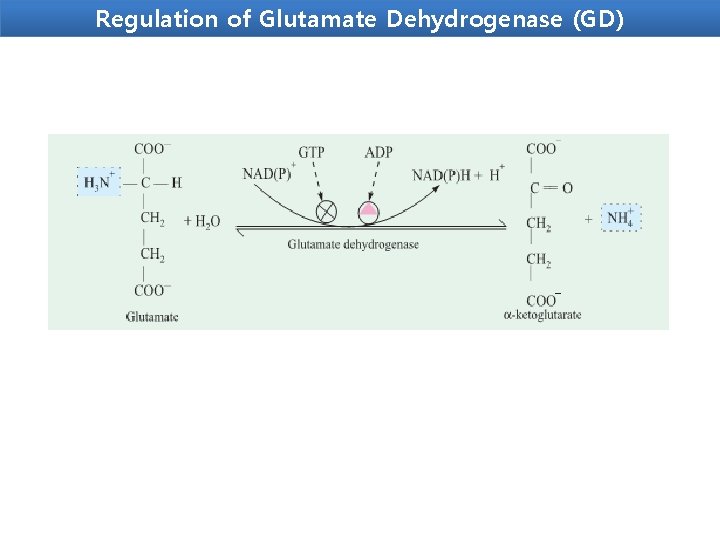
Oxidative deamination is the liberation of free ammonia from the amino group of aminoacids coupled with oxidation. The amino groups from many of the α-amino acids are collected in the liver in the form of the amino group of Lglutamate molecules coupled with oxidation. These amino groups must next be removed from glutamate to prepare them for excretion. In hepatocytes, glutamate is transported from the cytosol into mitochondria, where it undergoes oxidative deamination catalyzed by L-glutamate dehydrogenase. It is the only enzyme that can use either NAD+ or NADP+ as the acceptor of reducing equivalent. Purpose oxidative deamination is to provide NH 3 for urea synthesis and α-Keto acids for a variety of reactions including energy generations
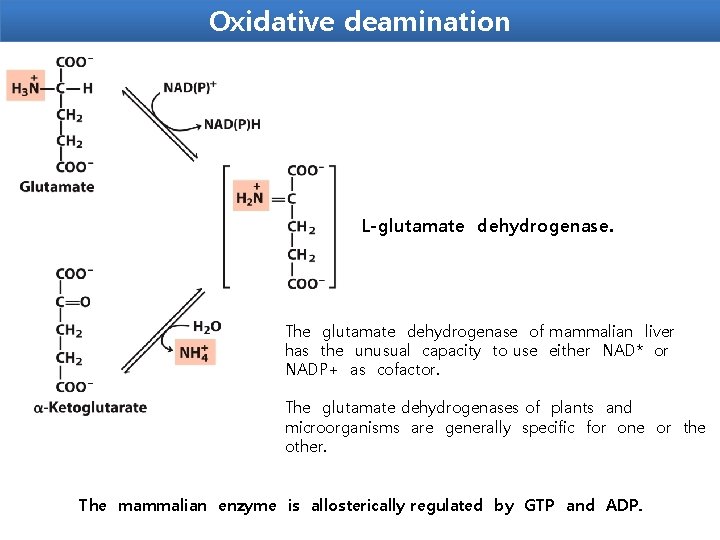
Oxidative deamination L-glutamate dehydrogenase. The glutamate dehydrogenase of mammalian liver has the unusual capacity to use either NAD* or NADP+ as cofactor. The glutamate dehydrogenases of plants and microorganisms are generally specific for one or the other. The mammalian enzyme is allosterically regulated by GTP and ADP.
Regulation of Glutamate Dehydrogenase (GD) Glutamate dehydrogenase (GD) -Present only in the mitochondrial matrix. -Complex allosteric enzyme -The enzyme molecule consists of 6 identical subunits. - Activity is influenced by the positive modulator ADP and by the negative modulator GTP. Whenever a hepatocyte needs fuel for the citric acid cycle, GD activity increases, making α-ketoglutarate available for the citric acid cycle and releasing NH 4+for excretion. On the contrary, whenever GTP accumulates in the mitochondria due to high activity of the citric acid cycle, oxidative deamination of glutamate is inhibited.
Regulation of Glutamate Dehydrogenase (GD)
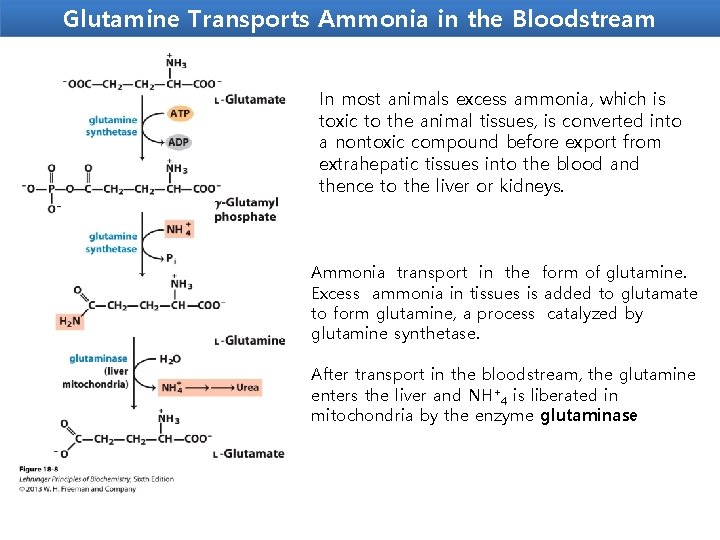
Glutamine Transports Ammonia in the Bloodstream In most animals excess ammonia, which is toxic to the animal tissues, is converted into a nontoxic compound before export from extrahepatic tissues into the blood and thence to the liver or kidneys. Ammonia transport in the form of glutamine. Excess ammonia in tissues is added to glutamate to form glutamine, a process catalyzed by glutamine synthetase. After transport in the bloodstream, the glutamine enters the liver and NH+4 is liberated in mitochondria by the enzyme glutaminase
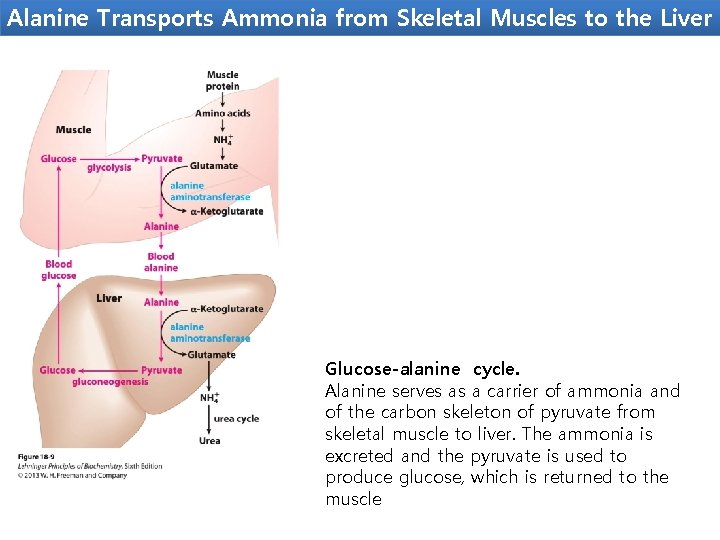
Alanine Transports Ammonia from Skeletal Muscles to the Liver Glucose-alanine cycle. Alanine serves as a carrier of ammonia and of the carbon skeleton of pyruvate from skeletal muscle to liver. The ammonia is excreted and the pyruvate is used to produce glucose, which is returned to the muscle
Toxicity of ammnonia Even a marginal elevation in the blood ammonia concentration is harmful to the brain. Ammonia, when it accumulates in the body, results in slurring of speech and blurring of the vision and causes tremors. lt may lead to coma and, finally, death, if not corrected. Hyperammonemia Elevation in blood NH 3 level may be genetic or acquired. lmpairment in urea synthesis due to a defect in any one of the five enzymes is described in urea synthesis. All these disorders lead to hyperammonemia and cause mental retardation. The acquired hyperammonemia may be due to hepatitis, alcoholism etc. where the urea synthesis becomes defective, hence NH 3 accumulates.
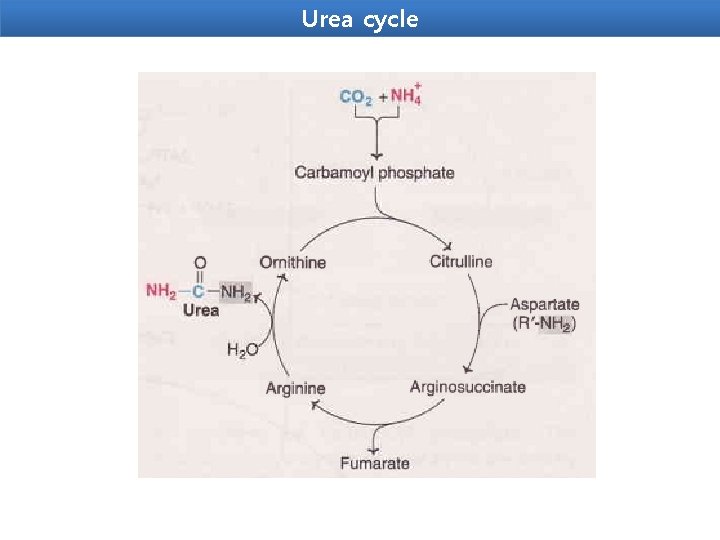
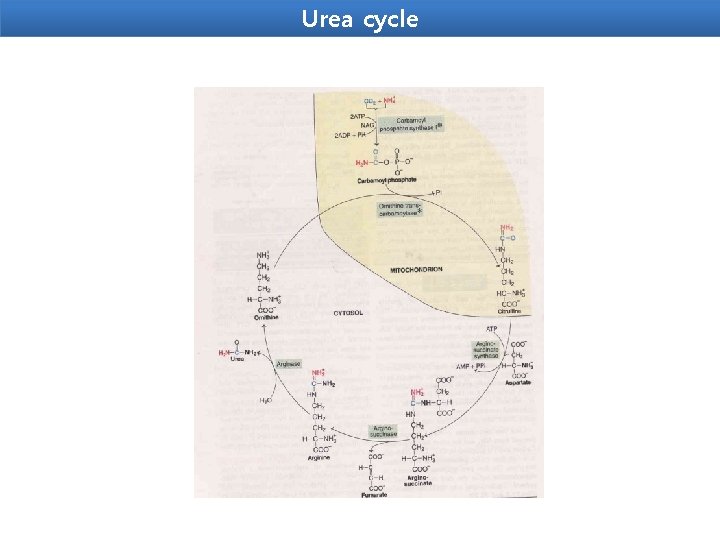
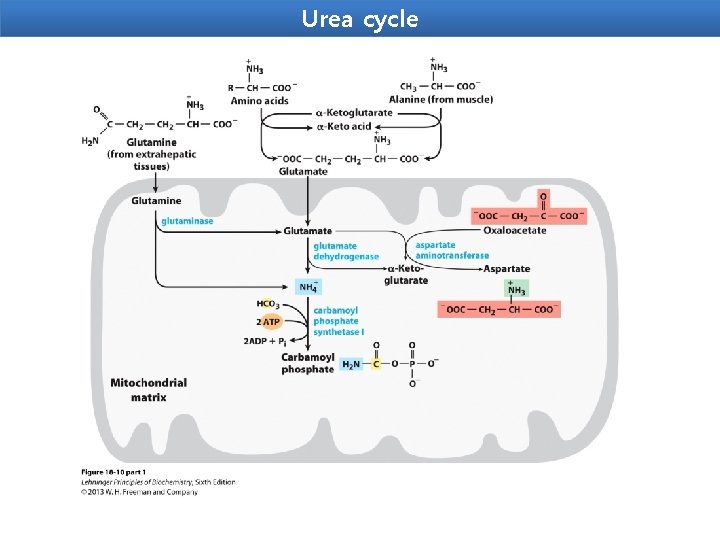
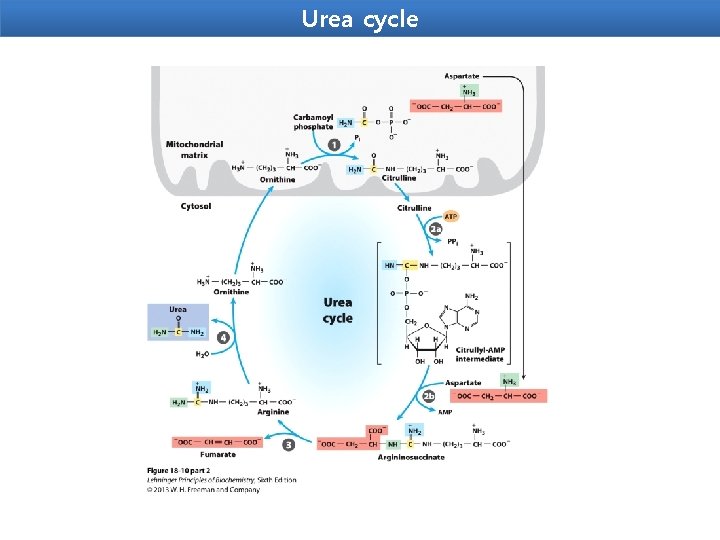
Urea cycle Urea is the end product of protein metabolism (amino acid metabolism). The nitrogen of amino acids, converted to ammonia, is toxic to the body. lt is converted to urea and detoxified. Urea is synthesized in liver and transported to kidneys for excretion in urine. Urea cycle is the first metabolic cycle that was elucidated by Hans Krebs and Kurt Henseleit (1932), hence it is known as Krebs. Henseleit cycle. Urea has two amino (-NH) groups, one derived from NH 3 and the other from aspartate. Carbon atom is supplied by CO 2. Urea synthesis is a five-step cyclic process, with five distinct enzymes. The first two enzymes are present in mitochondria while the rest are localized in cytosol.
Urea cycle
Urea cycle
Urea cycle
Urea cycle

Urea cycle
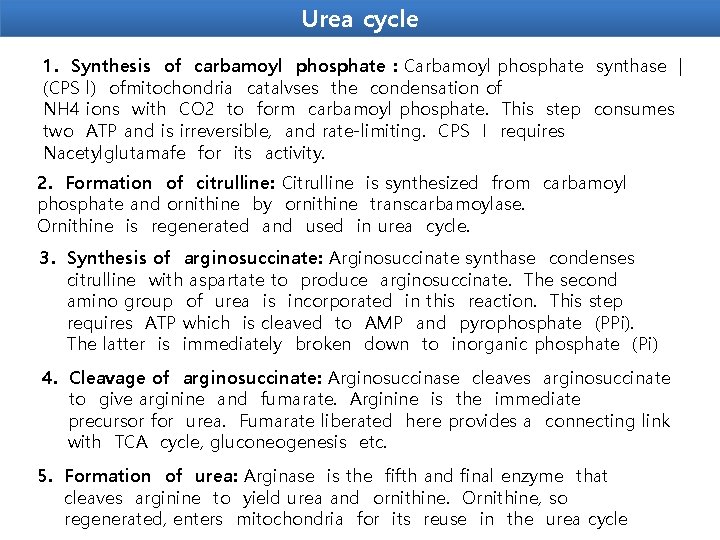
Urea cycle 1. Synthesis of carbamoyl phosphate : Carbamoyl phosphate synthase | (CPS l) ofmitochondria catalvses the condensation of NH 4 ions with CO 2 to form carbamoyl phosphate. This step consumes two ATP and is irreversible, and rate-limiting. CPS I requires Nacetylglutamafe for its activity. 2. Formation of citrulline: Citrulline is synthesized from carbamoyl phosphate and ornithine by ornithine transcarbamoylase. Ornithine is regenerated and used in urea cycle. 3. Synthesis of arginosuccinate: Arginosuccinate synthase condenses citrulline with aspartate to produce arginosuccinate. The second amino group of urea is incorporated in this reaction. This step requires ATP which is cleaved to AMP and pyrophosphate (PPi). The latter is immediately broken down to inorganic phosphate (Pi) 4. Cleavage of arginosuccinate: Arginosuccinase cleaves arginosuccinate to give arginine and fumarate. Arginine is the immediate precursor for urea. Fumarate liberated here provides a connecting link with TCA cycle, gluconeogenesis etc. 5. Formation of urea: Arginase is the fifth and final enzyme that cleaves arginine to yield urea and ornithine. Ornithine, so regenerated, enters mitochondria for its reuse in the urea cycle
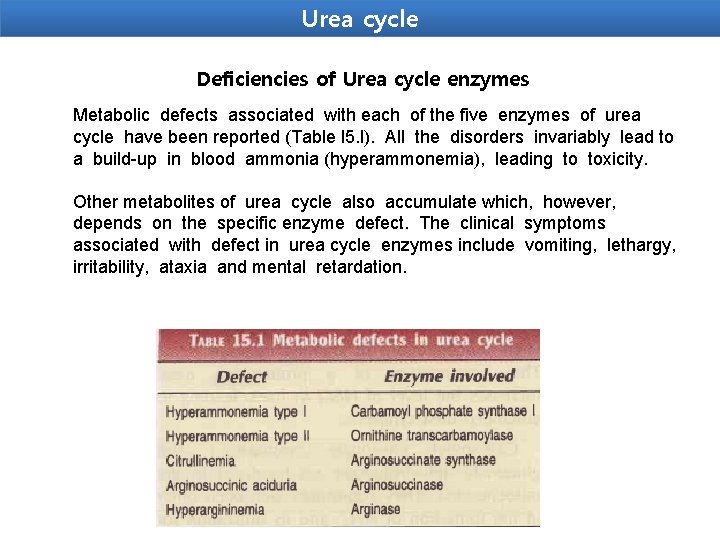
Urea cycle Deficiencies of Urea cycle enzymes Metabolic defects associated with each of the five enzymes of urea cycle have been reported (Table l 5. l). All the disorders invariably lead to a build-up in blood ammonia (hyperammonemia), leading to toxicity. Other metabolites of urea cycle also accumulate which, however, depends on the specific enzyme defect. The clinical symptoms associated with defect in urea cycle enzymes include vomiting, lethargy, irritability, ataxia and mental retardation.
- Slides: 35