
PROTEIN ENERGY MALNUTRITION SEVERE CHLDHOOD UNDERNUTRITION PEMSCU Most

- Slides: 29
PROTEIN ENERGY MALNUTRITION SEVERE CHİLDHOOD UNDERNUTRITION
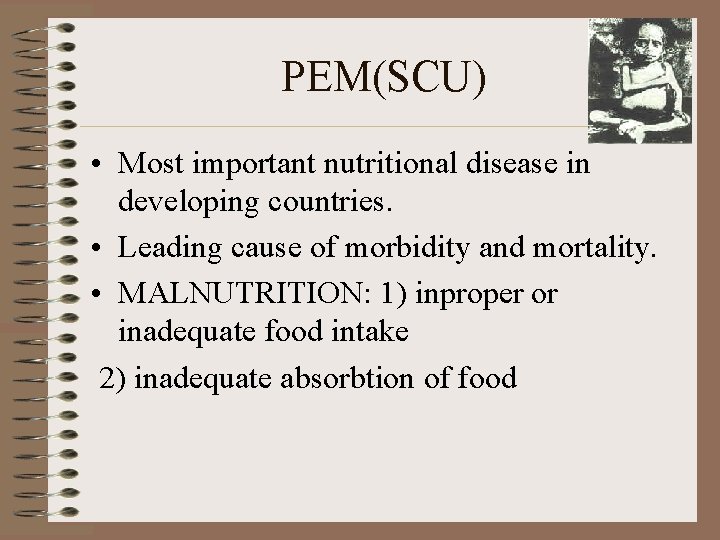
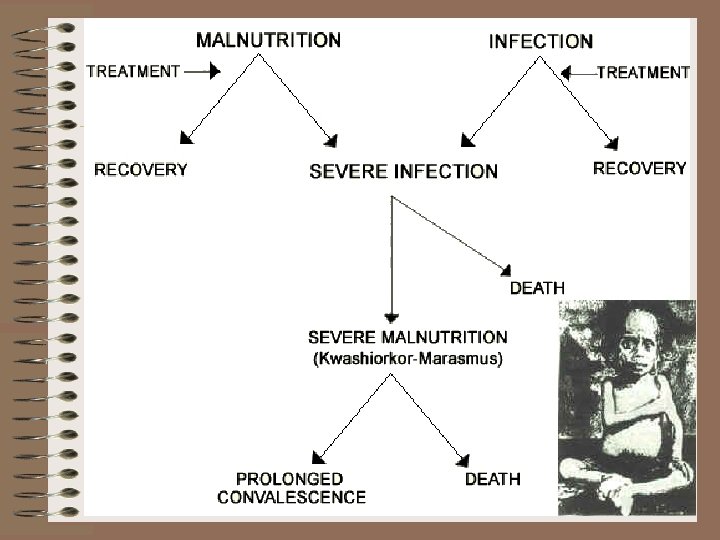
PEM(SCU) • Most important nutritional disease in developing countries. • Leading cause of morbidity and mortality. • MALNUTRITION: 1) inproper or inadequate food intake 2) inadequate absorbtion of food
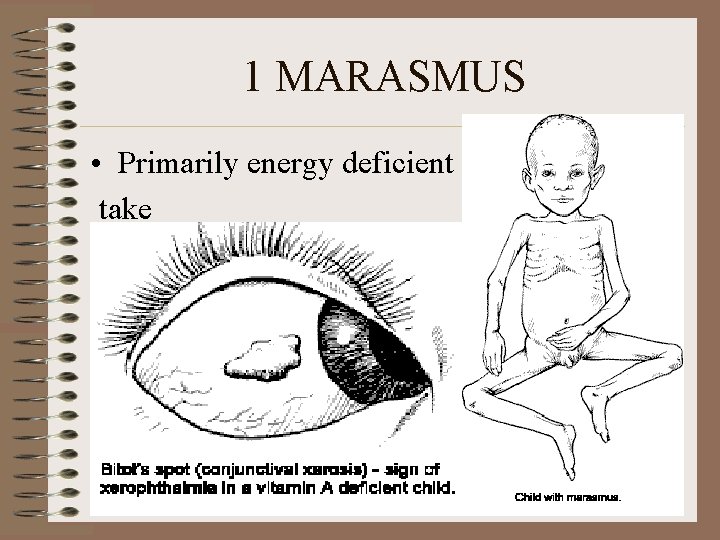
1 MARASMUS • Primarily energy deficient take
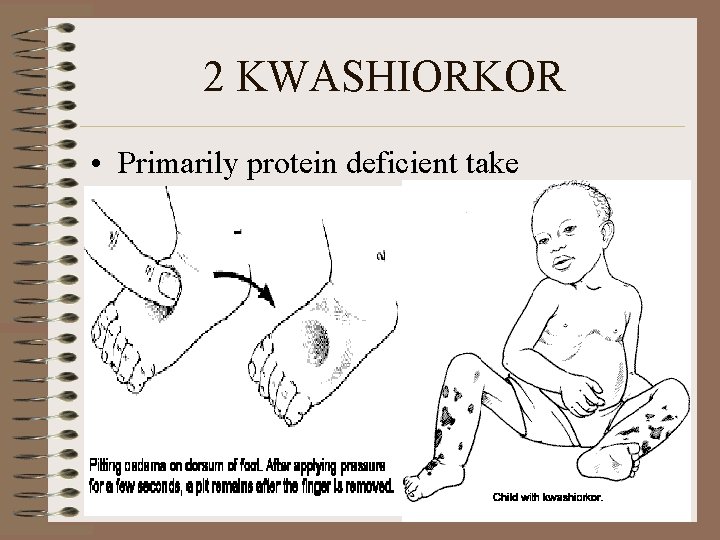
2 KWASHIORKOR • Primarily protein deficient take
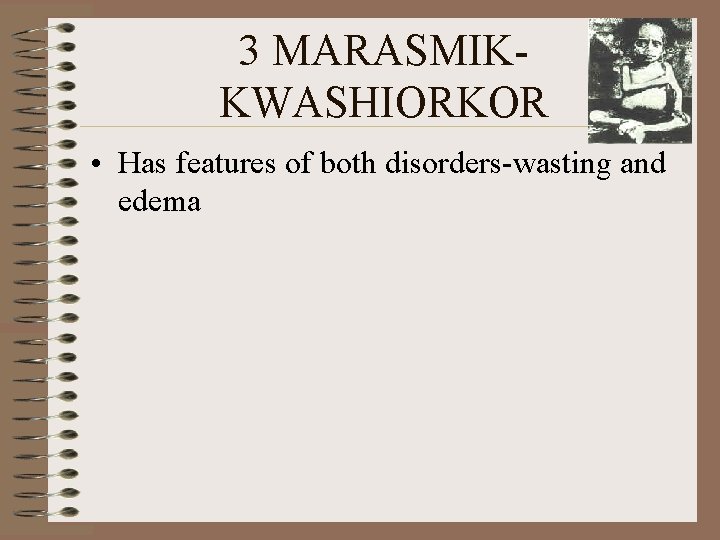
3 MARASMIKKWASHIORKOR • Has features of both disorders-wasting and edema
• ETIOLOGY: 1)Primary-Main: -insufficient food - inadequate knowledge of feeding tecniques - poor hygiene - infections - socioeconomic status
• 2) Secondary-Precipitating factors : - prematurity, SGA - metabolic abnormalities (DM, hypotiroidism etc. . ) - congenital abnormalities of digestive system (cleft palate etc. . . ) - severe inpairment of any body system (CVS, GUS, CNS etc. . . ) - constitutional defects (celiac , CF etc. . )
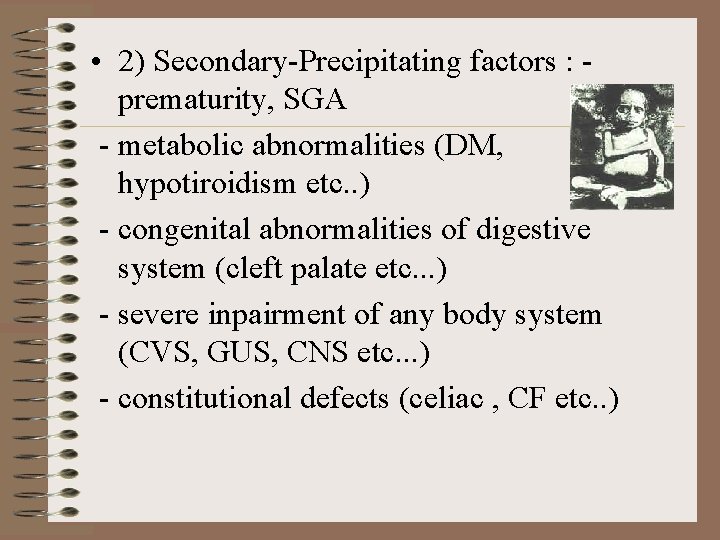
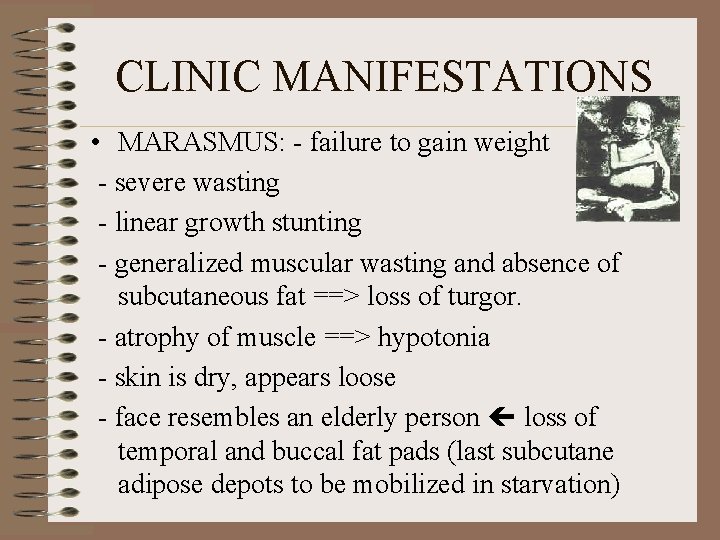
CLINIC MANIFESTATIONS • MARASMUS: - failure to gain weight - severe wasting - linear growth stunting - generalized muscular wasting and absence of subcutaneous fat ==> loss of turgor. - atrophy of muscle ==> hypotonia - skin is dry, appears loose - face resembles an elderly person loss of temporal and buccal fat pads (last subcutane adipose depots to be mobilized in starvation)
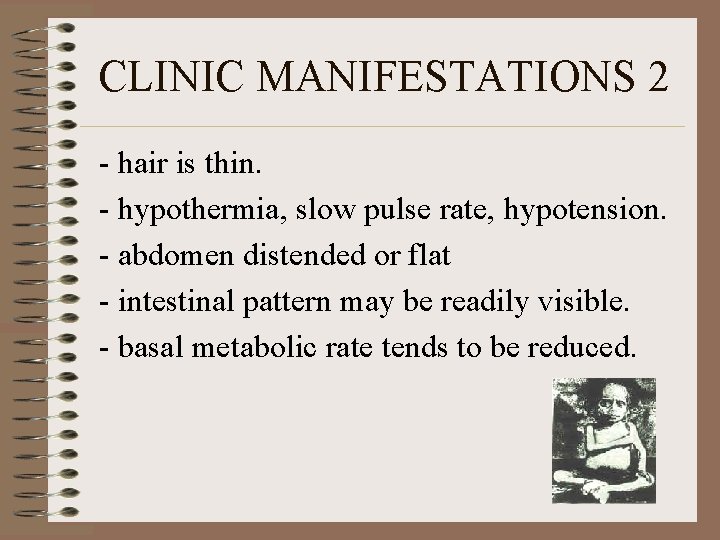
CLINIC MANIFESTATIONS 2 - hair is thin. - hypothermia, slow pulse rate, hypotension. - abdomen distended or flat - intestinal pattern may be readily visible. - basal metabolic rate tends to be reduced.
KWASHIORKOR • Disease of the deposed baby when the next is born (African’s dialect) • Insufficient intake of protein (often associated with deficient energy intake) • Evident from early infancy to about 5 yr. of age (during the weaning or postweaning phase) (18 mounts-3 years most common) • Produce a fat appearing child==> sugar baby
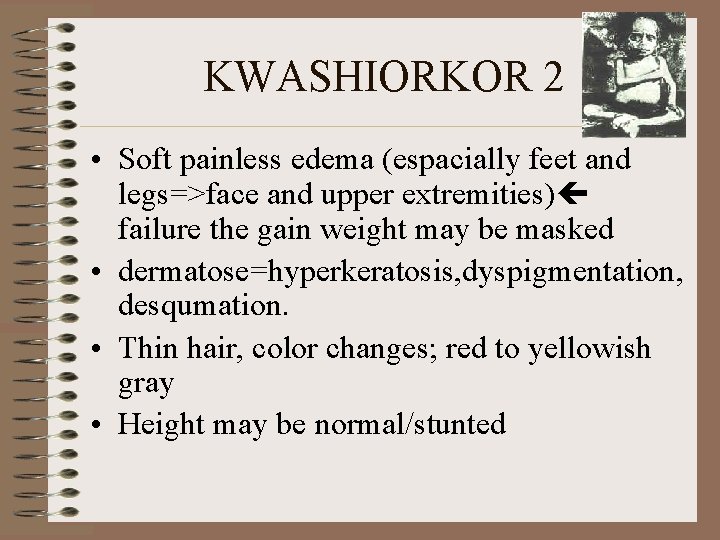
KWASHIORKOR 2 • Soft painless edema (espacially feet and legs=>face and upper extremities) failure the gain weight may be masked • dermatose=hyperkeratosis, dyspigmentation, desqumation. • Thin hair, color changes; red to yellowish gray • Height may be normal/stunted
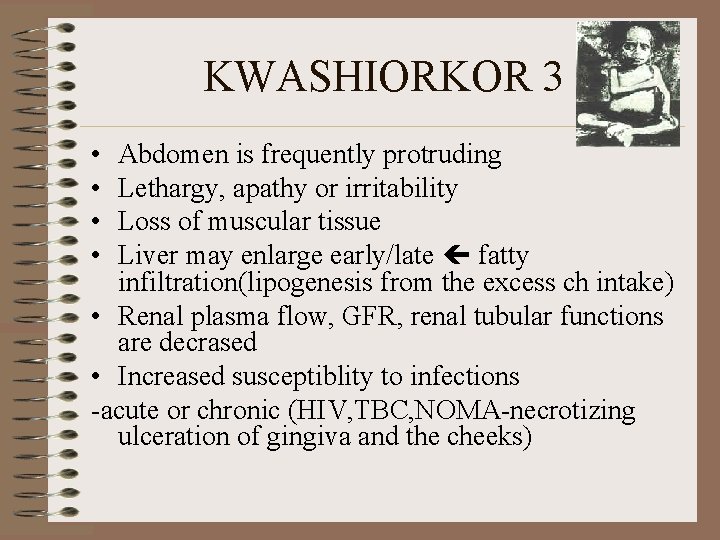
KWASHIORKOR 3 • • Abdomen is frequently protruding Lethargy, apathy or irritability Loss of muscular tissue Liver may enlarge early/late fatty infiltration(lipogenesis from the excess ch intake) • Renal plasma flow, GFR, renal tubular functions are decrased • Increased susceptiblity to infections -acute or chronic (HIV, TBC, NOMA-necrotizing ulceration of gingiva and the cheeks)
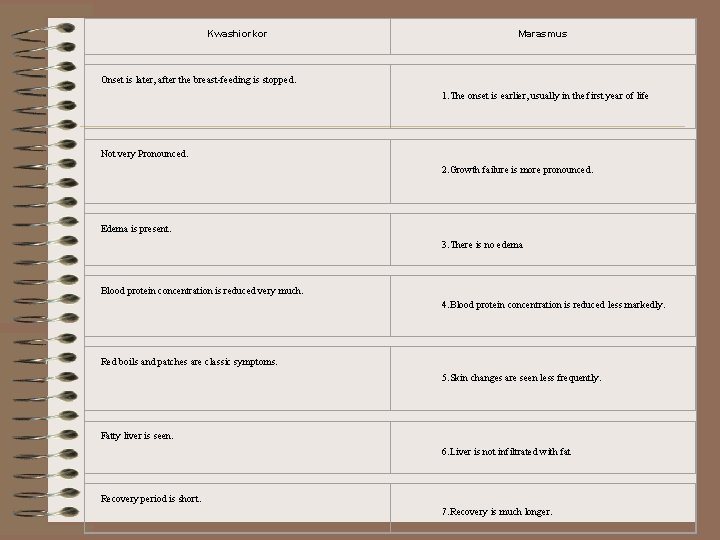
Kwashiorkor Marasmus Onset is later, after the breast-feeding is stopped. 1. The onset is earlier, usually in the first year of life Not very Pronounced. 2. Growth failure is more pronounced. Edema is present. 3. There is no edema Blood protein concentration is reduced very much. 4. Blood protein concentration is reduced less markedly. Red boils and patches are classic symptoms. 5. Skin changes are seen less frequently. Fatty liver is seen. 6. Liver is not infiltrated with fat Recovery period is short. 7. Recovery is much longer.
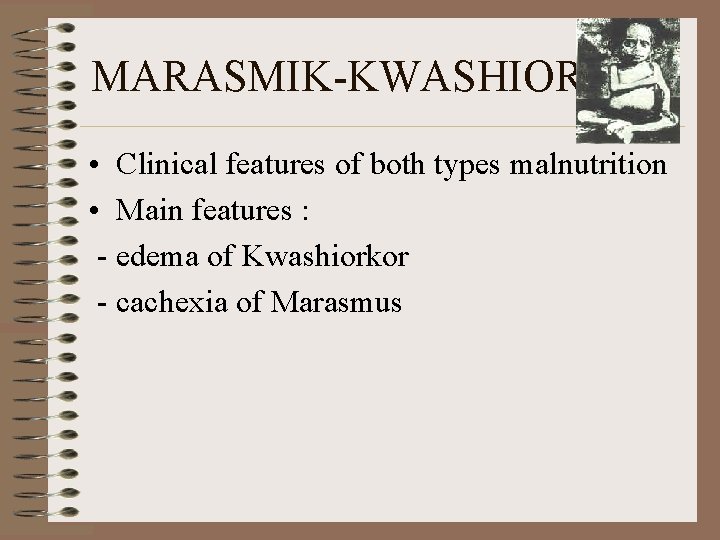
MARASMIK-KWASHIORKOR • Clinical features of both types malnutrition • Main features : - edema of Kwashiorkor - cachexia of Marasmus
DIAGNOSIS= - dietary history - evaluation of present deviations from avarage • Height } • Weight } FOR AGE • HC } • WEIGHT- FOR HEIGHT • Mid arm circumference (1 -5 yrs=>stable) • Skinfold thickness: ↓ PEM : ↑ obesity
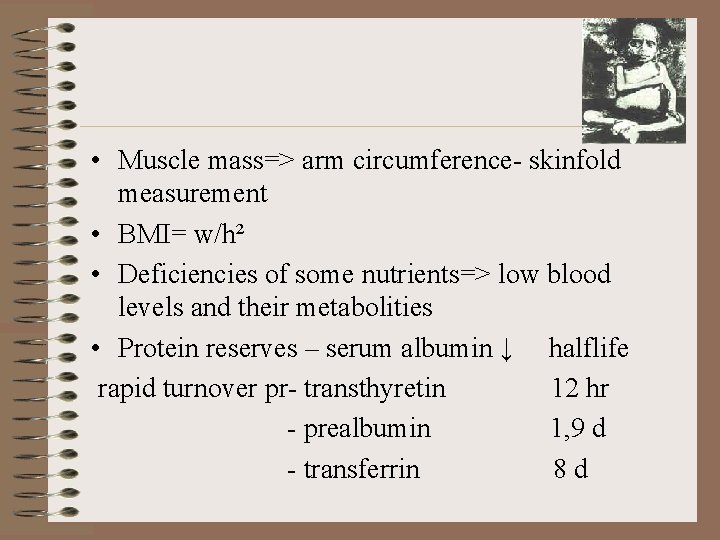
• Muscle mass=> arm circumference- skinfold measurement • BMI= w/h² • Deficiencies of some nutrients=> low blood levels and their metabolities • Protein reserves – serum albumin ↓ halflife rapid turnover pr- transthyretin 12 hr - prealbumin 1, 9 d - transferrin 8 d
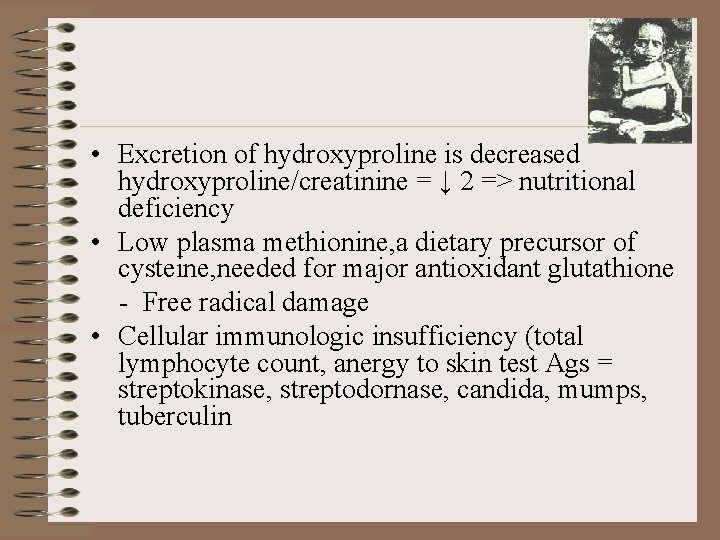
• Excretion of hydroxyproline is decreased hydroxyproline/creatinine = ↓ 2 => nutritional deficiency • Low plasma methionine, a dietary precursor of cysteine, needed for major antioxidant glutathione - Free radical damage • Cellular immunologic insufficiency (total lymphocyte count, anergy to skin test Ags = streptokinase, streptodornase, candida, mumps, tuberculin
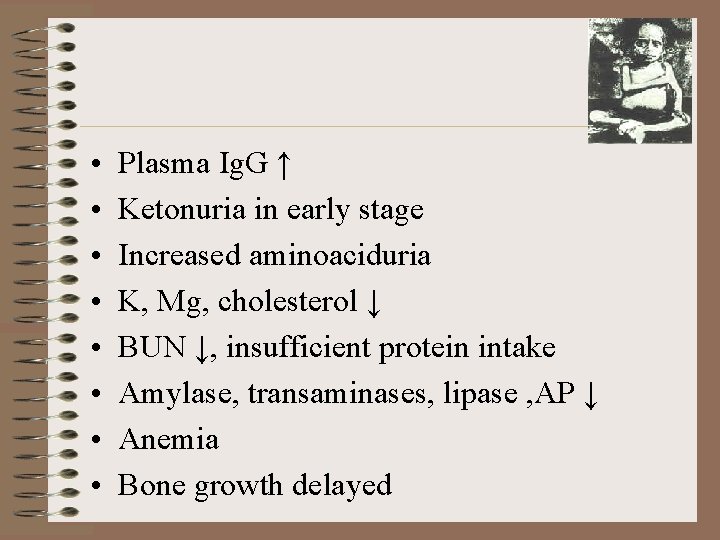
• • Plasma Ig. G ↑ Ketonuria in early stage Increased aminoaciduria K, Mg, cholesterol ↓ BUN ↓, insufficient protein intake Amylase, transaminases, lipase , AP ↓ Anemia Bone growth delayed
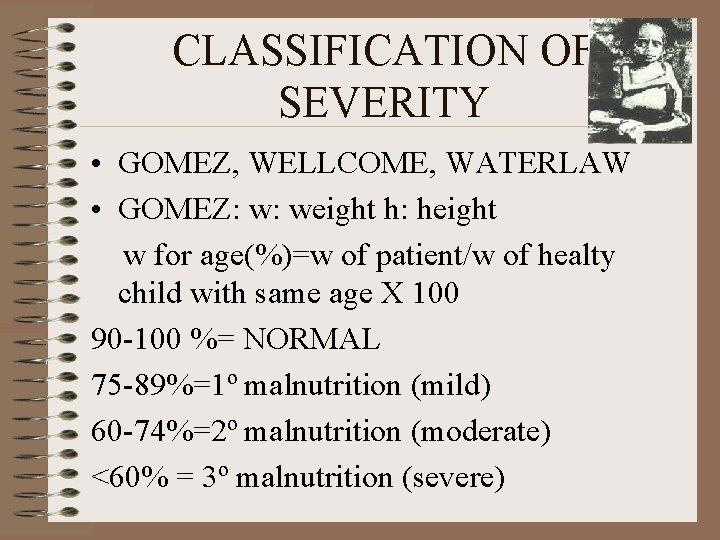
CLASSIFICATION OF SEVERITY • GOMEZ, WELLCOME, WATERLAW • GOMEZ: w: weight h: height w for age(%)=w of patient/w of healty child with same age X 100 90 -100 %= NORMAL 75 -89%=1º malnutrition (mild) 60 -74%=2º malnutrition (moderate) <60% = 3º malnutrition (severe)
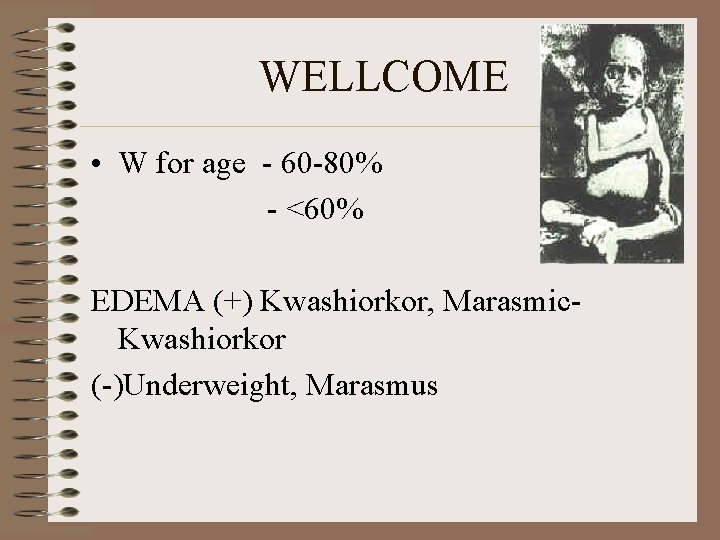
WELLCOME • W for age - 60 -80% - <60% EDEMA (+) Kwashiorkor, Marasmic- Kwashiorkor (-)Underweight, Marasmus
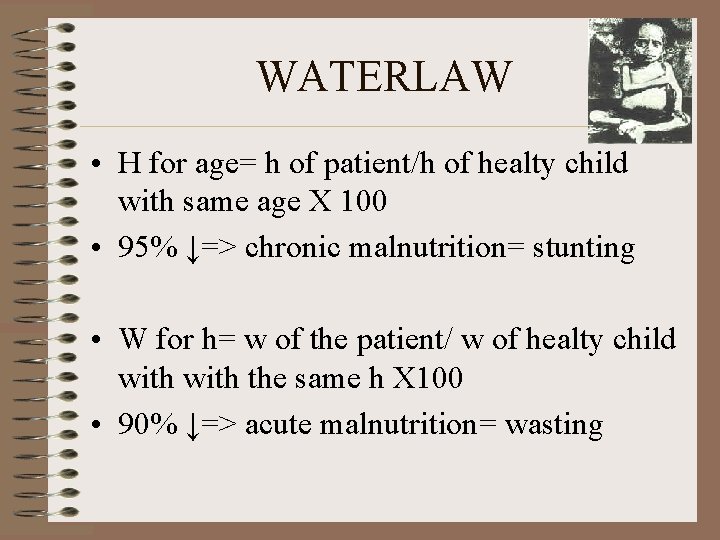
WATERLAW • H for age= h of patient/h of healty child with same age X 100 • 95% ↓=> chronic malnutrition= stunting • W for h= w of the patient/ w of healty child with the same h X 100 • 90% ↓=> acute malnutrition= wasting
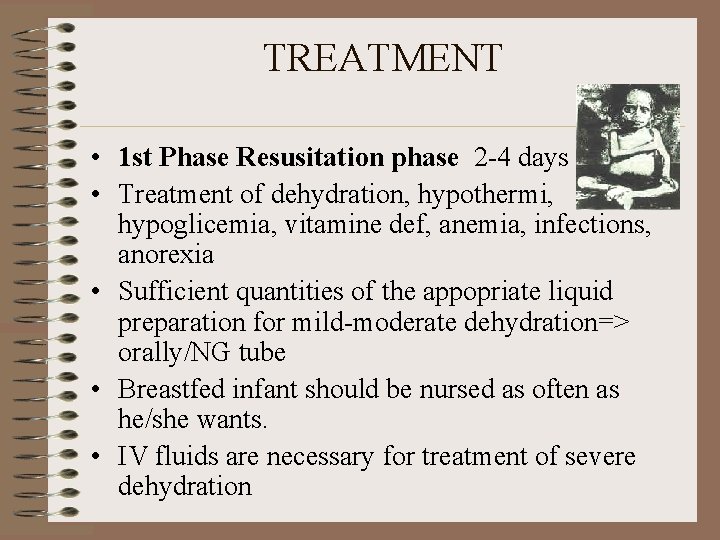
TREATMENT • 1 st Phase Resusitation phase 2 -4 days • Treatment of dehydration, hypothermi, hypoglicemia, vitamine def, anemia, infections, anorexia • Sufficient quantities of the appopriate liquid preparation for mild-moderate dehydration=> orally/NG tube • Breastfed infant should be nursed as often as he/she wants. • IV fluids are necessary for treatment of severe dehydration
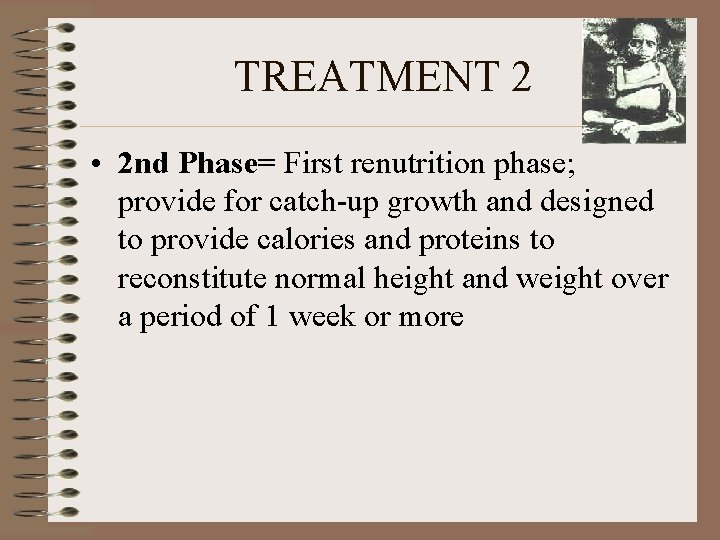
TREATMENT 2 • 2 nd Phase= First renutrition phase; provide for catch-up growth and designed to provide calories and proteins to reconstitute normal height and weight over a period of 1 week or more
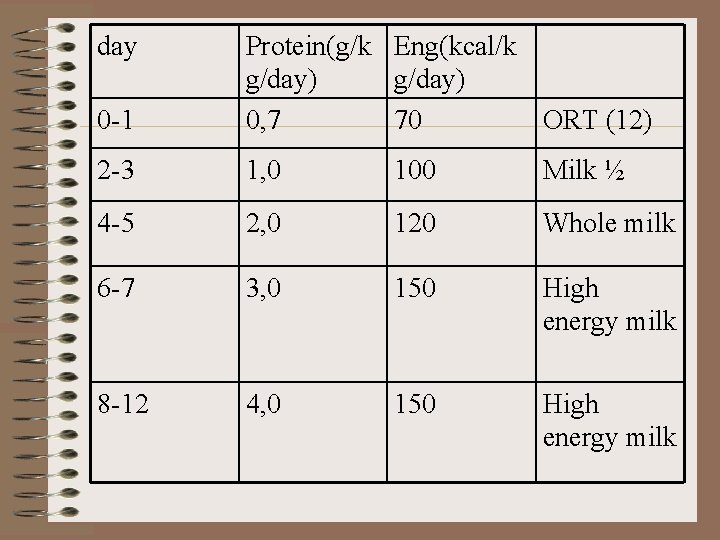
day 0 -1 Protein(g/k Eng(kcal/k g/day) 0, 7 70 ORT (12) 2 -3 1, 0 100 Milk ½ 4 -5 2, 0 120 Whole milk 6 -7 3, 0 150 High energy milk 8 -12 4, 0 150 High energy milk
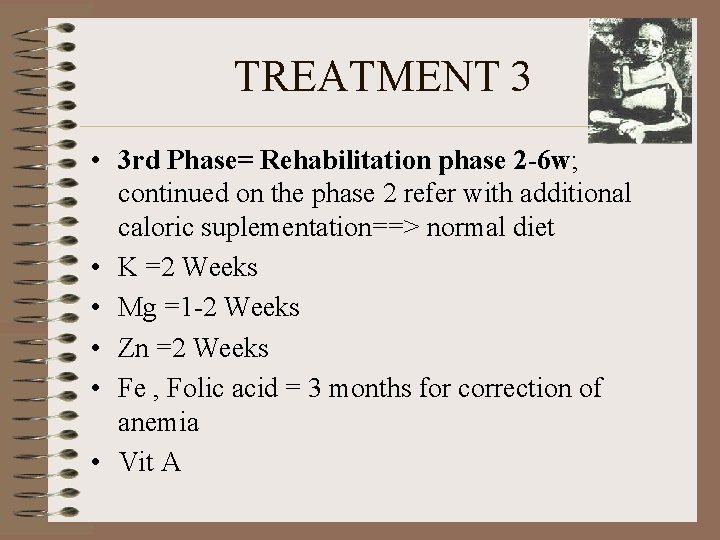
TREATMENT 3 • 3 rd Phase= Rehabilitation phase 2 -6 w; continued on the phase 2 refer with additional caloric suplementation==> normal diet • K =2 Weeks • Mg =1 -2 Weeks • Zn =2 Weeks • Fe , Folic acid = 3 months for correction of anemia • Vit A
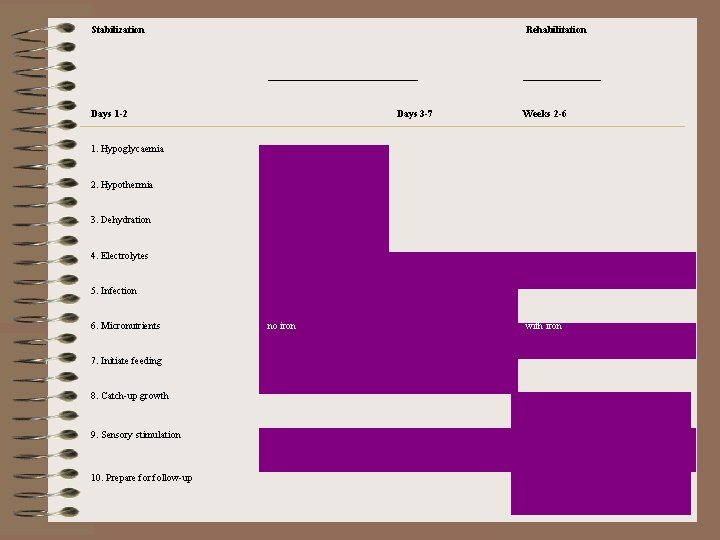
Stabilization Rehabilitation _____________ Days 1 -2 _______ Days 3 -7 Weeks 2 -6 1. Hypoglycaemia 2. Hypothermia 3. Dehydration 4. Electrolytes 5. Infection 6. Micronutrients no iron with iron 7. Initiate feeding 8. Catch-up growth 9. Sensory stimulation 10. Prepare for follow-up
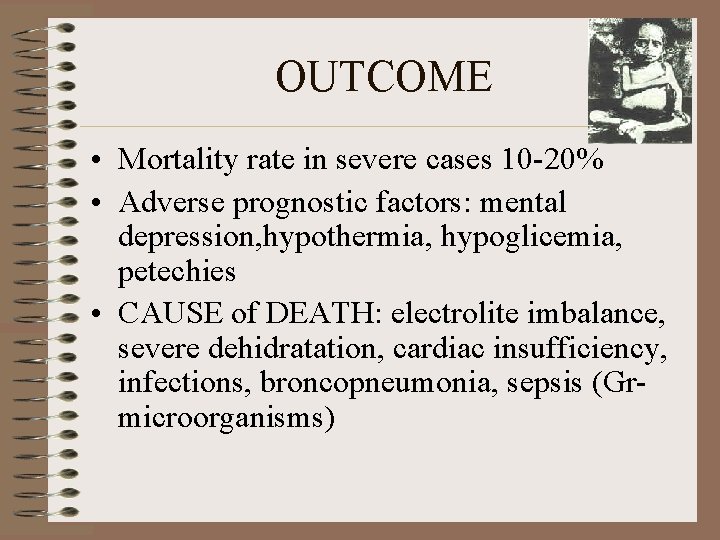
OUTCOME • Mortality rate in severe cases 10 -20% • Adverse prognostic factors: mental depression, hypothermia, hypoglicemia, petechies • CAUSE of DEATH: electrolite imbalance, severe dehidratation, cardiac insufficiency, infections, broncopneumonia, sepsis (Gr- microorganisms)
THANKS