
Protein Dr DEEPA G S Assistant Professor Dept


- Slides: 50
Protein Dr. DEEPA G. S Assistant Professor Dept. of Physiology and Biochemistry
Proteins • A protein is a biological macromolecule composed of hundreds of amino acids – A peptide is less than 50 amino acids • Three quarters of the body solids are proteins • Constitutes 50% of cellular dry weight • They are the polymers of aminoacids
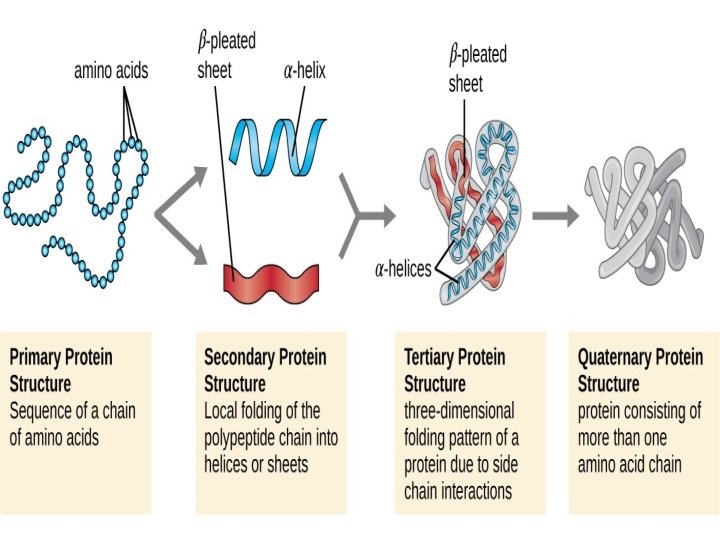
• A protein can fold into tens of thousands of different three dimensional shapes or Conformations – Many diseases such as Alzheimer’s, Mad Cow Disease and various cancers result from the misfolding of a protein
Functions Structural function • Collagen • Elastin • Alpha keratin
Dynamic functions • Enzymes • Hormones • Blood clotting factors • Immunoglobulins • Membrane receptors • Storage proteins
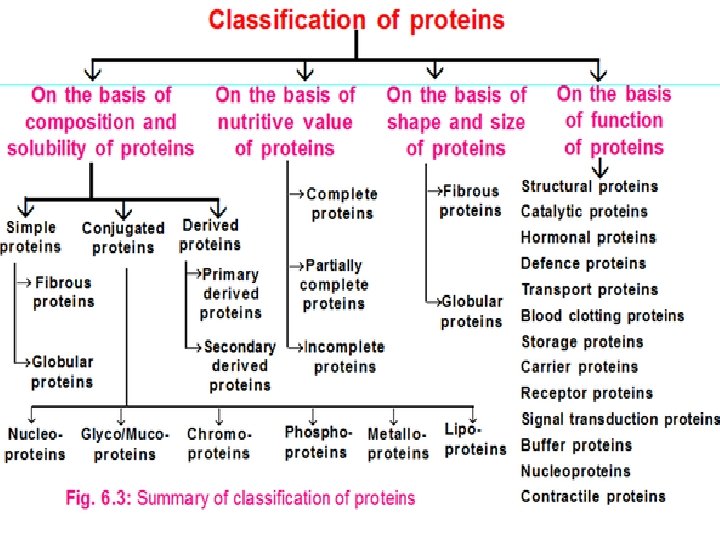
Conjugated proteins Combination of protein with a non protein part, called prosthetic group
Glycoproteins-proteins with carbohydrates When carbohydrate content more than 10% viscosity is increased , they are sometimes called as mucoproteins or proteoglycans Eg: Blood group antigens
Lipoproteins Occur in blood and cell membranes Nucleoproteins Protein attached to nucleic acids. DNA carries negative charges which combine with positively charged proteins Eg: Histones
Chromoproteins Protein with coloured prosthetic groups Hb Flavoproteins-Riboflavin Visual purple-Vitamin A Phosphoproteins-contain phosphorus Eg: Casein of milk and vitellin of egg yolk
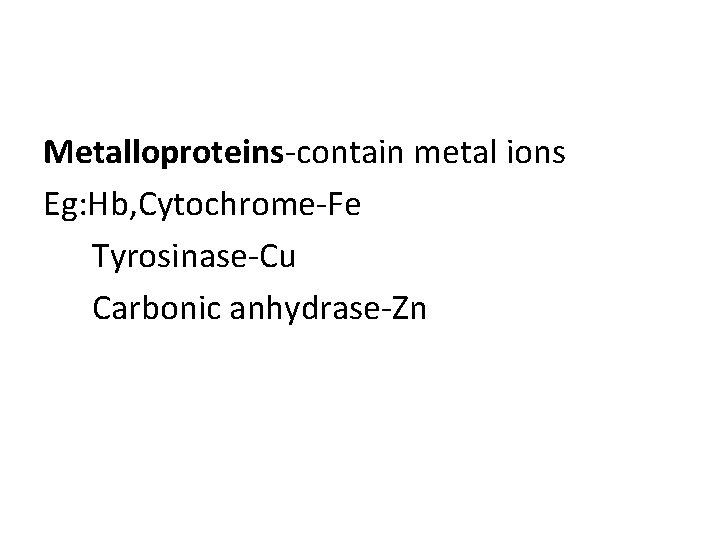
Metalloproteins-contain metal ions Eg: Hb, Cytochrome-Fe Tyrosinase-Cu Carbonic anhydrase-Zn
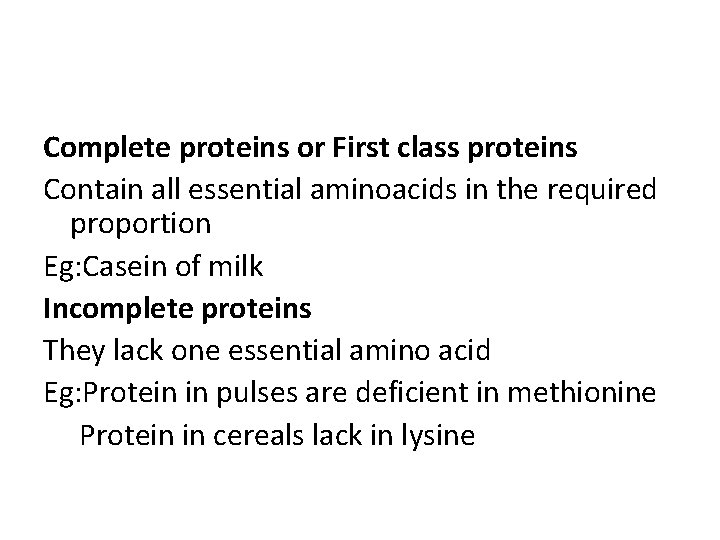
Complete proteins or First class proteins Contain all essential aminoacids in the required proportion Eg: Casein of milk Incomplete proteins They lack one essential amino acid Eg: Protein in pulses are deficient in methionine Protein in cereals lack in lysine
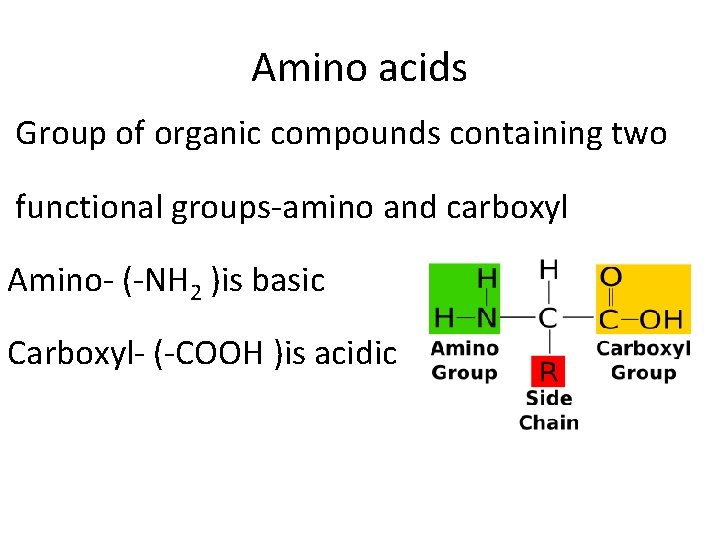
Amino acids Group of organic compounds containing two functional groups-amino and carboxyl Amino- (-NH 2 )is basic Carboxyl- (-COOH )is acidic
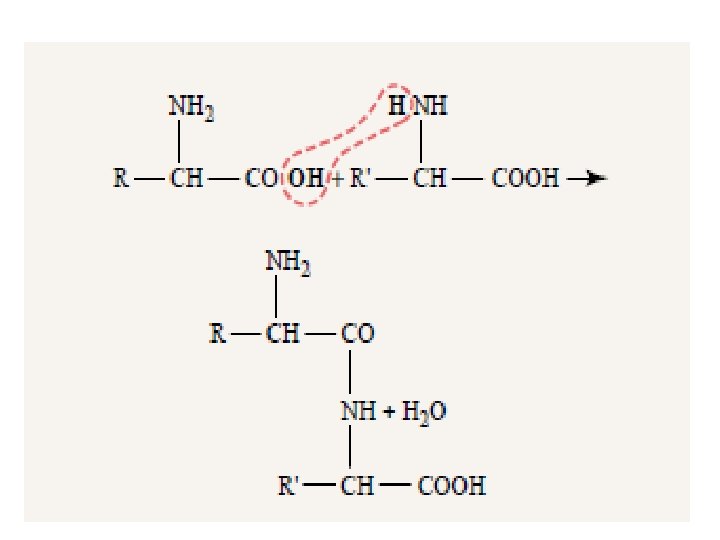
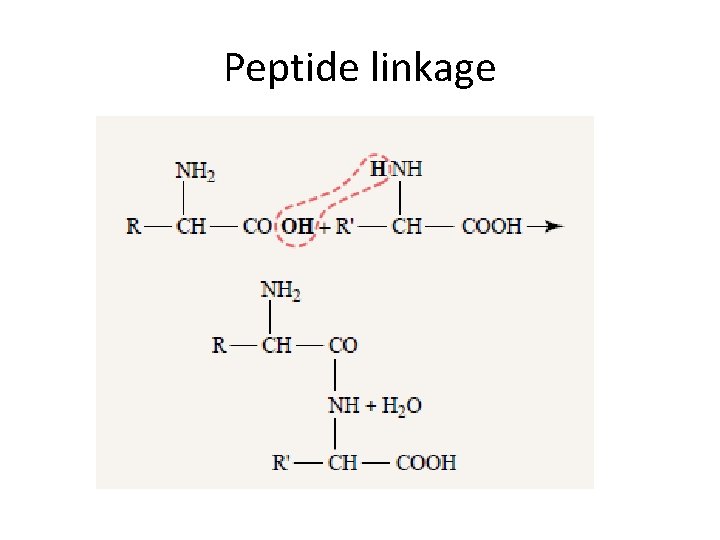
Peptide linkage
Peptide linkages and peptide chain • Complicated protein-1000 aminoacids • Smallest proteins-20 aminoacids • Average -400 amino acids
Standard aminoacids Out of about 300 aminoacids, 20 are considered as standard
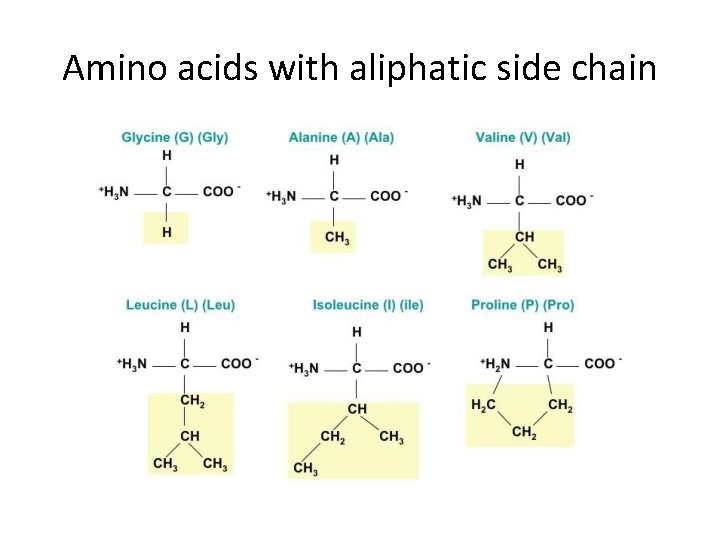
Amino acids with aliphatic side chain
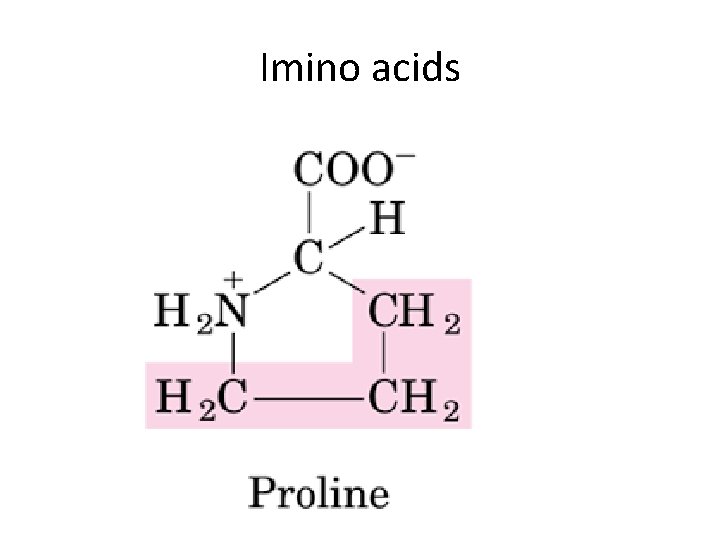
Imino acids
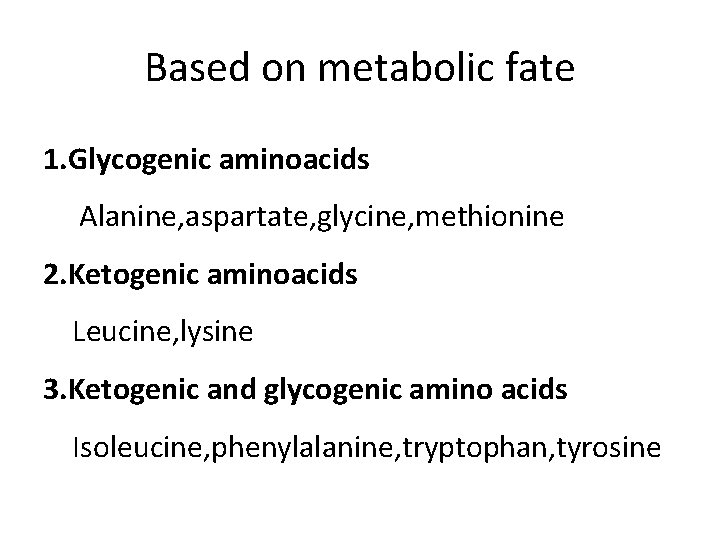
Based on metabolic fate 1. Glycogenic aminoacids Alanine, aspartate, glycine, methionine 2. Ketogenic aminoacids Leucine, lysine 3. Ketogenic and glycogenic amino acids Isoleucine, phenylalanine, tryptophan, tyrosine
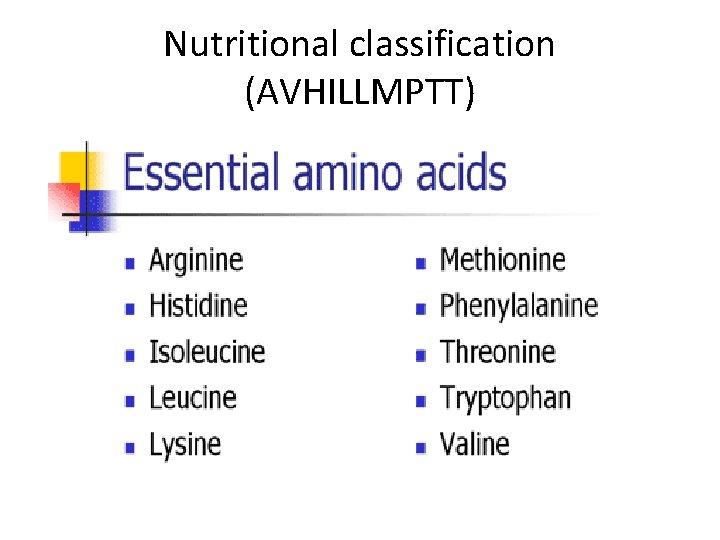
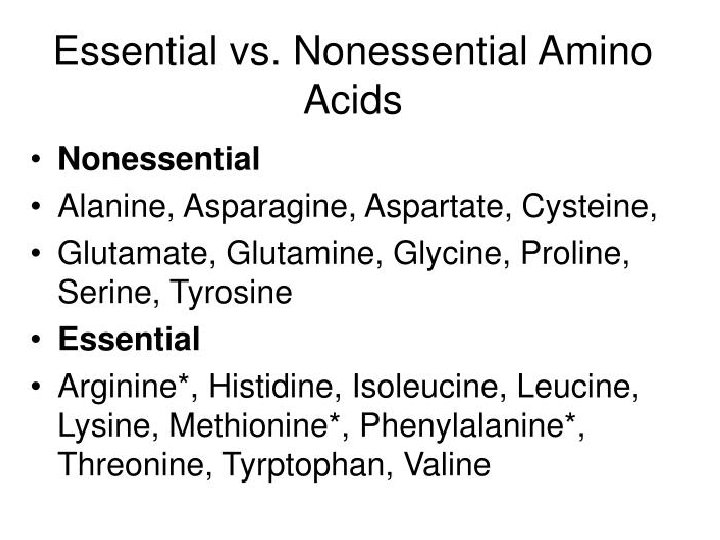
Nutritional classification (AVHILLMPTT)
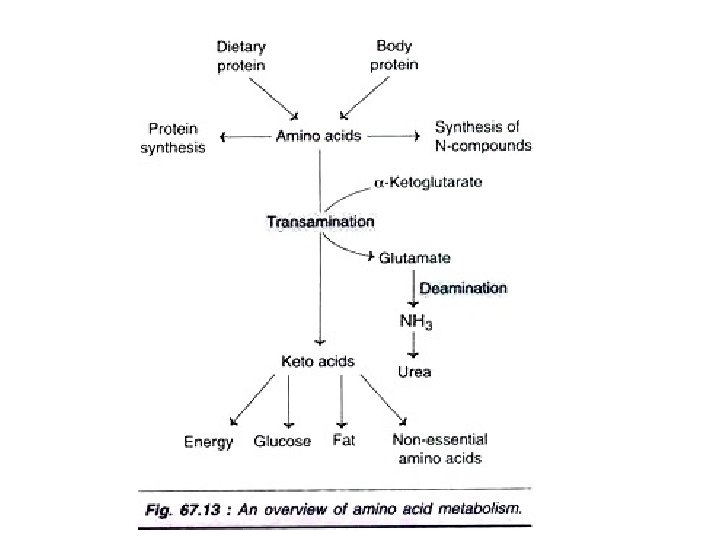
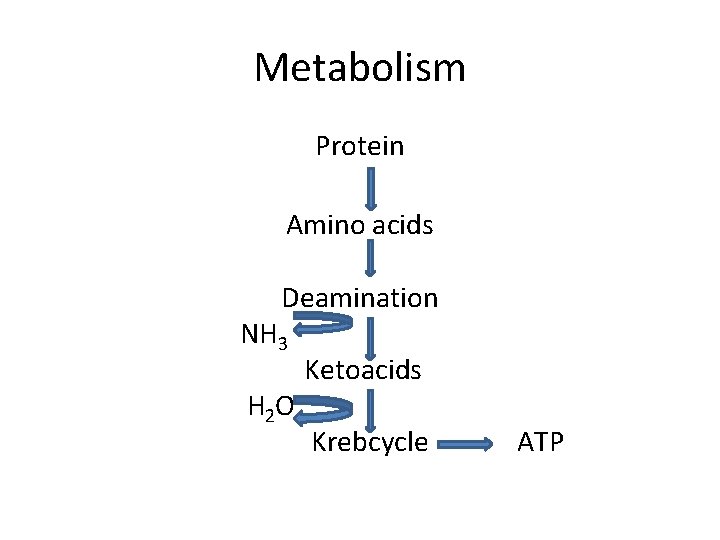
Metabolism Protein Amino acids Deamination NH 3 H 2 O Ketoacids Krebcycle ATP
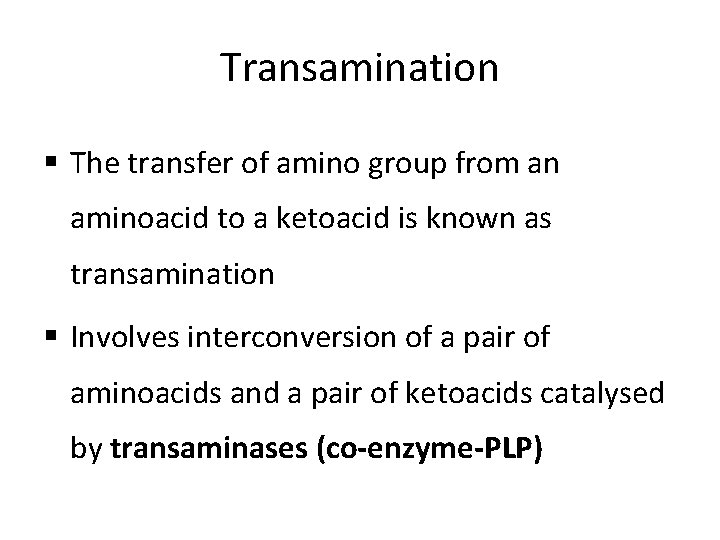
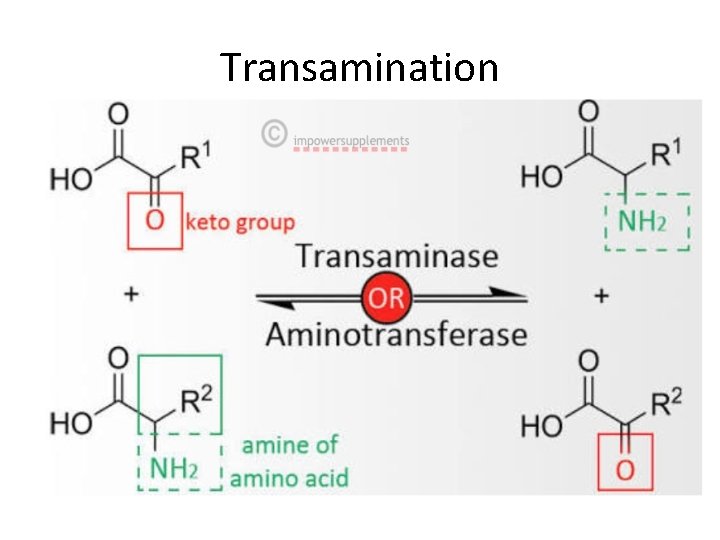
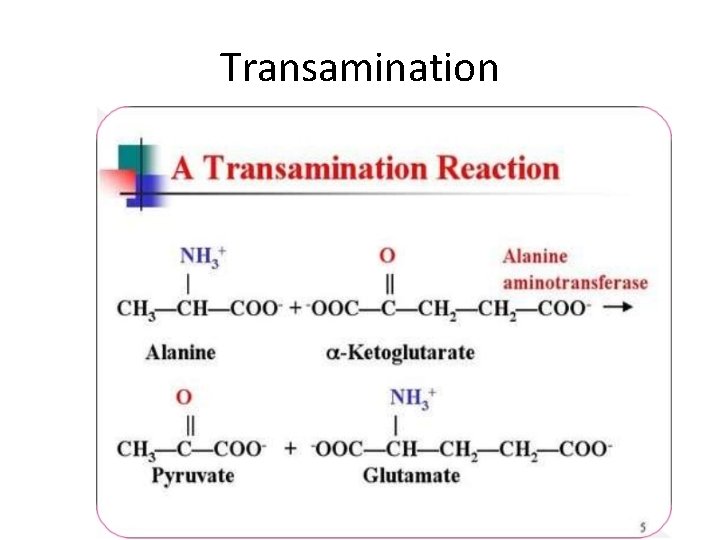
Transamination § The transfer of amino group from an aminoacid to a ketoacid is known as transamination § Involves interconversion of a pair of aminoacids and a pair of ketoacids catalysed by transaminases (co-enzyme-PLP)
Transamination
Transamination
• Redistribution of aminogroup and production of non-essential aminoacids • Excess aminoacids are diverted towards energy production • Concentrate nitrogen in glutamate, (collection center for amino groups)only aminoacid undergo significant oxidative deamination to liberate NH 3 for urea production
Deamination Removal of amino group from aminoacid as NH 3 • Oxidative deamination- mainly in liver and kidney Glutamate, by glutamate dehydrogenase • Non oxidative deamination. Serine. Threonine, Homocysteine, histidine
Formation of Ammonia • From aminoacids (By Transamination and deamination) • Biogenic amines • Aminogroup of purines and pyramidines • Action of intestinal bacteria urease on urea
Functions of ammonia • Synthesis of non essential aminoacids, purines, pyramidines, aminosugars • Acid base balance by NH 4
Detoxification of ammonia First line of defence (trapping of ammonia) • Ammonia is trapped by glutamic acid to form glutamine especially in brain cells • Transported to liver where reaction is reversed by glutaminase Final disposal • Detoxified to urea by liver cells
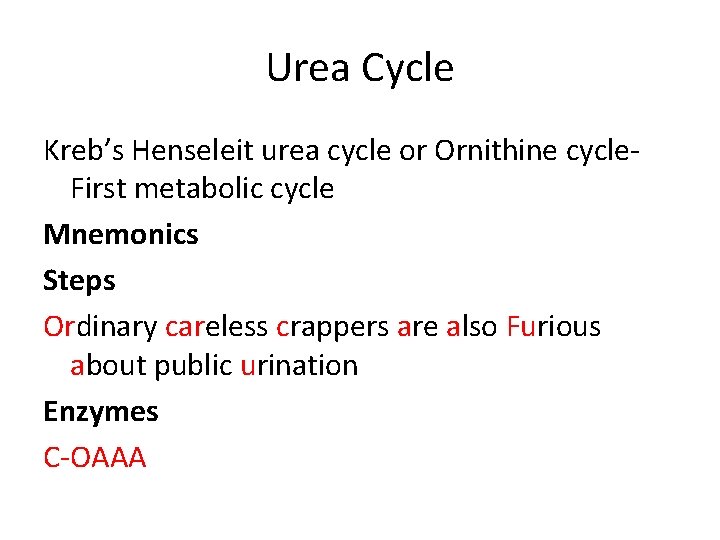
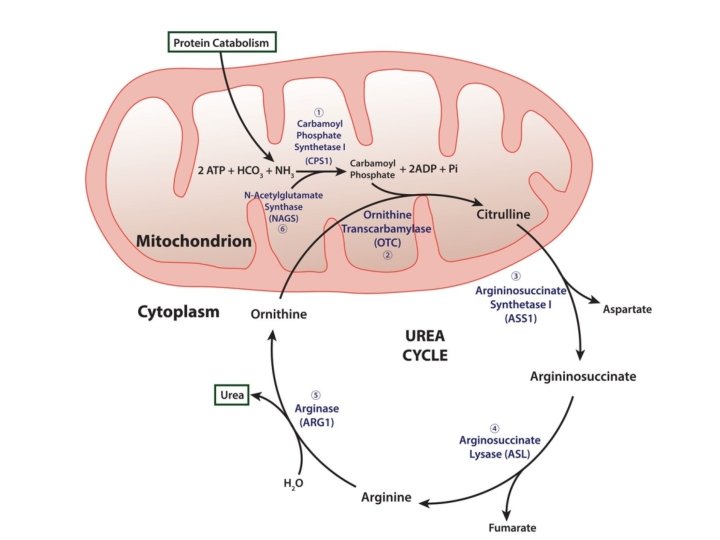
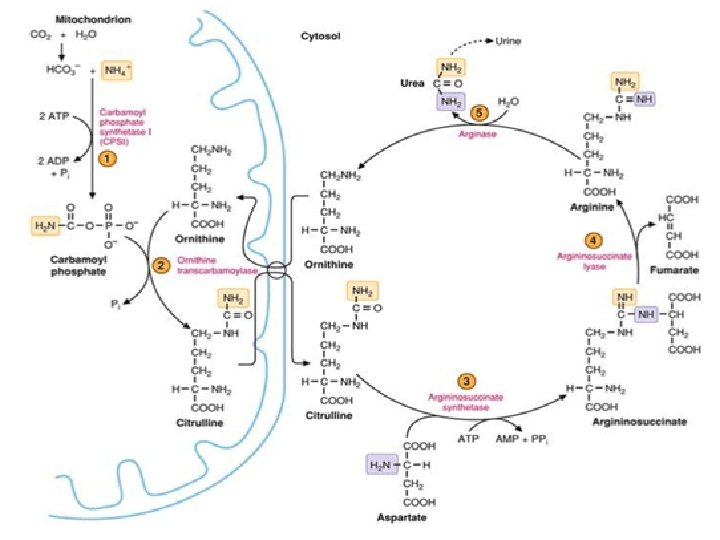
Urea Cycle Kreb’s Henseleit urea cycle or Ornithine cycle. First metabolic cycle Mnemonics Steps Ordinary careless crappers are also Furious about public urination Enzymes C-OAAA
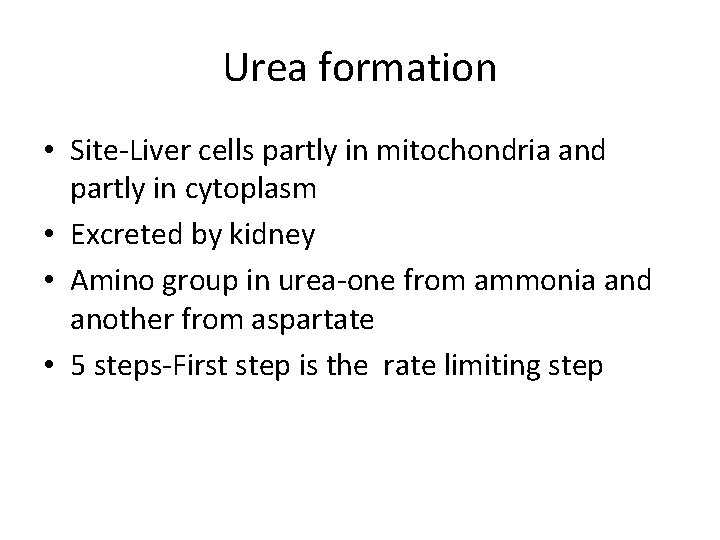
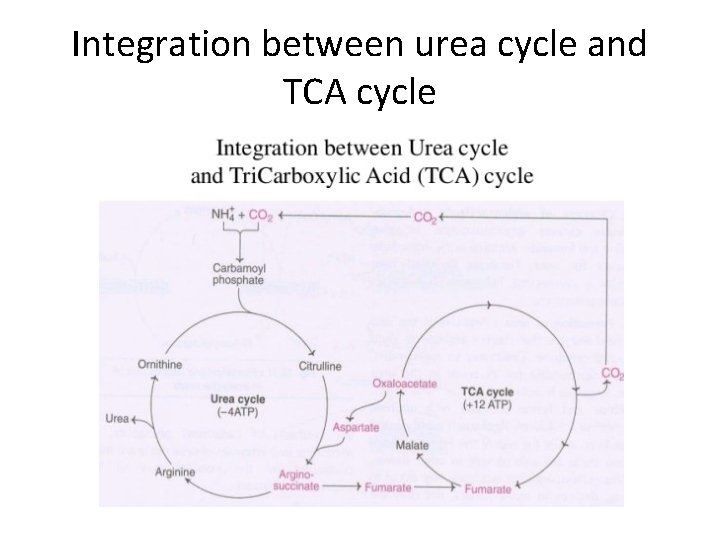
Urea formation • Site-Liver cells partly in mitochondria and partly in cytoplasm • Excreted by kidney • Amino group in urea-one from ammonia and another from aspartate • 5 steps-First step is the rate limiting step
Energetics ATP consumed-4 • Synthesis of carbomyl phosphate-2 ATP • 1 ATP to AMP and PPi to produce arginosuccinate that equals to 2 ATP Overall reaction NH 4+ +Co 2+aspartate+3 ATP =Urea+Fumarate+2 ADP+2 Pi+AMP+PPi
Disposal of urea • Excreted by kidney mainly • Small amount enters intestine – broken down to co 2 and NH 3 by bacterial enzyme urease-lost in feces or absorbed in blood
Clinical importance of urea • Normal-10 -40 mg/dl • Excreted rate-15 -30 g/day • Blood urea estimation-Screening test for evaluation of kidney function
Non-protein nitrogen • All nitrogen containing substances other than proteins • Include urea (most abundant), creatinine, creatine, uric acid, peptides, aminoacids, • Normal NPN-20 -40 mg/dl
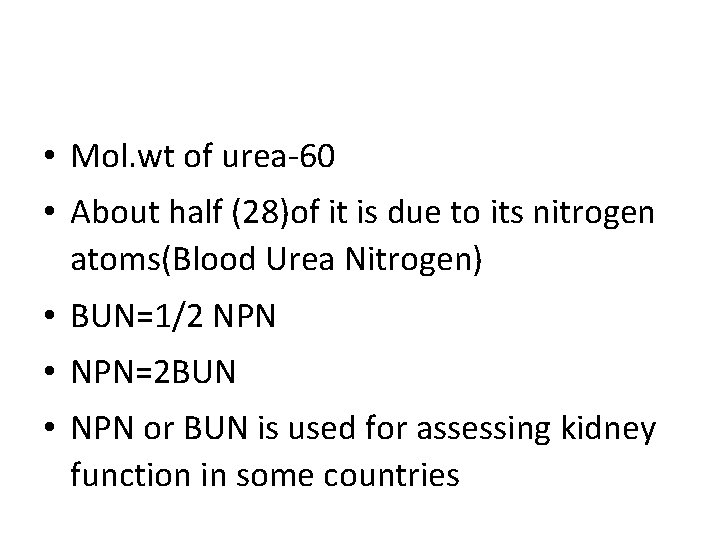
• Mol. wt of urea-60 • About half (28)of it is due to its nitrogen atoms(Blood Urea Nitrogen) • BUN=1/2 NPN • NPN=2 BUN • NPN or BUN is used for assessing kidney function in some countries
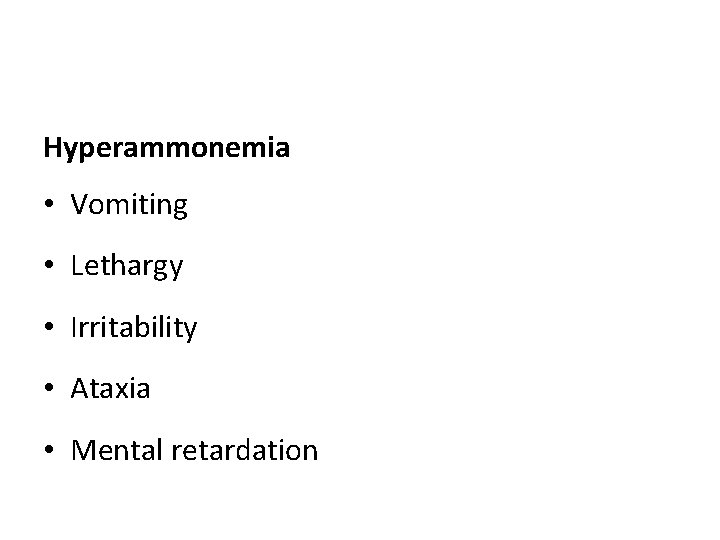
Hyperammonemia • Vomiting • Lethargy • Irritability • Ataxia • Mental retardation
Integration between urea cycle and TCA cycle
Tryptophan • First essential amino acid • Both ketogenic and glucogenic • Precursor for synthesis of NAD+, NADP+ (coenzymes of niacin), serotonin and melatonin