
Protein Digestion Digestion of proteins introduction Proteolytic enzymes
- Slides: 7
Protein Digestion
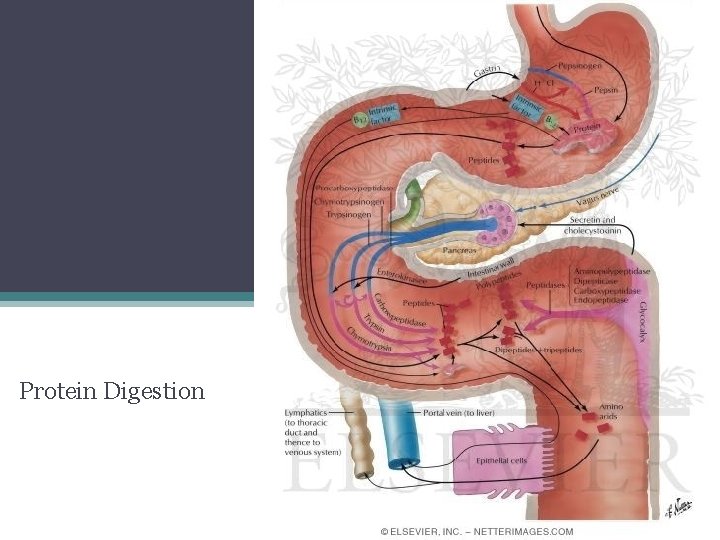
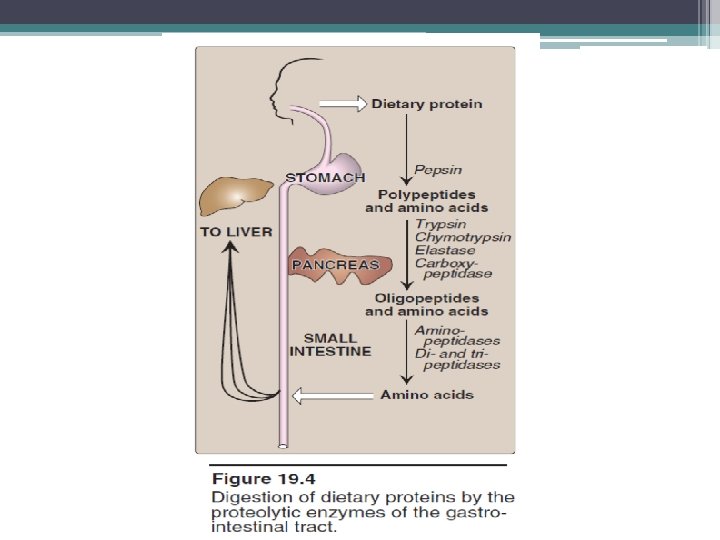
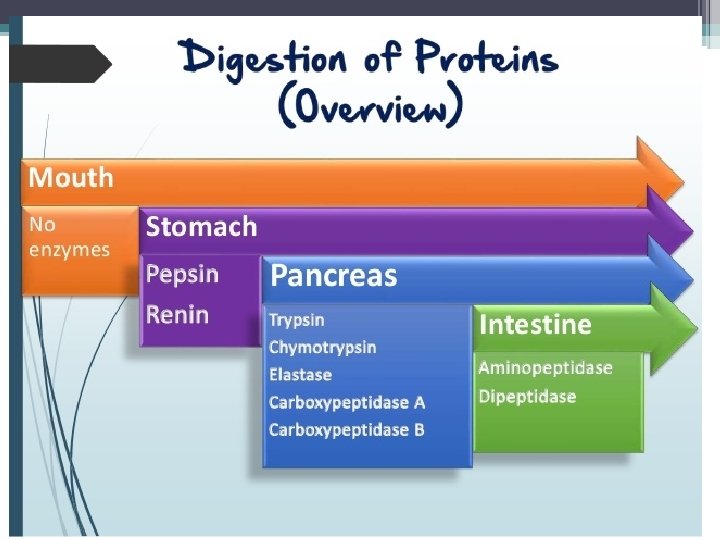
Digestion of proteins (introduction) Ø Proteolytic enzymes responsible for degrading proteins are produced by three different organs: the stomach, the pancreas, and the small intestine. ● The digestion of proteins begins in the stomach, which secretes gastric juice—a unique solution containing hydrochloric acid and the proenzyme, pepsinogen.
- Pepsinogen is activated to pepsin, either by HCl, or autocatalytically by other pepsin molecules that have already been activated. ● On entering the small intestine, large polypeptides produced in the stomach by the action of pepsin are further cleaved to oligopeptides and amino acids by a group of pancreatic proteases. ●Oligopeptides digested by enzymes of the small intestine
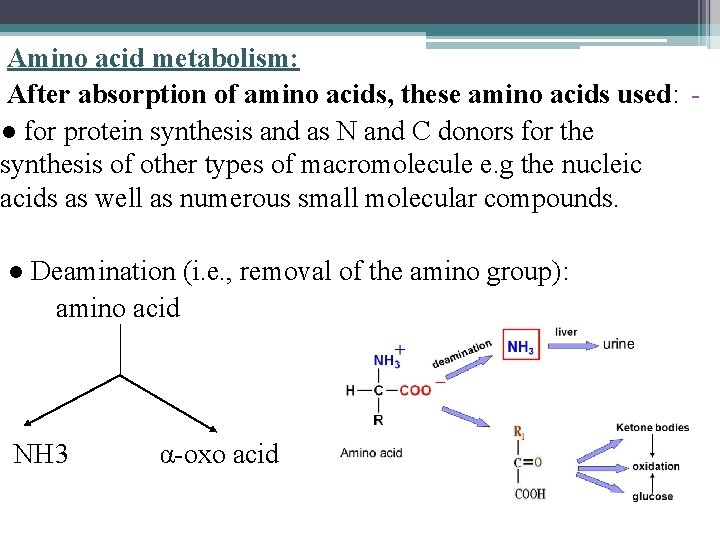
Amino acid metabolism: After absorption of amino acids, these amino acids used: ● for protein synthesis and as N and C donors for the synthesis of other types of macromolecule e. g the nucleic acids as well as numerous small molecular compounds. ● Deamination (i. e. , removal of the amino group): amino acid NH 3 α-oxo acid
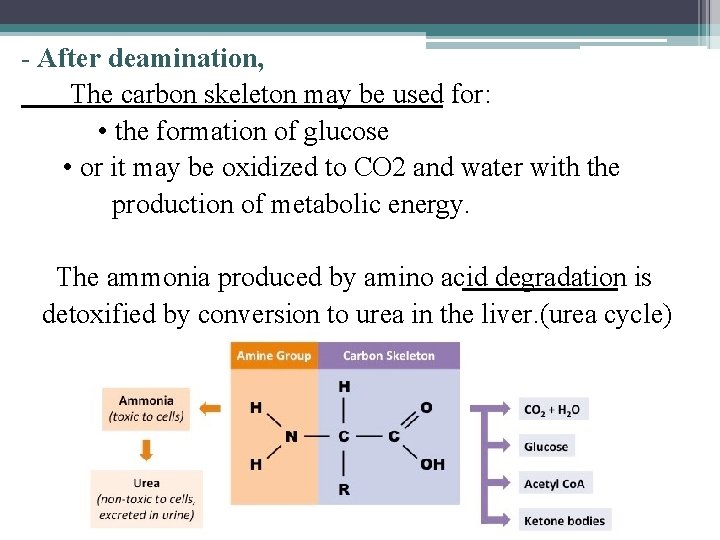
- After deamination, The carbon skeleton may be used for: • the formation of glucose • or it may be oxidized to CO 2 and water with the production of metabolic energy. The ammonia produced by amino acid degradation is detoxified by conversion to urea in the liver. (urea cycle)