
Protein Biochemistry Bioinformatics Dynamic modeling Stefan Legewie Sofya

Protein Biochemistry & Bioinformatics Dynamic modeling Stefan Legewie & Sofya Lipnitskaya Institute of Molecular Biology, Mainz
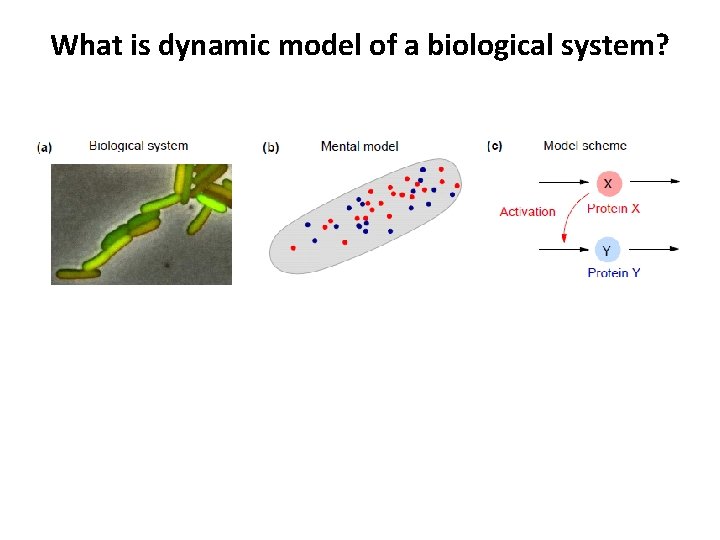
What is dynamic model of a biological system? (g) Comparison/fitting to data
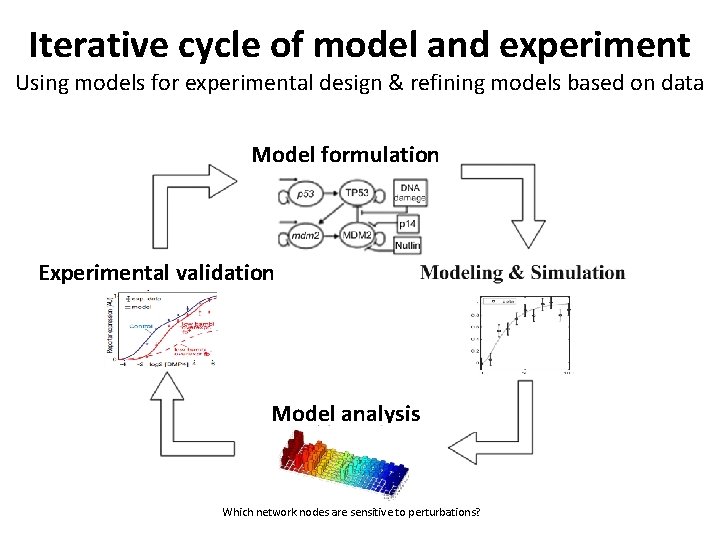
Iterative cycle of model and experiment Using models for experimental design & refining models based on data Model formulation Experimental validation Model analysis Which network nodes are sensitive to perturbations?
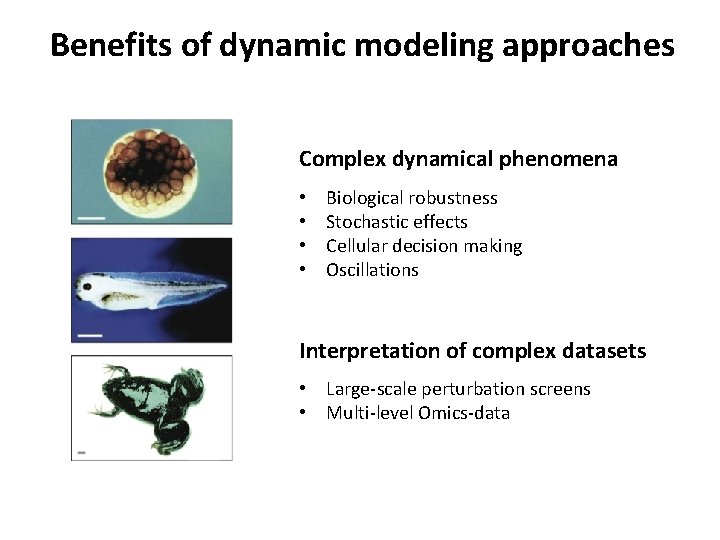
Benefits of dynamic modeling approaches Complex dynamical phenomena • • Biological robustness Stochastic effects Cellular decision making Oscillations Interpretation of complex datasets • • Large-scale perturbation screens Multi-level Omics-data
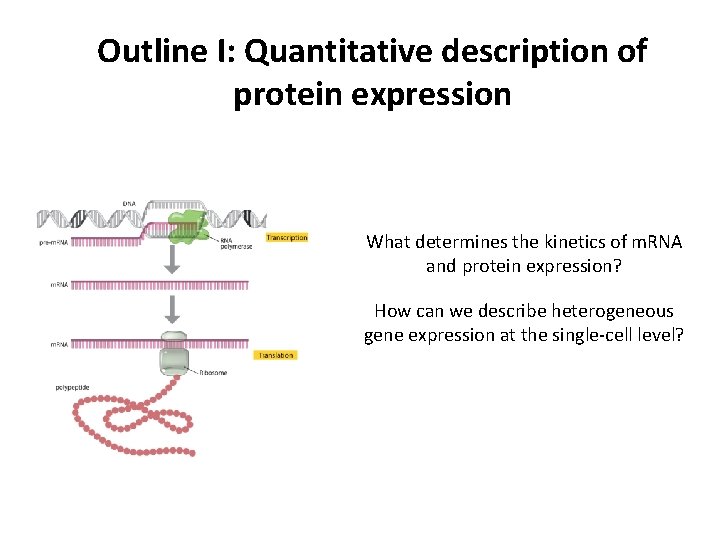
Outline I: Quantitative description of protein expression What determines the kinetics of m. RNA and protein expression? How can we describe heterogeneous gene expression at the single-cell level?
Outline II Simple deterministic model of gene expression Modeling circadian oscillators Stochastic model of gene expression captures cellular heterogeneity Stochastic cellular decision making
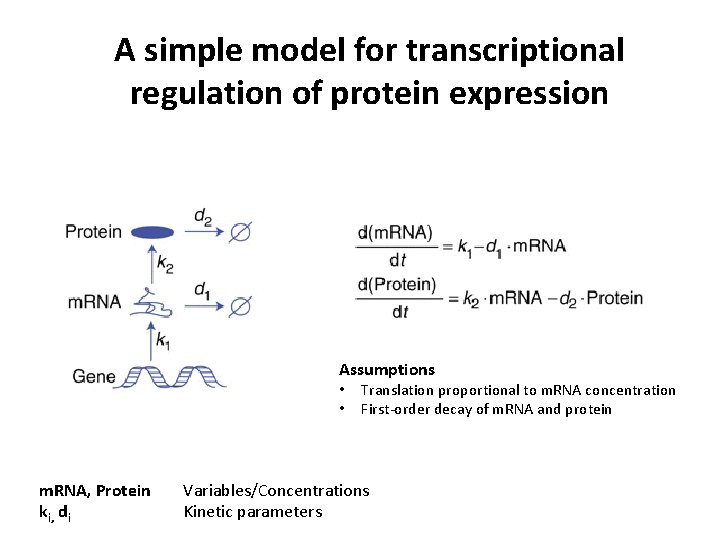
A simple model for transcriptional regulation of protein expression Assumptions • • m. RNA, Protein ki, di Translation proportional to m. RNA concentration First-order decay of m. RNA and protein Variables/Concentrations Kinetic parameters
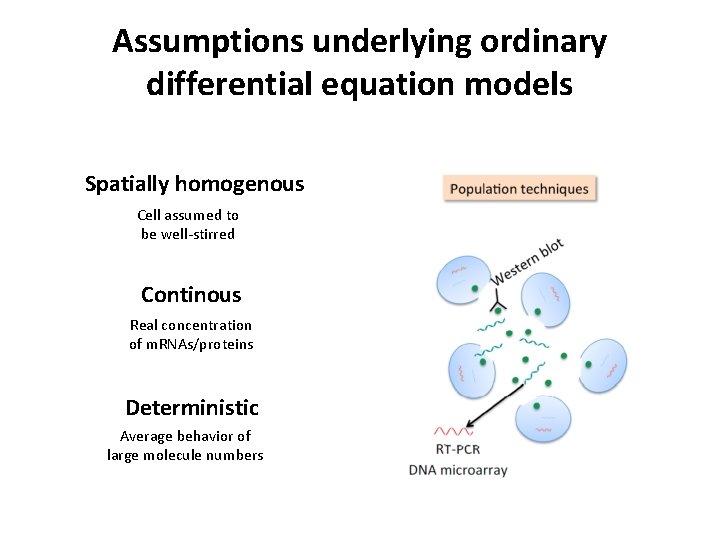
Assumptions underlying ordinary differential equation models Spatially homogenous Cell assumed to be well-stirred Continous Real concentration of m. RNAs/proteins Deterministic Average behavior of large molecule numbers
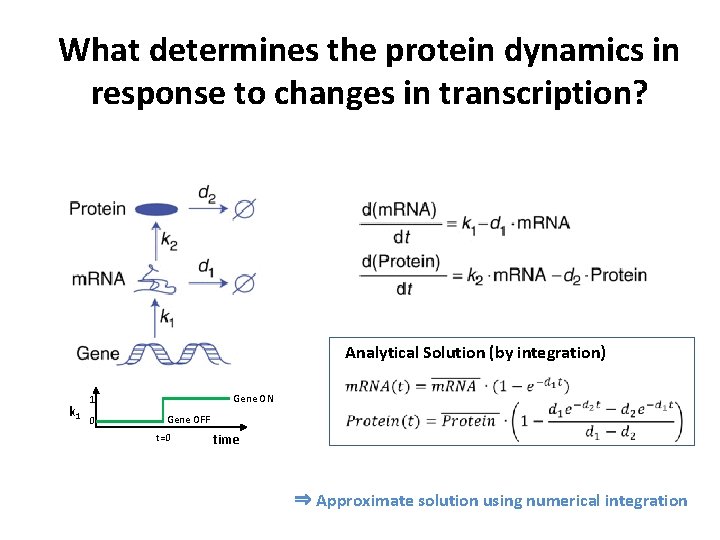
What determines the protein dynamics in response to changes in transcription? Analytical Solution (by integration) k 1 Gene ON 1 0 Gene OFF t=0 time ⇒ Approximate solution using numerical integration
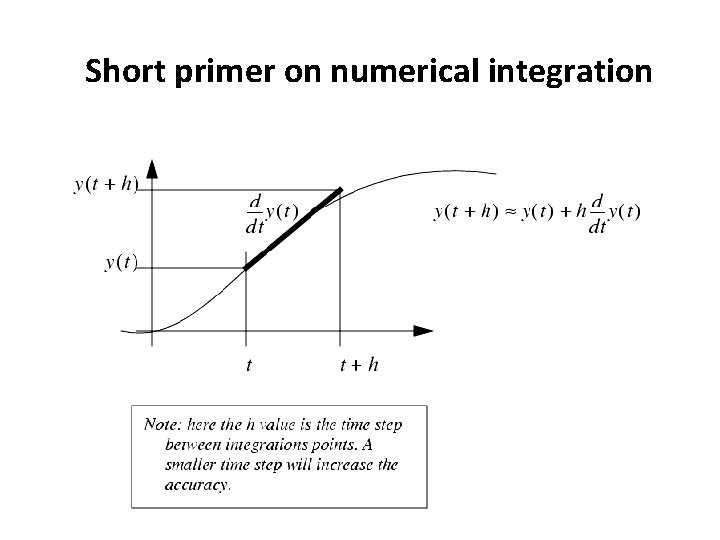
Short primer on numerical integration
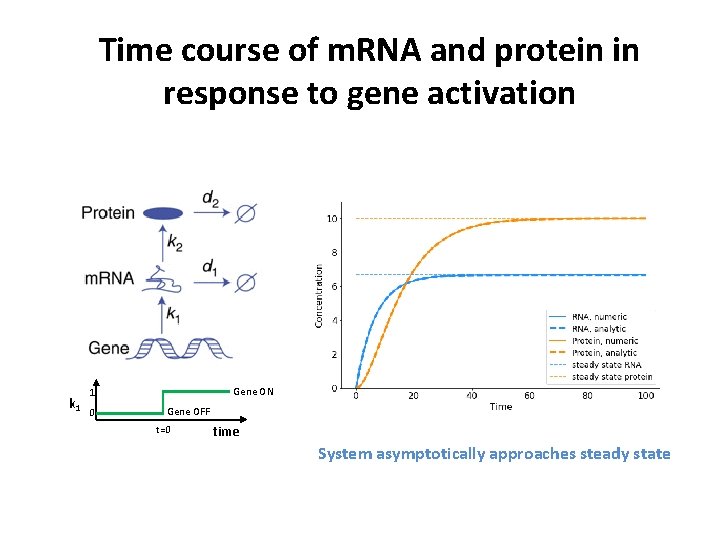
Time course of m. RNA and protein in response to gene activation k 1 Gene ON 1 0 Gene OFF t=0 time System asymptotically approaches steady state
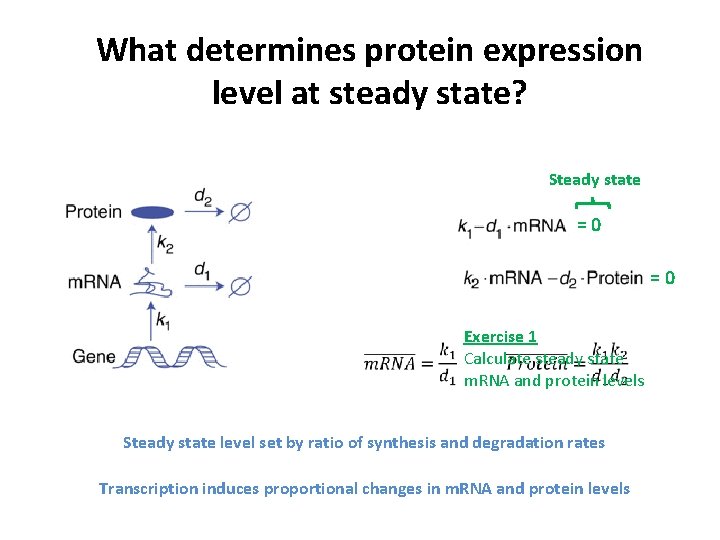
What determines protein expression level at steady state? Steady state =0 =0 Exercise 1 Calculate steady state m. RNA and protein levels Steady state level set by ratio of synthesis and degradation rates Transcription induces proportional changes in m. RNA and protein levels
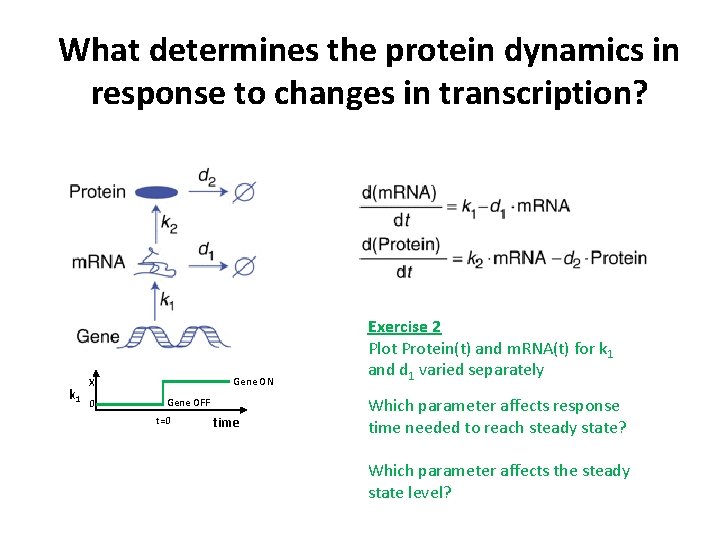
What determines the protein dynamics in response to changes in transcription? k 1 Gene ON X 0 Gene OFF t=0 time Exercise 2 Plot Protein(t) and m. RNA(t) for k 1 and d 1 varied separately Which parameter affects response time needed to reach steady state? Which parameter affects the steady state level?
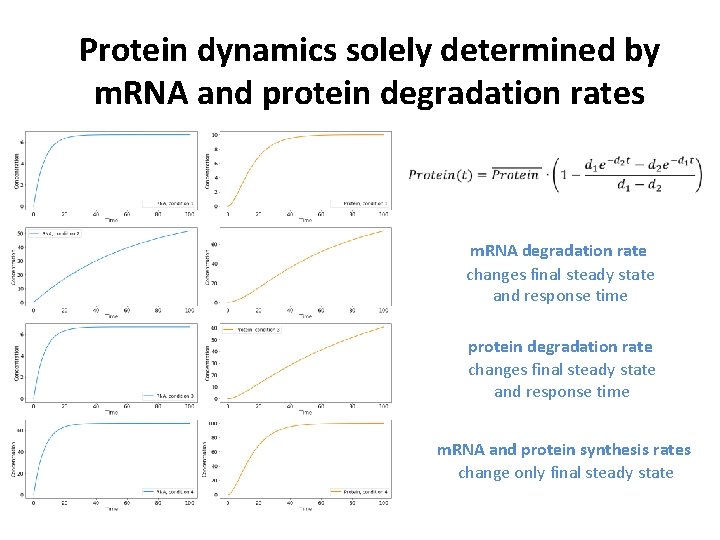
Protein dynamics solely determined by m. RNA and protein degradation rates m. RNA degradation rate changes final steady state and response time protein degradation rate changes final steady state and response time m. RNA and protein synthesis rates change only final steady state
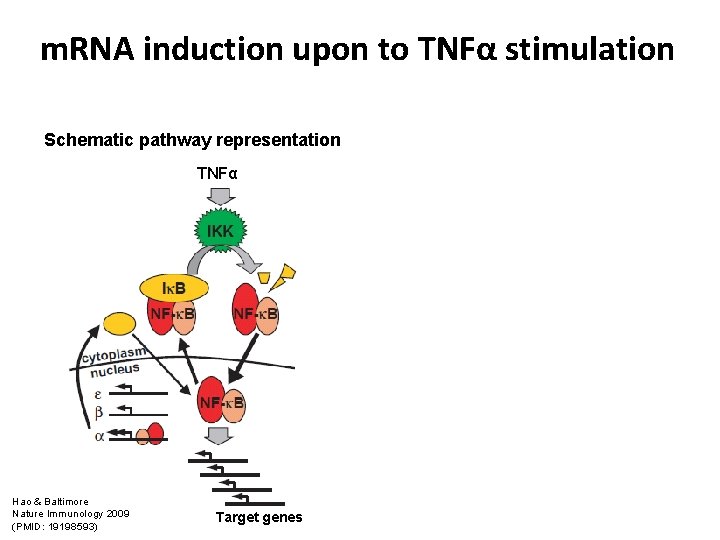
m. RNA induction upon to TNFα stimulation Schematic pathway representation TNFα Hao & Baltimore Nature Immunology 2009 (PMID: 19198593) Target genes
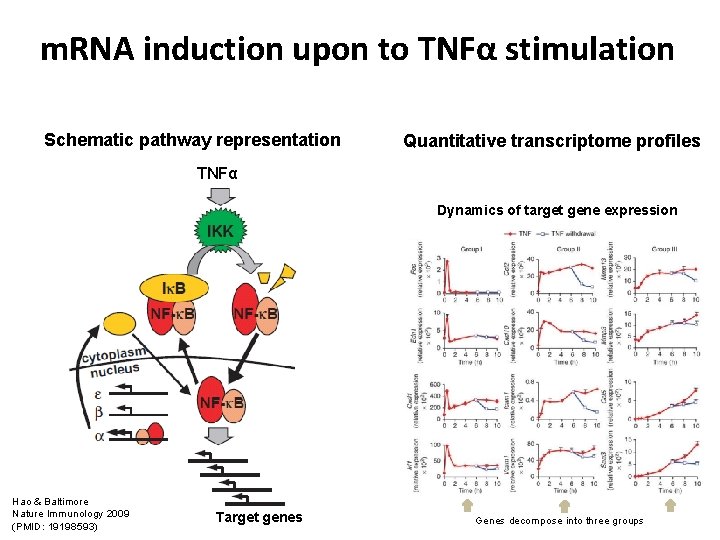
m. RNA induction upon to TNFα stimulation Schematic pathway representation Quantitative transcriptome profiles TNFα Dynamics of target gene expression Hao & Baltimore Nature Immunology 2009 (PMID: 19198593) Target genes Genes decompose into three groups
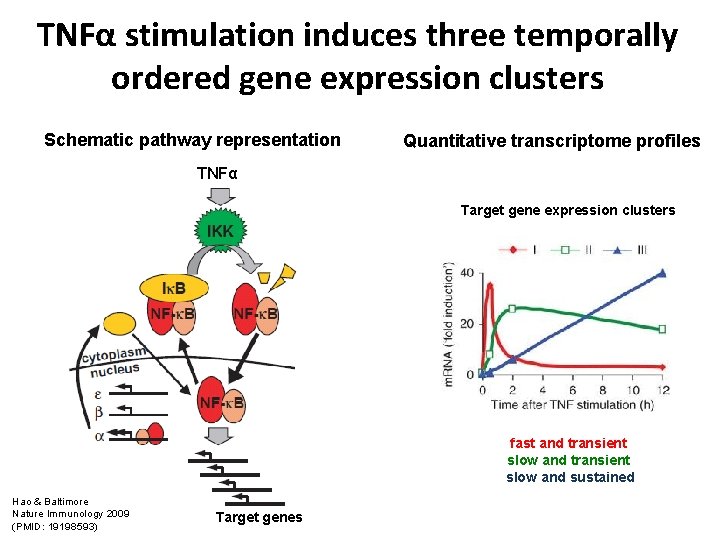
TNFα stimulation induces three temporally ordered gene expression clusters Schematic pathway representation Quantitative transcriptome profiles TNFα Target gene expression clusters fast and transient slow and sustained Hao & Baltimore Nature Immunology 2009 (PMID: 19198593) Target genes
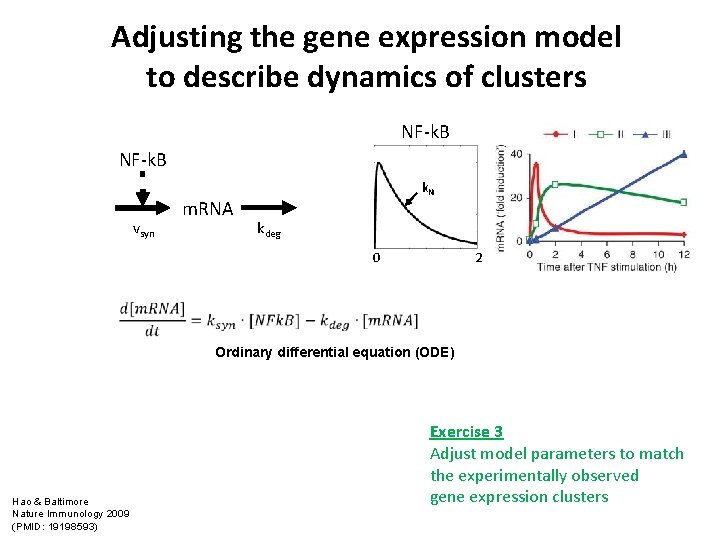
Adjusting the gene expression model to describe dynamics of clusters NF-k. B vsyn m. RNA k. N kdeg 0 2 Ordinary differential equation (ODE) Hao & Baltimore Nature Immunology 2009 (PMID: 19198593) Exercise 3 Adjust model parameters to match the experimentally observed gene expression clusters
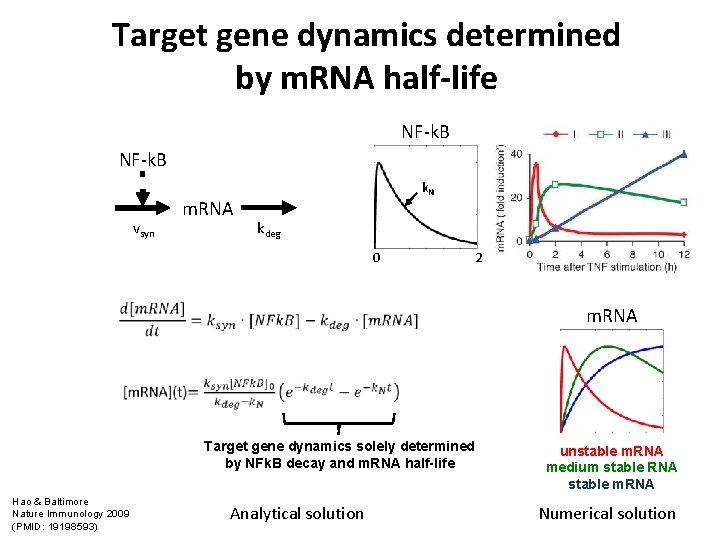
Target gene dynamics determined by m. RNA half-life NF-k. B vsyn m. RNA k. N kdeg 0 2 m. RNA Target gene dynamics solely determined by NFk. B decay and m. RNA half-life Hao & Baltimore Nature Immunology 2009 (PMID: 19198593) Analytical solution unstable m. RNA medium stable RNA stable m. RNA Numerical solution
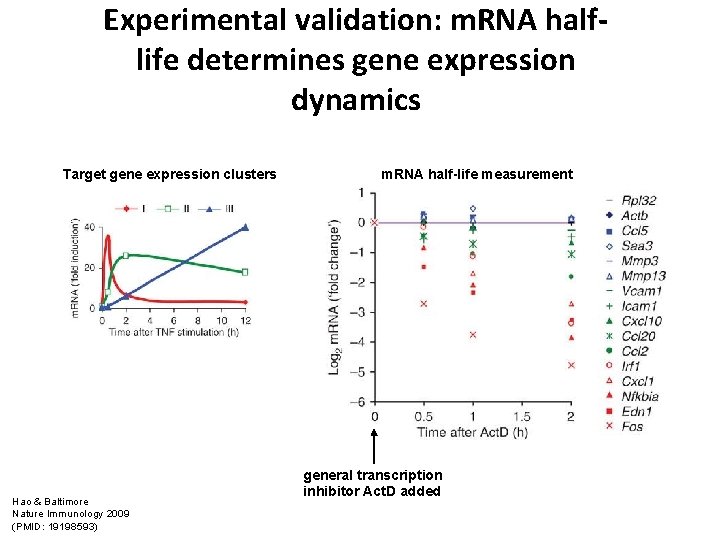
Experimental validation: m. RNA halflife determines gene expression dynamics Target gene expression clusters Hao & Baltimore Nature Immunology 2009 (PMID: 19198593) m. RNA half-life measurement general transcription inhibitor Act. D added
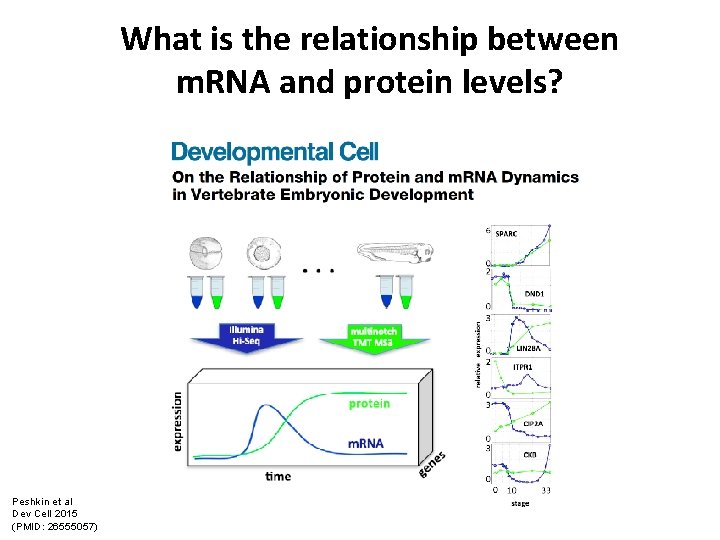
What is the relationship between m. RNA and protein levels? Peshkin et al Dev Cell 2015 (PMID: 26555057)
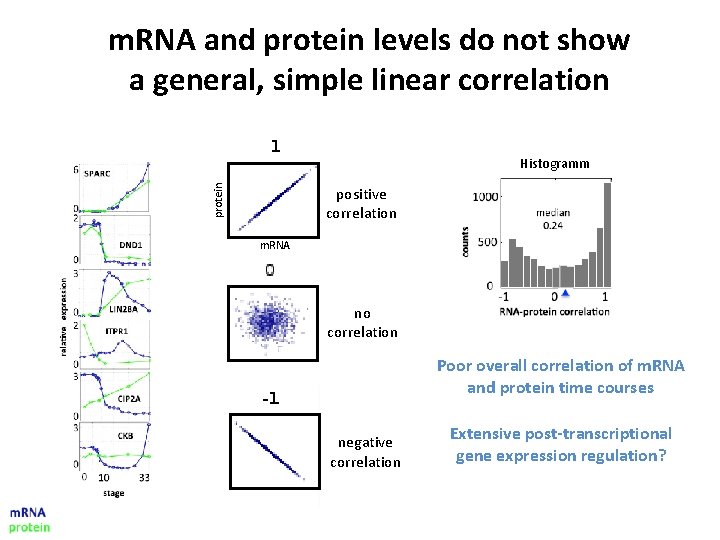
m. RNA and protein levels do not show a general, simple linear correlation protein Histogramm positive correlation m. RNA no correlation Poor overall correlation of m. RNA and protein time courses negative correlation Extensive post-transcriptional gene expression regulation?
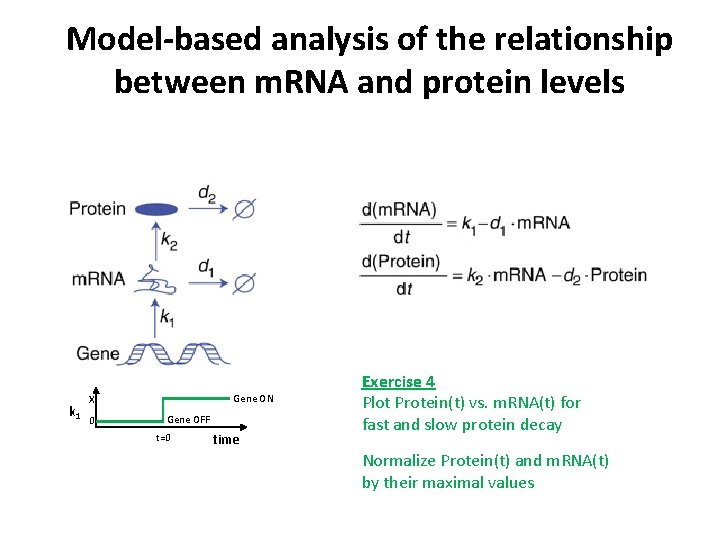
Model-based analysis of the relationship between m. RNA and protein levels k 1 Gene ON X 0 Gene OFF t=0 time Exercise 4 Plot Protein(t) vs. m. RNA(t) for fast and slow protein decay Normalize Protein(t) and m. RNA(t) by their maximal values
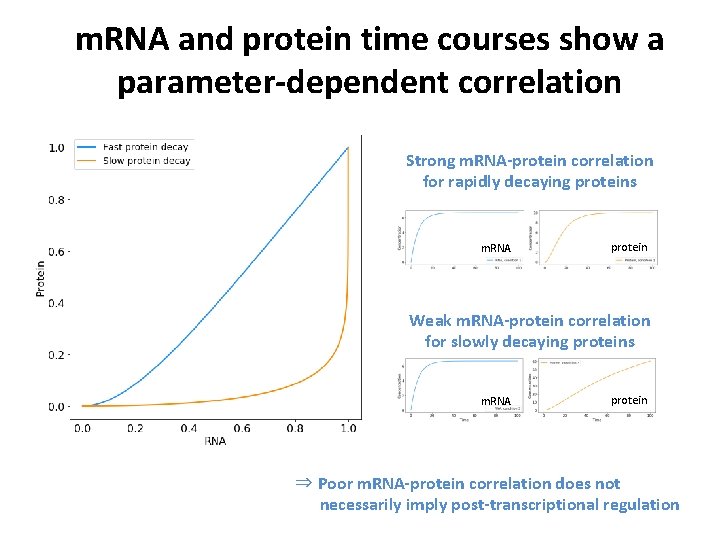
m. RNA and protein time courses show a parameter-dependent correlation Strong m. RNA-protein correlation for rapidly decaying proteins m. RNA protein Weak m. RNA-protein correlation for slowly decaying proteins m. RNA protein ⇒ Poor m. RNA-protein correlation does not necessarily imply post-transcriptional regulation
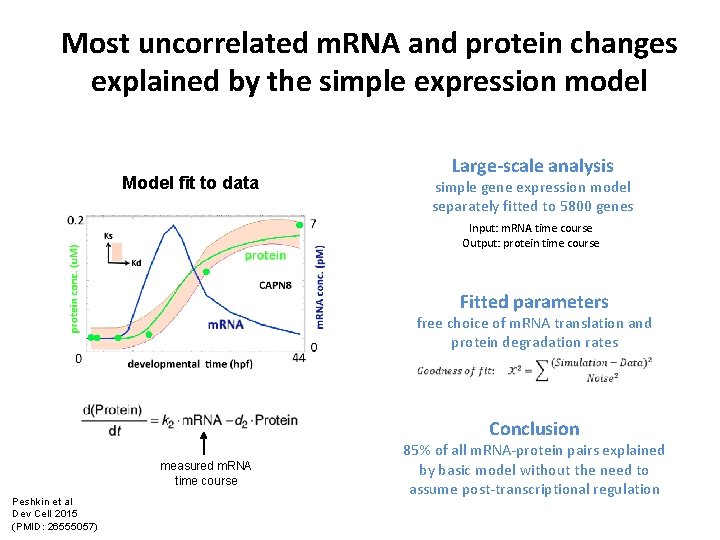
Most uncorrelated m. RNA and protein changes explained by the simple expression model Large-scale analysis Model fit to data simple gene expression model separately fitted to 5800 genes Input: m. RNA time course Output: protein time course Fitted parameters free choice of m. RNA translation and protein degradation rates Conclusion measured m. RNA time course Peshkin et al Dev Cell 2015 (PMID: 26555057) 85% of all m. RNA-protein pairs explained by basic model without the need to assume post-transcriptional regulation
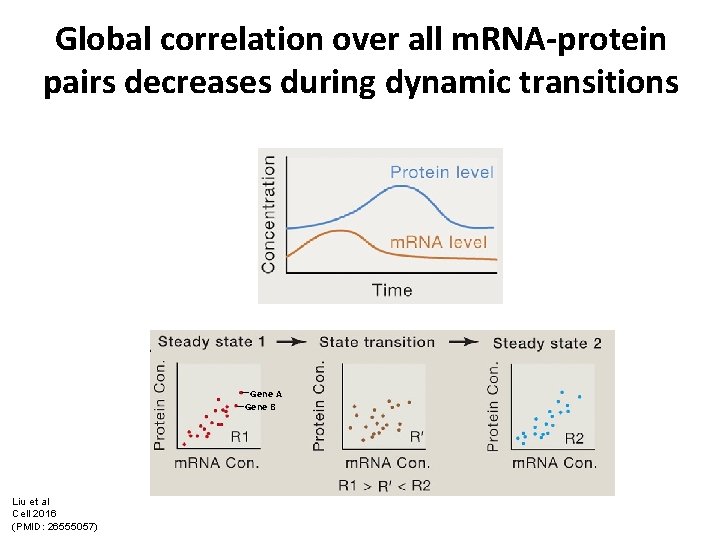
Global correlation over all m. RNA-protein pairs decreases during dynamic transitions Gene A Gene B Liu et al Cell 2016 (PMID: 26555057)
Summary Simple ordinary differential equation model of describes the dynamics of protein expression m. RNA and protein haf-lives determine kinetics and level of protein expression, whereas synthesis rates determine only expression Uncorrelated m. RNA and protein changes often arise from delayed protein synthesis and are explainable by protein expression model
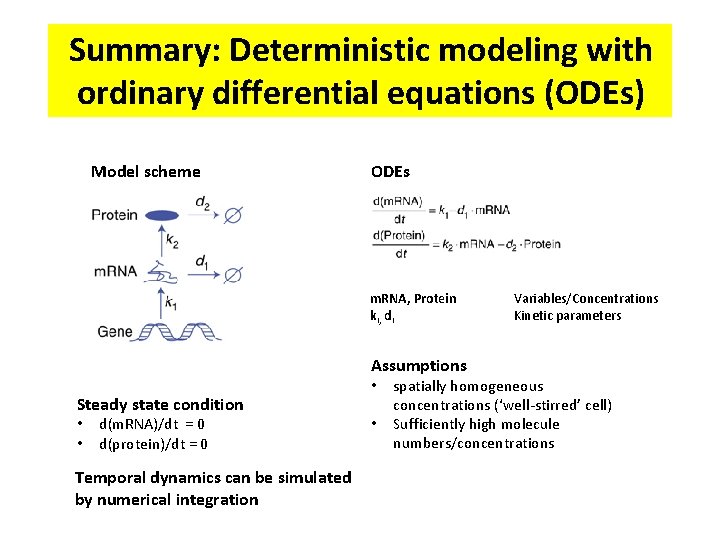
Summary: Deterministic modeling with ordinary differential equations (ODEs) Model scheme ODEs m. RNA, Protein ki, di Assumptions Steady state condition • • d(m. RNA)/dt = 0 d(protein)/dt = 0 Temporal dynamics can be simulated by numerical integration • • Variables/Concentrations Kinetic parameters spatially homogeneous concentrations (‘well-stirred’ cell) Sufficiently high molecule numbers/concentrations
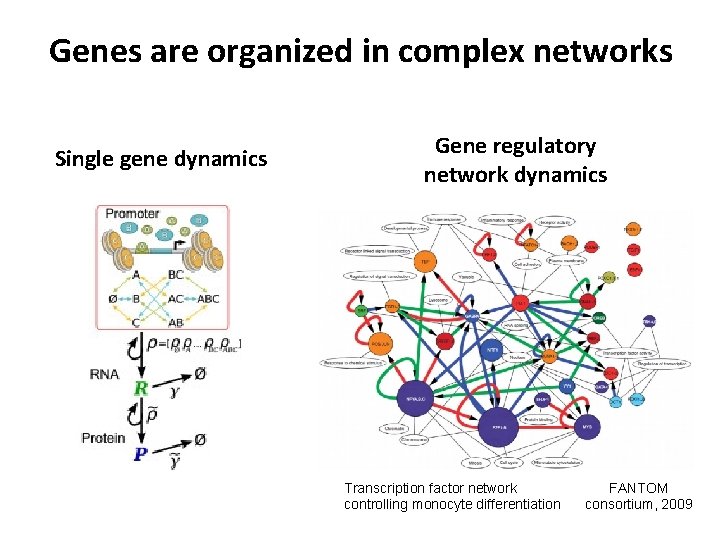
Genes are organized in complex networks Single gene dynamics Gene regulatory network dynamics Transcription factor network controlling monocyte differentiation FANTOM consortium, 2009
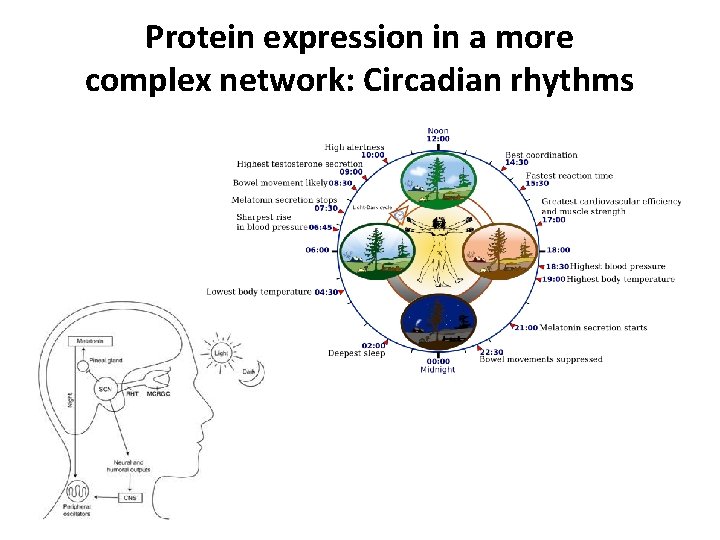
Protein expression in a more complex network: Circadian rhythms
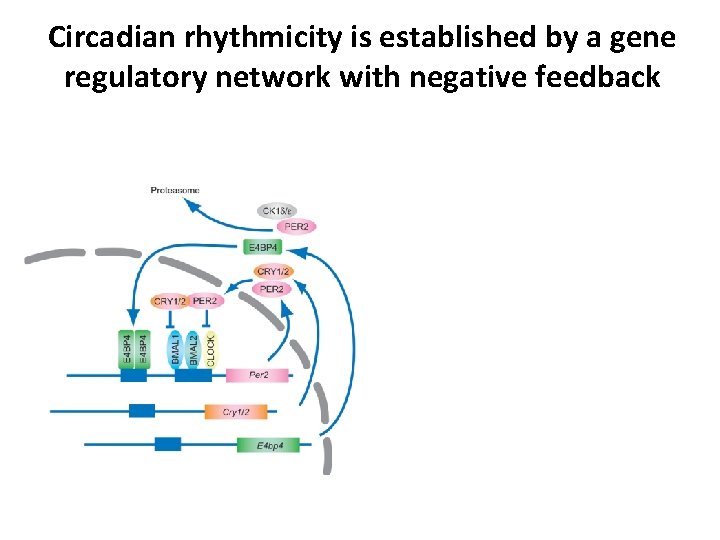
Circadian rhythmicity is established by a gene regulatory network with negative feedback
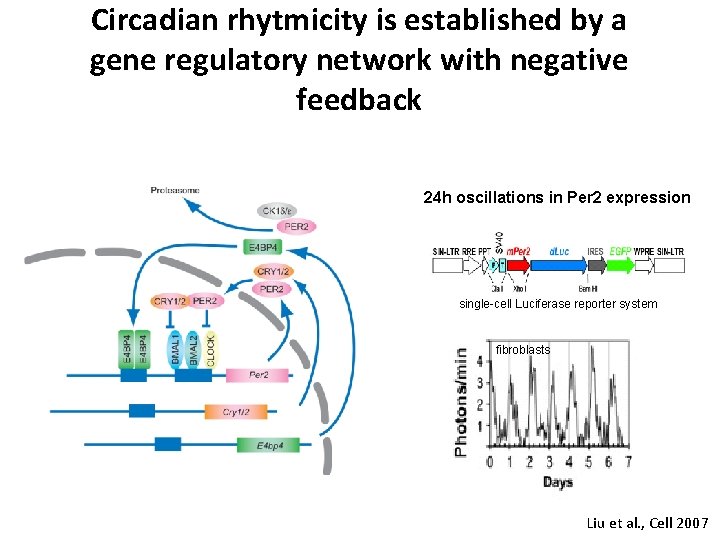
Circadian rhytmicity is established by a gene regulatory network with negative feedback 24 h oscillations in Per 2 expression single-cell Luciferase reporter system fibroblasts Liu et al. , Cell 2007
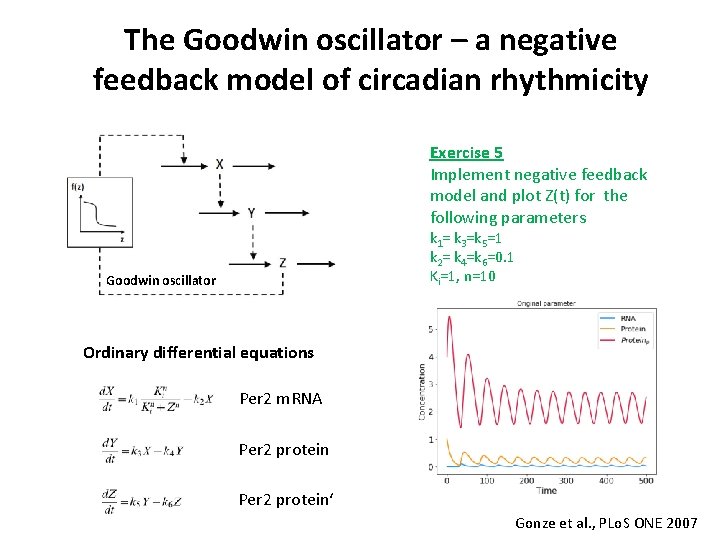
The Goodwin oscillator – a negative feedback model of circadian rhythmicity Exercise 5 Implement negative feedback model and plot Z(t) for the following parameters k 1= k 3=k 5=1 k 2= k 4=k 6=0. 1 Ki=1, n=10 Goodwin oscillator Ordinary differential equations Per 2 m. RNA Per 2 protein‘ Gonze et al. , PLo. S ONE 2007
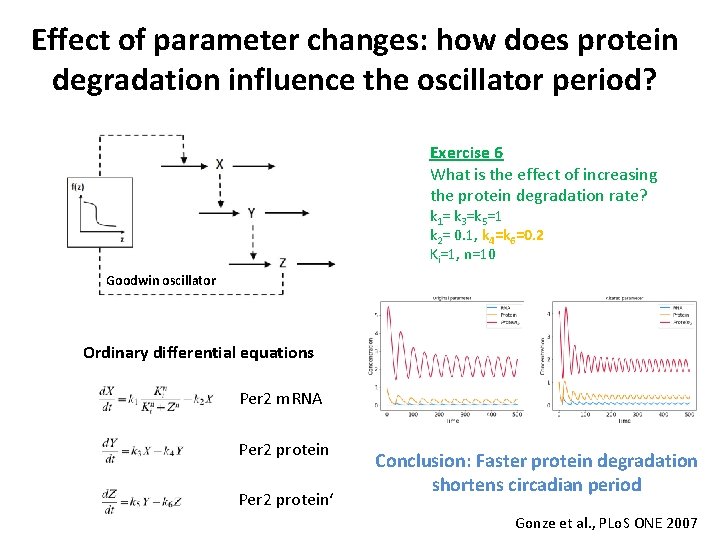
Effect of parameter changes: how does protein degradation influence the oscillator period? Exercise 6 What is the effect of increasing the protein degradation rate? k 1= k 3=k 5=1 k 2= 0. 1, k 4=k 6=0. 2 Ki=1, n=10 Goodwin oscillator Ordinary differential equations Per 2 m. RNA Per 2 protein‘ Conclusion: Faster protein degradation shortens circadian period Gonze et al. , PLo. S ONE 2007
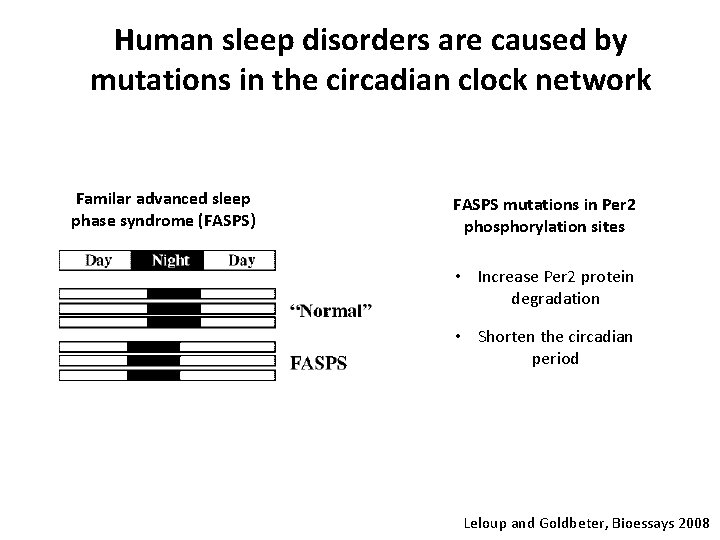
Human sleep disorders are caused by mutations in the circadian clock network Familar advanced sleep phase syndrome (FASPS) FASPS mutations in Per 2 phosphorylation sites • Increase Per 2 protein degradation • Shorten the circadian period Leloup and Goldbeter, Bioessays 2008
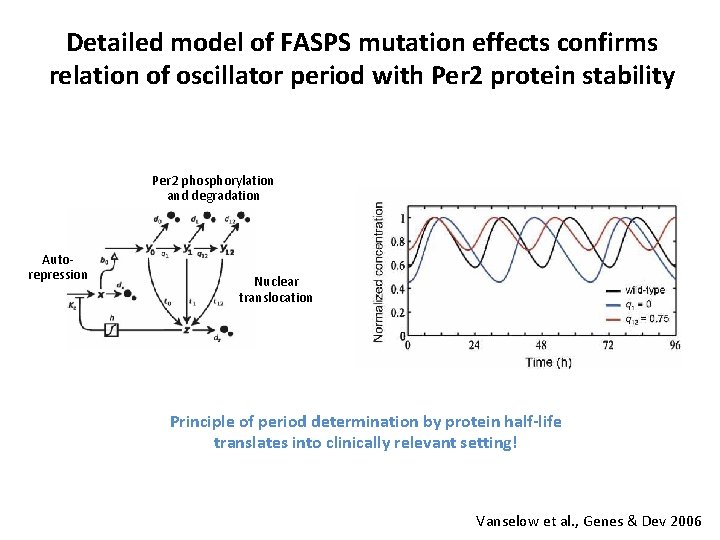
Detailed model of FASPS mutation effects confirms relation of oscillator period with Per 2 protein stability Per 2 phosphorylation and degradation Autorepression Nuclear translocation Principle of period determination by protein half-life translates into clinically relevant setting! Vanselow et al. , Genes & Dev 2006
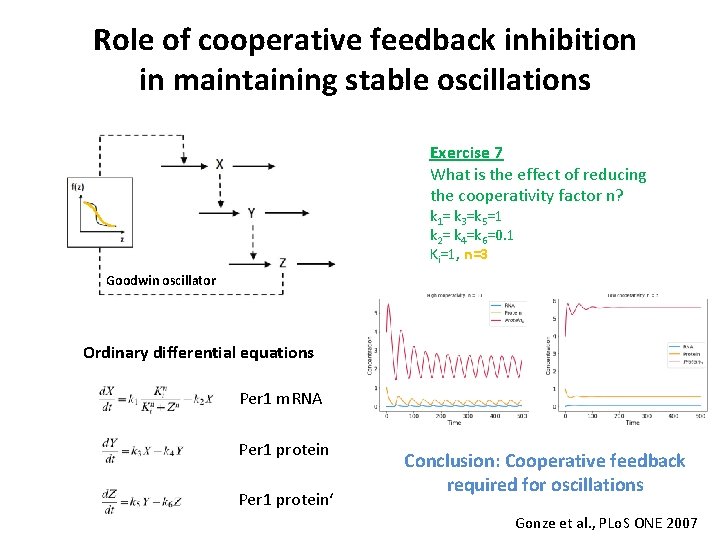
Role of cooperative feedback inhibition in maintaining stable oscillations Exercise 7 What is the effect of reducing the cooperativity factor n? k 1= k 3=k 5=1 k 2= k 4=k 6=0. 1 Ki=1, n=3 Goodwin oscillator Ordinary differential equations Per 1 m. RNA Per 1 protein‘ Conclusion: Cooperative feedback required for oscillations Gonze et al. , PLo. S ONE 2007
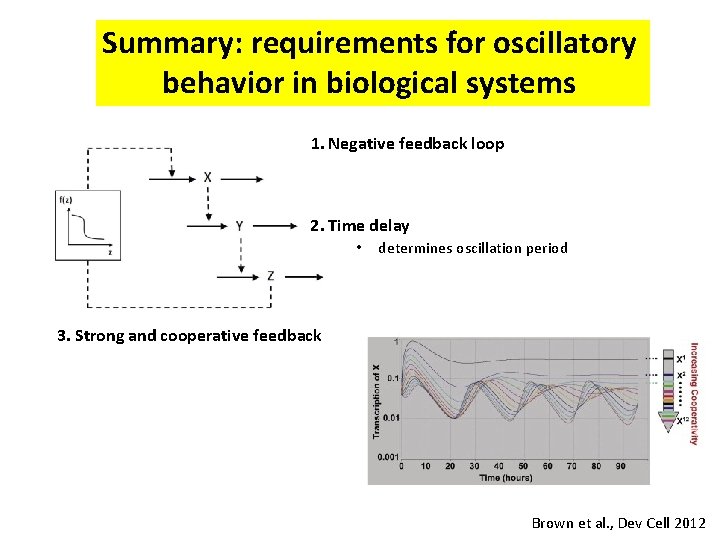
Summary: requirements for oscillatory behavior in biological systems 1. Negative feedback loop 2. Time delay • • determines oscillation period Set by m. RNA/protein half-life 3. Strong and cooperative feedback Brown et al. , Dev Cell 2012
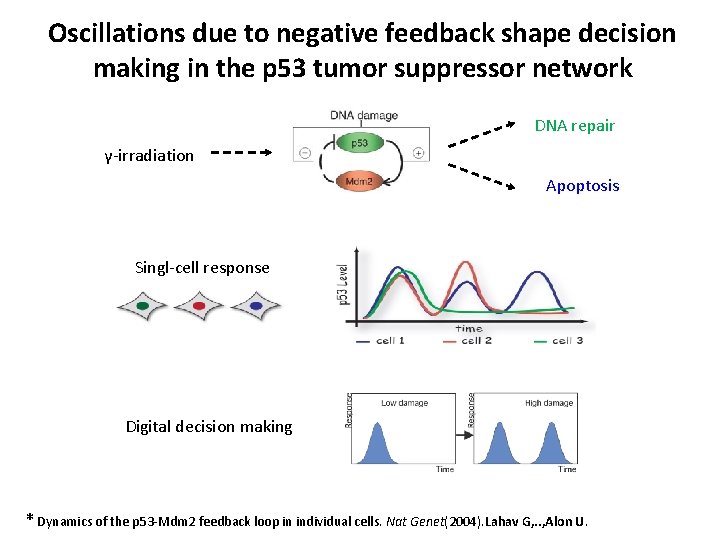
Oscillations due to negative feedback shape decision making in the p 53 tumor suppressor network DNA repair γ-irradiation Apoptosis Singl-cell response Digital decision making * Dynamics of the p 53 -Mdm 2 feedback loop in individual cells. Nat Genet(2004). Lahav G, . . , Alon U.
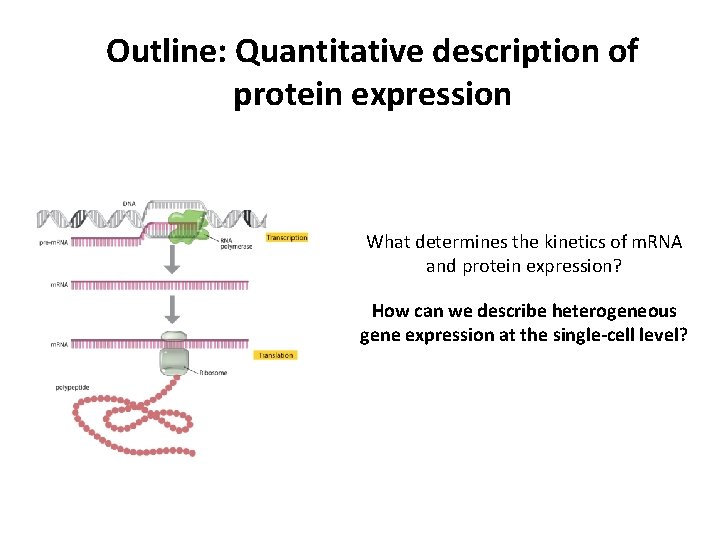
Outline: Quantitative description of protein expression What determines the kinetics of m. RNA and protein expression? How can we describe heterogeneous gene expression at the single-cell level?
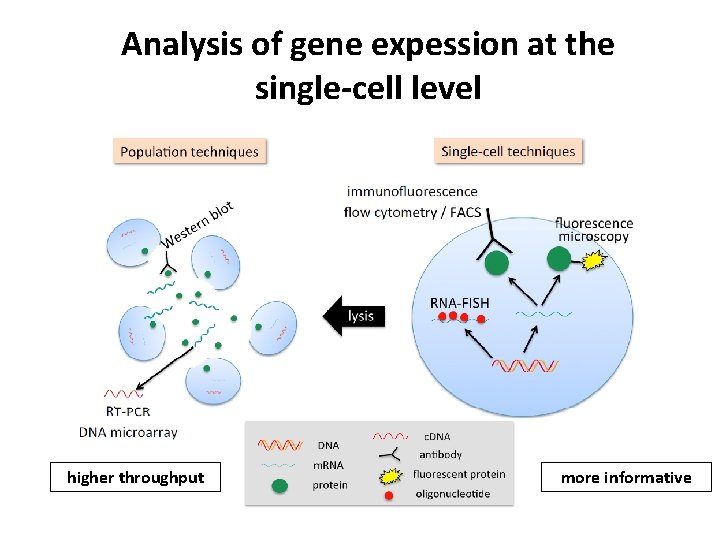
Analysis of gene expession at the single-cell level higher throughput more informative
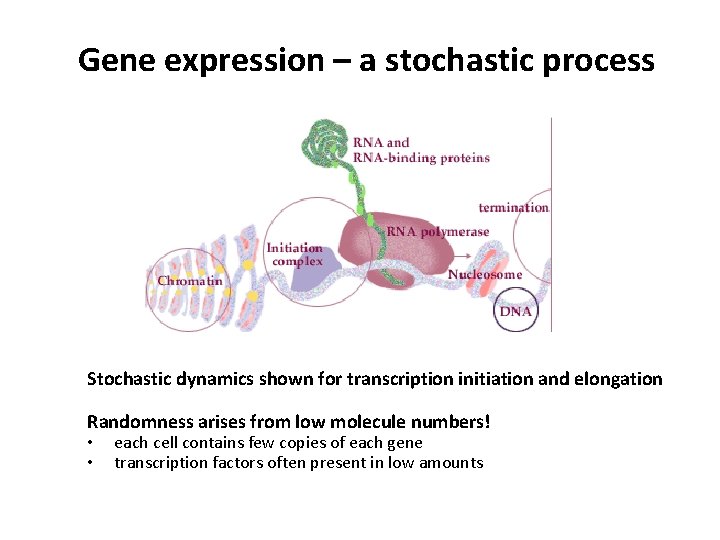
Gene expression – a stochastic process Stochastic dynamics shown for transcription initiation and elongation Randomness arises from low molecule numbers! • • each cell contains few copies of each gene transcription factors often present in low amounts
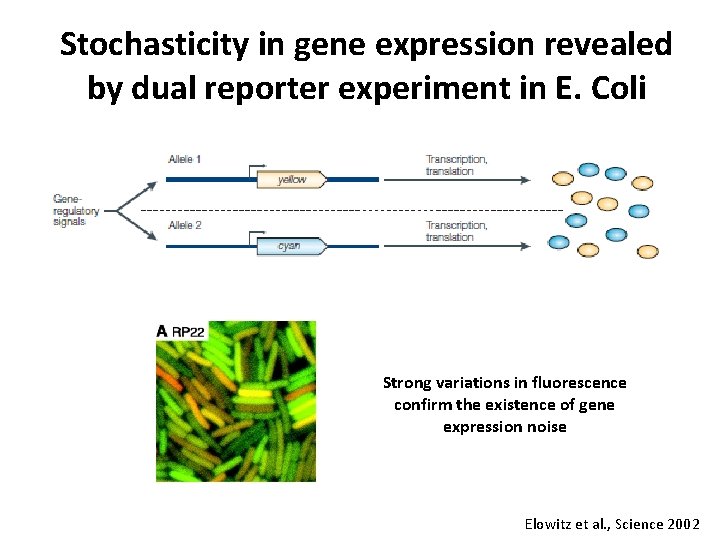
Stochasticity in gene expression revealed by dual reporter experiment in E. Coli Strong variations in fluorescence confirm the existence of gene expression noise Elowitz et al. , Science 2002
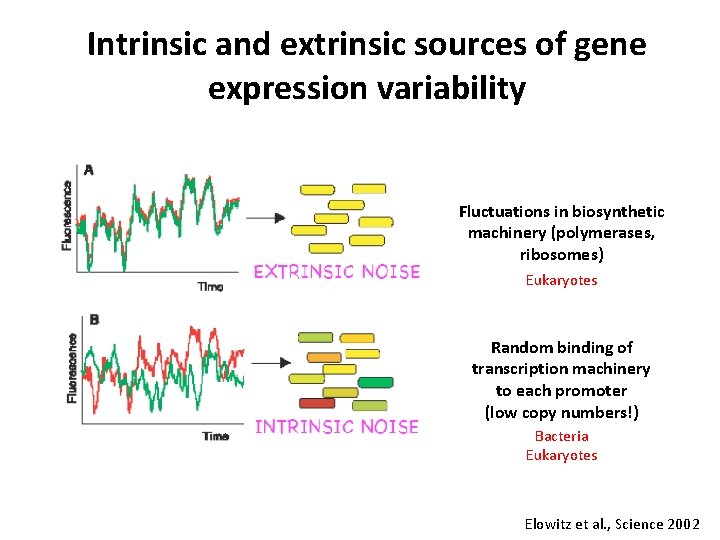
Intrinsic and extrinsic sources of gene expression variability Fluctuations in biosynthetic machinery (polymerases, ribosomes) Eukaryotes Random binding of transcription machinery to each promoter (low copy numbers!) Bacteria Eukaryotes Elowitz et al. , Science 2002
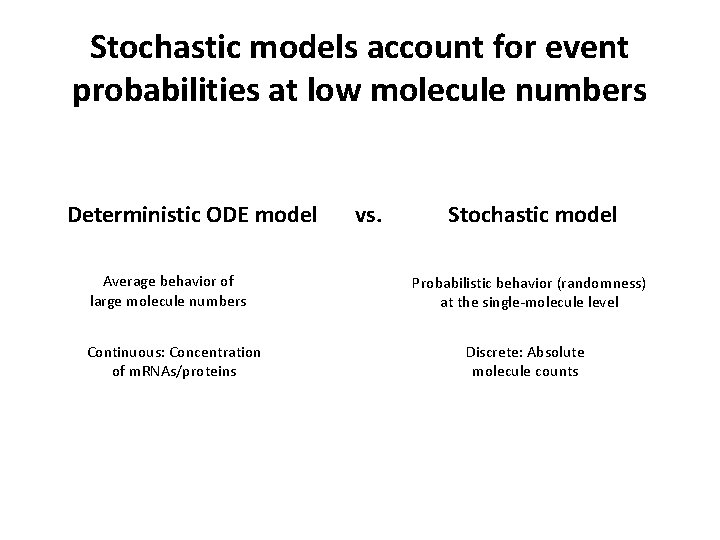
Stochastic models account for event probabilities at low molecule numbers Deterministic ODE model Average behavior of large molecule numbers Continuous: Concentration of m. RNAs/proteins vs. Stochastic model Probabilistic behavior (randomness) at the single-molecule level Discrete: Absolute molecule counts
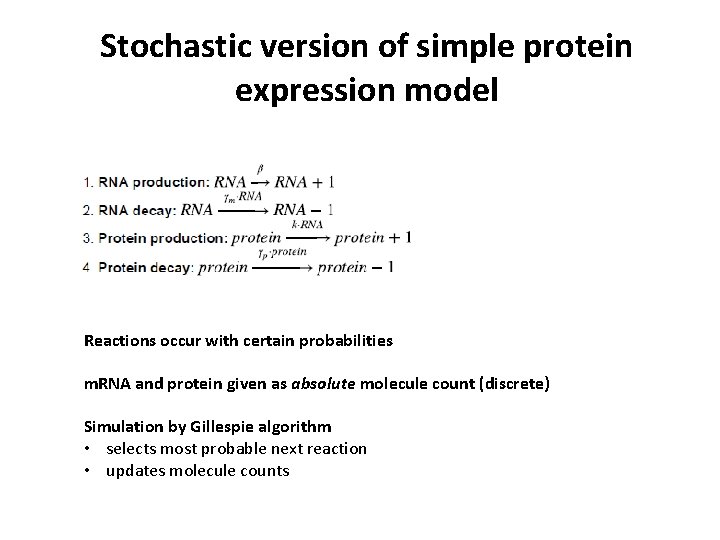
Stochastic version of simple protein expression model Reactions occur with certain probabilities m. RNA and protein given as absolute molecule count (discrete) Simulation by Gillespie algorithm • selects most probable next reaction • updates molecule counts
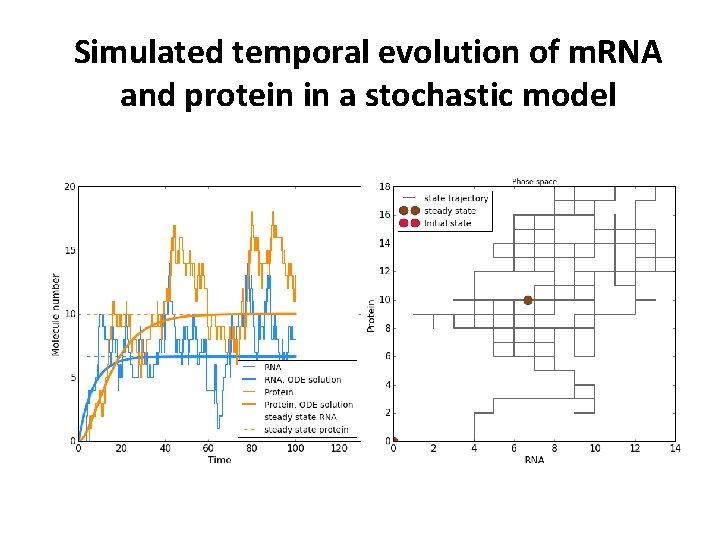
Simulated temporal evolution of m. RNA and protein in a stochastic model
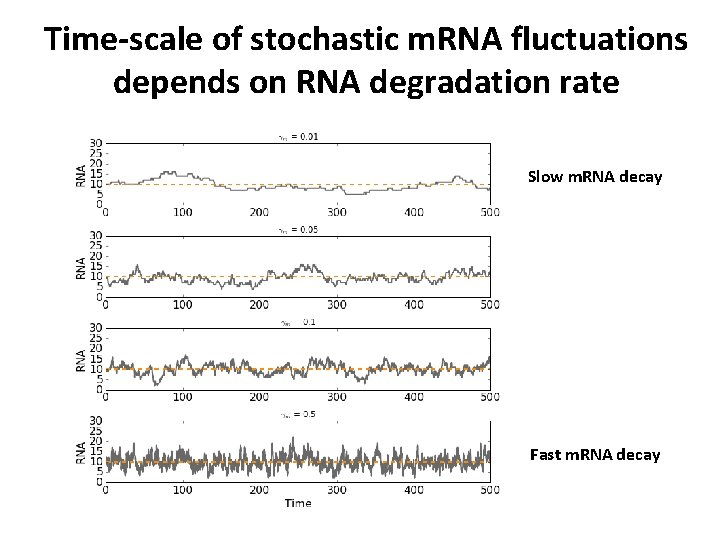
Time-scale of stochastic m. RNA fluctuations depends on RNA degradation rate Slow m. RNA decay Fast m. RNA decay
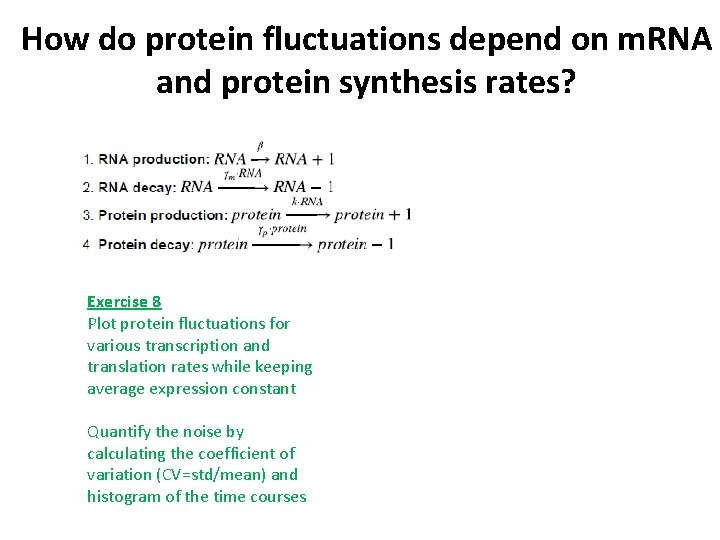
How do protein fluctuations depend on m. RNA and protein synthesis rates? Exercise 8 Plot protein fluctuations for various transcription and translation rates while keeping average expression constant Quantify the noise by calculating the coefficient of variation (CV=std/mean) and histogram of the time courses
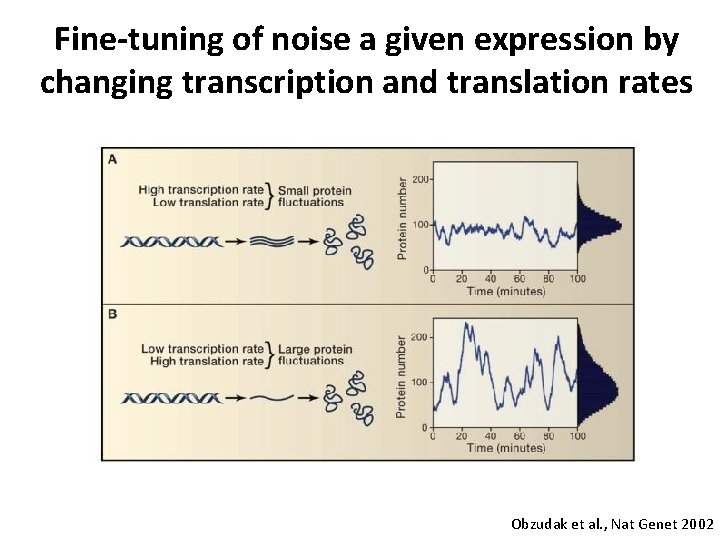
Fine-tuning of noise a given expression by changing transcription and translation rates Obzudak et al. , Nat Genet 2002
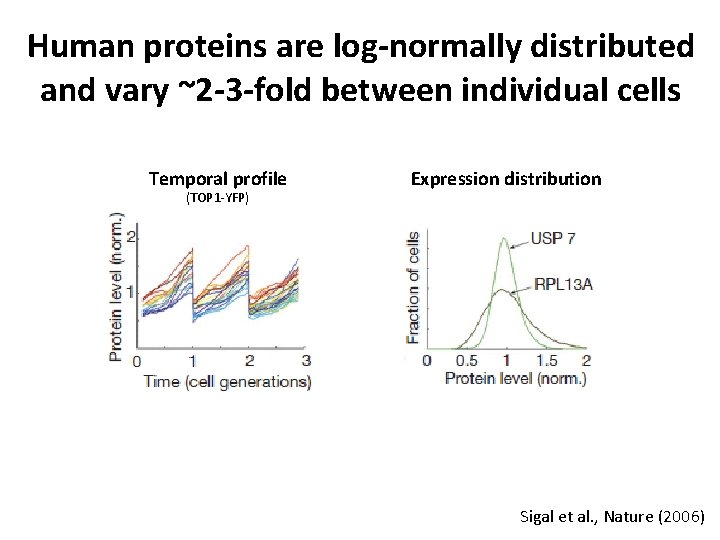
Human proteins are log-normally distributed and vary ~2 -3 -fold between individual cells Temporal profile Expression distribution (TOP 1 -YFP) www. imb-mainz. de Sigal et al. , Nature (2006)
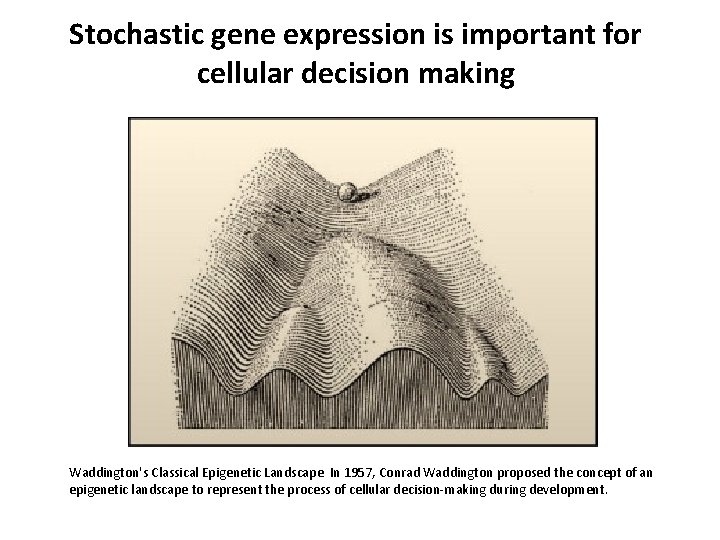
Stochastic gene expression is important for cellular decision making Waddington's Classical Epigenetic Landscape In 1957, Conrad Waddington proposed the concept of an epigenetic landscape to represent the process of cellular decision-making during development.
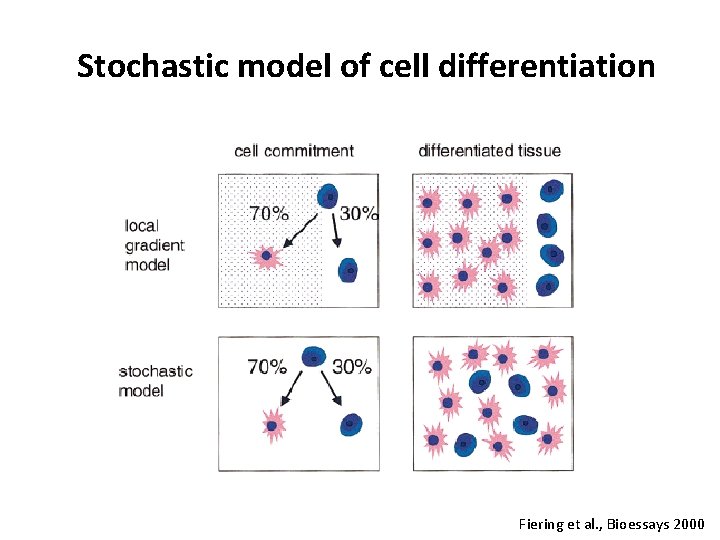
Stochastic model of cell differentiation Fiering et al. , Bioessays 2000
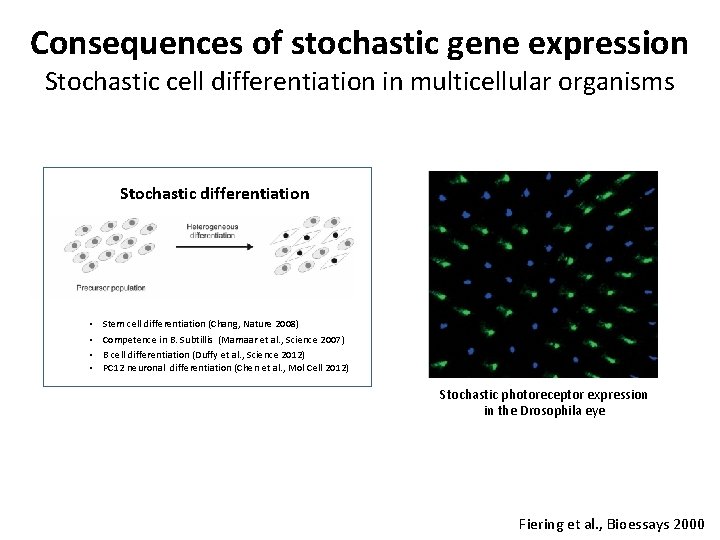
Consequences of stochastic gene expression Stochastic cell differentiation in multicellular organisms Stochastic differentiation • Stem cell differentiation (Chang, Nature 2008) • Competence in B. Subtillis (Mamaar et al. , Science 2007) • B cell differentiation (Duffy et al. , Science 2012) • PC 12 neuronal differentiation (Chen et al. , Mol Cell 2012) Stochastic photoreceptor expression in the Drosophila eye Fiering et al. , Bioessays 2000
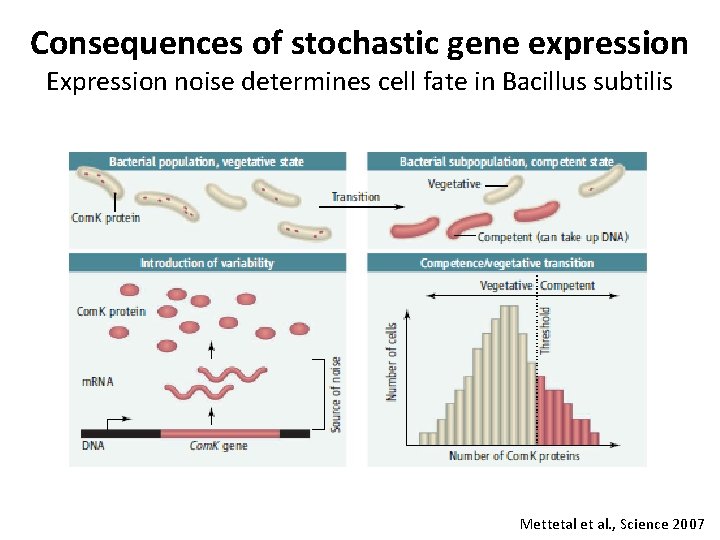
Consequences of stochastic gene expression Expression noise determines cell fate in Bacillus subtilis Mettetal et al. , Science 2007
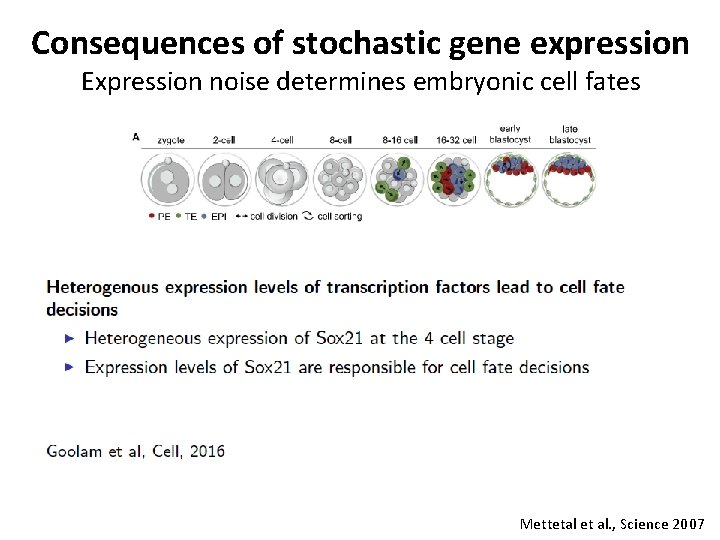
Consequences of stochastic gene expression Expression noise determines embryonic cell fates Mettetal et al. , Science 2007
Summary Gene expression at the single-cell level is a stochastic event due to low molecule numbers 1) only two copies of each gene per cell 2) low concentrations of regulating transcription factors Gene expression noise can be fine-tuned by transcription and translation kinetics low transcription rate + high translation rate => large protein fluctuations Noise gene expression is important for stochastic cellular decision making Heterogeneous expression of master transcription factors governs stochastic choice of cellular differentiation program
- Slides: 57