
Protecting the Drinking Water You Provide A Guide
- Slides: 10
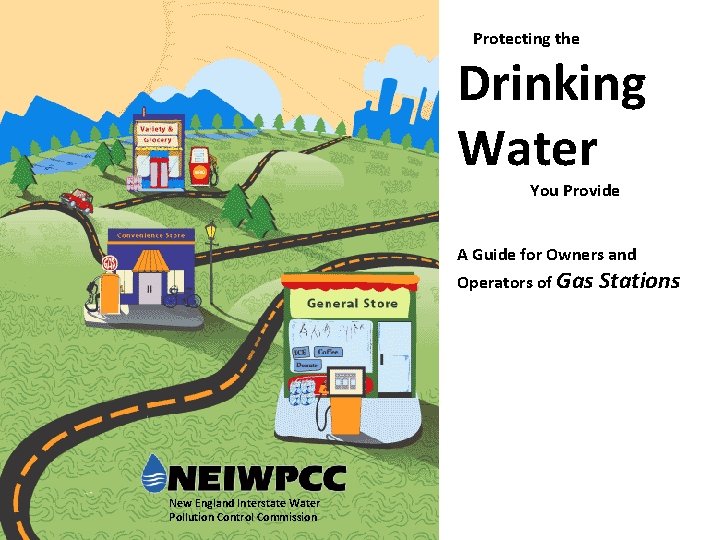
Protecting the Drinking Water You Provide A Guide for Owners and Operators of Gas New England Interstate Water Pollution Control Commission Stations
What’s in this guide? Why is this guide important? What are the responsibilities? What testing is required and what testing is strongly recommended? What if testing indicates contamination in a well? How can a well be protected from fuel contamination? How can a well be protected from other sources of contamination? What if fuel is spilled on the ground?
Why is this guide important? • Transient Non-Community (TNC) Water System = Public Water System – Drinking water well on the premises – Well provides water to 25 people or more per day for more than 60 days. – Point of Access • Faucet in a Restroom • Beverages Prepared with Water • Preparing food – Other examples of TNC include: campgrounds, motels, conveniences stores, rest areas, restaurants, golf courses
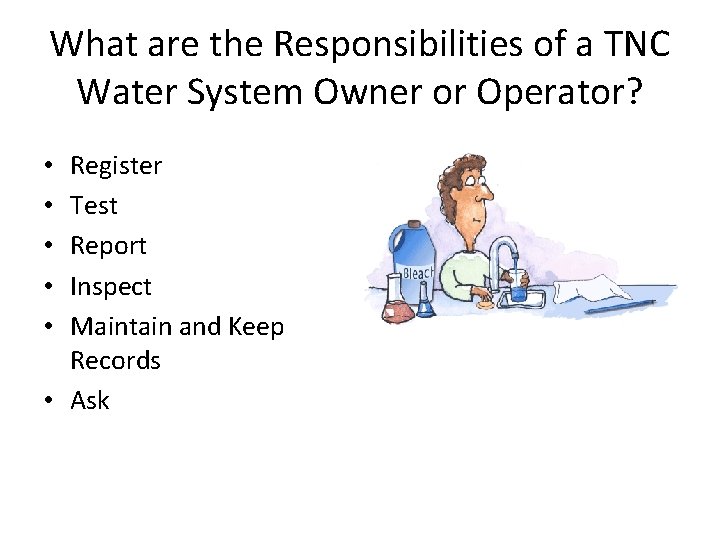
What are the Responsibilities of a TNC Water System Owner or Operator? Register Test Report Inspect Maintain and Keep Records • Ask • • •
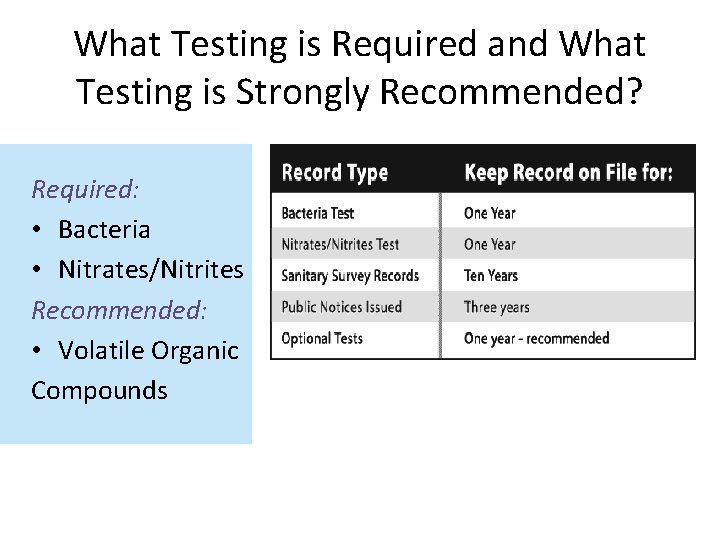
What Testing is Required and What Testing is Strongly Recommended? Required: • Bacteria • Nitrates/Nitrites Recommended: • Volatile Organic Compounds
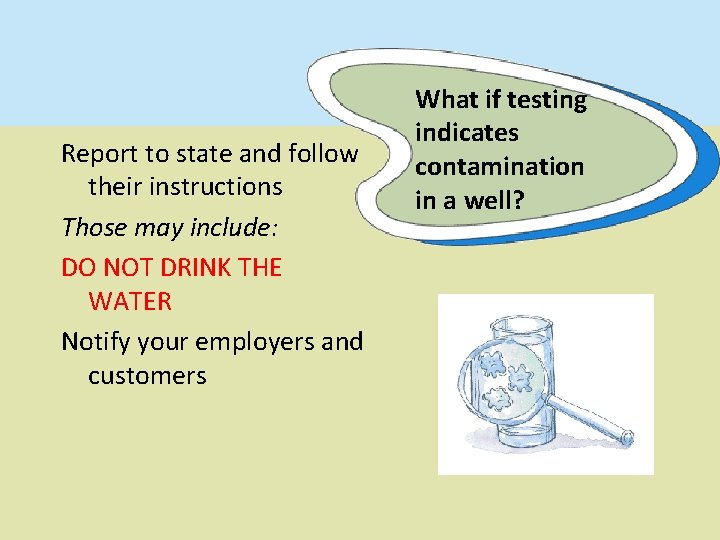
Report to state and follow their instructions Those may include: DO NOT DRINK THE WATER Notify your employers and customers What if testing indicates contamination in a well?
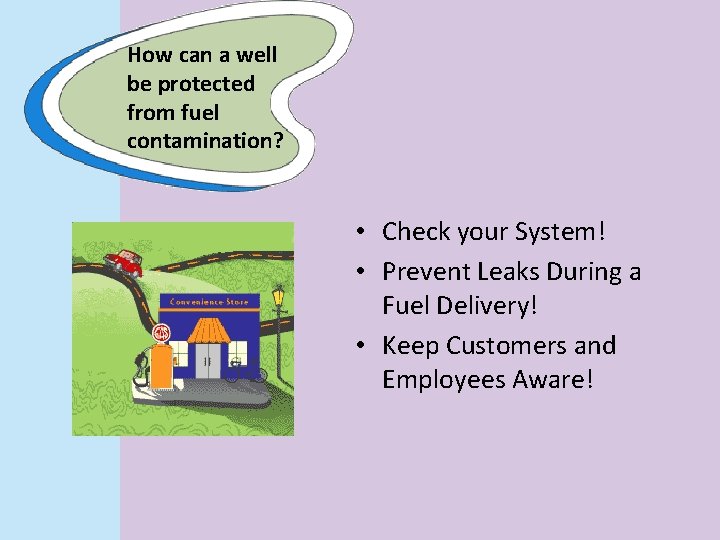
How can a well be protected from fuel contamination? • Check your System! • Prevent Leaks During a Fuel Delivery! • Keep Customers and Employees Aware!
How can a well be protected from other sources of contamination? • Know exactly where well is located • Ensure it is protected from damage by cars, snowplows • Avoid excessive use of pesticides, fertilizers • Move dumpsters and other unrelated equipment away from the well • Slope area around the well to keep runoff away. • Store and dispose of hazardous chemicals properly. • Do not dispose of petroleum products down septic system or floor drain connected to dry well or septic system
• Immediately absorb and cleanup the fuel. • Contact state if you observe: – Sheen on nearby surface water – Exceeds amount that state must be notified • Also: – Be alert for fuel vapors – Be alert for any unusual operating conditions • Note that state includes tank and drinking water programs!! What if fuel is spilled on the ground?
Questions? New England Interstate Water Pollution Control Commission