
Protecting Tennessees Children CHIP Cover Kids Kinika Young
- Slides: 26
Protecting Tennessee's Children: CHIP (“Cover. Kids”) Kinika Young Director of Children’s Health Tennessee Justice Center Andy Schneider Research Professor of the Practice Georgetown University Center for Children and Families May 17, 2017
Cover. Kids o Cover. Kids is Tennessee’s CHIP program o Cover. Kids provides health insurance for eligible children age 18 and younger and for eligible pregnant women. 2
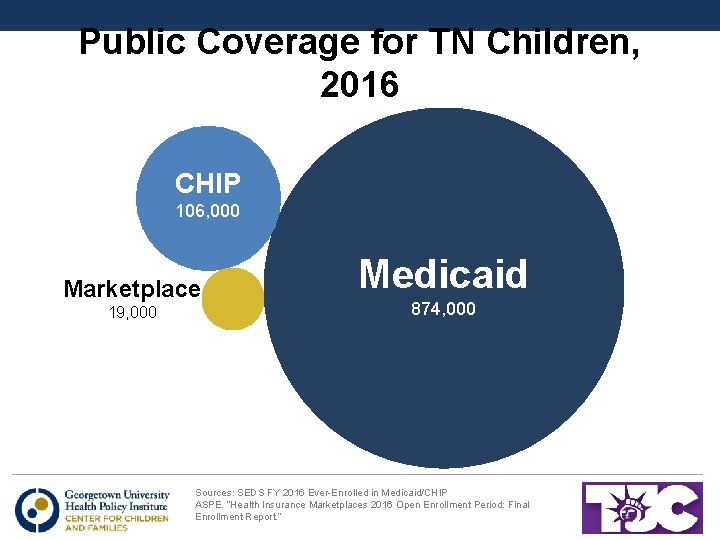
Public Coverage for TN Children, 2016 CHIP 106, 000 Marketplace 19, 000 Medicaid 874, 000 Sources: SEDS FY 2016 Ever-Enrolled in Medicaid/CHIP ASPE. “Health Insurance Marketplaces 2016 Open Enrollment Period: Final Enrollment Report. ” 3
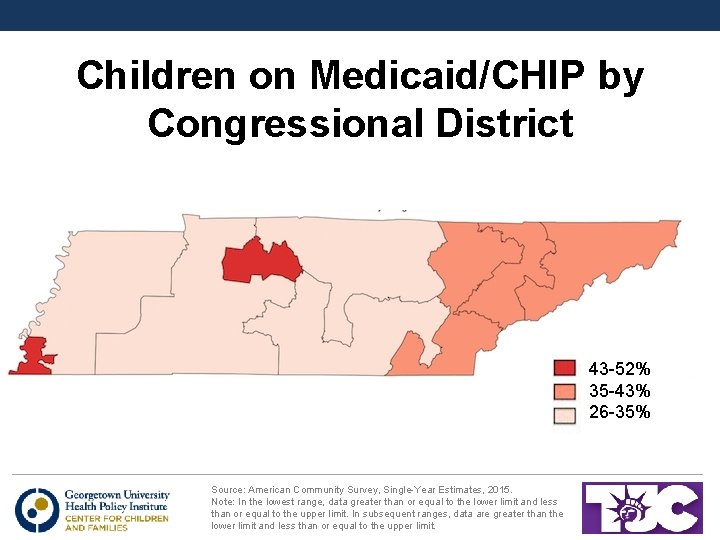
Children on Medicaid/CHIP by Congressional District 43 -52% 35 -43% 26 -35% Source: American Community Survey, Single-Year Estimates, 2015. Note: In the lowest range, data greater than or equal to the lower limit and less than or equal to the upper limit. In subsequent ranges, data are greater than the lower limit and less than or equal to the upper limit. 4
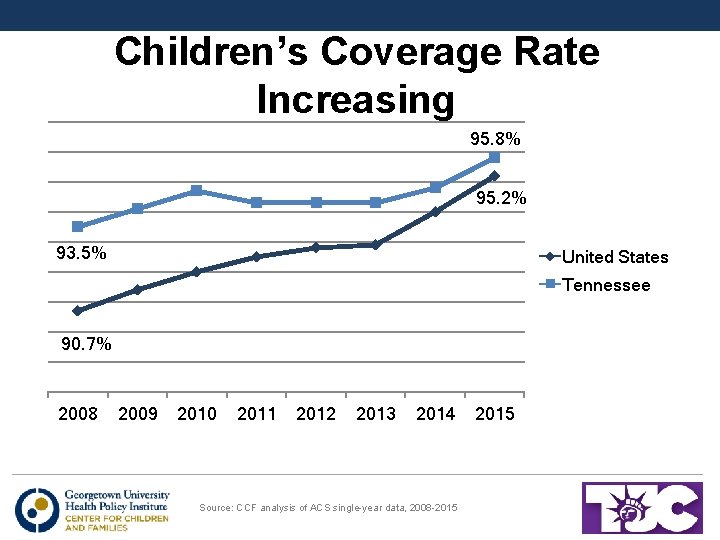
Children’s Coverage Rate Increasing 95. 8% 95. 2% 93. 5% United States Tennessee 90. 7% 2008 2009 2010 2011 2012 2013 2014 Source: CCF analysis of ACS single-year data, 2008 -2015 5
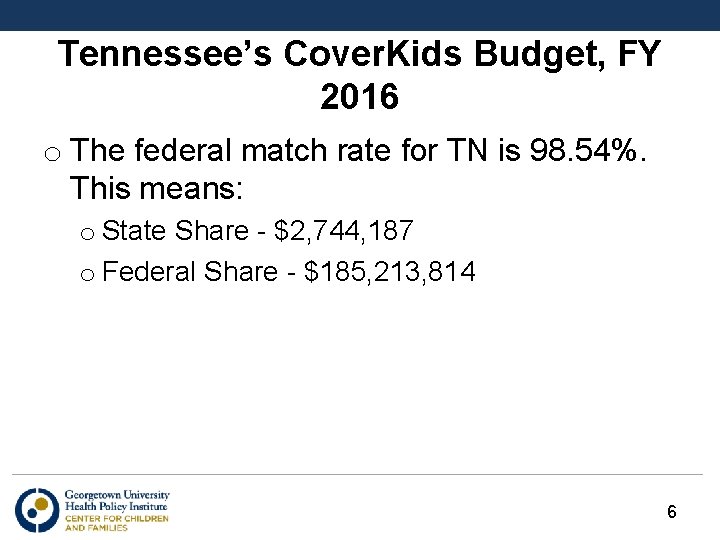
Tennessee’s Cover. Kids Budget, FY 2016 o The federal match rate for TN is 98. 54%. This means: o State Share - $2, 744, 187 o Federal Share - $185, 213, 814 6
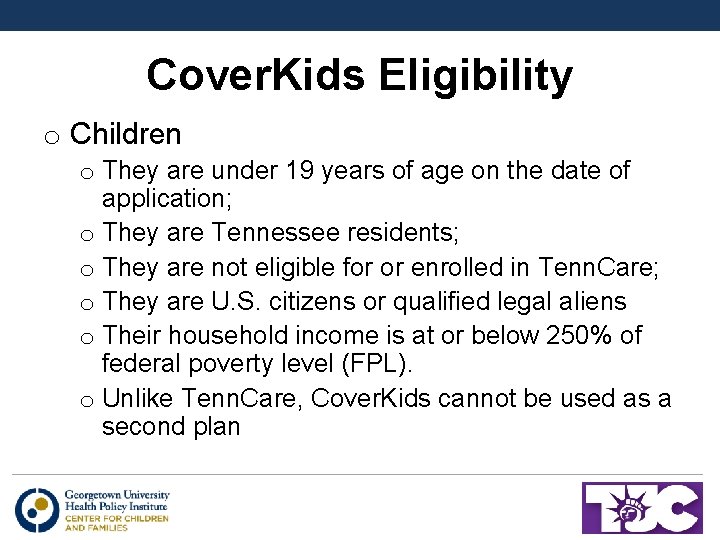
Cover. Kids Eligibility o Children o They are under 19 years of age on the date of application; o They are Tennessee residents; o They are not eligible for or enrolled in Tenn. Care; o They are U. S. citizens or qualified legal aliens o Their household income is at or below 250% of federal poverty level (FPL). o Unlike Tenn. Care, Cover. Kids cannot be used as a second plan 7
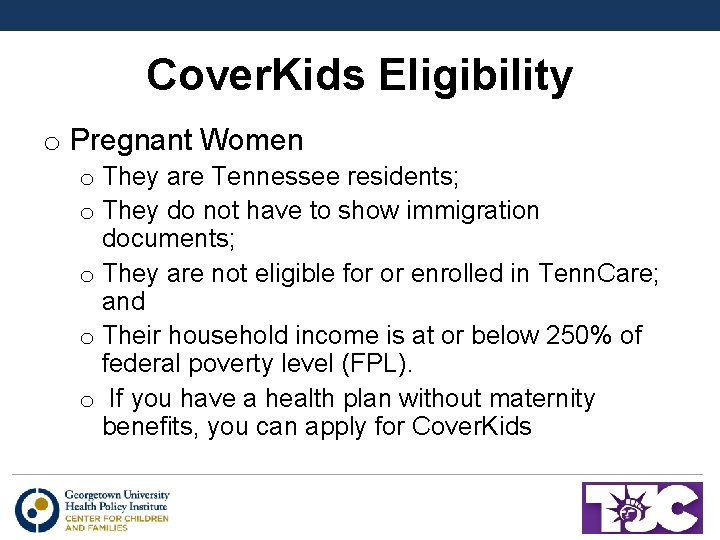
Cover. Kids Eligibility o Pregnant Women o They are Tennessee residents; o They do not have to show immigration documents; o They are not eligible for or enrolled in Tenn. Care; and o Their household income is at or below 250% of federal poverty level (FPL). o If you have a health plan without maternity benefits, you can apply for Cover. Kids 8
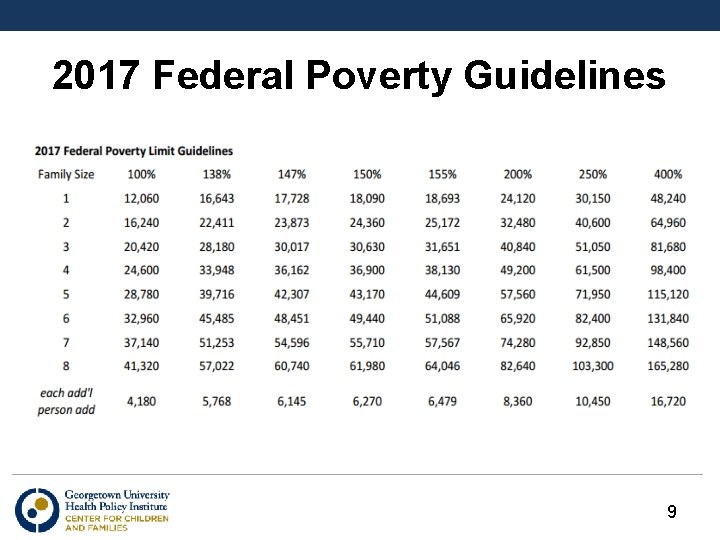
2017 Federal Poverty Guidelines 9
Application Information o Applicants applying for coverage must apply online at healthcare. gov or call tollfree 1 -800 -318 -2596 o Administered by Blue. Care via Health Care Finance and Administration o “No wrong door” provision 10
Premiums and Cost Sharing • • No premiums Total cost-sharing cannot exceed 5% of family income Cost-sharing varies based on income and service No cost sharing for well-baby and well-child care, including immunizations.
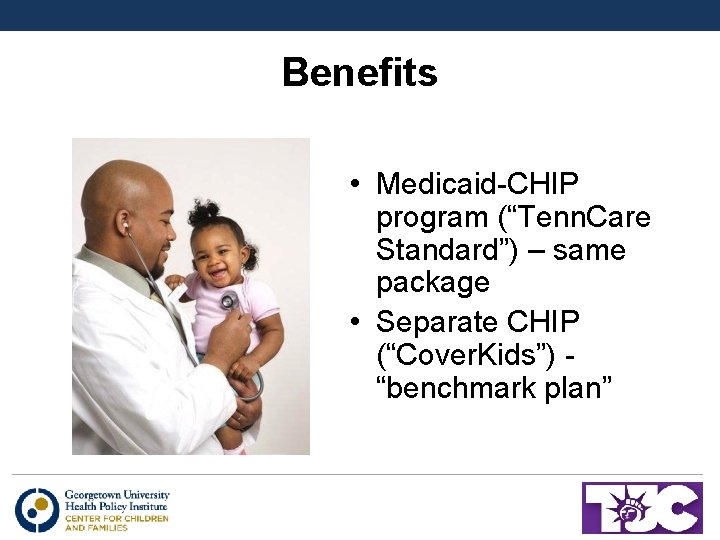
Benefits • Medicaid-CHIP program (“Tenn. Care Standard”) – same package • Separate CHIP (“Cover. Kids”) “benchmark plan”
How do Cover. Kids Benefits Compare? • Cover. Kids provides low-cost, comprehensive health coverage through a managed care plan • Covers preventative health services, doctor visits, hospital visits, vaccinations, well-child visits, developmental screenings and mental health • Children also get vision and dental care. Source: “Benefits and Cost Sharing in Separate CHIP Programs, ” National Academy for State Health Policy & Center for Children and Families (May 2014) available at http: //ccf. georgetown. edu/wp-content/uploads/2014/05/Benefits-and-Cost-Sharing-in. Separate-CHIP-Programs. pdf 13
Children’s Health Insurance Program (CHIP) • Passed in 1997 to help states provide coverage to uninsured children who do not qualify for Medicaid • Block grant with capped annual allotments to states • Federal government pays 65% to 85% of costs (EFMAP); with a 23% percentage point bump in 2016 -17 up to annual allotment • States administer and have flexibility to design eligibility, benefits, cost-sharing, payments beyond federal minimums 14
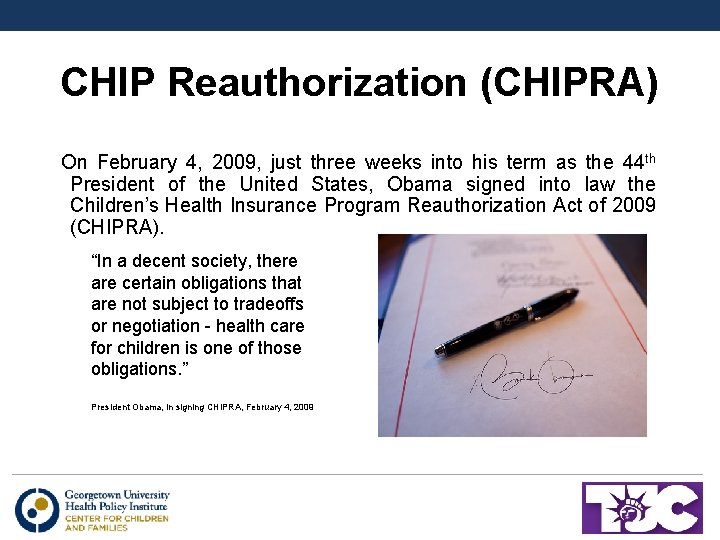
CHIP Reauthorization (CHIPRA) On February 4, 2009, just three weeks into his term as the 44 th President of the United States, Obama signed into law the Children’s Health Insurance Program Reauthorization Act of 2009 (CHIPRA). “In a decent society, there are certain obligations that are not subject to tradeoffs or negotiation - health care for children is one of those obligations. ” President Obama, in signing CHIPRA, February 4, 2009
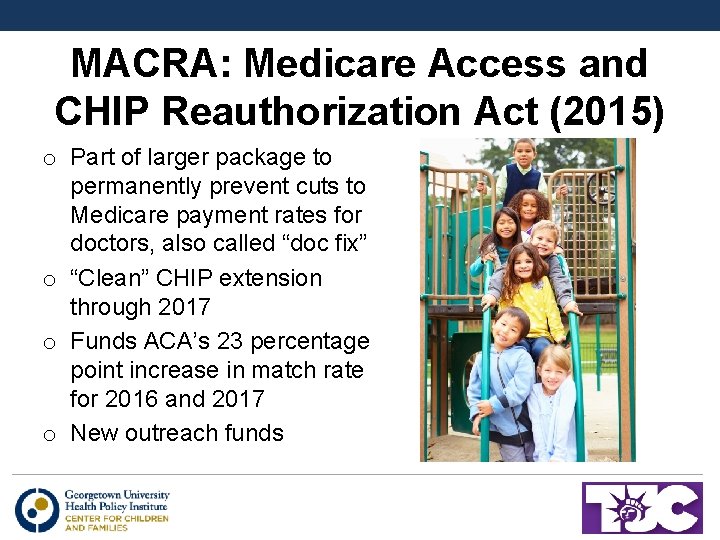
MACRA: Medicare Access and CHIP Reauthorization Act (2015) o Part of larger package to permanently prevent cuts to Medicare payment rates for doctors, also called “doc fix” o “Clean” CHIP extension through 2017 o Funds ACA’s 23 percentage point increase in match rate for 2016 and 2017 o New outreach funds 16
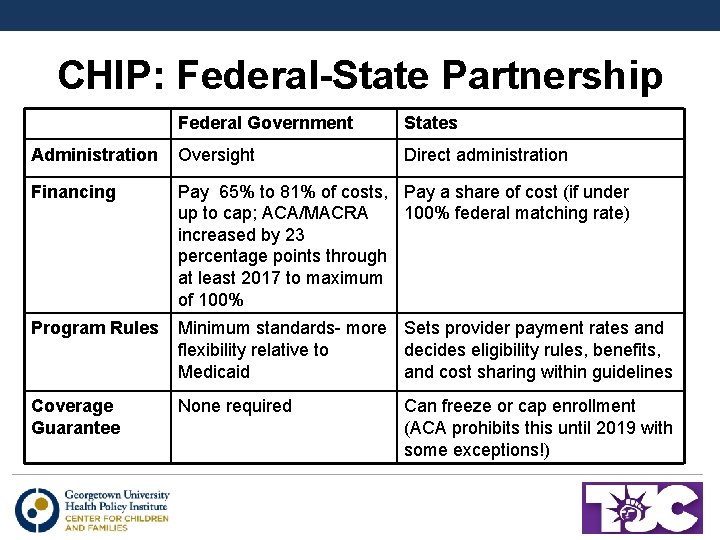
CHIP: Federal-State Partnership Federal Government States Administration Oversight Direct administration Financing Pay 65% to 81% of costs, Pay a share of cost (if under up to cap; ACA/MACRA 100% federal matching rate) increased by 23 percentage points through at least 2017 to maximum of 100% Program Rules Minimum standards- more Sets provider payment rates and flexibility relative to decides eligibility rules, benefits, Medicaid and cost sharing within guidelines Coverage Guarantee None required Can freeze or cap enrollment (ACA prohibits this until 2019 with some exceptions!)
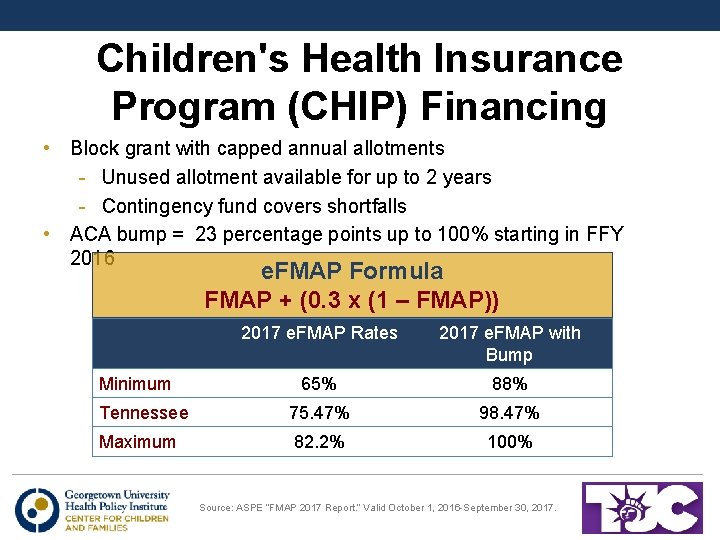
Children's Health Insurance Program (CHIP) Financing • Block grant with capped annual allotments - Unused allotment available for up to 2 years - Contingency fund covers shortfalls • ACA bump = 23 percentage points up to 100% starting in FFY 2016 e. FMAP Formula FMAP + (0. 3 x (1 – FMAP)) 2017 e. FMAP Rates 2017 e. FMAP with Bump 65% 88% Tennessee 75. 47% 98. 47% Maximum 82. 2% 100% Minimum Source: ASPE “FMAP 2017 Report. ” Valid October 1, 2016 -September 30, 2017. 18
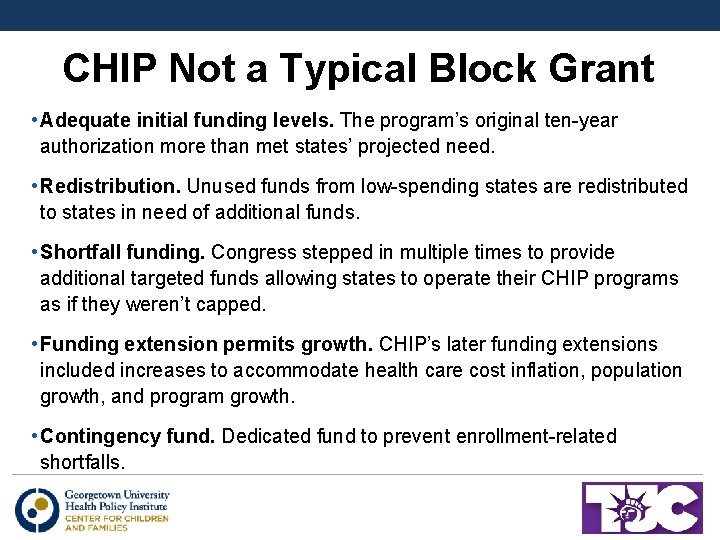
CHIP Not a Typical Block Grant • Adequate initial funding levels. The program’s original ten-year authorization more than met states’ projected need. • Redistribution. Unused funds from low-spending states are redistributed to states in need of additional funds. • Shortfall funding. Congress stepped in multiple times to provide additional targeted funds allowing states to operate their CHIP programs as if they weren’t capped. • Funding extension permits growth. CHIP’s later funding extensions included increases to accommodate health care cost inflation, population growth, and program growth. • Contingency fund. Dedicated fund to prevent enrollment-related shortfalls. 19
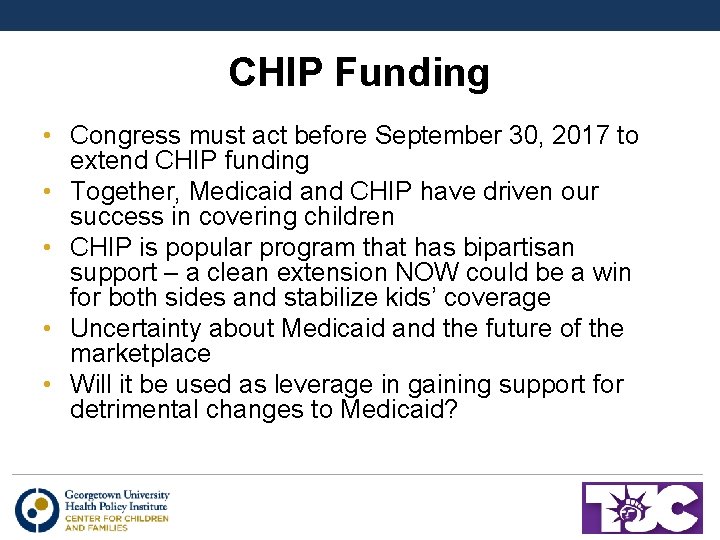
CHIP Funding • Congress must act before September 30, 2017 to extend CHIP funding • Together, Medicaid and CHIP have driven our success in covering children • CHIP is popular program that has bipartisan support – a clean extension NOW could be a win for both sides and stabilize kids’ coverage • Uncertainty about Medicaid and the future of the marketplace • Will it be used as leverage in gaining support for detrimental changes to Medicaid? 20
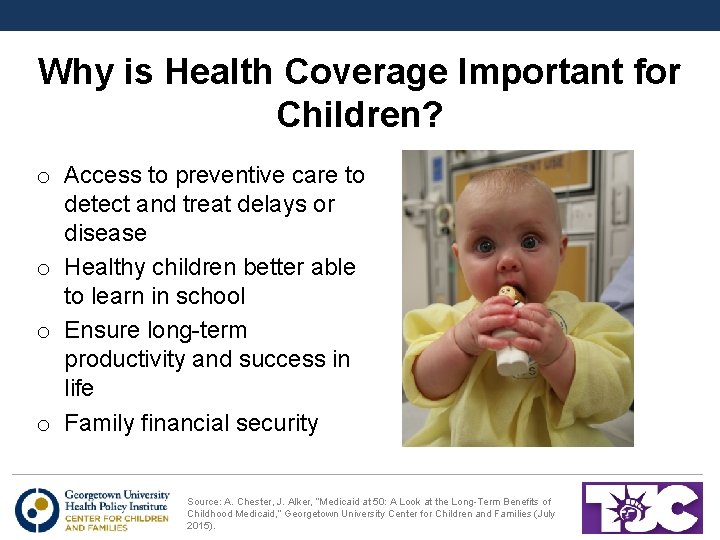
Why is Health Coverage Important for Children? o Access to preventive care to detect and treat delays or disease o Healthy children better able to learn in school o Ensure long-term productivity and success in life o Family financial security Source: A. Chester, J. Alker, “Medicaid at 50: A Look at the Long-Term Benefits of Childhood Medicaid, ” Georgetown University Center for Children and Families (July 2015). 21
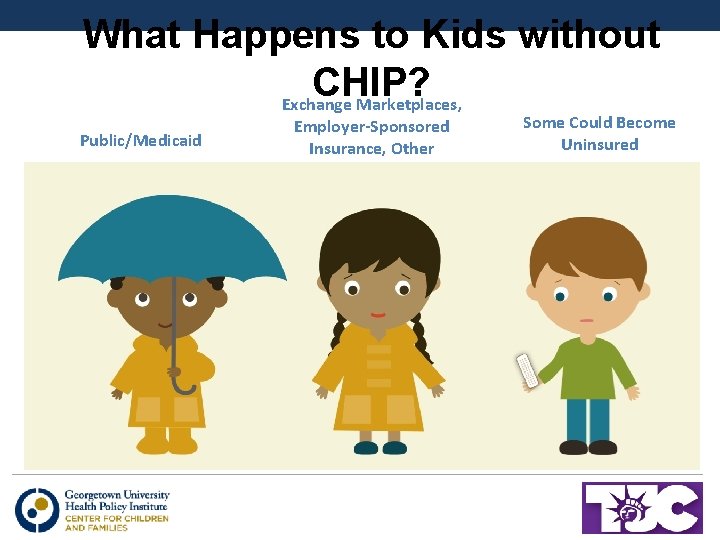
What Happens to Kids without CHIP? Exchange Marketplaces, Public/Medicaid Employer-Sponsored Insurance, Other Some Could Become Uninsured 22
Tools for Organizations • Children’s landing page – Branded and unbranded fact sheets and shareable images • Monday, Wednesday and Friday Facebook children’s posts at 2: 30 pm CDT • Please let us know what you need 23
How to Get Involved • Join our email list for timely updates • Let us know if you have any stories of families who benefit from CHIP for our story bank 24
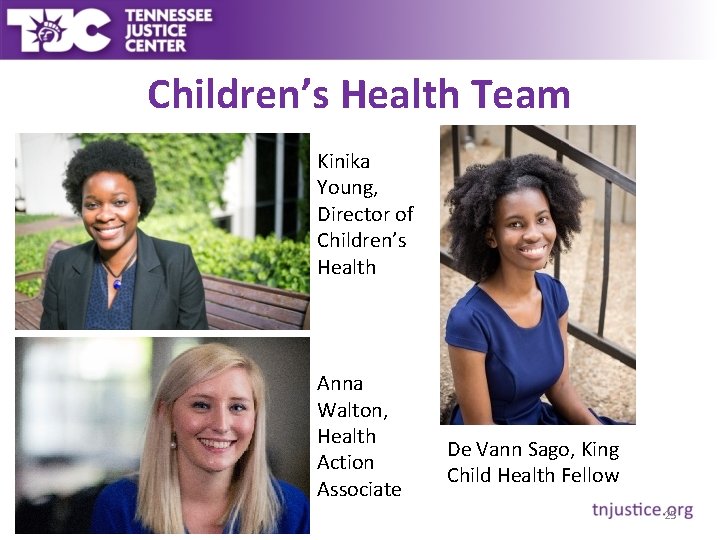
Children’s Health Team Kinika Young, Director of Children’s Health Anna Walton, Health Action Associate De Vann Sago, King Child Health Fellow 25
Questions? 26