
Protecting Assets Through Cell Structure Presenters Crosby Sherman
Protecting Assets Through Cell Structure Presenters: • Crosby Sherman Former Deputy Commissioner of Ins, VT and Former Chief of Captive Insurance, NJ • Mario Vitiello President, Risk Transfer Strategies LLC • Dianne Salter EVP, Corporate Insurance Services President, Mountain Laurel RRG and Five Point Professional Liability Insurance Company
What is a Cell? • A Means to segregate business • Traditional Cell Captive • Will consist of Core and Cells • Core will manage Cells through participation agreements • Pure/single parent captive • Segregation of business risks • Sponsored/Group/Association captives • Segregate unrelated businesses • Condominium concept

Cell Evolution • Started Offshore • Started as Rent-A-Captives • An Alphabet Soup of Different Structures • Different structures in different domiciles • US Cell Captives • Traditional cells provide liability/asset protection via captive statutes. • Incorporated cells, are governed by corporate law.
Popularity • Increasingly Popular for Smaller Businesses • Risk management is becoming more sophisticated • Looking for ways to solve coverage gaps or tailor insurance coverage's • Cost Effective • Lower formation costs. • Quicker to set up. • More efficient. • Traditional Cell Captive • NJ Statute currently allows for protected cells.
Lines of Business in Cells • Typical Property Casualty Lines • Medical Stop Loss • Recent Attention on Employee Benefits

Mid Market Popularity • Increasingly Popular • Ideal for Smaller Companies • Recent Attention on Employee Benefits • Domiciles are Chasing the Movement
NJ Formation • Core/Parent Captive • Similar to pure captive • Cells are subject to NJ DOBI approval; possibly through a change in the Business Plan • Cells must stand on their own as to capitalization. • NJ likes the cell Risk Management Function to Reside at the Core Cell Level.
Mario Vitiello, President, Risk Transfer Strategies LLC
Captive Insurance Group of New Jersey October 13, 2015 Medical Stop Loss Segregated Portfolio Cell Utilization.
Captive Overview • Business Purpose • Administrator places in excess of $15 million in Premium with Stop Loss carriers for its clients. • Overall loss ratio is under 60%. • Mature look of business • Significant risk and profit sharing available
Overview • Formation NJ domiciled Captive Company • “Cell” captive owned by Administrator for the benefit of clients opting into the strategy and structure. Specific agreements with cell govern the program • Clients participate in their own segregated cell • Risks are segregated in cells • High quality Carriers A. M. Best “A” Rated
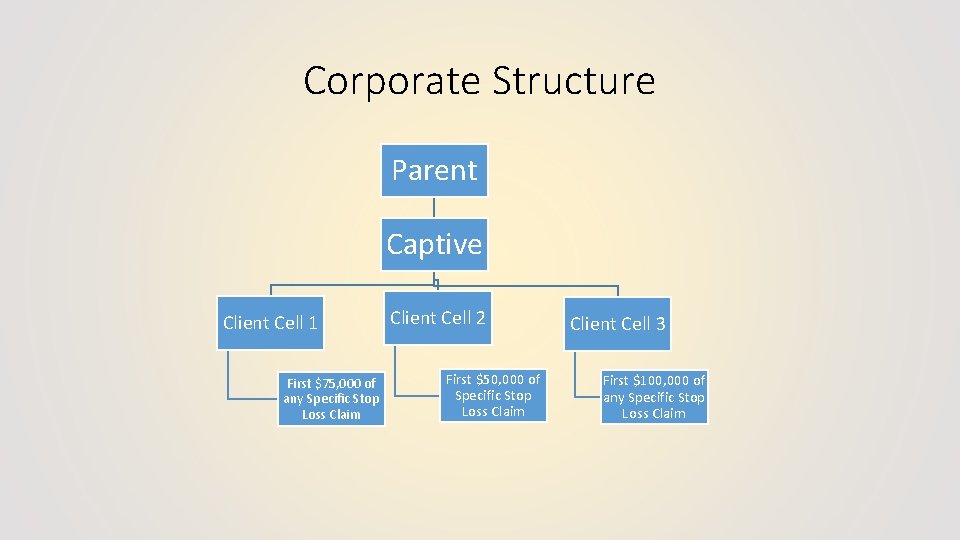
Corporate Structure Parent Captive Client Cell 1 First $75, 000 of any Specific Stop Loss Claim Client Cell 2 First $50, 000 of Specific Stop Loss Claim Client Cell 3 First $100, 000 of any Specific Stop Loss Claim
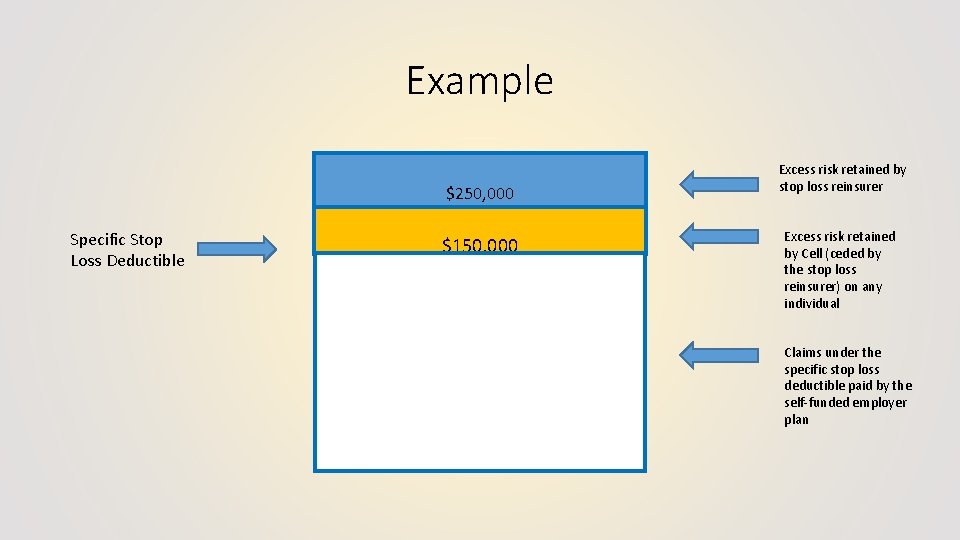
Example $250, 000 Specific Stop Loss Deductible $150, 000 Excess risk retained by stop loss reinsurer Excess risk retained by Cell (ceded by the stop loss reinsurer) on any individual Claims under the specific stop loss deductible paid by the self-funded employer plan
Contractual Structure • Employer purchases Specific Stop Loss Insurance at targeted risk point (deductible) • Reinsurer writes the coverage on their policy • Client incorporates a cell in captive • Requires DOI approval and proper capitalization • Capitalization will be subject to a statutory minimum and increase as risk is assumed • Reinsurer cedes some risk to the cell along with a share of the premium • Cells are segregated from each other • Captive pays its share of claims from the ceded premium • Reinsurer may require cede premium to be held in a Reg. 114 Trust
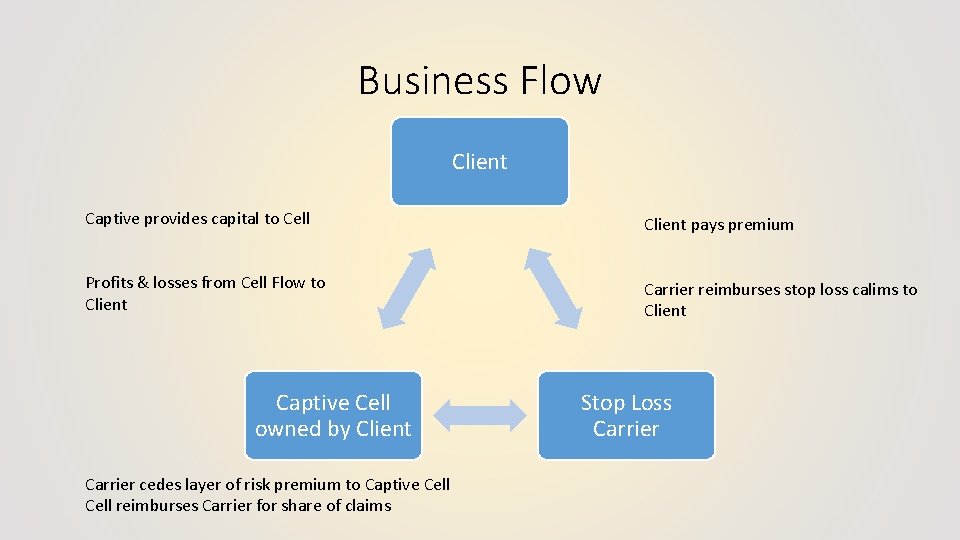
Business Flow Client Captive provides capital to Cell Client pays premium Profits & losses from Cell Flow to Client Carrier reimburses stop loss calims to Client Captive Cell owned by Client Carrier cedes layer of risk premium to Captive Cell reimburses Carrier for share of claims Stop Loss Carrier
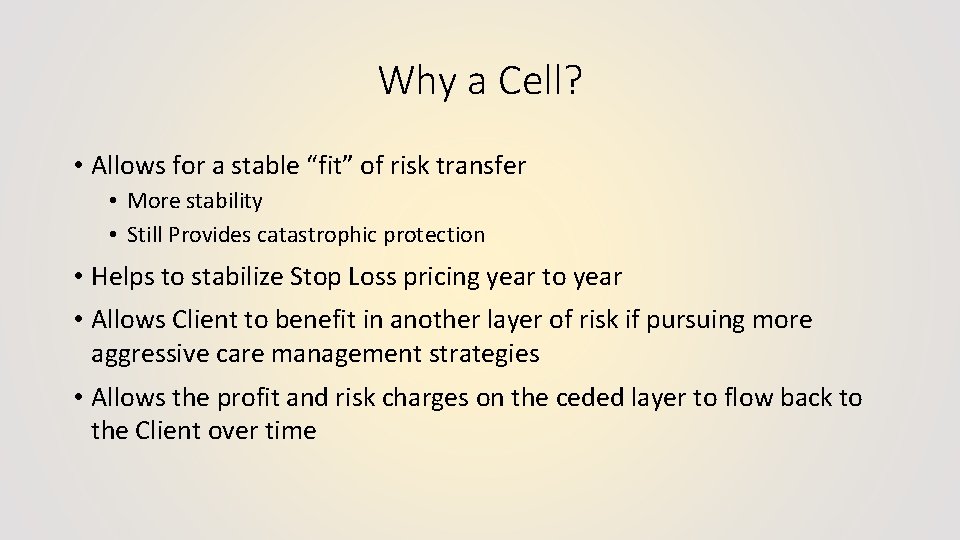
Why a Cell? • Allows for a stable “fit” of risk transfer • More stability • Still Provides catastrophic protection • Helps to stabilize Stop Loss pricing year to year • Allows Client to benefit in another layer of risk if pursuing more aggressive care management strategies • Allows the profit and risk charges on the ceded layer to flow back to the Client over time
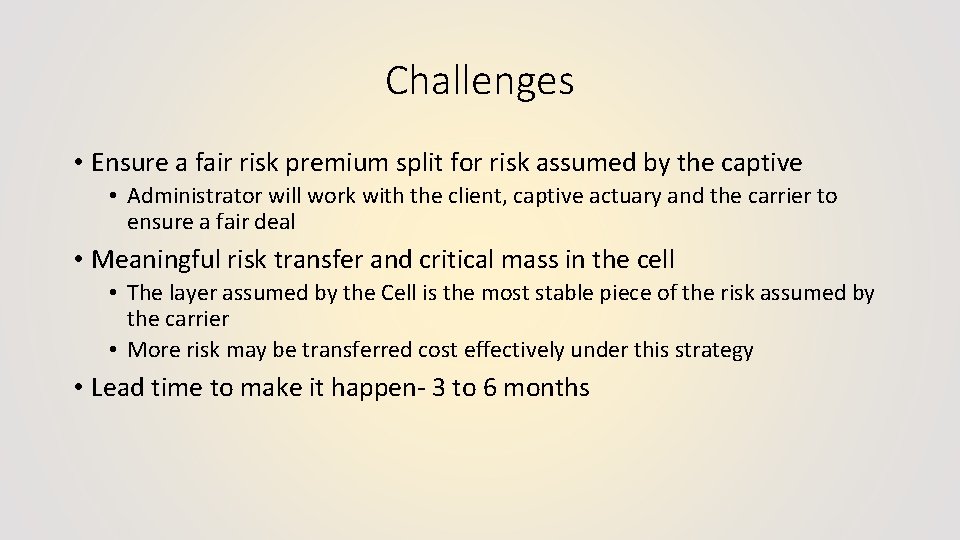
Challenges • Ensure a fair risk premium split for risk assumed by the captive • Administrator will work with the client, captive actuary and the carrier to ensure a fair deal • Meaningful risk transfer and critical mass in the cell • The layer assumed by the Cell is the most stable piece of the risk assumed by the carrier • More risk may be transferred cost effectively under this strategy • Lead time to make it happen- 3 to 6 months
Dianne Salter, EVP, Corporate Insurance Svcs. President, Mountain Laurel RRG President, Five Point Professional Liability Insurance Company
Why the Move to a Captive Program: • Unavailability of medical malpractice insurance for hospitals and physicians in Pennsylvania • Commitment to risk management and claims/ litigation management • Long term commitment of senior leadership to captive risk financing vehicle • Need to meet PA Statutory requirements for “approved” carrier • Acknowledgement of need for “appropriate” actuarially driven funding/premium
Strategic Advantages • Creating value/evaluating performance • Adherence to risk management/claims management standards/policies and procedures • Continued emphasis on quality improvement/patient safety/risk management • Strategic direction/insight and coordination with claims management and risk management • Key leadership providing ongoing input and oversight • Long term view of the program • Coverage extensions/flexibility
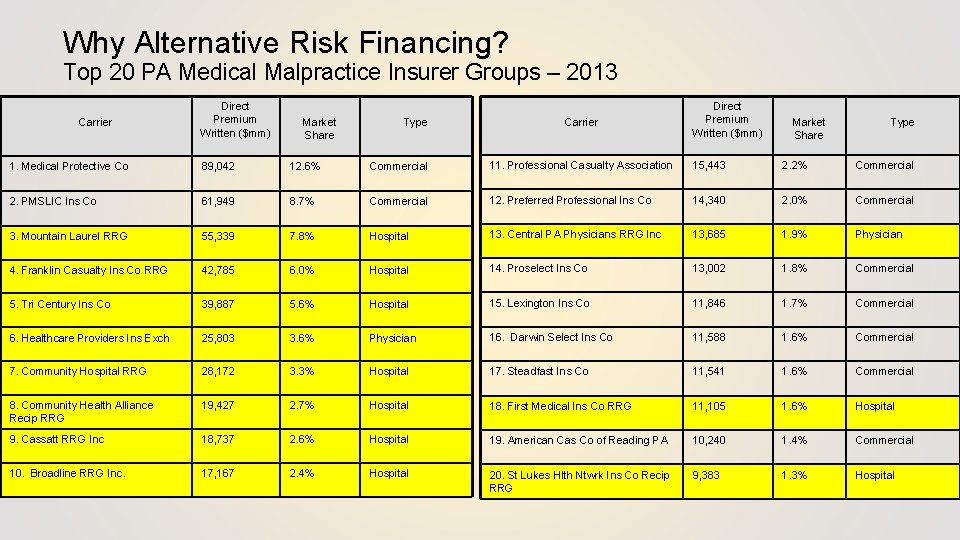
Why Alternative Risk Financing? Top 20 PA Medical Malpractice Insurer Groups – 2013 Carrier Direct Premium Written ($mm) Market Share Type 1. Medical Protective Co 89, 042 12. 6% Commercial 11. Professional Casualty Association 15, 443 2. 2% Commercial 2. PMSLIC Ins Co 61, 949 8. 7% Commercial 12. Preferred Professional Ins Co 14, 340 2. 0% Commercial 3. Mountain Laurel RRG 55, 339 7. 8% Hospital 13. Central PA Physicians RRG Inc 13, 685 1. 9% Physician 4. Franklin Casualty Ins Co RRG 42, 785 6. 0% Hospital 14. Proselect Ins Co 13, 002 1. 8% Commercial 5. Tri Century Ins Co 39, 887 5. 6% Hospital 15. Lexington Ins Co 11, 846 1. 7% Commercial 6. Healthcare Providers Ins Exch 25, 803 3. 6% Physician 16. Darwin Select Ins Co 11, 588 1. 6% Commercial 7. Community Hospital RRG 28, 172 3. 3% Hospital 17. Steadfast Ins Co 11, 541 1. 6% Commercial 8. Community Health Alliance Recip RRG 19, 427 2. 7% Hospital 18. First Medical Ins Co RRG 11, 105 1. 6% Hospital 9. Cassatt RRG Inc 18, 737 2. 6% Hospital 19. American Cas Co of Reading PA 10, 240 1. 4% Commercial 10. Broadline RRG Inc. 17, 167 2. 4% Hospital 20. St Lukes Hlth Ntwrk Ins Co Recip RRG 9, 383 1. 3% Hospital
Keys to Successful Captives Sense of urgency – problem to solve Good spread of risk; good business plan Understanding of loss volatility and the need for prudent funding Long-term commitment – discipline to “stay the course” through market cycles Strong business partners – manager, claims service, actuary, banking and investment, auditors and legal • Commitment and involvement of senior management • Open dialogue with Regulators • • •
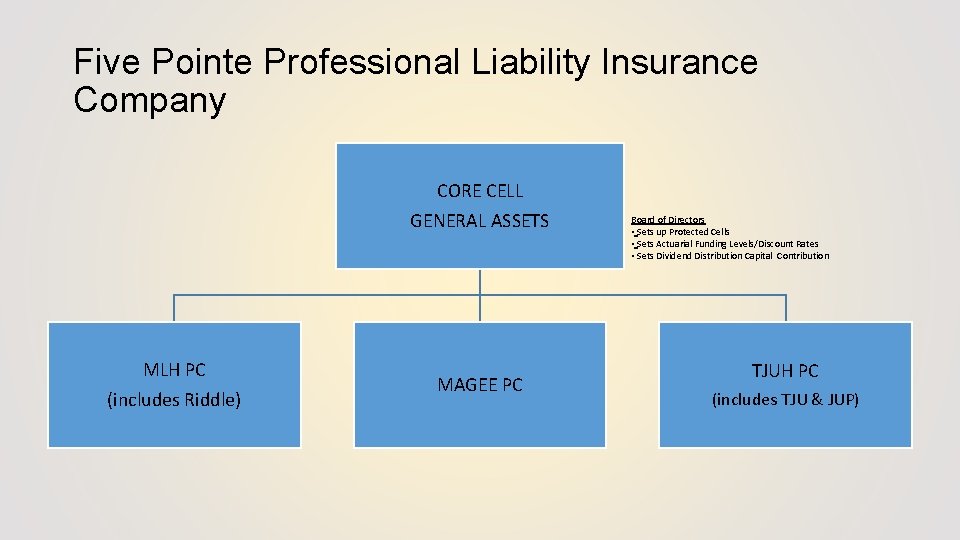
Five Pointe Professional Liability Insurance Company CORE CELL GENERAL ASSETS MLH PC (includes Riddle) MAGEE PC Board of Directors • Sets up Protected Cells • Sets Actuarial Funding Levels/Discount Rates • Sets Dividend Distribution Capital Contribution TJUH PC (includes TJU & JUP)
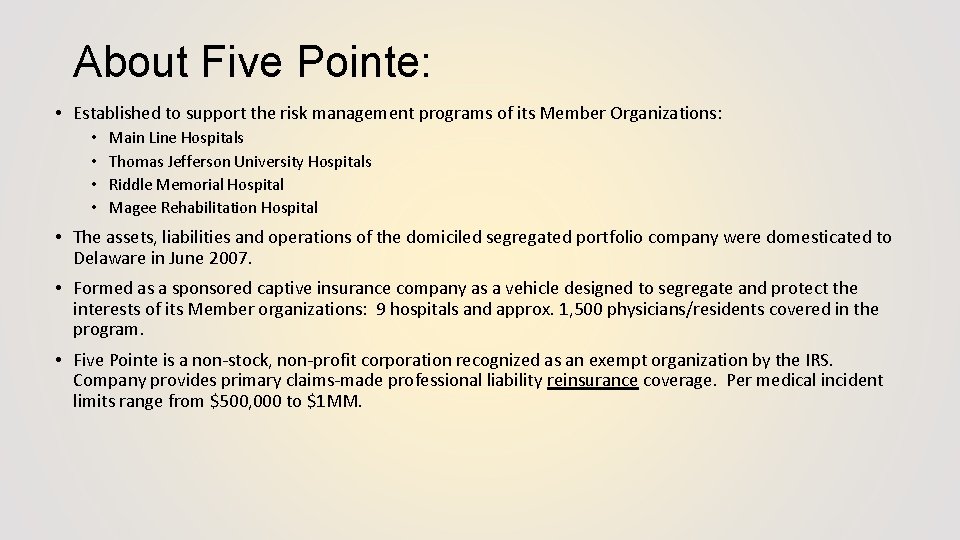
About Five Pointe: • Established to support the risk management programs of its Member Organizations: • • Main Line Hospitals Thomas Jefferson University Hospitals Riddle Memorial Hospital Magee Rehabilitation Hospital • The assets, liabilities and operations of the domiciled segregated portfolio company were domesticated to Delaware in June 2007. • Formed as a sponsored captive insurance company as a vehicle designed to segregate and protect the interests of its Member organizations: 9 hospitals and approx. 1, 500 physicians/residents covered in the program. • Five Pointe is a non-stock, non-profit corporation recognized as an exempt organization by the IRS. Company provides primary claims-made professional liability reinsurance coverage. Per medical incident limits range from $500, 000 to $1 MM.
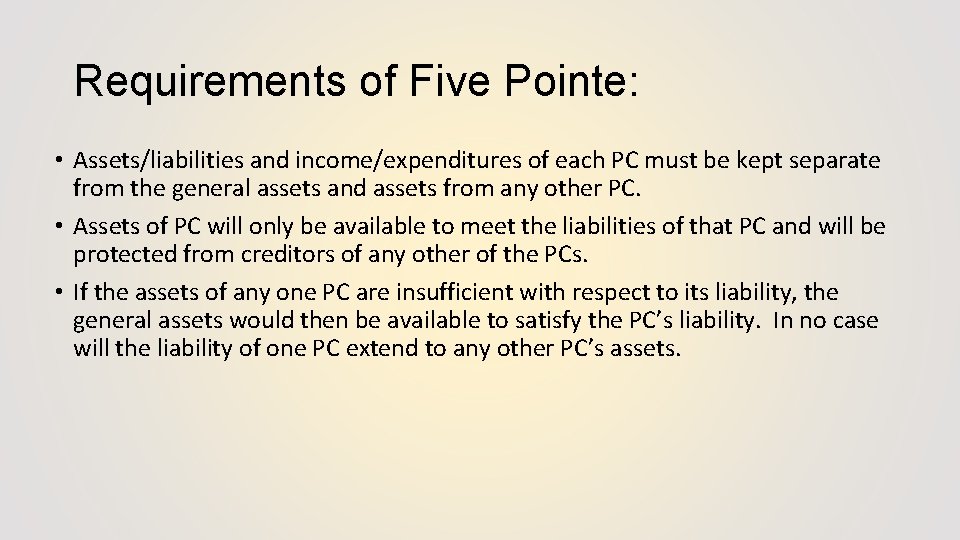
Requirements of Five Pointe: • Assets/liabilities and income/expenditures of each PC must be kept separate from the general assets and assets from any other PC. • Assets of PC will only be available to meet the liabilities of that PC and will be protected from creditors of any other of the PCs. • If the assets of any one PC are insufficient with respect to its liability, the general assets would then be available to satisfy the PC’s liability. In no case will the liability of one PC extend to any other PC’s assets.
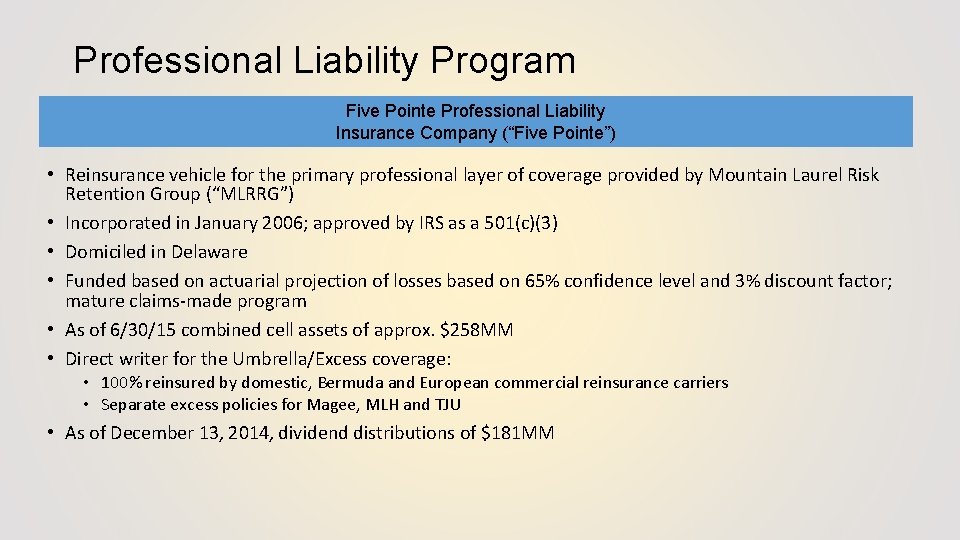
Professional Liability Program Five Pointe Professional Liability Insurance Company (“Five Pointe”) • Reinsurance vehicle for the primary professional layer of coverage provided by Mountain Laurel Risk Retention Group (“MLRRG”) • Incorporated in January 2006; approved by IRS as a 501(c)(3) • Domiciled in Delaware • Funded based on actuarial projection of losses based on 65% confidence level and 3% discount factor; mature claims-made program • As of 6/30/15 combined cell assets of approx. $258 MM • Direct writer for the Umbrella/Excess coverage: • 100% reinsured by domestic, Bermuda and European commercial reinsurance carriers • Separate excess policies for Magee, MLH and TJU • As of December 13, 2014, dividend distributions of $181 MM
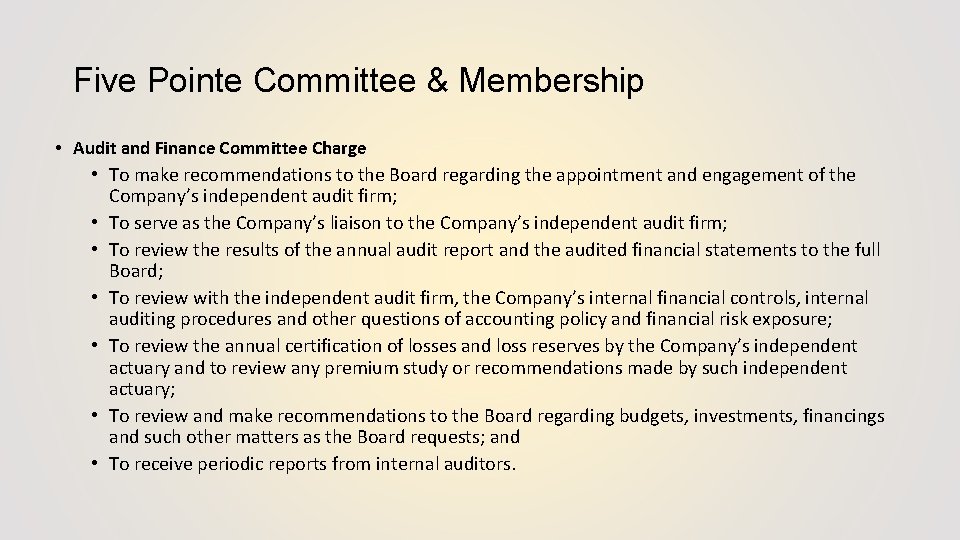
Five Pointe Committee & Membership • Audit and Finance Committee Charge • To make recommendations to the Board regarding the appointment and engagement of the Company’s independent audit firm; • To serve as the Company’s liaison to the Company’s independent audit firm; • To review the results of the annual audit report and the audited financial statements to the full Board; • To review with the independent audit firm, the Company’s internal financial controls, internal auditing procedures and other questions of accounting policy and financial risk exposure; • To review the annual certification of losses and loss reserves by the Company’s independent actuary and to review any premium study or recommendations made by such independent actuary; • To review and make recommendations to the Board regarding budgets, investments, financings and such other matters as the Board requests; and • To receive periodic reports from internal auditors.
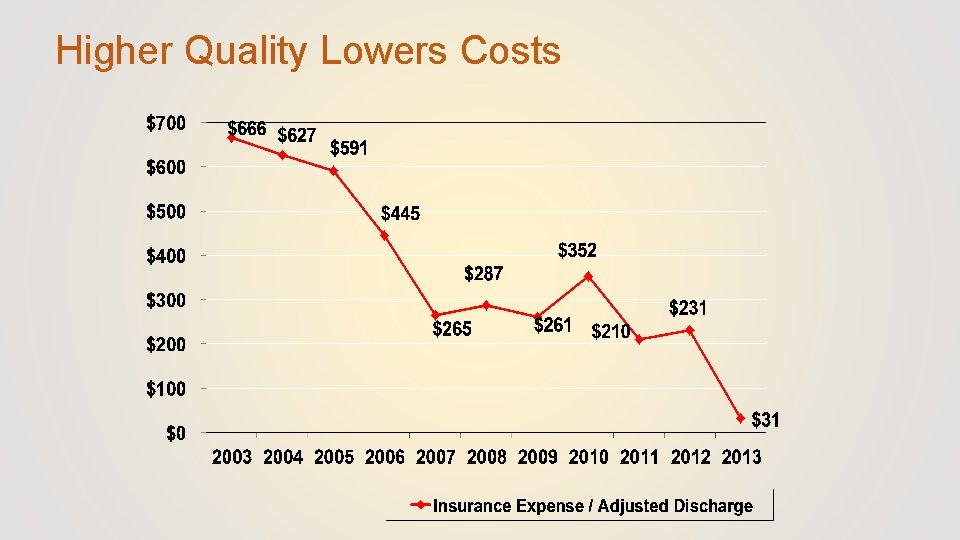
Higher Quality Lowers Costs
- Slides: 28