
ProsthesisPatient Mismatch After TAVR Does it Matter Howard
- Slides: 17
Prosthesis-Patient Mismatch After TAVR: Does it Matter? Howard C. Herrmann, MD, FACC, MSCAI John Bryfogle Professor of Cardiovascular Medicine and Surgery Health System Director for Interventional Cardiology Director, Cardiac Cath Labs, Hospital of the Univ of PA Perelman School of Medicine University of Pennsylvania Philadelphia
Disclosure Statement of Financial Interest Within the past 12 months, I or my spouse/partner have had a financial interest/arrangement or affiliation with the organization(s) listed below. Institutional Grant/Research Support Consulting Fees/Honoraria Abbott Vascular Bayer Boston Scientific Cardiovasc Res Found. Corvia Edwards Lifesciences Medtronic Siemens Leerink Wells Fargo Editorial Mass Medical Society Edwards Lifesciences Gore St. Jude Medical Medtronic Univ Laval Major Stock Shareholder/Equity Microinterventional Devices Ø Discussion may include unapproved and off-label devices, procedures, and indications
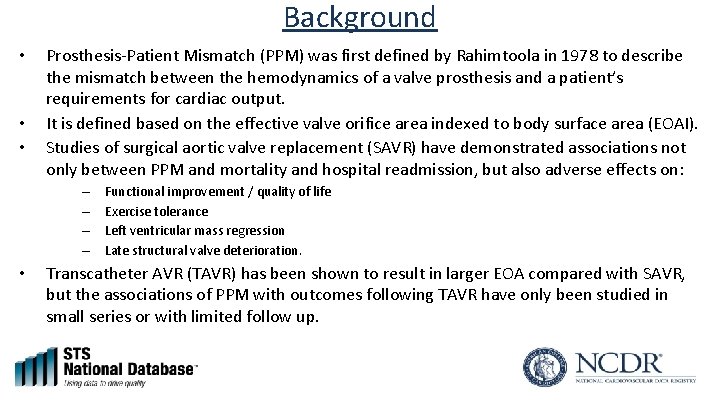
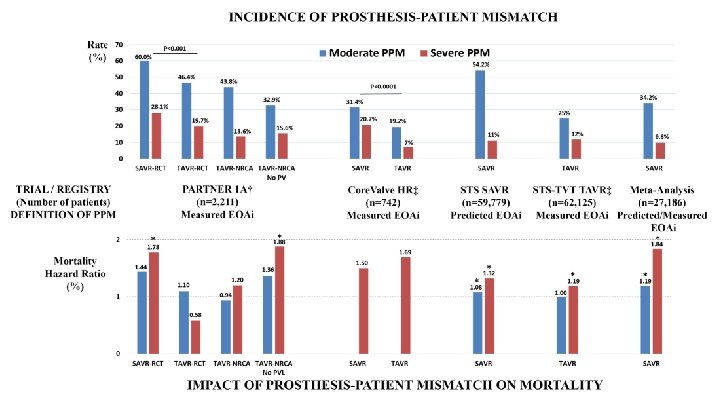
Background • • • Prosthesis-Patient Mismatch (PPM) was first defined by Rahimtoola in 1978 to describe the mismatch between the hemodynamics of a valve prosthesis and a patient’s requirements for cardiac output. It is defined based on the effective valve orifice area indexed to body surface area (EOAI). Studies of surgical aortic valve replacement (SAVR) have demonstrated associations not only between PPM and mortality and hospital readmission, but also adverse effects on: – – • Functional improvement / quality of life Exercise tolerance Left ventricular mass regression Late structural valve deterioration. Transcatheter AVR (TAVR) has been shown to result in larger EOA compared with SAVR, but the associations of PPM with outcomes following TAVR have only been studied in small series or with limited follow up.
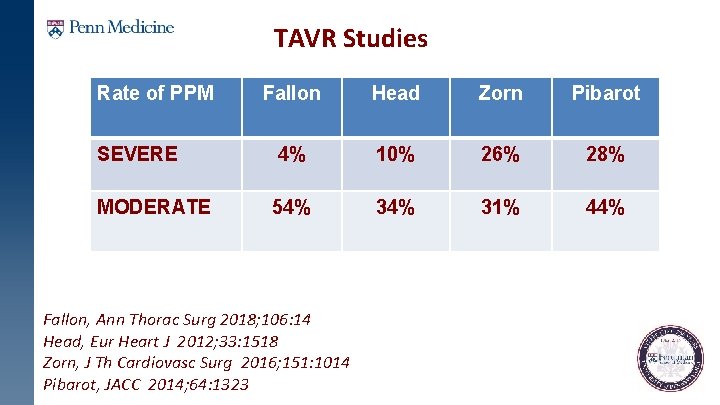
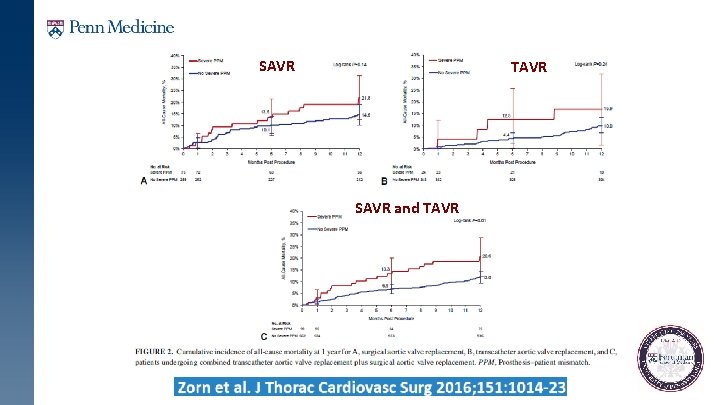
TAVR Studies Rate of PPM Fallon Head Zorn Pibarot SEVERE 4% 10% 26% 28% MODERATE 54% 31% 44% Fallon, Ann Thorac Surg 2018; 106: 14 Head, Eur Heart J 2012; 33: 1518 Zorn, J Th Cardiovasc Surg 2016; 151: 1014 Pibarot, JACC 2014; 64: 1323
SAVR TAVR SAVR and TAVR
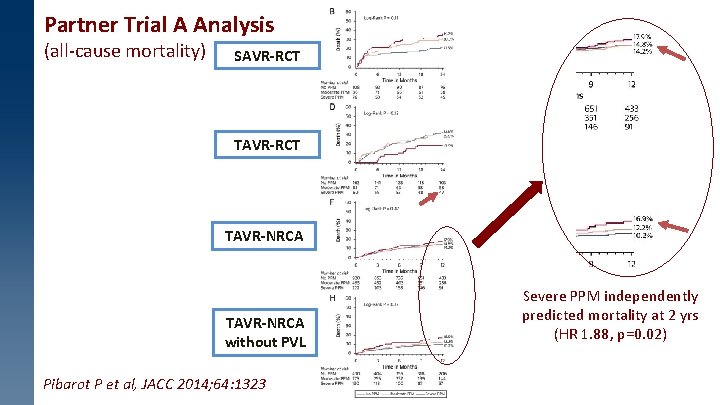
Partner Trial A Analysis (all-cause mortality) SAVR-RCT TAVR-NRCA without PVL Pibarot P et al, JACC 2014; 64: 1323 Severe PPM independently predicted mortality at 2 yrs (HR 1. 88, p=0. 02)
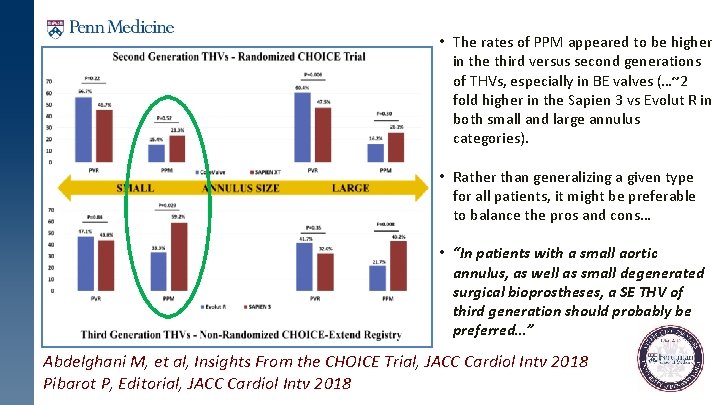
• The rates of PPM appeared to be higher in the third versus second generations of THVs, especially in BE valves (…~2 fold higher in the Sapien 3 vs Evolut R in both small and large annulus categories). • Rather than generalizing a given type for all patients, it might be preferable to balance the pros and cons… • “In patients with a small aortic annulus, as well as small degenerated surgical bioprostheses, a SE THV of third generation should probably be preferred…” Abdelghani M, et al, Insights From the CHOICE Trial, JACC Cardiol Intv 2018 Pibarot P, Editorial, JACC Cardiol Intv 2018
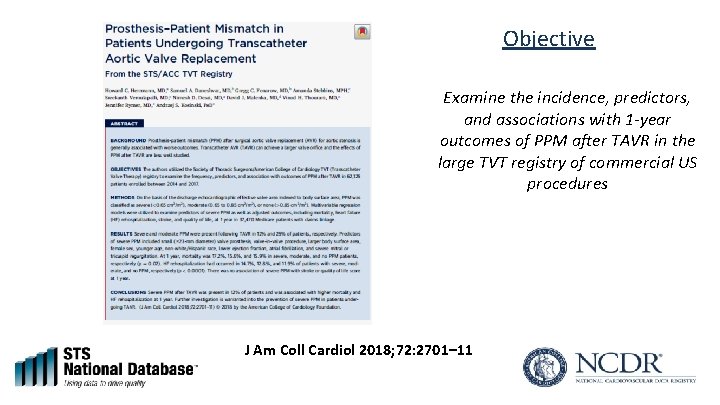
Objective Examine the incidence, predictors, and associations with 1 -year outcomes of PPM after TAVR in the large TVT registry of commercial US procedures J Am Coll Cardiol 2018; 72: 2701– 11
Methods STS/ACC Transcatheter Valve Registry – Goals of facilitating device and procedure surveillance, promoting quality assurance and improvement, and conducting studies that help with access to new therapies and expand device labelling through evidence development – Participating centers use standardized definitions to collect patient-specific data on demographics, morbidities, functional status, quality of life, hemodynamics, procedural details and outcomes (inhospital, 30 -day, and 1 -year) • All registry patients treated commercially from Jan 2014 through March 2017 were included in the present investigation • TVT enrollees > 65 years of age at the time of their procedure and with Fee-for-Service Medicare were linked to claims data by CMS using unique patient identifiers (name and social security number) to assess 1 -year survival, stroke, and rehospitalization for heart failure.
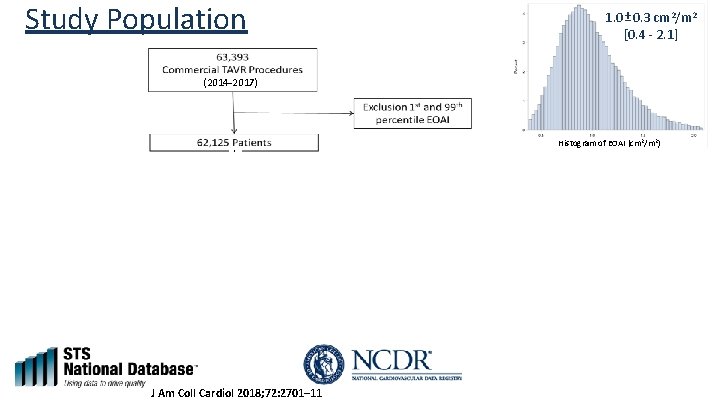
Study Population 1. 0 ± 0. 3 cm 2/m 2 [0. 4 - 2. 1] (2014 -2017) Histogram of EOAI (cm 2/m 2) J Am Coll Cardiol 2018; 72: 2701– 11
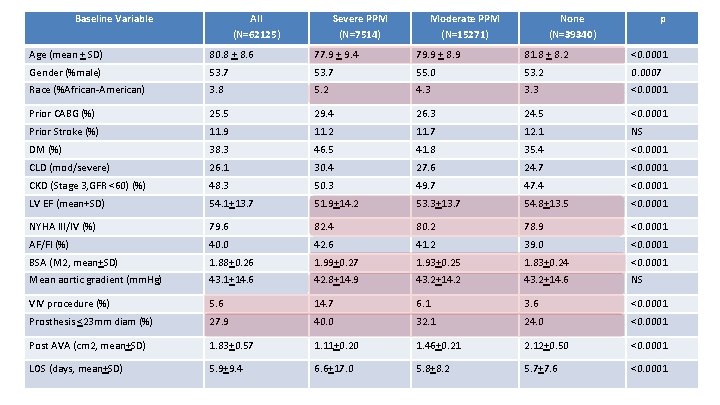
Baseline Variable All (N=62125) Severe PPM (N=7514) Moderate PPM (N=15271) None (N=39340) p Age (mean + SD) 80. 8 + 8. 6 77. 9 + 9. 4 79. 9 + 8. 9 81. 8 + 8. 2 <0. 0001 Gender (%male) 53. 7 55. 0 53. 2 0. 0007 Race (%African-American) 3. 8 5. 2 4. 3 3. 3 <0. 0001 Prior CABG (%) 25. 5 29. 4 26. 3 24. 5 <0. 0001 Prior Stroke (%) 11. 9 11. 2 11. 7 12. 1 NS DM (%) 38. 3 46. 5 41. 8 35. 4 <0. 0001 CLD (mod/severe) 26. 1 30. 4 27. 6 24. 7 <0. 0001 CKD (Stage 3, GFR <60) (%) 48. 3 50. 3 49. 7 47. 4 <0. 0001 LV EF (mean+SD) 54. 1+13. 7 51. 9+14. 2 53. 3+13. 7 54. 8+13. 5 <0. 0001 NYHA III/IV (%) 79. 6 82. 4 80. 2 78. 9 <0. 0001 AF/Fl (%) 40. 0 42. 6 41. 2 39. 0 <0. 0001 BSA (M 2, mean+SD) 1. 88+0. 26 1. 99+0. 27 1. 93+0. 25 1. 83+0. 24 <0. 0001 Mean aortic gradient (mm. Hg) 43. 1+14. 6 42. 8+14. 9 43. 2+14. 2 43. 2+14. 6 NS VIV procedure (%) 5. 6 14. 7 6. 1 3. 6 <0. 0001 Prosthesis <23 mm diam (%) 27. 9 40. 0 32. 1 24. 0 <0. 0001 Post AVA (cm 2, mean+SD) 1. 83+0. 57 1. 11+0. 20 1. 46+0. 21 2. 12+0. 50 <0. 0001 LOS (days, mean+SD) 5. 9+9. 4 6. 6+17. 0 5. 8+8. 2 5. 7+7. 6 <0. 0001
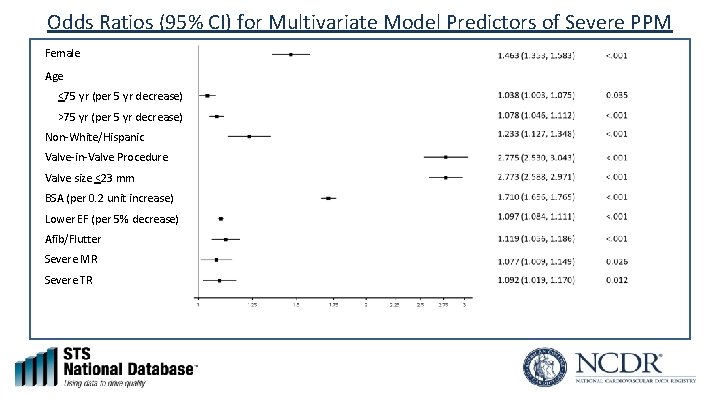
Odds Ratios (95% CI) for Multivariate Model Predictors of Severe PPM Female Age <75 yr (per 5 yr decrease) >75 yr (per 5 yr decrease) Non-White/Hispanic Valve-in-Valve Procedure Valve size <23 mm BSA (per 0. 2 unit increase) Lower EF (per 5% decrease) Afib/Flutter Severe MR Severe TR
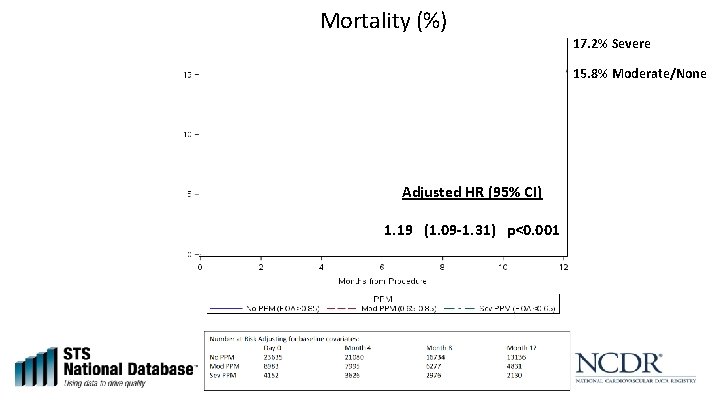
Mortality (%) 17. 2% Severe 15. 8% Moderate/None Adjusted HR (95% CI) 1. 19 (1. 09 -1. 31) p<0. 001
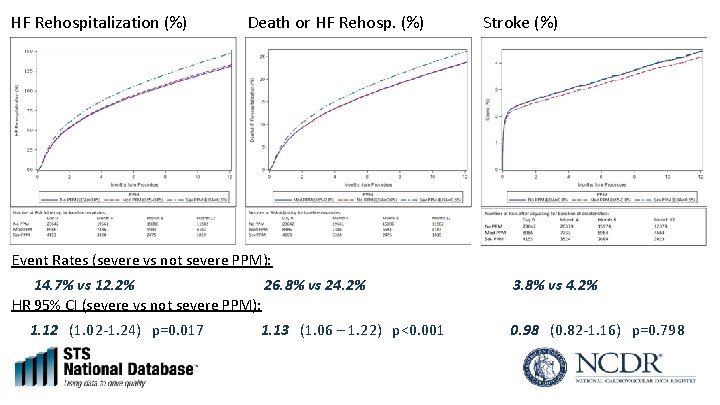
HF Rehospitalization (%) Death or HF Rehosp. (%) Stroke (%) Event Rates (severe vs not severe PPM): 14. 7% vs 12. 2% 26. 8% vs 24. 2% HR 95% CI (severe vs not severe PPM): 1. 12 (1. 02 -1. 24) p=0. 017 1. 13 (1. 06 – 1. 22) p<0. 001 3. 8% vs 4. 2% 0. 98 (0. 82 -1. 16) p=0. 798
Summary and Conclusions • This is the largest study to date of prosthesis-patient mismatch (PPM) after TAVR and demonstrates that severe and moderate PPM are common, occurring in 12% and 24% of patients, respectively. • Severe PPM is related to prosthesis and patient factors, including small diameter valve prosthesis, valve-in-valve procedure, larger BSA, female sex, and younger age. • Severe PPM is associated with increased 1 -year mortality and heart failure rehospitalization when compared with patients with moderate or no PPM. We did not find an association between PPM and stroke or QOL (KCCQ score) at 1 year. • Our findings suggest that efforts should be made to identify and limit the risk for PPM after TAVR J Am Coll Cardiol 2018; 72: 2701– 11
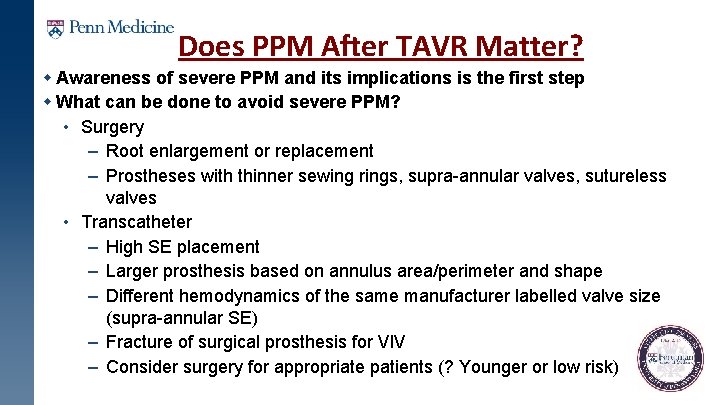
Does PPM After TAVR Matter? w Awareness of severe PPM and its implications is the first step w What can be done to avoid severe PPM? • Surgery – Root enlargement or replacement – Prostheses with thinner sewing rings, supra-annular valves, sutureless valves • Transcatheter – High SE placement – Larger prosthesis based on annulus area/perimeter and shape – Different hemodynamics of the same manufacturer labelled valve size (supra-annular SE) – Fracture of surgical prosthesis for VIV – Consider surgery for appropriate patients (? Younger or low risk)