
Prospects for Hadron Physics in Asia H Shimizu
- Slides: 38
Prospects for Hadron Physics in Asia H. Shimizu Laboratory of Nuclear Science Tohoku University ,
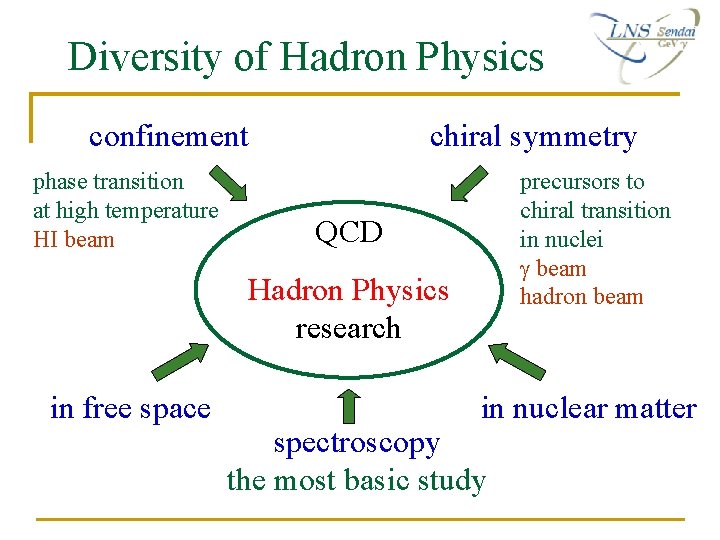
Diversity of Hadron Physics confinement phase transition at high temperature HI beam chiral symmetry precursors to chiral transition in nuclei g beam hadron beam QCD Hadron Physics research in free space in nuclear matter spectroscopy the most basic study
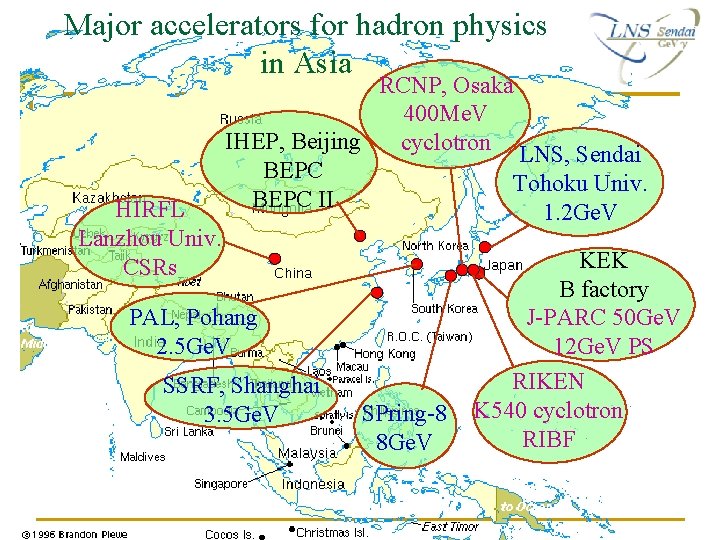
Major accelerators for hadron physics in Asia HIRFL Lanzhou Univ. CSRs RCNP, Osaka 400 Me. V IHEP, Beijing cyclotron LNS, Sendai BEPC Tohoku Univ. BEPC II 1. 2 Ge. V PAL, Pohang 2. 5 Ge. V SSRF, Shanghai 3. 5 Ge. V SPring-8 8 Ge. V KEK B factory J-PARC 50 Ge. V 12 Ge. V PS RIKEN K 540 cyclotron RIBF
Hadron Physics with e+e- collider machines
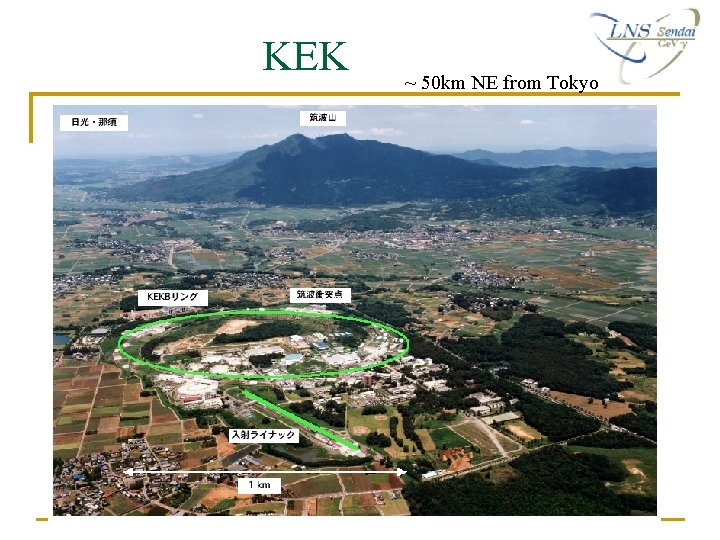
KEK ~ 50 km NE from Tokyo
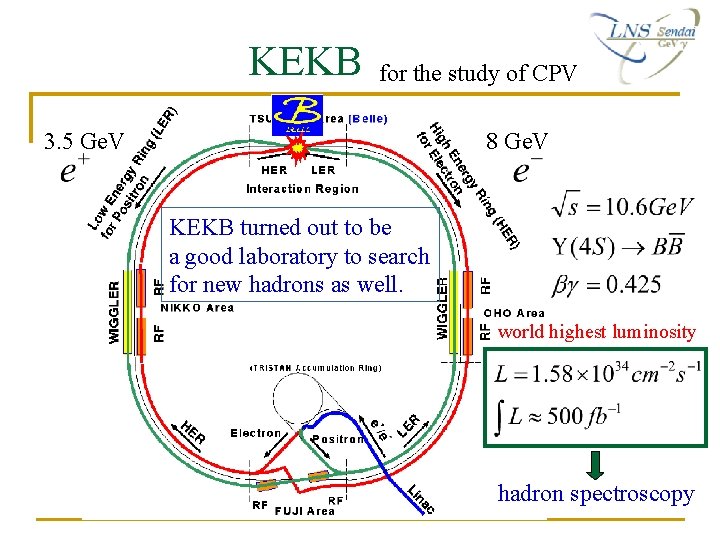
KEKB for the study of CPV 3. 5 Ge. V 8 Ge. V KEKB turned out to be a good laboratory to search for new hadrons as well. world highest luminosity hadron spectroscopy
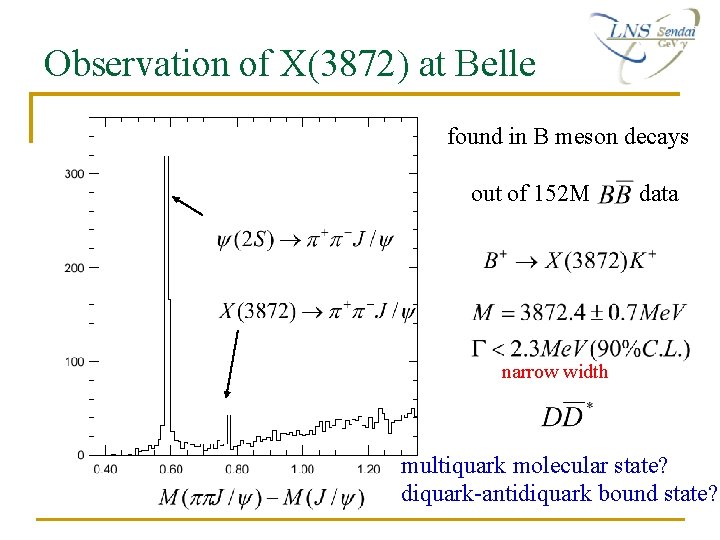
Observation of X(3872) at Belle found in B meson decays out of 152 M data narrow width multiquark molecular state? diquark-antidiquark bound state?
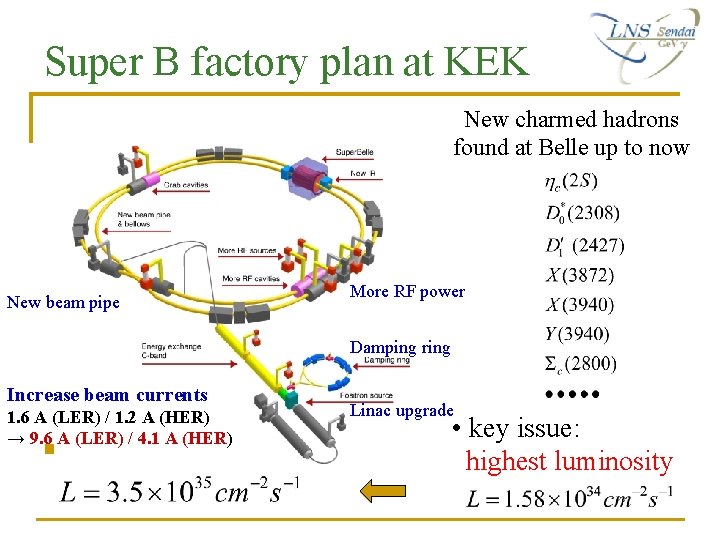
Super B factory plan at KEK New charmed hadrons found at Belle up to now New beam pipe More RF power Damping ring Increase beam currents 1. 6 A (LER) / 1. 2 A (HER) → 9. 6 A (LER) / 4. 1 A (HER) n Towards higher Linac upgrade luminosity • key issue: highest luminosity
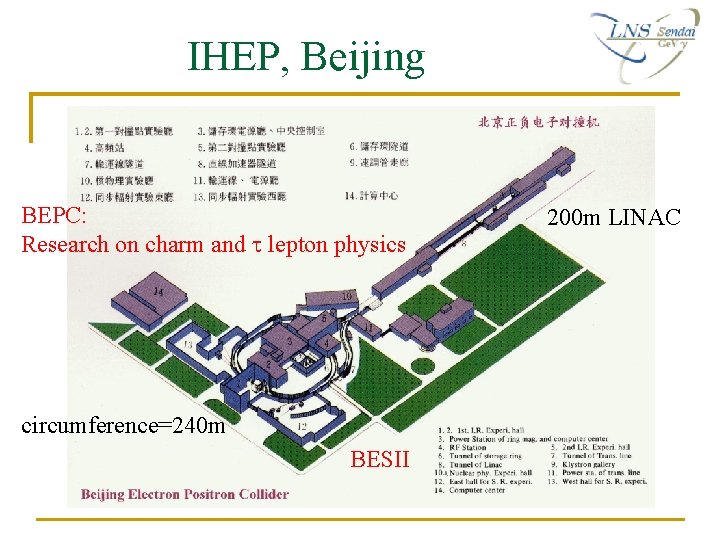
IHEP, Beijing BEPC: Research on charm and t lepton physics circumference=240 m BESII 200 m LINAC
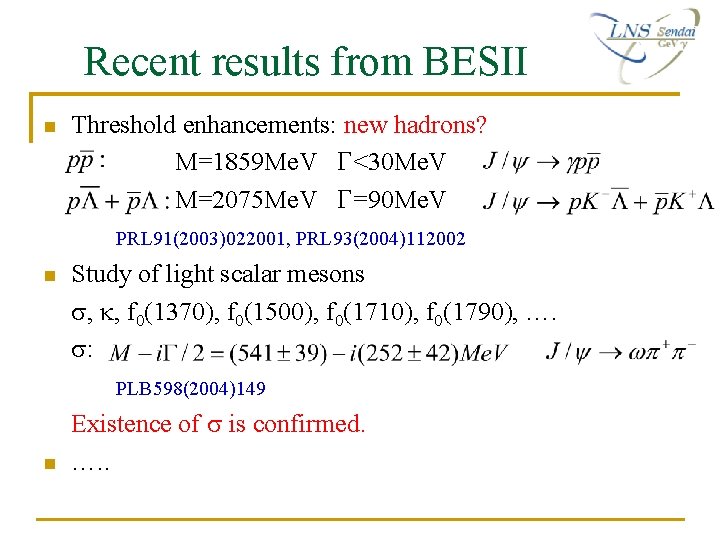
Recent results from BESII n Threshold enhancements: new hadrons? M=1859 Me. V G<30 Me. V M=2075 Me. V G=90 Me. V PRL 91(2003)022001, PRL 93(2004)112002 n Study of light scalar mesons s, k, f 0(1370), f 0(1500), f 0(1710), f 0(1790), …. s: PLB 598(2004)149 n Existence of s is confirmed. …. .
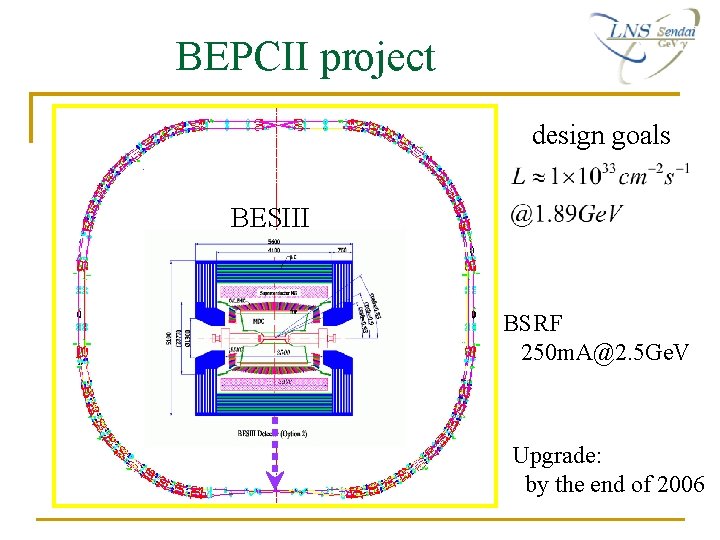
BEPCII project design goals BESIII BSRF 250 m. A@2. 5 Ge. V Upgrade: by the end of 2006
Hadron Physics with hadron beams
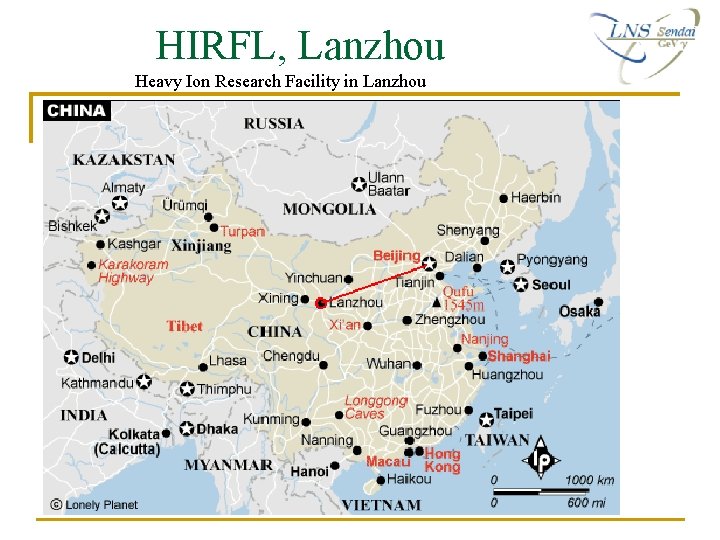
HIRFL, Lanzhou Heavy Ion Research Facility in Lanzhou
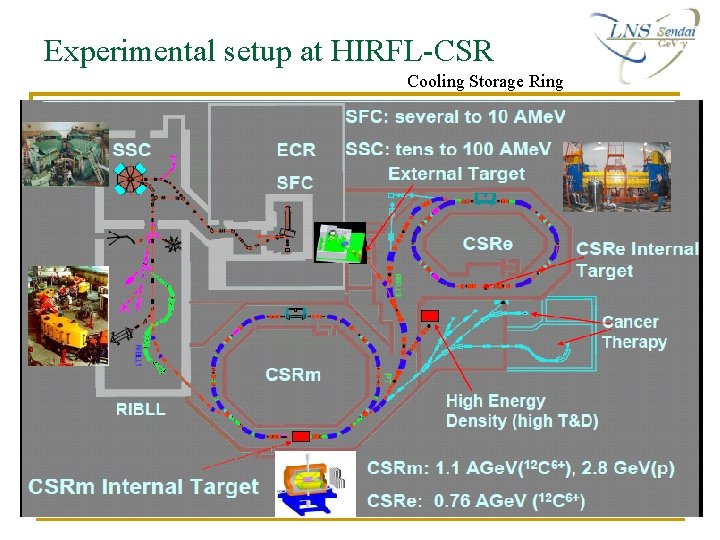
Experimental setup at HIRFL-CSR Cooling Storage Ring
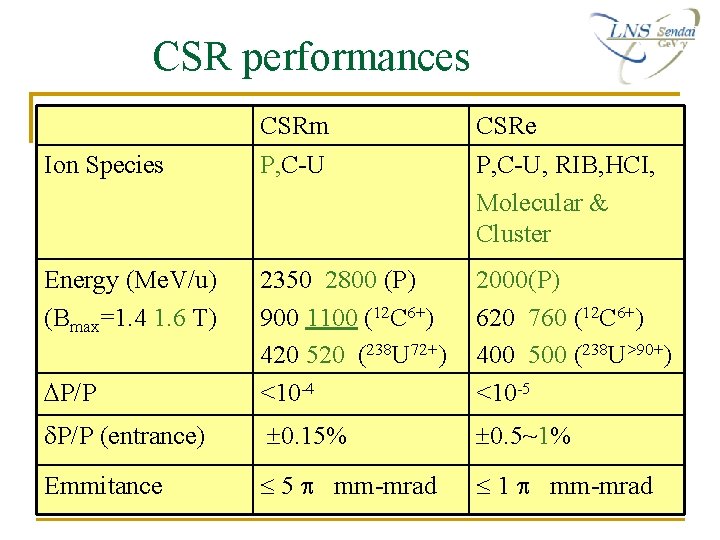
CSR performances CSRm P, C-U CSRe P, C-U, RIB, HCI, Molecular & Cluster P/P 2350 2800 (P) 900 1100 (12 C 6+) 420 520 (238 U 72+) <10 -4 2000(P) 620 760 (12 C 6+) 400 500 (238 U>90+) <10 -5 P/P (entrance) 0. 15% 0. 5~1% Emmitance 5 mm-mrad 1 mm-mrad Ion Species Energy (Me. V/u) (Bmax=1. 4 1. 6 T)
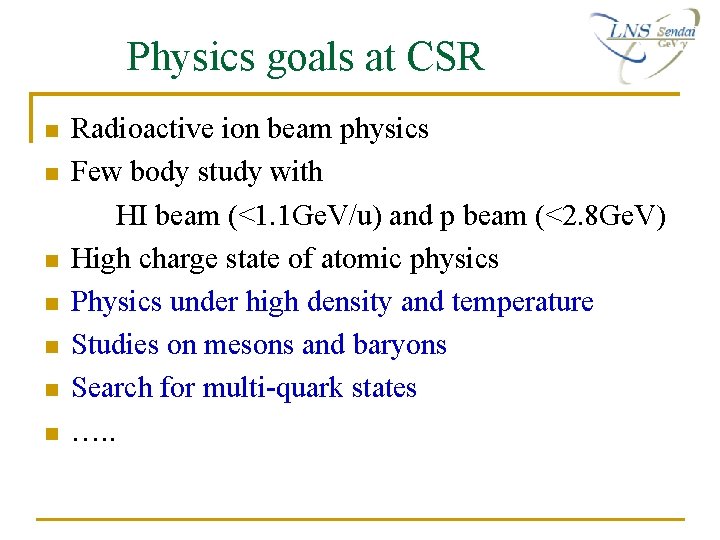
Physics goals at CSR n n n n Radioactive ion beam physics Few body study with HI beam (<1. 1 Ge. V/u) and p beam (<2. 8 Ge. V) High charge state of atomic physics Physics under high density and temperature Studies on mesons and baryons Search for multi-quark states …. .
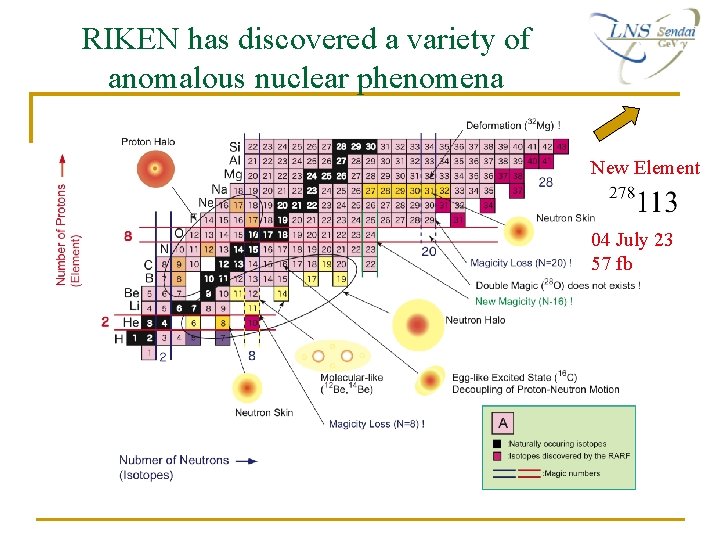
RIKEN has discovered a variety of anomalous nuclear phenomena New Element 04 July 23 57 fb
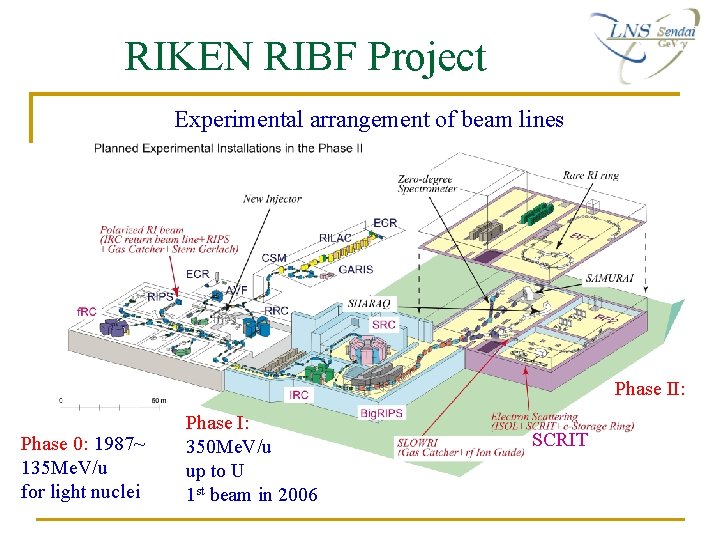
RIKEN RIBF Project Experimental arrangement of beam lines Phase II: Phase 0: 1987~ 135 Me. V/u for light nuclei Phase I: 350 Me. V/u up to U 1 st beam in 2006 SCRIT
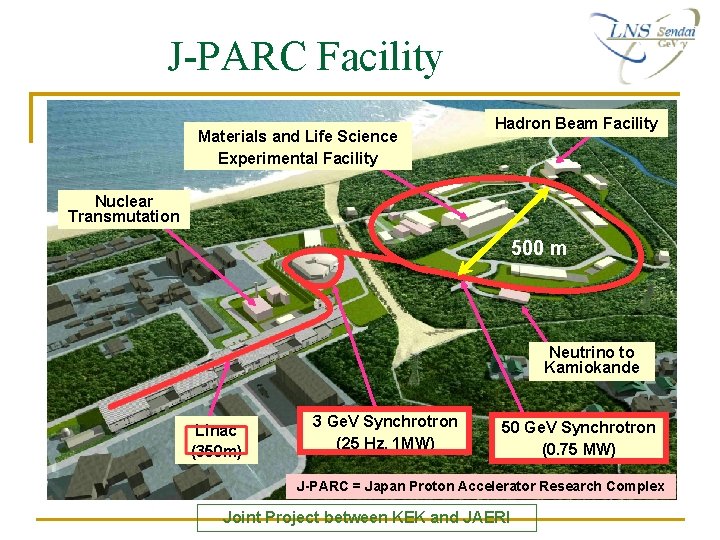
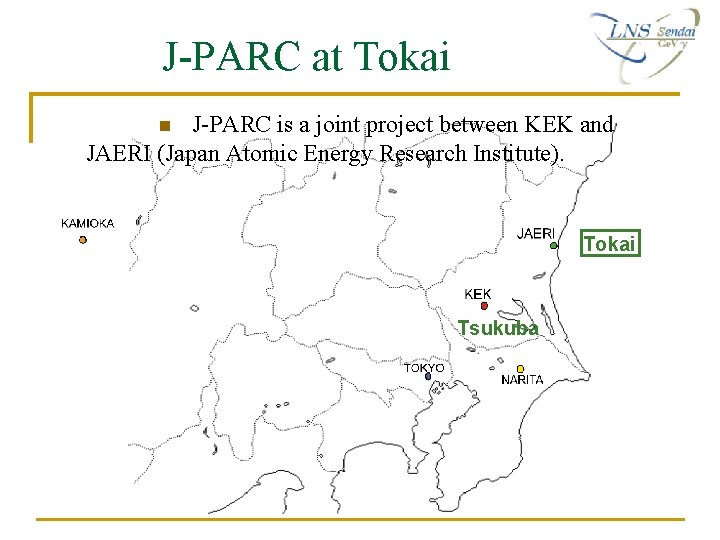
J-PARC Facility Materials and Life Science Experimental Facility Hadron Beam Facility Nuclear Transmutation 500 m Neutrino to Kamiokande Linac (350 m) 3 Ge. V Synchrotron (25 Hz, 1 MW) 50 Ge. V Synchrotron (0. 75 MW) J-PARC = Japan Proton Accelerator Research Complex Joint Project between KEK and JAERI
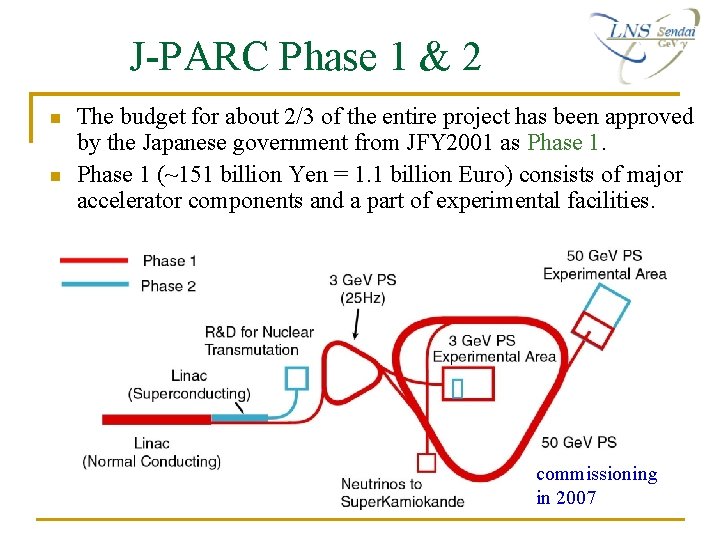
J-PARC Phase 1 & 2 n n The budget for about 2/3 of the entire project has been approved by the Japanese government from JFY 2001 as Phase 1 (~151 billion Yen = 1. 1 billion Euro) consists of major accelerator components and a part of experimental facilities. commissioning in 2007
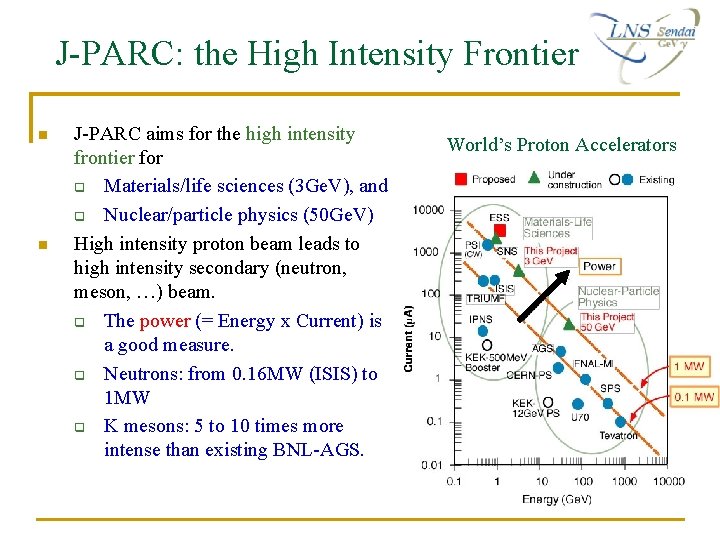
J-PARC: the High Intensity Frontier n n J-PARC aims for the high intensity frontier for q Materials/life sciences (3 Ge. V), and q Nuclear/particle physics (50 Ge. V) High intensity proton beam leads to high intensity secondary (neutron, meson, …) beam. q The power (= Energy x Current) is a good measure. q Neutrons: from 0. 16 MW (ISIS) to 1 MW q K mesons: 5 to 10 times more intense than existing BNL-AGS. World’s Proton Accelerators
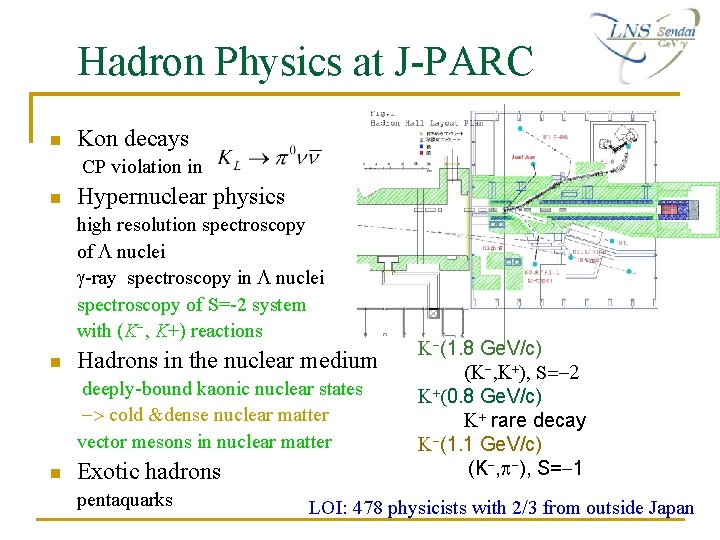
Hadron Physics at J-PARC n Kon decays CP violation in n Hypernuclear physics high resolution spectroscopy of L nuclei g-ray spectroscopy in L nuclei spectroscopy of S=-2 system with (K-, K+) reactions n Hadrons in the nuclear medium deeply-bound kaonic nuclear states -> cold &dense nuclear matter vector mesons in nuclear matter n Exotic hadrons pentaquarks K-(1. 8 Ge. V/c) (K-, K+), S=-2 K+(0. 8 Ge. V/c) K+ rare decay K-(1. 1 Ge. V/c) (K-, -), S=-1 LOI: 478 physicists with 2/3 from outside Japan
Hadron Physics with photon beams
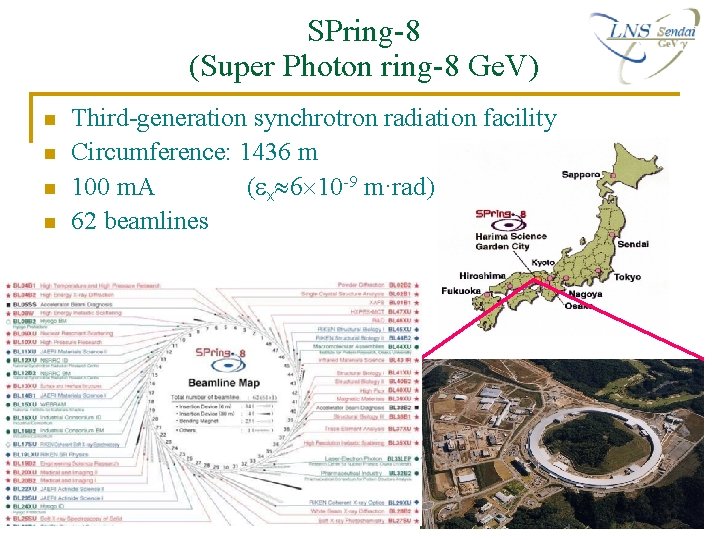
SPring-8 (Super Photon ring-8 Ge. V) n n Third-generation synchrotron radiation facility Circumference: 1436 m 100 m. A (ex 6 10 -9 m·rad) 62 beamlines
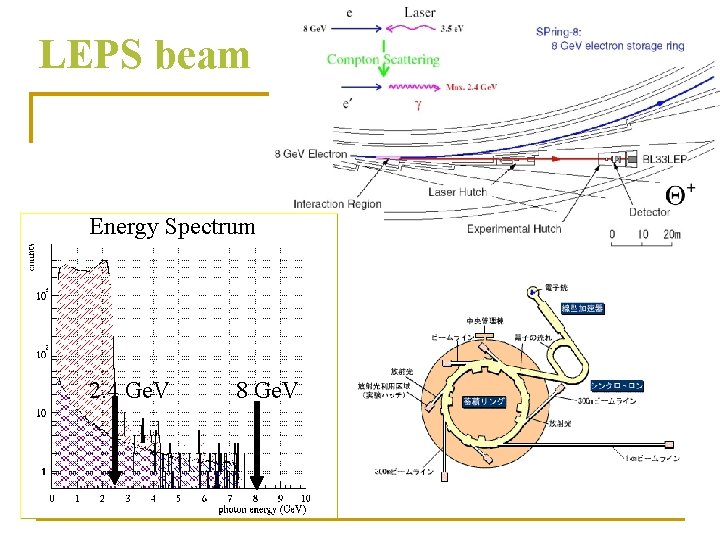
LEPS beam Energy Spectrum 2. 4 Ge. V 8 Ge. V
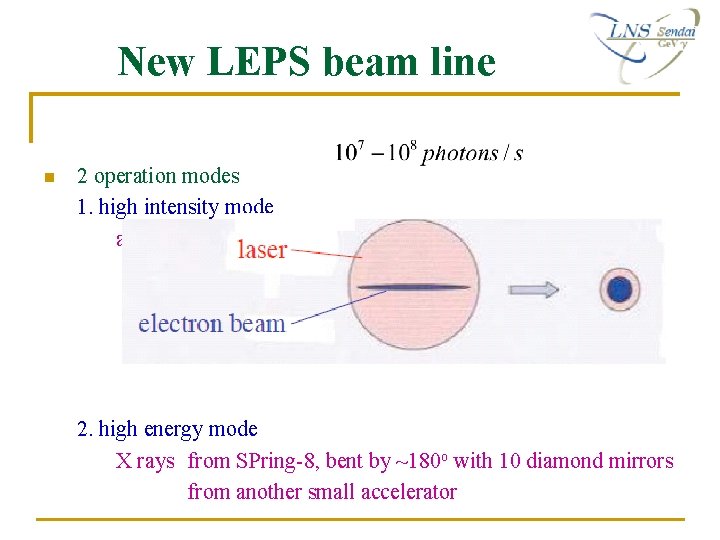
New LEPS beam line n 2 operation modes 1. high intensity mode a high power laser + round beam technique 2. high energy mode X rays from SPring-8, bent by ~180 o with 10 diamond mirrors from another small accelerator
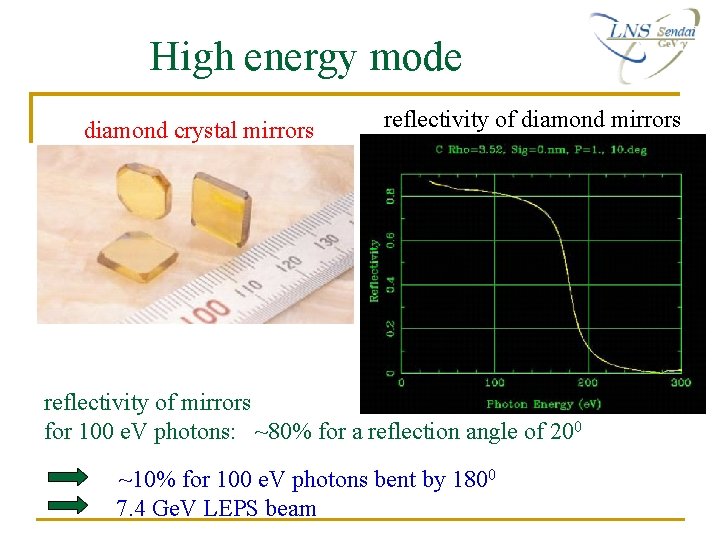
High energy mode diamond crystal mirrors reflectivity of diamond mirrors reflectivity of mirrors for 100 e. V photons: ~80% for a reflection angle of 200 ~10% for 100 e. V photons bent by 1800 7. 4 Ge. V LEPS beam
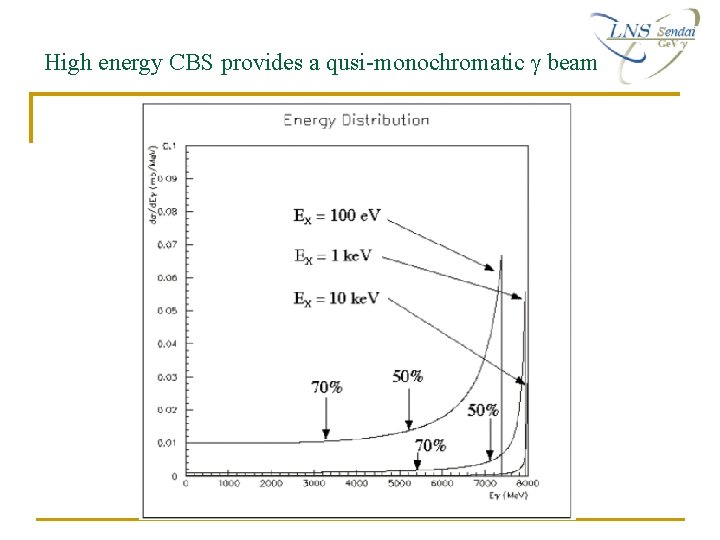
High energy CBS provides a qusi-monochromatic g beam
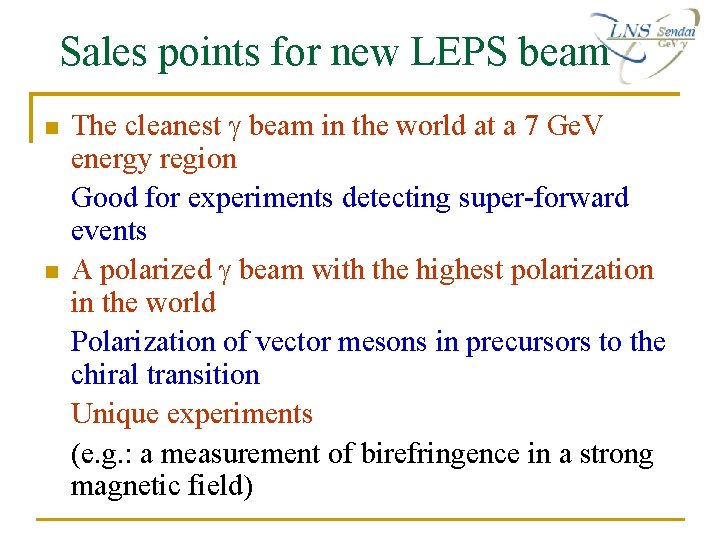
Sales points for new LEPS beam n n The cleanest g beam in the world at a 7 Ge. V energy region Good for experiments detecting super-forward events A polarized g beam with the highest polarization in the world Polarization of vector mesons in precursors to the chiral transition Unique experiments (e. g. : a measurement of birefringence in a strong magnetic field)
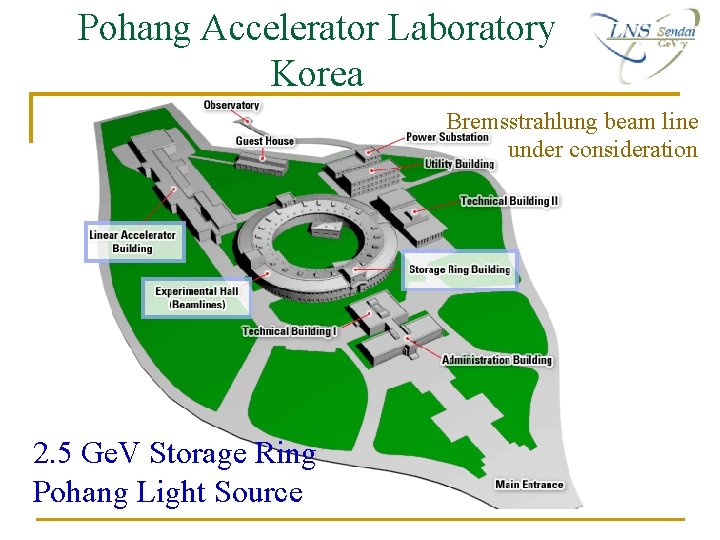
Pohang Accelerator Laboratory Korea Bremsstrahlung beam line under consideration 2. 5 Ge. V Storage Ring Pohang Light Source
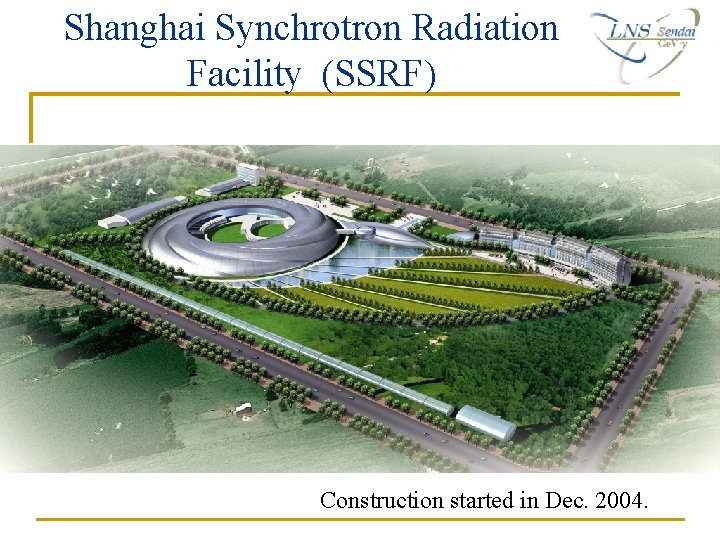
Shanghai Synchrotron Radiation Facility (SSRF) Construction started in Dec. 2004.
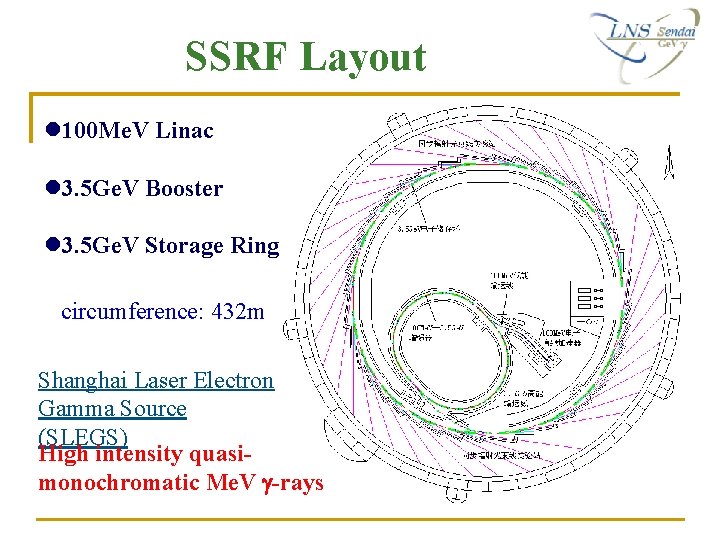
SSRF Layout l 100 Me. V Linac l 3. 5 Ge. V Booster l 3. 5 Ge. V Storage Ring circumference: 432 m Shanghai Laser Electron Gamma Source (SLEGS) High intensity quasimonochromatic Me. V g-rays
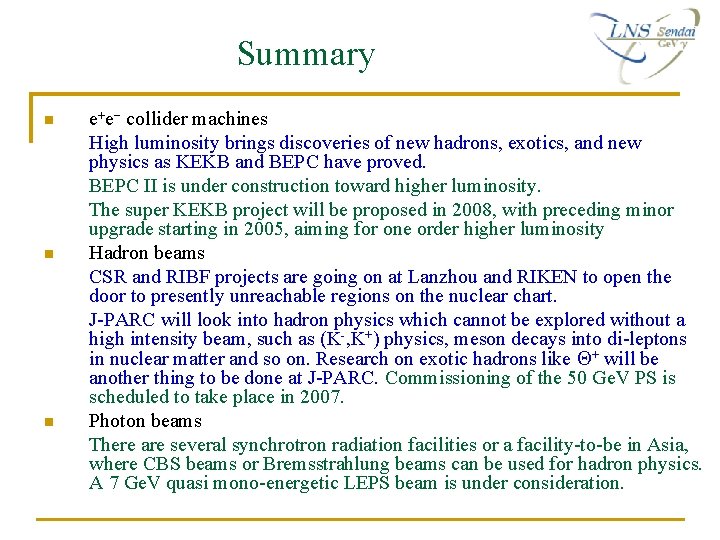
Summary n n n e+e- collider machines High luminosity brings discoveries of new hadrons, exotics, and new physics as KEKB and BEPC have proved. BEPC II is under construction toward higher luminosity. The super KEKB project will be proposed in 2008, with preceding minor upgrade starting in 2005, aiming for one order higher luminosity Hadron beams CSR and RIBF projects are going on at Lanzhou and RIKEN to open the door to presently unreachable regions on the nuclear chart. J-PARC will look into hadron physics which cannot be explored without a high intensity beam, such as (K-, K+) physics, meson decays into di-leptons in nuclear matter and so on. Research on exotic hadrons like Q+ will be another thing to be done at J-PARC. Commissioning of the 50 Ge. V PS is scheduled to take place in 2007. Photon beams There are several synchrotron radiation facilities or a facility-to-be in Asia, where CBS beams or Bremsstrahlung beams can be used for hadron physics. A 7 Ge. V quasi mono-energetic LEPS beam is under consideration.
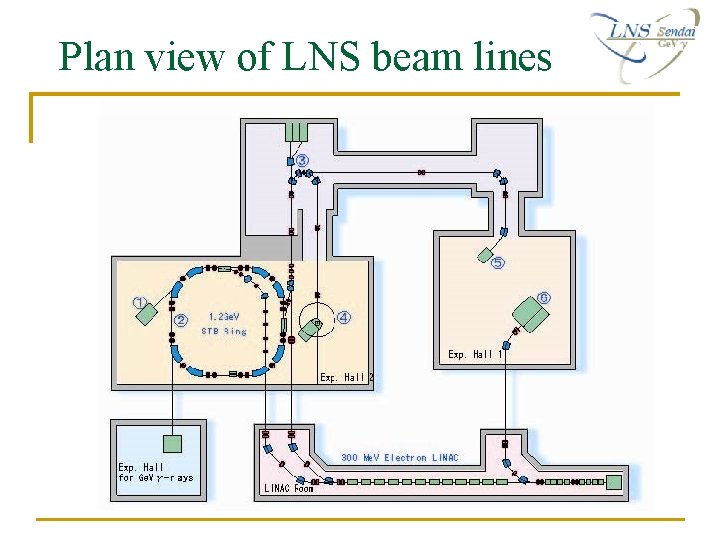
Plan view of LNS beam lines
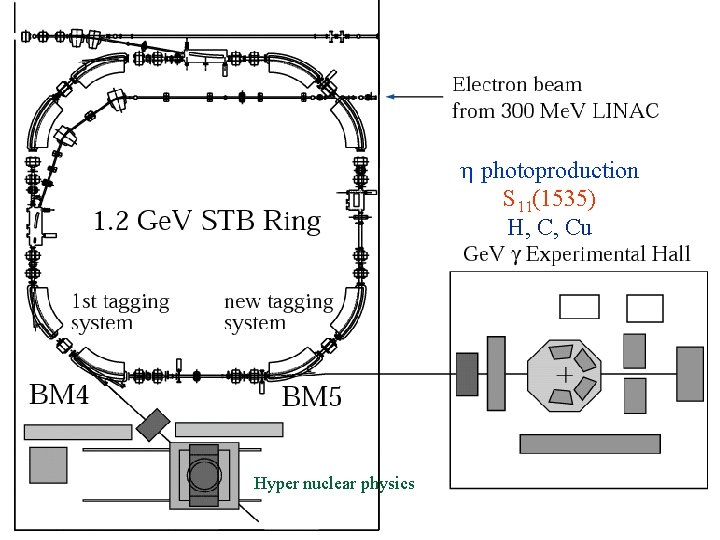
h photoproduction S 11(1535) H, C, Cu Hyper nuclear physics
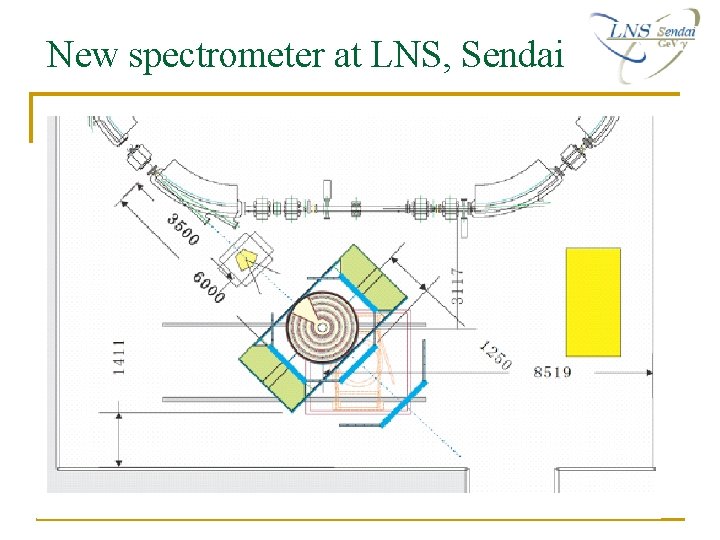
New spectrometer at LNS, Sendai
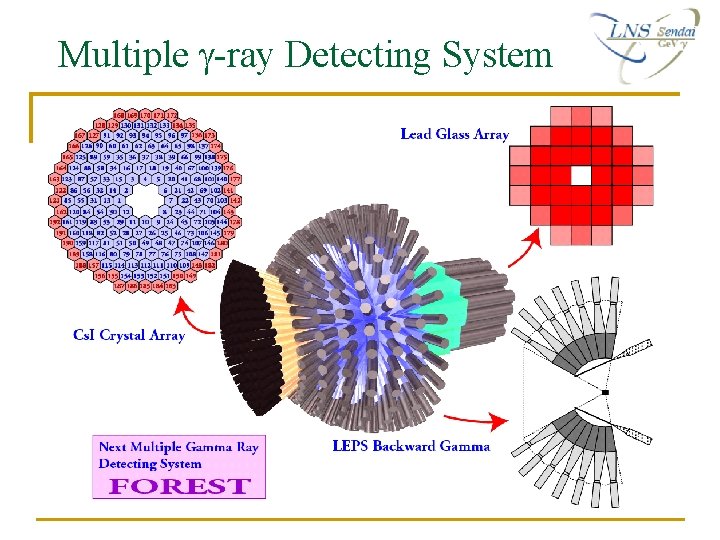
Multiple g-ray Detecting System
J-PARC at Tokai J-PARC is a joint project between KEK and JAERI (Japan Atomic Energy Research Institute). n Tokai Tsukuba